


 by Tom Gurney
Tom Gurney BSc (Hons) is an art history expert with over 20 years experience
Published on June 19, 2020 / Updated on October 2, 2026
Email: tomgurney1@gmail.com / Phone: +44 7429 011000
Sandro Botticelli: pinturas, desenhos e vida
Sandro Botticelli é um dos pintores mais conhecidos do Renascimento florentino. A Primavera e O Nascimento de Vênus mostram como organizava figuras em movimento com contornos precisos. Sua obra inclui também retábulos, imagens da Virgem com o Menino, retratos, afrescos da Capela Sistina e desenhos para a Divina Comédia de Dante. Esta página apresenta esses conjuntos e distingue os dados documentados das interpretações atraentes, mas incertas.[1][4][5][12]
At a glance
- NomeAlessandro di Mariano Filipepi, conhecido como Sandro Botticelli
- Vidacerca de 1445–1510
- Locais de trabalhosobretudo Florença; participação na decoração da Capela Sistina, em Roma, em 1481–82
- Formaçãoligação à oficina de Fra Filippo Lippi; uma aprendizagem anterior como ourives continua a ser uma hipótese
- Suportes e técnicaspainel de madeira, tela, fresco e desenho
- Obras conhecidasA Primavera, O Nascimento de Vênus, A Adoração dos Magos e A Natividade Mística
- Idioma das páginas detalhadasinglês nas páginas de obras ligadas abaixo
Botticelli em seu tempo
Oficina florentina e primeiras encomendas
até 1470Afrescos da Capela Sistina
1481–82Pinturas mitológicas em Florença
cerca de 1480Obras devocionais e narrativas tardias
décadas de 1490–1500Fra Filippo Lippi
mestrePiero del Pollaiolo
ciclo das Virtudes, 1470Sandro Botticelli
cerca de 1445–1510Filippino Lippi
oficina e colaboraçãoConteúdo
Um pintor em Florença
As igrejas, confrarias, instituições públicas e famílias florentinas encomendavam imagens para usos diferentes. Fra Filippo Lippi foi uma figura importante na formação de Botticelli. Em 1470, o artista pintou A Fortaleza para um ciclo público de virtudes. A figura combina uma postura firme com um desenho minucioso e documenta sua presença inicial em uma encomenda de destaque.[1][2]
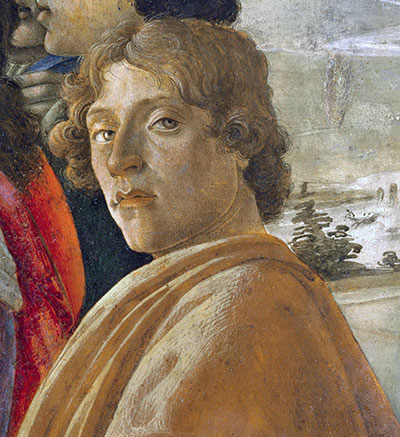
Na Adoração dos Magos para a capela de Gaspare del Lama, Botticelli reuniu a Sagrada Família e muitos florentinos contemporâneos. Os Uffizi apontam ligações à família Médici, mas tratam com cautela a possível representação do próprio pintor numa extremidade da cena. Nas numerosas imagens da Virgem, importa considerar o formato, o material e o primeiro destino, além das semelhanças de estilo.[3][8]
Pinturas mitológicas
Os Uffizi datam A Primavera de cerca de 1480. Nove figuras ocupam um jardim denso; o sentido exato do conjunto permanece debatido. A presença antiga da obra numa casa dos Médici está documentada, mas não identifica com certeza o primeiro encomendante nem estabelece uma única interpretação.[4]
O Nascimento de Vênus, datado de cerca de 1485, mostra a deusa chegando à costa sobre uma concha. Os ventos e a figura à sua espera organizam o movimento da cena. Está pintado sobre tela, ao passo que A Primavera está sobre madeira: não são, portanto, duas partes comprovadas da mesma encomenda. Vênus e Marte, em Londres, oferece outra abordagem aos temas mitológicos de Botticelli.[5][9]
Roma, obras tardias e Dante
Em 1481–82, Botticelli trabalhou com outros pintores nos afrescos da Capela Sistina. Suas cenas de Moisés reúnem vários episódios em uma só pintura; no muro oposto, histórias de Cristo dialogam com elas. A disposição da capela ajuda a compreender cada imagem.[6]
A Natividade Mística contém uma inscrição incomum e pertence aos anos tardios do pintor. Os conflitos políticos e religiosos de Florença ajudam a situá-la, mas não provam uma narrativa simples de conversão ou declínio. Os desenhos para a Divina Comédia revelam, por sua vez, um trabalho prolongado sobre a sequência de lugares, personagens e ações.[10][12]
Explorar a obra
A biografia apresenta a cronologia documentada. As seções de pinturas e desenhos permitem percorrer o catálogo; A Primavera e O Nascimento de Vênus têm estudos próprios. As páginas detalhadas estão atualmente em inglês e conservam os títulos institucionais e números de inventário tal como surgem nas fontes.
Quatro fases da carreira
- Formação c. 1450–60
- Primeiras encomendas 1470–79
- Roma e mitologia 1480–89
- Obras tardias 1490–1510
Seis caminhos pela obra
As páginas detalhadas das obras relacionadas estão em inglês.
Botticelli e obras relacionadas
Conversa
Que obra muda sua visão de Botticelli?
Perguntas para observar
Como uma linha em movimento guia o olhar?
O que muda ao conhecer o local original de uma obra?
Que nome tradicional exige mais cautela?
Fontes
- National Gallery, London, Sandro Botticelli artist profile, biography, workshop and attribution context; accessed 1 October 2026 View source.
- Uffizi Galleries, Fortitude, commission, material and 1470 date; accessed 1 October 2026 View source.
- Uffizi Galleries, Adoration of the Magi, Del Lama chapel, Medici identifications and qualified self-portrait; accessed 1 October 2026 View source.
- Uffizi Galleries, Primavera / Spring, subject, c.1480, medium and Medici-household history; accessed 1 October 2026 View source.
- Uffizi Galleries, Birth of Venus, subject, c.1485, canvas support, commission hypothesis and first written notice; accessed 1 October 2026 View source.
- Vatican Museums, Sistine Chapel south wall, multi-artist fresco programme and Moses episodes; accessed 1 October 2026 View source.
- National Gallery, London, conservation of the Adoration of the Kings, part three, object-specific Botticelli–Filippino working evidence; accessed 1 October 2026 View source.
- Uffizi Galleries, Madonna of the Magnificat, tondo subject and details; accessed 1 October 2026 View source.
- National Gallery, London, Venus and Mars, subject and probable marriage context; accessed 1 October 2026 View source.
- National Gallery, London, Mystic Nativity, inscription and historical interpretation; accessed 1 October 2026 View source.
- National Gallery, London, Three Miracles of Saint Zenobius, four-panel cycle and narrative structure; accessed 1 October 2026 View source.
- Biblioteca Apostolica Vaticana, Una cosa maravigliosa, Botticelli's dispersed Comedy project and open production questions; consulted 1 October 2026 View source.
- Biblioteca Apostolica Vaticana, Reg. lat. 1896 pt. A, fol. 100r annotation, continuous Inferno IX–XI scene; indexed text consulted 1 October 2026 View source.
- Victoria and Albert Museum, Botticelli Reimagined, 2016 exhibition description and examples of later artistic responses; accessed 1 October 2026 View source.
- National Gallery, London, Portrait of a Young Man, frontal presentation, date and unidentified sitter; accessed 1 October 2026 View source.
- Städel Museum, Idealised Portrait of a Lady, c.1480–85, ideal nymph portrait and traditional Simonetta name; accessed 1 October 2026 View source.
- Image credit. Sandro Botticelli, Idealised Portrait of a Lady (Portrait of Simonetta Vespucci as Nymph), c. 1480–85. Städel Museum, Frankfurt am Main, inv. 936. Museum image marked Public Domain. This is an idealised woman, not a portrait of Botticelli View source.