


 by Tom Gurney
Tom Gurney BSc (Hons) is an art history expert with over 20 years experience
Published on June 19, 2020 / Updated on October 2, 2026
Email: tomgurney1@gmail.com / Phone: +44 7429 011000
Sandro Botticelli : peintures, dessins et vie
Sandro Botticelli est l’un des peintres les plus connus de la Renaissance florentine. Le Printemps et La Naissance de Vénus ont rendu célèbres ses silhouettes souples et ses contours précis. Son activité comprend aussi des retables, des Vierges à l’Enfant, des portraits, des fresques pour la chapelle Sixtine et des dessins consacrés à la Divine Comédie de Dante. Cette page présente ces ensembles en distinguant les données établies des interprétations séduisantes mais incertaines.[1][4][5][12]
At a glance
- Nom Alessandro di Mariano Filipepi, dit Sandro Botticelli
- Vie vers 1445–1510
- Lieux de travail surtout Florence ; participation au décor de la chapelle Sixtine à Rome en 1481–82
- Formation lien établi avec l’atelier de Fra Filippo Lippi ; un apprentissage préalable d’orfèvre reste hypothétique
- Supports panneaux, toile, fresques et dessins
- Œuvres célèbres Le Printemps, La Naissance de Vénus, L’Adoration des Mages et La Nativité mystique
- Langue des notices détaillées anglais pour les pages d’œuvres liées ci-dessous
Botticelli dans son époque
Atelier florentin et premières commandes
vers 1470Fresques de la chapelle Sixtine
1481–82Peintures mythologiques à Florence
vers 1480Images de dévotion et récits tardifs
années 1490–1500Fra Filippo Lippi
maîtrePiero del Pollaiolo
cycle des Vertus, 1470Sandro Botticelli
vers 1445–1510Filippino Lippi
atelier et collaborationSommaire
- Un peintre dans la Florence de la Renaissance
- Les peintures mythologiques
- Rome, les dernières années et Dante
- Poursuivre la visite
Un peintre dans la Florence de la Renaissance
À Florence, les églises, les confréries, les institutions publiques et les familles commandaient des images pour des usages différents. Fra Filippo Lippi joua un rôle important dans la formation de Botticelli. En 1470, celui-ci réalisa la Force pour un cycle public consacré aux vertus. La figure associe une posture assurée à un dessin minutieux : c’est un jalon documenté de ses premières commandes visibles.[1][2]
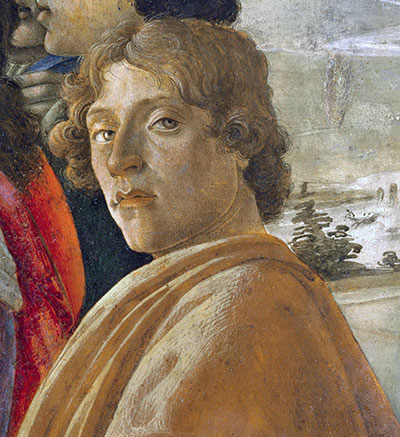
Dans l’Adoration des Mages peinte pour la chapelle de Gaspare del Lama, Botticelli réunit la Sainte Famille et de nombreux Florentins contemporains. Les Offices signalent plusieurs personnages liés aux Médicis, mais présentent avec prudence l’idée d’un autoportrait du peintre. Pour les nombreuses Vierges à l’Enfant, le format, la matière et la destination première comptent autant que les ressemblances de style.[3][8]
Les peintures mythologiques
Les Offices situent Le Printemps vers 1480. Neuf figures occupent un jardin dense ; leur programme symbolique exact demeure discuté. Une présence ancienne du tableau dans une maison des Médicis est attestée. Cette histoire ne suffit pourtant pas à identifier avec certitude son premier commanditaire ni à imposer une interprétation unique.[4]
La Naissance de Vénus, datée vers 1485, montre la déesse arrivant au rivage sur une coquille. Les vents et une figure qui l’attend organisent le mouvement de la scène. Le tableau est peint sur toile, tandis que Le Printemps est sur panneau : il faut donc éviter de les présenter comme les deux parties certaines d’une même commande. À Londres, Vénus et Mars ouvre encore une autre voie dans la peinture mythologique de Botticelli.[5][9]
Rome, les dernières années et Dante
En 1481–82, Botticelli participa avec plusieurs autres peintres au décor mural de la chapelle Sixtine. Ses scènes de Moïse réunissent plusieurs épisodes dans un même espace peint ; des histoires du Christ leur répondent sur le mur opposé. La disposition de la chapelle fait partie du sens de ces fresques.[6]
La Nativité mystique porte une inscription inhabituelle et appartient aux dernières années de l’artiste. Les bouleversements politiques et religieux de Florence éclairent son contexte, sans prouver une histoire simple de conversion ou de déclin. Les dessins pour la Divine Comédie montrent, de leur côté, un travail prolongé sur l’enchaînement des lieux, des personnages et des actions.[10][12]
Poursuivre la visite
La biographie donne les repères documentaires ; les sections peintures et dessins permettent de parcourir les œuvres. Des notices développées sont consacrées au Printemps et à La Naissance de Vénus. Ces pages détaillées sont en anglais ; les titres institutionnels et les numéros d’inventaire y conservent leur forme documentée.
Quatre étapes de sa carrière
- Formation c. 1450–60
- Premières commandes 1470–79
- Rome et mythologie 1480–89
- Œuvres tardives 1490–1510
Six portes d’entrée dans l’œuvre
Les notices détaillées des œuvres liées sont en anglais.
Botticelli et œuvres associées
Discussion
Quelle œuvre change votre regard sur Botticelli ?
Questions pour regarder
Comment une ligne en mouvement guide-t-elle le regard ?
Que change la connaissance du lieu d’origine ?
Quel nom traditionnel demande le plus de prudence ?
Sources
- National Gallery, London, Sandro Botticelli artist profile, biography, workshop and attribution context; accessed 1 October 2026 View source.
- Uffizi Galleries, Fortitude, commission, material and 1470 date; accessed 1 October 2026 View source.
- Uffizi Galleries, Adoration of the Magi, Del Lama chapel, Medici identifications and qualified self-portrait; accessed 1 October 2026 View source.
- Uffizi Galleries, Primavera / Spring, subject, c.1480, medium and Medici-household history; accessed 1 October 2026 View source.
- Uffizi Galleries, Birth of Venus, subject, c.1485, canvas support, commission hypothesis and first written notice; accessed 1 October 2026 View source.
- Vatican Museums, Sistine Chapel south wall, multi-artist fresco programme and Moses episodes; accessed 1 October 2026 View source.
- National Gallery, London, conservation of the Adoration of the Kings, part three, object-specific Botticelli–Filippino working evidence; accessed 1 October 2026 View source.
- Uffizi Galleries, Madonna of the Magnificat, tondo subject and details; accessed 1 October 2026 View source.
- National Gallery, London, Venus and Mars, subject and probable marriage context; accessed 1 October 2026 View source.
- National Gallery, London, Mystic Nativity, inscription and historical interpretation; accessed 1 October 2026 View source.
- National Gallery, London, Three Miracles of Saint Zenobius, four-panel cycle and narrative structure; accessed 1 October 2026 View source.
- Biblioteca Apostolica Vaticana, Una cosa maravigliosa, Botticelli's dispersed Comedy project and open production questions; consulted 1 October 2026 View source.
- Biblioteca Apostolica Vaticana, Reg. lat. 1896 pt. A, fol. 100r annotation, continuous Inferno IX–XI scene; indexed text consulted 1 October 2026 View source.
- Victoria and Albert Museum, Botticelli Reimagined, 2016 exhibition description and examples of later artistic responses; accessed 1 October 2026 View source.
- National Gallery, London, Portrait of a Young Man, frontal presentation, date and unidentified sitter; accessed 1 October 2026 View source.
- Städel Museum, Idealised Portrait of a Lady, c.1480–85, ideal nymph portrait and traditional Simonetta name; accessed 1 October 2026 View source.
- Image credit. Sandro Botticelli, Idealised Portrait of a Lady (Portrait of Simonetta Vespucci as Nymph), c. 1480–85. Städel Museum, Frankfurt am Main, inv. 936. Museum image marked Public Domain. This is an idealised woman, not a portrait of Botticelli View source.