


 by Tom Gurney
Tom Gurney BSc (Hons) is an art history expert with over 20 years experience
Published on June 19, 2020 / Updated on October 2, 2026
Email: tomgurney1@gmail.com / Phone: +44 7429 011000
Sandro Botticelli: pinturas, dibujos y vida
Sandro Botticelli es uno de los pintores más conocidos del Renacimiento florentino. La Primavera y El nacimiento de Venus muestran cómo organizó figuras en movimiento mediante contornos precisos. Su obra incluye también retablos, vírgenes con el Niño, retratos, frescos de la Capilla Sixtina y dibujos para la Divina comedia de Dante. Esta página ofrece una entrada a esos conjuntos y distingue los datos comprobados de las interpretaciones atractivas pero inciertas.[1][4][5][12]
At a glance
- NombreAlessandro di Mariano Filipepi, conocido como Sandro Botticelli
- Vidahacia 1445–1510
- Lugares de trabajoprincipalmente Florencia; participación en la decoración de la Capilla Sixtina de Roma en 1481–82
- Formaciónrelación con el taller de Fra Filippo Lippi; un aprendizaje previo como orfebre sigue siendo una hipótesis
- Soportes y técnicastabla, lienzo, fresco y dibujo
- Obras conocidasLa Primavera, El nacimiento de Venus, La adoración de los Magos y La Natividad mística
- Idioma de las fichas detalladasinglés en las páginas de obras enlazadas
Botticelli en su época
Taller florentino y primeros encargos
hacia 1470Frescos de la Capilla Sixtina
1481–82Pinturas mitológicas en Florencia
hacia 1480Obras religiosas y narrativas tardías
años 1490–1500Fra Filippo Lippi
maestroPiero del Pollaiolo
ciclo de Virtudes, 1470Sandro Botticelli
hacia 1445–1510Filippino Lippi
taller y colaboraciónContenido
Un pintor en Florencia
Las iglesias, cofradías, instituciones públicas y familias florentinas encargaban imágenes para usos distintos. Fra Filippo Lippi fue una figura importante en la formación de Botticelli. En 1470, el artista pintó La fortaleza para un ciclo público de virtudes. La figura combina una postura firme con un dibujo minucioso y documenta su presencia temprana en un encargo destacado.[1][2]
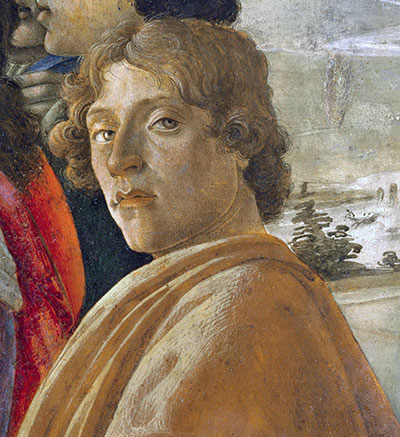
En La adoración de los Magos para la capilla de Gaspare del Lama, Botticelli reunió a la Sagrada Familia con numerosos florentinos contemporáneos. Los Uffizi señalan vínculos con los Médici, pero tratan con prudencia la posible presencia del propio pintor en un extremo de la escena. Para sus muchas imágenes de la Virgen, conviene preguntar por el formato, los materiales y el destino original, además de comparar el estilo.[3][8]
Las pinturas mitológicas
Los Uffizi sitúan La Primavera hacia 1480. Nueve figuras ocupan un jardín abundante; el significado preciso de todo el programa sigue siendo objeto de debate. Hay constancia de que la pintura estuvo en una casa de los Médici, pero ese dato no demuestra quién hizo el primer encargo ni impone una interpretación única.[4]
El nacimiento de Venus, fechado hacia 1485, presenta a la diosa llegando a la costa sobre una concha. Los vientos y la figura que espera en la orilla organizan el movimiento. Está pintado sobre lienzo, mientras que La Primavera está sobre tabla: no deben tratarse como dos partes documentadas de un mismo encargo. Venus y Marte, en Londres, ofrece otra forma de leer los temas mitológicos de Botticelli.[5][9]
Roma, los últimos años y Dante
En 1481–82 Botticelli trabajó junto a otros pintores en los muros de la Capilla Sixtina. Sus escenas de Moisés reúnen varios episodios en un mismo fresco; las historias de Cristo del muro opuesto dialogan con ellas. La disposición de la capilla forma parte del significado de cada imagen.[6]
La Natividad mística lleva una inscripción poco común y pertenece a los años tardíos del artista. Los conflictos políticos y religiosos de Florencia ofrecen contexto, pero no prueban una historia simple de conversión o decadencia. Los dibujos para la Divina comedia muestran, por otra parte, un trabajo prolongado con la secuencia de lugares, personajes y acciones.[10][12]
Explorar la obra
La biografía reúne los datos cronológicos. Las secciones de pinturas y dibujos ayudan a recorrer el catálogo; La Primavera y El nacimiento de Venus tienen estudios propios. Las fichas detalladas están actualmente en inglés y conservan los títulos institucionales y números de inventario documentados.
Cuatro etapas de su carrera
- Formación c. 1450–60
- Primeros encargos 1470–79
- Roma y mitología 1480–89
- Obras tardías 1490–1510
Seis entradas a la obra
Las fichas detalladas de las obras enlazadas están en inglés.
Botticelli y obras relacionadas
Conversación
¿Qué obra cambia su idea de Botticelli?
Preguntas para observar
¿Cómo guía la mirada un contorno en movimiento?
¿Qué cambia al conocer el lugar original de una obra?
¿Qué nombre tradicional requiere más cautela?
Fuentes
- National Gallery, London, Sandro Botticelli artist profile, biography, workshop and attribution context; accessed 1 October 2026 View source.
- Uffizi Galleries, Fortitude, commission, material and 1470 date; accessed 1 October 2026 View source.
- Uffizi Galleries, Adoration of the Magi, Del Lama chapel, Medici identifications and qualified self-portrait; accessed 1 October 2026 View source.
- Uffizi Galleries, Primavera / Spring, subject, c.1480, medium and Medici-household history; accessed 1 October 2026 View source.
- Uffizi Galleries, Birth of Venus, subject, c.1485, canvas support, commission hypothesis and first written notice; accessed 1 October 2026 View source.
- Vatican Museums, Sistine Chapel south wall, multi-artist fresco programme and Moses episodes; accessed 1 October 2026 View source.
- National Gallery, London, conservation of the Adoration of the Kings, part three, object-specific Botticelli–Filippino working evidence; accessed 1 October 2026 View source.
- Uffizi Galleries, Madonna of the Magnificat, tondo subject and details; accessed 1 October 2026 View source.
- National Gallery, London, Venus and Mars, subject and probable marriage context; accessed 1 October 2026 View source.
- National Gallery, London, Mystic Nativity, inscription and historical interpretation; accessed 1 October 2026 View source.
- National Gallery, London, Three Miracles of Saint Zenobius, four-panel cycle and narrative structure; accessed 1 October 2026 View source.
- Biblioteca Apostolica Vaticana, Una cosa maravigliosa, Botticelli's dispersed Comedy project and open production questions; consulted 1 October 2026 View source.
- Biblioteca Apostolica Vaticana, Reg. lat. 1896 pt. A, fol. 100r annotation, continuous Inferno IX–XI scene; indexed text consulted 1 October 2026 View source.
- Victoria and Albert Museum, Botticelli Reimagined, 2016 exhibition description and examples of later artistic responses; accessed 1 October 2026 View source.
- National Gallery, London, Portrait of a Young Man, frontal presentation, date and unidentified sitter; accessed 1 October 2026 View source.
- Städel Museum, Idealised Portrait of a Lady, c.1480–85, ideal nymph portrait and traditional Simonetta name; accessed 1 October 2026 View source.
- Image credit. Sandro Botticelli, Idealised Portrait of a Lady (Portrait of Simonetta Vespucci as Nymph), c. 1480–85. Städel Museum, Frankfurt am Main, inv. 936. Museum image marked Public Domain. This is an idealised woman, not a portrait of Botticelli View source.