by Tom Gurney
Tom Gurney BSc (Hons) is an art history expert with over 20 years experience
Published on June 19, 2020 / Updated on October 2, 2026
Email: tomgurney1@gmail.com / Phone: +44 7429 011000
Portrait of a Youth
A young man stands before a black background, with no landscape, room or companion to draw attention away from him. His head leans slightly to one side; his eyes turn the other way. One hand rises to his chest, where two fingers overlap. Botticelli gives us a face, a gesture and fashionable clothes, but no name. That tension makes this portrait unusually absorbing: the sitter seems close enough to meet, yet the painting keeps his story out of reach.[1]
The National Gallery of Art in Washington calls the work Portrait of a Youth and dates it to about 1482–1485. It is painted in tempera on a poplar panel and belongs to the Andrew W. Mellon Collection, accession number 1937.1.19. The Gallery currently displays it in its West Building. The title “Portrait of a Young Man II” sometimes used for this image is a way of distinguishing it from other portraits on this site; it is not a second sitter's identity preserved by the painting.[1]
At a glance
- ArtistSandro Botticelli, as catalogued by the National Gallery of Art
- Museum titlePortrait of a Youth
- Datec. 1482–1485
- Mediumtempera on poplar panel
- CollectionNational Gallery of Art, Washington, Andrew W. Mellon Collection
- Accession number1937.1.19
- Sitterunidentified
Where this work sits in Botticelli’s career
Fortitude
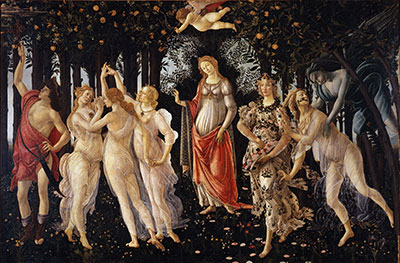
1470Primavera
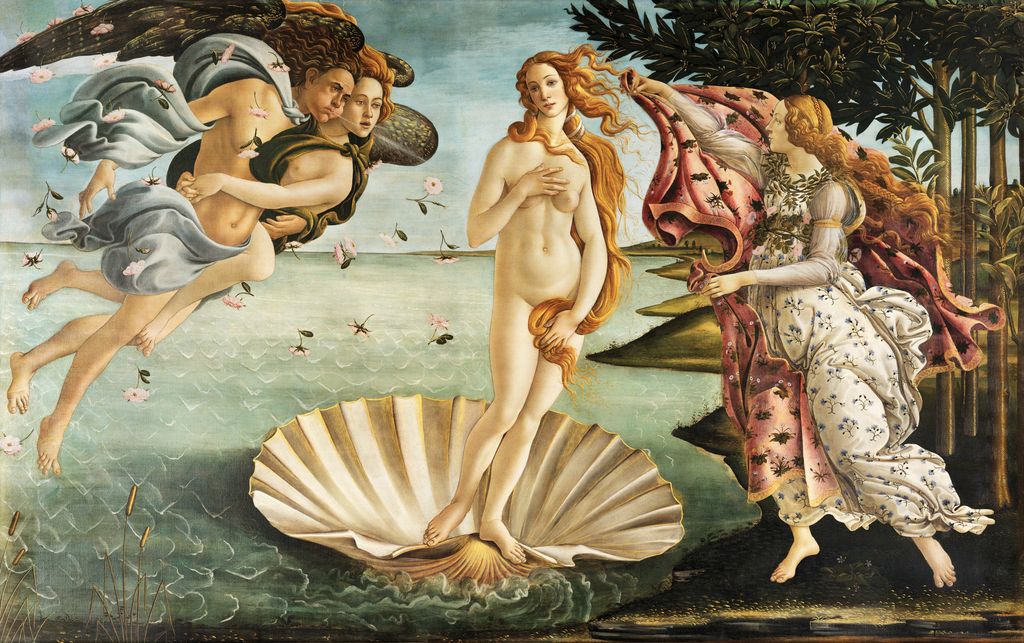
c. 1480The Birth of Venus
c. 1485Portrait of a Youth
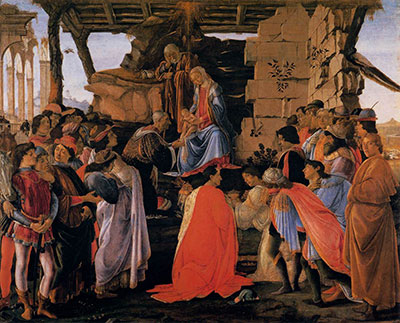
c. 1482–85The Mystical Nativity
c. 1500Contents
- A Face That Does Not Sit Still
- The Hand at His Chest
- What Is He Wearing?
- Who Was the Young Man?
- How the Painting Reached Washington
- Which Red-Cap Portrait Is This?
A Face That Does Not Sit Still
The portrait shows the man from the chest upwards. His shoulders are not perfectly square to the viewer, and his long neck carries a head tilted towards the left side of the picture as we see it. His eyes move towards our right. Because head and gaze pull in different directions, the pose feels less fixed than a strictly frontal likeness. He appears to look beyond us, although the black ground supplies nothing visible for him to look at.[1]
Botticelli builds the face with small distinctions rather than a dramatic expression. The eyebrows rise unevenly, the long nose catches the light, and the closed lips remain still. Dark blond hair falls from beneath a flat red cap, framing both sides of the pale face. The hair partly covers the ears and reaches the shoulders. These details make the sitter recognisable as an individual within the picture even though his name has not survived.[1]
The black background is a strong choice. There is no view to place him in Florence, no coat of arms to point to a family and no inscription to identify him. The pale face, red hat and white flashes at the shoulders stand out against the dark field. A narrow grey stone ledge runs across the bottom. It gives the figure a boundary and a sense of space: the young man occupies an imagined place just behind it, while the viewer remains on this side. The ledge also stops the image from becoming only a head suspended against black.[1]
The pose creates a quiet sense of movement without showing an action. His torso turns, his head tips and his eyes shift. These small differences are enough to animate the portrait. They need not be turned into a story about a visitor entering the room or a person speaking to him. Botticelli has left the setting deliberately spare; the viewer can attend to how the sitter presents himself rather than search for a narrative in the background.
The Hand at His Chest
The young man's right hand appears below the face and rests lightly on his upper chest. The NGA's visual description notes the middle finger overlapping the ring finger. This is one of the most memorable details in the painting because the hand interrupts the broad brown surface of the clothing. Its pale skin repeats the brightness of the face and creates a second focus below it.[1]
The gesture can feel personal. A hand brought towards the heart might suggest sincerity, a pledge or self-reference to a modern viewer. None of those meanings is established by the museum's record, however, and the portrait supplies no text or known commission to settle the matter. The exact arrangement of the fingers should not be treated as evidence for a medical diagnosis. What the painting securely shows is a carefully placed hand whose shape and colour bring us back to the sitter after the eye has travelled around his face and clothing.
The hand also changes the portrait's rhythm. Without it, the straight front of the brown garment could read as a quiet block beneath the lively head. The fingers break that surface with a pale, irregular shape. The stone sill below then closes the composition. From red cap to face, from face to hand, and from hand to ledge, Botticelli guides the eye down a narrow vertical space.[1]
What Is He Wearing?
The clothes may look plain at first: a brown upper garment, white at the neck and shoulders, and a red cap. A closer look reveals deliberate openings and edging. The Fashion History Timeline at the Fashion Institute of Technology identifies the brown garment as a wool doublet, an upper-body garment worn over a linen shirt. Its author, Lourdes Font, describes a fine white fringe around the high neckline and down the front. Matching brown sleeves are attached beneath the arms and behind the shoulders, leaving gaps through which the shirt shows.[2]
Those shoulder openings are easy to mistake for accidental tears or painted stripes. In Font's account, they are part of a fashionable arrangement of the sleeves. The same essay identifies the sitter's longer hair as a 1480s fashion and calls his round cap a berretta, probably made of red wool. The colour and shape are visible in the painting; the likely fabric and garment construction are specialist readings of what Botticelli depicted.[2]
This distinction matters because clothing tells us about presentation more readily than biography. The portrait records how this young man wished to appear, or how Botticelli and a patron chose to present him, in a recognisably contemporary style. The brown fabric is unpatterned and the trimmings are restrained. That does not securely identify his occupation, wealth or rank. Nor do the fashionable details prove that he lived in Florence, even though Botticelli worked there. The painting gives us a vivid appearance without the documents that would connect it to a particular life.[1][2]
Who Was the Young Man?
The National Gallery of Art's title names a youth, not an individual. Its published object record does not provide a first commission or the sitter's name. The work is often discussed among Botticelli's portraits of young men, but similarity of age, dress or cap cannot establish that two sitters were related or belonged to the same household.[1]
It is tempting to read his expression as a clue. His sideways eyes may seem hesitant, alert or proud depending on how one meets them. Those impressions are part of the experience of looking, not records of his character. The painter's control of the pose makes the sitter present to us; it does not tell us what he was thinking. That is why the portrait can reward close attention without a confident answer to its most obvious question.
The approximate date belongs to the painting, not to a documented moment in the young man's life. The NGA gives c. 1482–1485 rather than a single year. Dress of the period supports that general setting, but cannot narrow it to one sitting or prove a particular occasion. The portrait's directness and reserve can both be appreciated without attaching it to an unrecorded engagement, public office or family event.[1][2]
How the Painting Reached Washington
The ownership record begins long after Botticelli's lifetime. The painting was in the Paris collection of the comte de Pourtalès-Gorgier by 1841. It was sold in 1865 and passed into the Triqueti family. Later it belonged to the Schickler family, then moved through dealers and American collections during the twentieth century. The A. W. Mellon Educational and Charitable Trust bought it in December 1936 and gave it to the National Gallery of Art in 1937.[1]
Those records trace the object through named owners, sales and gifts. They do not take us back to the first person who ordered it or explain why the hand was posed this way. They also show how the painting's artistic identity changed in catalogues. The 1841 description and the 1865 sale presented it as a work by Masaccio. That is a historical attribution, while the NGA currently catalogues the painting as Botticelli. An old sale name should not be confused with the Gallery's current assessment.[1]
Which Red-Cap Portrait Is This?
Several Renaissance portraits of young men have similar titles, and red caps appear in more than one of them. The most reliable way to identify this image is its combination of features: a tilted head, shoulder-length hair, dark background, brown doublet with white at the shoulders, a hand against the chest and a narrow stone ledge. Its museum number is NGA 1937.1.19.[1]
The same gallery owns another work called Portrait of a Youth, accession 1937.1.20, which it currently catalogues under Filippino Lippi. Despite the neighbouring accession numbers and similar generic titles, these are separate paintings by the Gallery's present attributions. The Washington Botticelli portrait discussed here is the one whose hand rests on his chest.[1][3]
The portrait's power lies partly in this mix of precision and absence. Botticelli paints the cap, hair, sleeve gaps and fingers with enough care to make this person feel particular. Yet the black ground and lost name keep his circumstances unknown. We can identify the painting securely, follow its later history and study the youth's appearance. The life behind that appearance remains a question the picture cannot answer.
Botticelli and related artworks
Discussion
Look again at the details and evidence discussed above. Which part of the painting changes most when you know its history?
These prompts invite close looking and source-led questions rather than a single settled interpretation.
Reader Insights
How does the sitter’s tilted head affect the direction of his gaze?
What do the doublet and its shoulder openings reveal about dress in the 1480s?
How would you describe the hand gesture without assigning it an unrecorded meaning?
Join the Conversation
Share an observation or question about the painting below.
References
- National Gallery of Art, “Portrait of a Youth,” Andrew W. Mellon Collection, accession 1937.1.19, current object record; accessed 29 September 2026 View source.
- Lourdes Font, “1480–1489,” Fashion History Timeline, Fashion Institute of Technology, menswear section, updated 2 December 2025; accessed 29 September 2026 View source.
- National Gallery of Art, “Portrait of a Youth,” accession 1937.1.20, current object record; accessed 29 September 2026 View source.
- Image credit. Sandro Botticelli, Portrait of a Youth, c. 1482–1485. Andrew W. Mellon Collection, National Gallery of Art, Washington, 1937.1.19. Courtesy National Gallery of Art, Washington; Public Domain (CC0).