 by Tom Gurney
Tom Gurney BSc (Hons) is an art history expert with over 20 years experience
Published on June 19, 2020June 19, 2020 / Updated on July 6, 2026
Email: tomgurney1@gmail.com / Phone: +44 7429 011000
The Scream by Edvard Munch: Anxiety Made Visible
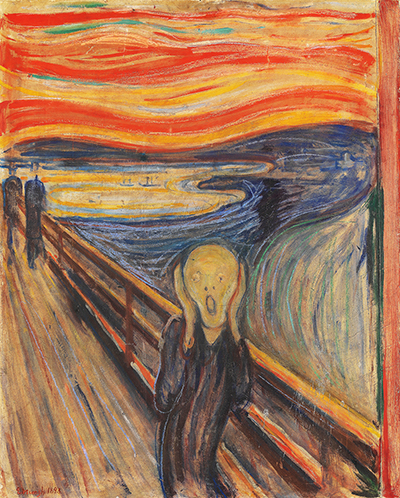
Edvard Munch's The Scream is one of the few modern paintings that seems to have escaped art history and entered ordinary language. A figure stands on a road or bridge, hands pressed to the head, mouth open, body bending as the sky and landscape ripple around it. The image is instantly recognisable, but that familiarity can make it easy to miss how strange the picture really is. [1]
The strongest anchor is the 1893 version in the National Museum of Norway. The museum records it as The Scream, or Skrik, made in tempera and grease crayon on cardboard, measuring 91 cm high by 73.5 cm wide, with inventory number NG.M.00939. It entered the collection as a gift from Olaf Schou in 1910. [1]
Yet The Scream is not only one object. MUNCH records four colourful versions of the motif, two paintings and two drawings with pastel and crayon, as well as a lithograph. Two of those colourful versions remained with Munch and are now in MUNCH's collection; one is in the National Museum; one is privately owned. That family of versions is central to understanding why the image became both a museum masterpiece and a repeatable modern icon. [2]
This page focuses on the 1893 National Museum painting while keeping the wider motif in view. The aim is to look carefully at what Munch changed, what he wrote, how the painting was received, and why a fragile cardboard image became one of the most durable emblems of modern anxiety. [8]
At a Glance
- Artist: Edvard Munch
- Title: The Scream / Skrik
- Date: 1893
- Medium: Tempera and grease crayon on cardboard
- Dimensions: 91 x 73.5 cm
- Collection: National Museum of Norway
- Inventory no.: NG.M.00939
- Acquisition: Gift from Olaf Schou, 1910
Contents
- Why The Scream Matters
- Museum Perspective
- Looking Carefully
- Munch's Scream Text
- From Despair to The Scream
- Versions of The Scream
- The Madman Inscription
- Materials and Conservation
- Meaning and Interpretation
- Things You Might Miss
Why The Scream Matters
The National Museum calls The Scream one of the best-known pictures in art history and notes that its figure has moved into political posters, horror films and emoji culture. That popular afterlife matters, but it should not be allowed to flatten the painting. The picture is famous because Munch found a form that could carry private disturbance into public recognition. [1]
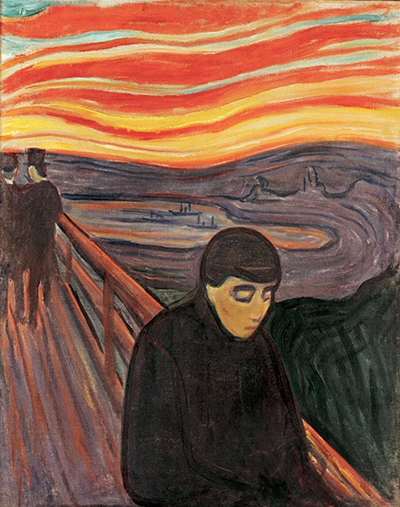
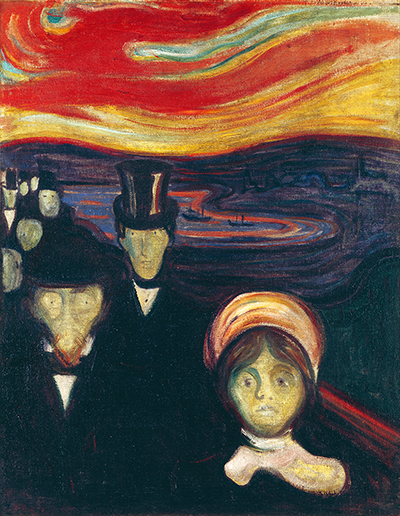
The work also marks a turning point inside Munch's own art. It belongs to the anxiety route that links Sick Mood at Sunset: Despair, Despair, The Scream and Anxiety. The road, fjord, city and red sky recur, but the psychological pressure changes from picture to picture. [7]
Art-historically, the painting is often placed between Symbolism and Expressionism. The National Museum's catalogue text stresses that form and content are closely linked: the simplified figure, vibrating colour and unstable landscape do not merely illustrate anxiety; they become the means by which anxiety is made visible. [1]
That is why The Scream still works even for viewers who know almost nothing about Munch. It does not require a narrative before it acts on the eye. It is a picture of an event, but also a picture in which line, colour and figure behave as if they have absorbed the event themselves. [8]
Museum Perspective
The National Museum's object record is precise about the 1893 version: painting, tempera and grease crayon on cardboard, 91 x 73.5 cm, signed and dated lower left, and acquired in 1910 as Olaf Schou's gift. Those facts are important because the icon is a vulnerable physical object, not just a reproduced image. [1]
The museum also frames the work through development. Its text points back to Sick Mood at Sunset. Despair, a painting from 1892 with a similar landscape, format, colour scheme and background figures. The radical change is the foreground figure. In Despair there is a recognisable man in a hat and coat; in The Scream he has become something more schematic, frontal and difficult to categorise. [1]
MUNCH's museum perspective widens the field from one painting to a motif. It records that Munch produced four colourful versions and a lithograph, and that a version of the motif is always on display at MUNCH. Its public interpretation stresses the importance of the written text, the multiple versions, and the conservation challenge of showing fragile works while preserving them. [2]
Together, these museum accounts encourage a balanced reading. The Scream is a singular masterpiece in the National Museum, a repeated motif in MUNCH's holdings, a text-image relationship in Munch's notebooks, and a fragile material object shaped by cardboard, pigments, humidity and display practice. [3]
Looking Carefully
The first thing to notice is the collision between straight and curved forms. The road or bridge cuts diagonally through the picture with hard rails that pull the eye into depth. Against that rigid structure, the sky, fjord and landscape move in bands of red, orange, blue, green and dark violet. The world seems to pulse around the figure. [8]
The figure does not stand naturally. Its body narrows, bends and almost melts into the vertical curve of the foreground. The head is skull-like, hairless and mask-like, with dark eyes and an open mouth. The hands cover the ears rather than projecting sound outward. This is one reason the image remains ambiguous: are we seeing a scream made by the figure, a scream heard by the figure, or both at once? [3]
The two background figures matter more than their small size suggests. Munch's text speaks of two friends, and the National Museum identifies two men walking in the background on the left. They continue along the road, separated from the foreground figure by distance, scale and attention. Their indifference sharpens the isolation at the front of the painting. [1]
The setting is also more specific than it may first appear. The National Museum identifies the simplified landscape as the Kristianiafjord, now the Oslofjord, seen from Ekeberg. That topographical basis keeps the picture from becoming pure fantasy. It is a real place transformed by perception, memory and pictorial force. [1]
Look finally at how little ordinary detail Munch gives us. The figure has no individual identity, the friends are reduced to silhouettes, the road is a few decisive lines, and the landscape is compressed into waves. The painting is not empty; it is stripped down so that every remaining element presses on the emotional structure. [9]
Annotated Details from The Scream
These numbered details show how Munch builds the image from a few charged elements: the blood-red sky, the diagonal bridge, the isolated figure, the real fjord setting and the fragile cardboard object itself. [1]
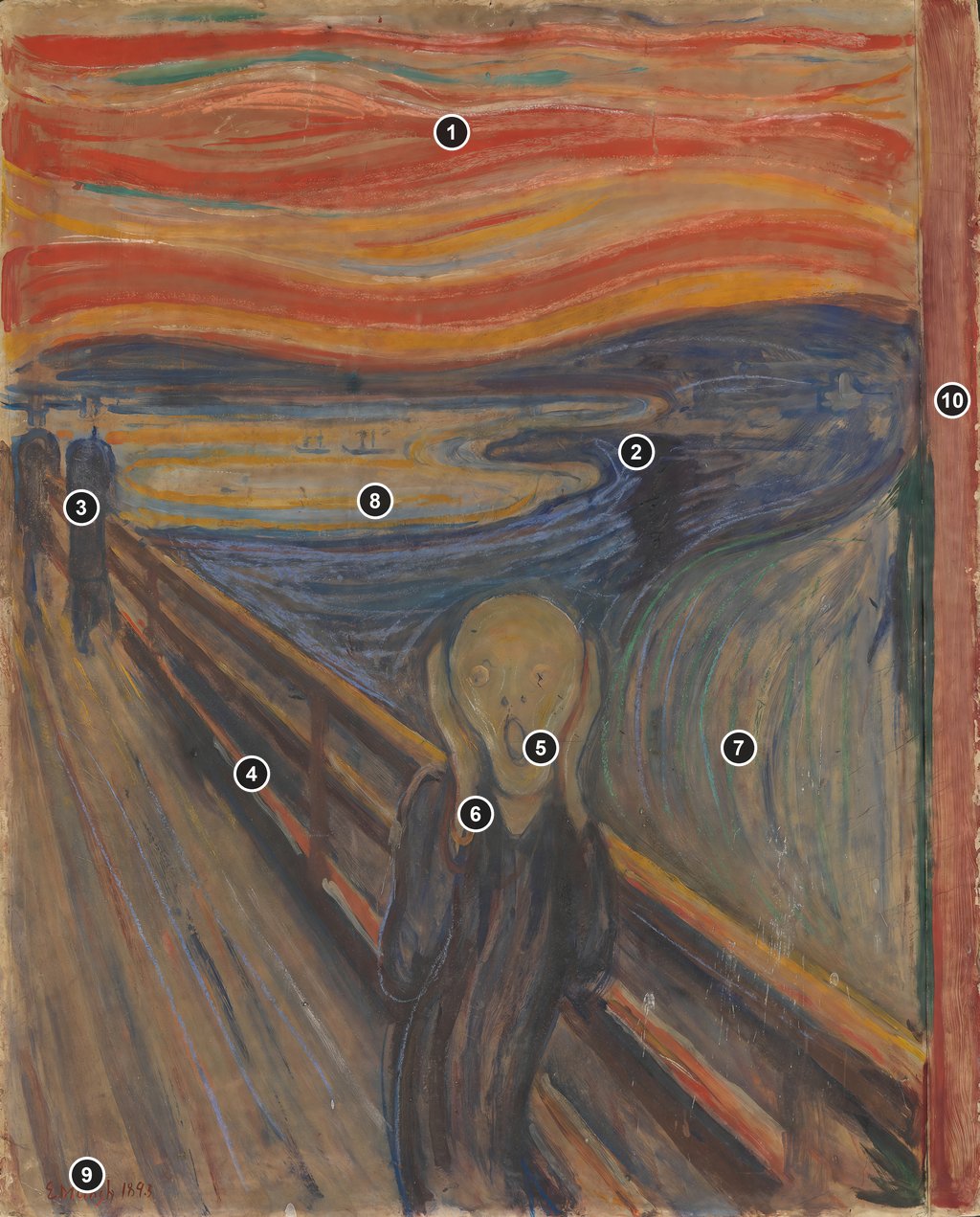
On desktop and tablet screens, click a number on the painting to jump to the matching detail below.
Details from THE SCREAM
The full image is famous, but these details show how carefully Munch balances place, figure, material and sensation.
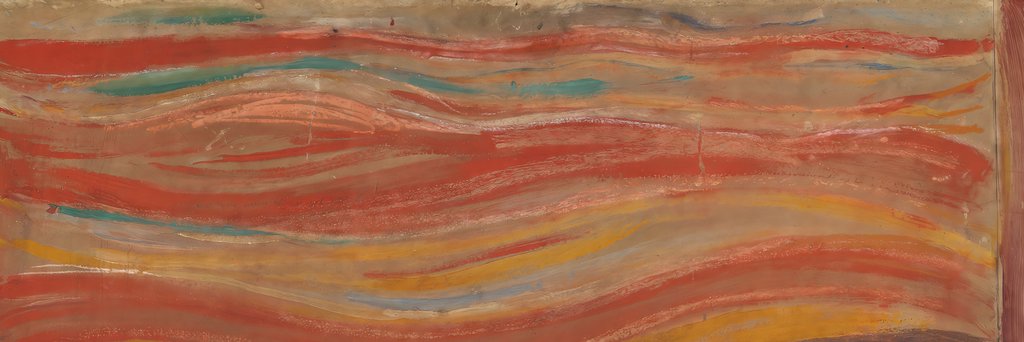
The blood-red sky
The red and orange sky is not a decorative sunset. Munch's own text describes a blood-red sky and a scream passing through nature, and the painting lets that disturbance spread across the whole upper field. [1]
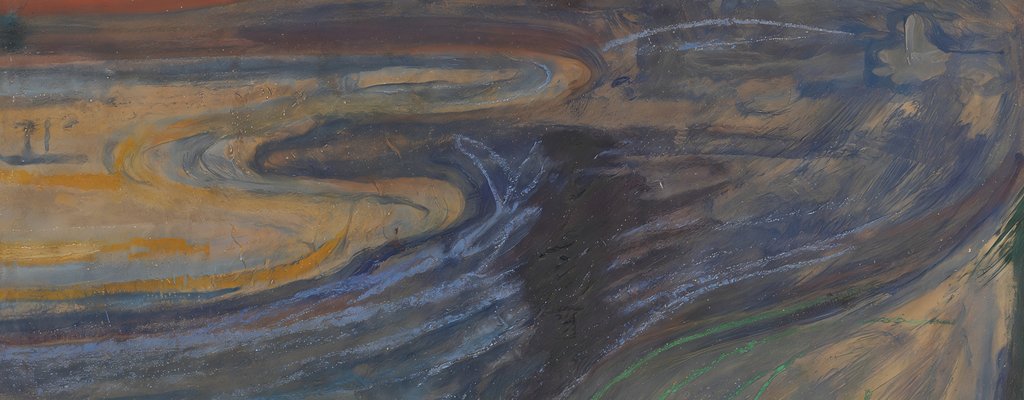
The Kristianiafjord setting
The landscape is simplified, but it is not invented from nothing. The National Museum identifies the setting as the Kristianiafjord, now the Oslofjord, seen from Ekeberg. [1]
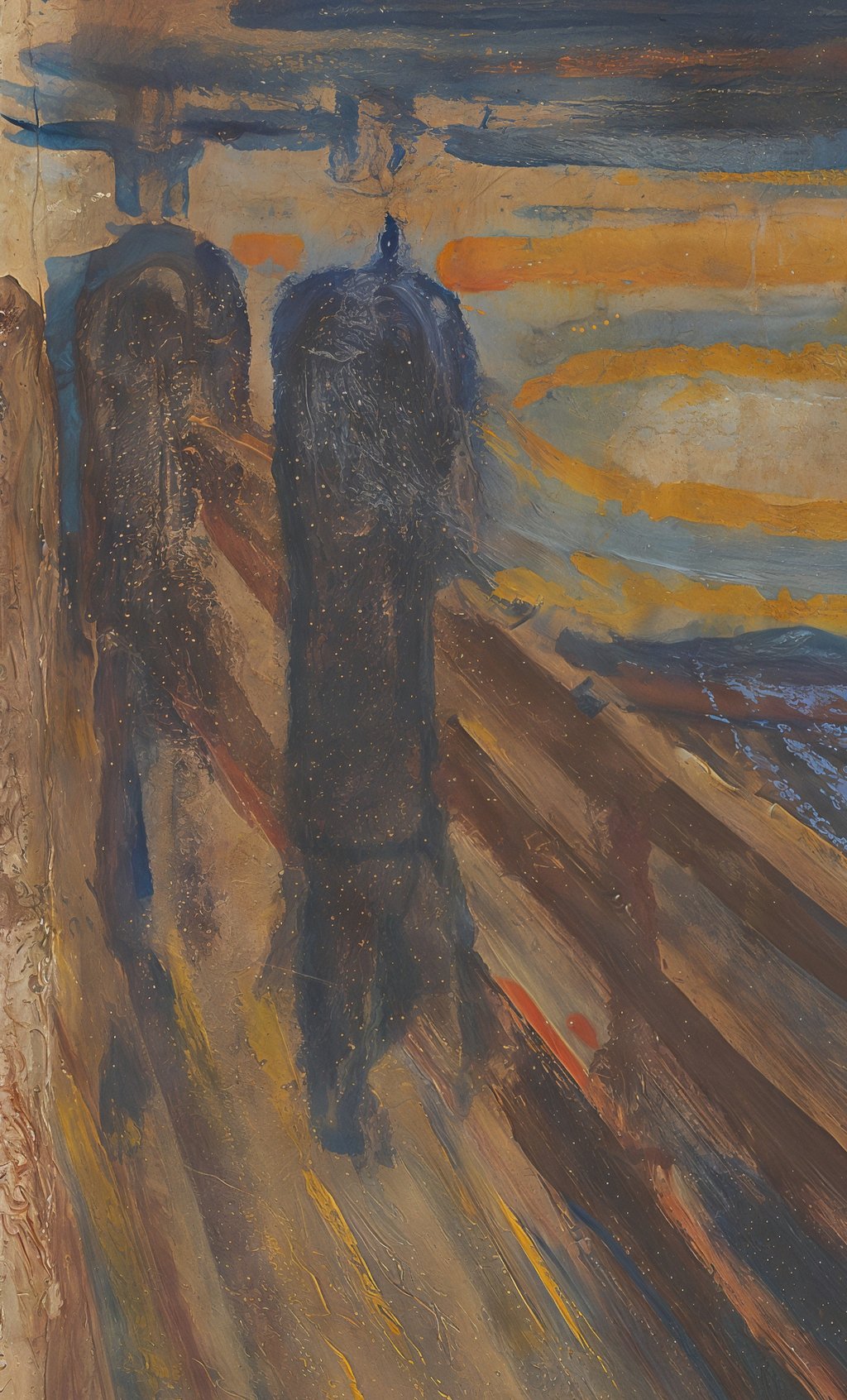
The two companions
The two dark figures at the left are tiny, but they are crucial. Munch's text speaks of walking with two friends, and their continued movement sharpens the isolation of the foreground figure. [1]
The hard bridge diagonal
The bridge or road cuts through the picture with hard diagonals. Those straight rails make the wavering sky and landscape feel even more unstable by contrast. [8]
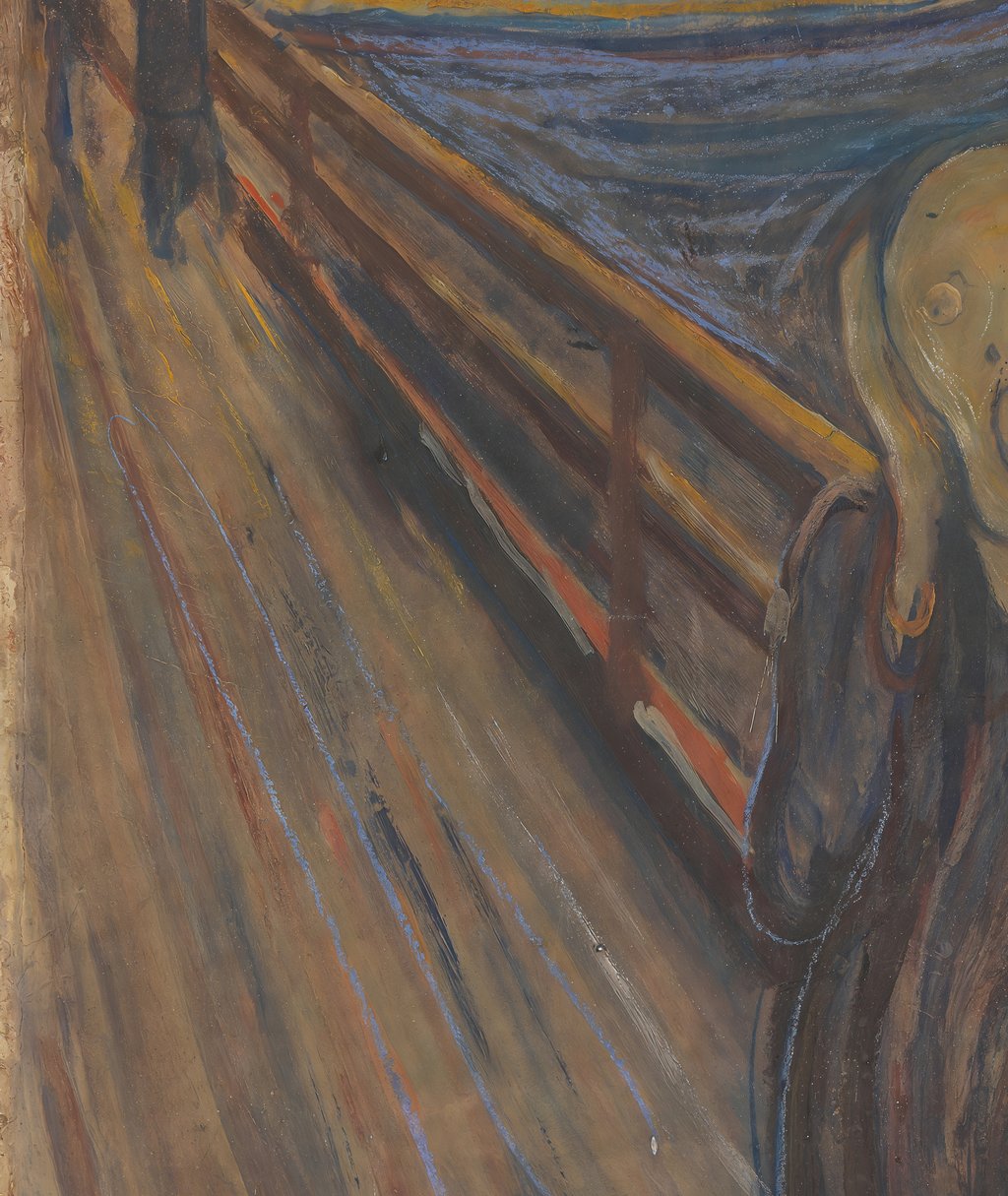
The mask-like head
The head is stripped of ordinary portrait detail: bald, skull-like, mask-like, and frontal. That reduction helps turn one frightened body into a more general image of modern anxiety. [9]
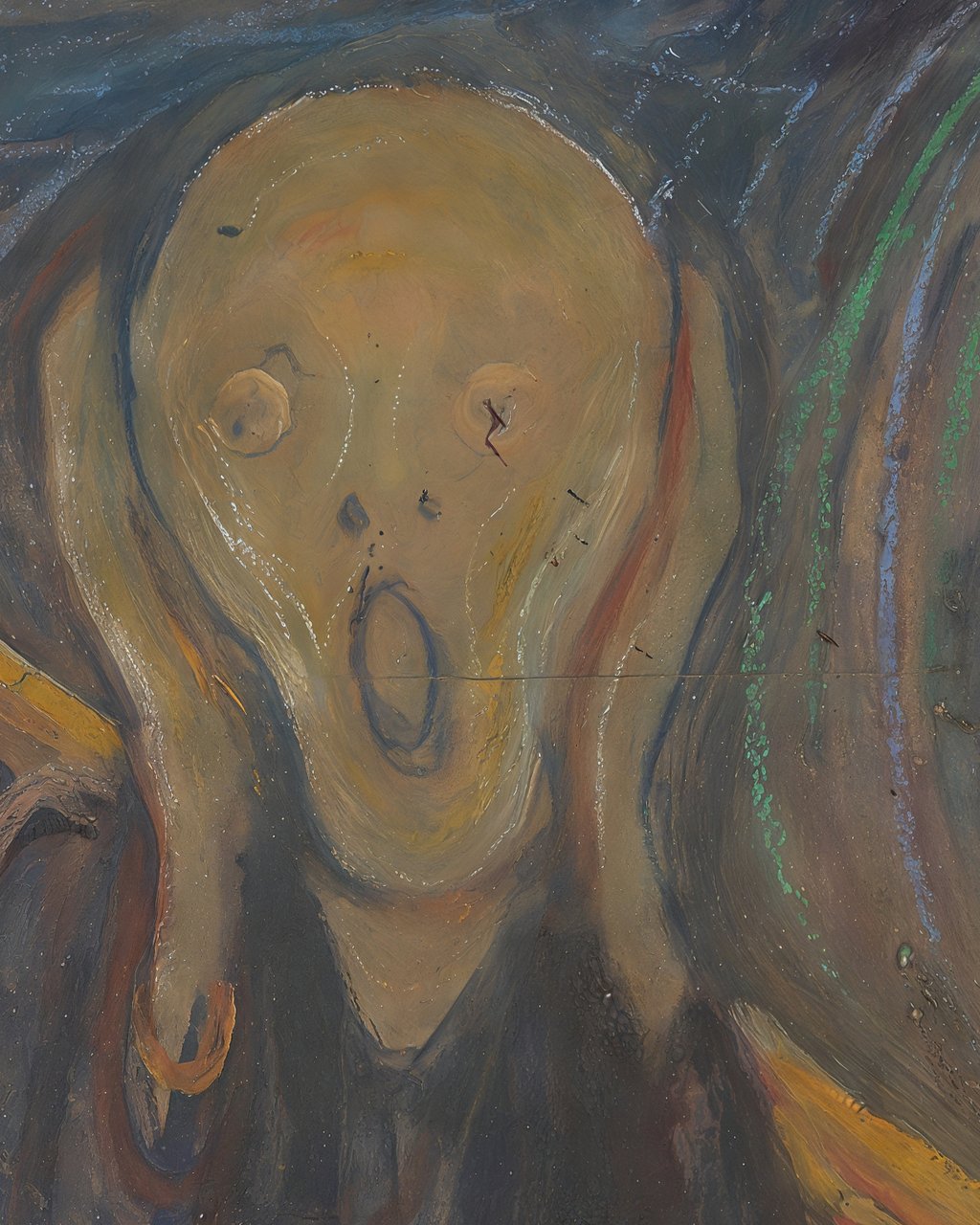
Hands over the ears
The hands are pressed to the ears, which keeps the image ambiguous. The figure may be screaming, hearing a scream, or being overwhelmed by a scream that belongs to nature itself. [3]
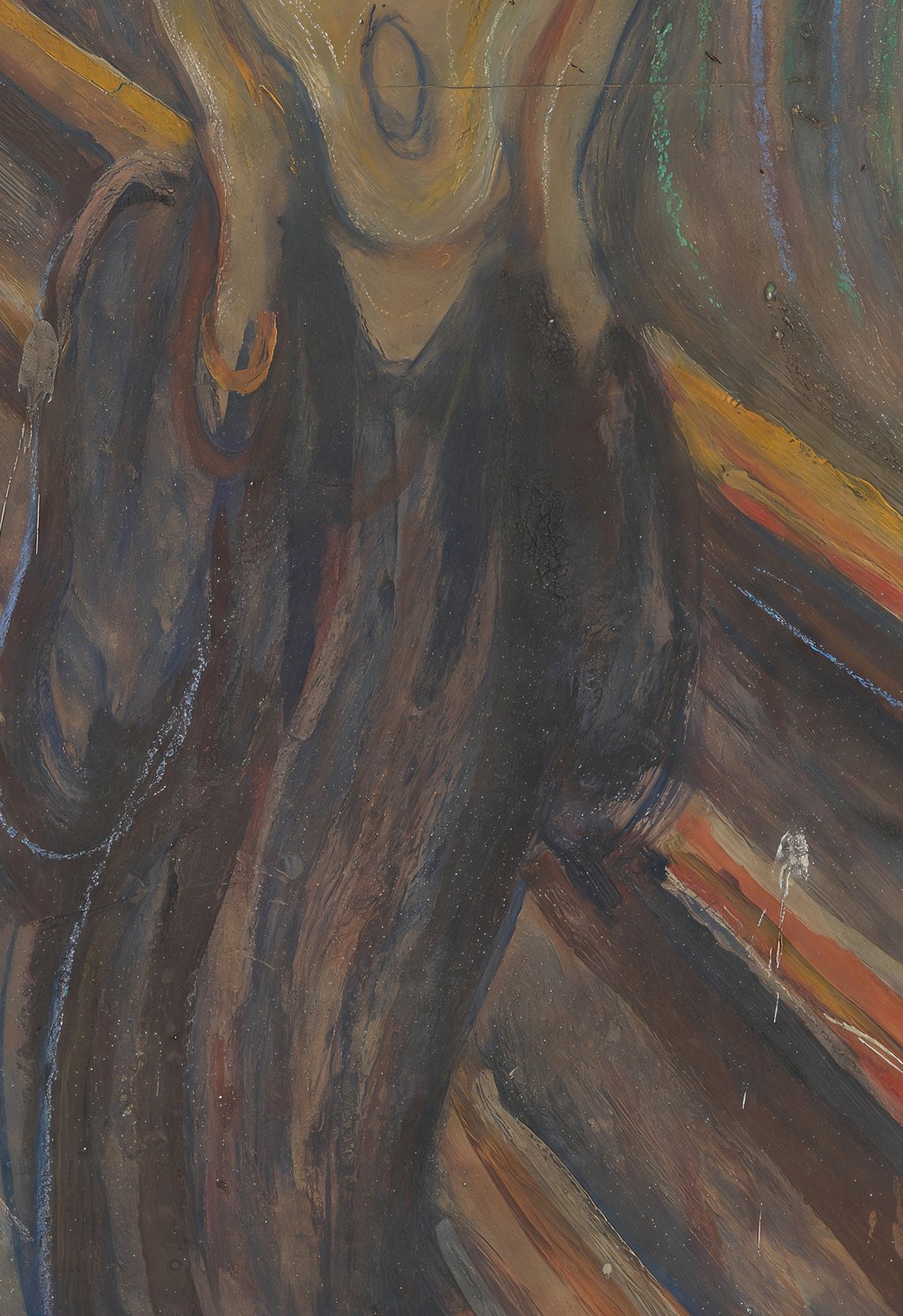
The vibrating landscape
The curves around the figure make the setting feel alive with pressure. Munch does not simply place anxiety inside the figure; he lets the whole landscape participate in it. [8]
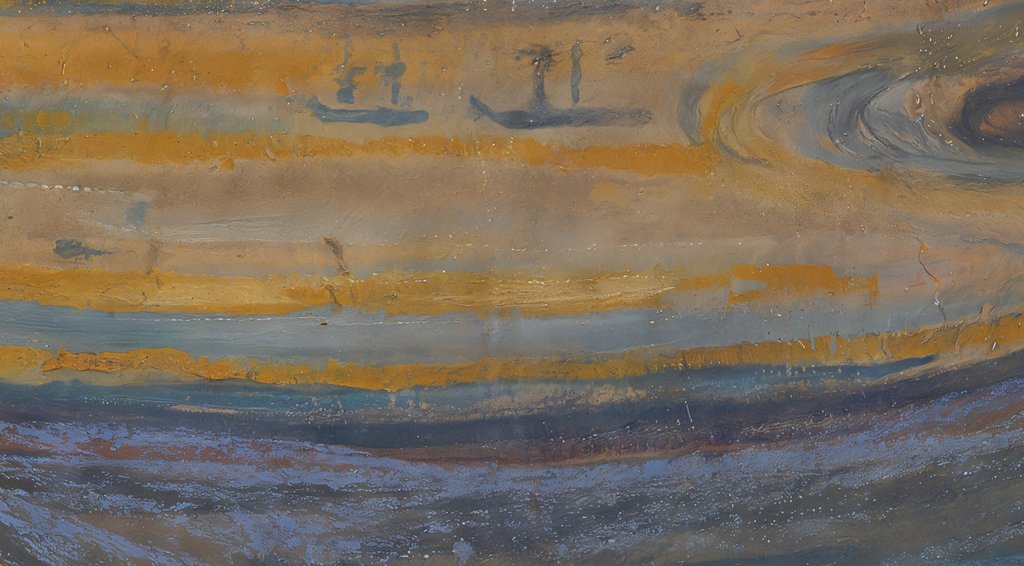
Boats and city distance
Small boats and horizontal marks of distance remain visible in the fjord. These restrained details keep the visionary scene attached to a recognisable place. [1]
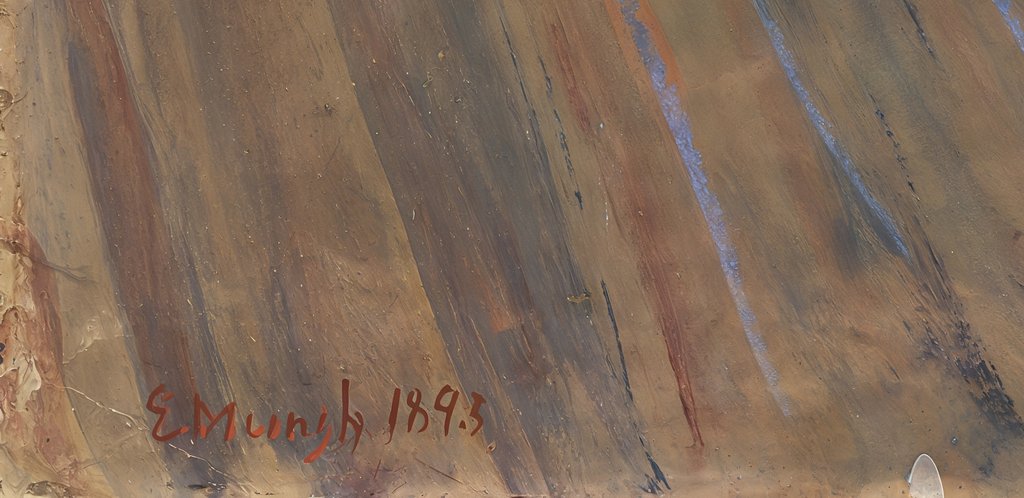
Signature and date
The lower-left signature and date anchor the National Museum painting to 1893, the version this page treats as its central object. [1]
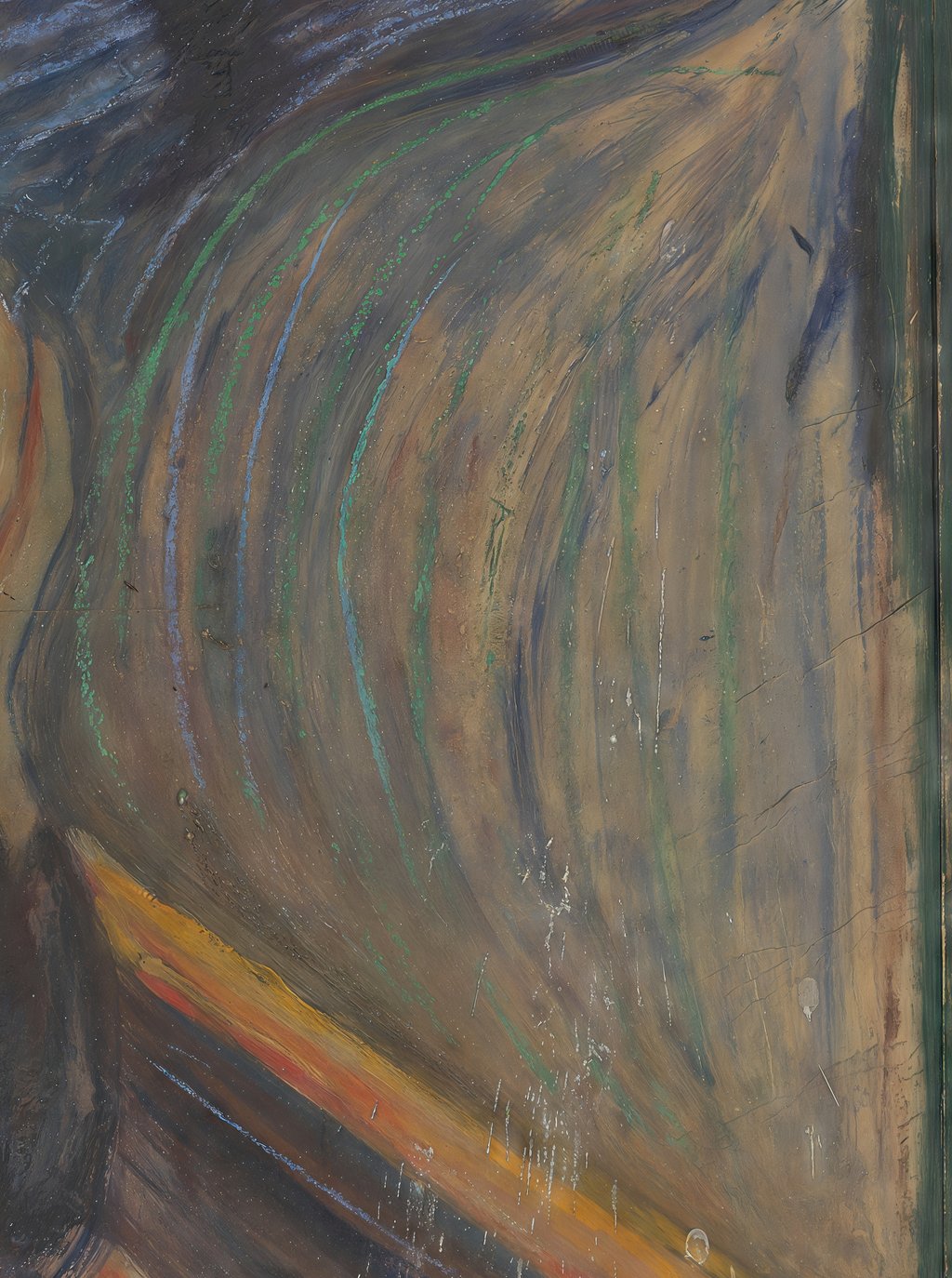
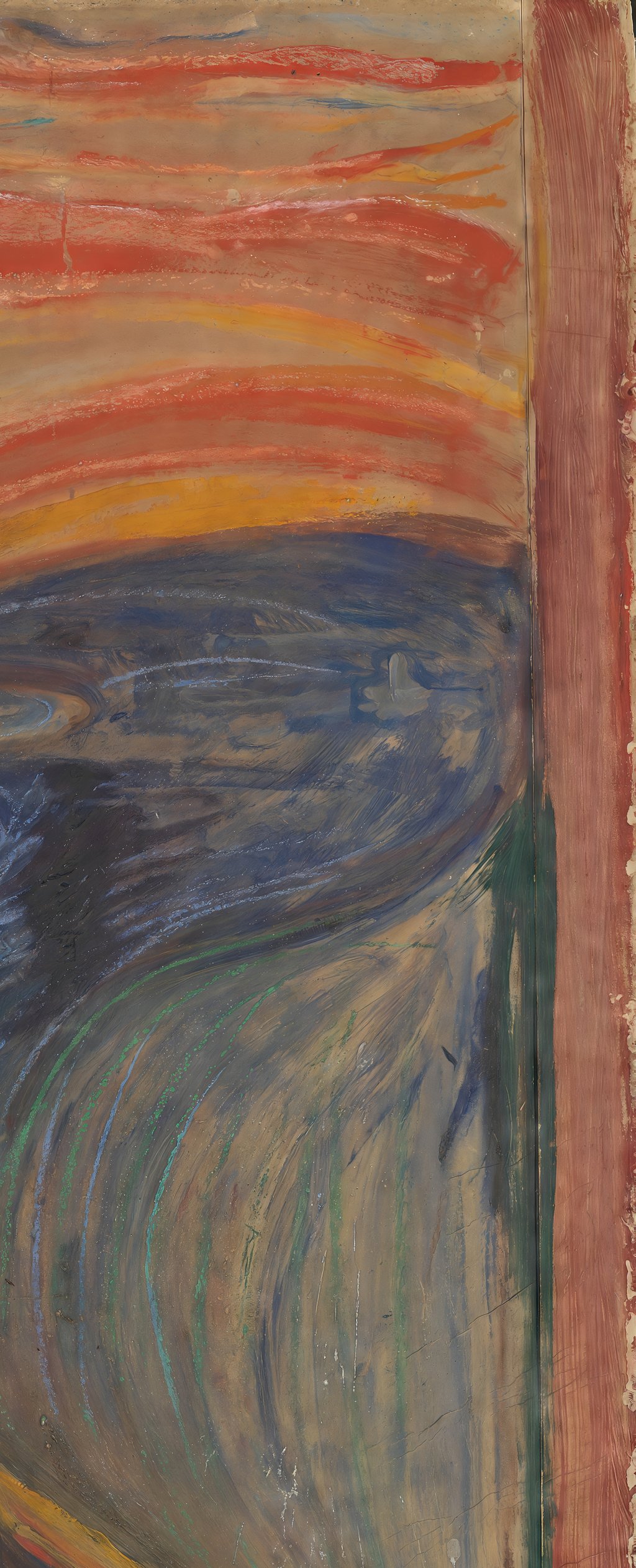
The painted edge
The right edge reminds us that this famous image is also a fragile physical object. The National Museum records the work as tempera and grease crayon on cardboard, not an abstract symbol detached from materials. [1]
Video Guide
This selected video from Great Art Explained offers useful visual context before the detailed analysis continues.
Munch's Scream Text
Before The Scream became an image, it existed as writing. The National Museum quotes Munch's 1892 notebook text: he walks with two friends, the sun goes down, the sky turns blood red, he pauses by the fence, and he senses a great scream passing through nature. [1]
MUNCH's own Scream page gives the compressed artist line, "I felt the great Scream in Nature." That wording is crucial because it changes the usual assumption. The painting is not simply a person screaming at the world. It imagines the world itself as sounding, vibrating, and overwhelming the body that perceives it. [2]
The eMunch digital archive matters here because it makes Munch's writings available as primary material rather than only as anecdotes repeated in biographies. The text has several versions, and MUNCH notes that it continued to engage Munch over time, appearing in notes, diaries and later forms connected with the motif. [5]
This is why a good reading of The Scream should keep text and image together. Munch did not merely illustrate a moment from life. He worked across words, drawing, painting and print to refine a motif in which outer landscape and inner sensation become inseparable. [10]
From Despair to The Scream
The immediate comparison is Despair, especially the earlier composition known as Sick Mood at Sunset: Despair. The National Museum states that the two pictures share colour, format, size, landscape and background figures. The dramatic change is the protagonist. [1]
In the Despair route, the figure remains more recognisably social: a man in dark clothing, bound to the scene as a person in a place. In The Scream, Munch turns the figure forward, strips away ordinary identity, and gives it a face that is almost a sign. That move makes the painting less descriptive and more direct. [7]
The later Anxiety is another essential comparison because it spreads the emotional condition across a group. The Scream isolates one figure against indifferent companions; Anxiety brings a procession of frontal faces toward the viewer. Together, these works show Munch testing how fear can belong to one person, a crowd, or an entire environment. [10]
That sequence is one reason the Munch cluster should be read as a network rather than a set of isolated masterpieces. The Scream gains force when placed beside Despair, Anxiety, the lithographs, and the broader project of The Frieze of Life. [9]
Versions of The Scream
MUNCH states that Munch produced four colourful versions of The Scream: two paintings with tempera, and two drawings with pastel and crayon. Two stayed in his possession and are now in MUNCH's collection; one is in the National Museum; and one is privately owned. [2]
The National Museum's catalogue text gives a slightly more technical version history. It states that there are two painted versions, two pastel versions, a sketch on the back of the National Museum painting, and a black-and-white lithograph from 1895. It also notes that the National Museum version is now widely agreed to date from 1893, while the Munch Museum painted version is no earlier than 1910. [1]
The lithograph is especially important for the afterlife of the motif. MUNCH says the number of impressions is unknown but estimates around 30, with six in the museum collection, including one hand-coloured by Munch. Printmaking allowed the image to move differently through culture: it could be repeated, circulated, collected and adapted beyond a single painted surface. [2]
For readers moving through this cluster, the versions make the future Munch prints page essential rather than secondary. Munch's modernity depends partly on repetition: a motif could return in paint, pastel, crayon, lithograph and later public memory. [9]
The Madman Inscription
One of the strangest details in the National Museum painting is a faint pencil inscription near the upper left. Translated, it reads: "Can only be painted by a madman!" For a painting so often interpreted through anxiety and mental disturbance, the line has always been charged. [1]
The question was who wrote it. The National Museum explains that the inscription was long debated and that some researchers were ready to accept that someone else probably added it. A later study by the National Museum and Munch Museum, using infrared photography and graphological analysis, supports the earlier hypothesis that Munch himself wrote the inscription. [1]
That evidence changes the tone of the detail. The inscription is not simply vandalism or an outsider's insult. If it is Munch's own hand, it becomes part of his self-positioning around the work: a sharp, perhaps wounded, perhaps ironic acknowledgement of how the painting's intensity could be judged. [8]
Materials and Conservation
The Scream may be visually indestructible, but the works themselves are physically fragile. The National Museum version is on cardboard, and MUNCH's conservation writing about the museum's 1910? version stresses that cardboard, even when thick and stiff, remains vulnerable like paper. [4]
MUNCH also explains that some cadmium yellow passages have degraded, with areas once yellow turning white. Research into the museum's versions compared original paint material with artificially aged mock-ups prepared from cadmium yellow paint tubes owned by Munch. [4]
The conservation conclusion is unusually important for visitors. MUNCH reports that humidity, rather than light alone, is a major factor in the degradation of cadmium yellow layers in The Scream. That research informs storage, climate control and exhibition strategy. [4]
This creates one of the great tensions around the motif. The public wants to see The Scream, but the museums responsible for it must manage exposure, rotation and preservation. The painting's fame creates pressure on an object whose materials ask for caution. [3]
Meaning and Interpretation
The safest interpretation begins with evidence rather than diagnosis. Munch wrote about walking with two friends, the blood-red sky, the fjord and city, and a scream passing through nature. The painting translates that written experience into a frontal figure, a vibrating landscape and a hard diagonal road. [1]
It is tempting to call the painting a self-portrait of mental illness, but that is too narrow. The figure is deliberately hard to categorise: not clearly male or female, not fully body or skull, not simply speaker or listener. The ambiguity makes the image less a private confession than a shared structure for fear, isolation and sensory overload. [8]
At the same time, the painting is not detached from Munch's life. The biography matters because Munch returned again and again to illness, death, love, anxiety and loneliness. But the painting's greatness lies in transformation. It turns biographical pressure into pictorial form. [10]
This is why The Scream remains so flexible. It can be read as anxiety, alienation, modern perception, miscommunication, sensory crisis, or the shock of seeing the external world become emotionally charged. None of those readings should cancel the others. The painting is simple enough to recognise instantly and complex enough to resist being exhausted. [9]
Things You Might Miss
- The hands cover the ears. The gesture suggests the figure may be responding to a scream rather than only producing one. [3]
- The friends do not turn around. Their continued walking makes the foreground figure feel more isolated. [1]
- The setting is recognisable. The simplified view is the Kristianiafjord from Ekeberg, not an invented landscape. [1]
- The image began in words. Munch's Scream text is not a later explanation; it belongs to the formation of the motif. [5]
- The National Museum painting has a reverse. Its catalogue text notes a rudimentary sketch version on the back. [1]
- The icon is fragile. Cardboard support and unstable pigments make conservation central to its museum life. [4]
Timeline
- 1892 - Munch paints Sick Mood at Sunset. Despair, an important precursor to The Scream. [1]
- 1892 - Munch writes notebook text describing the walk, red sky, fjord, city and scream through nature. [5]
- 1893 - The National Museum version of The Scream is painted and signed. [1]
- 1893 - The work is shown in Berlin, then under the title Verzweiflung, or Despair. [1]
- 1895 - Munch makes the lithographic version of the motif. [2]
- 1910 - Olaf Schou gives the National Museum painting to the museum. [1]
- 1994 - The National Museum painting is stolen and returned in the same year. [1]
- 2012 - MoMA presents Edvard Munch: The Scream, reflecting the motif's international museum status. [6]
- 2020 - MUNCH reports conservation research on cadmium yellow degradation in its Scream versions. [4]
Comparison Works
The first comparison is Despair, because it shows how close Munch came to The Scream before making the decisive change to the foreground figure. The earlier image keeps a recognisable human figure; The Scream creates a sign-like figure that confronts the viewer directly. [1]
The second is Anxiety. There Munch turns the single Scream figure into a collective condition, with faces advancing toward us in a crowded urban procession. If The Scream is isolation, Anxiety is shared unease. [10]
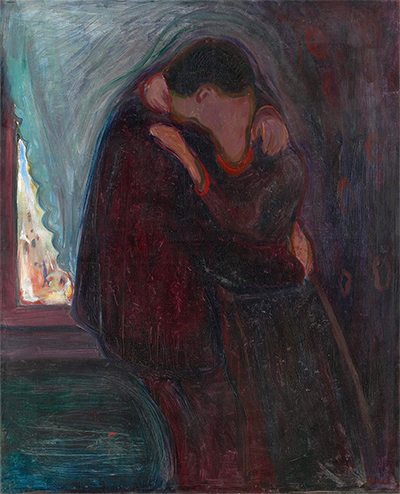
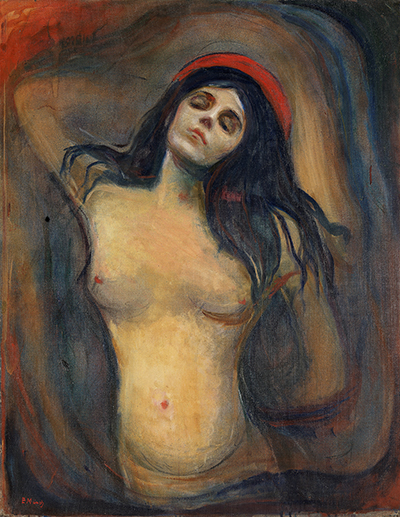
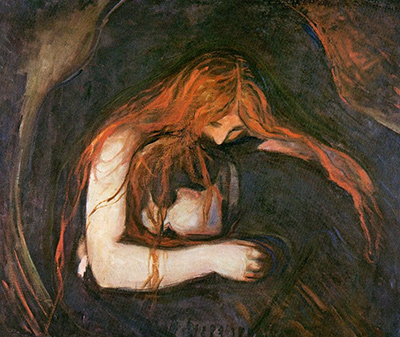
The third route is through love and death in The Frieze of Life: Separation, The Kiss, Vampire, Madonna and Dance of Life. These works show that anxiety is only one part of Munch's larger cycle of modern experience. [7]
The fourth route is biographical and material: The Sick Child for the early link between memory and painterly surface, prints for repetition and circulation, and Self-Portrait Between the Clock and the Bed for the late Munch confronting age, body and mortality. [9]
FAQs
It is famous because Munch turned anxiety into a form that is both simple and unstable: a frontal figure, a burning sky, a hard diagonal road and a vibrating landscape. Museums also stress its unusual afterlife as a popular icon, from posters to film and emoji culture. [1]
MUNCH records four colourful versions: two paintings and two drawings with pastel and crayon. Munch also made a lithograph, and the museum estimates around 30 impressions of that print. [2]
The 1893 painting is in the National Museum of Norway. The museum records it as tempera and grease crayon on cardboard, inventory number NG.M.00939, acquired as a gift from Olaf Schou in 1910. [1]
The image deliberately leaves that open. Munch's text describes a scream passing through nature, while the figure holds its hands to its ears. The painting can be read as someone screaming, someone hearing a scream, or a body overwhelmed by a screaming world. [5]
The faint pencil inscription translates as "Can only be painted by a madman!" The National Museum reports that infrared photography and graphological analysis support the conclusion that Munch wrote it himself. [1]
References
- National Museum of Norway, Edvard Munch, The Scream, object record and catalogue text, accessed 4 July 2026.
- MUNCH, The Scream, accessed 4 July 2026.
- Ute Kuhleman Falck, MUNCH, 5 things you should know about The Scream, published 16 April 2020, last changed 15 April 2024, accessed 4 July 2026.
- MUNCH, Researchers have found out why The Scream is fading, published 22 June 2020, last changed 15 March 2024, accessed 4 July 2026.
- eMunch, Edvard Munch's Writings: The English Edition, accessed 4 July 2026.
- Museum of Modern Art, Edvard Munch: The Scream, exhibition page, 24 October 2012-29 April 2013, accessed 4 July 2026.
- Gerd Woll, Edvard Munch: Complete Paintings, London: Thames & Hudson, 2009.
- Reinhold Heller, Edvard Munch: The Scream, London: Allen Lane, 1973.
- Ann Temkin, The Scream: Edvard Munch, New York: Museum of Modern Art, 2012.
- Patricia G. Berman, ed., Edvard Munch: The Modern Life of the Soul, New York: Museum of Modern Art, 2006.