 by Tom Gurney
Tom Gurney BSc (Hons) is an art history expert with over 20 years experience
Published on August 27, 2026 / Updated on September 6, 2026
Email: tomgurney1@gmail.com / Phone: +44 7429 011000
Ramon Casas: Introduction
Ramon Casas i Carbo was one of the defining artists of Catalan modernisme: a Barcelona painter, draughtsman and poster designer who moved between portraiture, social observation, cafe culture and modern graphic art. [1]
His career links Paris training with Barcelona's turn-of-the-century artistic confidence, and his best-known works still feel alert to the public life around him: the boulevard, the cafe, the poster wall, the studio, the political crowd and the carefully staged portrait. [2]
At a Glance
- Born4 January 1866, Barcelona [1]
- Died29 February 1932, Barcelona [1]
- Known forPortraits, posters, social scenes and Els Quatre Gats imagery
- MovementCatalan modernisme [4]
Contents
- Why Ramon Casas Matters
- Early Life and Training
- Barcelona, Paris and Modernisme
- Els Quatre Gats
- Portraiture and Public Identity
- Posters and Social Painting
Why Ramon Casas Matters
Casas matters because he gives Catalan modernisme a recognisably human face. The movement is often remembered through architecture, but it also depended on painters, illustrators, magazines, patrons, musicians and cafe networks.
The Metropolitan Museum of Art places Casas and Santiago Rusinol among the key founders of modernista Catalan painting, a useful reminder that the movement's modernity was visual, social and urban as well as architectural. [4]
Early Life and Training
Casas was born in Barcelona into a prosperous family and began artistic training early. The Biblioteca Nacional de Espana records his formation in Barcelona and his teenage move toward Paris study. [1]
The Prado notes his work with Carolus-Duran, his later visit to Madrid to study Velazquez and the role of Manet, Whistler and Degas in the style that matured during the 1890s. [2]
Barcelona, Paris and Modernisme
The most useful way to read Casas is through movement: Barcelona to Paris, Paris back to Barcelona, studio to cafe, painting to poster, private likeness to public image.
Modernisme in Barcelona opened itself to contemporary French art and to new urban subjects. Casas' work belongs to that atmosphere of exchange. [4]
Els Quatre Gats
Els Quatre Gats opened in Barcelona in 1897 and became a meeting place for modernista artists, writers, musicians and younger figures including Picasso. [3]
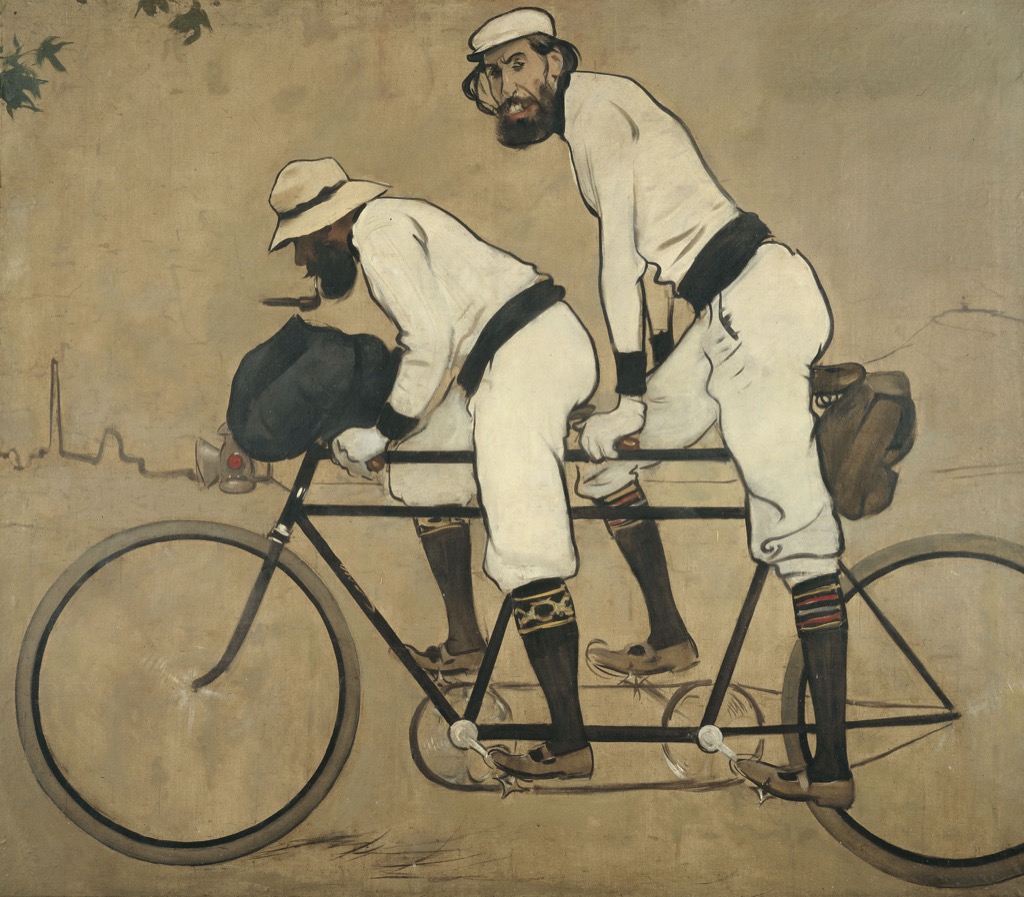
Casas' painting of himself and Pere Romeu on a tandem gave that world one of its most memorable emblems: funny, modern, public and immediately recognisable. [7]
Portraiture and Public Identity
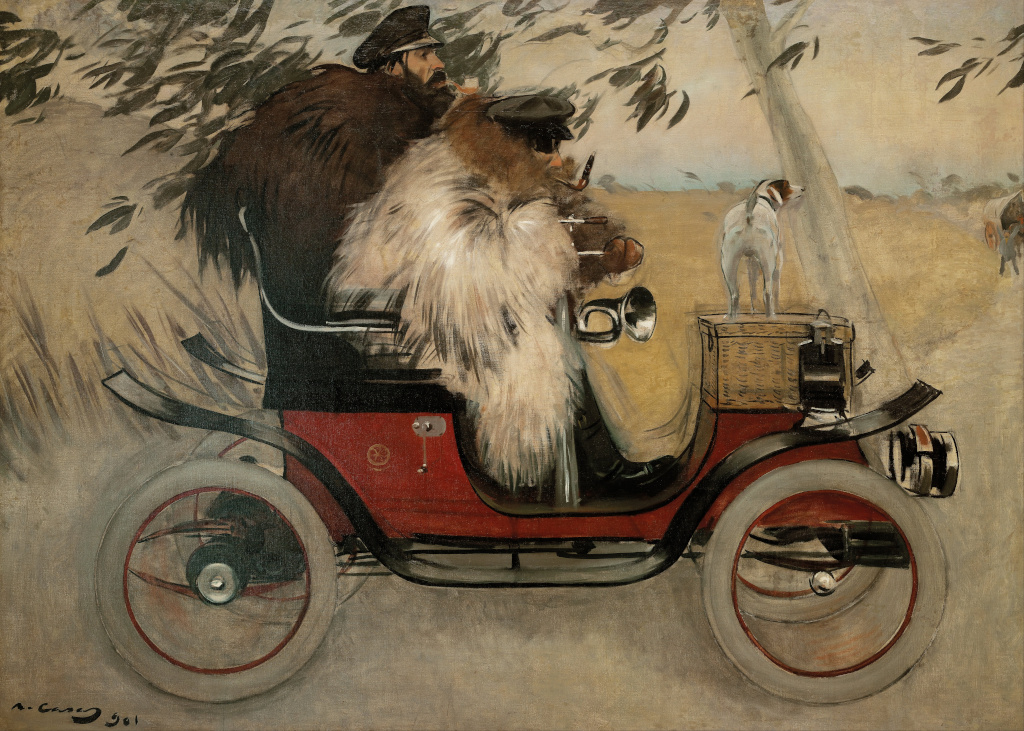
Casas became one of the leading portraitists of the Catalan bourgeoisie and intellectual world. His portraits show how status, pose and restraint could make a modern public identity visible. [2]
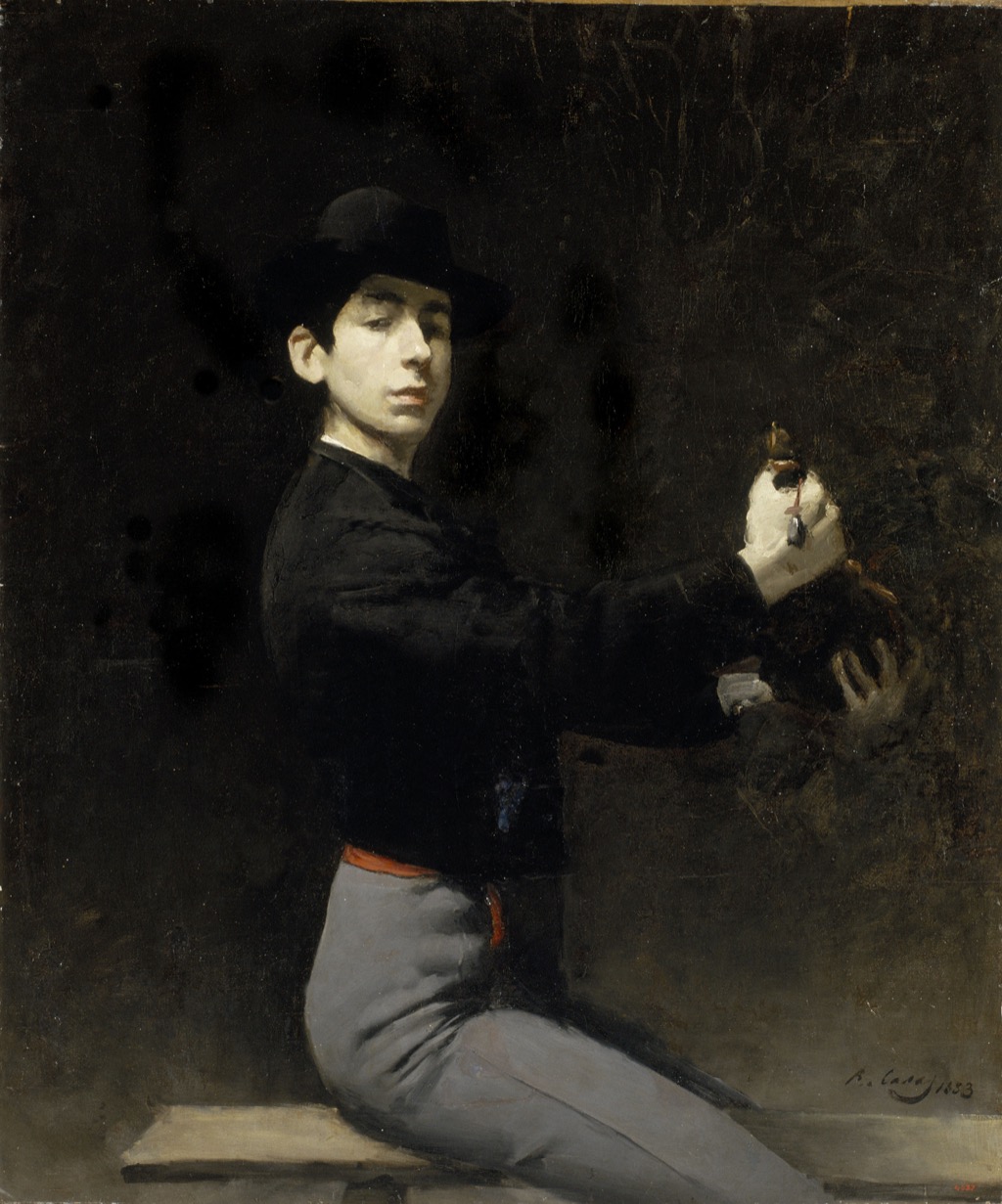
The 1883 self-portrait now in MNAC's collection gives this guide a direct, secure view of the young artist's self-fashioning. [8]
Posters and Social Painting
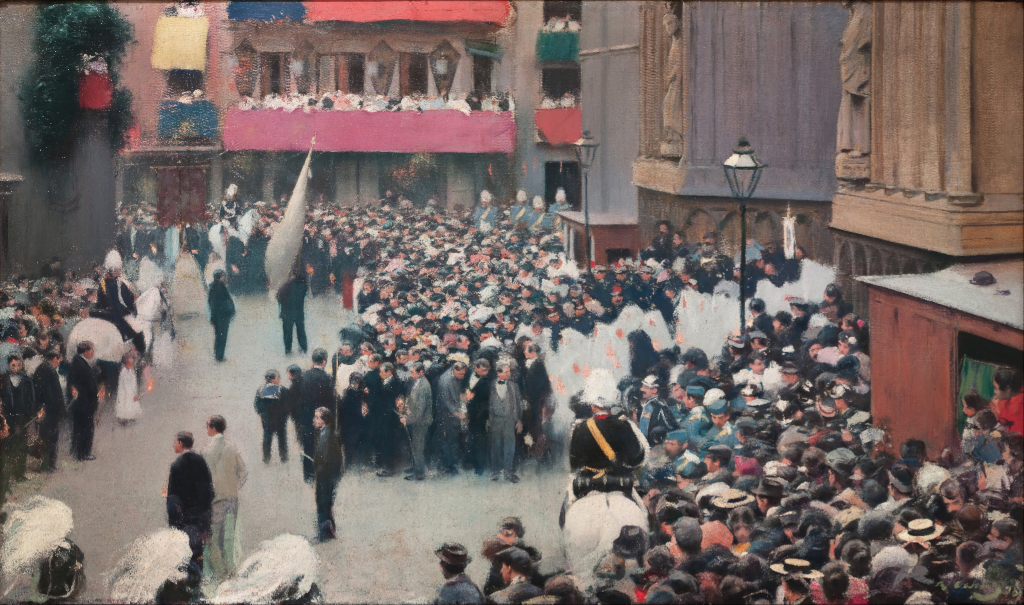
Casas' poster work helped bring modernisme into print culture and public advertising, while works such as Garrote vil and La carga show his attention to the social strain of modern public life. [2]
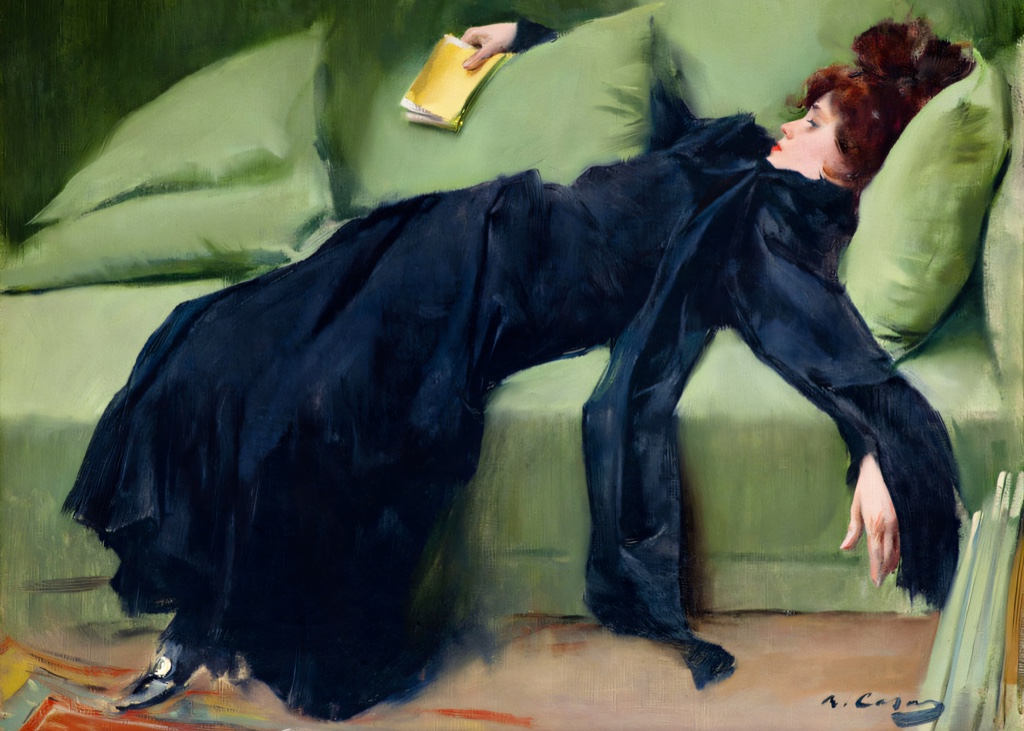
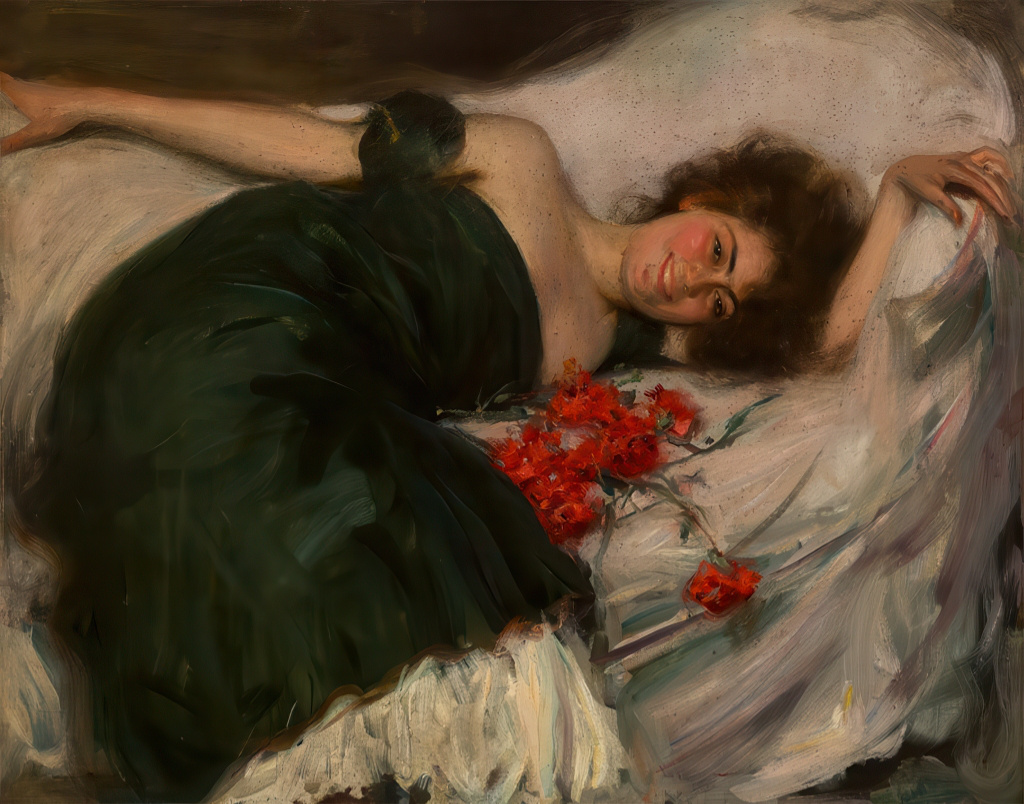
The result is a career that should not be split into fine art on one side and graphic design on the other. For Casas, that movement across media is part of the modernity, from poster culture to a painting such as Decadent Young Woman. After the Dance. [5] [6]
Frequently Asked Questions
Discussion
Which part of Casas' modernity feels most alive today: the portrait, the poster, the cafe image or the social crowd?
Reader Insights
How does Casas make public identity visible through pose, costume and simplified design?
Where do you see the strongest bridge between Paris training and Barcelona modernisme?
Does Casas feel more like a painter of people, places or public culture?
Join the Conversation
Share your reading of this Ramon Casas page below.
References
- Biblioteca Nacional de Espana, "Casas, Ramon", accessed 25 July 2026.
- Museo Nacional del Prado, "Casas y Carbo, Ramon", accessed 25 July 2026.
- Patrimoni Cultural, Generalitat de Catalunya, "Els Quatre Gats", accessed 25 July 2026.
- The Metropolitan Museum of Art, "Barcelona and Modernity: Gaudi to Dali", accessed 25 July 2026.
- Museo Reina Sofia, "Anis del Mono. Mono y mona", accessed 25 July 2026.
- Museu de Montserrat, "Ramon Casas - Joven decadente. Despues del baile", accessed 25 July 2026.
- Museu Nacional d'Art de Catalunya, "Ramon Casas y Pere Romeu en un tandem", accessed 25 July 2026.
- Museu Nacional d'Art de Catalunya, "Self-portrait", accessed 25 July 2026.
- Museu Nacional d'Art de Catalunya, Barcelona. Ramon Casas, Self-portrait / Autoretrat, 1883, oil on canvas, 115.5 x 96 cm, Plandiura Collection, purchased 1932, inventory 004037-000. Rights note recorded by MNAC:
Domini public. Source image file. Accessed 25 July 2026.