 by Tom Gurney
Tom Gurney BSc (Hons) is an art history expert with over 20 years experience
Published on August 27, 2026 / Updated on September 6, 2026
Email: tomgurney1@gmail.com / Phone: +44 7429 011000
Ramon Casas, Flora: Introduction
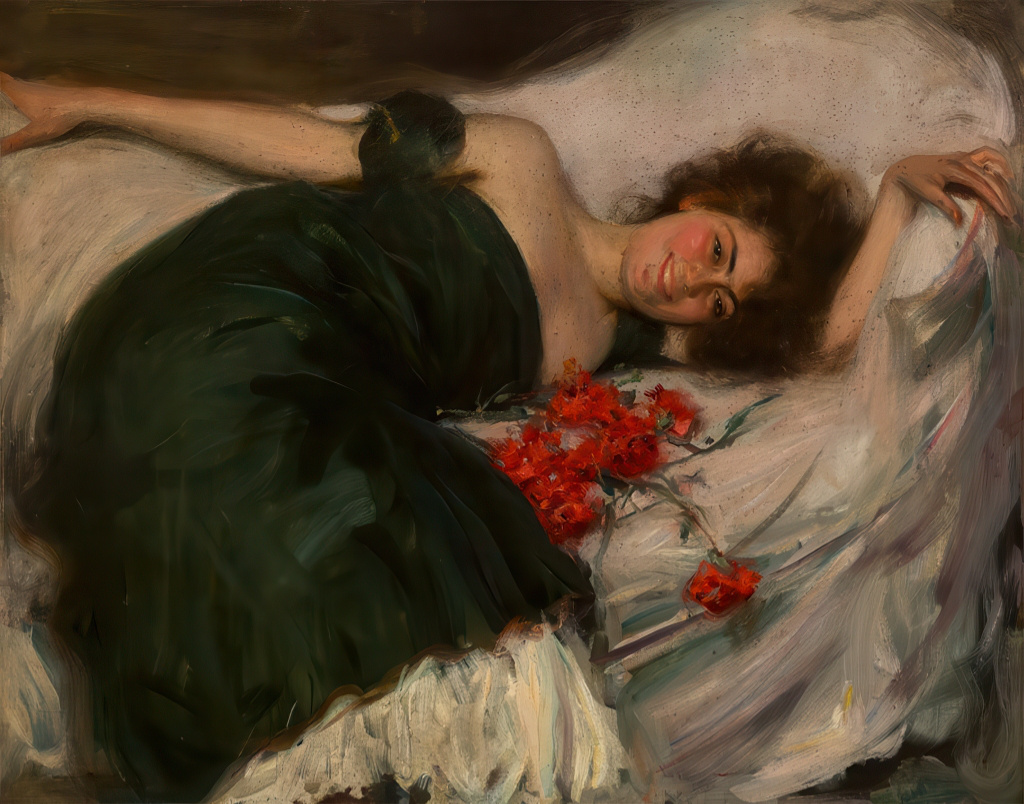
Ramon Casas' Flora is a compact but valuable artwork page because it sits near the beginning of his long visual relationship with Julia Peraire.
The Commons object record identifies Flora as a 1906 oil on canvas by Ramon Casas, measuring 80.5 x 100.5 cm, in the National Museum of Fine Arts of Cuba, and identifies the depicted person as Julia Peraire. [16]
At a Glance
- ArtistRamon Casas
- Date1906 [16]
- MediumOil on canvas
- CollectionNational Museum of Fine Arts of Cuba
Contents
- Why Flora Matters
- Julia Peraire and Casas in 1906
- Reading the Title
- Portrait, Allegory and Display
- How It Connects to Later Julia Paintings
Why Flora Matters
Flora matters less because it is Casas' most famous work and more because it opens a route into one of the most important relationships of his later career.
ARA's report on the exhibition Julia, el desig describes Julia Peraire as Casas' muse, lover and later wife, and states that he portrayed her in around 120 oils, drawings and posters over more than twenty-five years. [17]
Julia Peraire and Casas in 1906
The year 1906 is important. ARA describes Casas meeting Julia around this period and links her early appearances to posters and then oil paintings with frontal, challenging and seductive poses. [17]
Public copy should say that Flora is identified as Julia Peraire rather than implying that every detail has been verified from a full official Cuban museum catalogue. The identification aligns with the broader art-historical story, but the source base is thinner than for MNAC works.
Reading the Title
The title Flora invites two readings. The first is decorative and allegorical: Flora is associated with flowers, spring and feminine abundance.
The second is social. ARA notes accounts that Julia sold flowers or lottery tickets around Barcelona. The page should not overstate a direct biographical symbol, but the link between flowers, street commerce and painted transformation is useful. [17]
Portrait, Allegory and Display
Casas often moved between direct portrait and staged persona. Julia could appear as herself, but also as a type, a fantasy, a fashionable woman, a queen, a nun, a Cordovan figure or a decorative modern icon.
Flora helps introduce that pattern. Its value is contextual: it explains the Julia cycle, Casas' 1906 transition and the artist's ability to turn a model into a sequence of modern identities.
How It Connects to Later Julia Paintings
The painting should be linked from the biography and paintings hub as the Julia Peraire route. It does not need to carry the weight of a flagship page to be useful.
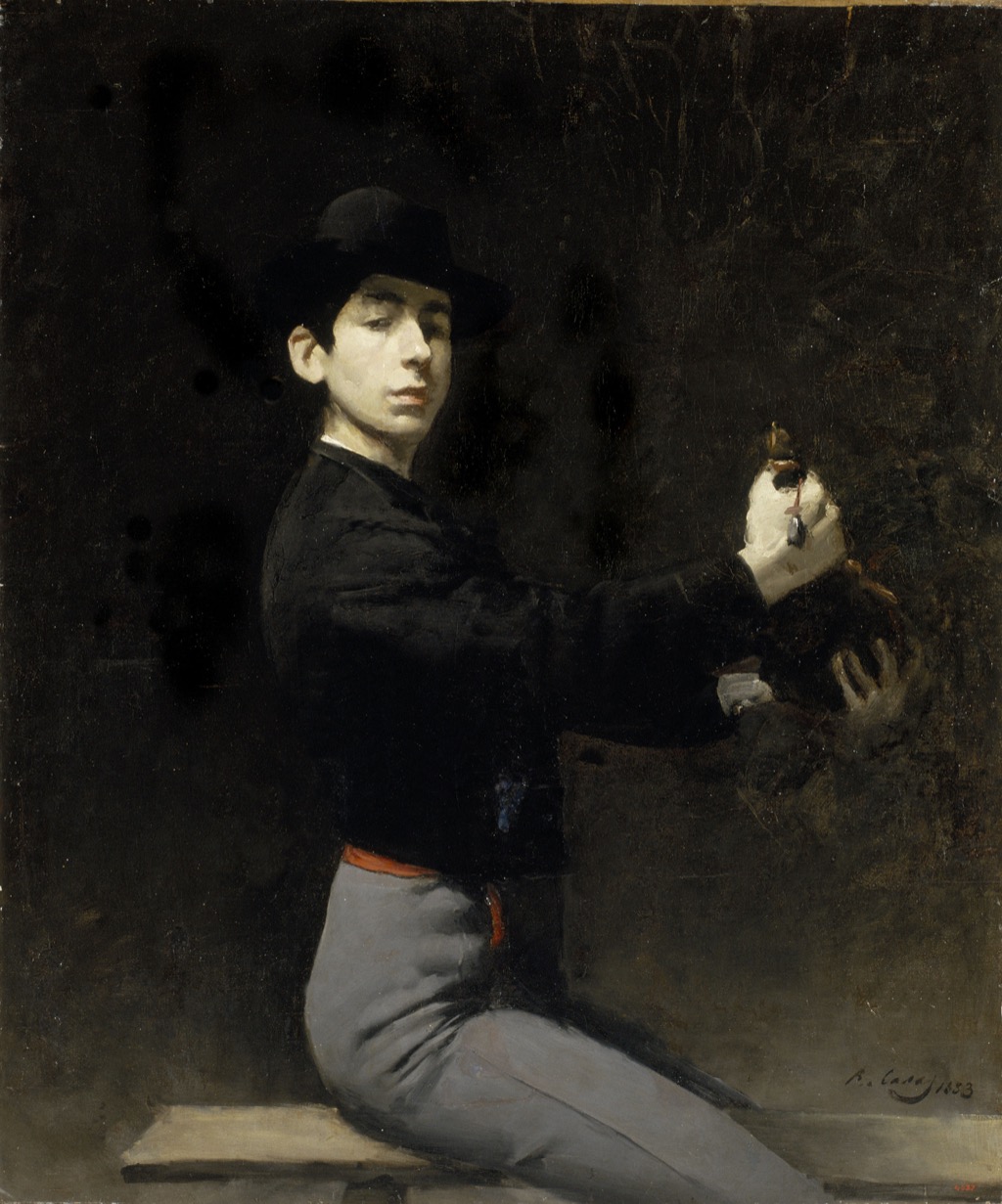
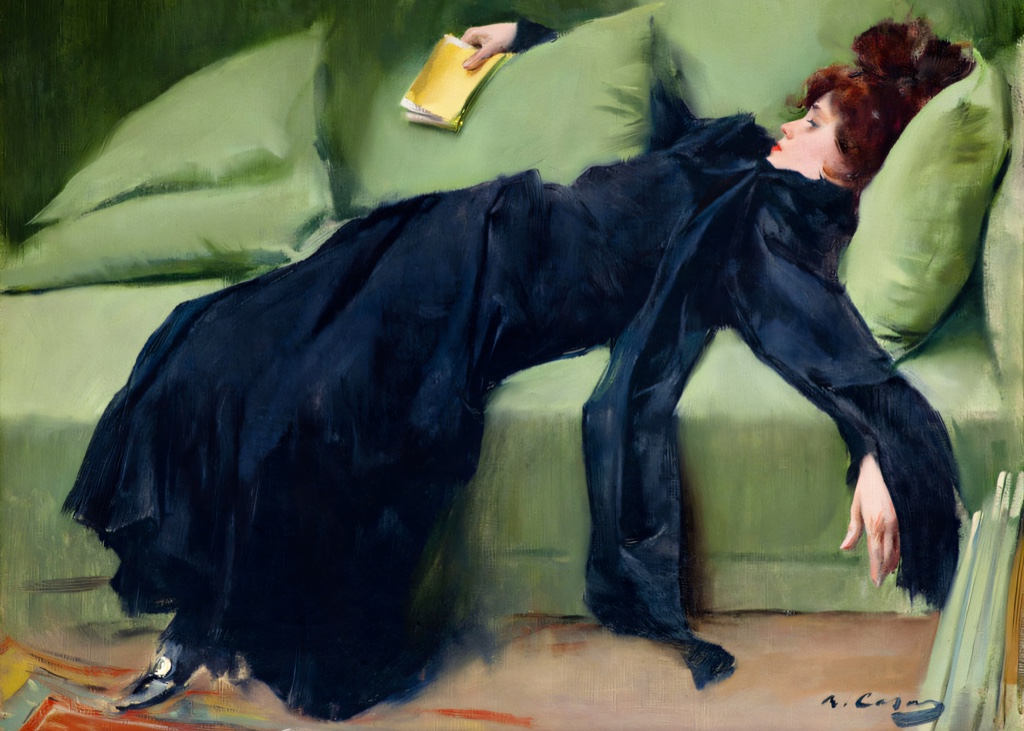
A reader might arrive from Decadent Young Woman. After the Dance thinking about women, modernity and pose; from Self-portrait thinking about identity; or from the biography looking for Casas' later intimate portrait world.
Frequently Asked Questions
Discussion
Does Flora read more strongly as a portrait, an allegory or the beginning of the Julia Peraire cycle?
Reader Insights
How does the title change the way a viewer reads the sitter?
What does Julia Peraire add to the later Casas story?
Should Flora be read beside Decadent Young Woman or separately as a later portrait route?
Join the Conversation
Share your reading of this Ramon Casas page below.
References
- Wikimedia Commons, "File:Ramon Casas - Flora, 1906.jpg", accessed 25 July 2026.
- ARA, "El pintor i la model: espiant Ramon Casas al Liceu", accessed 25 July 2026.
- Biblioteca Nacional de Espana, "Casas, Ramon", accessed 25 July 2026.
- Museu de l'Emporda, "Ramon Casas Carbo", accessed 25 July 2026.
- Wikimedia Commons, File:Ramon Casas - Flora, 1906.jpg. Object metadata: Ramon Casas, Flora, 1906, oil on canvas, 80.5 x 100.5 cm, National Museum of Fine Arts of Cuba. Image prepared from a high-resolution source supplied by TheHistoryOfArt.org. Accessed 25 July 2026.