 by Tom Gurney
Tom Gurney BSc (Hons) is an art history expert with over 20 years experience
Published on August 27, 2026 / Updated on September 6, 2026
Email: tomgurney1@gmail.com / Phone: +44 7429 011000
Ramon Casas and Pere Romeu on a Tandem: Introduction
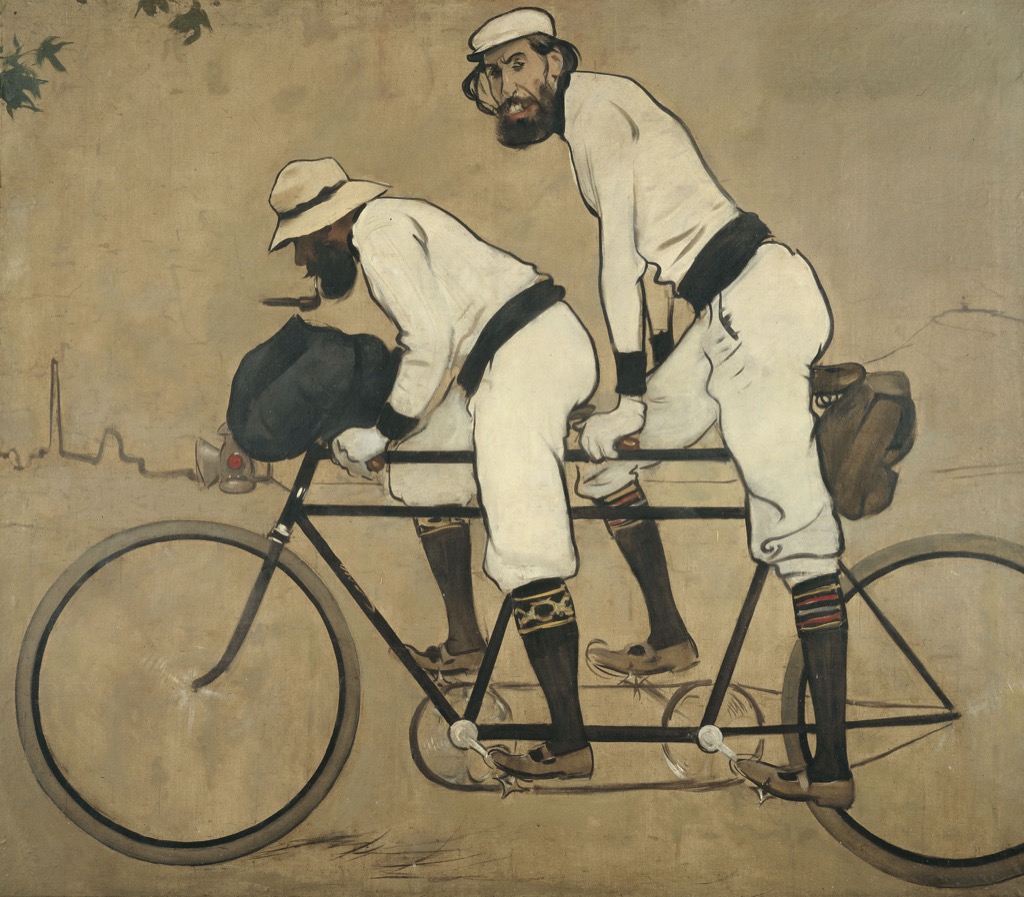
Ramon Casas and Pere Romeu on a Tandem is one of the most memorable images of Catalan modernisme: a comic, stylish double portrait in which Ramon Casas and Pere Romeu pedal through modern Barcelona on a tandem bicycle. [7]
Painted in 1897 for Els Quatre Gats, the work turns a cafe friendship into a public emblem of speed, urbanity and artistic sociability. [7]
At a Glance
- ArtistRamon Casas
- Date1897 [7]
- MediumOil on canvas
- CollectionMuseu Nacional d'Art de Catalunya
Contents
- Work Context
- Who Was Pere Romeu?
- Visual Reading
- Els Quatre Gats and Modernisme
- Painting, Poster and Public Image
Work Context
MNAC identifies the painting as an 1897 oil on canvas, acquired in 1964 and catalogued as 069806-000. The museum places the work at the centre of Catalan modernisme. [7]
The painting decorated Els Quatre Gats, the Barcelona cafe that became a meeting place for modernista artists and intellectuals. [7] [3]
Who Was Pere Romeu?
Pere Romeu was the barman and public face associated with Els Quatre Gats. In the painting he is not a remote sitter of rank, but part of the cafe's social theatre.
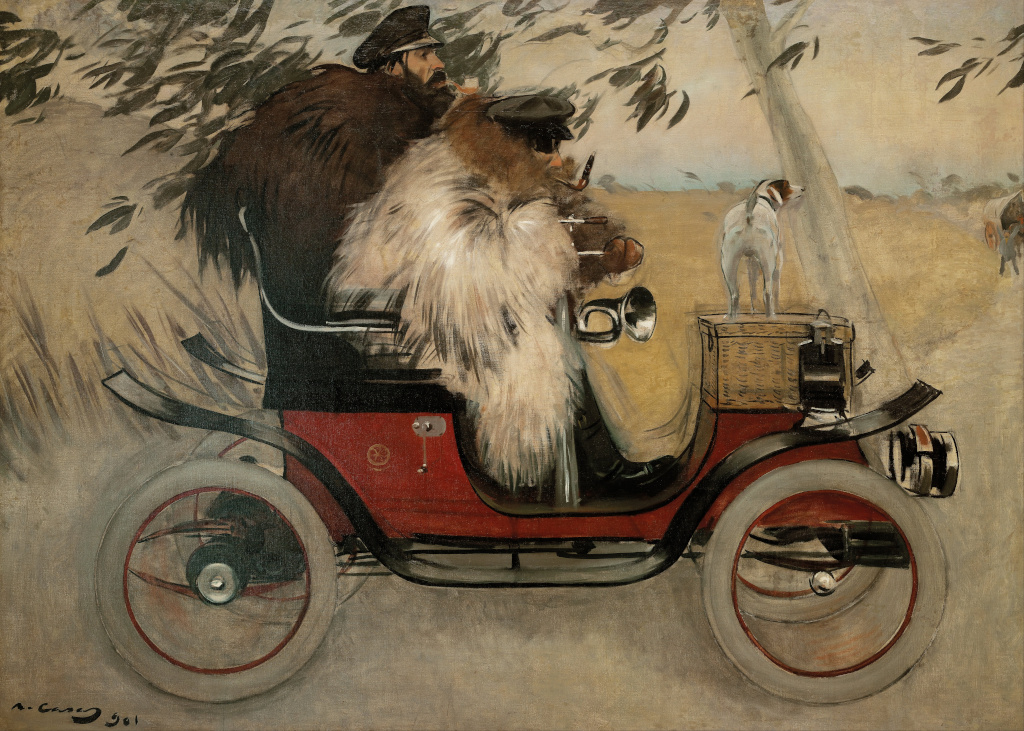
Casas stages himself and Romeu in motion, sharing a machine and moving in relation to the city. The relationship between artist and barman becomes the relationship between art and public life.
Visual Reading
The tandem is the painting's central device. A bicycle built for two requires coordination, shared direction and trust, and Casas uses that built-in comedy without flattening the work into caricature.
MNAC connects the painting's decorative purpose, humorous tone and style with poster technique, a genre in which Casas had gained prestige. [7]
Els Quatre Gats and Modernisme
Els Quatre Gats opened in 1897 and hosted exhibitions, literary evenings, music, poetry readings, puppet theatre and shadow shows. [3]
The Met identifies Els Quatre Gats as a focus of bohemian artistic activity in Barcelona and a site where Picasso, then eighteen, became part of the circle. [4]
Painting, Poster and Public Image
The painting is unusually portable in memory. Its forms are easy to recognise, its humour is immediate and its composition is simplified without becoming empty.
That poster-like clarity is central to Casas' modernity: his public image-making crossed painting, print, cafe decoration and advertising. [2]
Frequently Asked Questions
Discussion
Does the tandem make this painting feel more like a portrait, a poster or a social joke?
Reader Insights
What detail makes the pair feel most theatrical: the bicycle, the clothes, the pipe or Romeu's direct grin?
How much of Els Quatre Gats can Casas compress into a single image?
Does the humour make the work more serious as a modernista emblem?
Join the Conversation
Share your reading of this Ramon Casas page below.
References
- Museu Nacional d'Art de Catalunya, "Ramon Casas y Pere Romeu en un tandem", accessed 25 July 2026.
- Patrimoni Cultural, Generalitat de Catalunya, "Els Quatre Gats", accessed 25 July 2026.
- The Metropolitan Museum of Art, "Barcelona and Modernity: Gaudi to Dali", accessed 25 July 2026.
- Museo Nacional del Prado, "Casas y Carbo, Ramon", accessed 25 July 2026.
- Biblioteca Nacional de Espana, "Casas, Ramon", accessed 25 July 2026.
- Museu Nacional d'Art de Catalunya, Barcelona. Ramon Casas, Ramon Casas y Pere Romeu en un tandem / Ramon Casas and Pere Romeu on a Tandem, 1897, oil on canvas, 188 x 215.5 cm, acquired 1964, catalogue number 069806-000. Rights note recorded by MNAC:
Domini public. Source image file. Accessed 25 July 2026.