 by Tom Gurney
Tom Gurney BSc (Hons) is an art history expert with over 20 years experience
Published on August 27, 2026 / Updated on September 6, 2026
Email: tomgurney1@gmail.com / Phone: +44 7429 011000
Ramon Casas and Pere Romeu in an Automobile: Introduction
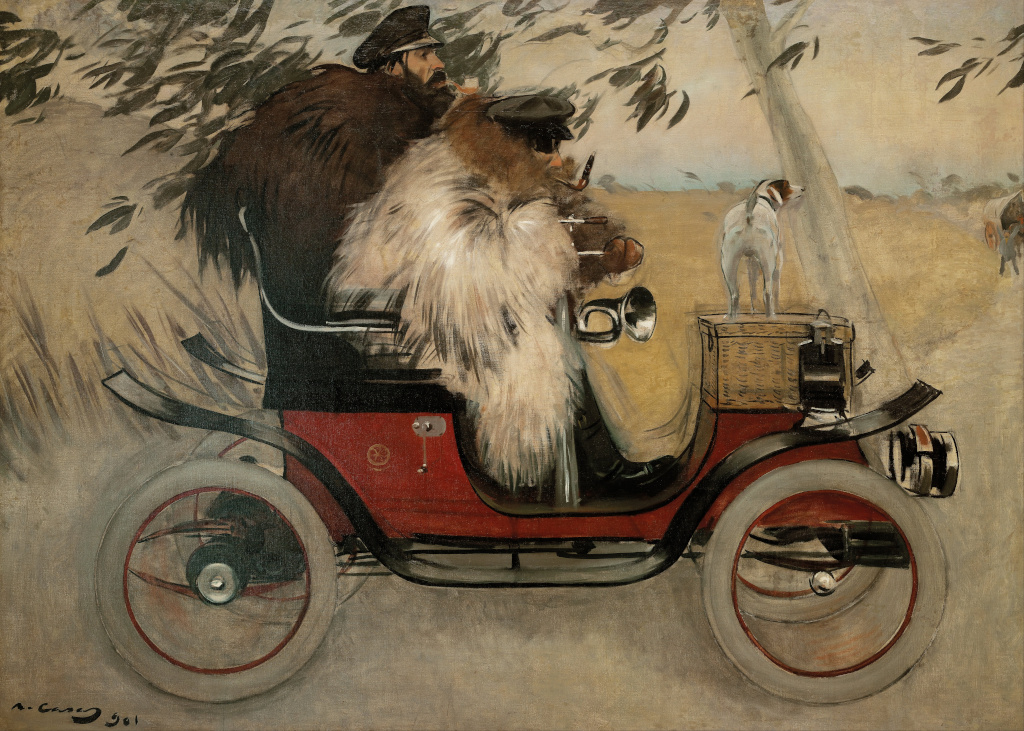
Ramon Casas and Pere Romeu in an Automobile is the sequel image that tells us how quickly Catalan modernisme wanted to update itself.
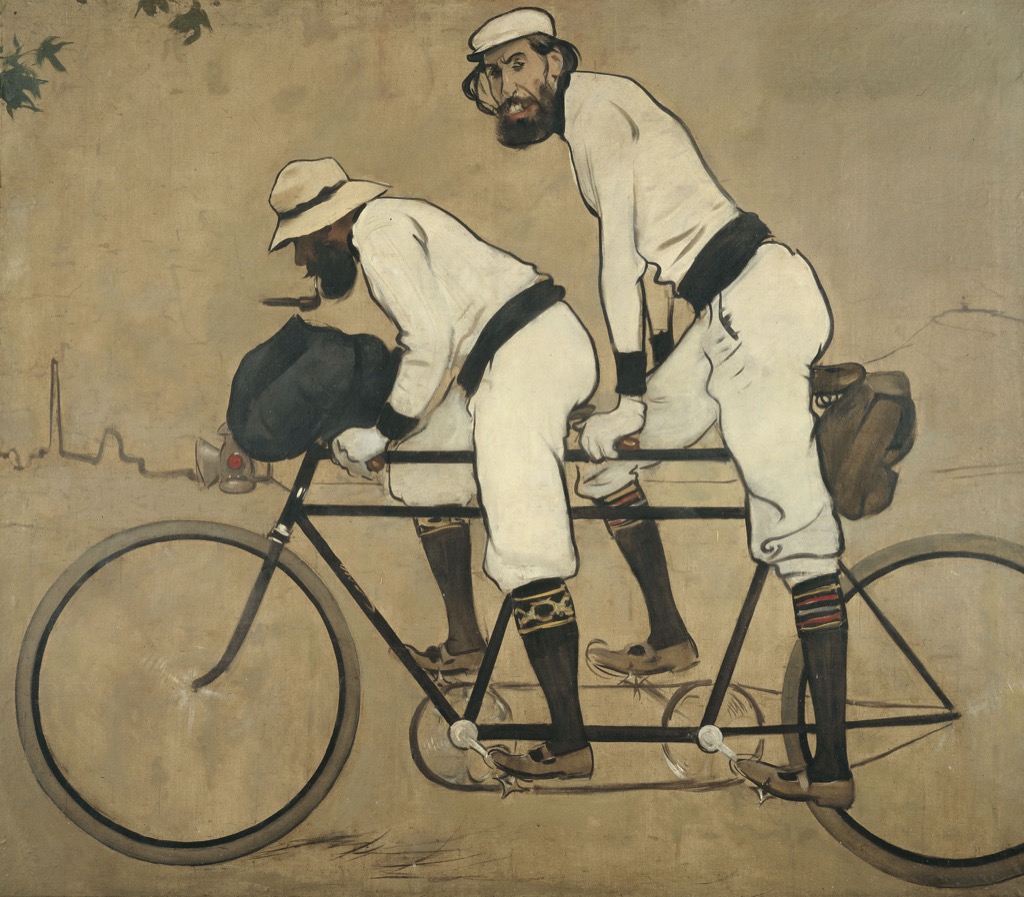
In 1897, Casas had painted himself and Pere Romeu riding a tandem bicycle for Els Quatre Gats. In 1901, MNAC records that the automobile canvas replaced that earlier image on the cafe wall. [9]
At a Glance
- ArtistRamon Casas
- Date1901 [9]
- MediumOil on canvas
- CollectionMuseu Nacional d'Art de Catalunya
Contents
- From Tandem to Automobile
- Els Quatre Gats and the Wall
- How Casas Paints Speed
- Poster Language on Canvas
- The Automobile as Symbol
From Tandem to Automobile
The Tandem painting of 1897 had already given Els Quatre Gats an unforgettable emblem: Casas and Romeu riding together across a spare landscape. Four years later, the bicycle was no longer modern enough.
MNAC describes the 1901 automobile painting as representing Casas and Pere Romeu, owner of Els Quatre Gats, driving a vehicle that belonged to the twentieth century. The same figures remain, but the machine has changed. [10]
That replacement is the key to the work's meaning. Casas was not simply making another double portrait. He was revising the public identity of a place and a circle.
Els Quatre Gats and the Wall
Els Quatre Gats was a meeting place, performance space and symbolic home for Barcelona modernisme. The paintings that decorated it were part of the cafe's atmosphere, not remote museum objects waiting quietly for viewers. [3]
MNAC stresses the decorative aim of the Tandem and Automobile paintings and relates their humorous, poster-like character to Art Nouveau graphic culture. [10]
How Casas Paints Speed
The official collection text notes that Casas transmits movement through the attitude of the two figures and through the wheels of the car, whose spokes are not visible. [9]
He does not need cinematic blur. Posture, forward thrust and simplified wheel movement make the vehicle feel as if it pushes across the canvas rather than sits calmly inside it.
The scale intensifies the joke. MNAC gives the dimensions as 208 x 291 cm, turning a driving gag into a mural-sized statement about modern life. [9]
Poster Language on Canvas
MNAC says the work moves away from conventional painting and comes close to the poster image. That is essential to how the page should read the painting. [9]
Casas simplifies and enlarges forms so they can be grasped quickly. The vehicle, figures and gesture function almost as a logo for modernist camaraderie.
His experience as a poster designer matters. In this painting, graphic clarity returns to oil painting, producing a hybrid object: a painting with decorative authority, a portrait with poster speed and a cafe emblem with museum afterlife.
The Automobile as Symbol
The car is not only transport. It is an argument about time: acceleration, novelty, engineering and public display.
The move from tandem to automobile also changes the logic of partnership. A tandem bicycle requires both riders to pedal; a motor car can be driven by one while the other rides along.
That is why this page deserves to stand beside the Tandem article. The two works show modernisme updating its own symbols in real time.
Frequently Asked Questions
Discussion
Does the automobile painting feel like a portrait, a joke, a poster or a prophecy of the new century?
Reader Insights
How does Casas make speed visible without literal blur?
What changes when the Tandem is replaced by a motor car?
Which painting feels more modern now: Tandem or Automobile?
Join the Conversation
Share your reading of this Ramon Casas page below.
References
- Museu Nacional d'Art de Catalunya, "Ramon Casas and Pere Romeu in a Motor Car", accessed 25 July 2026.
- Museu Nacional d'Art de Catalunya, "Ramon Casas and Pere Romeu in an automobile", accessed 25 July 2026.
- Patrimoni Cultural, Generalitat de Catalunya, "Els Quatre Gats", accessed 25 July 2026.
- Museo Nacional del Prado, "Casas y Carbo, Ramon", accessed 25 July 2026.
- Museu Nacional d'Art de Catalunya, Barcelona. Object record: Ramon Casas, Ramon Casas and Pere Romeu in an Automobile, 1901, oil on canvas, 208 x 291 cm, inventory 214453-000. Image prepared from a high-resolution source supplied by TheHistoryOfArt.org. Accessed 25 July 2026.