 by Tom Gurney
Tom Gurney BSc (Hons) is an art history expert with over 20 years experience
Published on August 27, 2026 / Updated on September 6, 2026
Email: tomgurney1@gmail.com / Phone: +44 7429 011000
Ramon Casas Biography: Introduction
Ramon Casas i Carbo was one of the central artists of Catalan modernisme: a Barcelona-born painter, draughtsman, portraitist and poster designer who turned the changing world around him into a recognisable visual language. [1]
His career is valuable because it refuses to stay in one category. Casas could paint a society sitter, design a poster, decorate a modernist cafe, produce a charcoal portrait and turn contemporary Barcelona violence into large-scale social painting. [2]
At a Glance
- Born4 January 1866, Barcelona [1]
- Died29 February 1932, Barcelona [1]
- MovementCatalan modernisme [4]
- Known forPortraiture, posters, cafe imagery and public social painting
Contents
- Why Ramon Casas Matters
- Family Background and Early Formation
- Paris and the Young Artist
- Els Quatre Gats
- Portraits and Public Identity
- Social Painting and the Modern City
- Posters, Magazines and Graphic Modernity
- Julia Peraire and Later Work
- Late Recognition and Legacy
Why Ramon Casas Matters
Casas matters because he made Catalan modernisme visible in human form. Barcelona modernisme is often remembered through architecture, but Casas worked through faces, bodies, posters, cafe walls, magazines and paintings of public life.
The Metropolitan Museum of Art describes modernisme as a broad Catalan cultural movement that opened Barcelona to foreign influence, especially contemporary French art. In that frame, Casas and Santiago Rusinol stand among the key founders of modernista Catalan painting. [4]
He also matters because his modernity was practical. Easel painting, exhibition work, cafe decoration, magazine publishing and advertising all belonged to the same visual ecosystem. MNAC's Casas catalogue presents him across painting, drawing and poster art, which is exactly the range a biography needs to hold together. [18]
Family Background and Early Formation
Casas was born in Barcelona on 4 January 1866 into a prosperous family. The Biblioteca Nacional de Espana records that his father had made money in Cuba and his mother came from a textile family, placing the artist inside the bourgeois world he would later paint, serve and sometimes quietly unsettle. [1]
He showed an early talent for drawing and entered the studio of Joan Vicens after leaving conventional schooling. That early draughtsmanship helps explain the authority of his later charcoal portraits, which form a visual archive of the intellectual and political world around 1900. [2]
Paris and the Young Artist
Paris was decisive for Casas. The Prado records his training with Carolus-Duran and connects his mature 1890s style with Manet, Whistler and Degas. [2]
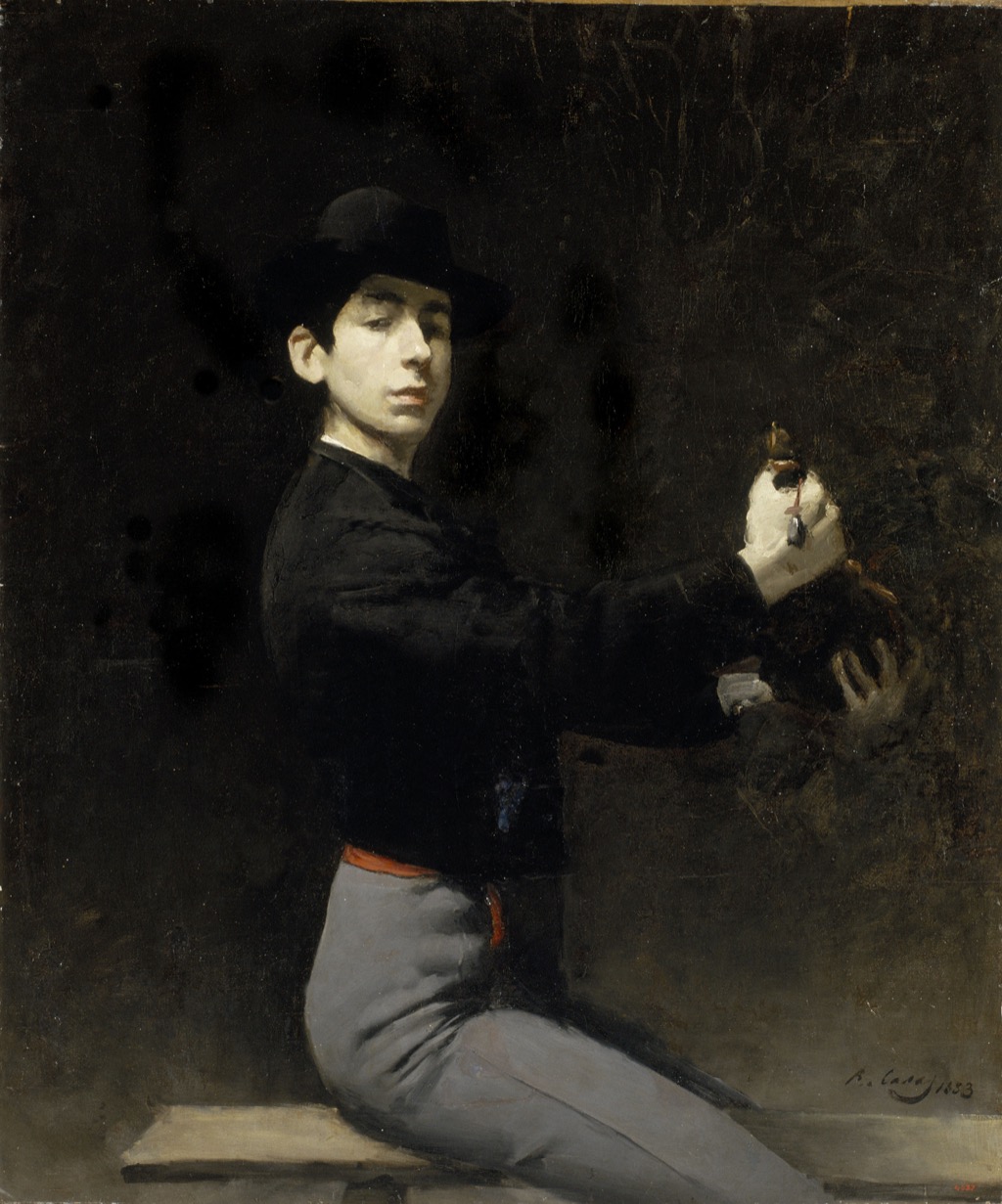
The young artist did not simply import Paris back to Barcelona. He used Paris to help Barcelona imagine itself as a modern artistic capital. His 1883 Self-portrait gives a vivid early example of that self-fashioning. [8]
Casas also studied Spanish precedent. The Prado notes his 1885 trip to Madrid to study Velazquez and copy works in the Museo del Prado, giving his career a double orientation: Parisian modernity and Spanish painterly memory. [2]
Els Quatre Gats
Els Quatre Gats opened in Barcelona in 1897 and became one of the best-known spaces of modernista culture. It was inspired by Parisian bohemia, but its importance was local: it gave Barcelona's artists, writers and intellectuals a room in which modernisme could perform itself. [3]
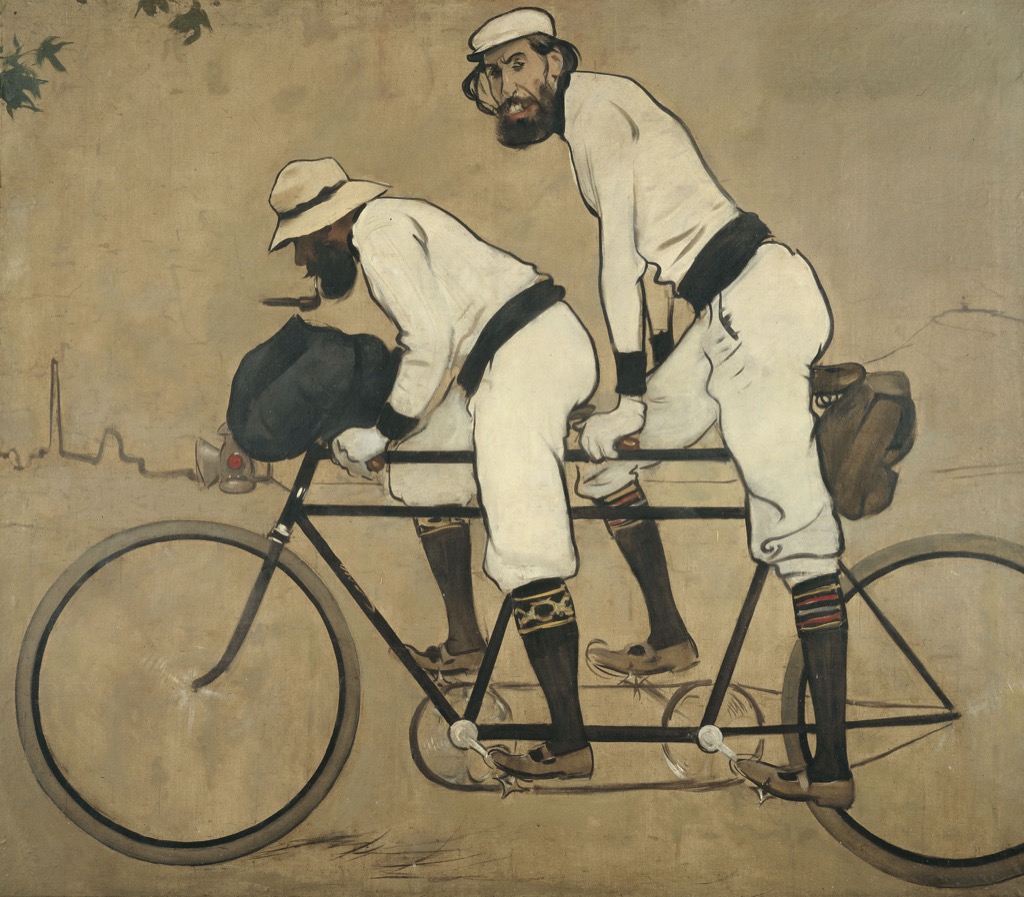
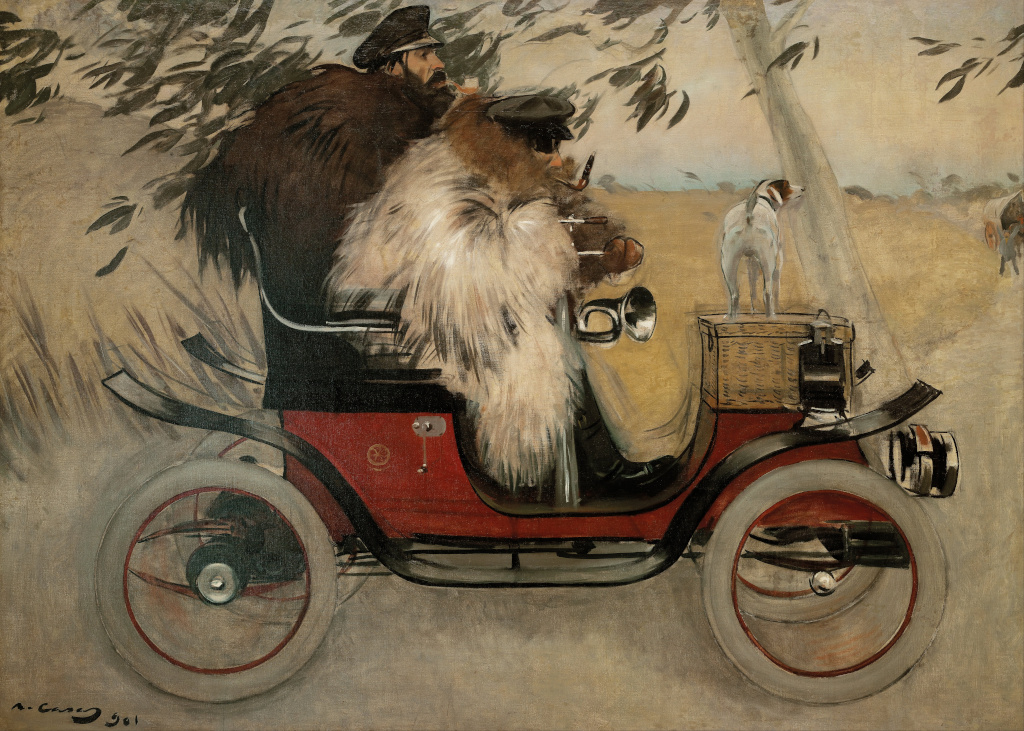
Casas' Ramon Casas and Pere Romeu on a Tandem became one of the cafe's emblematic images. In 1901, MNAC records that Ramon Casas and Pere Romeu in an Automobile replaced it on the wall, updating the modernist image from bicycle to motor car. [9]
MNAC blog writing by Francesc Quilez is useful here because it stresses the cafe's crossover between high and popular culture. Casas was a bourgeois artist, but he understood cafe spectacle, shadow theatre, poster design and public wit as serious cultural tools. [19]
Portraits and Public Identity
Casas became one of the leading portraitists of Catalan and Spanish public life. The Prado calls him one of the principal portraitists of the Catalan bourgeoisie, while the BNE highlights more than 200 portraits made between 1899 and 1909 of figures from intellectual, political and artistic circles. [2] [1]
His portraits do not simply record likeness. They show identity as a public form: a face, hand, jacket, seated pose or empty background can carry status, intelligence and social role with great economy.
Social Painting and the Modern City
Casas' social paintings prevent the biography from becoming too decorative. The Prado connects Garrote vil and La Carrega to the transformation of history painting around 1900, when immediate social events could replace distant heroic subjects. [2]
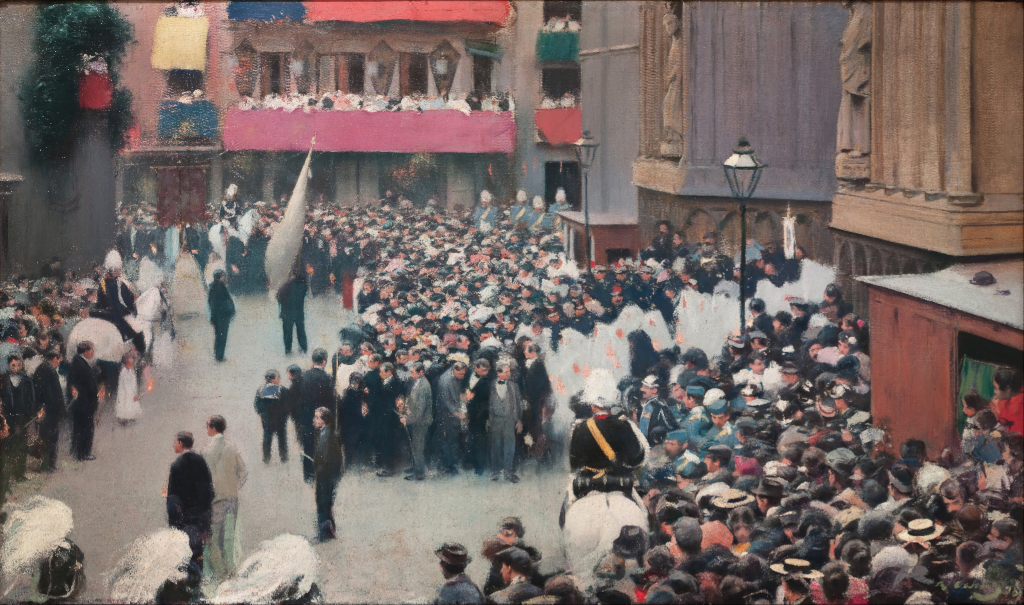
The same public register supports The Corpus Christi Procession Leaving the Church of Santa Maria del Mar. MNAC states that the painting was suggested by the bomb explosion at the Corpus procession of Santa Maria del Mar on 7 June 1896. [11]
Together, these works show Casas as a painter of civic nerves. Barcelona is not only a stage for leisure and fashion; it is also a city of executions, processions, crowds, strikes, political fear and public memory.
Posters, Magazines and Graphic Modernity
Casas was one of the major poster artists of Catalan modernisme. His poster style often depends on strong figures, simplified backgrounds, integrated lettering and memorable silhouettes. [5]
The magazine Pel & Ploma is equally important. Reina Sofia's digital archive describes it as perhaps Casas' most important editorial project, edited with Miquel Utrillo and dedicated to modern art. [13]
This publishing activity changes how we read him. Casas was not only producing isolated artworks; he was building channels through which art, criticism, portraits and advertising could circulate. [20]
Julia Peraire and Later Work
Julia Peraire became one of the central figures of Casas' later work. ARA's coverage of Julia, el desig describes her as Casas' muse, lover and later wife, and states that he portrayed her in around 120 oils, drawings and posters over more than twenty-five years. [17]
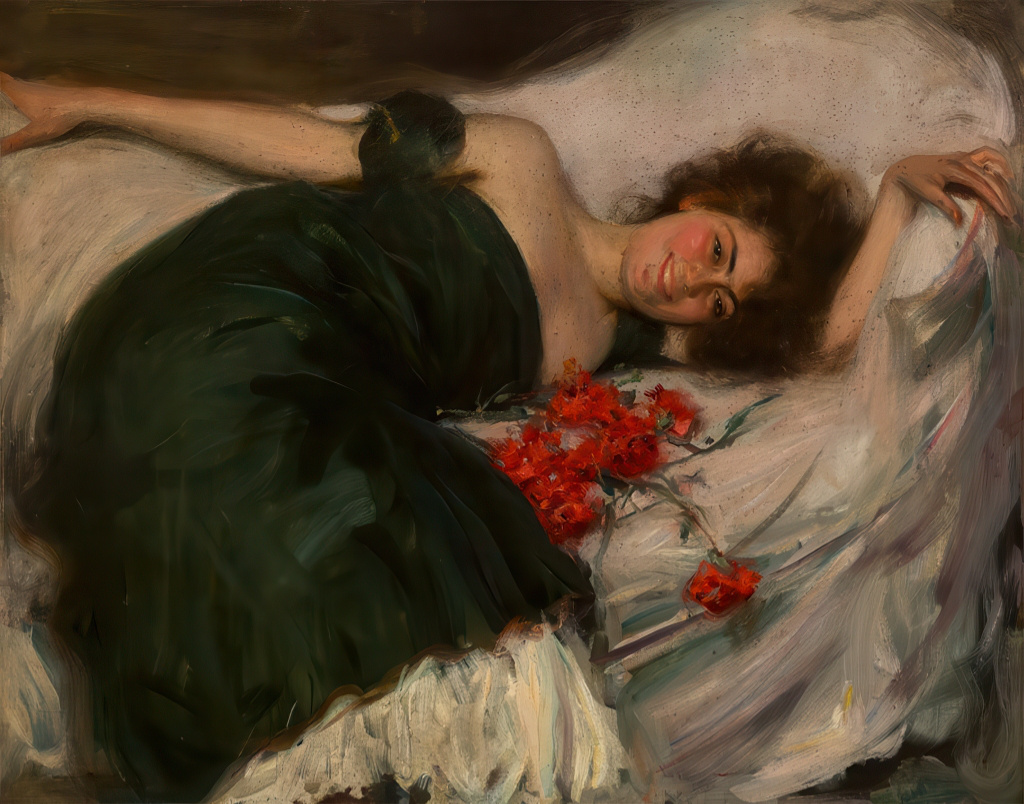
A page such as Flora can introduce this later portrait world carefully. Commons/Wikidata metadata identifies the 1906 painting as depicting Julia Peraire, but the live article should keep that source caveat visible because public museum documentation is thinner than for MNAC works. [16]
Late Recognition and Legacy
In the later career, Casas remained productive and admired, even as newer art movements moved beyond the modernista world he helped create. The Museu de l'Emporda biography records his connection with Charles Deering, Sitges, Tamarit and later exhibitions. [21]
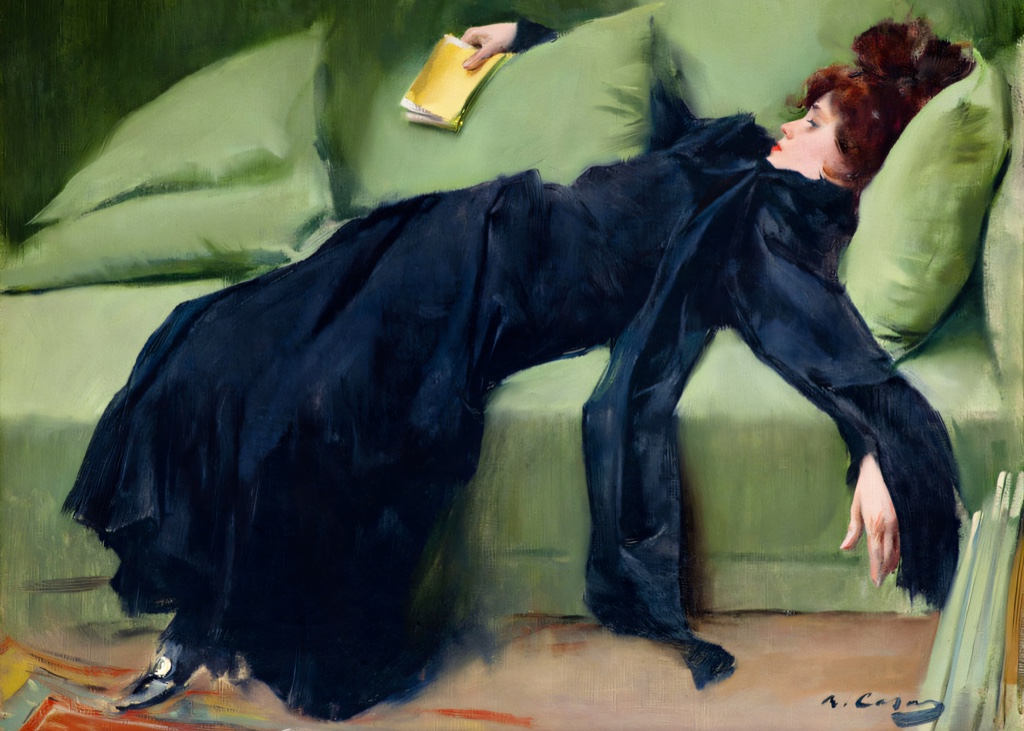
Casas died in Barcelona on 29 February 1932. His legacy rests on range and recognisability: friends on a tandem, friends in an automobile, a young woman after the dance, a procession before catastrophe, a crowd under pressure and sitters reduced to a few decisive marks.
Frequently Asked Questions
Discussion
Which identity best explains Casas: portraitist, poster artist, social painter or maker of modern Barcelona's public image?
Reader Insights
Which works make Casas feel most modern in visual terms?
How does his Paris training change the story of Barcelona modernisme?
Where should the next deep-dive Casas page go: social painting, Julia Peraire or poster culture?
Join the Conversation
Share your reading of this Ramon Casas page below.
References
- Biblioteca Nacional de Espana, "Casas, Ramon", accessed 25 July 2026.
- Museo Nacional del Prado, "Casas y Carbo, Ramon", accessed 25 July 2026.
- Patrimoni Cultural, Generalitat de Catalunya, "Els Quatre Gats", accessed 25 July 2026.
- The Metropolitan Museum of Art, "Barcelona and Modernity: Gaudi to Dali", accessed 25 July 2026.
- Museo Reina Sofia, "Anis del Mono. Mono y mona", accessed 25 July 2026.
- Museu Nacional d'Art de Catalunya, "Ramon Casas. El pintor del modernisme", accessed 25 July 2026.
- Museu Nacional d'Art de Catalunya blog, Francesc Quilez, "Ramon Casas i les ombres xineses d'Els Quatre Gats", accessed 25 July 2026.
- Museu Nacional d'Art de Catalunya, "Ramon Casas and Pere Romeu in a Motor Car", accessed 25 July 2026.
- Museu Nacional d'Art de Catalunya, "The Corpus Christi Procession Leaving the Church of Santa Maria", accessed 25 July 2026.
- Reina Sofia digital archive, "Revista Pel y Ploma", accessed 25 July 2026.
- Museu Nacional d'Art de Catalunya, "Pel & ploma. Junio de 1901", accessed 25 July 2026.
- ARA, "El pintor i la model: espiant Ramon Casas al Liceu", accessed 25 July 2026.
- Wikimedia Commons, "File:Ramon Casas - Flora, 1906.jpg", accessed 25 July 2026.
- Museu de l'Emporda, "Ramon Casas Carbo", accessed 25 July 2026.
- Museu Nacional d'Art de Catalunya, "Self-portrait", accessed 25 July 2026.
- Museu Nacional d'Art de Catalunya, Barcelona. Ramon Casas, Self-portrait / Autoretrat, 1883, oil on canvas, 115.5 x 96 cm, Plandiura Collection, purchased 1932, inventory 004037-000. Rights note recorded by MNAC:
Domini public. Source image file. Accessed 25 July 2026.