 by Tom Gurney
Tom Gurney BSc (Hons) is an art history expert with over 20 years experience
Published on August 27, 2026 / Updated on September 6, 2026
Email: tomgurney1@gmail.com / Phone: +44 7429 011000
Decadent Young Woman. After the Dance by Ramon Casas: Introduction
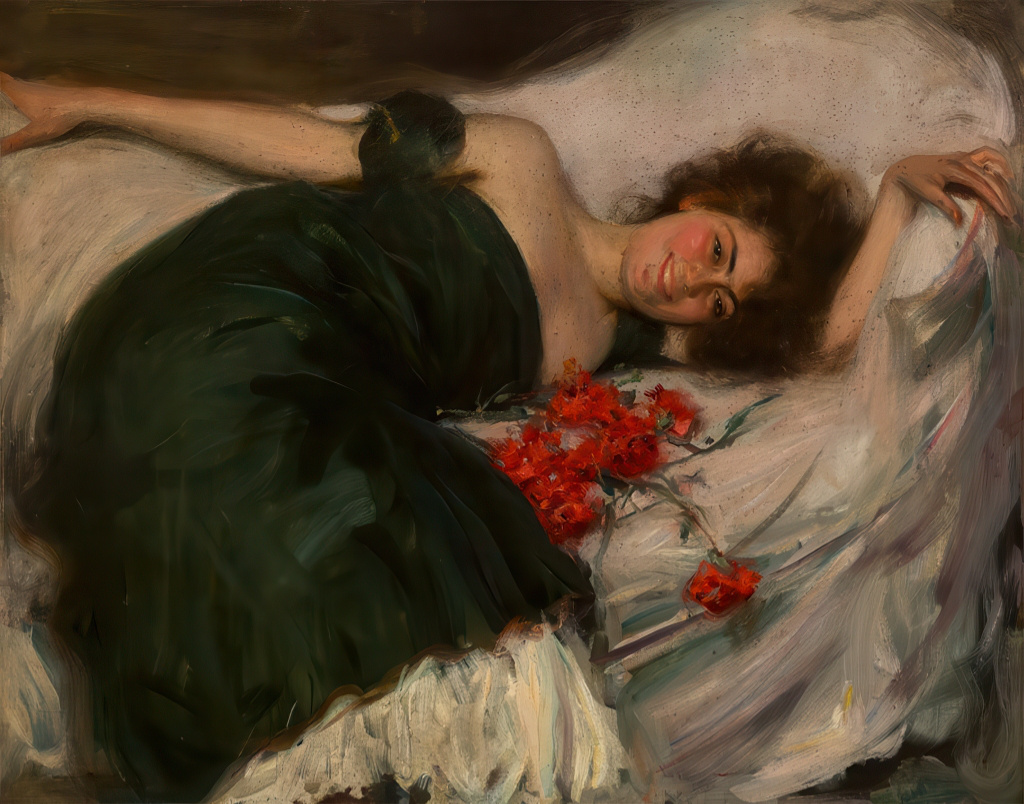
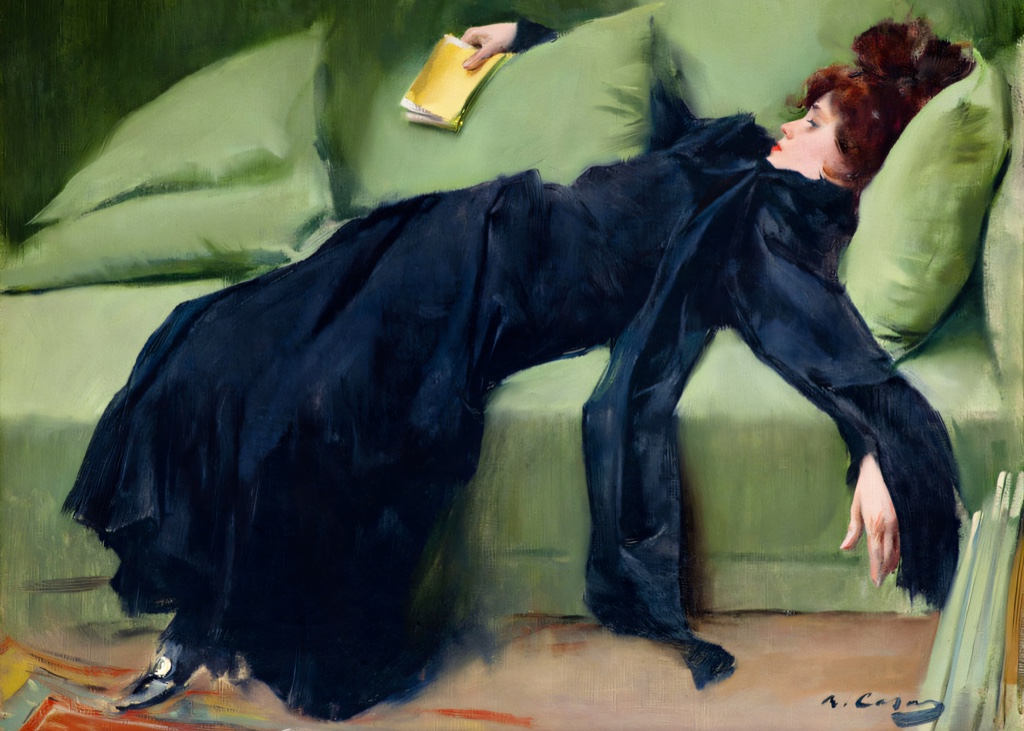
Ramon Casas' Decadent Young Woman. After the Dance, recorded by Museu de Montserrat as Joven decadente. Despues del baile, is a small painting with an unusually large afterlife. The museum identifies it as an 1899 oil on canvas measuring 46.5 x 56 cm, from the donation of J. Sala Ardiz. [6]
A young woman in black lies across a green sofa after a dance, one hand holding a reading object, her body stretched between elegance and collapse. The picture opens onto late-night leisure, modern femininity, poster culture and the uneasy glamour of Catalan modernisme.
At a Glance
- ArtistRamon Casas
- Date1899 [6]
- MediumOil on canvas
- CollectionMuseu de Montserrat
Contents
- Why This Painting Matters
- Title, Date and Collection
- What the Painting Shows
- Annotated Image
- Decadence After the Dance
- From Painting to Poster Culture
- The Model Question
Why This Painting Matters
Decadent Young Woman. After the Dance deserves a standalone page because it condenses several of Casas' strongest subjects into one memorable image: performance, private exhaustion, public style and the fragile boundary between being seen and withdrawing from view.
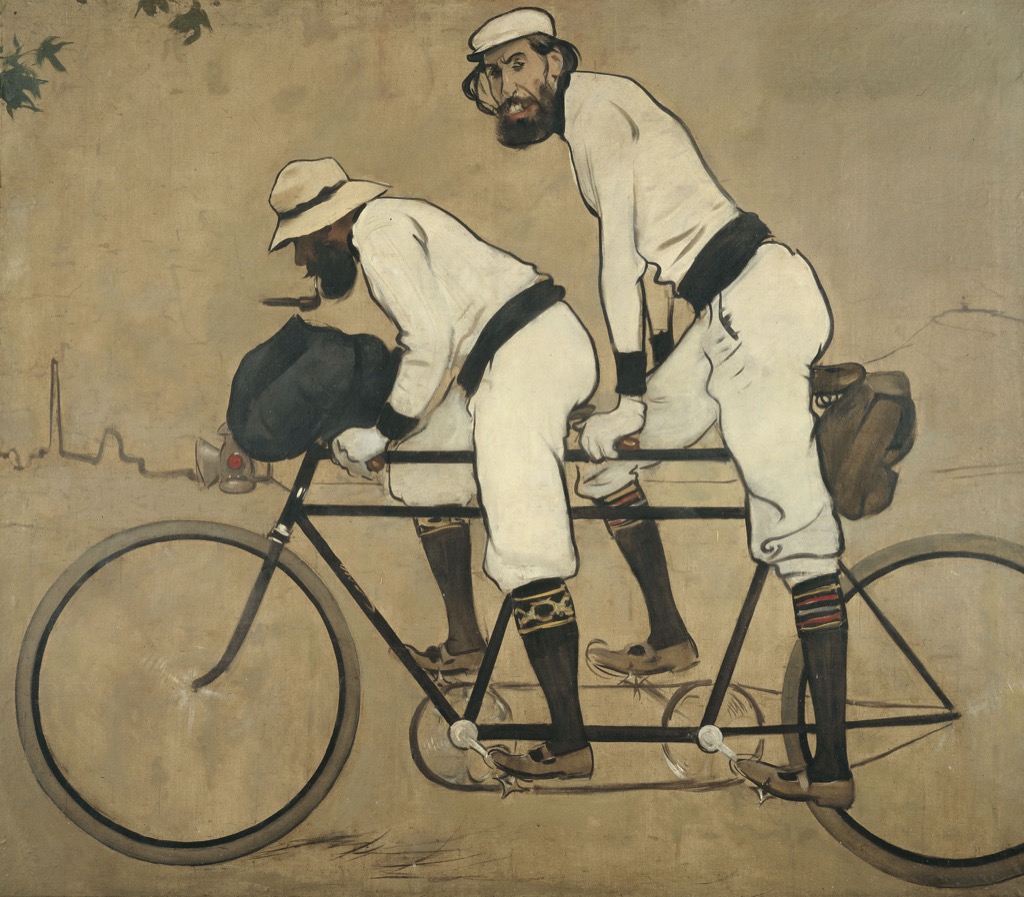
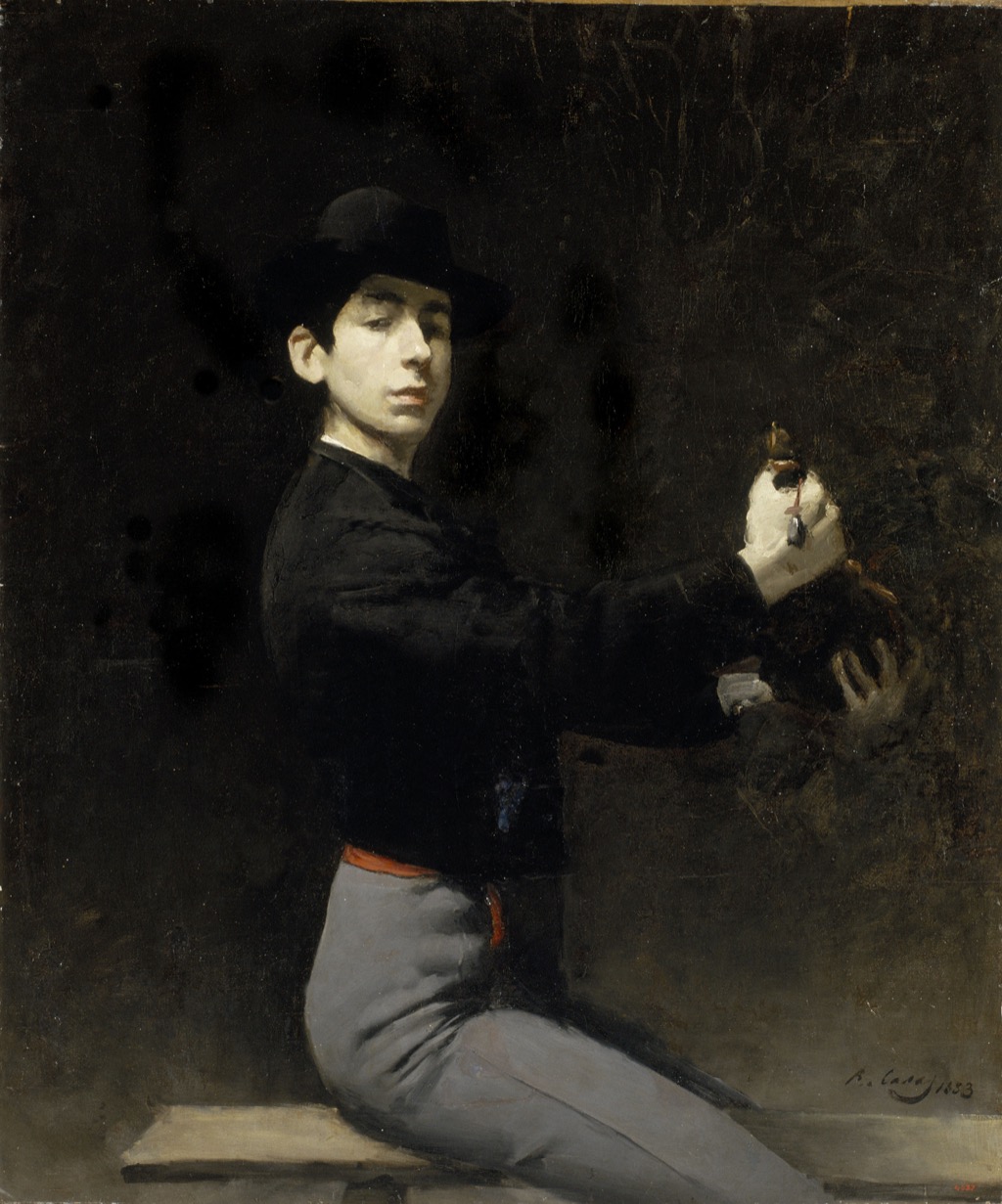
It gives the Casas cluster a different centre of gravity. The Tandem page covers social modernisme and Els Quatre Gats; the Self-portrait page covers identity and formation. Decadent Young Woman opens the late-1890s interior.
Title, Date and Collection
This guide leads with the English title Decadent Young Woman. After the Dance while keeping the source title visible. Museu de Montserrat records the work as Joven decadente. Despues del baile, while Catalan references often use Jove decadent. Despres del ball.
CaixaForum's exhibition page for Ramon Casas. La modernidad anhelada also listed the work under the variant Despues del baile o Joven decadente, dated 1899, and identified it as an oil on canvas from the Museo de Montserrat / Abbey of Montserrat, donation J. Sala Ardiz. [14]
What the Painting Shows
The painting shows a young woman stretched across a green sofa after a dance. Her black dress lies against the upholstery with theatrical clarity, while a pale reading object rests in one hand.
The title gives the narrative cue: after the dance. We do not see the ballroom, music, partner, crowd or social ritual itself. We see the return, the pause, the moment when public display has ended and a private body has to come back to itself.
Annotated Details from Decadent Young Woman. After the Dance
This annotated view follows the main visual routes through Casas's 1899 painting: the reading object, the sofa, the black dress, the turned face, the dropped hand and the signature/floor trace.
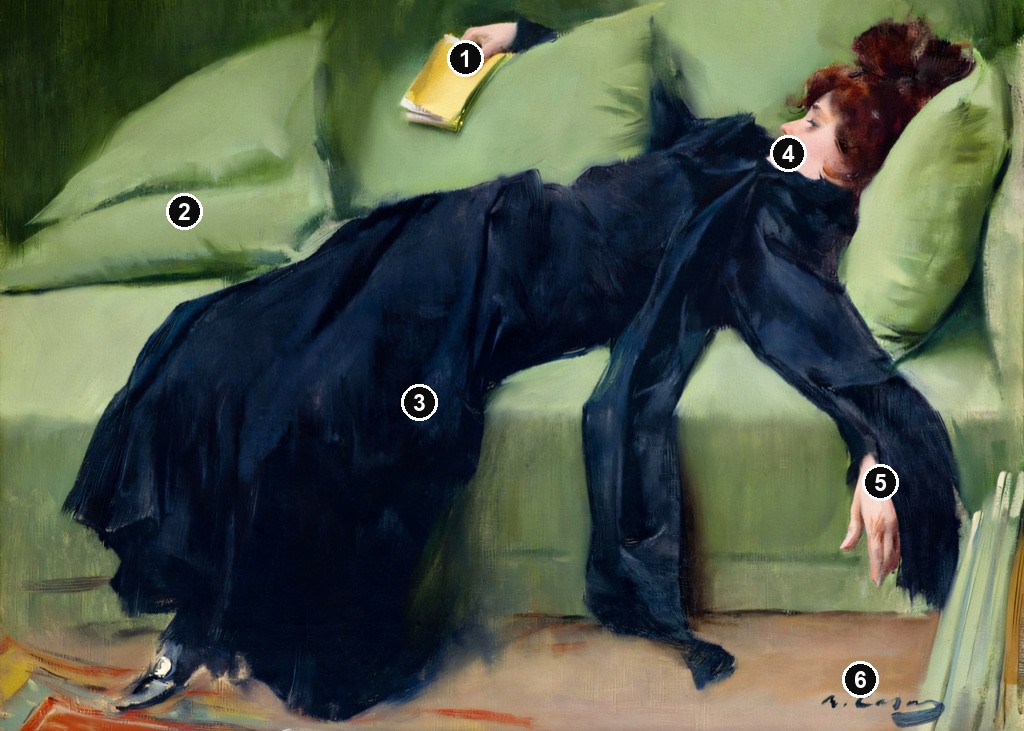
Details from DECADENT YOUNG WOMAN. AFTER THE DANCE
The details move from props and setting to body language and surface evidence, showing how Casas turns post-dance fatigue into a modern image.
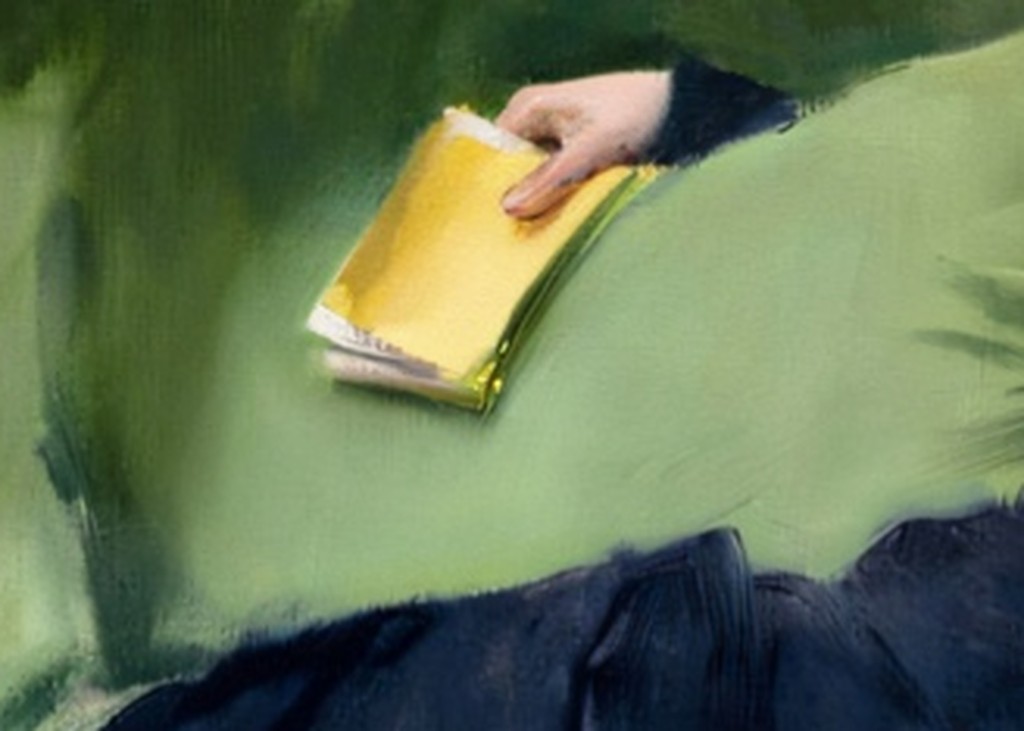
Reading object
The yellow reading object links the exhausted post-dance figure to the world of magazines, posters and modern reading culture that later surrounded the image.
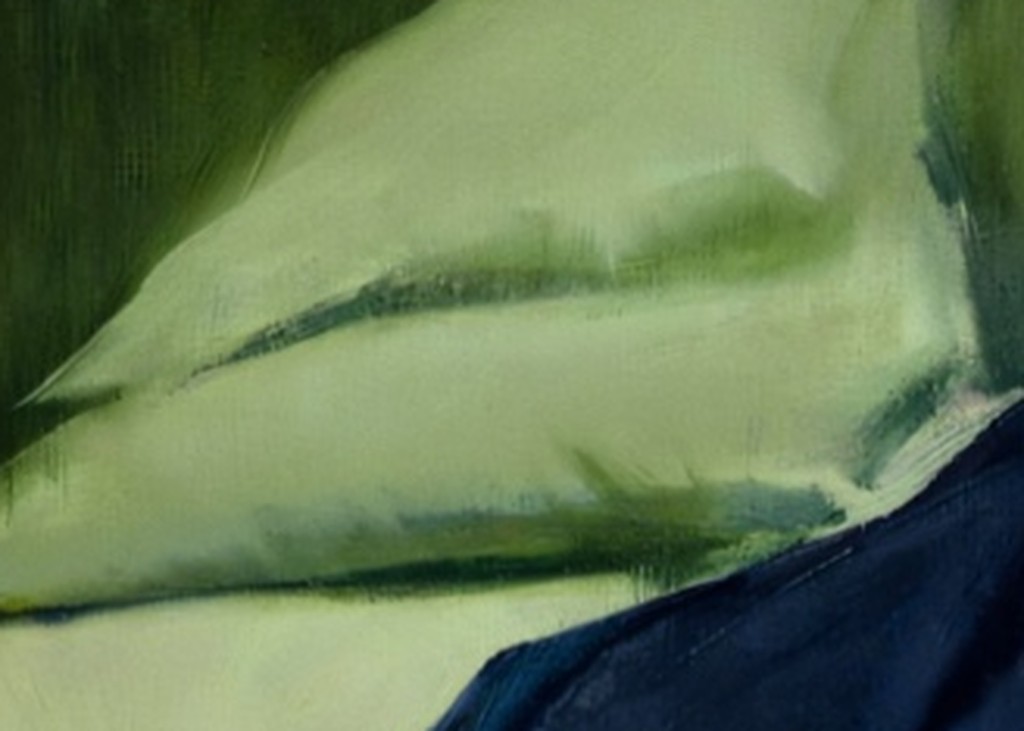
Green sofa
The sofa is not neutral background. Its cool green mass turns the scene into a cushioned stage for fashionable fatigue.
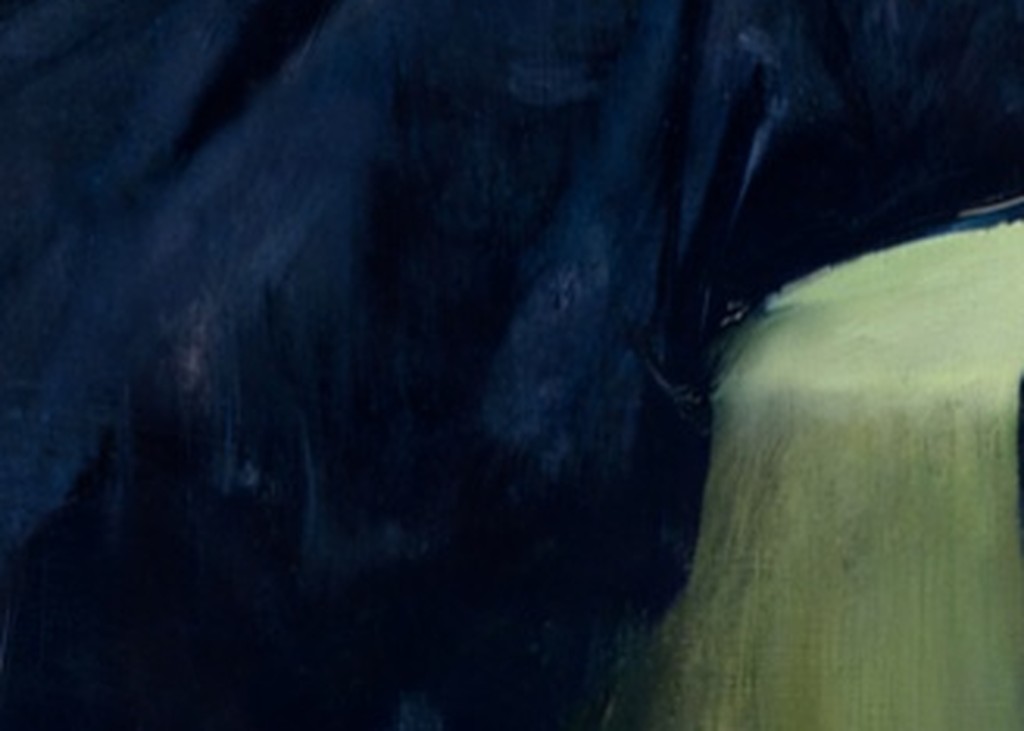
Black dress
The black dress creates the painting's main diagonal, making the body feel graphic, theatrical and physically heavy at the same time.
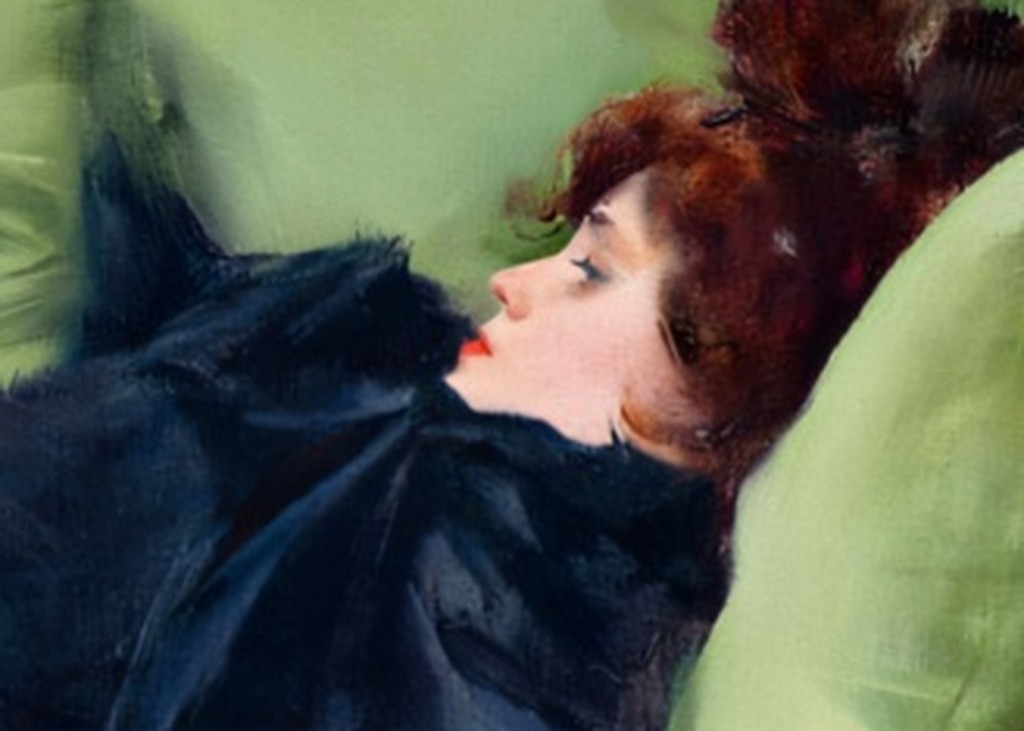
Turned profile
The face is visible but withheld. Casas keeps the figure between public display and private withdrawal.
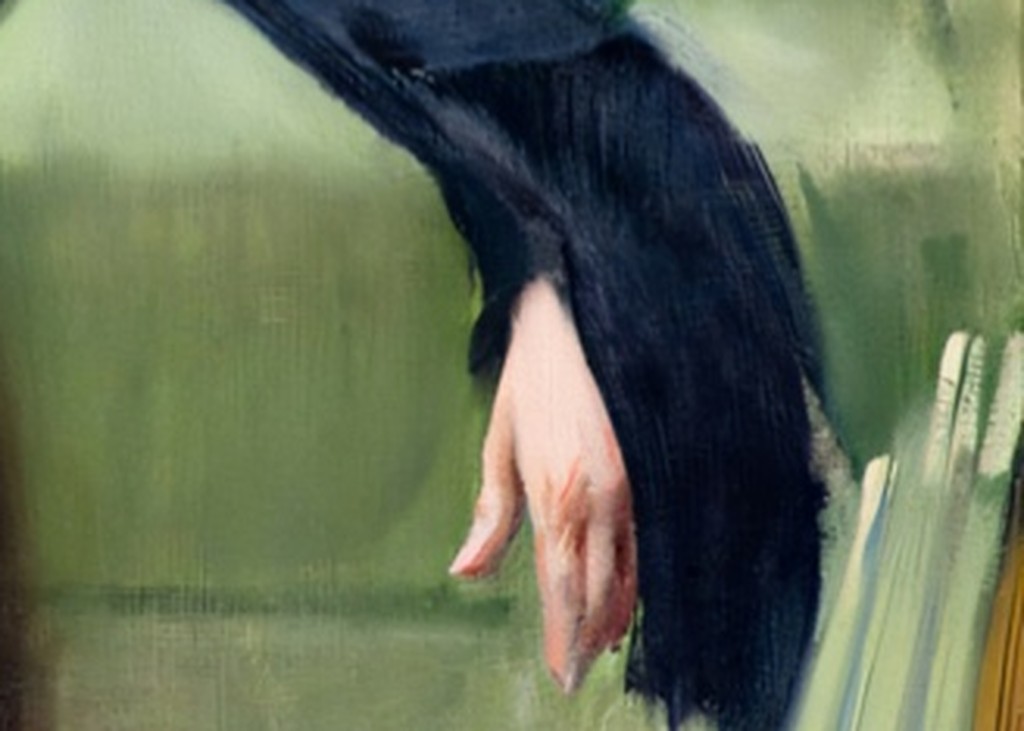
Dropped hand
The hand falling over the sofa edge gives the image its strongest bodily note of tiredness after the dance.
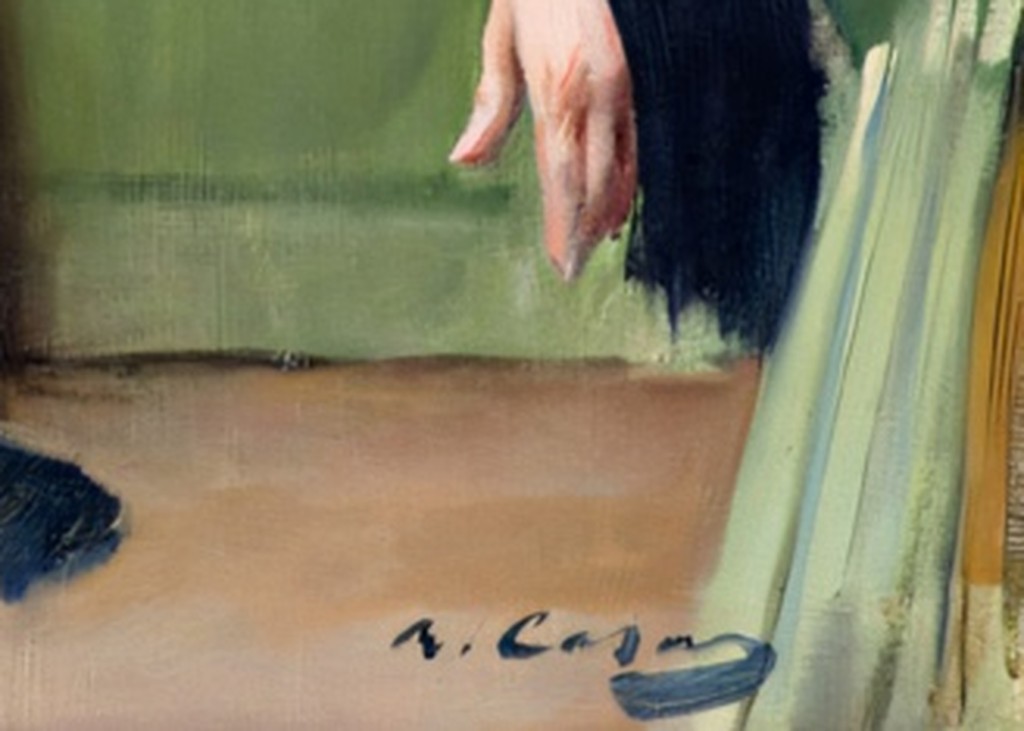
Signature and floor trace
The lower edge keeps Casas's signature near the dragged hem and floor marks, reminding the reader that this private-looking moment is also a constructed image.
Decadence After the Dance
The word "decadent" should be handled carefully. It need not mean moral collapse in a crude sense. In a late-nineteenth-century context, decadence can suggest over-refinement, languor, fashionable exhaustion and a culture fascinated by its own fatigue.
Casas gives that idea a body, but he does not reduce the woman to a symptom. She is tired, stylish, self-contained and difficult to pin down.
From Painting to Poster Culture
The relationship between this painting and Pel & Ploma is one of the strongest reasons to give the work its own page. The Reina Sofia archive record describes Pel y Ploma as a major Casas editorial project made with Miquel Utrillo, and notes that Casas used the image of Jove decadent. Despres del ball for the first poster promoting the magazine. [13]
That shift matters. What begins as a painting of post-dance fatigue becomes an advertisement for reading, writing and modern art culture. The reclining figure enters the economy of modern print.
The Model Question
Several later sources identify the model as Madeleine de Boisguillaume. Public copy should phrase this carefully because the basic Museu de Montserrat object page does not state the identification.
The safest wording is that the model is often identified as Madeleine de Boisguillaume in later cultural and art-historical discussion. ARA's 2024 report on the painting's contemporary afterlife also uses that identification. [15]
Frequently Asked Questions
Discussion
Does this painting feel more like a portrait, a mood, a social type or a poster image waiting to happen?
Reader Insights
How do the green sofa and black dress shape the emotional temperature of the scene?
What changes when the reclining figure moves into Pel & Ploma poster culture?
Is the title describing the woman, the city or the viewer's expectations?
Join the Conversation
Share your reading of this Ramon Casas page below.
References
- Museu de Montserrat, "Ramon Casas - Joven decadente. Despues del baile", accessed 25 July 2026.
- CaixaForum, "Ramon Casas. La modernidad anhelada", accessed 25 July 2026.
- Reina Sofia digital archive, "Revista Pel y Ploma", accessed 25 July 2026.
- ARA, "Selena Gomez s'inspira en la Jove decadent de Ramon Casas", accessed 25 July 2026.
- Museu de Montserrat. Object record: Ramon Casas, Joven decadente. Despues del baile / Decadent Young Woman. After the Dance, 1899, oil on canvas, 46.5 x 56 cm, reference N.R. 200.397, Donation J. Sala Ardiz. Image prepared from a high-resolution source held by TheHistoryOfArt.org. Accessed 25 July 2026.