 by Tom Gurney
Tom Gurney BSc (Hons) is an art history expert with over 20 years experience
Published on August 27, 2026 / Updated on September 6, 2026
Email: tomgurney1@gmail.com / Phone: +44 7429 011000
Self-portrait: Introduction
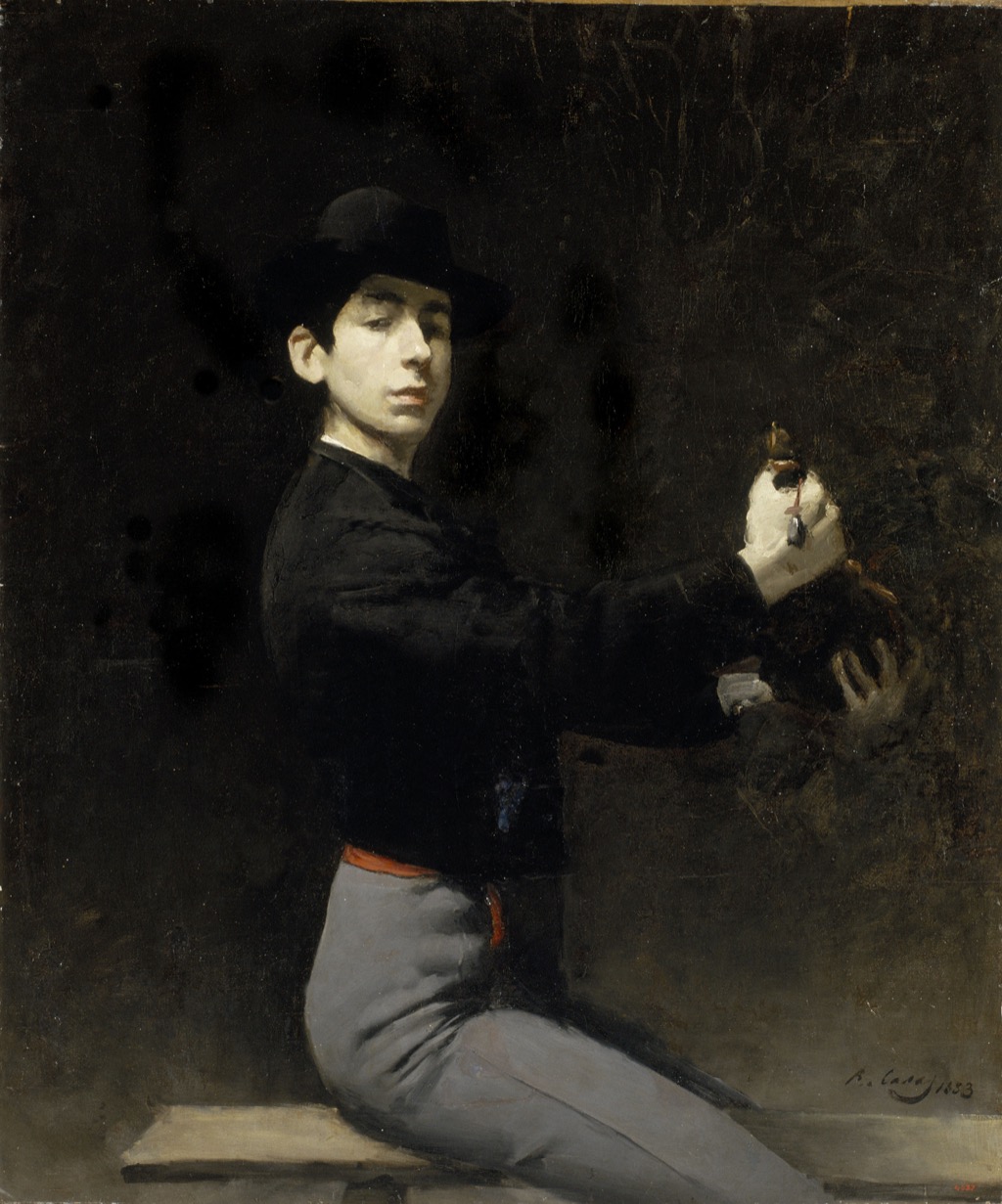
Ramon Casas' 1883 Self-portrait gives this guide a direct view of the artist near the beginning of his career. [8]
Held by the Museu Nacional d'Art de Catalunya, the painting belongs to the period when Casas' Barcelona background, Paris training and self-conscious public image were beginning to meet.
At a Glance
- ArtistRamon Casas
- Date1883 [8]
- MediumOil on canvas
- CollectionMuseu Nacional d'Art de Catalunya
Contents
- Work Context
- A Young Artist in Paris
- Visual Reading
- Self-portrait and Modernisme
- Portraiture as a Career Thread
Work Context
MNAC lists this Self-portrait as an 1883 oil on canvas measuring 115.5 x 96 cm, from the Plandiura Collection and purchased in 1932. [8]
The museum caption places the image in Paris in 1883, making it a useful early anchor for Casas' formation.
A Young Artist in Paris
Casas was born in Barcelona in 1866 and travelled to Paris as a teenager. BNE records his early training in Barcelona and his Paris study with Carolus-Duran. [1]
Paris was not simply a place where Casas learned technique. It was where he encountered modern artistic models and the public life of a contemporary art capital. [2]
Visual Reading
The painting shows Casas using portraiture on himself before he became one of the great portrait-makers of his circle.
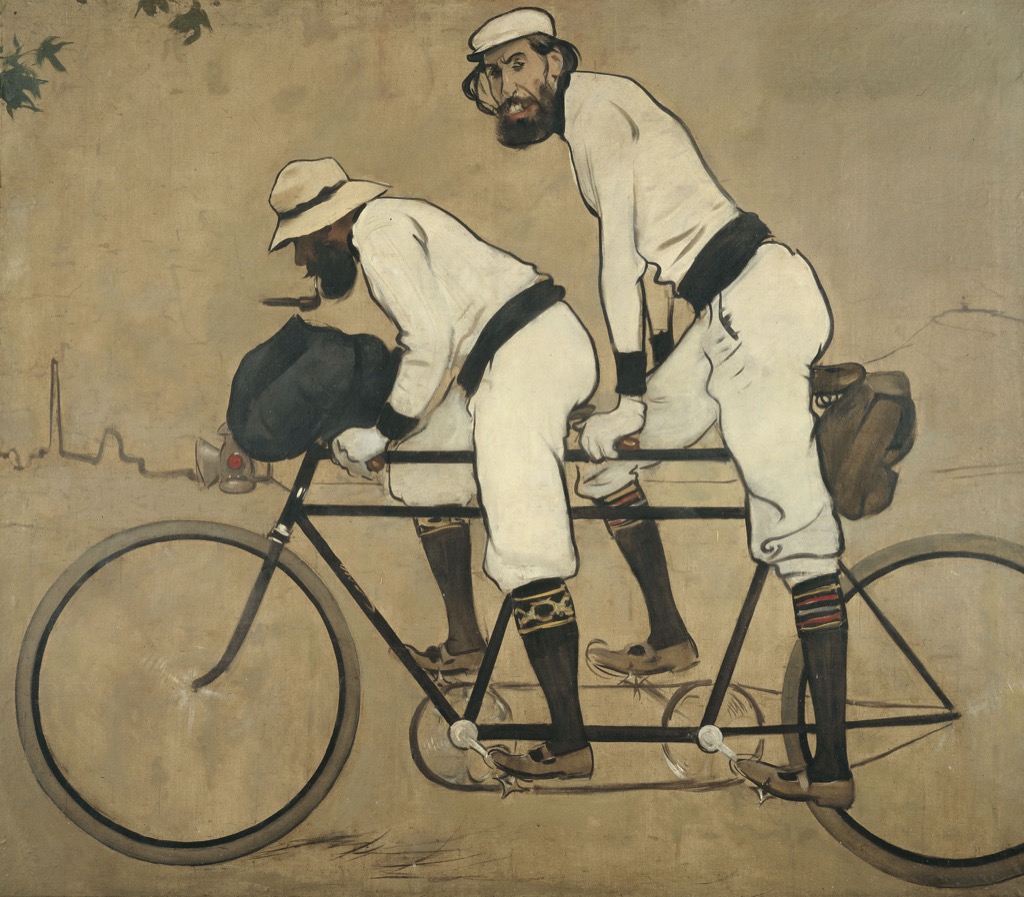
Its value is structural as well as biographical: it pairs a young artist in formation with the later public self-image of Ramon Casas and Pere Romeu on a Tandem.
Self-portrait and Modernisme
Modernisme was not only a decorative style. It was also a way of imagining cultural identity in Barcelona, with artists looking outward to Paris while building a local modern public culture. [4]
The young artist of this self-portrait would later help give Els Quatre Gats and modernista Barcelona some of their most recognisable images. [3]
Portraiture as a Career Thread
Casas' later reputation as a portraitist gives the self-portrait extra weight. The Prado identifies him as one of the principal portraitists of the Catalan bourgeoisie. [2]
This early self-image therefore belongs to a larger portrait practice in which pose, costume, social role and public recognition all matter.
Frequently Asked Questions
Discussion
How does the young Casas present himself before his later public reputation is fully formed?
Reader Insights
What does the pose suggest about confidence, study and self-fashioning?
How does the Paris setting change the way you read this early image?
Does the painting feel private, public or somewhere between the two?
Join the Conversation
Share your reading of this Ramon Casas page below.
References
- Museu Nacional d'Art de Catalunya, "Self-portrait", accessed 25 July 2026.
- Biblioteca Nacional de Espana, "Casas, Ramon", accessed 25 July 2026.
- Museo Nacional del Prado, "Casas y Carbo, Ramon", accessed 25 July 2026.
- The Metropolitan Museum of Art, "Barcelona and Modernity: Gaudi to Dali", accessed 25 July 2026.
- Patrimoni Cultural, Generalitat de Catalunya, "Els Quatre Gats", accessed 25 July 2026.
- Museu Nacional d'Art de Catalunya, Barcelona. Ramon Casas, Self-portrait / Autoretrat, 1883, oil on canvas, 115.5 x 96 cm, Plandiura Collection, purchased 1932, inventory 004037-000. Rights note recorded by MNAC:
Domini public. Source image file. Accessed 25 July 2026.