 by Tom Gurney
Tom Gurney BSc (Hons) is an art history expert with over 20 years experience
Published on June 19, 2020 / Updated on November 29, 2026
Email: tomgurney1@gmail.com / Phone: +44 7429 011000
The Beloved: Introduction
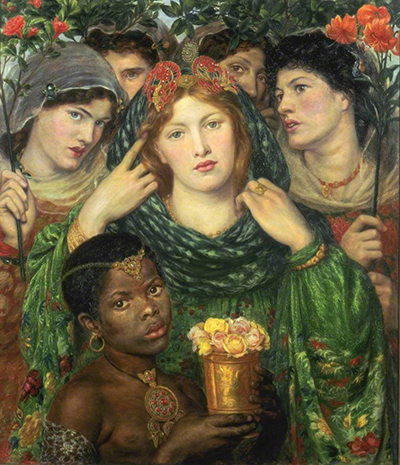
A bride lifts a green veil from her face and looks straight out of Dante Gabriel Rossetti’s The Beloved. Her attendants crowd behind her. In front, a child holds up a gilded cup of roses and meets the viewer’s gaze as well. Rossetti took the bride from the biblical Song of Songs, but the scene took years to assume this form. The commission changed hands, a girl gave way to a boy in the foreground, and the artist returned to the painting seven years after its first showing. [1] [2] [3]
At a Glance
- ArtistDante Gabriel Rossetti
- Date1865–66, reworked in 1873
- MediumOil paint on canvas
- Dimensions82.5 × 76.2 cm
- CollectionTate, N03053 (Surtees 182)
This work across Dante Gabriel Rossetti’s career
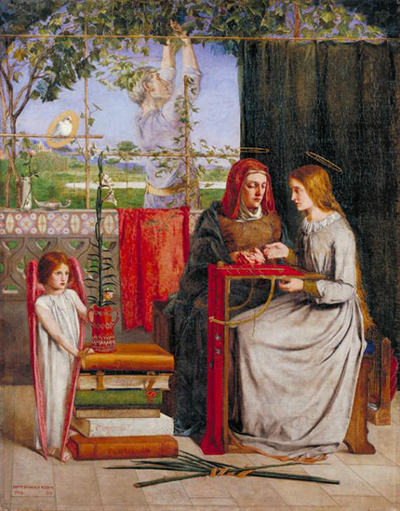
The Girlhood of Mary Virgin
1848–49Arthur’s Tomb
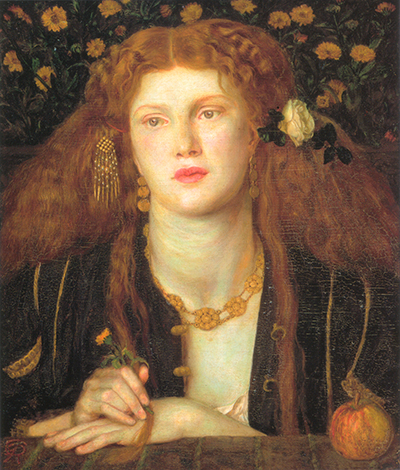
1855Bocca Baciata
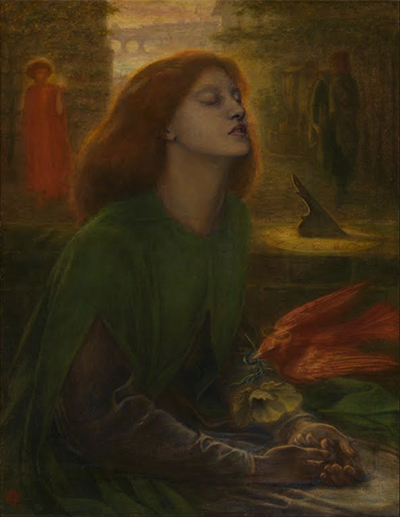
1859Beata Beatrix
about 1864–70The Blue Bower
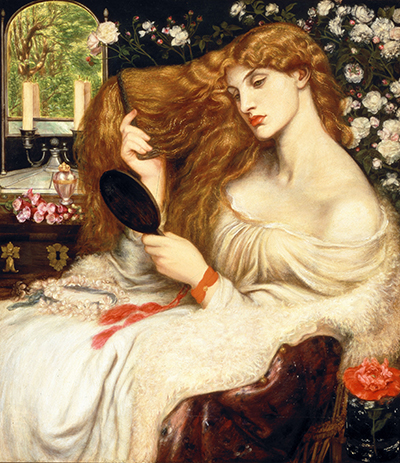
1865Lady Lilith
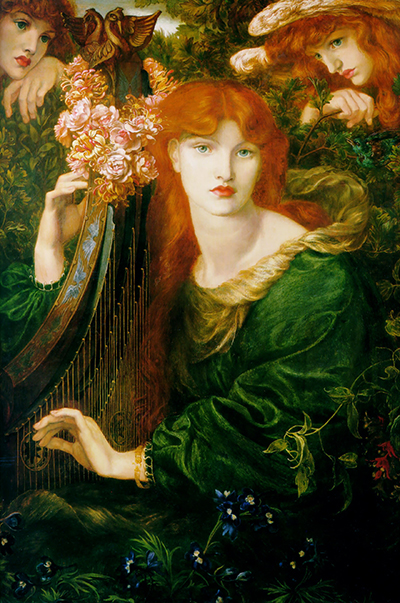
1866–68, altered 1872–73La Ghirlandata
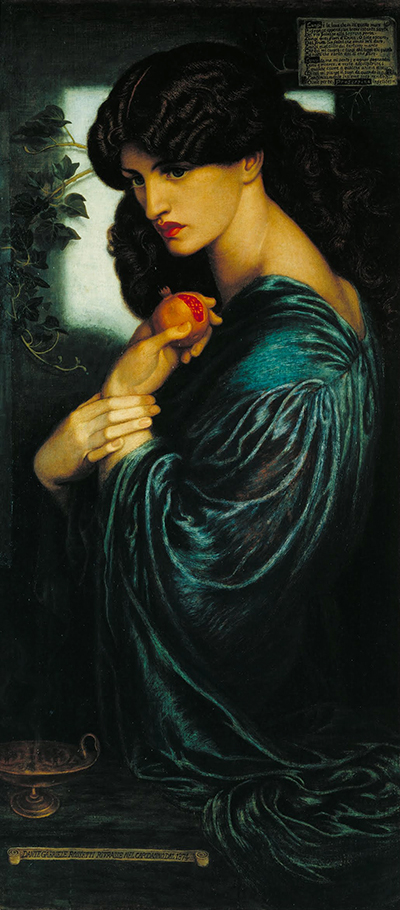
1873Proserpine
1874The Blessed Damozel
1875–78Contents
- One canvas with two dates
- From Beatrice to the bride of the Song of Songs
- What changed in 1865 and what changed in 1873
- What the frame asks us to read
- Veils, flowers and the arrangement of faces
- Who sat for Rossetti?
- Race, colour and the viewer’s place
- From Rae’s collection to Tate
One canvas with two dates
Tate catalogues The Beloved (‘The Bride’) as oil paint on canvas, dated 1865–66. It measures 82.5 × 76.2 cm and is accession N03053. The National Gallery of Australia, exhibiting the Tate loan, dated it 1865–66/73, bringing the later campaign into the credit line. The artist’s monogram and the date 1865–66 at the lower left record the first completion. In Virginia Surtees’s catalogue raisonné the work is no. 182, the number used in the Rossetti Archive’s entry. That entry gives both sets of dates and lists the support as panel, a description also found in a late Victorian Guildhall loan catalogue. Tate’s identification supplies the current description of the physical work. The accession and provenance tie the descriptions to the same object. The reason for the older description remains unclear. [1] [2] [3] [4]
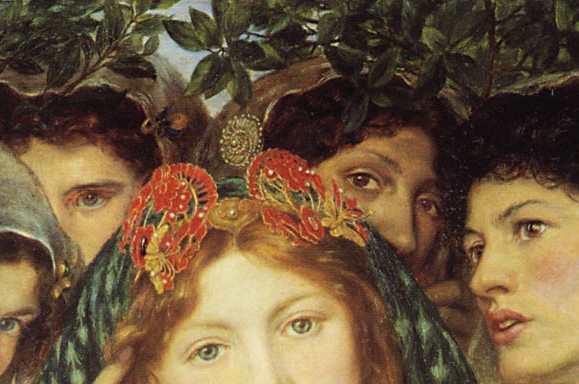
At this scale, the faces and their surroundings compete for attention in a way that a small reproduction can obscure. The comparatively upright but almost square canvas packs the figures into a space barely wider than their combined shoulders. The large sleeve at the lower right belongs to the bride, whose face occupies a much smaller area than her clothes. Above her brow, the fabric and headdress allow two of the attendants to appear in fragments. Seeing those fragments helps explain why a painting that reads at first as a single imposing likeness turns into a group picture as the eye adjusts. [1]
From Beatrice to the bride of the Song of Songs
In 1863 Rossetti began thinking about the picture as a Beatrice for Ellen Heaton. He already had a sustained interest in Dante Alighieri’s heroine, but the letters he sent Heaton in July show the project turning early towards Solomon’s bride. Rossetti thought the head he had in mind suited the new subject better and offered to paint a Beatrice for her separately if a suitable model could be found. He proposed calling the new picture The King’s Daughter. The name helps account for the royal wedding language that survived on the frame even after The Beloved became the established title. This was a change in who the central figure would be and in the kind of encounter the painting would stage. [3] [5]
By December 1863 the Birkenhead banker and collector George Rae was in negotiations for the work. According to William Michael Rossetti’s account of his brother’s correspondence, the artist proposed two prices, £315 for the picture as he then envisaged it and £262 if he reduced the amount of material in the background. Rae had suggested simplifying that part of the design. Even in discussing the less expensive option, Rossetti reserved the choice of what to change. The price was eventually fixed at £300, with delivery promised by the end of 1864. In June 1865 Rossetti explained the delay by saying that he had enlarged the subject beyond the original terms. His account establishes a change in scope without spelling out a neat sequence for every head, branch or inch of canvas. [6]
The dates of the commission also explain why the painting’s origins precede the date on the canvas. By February 1866 it was ready to show at the Arundel Club. Charlotte Polidori, the artist’s aunt, wrote on 20 February that it would be exhibited the next day, for one day only. William Michael records that it was with Rae by 23 February. The interval between the promise and delivery had allowed a commission that began around a single literary heroine to become an elaborate group, complete with multiple sittings, floral props and an unusually insistent relationship between the bride and the spectator. [3] [5] [6] [7]
What changed in 1865 and what changed in 1873
Early drawings record Rossetti’s consideration of a Black girl for the foreground. Two studies of a girl and a study of a boy survive in the Birmingham Museums Trust collection. The first painted conception also included a girl, according to William Michael. In March 1865, while the picture was in progress, Rossetti decided to substitute a boy. In explaining his search to Rae, he likened the intended colour of the whole painting to jewels and said that “the jet would be invaluable”. The phrase describes the value he placed on a particular colour relationship and shows how directly that calculation affected his choice of a child to sit. Chiedza Mhondoro dates the boy’s sittings to spring 1865, and Matthew Francis Rarey likewise places the painter’s encounter with him in March of that year. [6] [8] [9]
There is a conflicting date in the Rossetti Archive’s oil records, which put the substitution among the changes of 1873. The evidence for the boy’s earlier appearance is unusually specific. William Michael records that the roses in his cup still needed work in December 1865. On the eve of the February 1866 showing, Polidori wrote down Rossetti’s account of how he met and painted the boy. These records put him in the painting Rae received. They leave room for Rossetti to alter the figure and its surroundings later, as he did with other parts of the composition. [3] [6] [7]
The return to the painting in 1873 was a separate campaign. Rae lent it back to Rossetti at the artist’s request while he was living at Kelmscott. William Michael reports that by late March his brother had adjusted the general colour tone, modified the heads of the bride and the woman at the right, and repainted the bride’s left hand, on the viewer’s right. Rossetti described the revised colour as mellow and rich without having become darker. His work on the hand matters to the scene because that is the hand gathering the veil beside the bride’s neck. A change there could affect the instant at which the bride seems to be revealing herself. A modern claim that a different named model supplied the reworked face would require stronger evidence than the visible alteration. [6]
A smaller, independent object makes the chronology more tangible. James Anderson Rose acquired a photographic print of the developing composition worked over by Rossetti in watercolour. In a letter of 4 July 1865, quoted in a Christie’s catalogue, the painter asked Rose to wait until the large picture was back in hand so that the unfinished parts of the small version could be taken from it. In the auction catalogue’s comparison, the attendant partly eclipsed on the viewer’s left presents a different eye in the small version, and the woman at the far right lacks the necklace seen in the Tate oil. The rose colours and the bride’s hand differ too. Christie’s allowed for possible later retouching of the small work. It is evidence of change across the life of the composition, with its own history as a painted object. [10]
The Archive separately catalogues a photograph it dates to 1873, after some revisions were already underway. A photograph taken during work and a photograph overpainted for a buyer reflect different decisions about what to record or elaborate. The exact colour of the oil as it left the Arundel Club in 1866 remains uncertain. Each photographic object preserves particular details from the work in progress. That is also why the final canvas can bear its early date and carry the marks of a later stage. [3] [10] [11]
What the frame asks us to read
Rossetti depicts a bride drawing aside her veil as she approaches her lover. The Song of Songs, also called the Song of Solomon, opens with a wish for kisses and compares love to wine. The frame inscribes that passage from Song 1:2 alongside wording from Psalm 45:14, in which a woman in embroidered clothing is brought to the king in the company of her attendants. The Rossetti Archive also transcribes the brief declaration from Song 2:16, “My beloved is mine and I am his”, with the work. The inscription from the psalm has its own phrasing for the bride’s companions, so the familiar King James text and the wording on the frame need to be read on their own terms. [3] [5] [12]
The two principal passages change how the picture can be read. The words from the Song express desire from within the encounter. The psalm presents a public event with a procession, costly dress and a place assigned to each person. On the canvas the bride’s direct address belongs to the first of those registers, and the group around her gives form to the second. The dress is both something that stops the eye and an answer to the psalm’s attention to needlework. One can understand the attendants’ proximity as a trace of a procession even though the painting offers scarcely any floor on which they could walk. The frame carries this idea of movement into a picture whose figures appear held in place. [3] [5] [12]
The lack of a painted bridegroom is crucial. The viewer stands where the central woman’s glance arrives. William Michael described the bridegroom as advancing outside the image, and the Rossetti Archive reads the viewer’s position as a way of identifying with him. The bride’s hands make a movement that seems addressed to someone in particular, while everyone looking at the painting occupies that position in turn. Her attention feels personal even though the view it creates is available to any spectator. [3] [6]
Veils, flowers and the arrangement of faces
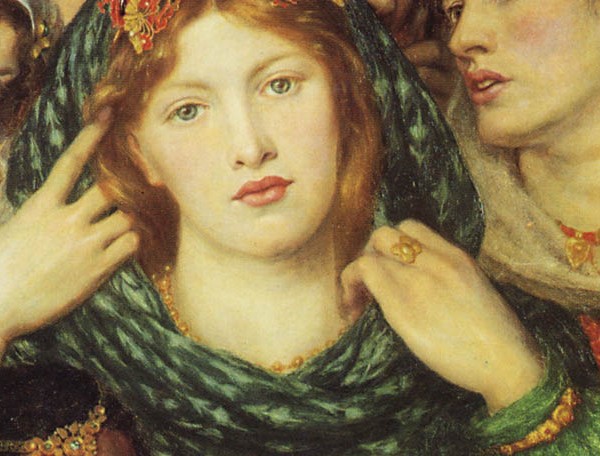
Begin with the bride’s hands. The fingers on the viewer’s left extend towards her temple, while the other hand grips a fold close to the shoulder. Between them, the veil winds beneath her chin in bands of dark and lighter green. Her two hands create room for the face. Just outside that opening, the attendants on either side are partly veiled, too. Their pale translucent fabric echoes hers while leaving their brows and mouths differently exposed. The grouping repeats the action of framing a face several times within the same narrow space. [1] [13]
The faces play different roles in that arrangement. The woman on the viewer’s right, seen nearly in profile, directs her gaze across the picture. The woman on the left shows more of her face to us, her head tipped inward. Two faces are set farther back, where headdresses, heads and veils partly interrupt our view. Rossetti has given the composition roughly paired positions without aligning the eyes or matching the angle of each head. Above them, stems and leaves give just enough sense of an enclosure to join the figures together. At the edges, taller red and orange blossoms rise in the hands of the outer attendants. The roses at the bottom are gathered tightly in a cup. Their soft yellows and pinks pull the eye down through a picture otherwise dominated by a broad field of green. [1] [13]
Tate’s 2023 exhibition guide connects the composition to Titian’s Woman with a Mirror in the Louvre. In Titian, mirrors offer different views of a woman as she attends to her appearance. Rossetti obtains a related effect through the surrounding heads, which show a series of angles and degrees of concealment. His bride looks out, and her companions’ faces have a life of their own. The echoes of pose draw attention to the woman at the centre, even as those distinct expressions prevent the whole group from behaving like a set of literal reflections. [14] [15]
The bride’s green garment has been identified as a Japanese kimono. Dress historian Allie Yamaguchi, drawing on George Price Boyce’s diary, records that Rossetti borrowed it from Boyce. She discusses its unusual arrangement around the body and the gathered cuffs as evidence of an adaptation for the painting. The visible effect is a wide sleeve with room for a substantial field of green, broken by curved bands of ornament and flower forms. The head ornaments, for which Art Fund’s historical description identifies Peruvian featherwork, offer a further example of the mixture of sources. The 2023 Tate guide sets the work within the greater circulation of goods and people through travel and colonial expansion, and reads the gathering of objects and looks from different places as a Victorian Orientalist fantasy. Their mixture in one scene tells us about what Victorian viewers might have found sumptuous or unfamiliar. The picture’s pattern and colour make that mixture feel coherent even though the objects cannot locate the bride in one historical place. [13] [14] [16]
Annotated Details from The Beloved
Dante Gabriel Rossetti, The Beloved, 1865–66, reworked in 1873, Tate, N03053. Collection record.
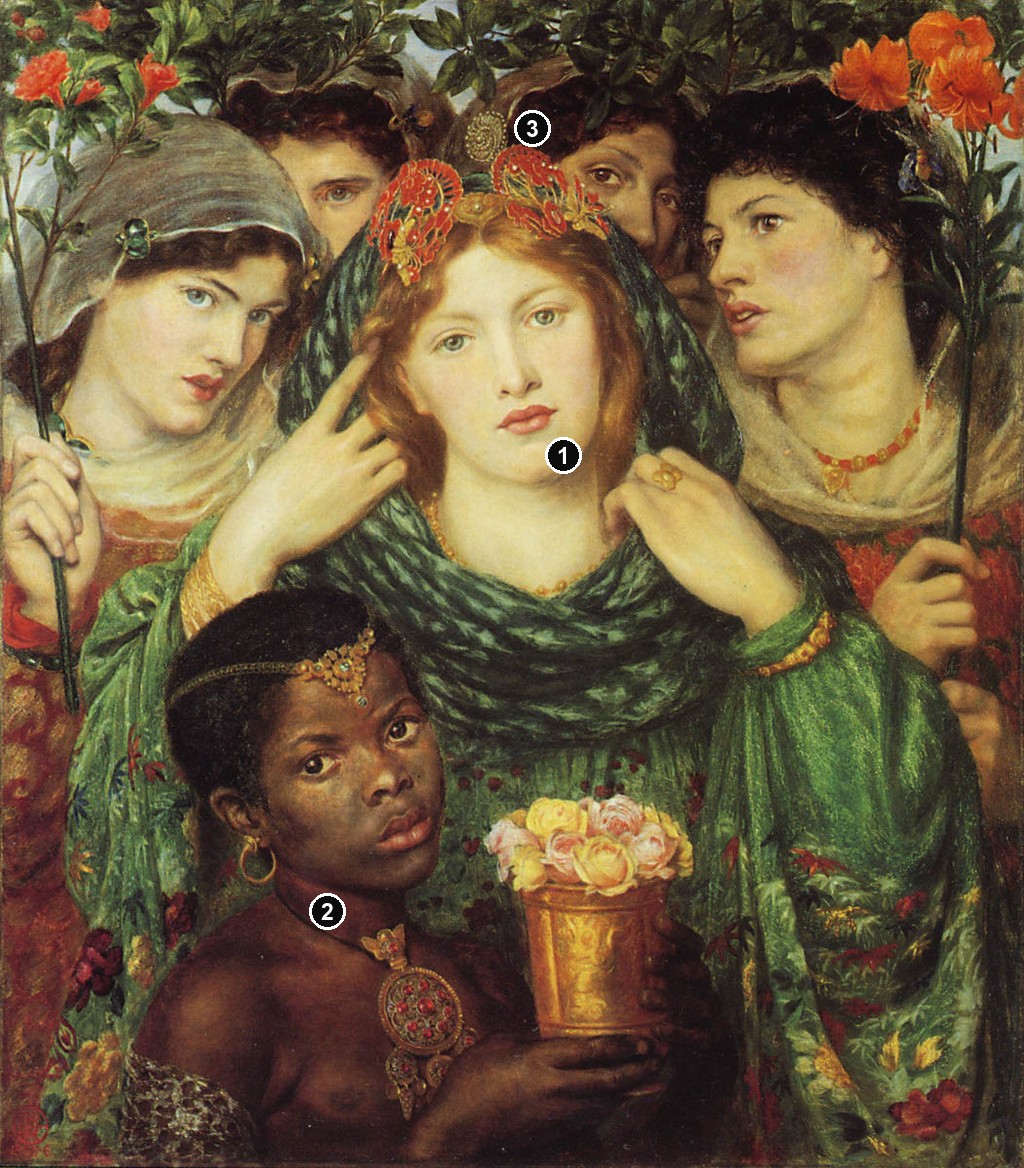
Details from THE BELOVED
Select a numbered point to compare each detail with its place in the painting.
The bride and her veil
The bride draws the green fabric to either side of her face. Her gaze meets ours as the gathered folds and fingers turn our attention back towards her.
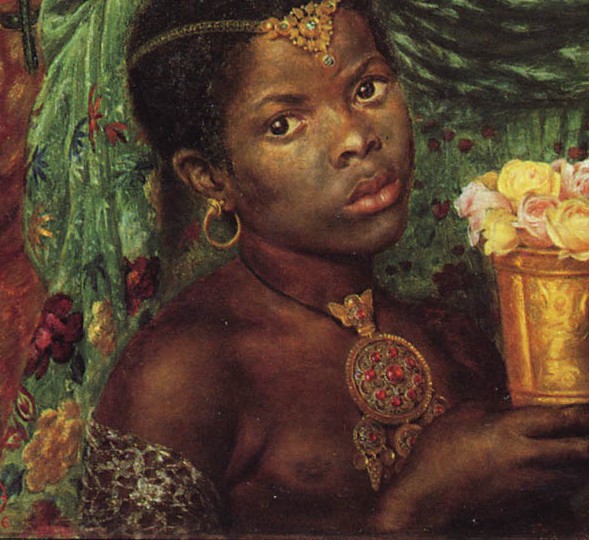
The boy and the gold vessel
The boy also looks out of the painting. The cup of flowers and his hand overlap the bride’s clothes, bringing him forward from the ring of attendants.
Partial faces above the bride
Two attendants appear in fragments above the principal faces. Their positions make the crowd look deeper than the narrow space at first suggests.
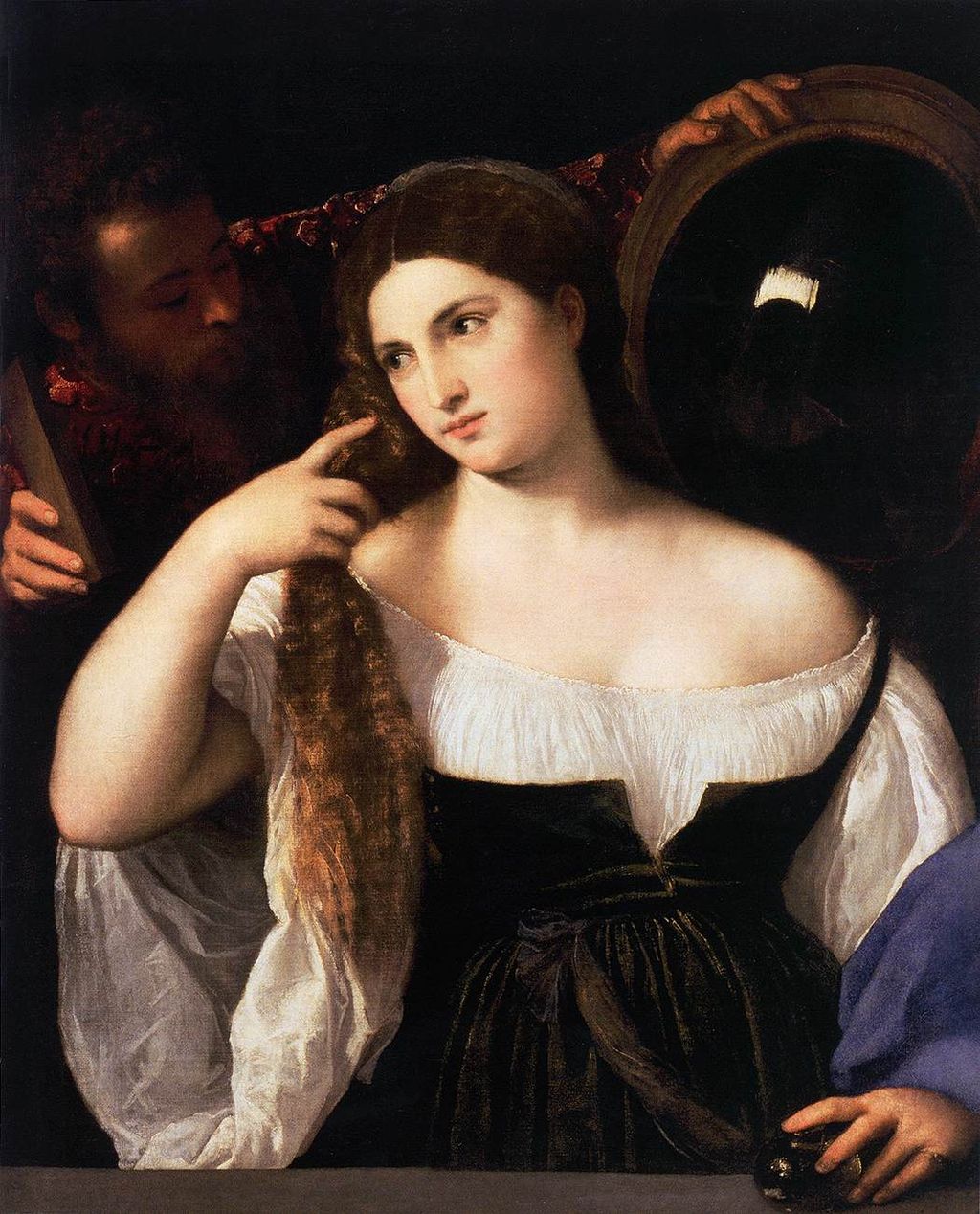
Titian, Woman with a Mirror, Musée du Louvre, INV 755 Image source. Public domain.
Who sat for Rossetti?
Mhondoro identifies Marie Ford as the model for the bride, Keomi Gray Bonnet as the model for the attendant on the viewer’s right and Fanny Eaton as the model for the face partly visible behind her. She identifies Ellen Smith with the attendant at the left, and suggests tentatively that Smith may also have sat for the more obscured woman behind. Smith may therefore have contributed to two different likenesses. Rossetti was assembling a group of fictional attendants from a much smaller circle of people who worked in his studio. The identification of Ford is supported by the Archive’s record of the 1863 chalk study for the bride’s head and shoulders. William Michael, writing later, tentatively remembered the name as Mackenzie. His uncertainty and the record of Ford in the study make it prudent to start with Ford and keep the later retouching distinct. [3] [6] [8] [17]
These women brought lives and work to the studio that the painted scene largely conceals. Mhondoro describes Keomi as Roma, Eaton as a Jamaica-born woman of mixed heritage who had worked as a laundress, and Smith as a former housemaid. Their faces are more specific than the broad categories into which Victorian viewers could sort them. Eaton appears where the opening between two other heads lets us see her glance. The grouping can make her relatively easy to miss, though her position gives an impression that the company continues back into the dark foliage. Keomi’s profile is more fully exposed. A dated pencil study in the Victoria and Albert Museum records her likeness separately from the part she eventually played in the group. [8] [18]
The foreground child is less well documented. Polidori’s memorandum records having heard Rossetti say that he had first seen the child at a hotel door and was referred to the person he called the boy’s “master”. It also recounts that the boy sometimes cried when sitting and was active between sittings. It is Rossetti’s account written down by his aunt. The description of the adult leaves the nature of that relationship unresolved, and the reported behaviour supplies little basis for deciding what the boy was thinking or feeling. His name and legal status remain uncertain. The painted costume establishes a role in the wedding scene, as it does for the women who sat. [7] [8] [9]
Race, colour and the viewer’s place
The boy is nearest to us, bare-shouldered and dressed in elaborate ornaments. The cloth on his upper arm, the gold at his brow and the pendant against his chest make his part of the canvas as richly worked as the bride’s. The painter’s comparison with jet also makes plain that the child’s skin mattered to him as an element in the picture’s colour. The hierarchy is visible in the design. The white bride is set higher and given the action that governs the story. The boy holds an object of display for the company, yet his position in front and his direct gaze give him a presence that competes with hers. The painting makes both impressions possible on the same surface. The choice of a white bride also shows the extent of Rossetti’s freedom with his source. Only a few verses after the wish for kisses, the opening chapter of the Song gives its woman speaker the words “I am black, but comely” in the King James Version. The words do not assign a modern racial identity to an ancient literary voice. They do make the bride’s own complexion a subject of the poem, whereas Rossetti makes her pale skin a centre of attention amid a range of painted complexions. [1] [6] [8] [12]
The contrast has invited a comparison with Édouard Manet’s Olympia. The Rossetti Archive reports that Rossetti saw the picture in Manet’s studio in 1864 and treats it as a source for the attendant. In the painting now at the Musée d’Orsay, an adult Black woman brings a bouquet to a reclining white woman who looks at us. In The Beloved the child’s cup is equally prominent but his own look comes out of the picture and towards the spectator. The parallel makes sense as a possible stimulus, particularly in the use of flowers and in the placing of the figures. It leaves room for each painter’s different setting, pictorial structure and treatment of the person who brings the flowers. [3] [19]
Rarey reads Rossetti’s choice in the context of nineteenth-century abolition, racial stereotypes and the terms of artistic labour. He argues that Rossetti was trying to give Blackness an aesthetic role independent of the politics of slavery and race. The attempt, as an interpretation of the painting, brings us back to the doubleness of the colour comparison. Rossetti wrote as though the visual contribution of the boy’s skin could be considered in its own right, while the working arrangements and the position the figure occupies make the social question hard to detach from the effect of the paint. A claim about what the painter hoped colour could do is different from a claim about the identity or experiences of the child. [7] [9]
Mhondoro and Janine Francois have asked what becomes visible when the museum viewer starts from the child’s presence. Mhondoro introduced her exhibition catalogue essay with a short, explicitly fictional account written from the boy’s point of view. Its questions about the encounter in the studio arise from archival gaps as well as from the painting. Francois, writing about her own experience of looking, compares the child’s presence on the canvas with his absence from a tiled reproduction at Pimlico Underground station. Her comparison shows how drastically a crop can change the distribution of attention. She also considers how Birmingham’s studies put the children’s faces in view individually, free of the roles or proportions of the oil. [8]
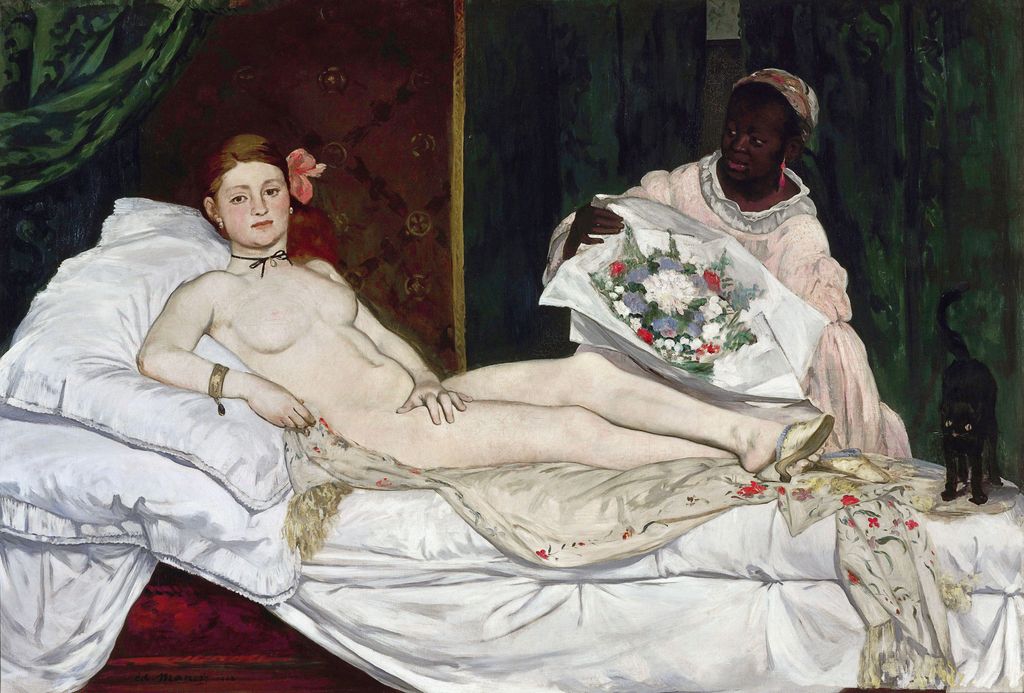
Édouard Manet, Olympia, 1863, Musée d’Orsay, RF 644 Image source. Public domain.
From Rae’s collection to Tate
The Beloved moved between settings even before it entered the national collection. Its first recorded showing was brief. It then spent years with Rae, who subsequently lent it for exhibitions. The Rossetti Archive records appearances at the Royal Academy in 1883 and the Walker Art Gallery’s Grand Loan Exhibition in Liverpool in 1886. William Michael recalled the picture sharing the highest praise with Rossetti’s Monna Vanna among those inclined towards his brother’s later work. He agreed on their accomplishment in execution while ranking them lower for depth of meaning. The later Guildhall catalogue still names Rae as lender and explains the action through the words from Psalm 45. Tate acquired the work in 1916 with support from the Art Fund and assistance from Sir Arthur Du Cros and Sir Otto Beit. [2] [3] [4] [6] [13]
The 2023 exhibition The Rossettis placed studies of the sitters near the painting. Seen this way, the oil belongs to a practice of sittings, drawings and revisions as much as to the invented procession it depicts. Comparing it with Bocca Baciata shows how Rossetti could put a face close to the viewer and use dress and flowers to hold attention. Here he had to sustain that closeness across several faces at once. The foreground child and the half-hidden women repay looking as closely as the bride does. Each participates differently in the visual encounter announced by the words on the frame. [1] [14]
Artworks directory
Explore paintings, drawings and prints by title or date. The medium filter uses confirmed media. Other entries link to their numbered catalogue records. Rossetti Archive picture catalogue
| Name | Date | Medium |
|---|---|---|
| Grotesque Sketches of a Man and a Dragon, etc. | 1830-1835? | See catalogue S744. |
| The Rocking-Horse | 1834 | See catalogue S1. |
| The Castle Spectre | 1836 October | See catalogue S2. |
| Designs for Title Pages of Four Novels | 1840 | See catalogue S5. |
| Homeward Bound | 1840 | See catalogue S12. |
| Juvenilia: Bolingbroke | 1840 c. | See catalogue S613. |
| Playing-Cards | 1840-1845 | See catalogue S4. |
| The Arabian Nights Illustrations | 1840 | See catalogue S7. |
| The Heir of Linne | 1840 | See catalogue S6. |
| The Iliad | 1840 February | See catalogue S3. |
| The Nun | 1840? | See catalogue S610. |
| A Fencing Match | 1842? | See catalogue S724. |
| Two Warriors | 1842? (early 1840s) | See catalogue S614. |
| Blanche and the Dauphin | 1843 | See catalogue S9. |
| Death of Marmion | 1843 July | See catalogue S8. |
| Back View of Man and Woman | 1844 | See catalogue S616. |
| Man with a Woman Wearing Trousers | 1844 December | See catalogue S615. |
| A Boy Smoking | 1845 January | See catalogue S618. |
| Juliette | 1845-1846 (circa) | See catalogue S16. |
| Man and Woman in Eighteenth Century Costume | 1845? | See catalogue S683. |
| Man Dancing with a Woman in Trousers | 1845 January | See catalogue S617. |
| Man With a Dagger Bending Over a Woman | 1845 July | See catalogue S15. |
| Pair of Lovers | 1845 (circa) | See catalogue S620. |
| Sketch of a House | 1845? | See catalogue S749. |
| Sketch of Boy Reading | 1845 | See catalogue S619. |
| The Bivouac after the Ball | 1845 | See catalogue S13. |
| The Day After the Ball | 1845 | See catalogue S14. |
| A Girl and a Demon | 1846 (circa) | See catalogue S654. |
| A Man and a Girl | 1846 (circa) | See catalogue S635. |
| A Servant Girl | 1846 (circa) | See catalogue S652. |
| A Woman Arming a Man | 1846 (circa) | See catalogue S630. |
| A Young Girl | 1846? | See catalogue S737. |
| A Young Man | 1846? | See catalogue S730. |
| A Young Woman | 1846? | See catalogue S735. |
| A Young Woman | 1846? | See catalogue S736. |
| Beggar and Woman | 1846 September | See catalogue S627. |
| Caricature of a Man | 1846 July | See catalogue S626. |
| Caricature of a Man in Evening Dress | 1846 (circa) | See catalogue S642. |
| Childe Waters | 1846 (circa) | See catalogue S27. |
| Christina Rossetti | 1846 | See catalogue S420. |
| Crouching Female Figure | 1846 (circa) | See catalogue S648. |
| Faust | 1846 (circa) | See catalogue S18. |
| Faust: Mephistopheles Outside Gretchen's Cell | 1846 April | See catalogue S17. |
| Five Heads (mostly Caricatures) and One Figure | 1846 (circa) | See catalogue S656. |
| Girl Reading at a Table | 1846 (circa) | See catalogue S651. |
| Girl Seated | 1846 (circa) | See catalogue S650. |
| Girl Walking or Flying | 1846 | See catalogue S23. |
| Grotesque Figure | 1846 (circa) | See catalogue S658. |
| Hermia and Helena | 1846 (circa) | See catalogue S26. |
| Man and Woman in Conspiratorial Attitude | 1846 (circa) | See catalogue S634. |
| Man and Woman in Medieval Dress | 1846 (circa) | See catalogue S631. |
| Man and Woman in the Sixteenth Century Costume | 1846 April | See catalogue S621. |
| Man and Woman Seated Under a Tree | 1846 July | See catalogue S625. |
| Man and Woman Seated under a Tree | 1846-1847 (circa) | See catalogue S660. |
| Man and Woman with Arms Entwined, Moving to Left | 1846 (circa) | See catalogue S632. |
| Man in Costume | 1846 (circa) | See catalogue S641. |
| Man with a Riding Crop Conversing with a Woman | 1846 (circa) | See catalogue S629. |
| Man with Peepshow | 1846 (circa) | See catalogue S644. |
| Old Woman Brooding by the Fire | 1846 (circa) | See catalogue S649. |
| Seated Man | 1846 (circa) | See catalogue S640. |
| Sketch of a Girl | 1846 (circa) | See catalogue S653. |
| Sketch of a Woman | 1846 September | See catalogue S628. |
| Sketch of Two Men | 1846 (circa) | See catalogue S638. |
| Sketches of Figures | 1846 (circa) | See catalogue S657. |
| Study of a Man's Head, and Three Nude Studies | 1846 (circa) | See catalogue S645. |
| Study of Man and Woman in Medieval Costume | 1846-1847 (circa) | See catalogue S661. |
| The Children in the Wood | 1846 (circa) | See catalogue S24. |
| The Ladies of Marlboro' Street | 1846 (circa) | See catalogue S21. |
| The Raven: Angel Footfalls | 1846-1848 | See catalogue S19. |
| The Shadowless Man | 1846 (circa) | See catalogue S28. |
| The Sleeper | 1846-1847 (circa) | See catalogue S29. |
| Three Studies of Heads | 1846 (circa) | See catalogue S659. |
| Touchstone and Audrey | 1846 September | See catalogue S20. |
| Two Female Figures | 1846 June | See catalogue S624. |
| Two Female Figures with Cross and Serpent | 1846 (circa) | See catalogue S22. |
| Two Lovers Seated | 1846 (circa) | See catalogue S633. |
| Two Men and a Dog | 1846 (circa) | See catalogue S636. |
| Two Men Fighting | 1846 (circa) | See catalogue S637. |
| Two Women in Eighteenth Century Costume with a Negro Servant | 1846? | See catalogue S684. |
| Unidentified Composition | 1846 May | See catalogue S623. |
| William Michael Rossetti | 1846 | See catalogue S452. |
| Winged Demon | 1846 (circa) | See catalogue S655. |
| Woman in Fancy Dress | 1846 April | See catalogue S622. |
| Woman Standing by a Bed | 1846 (circa) | See catalogue S647. |
| Woman Striding to the Right | 1846 (circa) | See catalogue S646. |
| Young Men Playing Chess | 1846 (circa) | See catalogue S639. |
| Youth Sitting in a Chair | 1846 (circa) | See catalogue S643. |
| ‘The Romaunt of Margret’ | 1846 (circa) | See catalogue S25. |
| Christina Rossetti | 1847 | See catalogue S421. |
| Christina Rossetti | 1847 (circa) | See catalogue S422. |
| Dante Gabriel Rossetti | 1847 March | See catalogue S434. |
| Man and Woman Standing under a Tree | 1847 December | See catalogue S662. |
| Ulalume | 1847-1849 | See catalogue S30. |
| A Young Woman | 1848-1849 (circa) | See catalogue S665. |
| Bottles | 1848 | See catalogue S31. |
| Christina Rossetti | 1848 | See catalogue S423. |
| Christina Rossetti | 1848 | See catalogue S424. |
| Faust | 1848 (circa) | See catalogue S36. |
| Faust: Gretchen and Mephistopheles in the Church | 1848 July | See catalogue S34. |
| Faust: Margaret in Church | 1848 | See catalogue S35. |
| Faust: Margaret in the Church | 1848 | Drawing |
| Gabriele Rossetti | 1848 | See catalogue S442. |
| Gaetano Polidori | 1848 June | See catalogue S412. |
| Genevieve | 1848 August | See catalogue S38. |
| Henrietta Polydore | 1848 October 10 | See catalogue S415. |
| La Belle Dame Sans Merci | 1848 April | See catalogue S32. |
| Sketch of Two Women and a Child | 1848 | See catalogue S663. |
| The First Anniversary of the Death of Beatrice | 1848-1849 | See catalogue S42. |
| The Girlhood of Mary Virgin | 1848–49 | Painting |
| Walter Deverell | 1848-1852 (circa) | See catalogue S315. |
| “The Sun May Shine and We Be Cold” | 1848 May | See catalogue S33. |
| Dorothy and Theophilus | 1849 | See catalogue S43. |
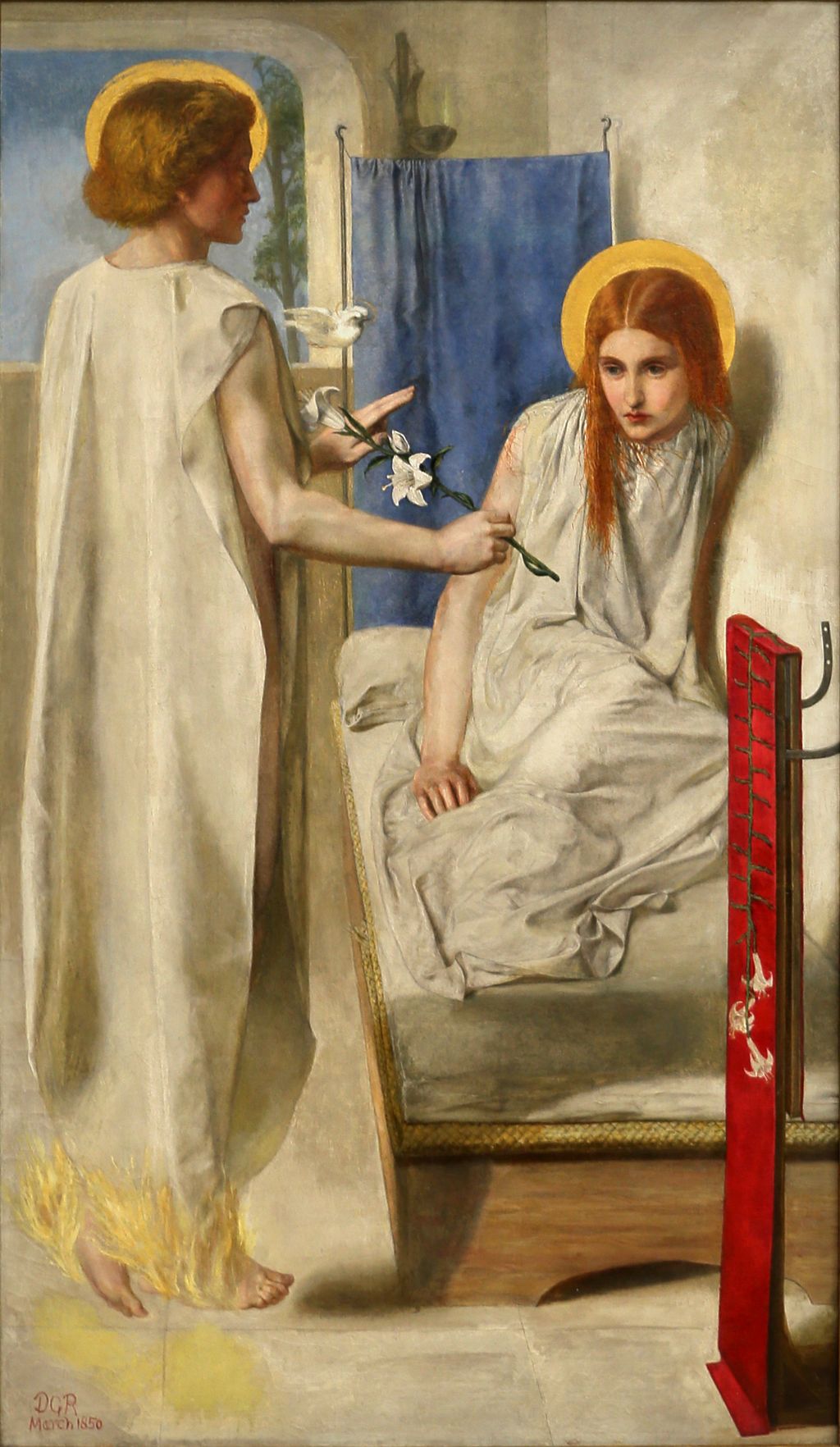
| Ecce Ancilla Domini! | 1849 November - 1853 January | See catalogue S44. |
| Ecce Ancilla Domini! (The Annunciation) | 1849–50 | Painting |
| Major Calder Campbell | 1849 (circa) | See catalogue S279. |
| Portrait of an Unidentified Young Girl | 1849 (circa) | See catalogue S544. |
| Study for ‘Ecce Ancilla Domini! (The Annunciation)’ | c.1849 | Drawing |
| Study of a Man Smoking a Long Pipe | c.1849 | Drawing |
| Study of a Woman | 1849 | See catalogue S667. |
| Taurello’s First Sight of Fortune | 1849 | Drawing |
| The Laboratory | 1849 | See catalogue S41. |
| “Hist!” Said Kate the Queen | 1849 - 1851 | See catalogue S49. |
| A Girl and a Knight | 1850? | See catalogue S726. |
| A Kneeling Man and a Seated Girl | 1850-1852 (circa) | See catalogue S676. |
| A Nun Looking out of a Quatrefoil Window | 1850? | See catalogue S733. |
| A Painter at Work | 1850-1852 (circa) | See catalogue S677. |
| A Parable of Love | 1850 (circa) | See catalogue S668. |
| Benedick and Beatrice | 1850 September | See catalogue S46. |
| Borgia | 1850 - 1863 | See catalogue S48. |
| Christina Rossetti | 1850 (circa) | See catalogue S425. |
| Composition of Six Figures in Medieval Dress | 1850 (circa) | See catalogue S673. |
| Designs for Engraving on the Back and Face of a Watch | 1850? | See catalogue S747. |
| Elizabeth Siddal | 1850 (circa) | See catalogue S457. |
| Elizabeth Siddal | 1850-1865 | See catalogue S458. |
| Elizabeth Siddal | 1850-1860 | See catalogue S481. |
| Old Man Walking between Young Man and Woman | 1850 (circa) | See catalogue S674. |
| Page from a Sketch Book | 1850 (circa) | See catalogue S671. |
| Rossovestita | 1850 | See catalogue S45. |
| Sketches of Heads and Figures | 1850 (circa) | See catalogue S672. |
| Study of a Young Girl | 1850? | See catalogue S664. |
| Thomas Woolner | 1850 | See catalogue S538. |
| Two Figures | 1850? | See catalogue S742. |
| Two Men | 1850 (circa) | See catalogue S670. |
| Two Pugilists and Figure Studies | 1850 (circa) | See catalogue S669. |
| “The Duenna” | 1850-1852 (circa) | See catalogue S675. |
| “To Caper Nimbly in a Lady's Chamber/ To the Lascivious Pleasing of a Lute” | 1850 | See catalogue S47. |
| "How They Met Themselves" | 1851-1864 | See catalogue S118. |
| Beatrice Meeting Dante at a Marriage Feast, Denies Him Her Salutation | 1851-1855 | See catalogue S50. |
| Sir John Everett Millais | 1851-1853 (circa) | See catalogue S592. |
| The Three Fates | 1851 (circa) | See catalogue S589. |
| William Holman Hunt | 1851-1853 (circa) | See catalogue S591. |
| William Holman Hunt (?) | 1851 (circa) | See catalogue S340. |
| A Young Man | 1852 January 28 | See catalogue S678. |
| A Young Man | 1852 (circa) | See catalogue S692. |
| Christina Rossetti | 1852 October | See catalogue S426. |
| Christina Taking Down the Verses of Swynfen Jervis | 1852 August 4 | See catalogue S590. |
| Design for an Unknown Subject | 1852 (circa) | See catalogue S690. |
| Eliza Polidori | 1852 (circa) | See catalogue S409. |
| Elizabeth Siddal | 1852 | See catalogue S459. |
| Elizabeth Siddal | 1852 (circa) | See catalogue S460. |
| Elizabeth Siddal | 1852? (1850-1862) | See catalogue S491. |
| Ford Madox Brown | 1852 November | See catalogue S269. |
| Ford Madox Brown | 1852 | See catalogue S271. |
| Giotto Painting the Portrait of Dante | 1852-1859 | See catalogue S54. |
| Juliet and her Nurse[?] | 1852 (circa) | See catalogue S681. |
| Man Holding a Girl's Hand | 1852 (circa) | See catalogue S680. |
| Man Walking between Two Women | 1852 (circa) | See catalogue S682. |
| Mrs. Gabriele Rossetti | 1852 October | See catalogue S445. |
| Mrs. James Hannay | 1852 December 8 | See catalogue S322. |
| St. Elizabeth of Hungary Kneeling with her Companions | 1852 (circa) | See catalogue S691. |
| Study for ‘Giotto Painting the Portrait of Dante’ | 1852 | Drawing |
| The Annunciation | 1852 (circa) | See catalogue S688. |
| The Maries at the Foot of the Cross | 1852 (circa) | See catalogue S52. |
| The Munros' Maid | 1852 (circa) | See catalogue S687. |
| The Virgin and Child | 1852 | See catalogue S689. |
| The Virgin Mary Being Comforted | 1852 May | See catalogue S51. |
| Thomas Woolner | 1852 July | See catalogue S539. |
| Two Mothers | 1852 | See catalogue S53. |
| Uncle Tom | 1852 (circa) | See catalogue S593. |
| Unidentified Woman in a Bonnet | 1852? (early 1850s) | See catalogue S545. |
| William Bell Scott | 1852 October | See catalogue S456. |
| Woman and Child Walking | 1852 (circa) | See catalogue S686. |
| Woman in Evening Dress | 1852 January | See catalogue S679. |
| Woman in Evening Dress | 1852? | See catalogue S739. |
| Woman with Two Children | 1852 (circa) | See catalogue S685. |
| Young Man in Medieval Costume | 1852? | See catalogue S729. |
| A Young Man | 1853 (circa) | See catalogue S696. |
| Battlements of Wetheral | 1853 | See catalogue S693. |
| Boatmen and Siren | 1853 (circa) | See catalogue S63. |
| Carlisle Wall | 1853 June | See catalogue S60. |
| Carlisle Wall (The Lovers) | 1853 | Drawing |
| Charles Cayley | 1853 (circa) | See catalogue S282. |
| Charlotte Polidori | 1853 September | See catalogue S407. |
| Charlotte Polidori | 1853 July | See catalogue S408. |
| D.G. and W.M. Rossetti | 1853 (circa) | See catalogue S594. |
| D.G. Rossetti and Elizabeth Siddal | 1853-1862 | See catalogue S441. |
| D.G. Rossetti Sitting to Elizabeth Siddal | 1853 September | See catalogue S440. |
| Dante Gabriel Rossetti | 1853 | See catalogue S435. |
| Elizabeth Siddal | 1853 December | See catalogue S461. |
| Elizabeth Siddal | 1853-1858 (circa) | See catalogue S494. |
| Elizabeth Siddal | 1853-1858 (circa) | See catalogue S496. |
| Elizabeth Siddal | 1853? | See catalogue S497. |
| Elizabeth Siddal | 1853-1858 (1850-1862) | See catalogue S505. |
| Elizabeth Siddal | 1853-1858 (circa) | See catalogue S512. |
| Elizabeth Siddal | 1853-1858 (1850-1862) | See catalogue S513. |
| Elizabeth Siddal | 1853-1858 (circa) | See catalogue S515. |
| Found | Designed 1853; unfinished | Painting |
| Fra Angelico Painting | 1853 (circa) | See catalogue S694. |
| Gabriele Rossetti | 1853 April | See catalogue S443. |
| Gabriele Rossetti | 1853 (circa) | See catalogue S444. |
| Gaetano Polidori | 1853 May 4 | See catalogue S413. |
| Giorgione Painting | 1853 (circa) | See catalogue S695. |
| Girl Singing to a Lute | 1853 June | See catalogue S59. |
| Girl Trundling an Infant | 1853 July | See catalogue S61. |
| Hesterna Rosa | 1853 | Drawing |
| Michael Scott's Wooing | 1853 | See catalogue S56. |
| Mrs. Ford Madox Brown | 1853 May | See catalogue S272. |
| Mrs. Gabriele Rossetti | 1853 | See catalogue S446. |
| Ruding Deverell | 1853 December 22 | See catalogue S313. |
| Sir John Everett Millais | 1853 (circa) | See catalogue S352. |
| Sir John Everett Millais | 1853 (circa) | See catalogue S353. |
| The First Anniversary of the Death of Beatrice | 1853 | See catalogue S58. |
| Two Lovers | 1853? | See catalogue S725. |
| W. W. Pearce | 1853-1858 (circa) | See catalogue S406. |
| Walter Deverell | 1853 (circa) | See catalogue S314. |
| William Holman Hunt | 1853 April 12 | See catalogue S341. |
| William Holman Hunt | 1853 | See catalogue S342. |
| William Michael Rossetti | 1853 (circa) | See catalogue S453. |
| Ballad of Fair Annie | 1854-1856 | See catalogue S68. |
| Day and Night Songs | 1854 | See catalogue S65. |
| Elizabeth Siddal | 1854 | See catalogue S462. |
| Elizabeth Siddal | 1854 May | See catalogue S463. |
| Elizabeth Siddal | 1854 May | See catalogue S464. |
| Elizabeth Siddal | 1854 June | See catalogue S465. |
| Elizabeth Siddal | 1854 June | See catalogue S466. |
| Elizabeth Siddal | 1854 | See catalogue S467. |
| Elizabeth Siddal | 1854 | See catalogue S468. |
| Elizabeth Siddal | 1854 | See catalogue S469. |
| Elizabeth Siddal | 1854 September | See catalogue S470. |
| Elizabeth Siddal | 1854 | See catalogue S471. |
| Elizabeth Siddal | 1854? (1850-1862) | See catalogue S486. |
| Elizabeth Siddal | 1854 | See catalogue S489. |
| Elizabeth Siddal | 1854? | See catalogue S503. |
| Hamlet and Ophelia | 1854, 1858 | See catalogue S108. |
| Maids of Elfen-Mere | 1854 | See catalogue S67. |
| Mrs. Gabriele Rossetti | 1854 July | See catalogue S447. |
| Mrs. Gabriele Rossetti | 1854 | See catalogue S448. |
| The Queen's Page | 1854 June | See catalogue S66. |
| Two Children | 1854 (circa) | See catalogue S697. |
| Wykeham Deverell | 1854 February 8 | See catalogue S316. |
| A Woman Walking | 1855? | See catalogue S738. |
| Alfred Chaworth Lyster | 1855 January 28 | See catalogue S348. |
| Angel with Cymbals | 1855 (circa) | See catalogue S699. |
| Arthur’s Tomb | 1855 | Drawing |
| Beatrice | 1855 (circa) | See catalogue S701. |
| Cat's Cradle | 1855 | See catalogue S77. |
| Christina Rossetti | 1855? (1850s) | See catalogue S427. |
| Dante Gabriel Rossetti | 1855 September | See catalogue S436. |
| Dante's Vision of Mathilda Gathering Flowers | 1855 | See catalogue S72. |
| Dante’s Vision of Rachel and Leah | 1855 | Drawing |
| Elizabeth Siddal | 1855 February 6 | See catalogue S472. |
| Elizabeth Siddal | 1855 July | See catalogue S473. |
| Elizabeth Siddal | 1855 November 21 | See catalogue S474. |
| Elizabeth Siddal | 1855? (1850-1862) | See catalogue S483. |
| Elizabeth Siddal | 1855? | See catalogue S495. |
| Elizabeth Siddal | 1855? | See catalogue S507. |
| Head of a Young Child | 1855-1870 (circa) | See catalogue S741. |
| Head of a Young Man | 1855 | See catalogue S706. |
| Henry Polydore | 1855 April | See catalogue S417. |
| John Ruskin | 1855 (circa) | See catalogue S595. |
| La Belle Dame Sans Merci | 1855 | See catalogue S76. |
| Louisa Jane Parke | 1855 (circa) | See catalogue S405. |
| Maids of Elfen-Mere, engraved by the Dalziel Brothers | published 1855 | |
| Paolo and Francesca da Rimini | 1855 | Drawing |
| Robert Browning | 1855 October | See catalogue S275. |
| Ruth and Boaz | 1855 | See catalogue S70. |
| Tennyson Reading Maud | 1855 September | See catalogue S526. |
| The Annunciation | 1855 | See catalogue S69. |
| The Carol | 1855-1856 | See catalogue S79. |
| The Nativity | 1855 June | See catalogue S71. |
| The Seed of David | Commissioned 1855, delivered 1864 | Painting |
| Two Heads | 1855? | See catalogue S727. |
| Two Women on either Side of a Tree | 1855 (circa) | See catalogue S698. |
| Unidentified Portrait | 1855-1860 (circa) | See catalogue S578. |
| Unidentified Portrait: 41 | 1855? | See catalogue S584. |
| Young Woman at a Window) | 1855 (circa) | See catalogue S702. |
| “Era in Pensier D'Amor” | 1855 (circa) | See catalogue S700. |
| A Girl | 1856-1869 | See catalogue S734. |
| A Man and a Woman | 1856 (circa) | See catalogue S703. |
| Dante’s Dream at the Time of the Death of Beatrice (Tate watercolour) | 1856 | Drawing |
| Eliza Polidori | 1856 (circa) | See catalogue S410. |
| Eliza Polidori | 1856? | See catalogue S411. |
| Elizabeth Siddal | 1856 October | See catalogue S475. |
| Elizabeth Siddal | 1856? (1850-1862) | See catalogue S487. |
| Elizabeth Siddal | 1856? | See catalogue S490. |
| Elizabeth Siddal | 1856? | See catalogue S493. |
| Elizabeth Siddal | 1856? | See catalogue S499. |
| Elizabeth Siddal | 1856-1857 (circa) | See catalogue S514. |
| Faust: Faust and Margaret in Prison | 1856 (circa) | See catalogue S82. |
| Fra Pace | 1856 | See catalogue S80. |
| King Arthur and the Weeping Queens | 1856-1857 | See catalogue S84. |
| Mariana in the South | 1856-1857 | See catalogue S86. |
| Mrs. Ford Madox Brown | 1856 September | See catalogue S273. |
| St. Cecilia | 1856-1857 | See catalogue S83. |
| The Lady of Shalott | 1856-1857 | See catalogue S85. |
| The Passover in the Holy Family | 1856 | Drawing |
| The Seed of David (small version) | about 1856 | Drawing |
| The Sisters | 1856 (circa) | See catalogue S704. |
| Unidentified Profile of a Young Girl | 1856 (circa) | See catalogue S546. |
| ‘Red Lion Mary’ | 1856-1859 (circa) | See catalogue S418. |
| A Christmas Carol | 1857 December; 1857-1858 | See catalogue S98. |
| Caricature of William Morris Presenting a Ring to his Future Wife | 1857 September | See catalogue S597. |
| Figure Studies | 1857 October | See catalogue S705. |
| Figure Studies | 1857? | See catalogue S743. |
| Mary Magdalene leaving the house feasting | 1857 | Drawing |
| Mary Magdalene Leaving the House of Feasting | 1857 | See catalogue S88. |
| Mary Nazarene | 1857 | Drawing |
| Mrs. John Hungerford Pollen | 1857 | See catalogue S414. |
| Mrs. William Morris | 1857 October | See catalogue S363. |
| Sir Galahad and an Angel | 1857 | See catalogue S96. |
| Sir Galahad, Sir Bors and Sir Percival Receiving the Sanc Grael | 1857 | See catalogue S94. |
| Sir Launcelot in the Queen's Chamber | 1857 | See catalogue S95. |
| Sir Launcelot's Vision of the Sanc Grael | 1857 | See catalogue S93. |
| St Catherine | 1857 | Painting |
| St. John Comforting the Virgin at the Foot of the Cross | 1857-1858 | See catalogue S104. |
| The Blue Closet | 1857 | Drawing |
| The Chapel before the Lists | 1857–64 | Drawing |
| The Damsel of Sanct Grael | 1857 | Drawing |
| The Damsel of the Sanct Grael | 1857 | See catalogue S91. |
| The Death of Breuze Sans Pitié | 1857; 1865 (reworked) | See catalogue S101. |
| The Gate of Memory | 1857 | See catalogue S100. |
| The Palace of Art, engraved by the Dalziel Brothers | published 1857 | |
| The Skeleton in Armour | 1857-1858 | See catalogue S103. |
| The Tune of Seven Towers | 1857 | See catalogue S92. |
| The Tune of the Seven Towers | 1857 | Drawing |
| The Wedding of St George and Princess Sabra | 1857 | Drawing |
| The Wedding of St. George and the Princess Sabra | 1857 | See catalogue S97. |
| Before the Battle | 1858 | See catalogue S106. |
| David | 1858–64 | Drawing |
| Elizabeth Siddal | 1858? (1850-1862) | See catalogue S482. |
| Elizabeth Siddal | 1858? | See catalogue S500. |
| For the Benefit of Miss Herbert | 1858 July 12 | See catalogue S599. |
| Golden Water | 1858 | See catalogue S107. |
| King David | 1858–64 | Drawing |
| Lady Dalrymple | 1858-1862 (circa) | See catalogue S312. |
| Louisa Ruth Herbert | 1858 | See catalogue S325. |
| Mrs. William Morris | 1858 October | See catalogue S364. |
| Ruth Herbert | 1858 September 20 | See catalogue S326. |
| Ruth Herbert | 1858 December | See catalogue S327. |
| Ruth Herbert | 1858 | See catalogue S328. |
| Ruth Herbert | 1858-1859 (circa) | See catalogue S329. |
| Ruth Herbert | 1858-1859 (circa) | See catalogue S330. |
| Ruth Herbert | 1858-1859 (circa) | See catalogue S331. |
| Ruth Herbert | 1858-1859 | See catalogue S332. |
| Ruth Herbert | 1858-1859 | See catalogue S333. |
| Ruth Herbert | 1858-1859 | See catalogue S335. |
| Ruth Herbert | 1858-1859 | See catalogue S336. |
| Stunner No.1 | 1858 (circa) | See catalogue S598. |
| The Adoration | 1858–64 | Drawing |
| Unidentified Woman Wearing a Bonnet | 1858 (circa) | See catalogue S548. |
| Woman Kneeling | 1858? | See catalogue S732. |
| Writing on the Sand | 1858-1859 | See catalogue S111. |
| Bocca Baciata | 1859 | Painting |
| Dinner Time | 1859 April | See catalogue S600. |
| Elizabeth Siddal | 1859? (1850-1862) | See catalogue S485. |
| Fanny Cornforth | 1859 | Drawing |
| Mary in the House of St John | 1859 | Drawing |
| My Lady Greensleeves | 1859 | See catalogue S113. |
| Ruth Herbert | 1859 October | See catalogue S334. |
| Sir Galahad at the Ruined Chapel | 1859 (1857) | See catalogue S115. |
| The Bower Garden | 1859 | See catalogue S112. |
| The Salutation of Beatrice (Ottawa panels) | 1859 | Painting |
| Unidentified Woman in Profile Wearing a Bonnet | 1859-1860 (circa) | See catalogue S549. |
| A Girl | 1860-1865 (circa) | See catalogue S710. |
| A Girl | 1860-1865 (circa) | See catalogue S711. |
| A Pelican | 1860 (circa) | See catalogue S707. |
| Algernon Charles Swinburne | 1860 August | See catalogue S522. |
| Annie Miller | 1860 | See catalogue S354. |
| Annie Miller | 1860 January | See catalogue S355. |
| Annie Miller | 1860 (circa) | See catalogue S356. |
| Annie Miller | 1860 (circa) | See catalogue S357. |
| Annie Miller | 1860 (circa) | See catalogue S358. |
| Annie Miller | 1860-1863 (circa) | See catalogue S359. |
| Annie Miller | 1860 (circa) | See catalogue S708. |
| Annie Miller | 1860 (circa) | See catalogue S709. |
| Arthur’s Tomb (Tate watercolour) | 1860 | Drawing |
| Dante Gabriel Rossetti | 1860 (circa) | See catalogue S437. |
| Dantis Amor | 1860 | Painting |
| Design for a Sofa | 1860 | See catalogue S122a. |
| Design for Decorations on a Sofa | 1860 (circa) | See catalogue S746. |
| Dr Johnson at the Mitre | 1860 | Drawing |
| Elizabeth Siddal | 1860 | See catalogue S476. |
| Elizabeth Siddal | 1860 | See catalogue S477. |
| Elizabeth Siddal | 1860? | See catalogue S501. |
| Elizabeth Siddal | 1860? (circa 1850-1862) | See catalogue S502. |
| Giuseppe Maenza | 1860 | See catalogue S349. |
| Joseph Accused Before Potiphar | 1860 | See catalogue S122. |
| King René's Honeymoon | 1860-1864 | See catalogue S175. |
| Lady Burne-Jones | 1860 (circa) | See catalogue S276. |
| Lucrezia Borgia | 1860–1 | Drawing |
| Mrs. Ford Madox Brown | 1860 November | See catalogue S274. |
| Mrs. William Morris | 1860 December | See catalogue S365. |
| Regina Cordium | 1860 | See catalogue S120. |
| The Farmer's Daughter | 1860 | See catalogue S158. |
| Unidentified Portrait | 1860 November | See catalogue S550. |
| Unidentified Portrait | 1860 | See catalogue S551. |
| Unidentified Portrait | 1860? (circa) | See catalogue S577. |
| Algernon Charles Swinburne | 1861 | See catalogue S523. |
| Burd Alane | 1861 | See catalogue S144. |
| Dante Gabriel Rossetti | 1861 October | See catalogue S438. |
| Elizabeth Siddal | 1861 June | See catalogue S478. |
| Elizabeth Siddal | 1861 (circa) | See catalogue S479. |
| Elizabeth Siddal | 1861 | See catalogue S480. |
| Elizabeth Siddal | 1861? (1850-1862) | See catalogue S484. |
| Elizabeth Siddal | 1861? (1850-1862) | See catalogue S488. |
| Elizabeth Siddal | 1861? (1850-1862) | See catalogue S492. |
| Elizabeth Siddal | 1861? (1850-1862) | See catalogue S498. |
| Elizabeth Siddal | 1861? (circa 1850-1862) | See catalogue S504. |
| Elizabeth Siddal | 1861? (1850-1862) | See catalogue S506. |
| Elizabeth Siddal | 1861? (1850-1862) | See catalogue S508. |
| Elizabeth Siddal | 1861? (1850-1862) | See catalogue S509. |
| Elizabeth Siddal | 1861? (1850-1862) | See catalogue S510. |
| Elizabeth Siddal | 1861? (1850-1862) | See catalogue S511. |
| Fair Rosamund | 1861 | See catalogue S128. |
| Goblin Market (various designs) | 1861 | See catalogue S143. |
| John Ruskin | 1861 | See catalogue S455. |
| Lachesis | 1861 | See catalogue S130. |
| Mrs. Aldam Heaton | 1861 October | See catalogue S323. |
| Mrs. Burrell's Child | 1861? | See catalogue S277. |
| Regina Cordium | 1861 | See catalogue S129. |
| St. George and the Princess Sabra | 1861-1862 | See catalogue S151. |
| The Annunciation | 1861 | See catalogue S131. |
| The Last Judgment | 1861 (circa) | See catalogue S141. |
| The Parable of the Vineyard: Judgment and Condemnation by the Lord of the Vineyard. | 1861 | See catalogue S139. |
| The Parable of the Vineyard: The Arrival of the Lord's Son | 1861 | See catalogue S136. |
| The Parable of the Vineyard: The Feast of the Vintage | 1861 | See catalogue S137. |
| The Parable of the Vineyard: The Letting of the Vineyard to the Husbandmen | 1861 | See catalogue S134. |
| The Parable of the Vineyard: The Planting of the Vine | 1861 | See catalogue S133. |
| The Parable of the Vineyard: The Sending of a Servant to Receive the Fruit, and the Stoning and Killing of the Servant | 1861 | See catalogue S135. |
| The Parable of the Vineyard: The Slaying of the Lord's Son | 1861 | See catalogue S138. |
| The Rose Garden | 1861 October | See catalogue S125. |
| The Sermon on the Mount | 1861 (circa) | See catalogue S142. |
| The Story of St. George and the Dragon: St. George and the Dragon | 1861-1862 | See catalogue S148. |
| The Story of St. George and the Dragon: The Princess Sabra Drawing the Lot | 1861-1862 (pen and ink design), 1868 (painted over in watercolour) | See catalogue S146. |
| The Story of St. George and the Dragon: The Princess Sabra Taken to the Dragon | 1861-1862 | See catalogue S147. |
| The Story of St. George and the Dragon: The Return of the Princess | 1861-1862 | See catalogue S149. |
| The Story of St. George and the Dragon: The Skulls Brought to the King | 1861-1862 | See catalogue S145. |
| The Story of St. George and the Dragon: The Wedding of St. George | 1861-1862 | See catalogue S150. |
| Winifred or Monica Heaton | 1861 | See catalogue S324. |
| Aggie | 1862 | See catalogue S262. |
| Aggie | 1862 | See catalogue S263. |
| Aggie | 1862 | See catalogue S264. |
| Alice Boyd | 1862 December 20 | See catalogue S268. |
| Christ in Glory | 1862 (circa) | See catalogue S155. |
| Girl at a Lattice | 1862 | See catalogue S152. |
| Joshua | 1862 (circa) | See catalogue S157. |
| Monna Rosa | 1862 | See catalogue S153. |
| Mrs. Beyer | 1862 (circa) | See catalogue S266. |
| Mrs. Beyer | 1862 (circa) | See catalogue S267. |
| Mrs. Gabriele Rossetti | 1862 February | See catalogue S449. |
| Mrs. James Leathart | 1862 December | See catalogue S343. |
| Mrs. James Leathart | 1862 December | See catalogue S344. |
| Mrs. James Leathart | 1862 | See catalogue S345. |
| St George and Princess Sabra | 1862 | Drawing |
| St. Jude | 1862 (circa) | See catalogue S156. |
| Sweet Tooth | 1862 | See catalogue S123. |
| The Crucifixion | 1862 | See catalogue S140. |
| The Heart of the Night (Mariana in the Moated Grange) | 1862 | Drawing |
| Threshing | 1862 (circa) | See catalogue S154. |
| Unidentified Portrait | 1862? (early 1860s) | See catalogue S552. |
| Unidentified Portrait | 1862? (early 1860s) | See catalogue S553. |
| A Young Woman | 1863 (circa) | See catalogue S713. |
| Ada Vernon | 1863 | See catalogue S527. |
| Ada Vernon | 1863-1865 (circa) | See catalogue S528. |
| Aurelia (Fazio’s Mistress) | 1863–73 | Painting |
| Belcolore | 1863 | See catalogue S160. |
| Bethlehem Gate | 1863 | Drawing |
| Brimfull | 1863 | See catalogue S167. |
| Ellen Smith | 1863 | See catalogue S516. |
| Fazio's Mistress | 1863; 1873 | See catalogue S164. |
| Helen of Troy | 1863 | Painting |
| Henrietta Polydore | 1863 | See catalogue S416. |
| La Castagnetta | 1863 (circa) | See catalogue S166. |
| My Lady Greensleeves | 1863 May | See catalogue S161. |
| Woman Holding a Dog | 1863 (circa) | See catalogue S712. |
| Woman in Yellow | 1863 | Drawing |
| Aspasia Teaching Socrates to Dance | 1864 (circa) | See catalogue S176. |
| Beata Beatrix | about 1864–70 | Painting |
| How Sir Galahad, Sir Bors and Sir Percival Were Fed with the Sanct Grael; but Sir Percival’s Sister Died by the Way | 1864 | Drawing |
| Joan of Arc | 1864 | Drawing |
| Monna Pomona | 1864 | Drawing |
| Morning Music | 1864 | See catalogue S170. |
| Roman de la Rose | 1864 | Drawing |
| The First Madness of Ophelia | 1864 April | See catalogue S169. |
| The Laurel | 1864 | See catalogue S172. |
| Venus Verticordia | 1864–68 | Painting |
| Woman Combing her Hair | 1864 | See catalogue S174. |
| A Fight for a Woman | 1865 | See catalogue S180. |
| A Girl in Sixteenth Century Costume | 1865? | See catalogue S731. |
| Charles Augustus Howell | 1865 | See catalogue S337. |
| Christina Rossetti | 1865 May | See catalogue S428. |
| Christina Rossetti in a Tantrum | 1865 | See catalogue S601. |
| Circe | 1865 (circa) | See catalogue S187. |
| Diana | 1865 (circa) | See catalogue S188. |
| Head of Little Girl in a Bonnet | 1865 (circa) | See catalogue S547. |
| Il Ramoscello | 1865 | See catalogue S181. |
| Miss Burton | 1865 | See catalogue S278. |
| Mrs Vernon Lushington | 1865 | Painting |
| Mrs. Charles Augustus Howell | 1865 July 31 | See catalogue S338. |
| Mrs. William Morris | 1865 | See catalogue S366. |
| Mrs. William Morris | 1865 | See catalogue S367. |
| Mrs. William Morris | 1865 | See catalogue S368. |
| Mrs. William Morris | 1865 (circa) | See catalogue S369. |
| Mrs. William Morris | 1865 (circa) | See catalogue S370. |
| Mrs. William Morris | 1865-1870 (circa) | See catalogue S371. |
| Prince's Progress (frontispiece design) | 1865 December | See catalogue S185. |
| Prince's Progress (title page design) | 1865 December | See catalogue S186. |
| Risen at Dawn | 1865-1880 (circa) | See catalogue S253. |
| Study for ‘The Bride’ | 1865 | Drawing |
| Study of a Female Head | 1865 | See catalogue S714. |
| The Beloved | 1865-1866 | See catalogue S182. |
| The Beloved (‘The Bride’) | 1865–66 | Painting |
| The Blue Bower | 1865 | Painting |
| The Merciless Lady | 1865 | See catalogue S177. |
| Three Sang of Love Together | 1865 (circa) | See catalogue S184. |
| Unidentified Portrait | 1865 | See catalogue S554. |
| Unidentified Portrait | 1865 (circa) | See catalogue S555. |
| Unidentified Portrait | 1865? (mid-1860s) | See catalogue S556. |
| Unidentified Portrait | 1865? | See catalogue S581. |
| Washing Hands | 1865 August | See catalogue S179. |
| Alexa Wilding | 1866 | See catalogue S530. |
| Alexa Wilding | 1866 | See catalogue S531. |
| Alexa Wilding | 1866 | See catalogue S532. |
| Christina Rossetti | 1866 September | See catalogue S429. |
| Christina Rossetti | 1866 (circa) | See catalogue S430. |
| Fiammetta | 1866 | See catalogue S192. |
| Hamlet and Ophelia | 1866 | See catalogue S189. |
| Heartsease | 1866 | See catalogue S194. |
| Lady Lilith | 1866–68, altered 1872–73 | Painting |
| Miss Robertson | 1866 (circa) | See catalogue S419. |
| Miss Robertson (Mrs Fernandez) | c.1866 | Drawing |
| Monna Vanna | 1866 | Painting |
| Mrs. Gabriele Rossetti | 1866 | See catalogue S450. |
| Regina Cordium | 1866 | See catalogue S190. |
| A Christmas Carol | 1867 | See catalogue S195. |
| Alexa Wilding | 1867 (circa) | See catalogue S533. |
| Aurora | 1867 | See catalogue S202. |
| Contemplation | 1867 | See catalogue S204. |
| Ellen Smith | 1867 | See catalogue S517. |
| Ford Madox Brown | 1867 January 31 | See catalogue S270. |
| Henry Treffry Dunn | 1867? (late 1860s) | See catalogue S317. |
| Joli Coeur | 1867 | See catalogue S196. |
| Lady Lilith (Met watercolour) | 1867 | Drawing |
| Monna Rosa | 1867 | See catalogue S198. |
| Peace | 1867 | See catalogue S197. |
| Rosa Triplex | 1867 | Drawing |
| Sir Tristram and La Belle Yseult Drinking the Love Potion | 1867 | See catalogue S200. |
| Study for Fair Rosamund | 1867? | See catalogue S576. |
| Tessa la Bionda | 1867 | See catalogue S203. |
| The Loving Cup | 1867 | Painting |
| The Rose: A Lady at a Window | 1867 (circa) | See catalogue S199. |
| Unidentified Portrait | 1867 | See catalogue S557. |
| Unidentified Portrait | 1867 | See catalogue S580. |
| A Woman | 1868? (late 1860s) | See catalogue S715. |
| Alexa Wilding | 1868 | See catalogue S534. |
| Aurea Catena | 1868 (circa) | See catalogue S209. |
| La Penserosa | 1868 | See catalogue S208. |
| La Pia de’ Tolomei | 1868–80 | Painting |
| La Pia de’ Tolomei (Fitzwilliam study) | 1868 | Drawing |
| Mrs. Murray Marks | 1868 | See catalogue S350. |
| Mrs. Murray Marks | 1868 | See catalogue S351. |
| Mrs. William Morris | 1868 | See catalogue S372. |
| Mrs. William Morris | 1868 (circa) | See catalogue S373. |
| Reverie | 1868 | See catalogue S206. |
| Study of a Woman Holding up her Necklace | 1868-1872 | See catalogue S716. |
| The Bard and the Petty Tradesmen | 1868 | See catalogue S609. |
| Unidentified Portrait | 1868 | See catalogue S558. |
| Unidentified Portrait | 1868? (late 1860s) | See catalogue S560. |
| Bianca Dorata | 1869 (circa) | See catalogue S717. |
| Calliope Coronio | 1869 February | See catalogue S311. |
| Dante Gabriel Rossetti | 1869? | See catalogue S602. |
| Frances Graham | 1869 | See catalogue S318. |
| La Mandolinata | 1869 | See catalogue S211. |
| Mrs. Charles Augustus Howell | 1869 July 29 | See catalogue S339. |
| Mrs. William J. Stillman | 1869 July-August | See catalogue S519. |
| Mrs. William J. Stillman | 1869 | See catalogue S520. |
| Mrs. William Morris | 1869 July 14 | See catalogue S374. |
| Mrs. William Morris | 1869-1870 (circa) | See catalogue S375. |
| Mrs. Zambaco | 1869 (circa) | See catalogue S540. |
| Penelope | 1869 | See catalogue S210. |
| Resolution; or, The Infant Hercules | 1869 August | See catalogue S604. |
| The German Lesson | 1869 August 4 | See catalogue S603. |
| The M's at Ems | 1869 July | See catalogue S605. |
| Unidentified Portrait | 1869 | See catalogue S559. |
| Willie Graham | 1869 March | See catalogue S319. |
| A Woman Lolling on a Sofa | 1870 (circa) | See catalogue S718. |
| Dante Gabriel Rossetti | 1870 | See catalogue S439. |
| Designs for Engraving on the Back of a Watch | 1870 | See catalogue S748. |
| Girl Eating Cherries | 1870 (circa) | See catalogue S723. |
| Girl Plucking Fruit | 1870 (circa) | See catalogue S720. |
| Girl with a Fan | 1870 (circa) | See catalogue S721. |
| Girl with a Musical Instrument | 1870 (circa) | See catalogue S722. |
| Jane Burden, Mrs William Morris | Started about 1870, later finished by Ford Madox Brown | Painting |
| La Donna Della Fiamma | 1870 | See catalogue S216. |
| Man with Child on his Knee | 1870? | See catalogue S728. |
| Mariana | 1870 April | See catalogue S213. |
| Mrs. Coronio | 1870 | See catalogue S310. |
| Mrs. Virtue Tebbs | 1870 | See catalogue S524. |
| Mrs. William Morris | 1870 April 30 | See catalogue S376. |
| Mrs. William Morris | 1870 May | See catalogue S377. |
| Mrs. William Morris | 1870 July 25 | See catalogue S378. |
| Mrs. William Morris | 1870 July 26 | See catalogue S379. |
| Mrs. William Morris | 1870 July 27 | See catalogue S380. |
| Mrs. William Morris | 1870 August 12 | See catalogue S381. |
| Mrs. William Morris | 1870 August 12 | See catalogue S382. |
| Mrs. William Morris | 1870 November 29 | See catalogue S383. |
| Mrs. William Morris | 1870 | See catalogue S384. |
| Mrs. William Morris | 1870 | See catalogue S385. |
| Mrs. William Morris | 1870 (circa) | See catalogue S386. |
| Mrs. William Morris | 1870 (circa) | See catalogue S387. |
| Mrs. William Morris | 1870 (circa) | See catalogue S388. |
| Mrs. William Morris | 1870 (circa) | See catalogue S389. |
| Mrs. William Morris | 1870 (circa) | See catalogue S390. |
| Mrs. William Morris | 1870 (circa) | See catalogue S391. |
| Mrs. William Morris | 1870-1875? | See catalogue S402. |
| Mrs. Zambaco | 1870 | See catalogue S541. |
| Mrs. Zambaco | 1870 | See catalogue S542. |
| Mrs. Zambaco | 1870 | See catalogue S543. |
| Study for the Head of Love, for ‘Dante’s Dream at the Time of the Death of Beatrice’ | 1870 | Drawing |
| Study for ‘Desdemona’s Death Song’ | 1870 | Drawing |
| The Countess of Carlisle | 1870 | See catalogue S280. |
| The Countess of Carlisle | 1870 June | See catalogue S281. |
| The Loving Cup (reproductive print) | about 1870–1913 | |
| The Prisoner's Daughter | 1870 | See catalogue S218. |
| The Roseleaf | 1870 | See catalogue S215. |
| Unidentified Portrait | 1870 | See catalogue S561. |
| Unidentified Portrait | 1870 | See catalogue S562. |
| Unidentified Portrait | 1870 (circa) | See catalogue S563. |
| Unidentified Portrait | 1870-1879 (circa) | See catalogue S579. |
| Unidentified Portrait | 1870-1880 (exact date unknown) | See catalogue S582. |
| Unidentified Portrait (Head of a Man) | 1870 | See catalogue S585. |
| William J. Stillman | 1870 | See catalogue S518. |
| Woman Seated at an Embroidery Frame | 1870 (circa) | See catalogue S719. |
| Woman with a Fan | 1870 | See catalogue S217. |
| Wood Nymph | 1870-75 | See catalogue S223. |
| Dante’s Dream at the Time of the Death of Beatrice | 1871 | Painting |
| Jenny Morris | 1871 | See catalogue S360. |
| May Morris | 1871 | See catalogue S361. |
| Mrs. William Morris | 1871 February 18 | See catalogue S392. |
| Water Willow | 1871 | See catalogue S226. |
| Alexa Wilding | 1872 | See catalogue S535. |
| Dr. Thomas Gordon Hake | 1872 | See catalogue S321. |
| George Gordon Hake | 1872 | See catalogue S320. |
| La Gitana | 1872 (circa) | See catalogue S231. |
| May Morris | 1872 | See catalogue S362. |
| Mrs. William Morris | 1872 January 6 | See catalogue S393. |
| Paetus and Arria | 1872 | See catalogue S230. |
| Study of Hands | 1872 | See catalogue S586. |
| The Bower Meadow | 1872 | Painting |
| Unidentified Portrait | 1872? (early 1870s) | See catalogue S573. |
| Veronica Veronese | 1872 | Painting |
| Alexa Wilding | 1873 | See catalogue S536. |
| Blanzifiore | 1873 | See catalogue S227. |
| La Ghirlandata | 1873 | Painting |
| Ligeia Siren | 1873 March | See catalogue S234. |
| Marigolds | 1873 | See catalogue S235. |
| Mrs. William Morris | 1873 January | See catalogue S394. |
| Mrs. William Morris | 1873 February | See catalogue S395. |
| Mrs. William Morris | 1873 | See catalogue S396. |
| Mrs. William Morris | 1873 | See catalogue S397. |
| Mrs. William Morris | 1873 (circa) | See catalogue S398. |
| Mrs. William Morris | 1873 (circa) | See catalogue S399. |
| Study of Hands [Unidentified Poertrait: 45] | 1873? | See catalogue S587. |
| Unidentified Portrait | 1873 | See catalogue S564. |
| Unidentified Portrait | 1873 | See catalogue S565. |
| Mrs. William Michael Rossetti | 1874 | See catalogue S454. |
| Portrait of Fanny Cornforth | 1874 | See catalogue S569. |
| Proserpine | 1874 | Painting |
| Roman Widow | 1874 | See catalogue S236. |
| Rupes Topseiana | 1874 | See catalogue S611. |
| Sancta Lilias | 1874 | Painting |
| The Marchioness of Northampton | 1874 November 16 | See catalogue S403. |
| The Roman Widow (Dis Manibus) | 1874 | Painting |
| Theodore Watts-Dunton | 1874 | See catalogue S529. |
| Unidentified Portrait | 1874 March | See catalogue S566. |
| Unidentified Portrait | 1874 | See catalogue S567. |
| Unidentified Portrait | 1874 | See catalogue S568. |
| Unidentified Portrait | 1874 | See catalogue S570. |
| Unidentified Portrait | 1874 | See catalogue S571. |
| Woman's Head and Angel's Wing | 1874? | See catalogue S740. |
| Mrs. Alderson-Smith | 1875 (circa) | See catalogue S265. |
| Mrs. William Morris | 1875 August 28 | See catalogue S400. |
| Mrs. William Morris | 1875 (circa) | See catalogue S401. |
| Orpheus and Eurydice | 1875 | See catalogue S243. |
| Sketch of Angels’ Heads | ?c.1875 | Drawing |
| The Blessed Damozel | 1875–78 | Painting |
| The Blessed Damozel (reduced replica) | 1875–79 | Painting |
| The Death of Lady Macbeth | 1875 (circa) | See catalogue S242. |
| Unidentified Portrait | 1875 October | See catalogue S572. |
| Astarte Syriaca | 1876–77 | Painting |
| Domizia Scaligera | 1876 | See catalogue S246. |
| Lady Mount Temple | 1876 August | See catalogue S525. |
| Mrs. Holme Sumner | 1876 August | See catalogue S521. |
| The Spirit of the Rainbow | 1876 | See catalogue S245. |
| Unidentified Portrait | 1876? | See catalogue S583. |
| A Sea-Spell | 1877 | Painting |
| Christina Rossetti | 1877 | See catalogue S431. |
| Christina Rossetti | 1877 | See catalogue S432. |
| Christina Rossetti and Mrs. Gabriele Rossetti | 1877 September | See catalogue S433. |
| Forced Music | 1877 | See catalogue S247. |
| Mary Magdalene | 1877 | See catalogue S250. |
| Mrs. Gabriele Rossetti | 1877 | See catalogue S451. |
| The Marchioness of Northampton | 1877? (late 1870s) | See catalogue S404. |
| A Vision of Fiammetta | 1878 | Painting |
| Bruna Brunelleschi | 1878 | See catalogue S251. |
| Desdemona's Death-Song | 1878-1881 (circa) | See catalogue S254. |
| From a Statue | 1878 September 20 | See catalogue S612. |
| Unidentified Portrait | 1878? (late 1870s) | See catalogue S574. |
| Beatrice | 1879 | See catalogue S256. |
| Edith Williams | 1879 April 28 | See catalogue S537. |
| Frederick Richards Leyland | 1879 | See catalogue S346. |
| La Donna Della Finestra | 1879 | See catalogue S255. |
| Unidentified Portrait | 1879 | See catalogue S575. |
| Study of an Arm | 1880 (circa) | See catalogue S588. |
| The Day Dream | 1880 | Painting |
| The Salutation of Beatrice | 1880–82 | Painting |
| Proserpine (Birmingham version) | 1882 | Painting |
| Elizabeth Siddall in a Chair | date not known | Drawing |
| Elizabeth Siddall Plaiting her Hair | date not known | Drawing |
| Miss Siddal Hiding a Drawing and Rossetti Finding It | Undated | See catalogue S596. |
Discussion
Look again at the images and ideas explored in The Beloved. These editorial prompts invite your observations.
Reader Insights
How does the boy’s direct gaze change the encounter set up by the bride’s unveiling?
How do the Song of Songs and Psalm 45 change your reading of the veil, clothing and attendants when you consider them together?
Join the Conversation
Share a detail, comparison or question about The Beloved below.
References
- Tate, The Beloved (‘The Bride’), N03053. View source.
- National Gallery of Australia, Love & Desire: Pre-Raphaelite Masterpieces from the Tate, exhibition works. View source.
- Rossetti Archive, The Beloved, Surtees 182. View source.
- Guildhall Art Gallery, Descriptive catalogue of the loan collection of pictures, Gallery III, no. 132. View source.
- Rossetti Archive, The Beloved, collection introduction and July 1863 letters to Ellen Heaton. View source.
- William Michael Rossetti, Dante Gabriel Rossetti as Designer and Writer, pp. 41–43, 51–52 and 54–55. View source.
- Charlotte Polidori, Memorandum of 20 February 1866, in Rossetti Papers, 1862–1870, p. 175. View source.
- Chiedza Mhondoro and Janine Francois, Approaching Race and Empire in Collections of Nineteenth-Century Art and Design, §§3.5–3.6. View source.
- Matthew Francis Rarey, “And the Jet Would Be Invaluable”: Blackness, Bondage, and The Beloved, The Art Bulletin 102, no. 3 (2020), pp. 28–53. View source.
- Christie’s, The Beloved, the smaller painted photograph made for James Anderson Rose. View source.
- Rossetti Archive, The Beloved (photograph), a state of the oil during revision. View source.
- King James Bible, Song of Solomon 1–3 and Psalm 45. View source.
- Art Fund, The Beloved (The Bride), acquisition record and illustration. View source.
- Tate, The Rossettis exhibition guide, “Venus Surrounded by Mirrors”. View source.
- Musée du Louvre, Titien, La Femme au miroir (Woman with a Mirror), INV 755. View source.
- Allie Yamaguchi, “Thing to Wear” to “Thing to Undress”: Representation of Japanese Kimonos in Late Victorian Paintings, The Journal of Dress History 4, no. 1 (2020), pp. 91–92. View source.
- Rossetti Archive, The Beloved (study for head and shoulders of bride), Surtees 182A. View source.
- Rossetti Archive, The Beloved (study for bridesmaid), Surtees 182D. View source.
- Musée d’Orsay, Édouard Manet, Olympia. View source.