 by Tom Gurney
Tom Gurney BSc (Hons) is an art history expert with over 20 years experience
Published on June 19, 2020 / Updated on November 18, 2026
Email: tomgurney1@gmail.com / Phone: +44 7429 011000
Self-Portrait as a Mature Man
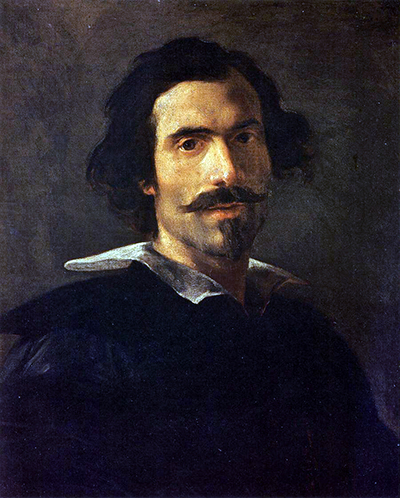
A white collar separates Gian Lorenzo Bernini’s face from the dark mass of his clothing. His shoulders turn while his eyes meet the viewer, and the moustache and pointed beard give the lower part of the face a firm outline. This is the painted self-portrait in the Uffizi in Florence, inventory 1692. The exhibition I volti dell’arte dalla collezione degli Uffizi dated the oil on canvas to about 1635 and recorded its dimensions as 62 by 46 centimetres. Bernini’s other painted likenesses include a distinct canvas of similar date in the Galleria Borghese. Their poses and collection histories help distinguish the two. [1][2][3]
At a Glance
- Datec. 1635
- Location or statusUffizi, Florence
- WorkOil on canvas, inventory 1692
The work in Bernini’s career
David
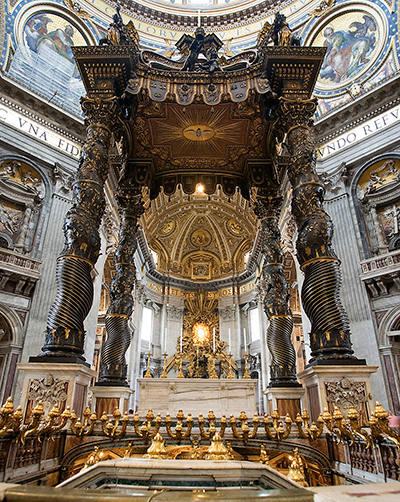
1623–24St Peter’s Baldachin
1624–33Self-Portrait as a Mature Man
c. 1635The turn from the shoulders to the face
The upper body occupies most of the lower half of the picture, where small changes in tone have to describe the width and turn of a dark garment. The collar supplies a clearer measure. One point extends out into the background, and the other side falls away beside the neck. Its uneven spread lets the viewer infer how the shoulders sit in relation to the head. Above the collar, the jaw and eyes carry the turn in a different direction. The effect is of someone looking back towards the viewer while retaining a posture of his own. [1][2]
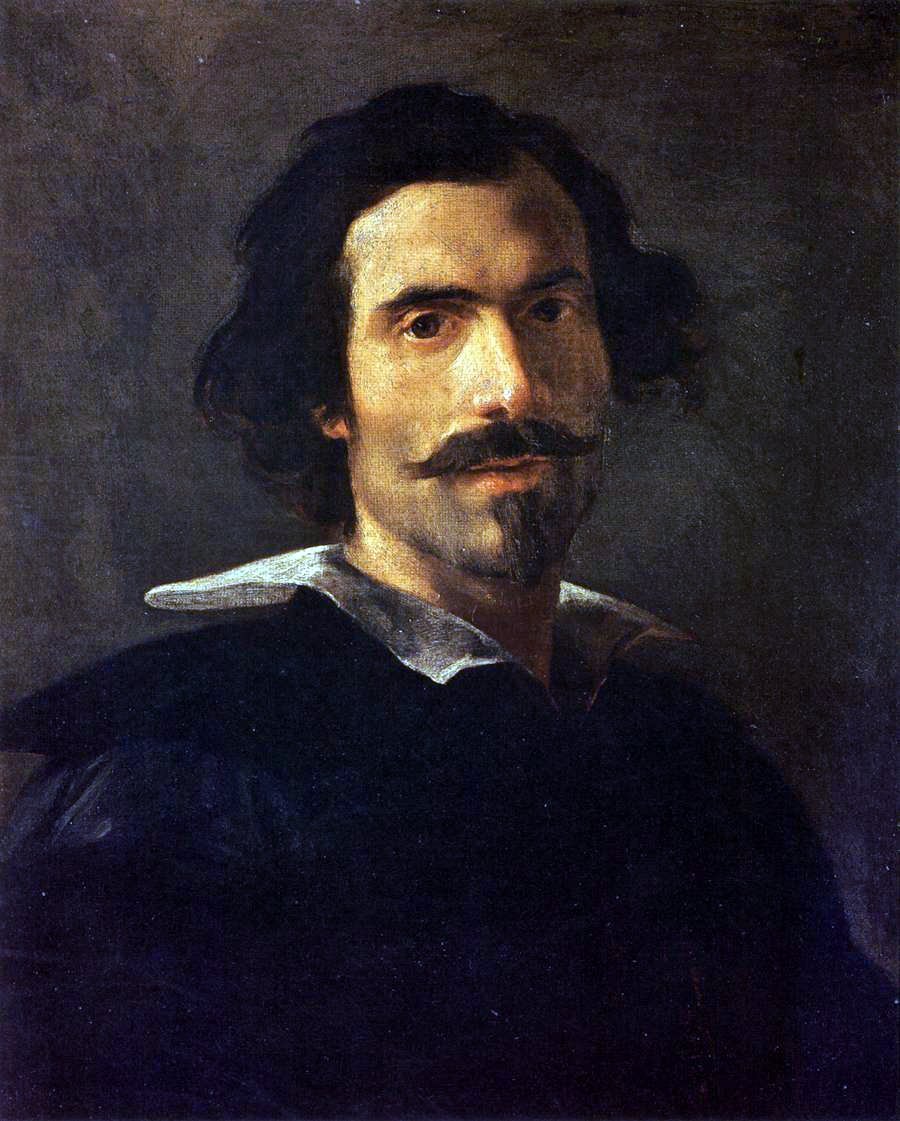
The directness of the eyes depends on the light around them. The forehead and the cheek at the left of the picture receive more illumination than the far side of the face. The nose projects into that light and helps define the transition to the shadow. The smaller marks around the lids and eyebrows sustain the sense of attention across it. The shape of the moustache then crosses the two sides of the face with a fairly continuous dark accent. Its tips extend beyond the mouth, leaving the lips much less emphatic than the overall line of the hair. [2]
The head has both hard and soft boundaries. The collar has a distinct edge where it crosses the background, and the beard can be followed clearly where it meets the skin. In other passages the dark hair loses definition against the ground. Those passages make the illumination within the face more consequential. The viewer can see how much of the head is described by the light on its features and how little has to be explained by the contour against the background. In oil paint, very close values at a boundary can leave an area open while a few pale strokes elsewhere give it direction. [1][2]
A second self-portrait from the 1630s
The Galleria Borghese holds another oil on canvas, inventory 545, which it calls Self-portrait at a Mature Age. It dates that painting to about 1635–40 and gives its dimensions as 53 by 43 centimetres. In that canvas the body is more distinctly in profile and the turn of the head back towards the viewer is pronounced. The Uffizi picture gives more room to the dark front of the garment and makes the spread of the collar a stronger horizontal feature. The names of the pictures both use the idea of a mature Bernini, but the individual arrangements of shoulders, head and collar make it possible to identify them without depending on the title. [1][2][3]
The Borghese catalogue discusses a hypothesis that its picture was once part of a double portrait. It also sets out proposed dates and explains why some scholars have arrived at about 1638. Those questions belong to the history of inventory 545. They illustrate how the evidence for one canvas can involve its edges, the age of the sitter and documents about a possible larger composition. The Uffizi painting has its own object record and approximate date. The close chronology permits a visual comparison. It also calls for care when dates and documentary proposals appear beside a reproduction under a generic title. [1][2][3]
The younger self-portrait at the Galleria Borghese offers a comparison with a firmer separation in date. The museum dates inventory 554 to about 1623 and describes it as oil on canvas laid down on panel. At 39 by 31 centimetres it is appreciably smaller than the Florence canvas. The direction of the younger head is reversed in relation to the group of portraits the Borghese places in the 1630s. In the younger image the gaze is held within a more tightly cropped space. In Florence the head has more room above the chest and the white collar helps stretch the composition across the shoulders. The comparison brings out changes in framing as well as the change in Bernini’s appearance. [1][2][3][6]
The three inventory numbers refer to three different physical objects. The younger painting reached the Borghese from the Alvise De Ruggieri collection in 1919. The later Borghese portrait arrived through Otto Messinger’s gift in 1911. This separate history is useful when comparing reproductions. A title that identifies the age of a sitter can describe two independent portraits, while a catalogue number and a collection history tie observations about the paint and canvas to a particular work. [2][3][6]
A sculptor’s image in a collection of painters
The Uffizi’s collection of artists’ self-portraits grew from the collecting of Cardinal Leopoldo de’ Medici in the seventeenth century. The gallery’s research on his correspondence describes how important it was to acquire portraits painted by the artists themselves. Such a work gave the collection both a likeness and an instance of the sitter’s own handling of paint. As a self-portrait by an artist especially associated with sculpture and architecture, Bernini’s picture fits that purpose particularly well. Its subject is a figure known from many kinds of object. The Uffizi canvas lets a viewer see how he depicted his own features with a brush. [1][4]
The difference of medium matters when comparing it with his sculpted portraits. In a marble bust the placement of the head can be tested by walking around the object and watching the visible part of the face change. The painter gives the viewer one view and makes the turning of the sitter visible within it. Here the dark garment offers few separate forms to measure. The collar, the angle of the jaw and the differences in light from cheek to cheek provide most of the information about position. Those parts can be read all at once, but the apparent turn comes from looking back and forth between them. [2][3]
What a collection of self-portraits asked of a likeness
The Uffizi’s research into Cardinal Leopoldo de’ Medici’s correspondence shows that he enlisted agents to secure works painted by the artists they depicted. Anna Maria Procajło distinguishes that aim from the one behind Cosimo I’s series of eminent people. A painting could record an artist’s features even if it had been copied or made by somebody else. Leopoldo sought something that carried evidence of the painter’s hand as well as the likeness. The correspondence shows his agents comparing pictures and asking about their origins. The result was a collection in which the assessment of authorship was part of the work of acquiring a portrait. [7]
Valeska von Rosen traces a subsequent stage under Cosimo III, when the collection grew to include more foreign artists and the paintings were classified and arranged systematically. That later history helps explain how a likeness like the Bernini could be displayed within a group much larger than the circle of people who knew his appearance. Viewed alongside other self-portraits, the dark costume and spare setting give relatively little biographical information. The choice of where to place the light and how much of the turning shoulders to show becomes more important. The Uffizi’s grouping of artists’ likenesses therefore gives a reason to look at how Bernini used paint, even where the sitter’s name is already familiar. [7][8]
An eighteenth-century reproduction
The Lombardia Beni Culturali catalogue records an etching of Bernini after the painted likeness, with Giovanni Domenico Campiglia named as draughtsman and printmaker. The sheet belongs to the publication of artists’ portraits from the Florentine collection. The record dates it broadly from around 1750 to before Campiglia’s death in 1775. Recording both names distinguishes the artist responsible for the likeness from the person who made it transferable to printed impressions. The etched portrait could be identified in a bound sequence without the frame or the collection room that gave the painting its place. [9]
In the oil, the lit collar cuts across the lower part of the face. The print makes that form legible by reserving areas of lighter paper against finely worked passages. It can preserve the direction of the gaze and the shape of the garment while changing the means by which the two are seen. The additional words and framing on the sheet give the likeness an identity within the publication. The print documents the circulation of the portrait at a later date. Its history leaves open when the painting itself first entered the Florentine collection. [8][9]
The proposed dates for the oil also illustrate how reproductions can travel independently of their captions. The National Gallery of Victoria’s discussion cites a date around 1640 proposed by Kristina Herrmann Fiore for the Florence canvas, while the Uffizi exhibition checklist gives about 1635. The different estimates concern the same oil portrait and fit within a broader period in which Bernini repeatedly represented his own features. An eighteenth-century print helps identify the image being discussed. The year in which the canvas was painted still depends on the assessment of the original and its relation to other works. [9][10]
The face reproduced in print
The Italian national catalogue records a print of Bernini’s self-portrait among a series of 249 engravings of artists in the Uffizi collection. The project brought individual likenesses into a publication whose readers could compare artists one after another. An engraving has to describe the transitions in the face with lines and changes in their spacing. The painted differences between the coat, hair and ground can only be suggested through the way those marks accumulate or thin out. The reproduction therefore belongs to the history of how the likeness was circulated in Florence and beyond. The painting gives particular force to the eyes and collar by allowing colour and tone to make some edges more distinct than others. [2][5]
Discussion
A pale collar divides the face from the mass of dark clothing.
Reader Insights
How does the turn of the shoulders change the sense of address?
Which details distinguish this work from the later Borghese self-portrait?
What could an exhibition record establish about the identity of the canvas?
Join the Conversation
Share a detail, comparison or question about Self-Portrait as a Mature Man by Gian Lorenzo Bernini below.
References
- Istituto Veneto di Scienze, Lettere ed Arti. I volti dell’arte dalla collezione degli Uffizi. 2007 exhibition checklist, date, medium and measurements. View source
- Fondazione Federico Zeri. Autoritratto di Gian Lorenzo Bernini. Uffizi painting and photographic record. See also the Uffizi inventory list, entry 1692. View source: Autoritratto di Gian Lorenzo Bernini View source: Uffizi inventory list
- Galleria Borghese. Self-portrait at a Mature Age. Catalogue entry for the distinct Borghese canvas, inventory 545. View source
- Uffizi Galleries. Imagines 4. Research on Leopoldo de’ Medici’s methods of collecting artists’ self-portraits. View source
- Ministero della Cultura. Autoritratto di Gian Lorenzo Bernini, print. Catalogue record for the engraved portrait in the published Uffizi series. View source
- Galleria Borghese. Self-portrait as a Young Man. Catalogue entry for inventory 554. View source
- Procajło, Anna Maria. Leopoldo de’ Medici e la sua ricerca sistematica del ritratto fatto di sua propria mano. Imagines 4, 2020, pp. 134–51. The Italian edition of the study of Leopoldo’s methods.
- Von Rosen, Valeska. The Galleria degli Autoritratti in the Uffizi. Imagines 3, 2020. Collection history and its development under Cosimo III.
- Lombardia Beni Culturali. Ritratti di pittori della Regia Galleria: Ritratto di Gian Lorenzo Bernini. Regional print record 5r010-02629, Campiglia and Bernini.
- National Gallery of Victoria. A Bernini self-portrait?. Comparative discussion and Herrmann Fiore’s proposed date for Florence.