


 by Tom Gurney
Tom Gurney BSc (Hons) is an art history expert with over 20 years experience
Published on December 4, 2025 / Updated on December 4, 2025
Email: tomgurney1@gmail.com / Phone: +44 7429 011000
Rosa Bonheur Drawings: A Complete Guide to Her Sketches, Studies and Working Process
Bonheur created some of the finest artworks in the French Realism movement, and behind the paintings lie some extraordinary drawings. These came in varying levels of detail and content, all with the ambition of progressing the artist's knowledge of anatomy and, ultimately, the accuracy of her completed paintings.
The artist studied a wide range of animals across her career, representing her general love of the animal kingdom, as well as a desire to continually challenge herself. You will discover studies of horses, cattle, sheep and lions as well as humans who existed within the rural, agricultural community. By mastering these topics, along with traditional landscape art, Rosa Bonheur had a varied toolkit of content from which to plan her paintings.
In order to outline Bonheur's working practises, we will take a number of her most famous works, such as The Horse Fair (1855) and Ploughing in the Nivernais (1849), and summarise the study drawings which came about in their preparation. For animal painters and sketchers, this will uncover the secrets to anatomy in art.
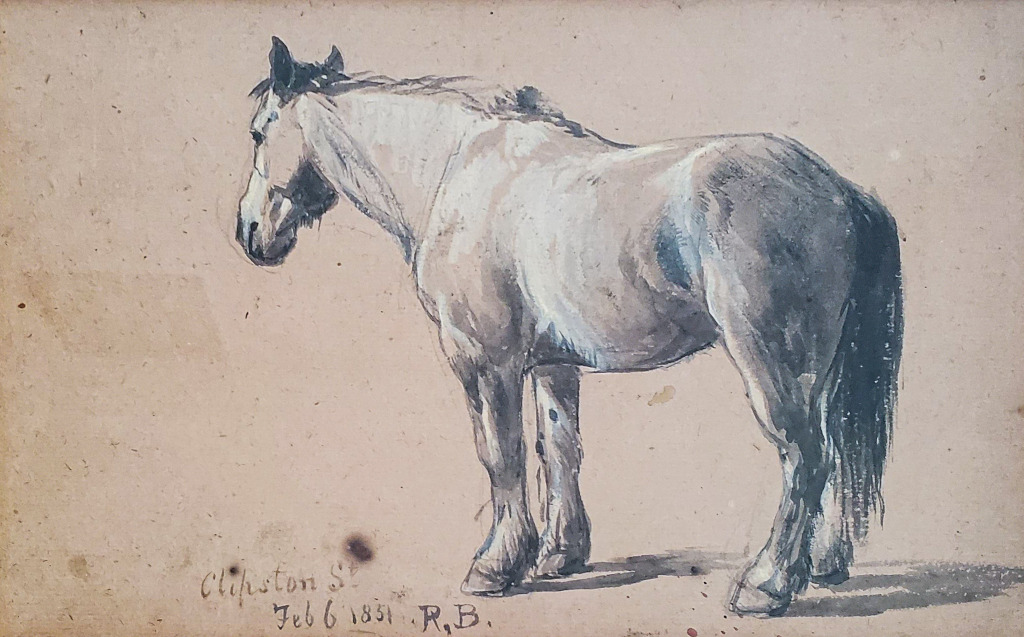
Horse Drawing
Central Role of Drawing in Bonheur's Artistic Practice
Rosa was a passioniate draughtswoman from an early age, instinctively recognising the importance of this medium. French art had traditionally promoted drawings as a key, foundational discipline and the artist's father was in agreement with this philosophy. Rosa and her siblings were strongly encouraged to sketch for hours at a time, and thankfully this forced education did not deter Rosa in later life - rather it helped shape everything that followed.
An additional benefit to this process is improving the artist's 'eye' - helping them to spot different subtle elements of whatever they are observing. This could lead to more precision and lifelike qualities in their final paintings.
The purpose of Bonheur's drawings broadly served the following technical tasks:
- to capture natural movement
- to study anatomy from life
- to build compositions, piece-by-piece
- to visually record rural life, for both animals and workers
- to further explore posture, light and different arrangements
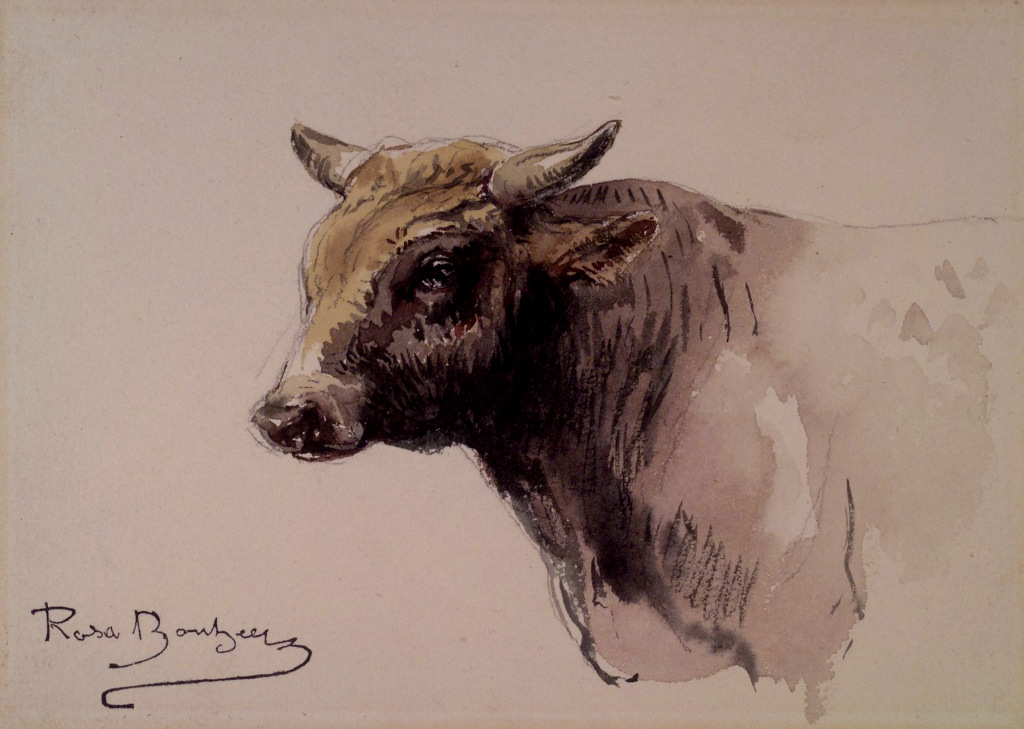
Head of a Bull (Watercolor and graphite)
Studying Animals from Life
Rosa visited a wide number of locations in order to sketch different elements, in different conditions.
Sketchbooks were useful in travelling from one location to another, but keeping related sketches organised together. For quick work, they served their purpose well and when working with movement, the artist would only have a short window of time to record their observations - this could be certain muscles in full flow, a change of posture, or action.
- Horse fairs
- Cattle markets
- Farms in the Nivernais region
- Slaughterhouses
- The Jardin des Plantes, Paris
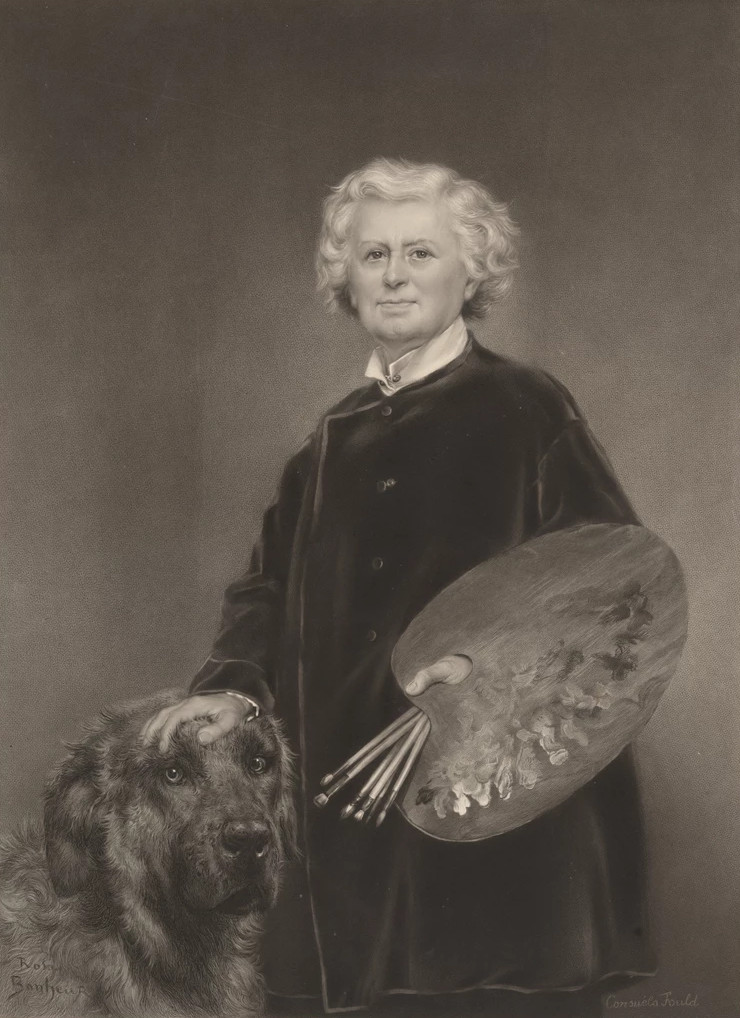
Portrait with Dog
Studying Animals in Abattoirs
Whilst drawing from life was more enjoyable, and entirely necessary for understanding movement, Bonheur held a permit in order to further her studies in abattoirs. Here she could really drill down into small details on muscle and bone structure, and seeing beneath the surface allowed her to truly understand the inner workings of each creature.
She could also take the time to measure different parts of the body, and even compare them from one animal breed to the next. Previous animal artists such as Stubbs would learn new species by comparing them to anything similar that they had previously studied.
Preparatory Drawings for Major Works
In order to outline the typical process used by Bonheur, we can examine two of her most famous paintings and run through the study drawings that she produced for both.
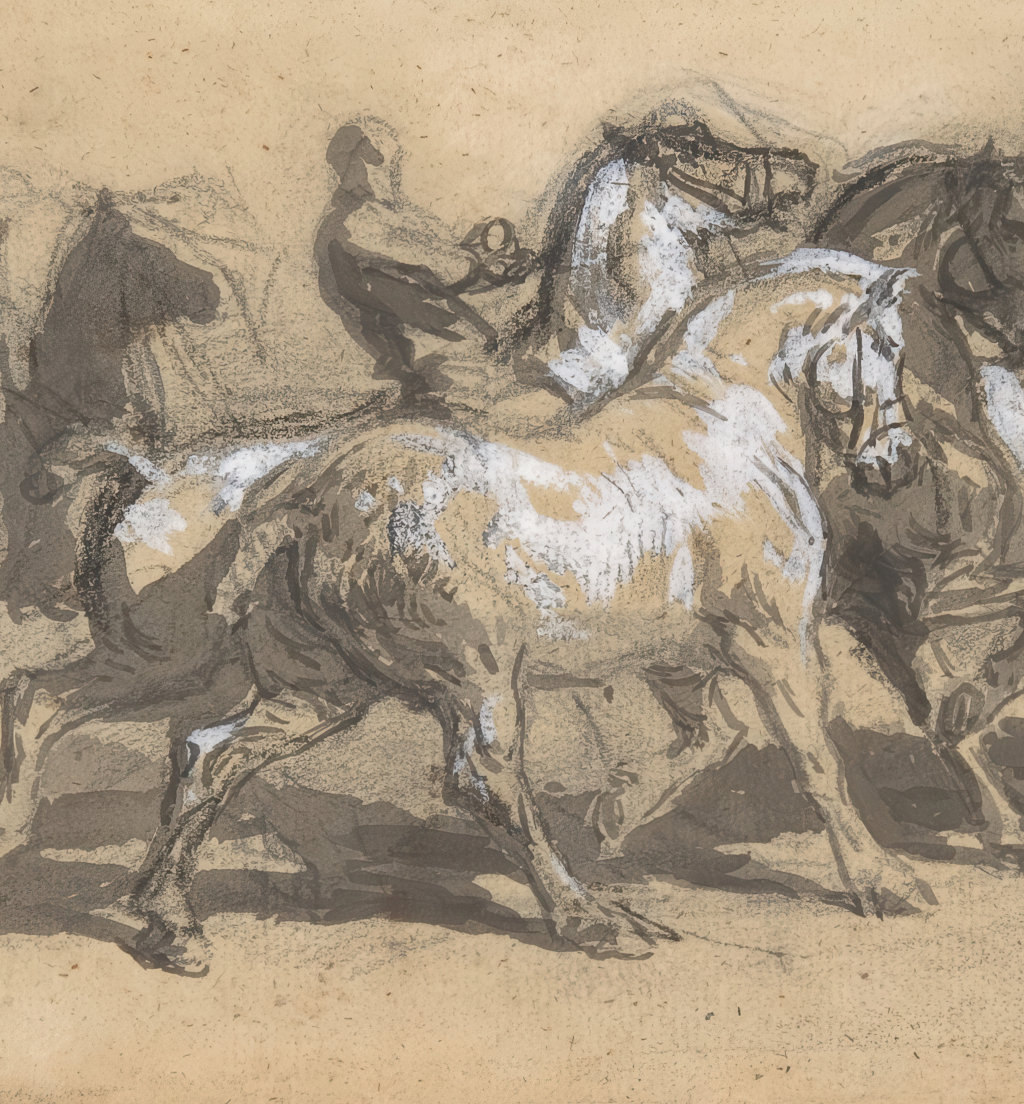
Studies for The Horse Fair
Bonheur's studies for The Horse Fair are perhaps her most technically accomplished series of study sketches. In order to achieve accuracy in such a complex piece, the artist had to practice many different aspects of this work, including postures, single and groups of figures, as well as the rural workers too.
As the artist produced more studies, then the final composition started to slowly take place.
- Charcoal outlines
- Horses in motion
- Experiments with the grouping of figures
- Tests of lighting and perspective
- Human and equine interactions
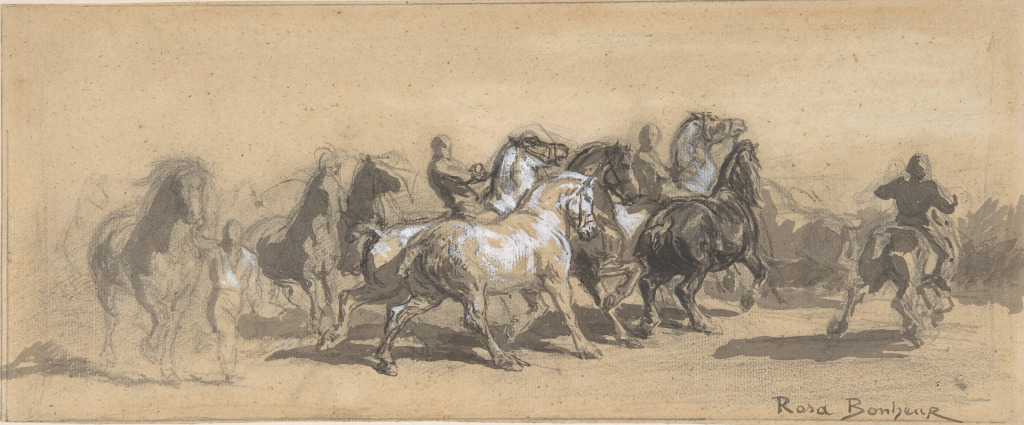
Study for The Horse Fair (Black chalk, brush and gray wash, white heightening)
Studies for Ploughing in the Nivernais
Her work for this painting made use of realistic replication as well as some elements of artistic freedom and experimentation.
- Studies of Charolais cattle
- Studies of rural workers
- Trees, fields and perspective
- Atmospheric effects
Besides these two famous paintings, Bonheur also completed a number of study sketches for other works such as Weaning the Calves, Sheepfold, Windsor and Horses Threshing Corn. As her career progressed, she would actually place an even greater importance on her preparation, perhaps as expectations from the public started to rise.
These drawings often show looser handling, with powerful strokes and confident linework born from a lifetime of practice.
Drawing Materials and Techniques
Rosa Bonheur used the same materials for her drawings as with most other artists of her period. She did, however, learn to alternate between them, depending on the specific task that she was carrying out.
Graphite and Chalk
Rosa used graphite pencil most frequently, and discovered it to be a suitable tool for most of her needs. It was particularly appropriate for working at speed, when studying movement in real-life scenarious. For more polished drawings, she might make use of red or black chalk instead which produced a more developed finish.
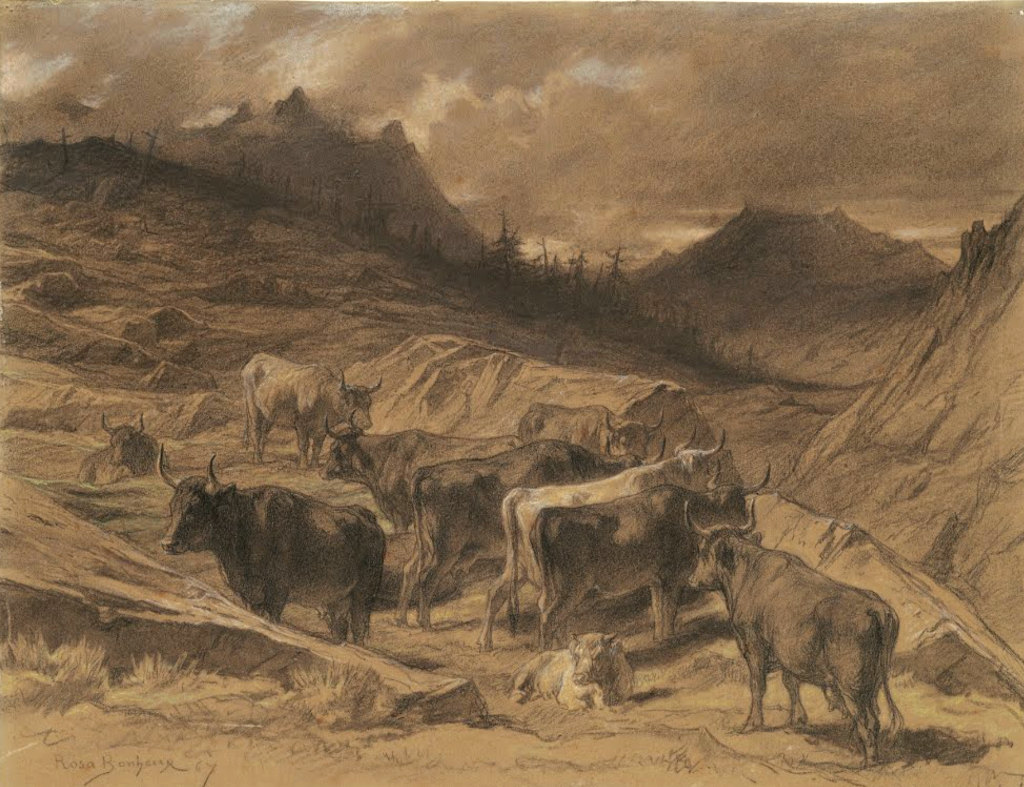
Cattle in the Auvergne (Black and white chalk)
Charcoal
The nature of charcoal as an artistic medium best served Bonheur when she was capturing wild activity, with a more expressive, almost romanticist look to these works. The texture of charcoal provided a strong contrast, and much could be achieved with relatively few strokes. One could feel an element of poetry in these, rather than anatomical precision.
Ink and Watercolour
Ink and watercolour were less common in her oeuvre but still offered an interesting contrast, where Bonheur could produce atmosphere. Ink could help to highlight specific elements with loose watercolours providing general background detail.
Sketchbooks
Bonheur used sketchbooks for a variety of purposes, capturing quick impromptu sketches, as well as logistical notes such as travel maps and directions. The ones uncovered since her career have provided an excellent insight into some of her artistic journeys, helping us to understand much more than merely what she observed.
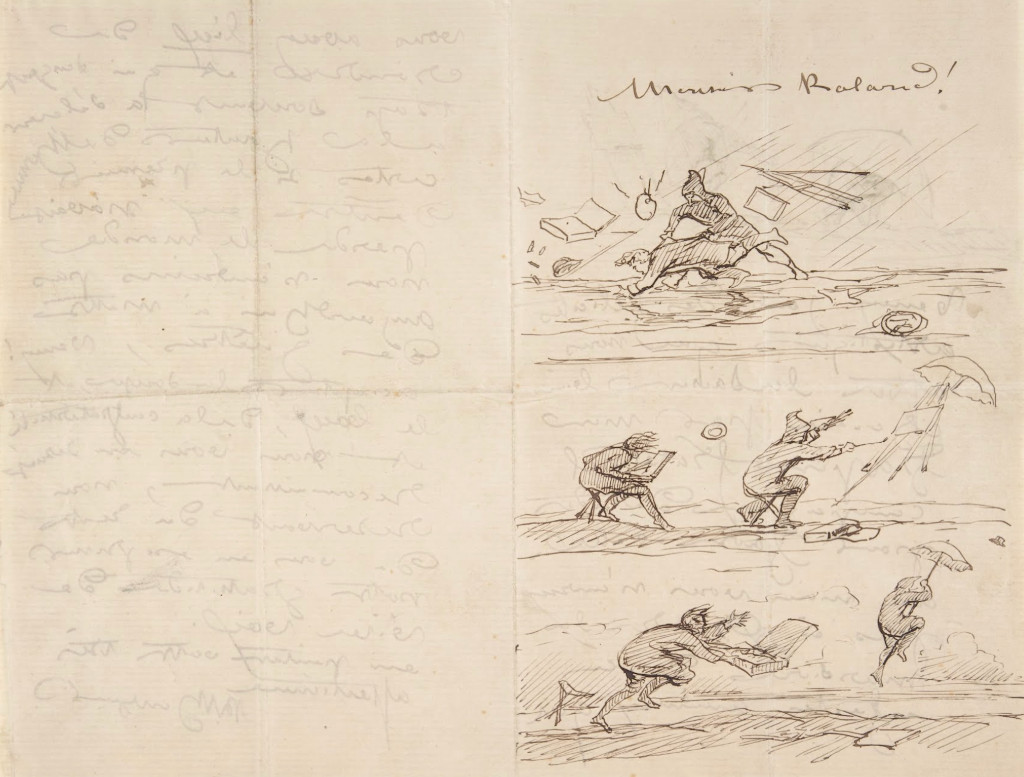
Illustrated letter
Other information such as locations, dates and animal breeds have also helped to further expand our knowledge of her life.
Which Animals did Bonheur Sketch?
Horses were the favourite animal for Rosa Bonheur.
She focused on a variety of breeds, as well as different scenarios - horses working with machinery, and strutting more elegantly in nature. Foals and mares, motion and static, there was no shortage to her curiosity and desire for further understanding. There was also something of a romantic feeling for the artist towards horses, and she developed a fondness for them from a young age, long before her art career took off.
Cattle and oxen held a different balance and role to horses, but were just as integral to rural life in France at that time. They perfectly fitted into scenes of French Realism, and added aesthetic interest alongside the agricultural workers. The muscle structure of these stocky animals were key to their success and something that Bonheur studied closely.
As the artist looked beyond her rural French environment, so other creatures would start to appear in her work - be it the big cats from French zoos, or the sheep and goats found in her travels around Scotland.
.jpg)
Sheep (brush and brown wash over graphite, heightened with lead white)
Bonheur in Scotland
Many artists from outside the UK have discovered a love of the Scottish countryside, and Bonheur was one of those. She travelled to Scotland in 1855 and 1856, and the stunning scenes that she came across would inspire a series of poetic drawings. She would capture rugged landscapes, Highland cattle, sheep on windy slopes and other local wildlife.
Bonheur also discovered local shepherds and other rural workers, similar but ever so slightly different to those who she was more familiar back in France. Paintings of Scotland would follow, but mostly based on drawings that she completed whilst in Scotland, making her sketches all the more important. Scottish weather can change without warning, and Bonheur had to be at her most responsive in order to work effectively in this environment. Others to have done similar here include Landseer and Dore.
Completed Drawings as Presentable Artworks
As Bonheur's skills and reputation grew, she started to develop a number of sketches into presentable, exhibition-ready artworks. These would hone details, add colour on occasion, and generally move from study support to hangable artwork. French art had a long history of success in drawing, and no other country held a greater academic respect for this medium than here.
In order to make the transition from study sketch to marketable artwork, Bonheur would consider composition more carefully, centering the main focus, further develop contrasting shadows and textures and even potentially using multiple mediums or tones within the same piece. There may also be time to include elements of background and supporting elements in order to produce a more complete finish.
Summary of Rosa Bonheur's Drawings
Drawing became a crucial discipline for Rosa Bonheur, providing the foundation behind her more elaborate paintings. The studies left over from her career offer evidence of her work and progess through the decades. It also indicates where her passion lied, and where she wanted to truly master her skills. Horses and other native animals were part of her daily life, and they were later joined by other animals as her curiosity started to spread.
She joined an impressive of highly regarded animal artists by following a similar process of anatomical study, with practice being essential. Without her extensive series of drawing studies, her paintings would never have achieved the technical levels that they did.