 by Tom Gurney
Tom Gurney BSc (Hons) is an art history expert with over 20 years experience
Published on June 19, 2020 / Updated on July 26, 2026
Email: tomgurney1@gmail.com / Phone: +44 7429 011000
The Glass of Wine by Johannes Vermeer: Introduction
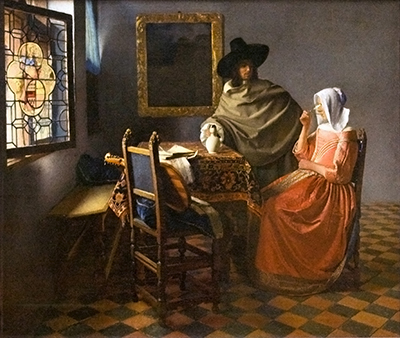
Johannes Vermeer’s The Glass of Wine is a courtship scene built from restraint, colour and uncertainty. A seated woman drinks from a glass while a man stands beside her, attentive and slightly watchful. The room is bright, ordered and elegant, but the relationship between the figures remains open.
The Staatliche Museen zu Berlin record the painting as Das Glas Wein, or The Glass of Wine, by Jan Vermeer, executed in 1658/60, on canvas, image size 67.7 by 79.6 cm, Ident. Nr. 912C. [1] It belongs to the Gemäldegalerie in Berlin.
At a Glance
- ArtistJohannes Vermeer
- TitleThe Glass of Wine / Das Glas Wein
- Date1658/60
- MediumCanvas
- Dimensions67.7 x 79.6 cm
- CollectionGemäldegalerie, Staatliche Museen zu Berlin
- Ident. number912C
- Key themesCourtship, wine, music, morality, interior space, ambiguity
Contents
- Introduction
- At a Glance
- Annotated Close Reading
- What the Painting Shows
- Wine and Courtship
- The Window and Moral Framing
- Temperance and Uncertainty
- The Man and Woman
- Colour, Light and Interior Order
- Relation to Officer and Laughing Girl
- The Berlin Pairing
- Early Interior Experiment
- Acquisition and Berlin Context
Annotated Details from The Glass of Wine
These annotated details focus on the raised glass, seated woman, watchful man, stained-glass window, tiled floor and chair that create the painting's delicate social tension.
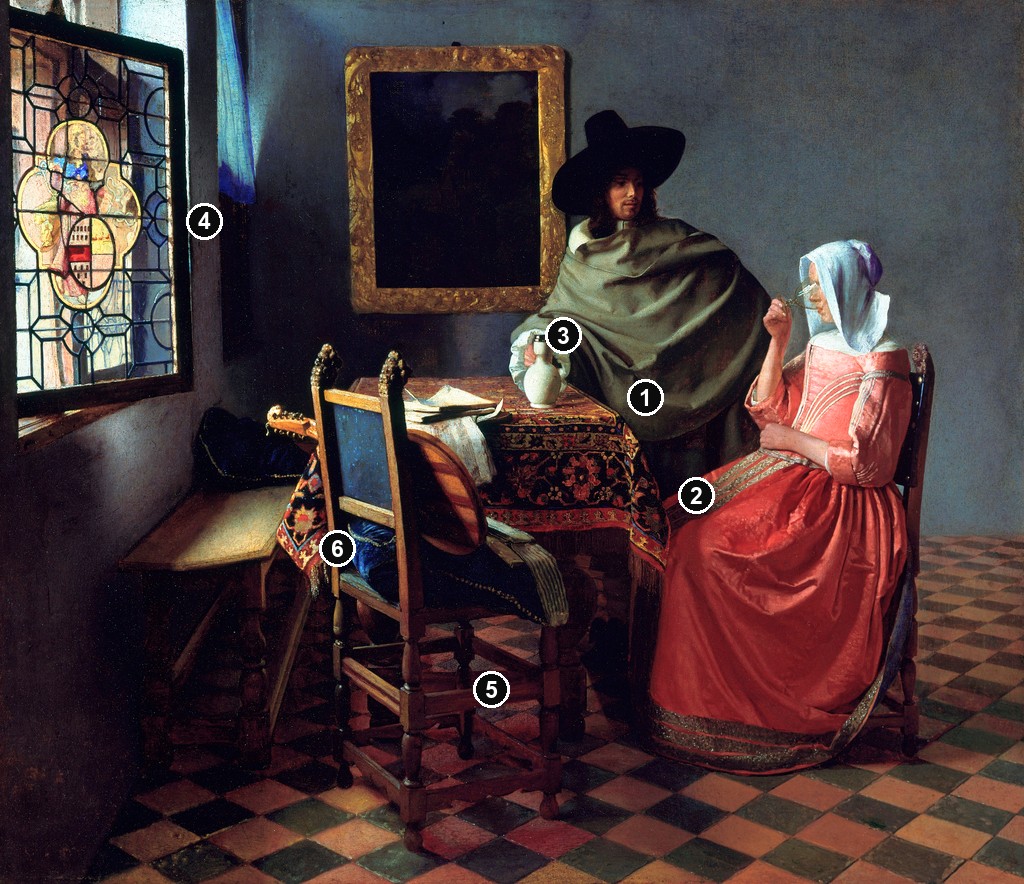
Details from THE GLASS OF WINE
Close looking reveals a scene where courtship, caution, colour and geometry are held in careful balance.
The raised glass
The glass is small but decisive. It concentrates the social exchange and the painting's ambiguity around pleasure, courtship and caution.
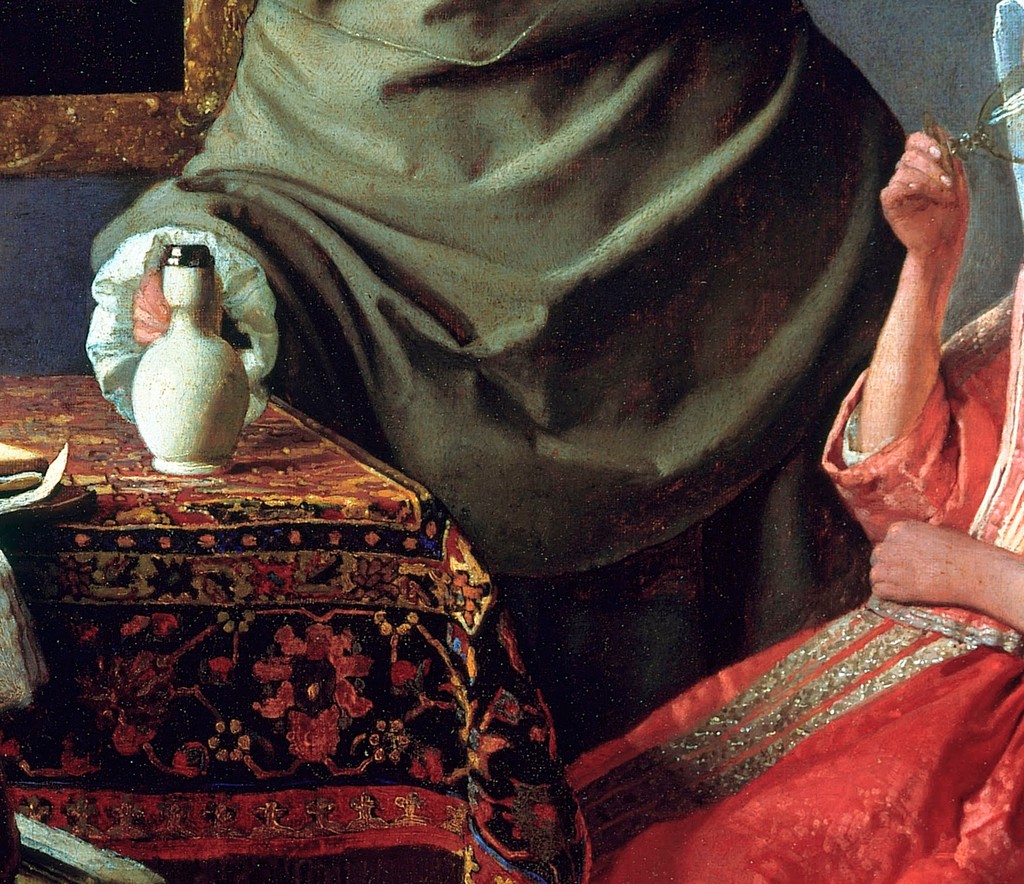
The seated woman
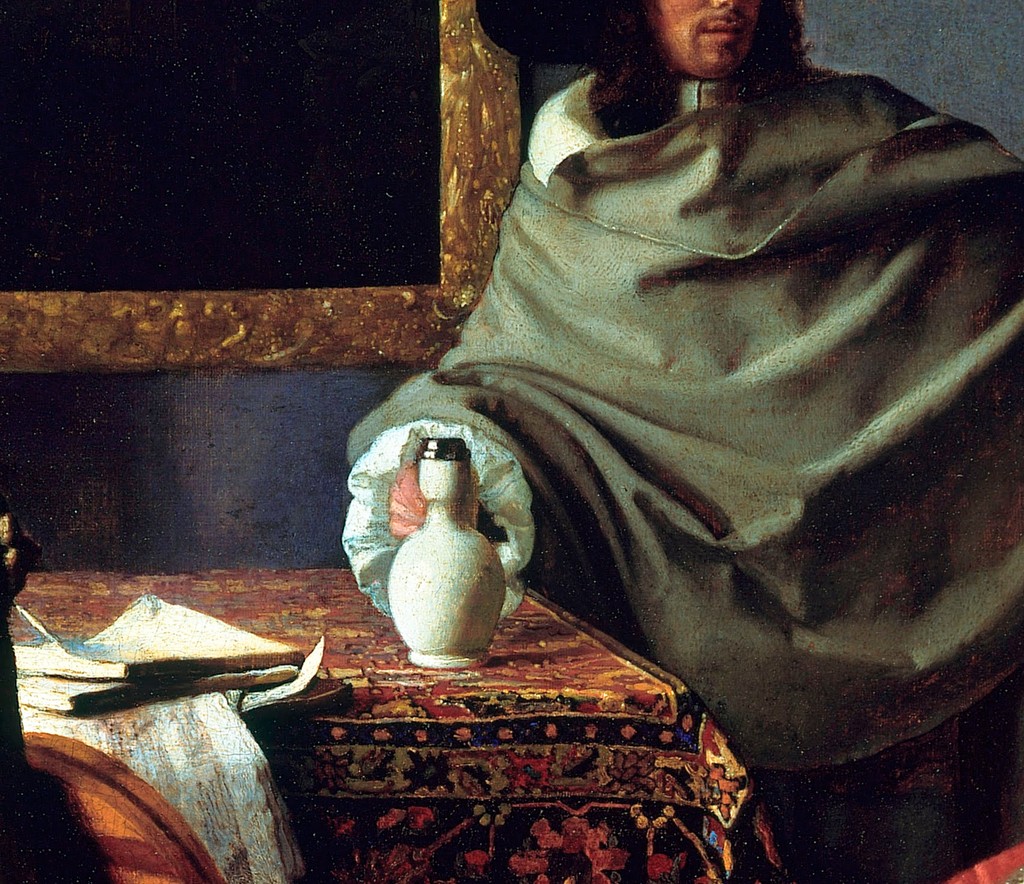
The woman's red dress gives the painting its warm centre. Her posture is composed, but the raised glass keeps the moment unresolved.
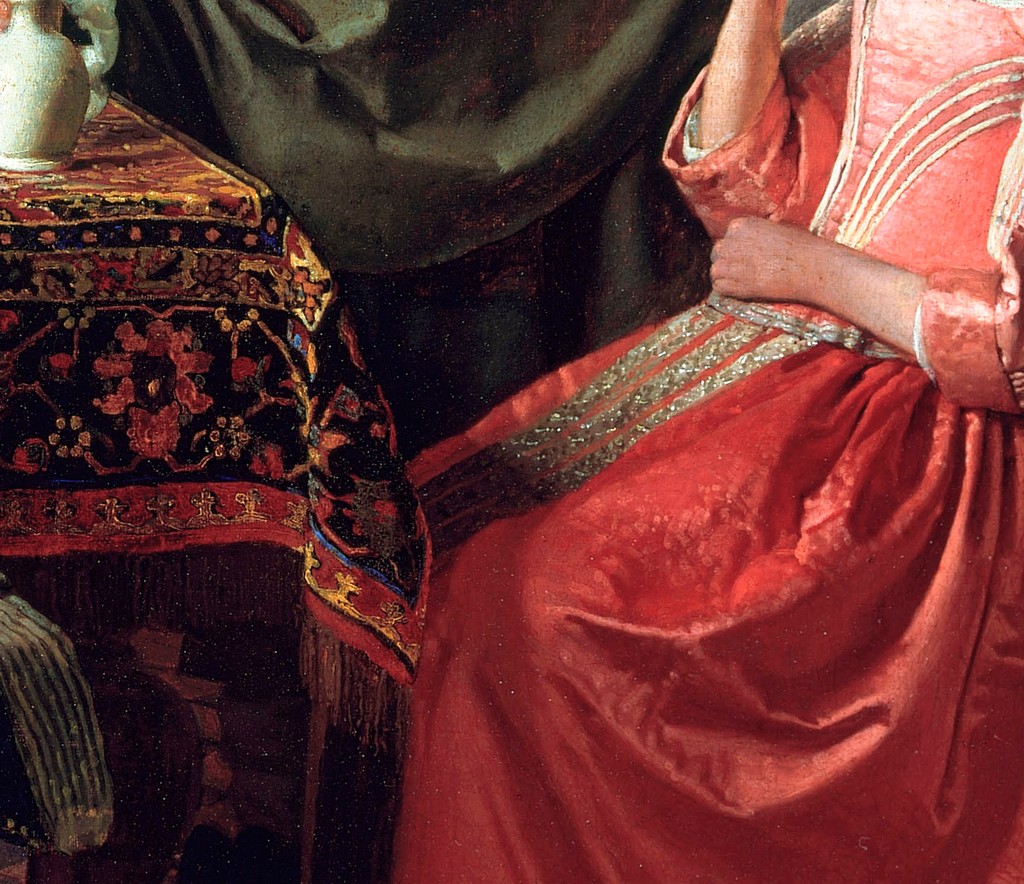
The watchful man
The standing man leans into the exchange without dominating it. Vermeer makes the social pressure quiet rather than theatrical.
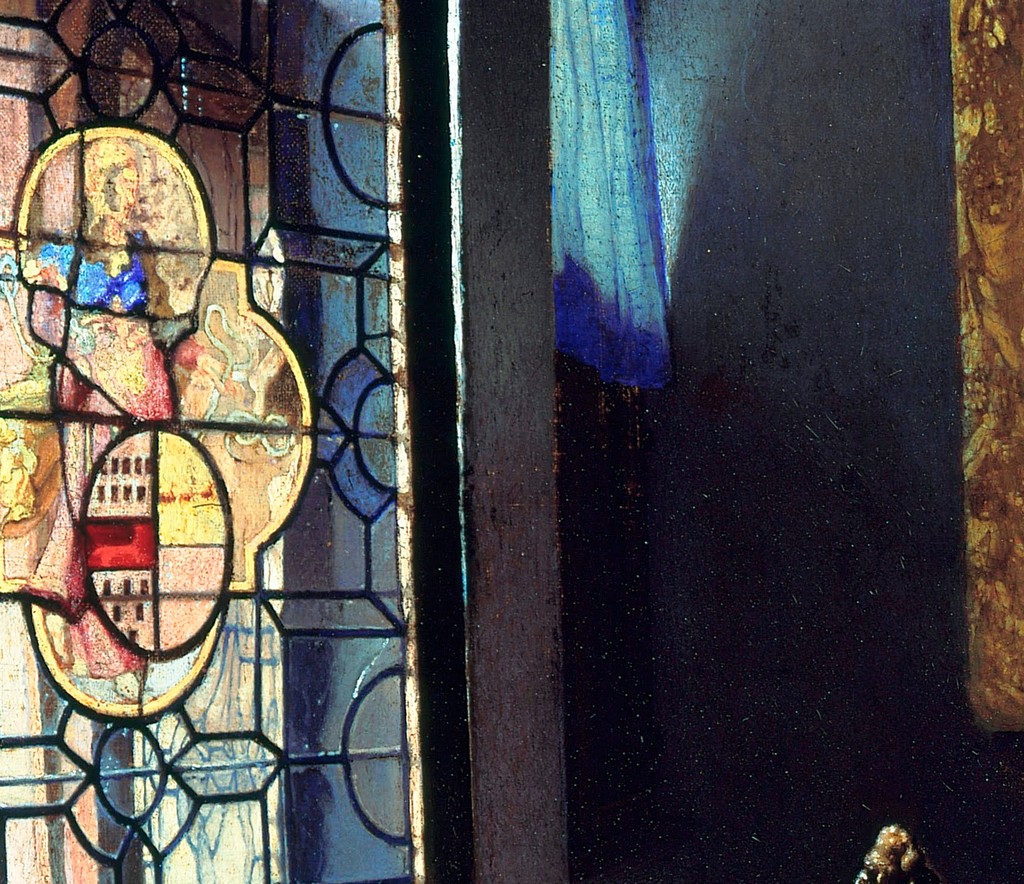
The stained-glass window
The coloured window introduces heraldic and moral complexity while also controlling the left-side light.
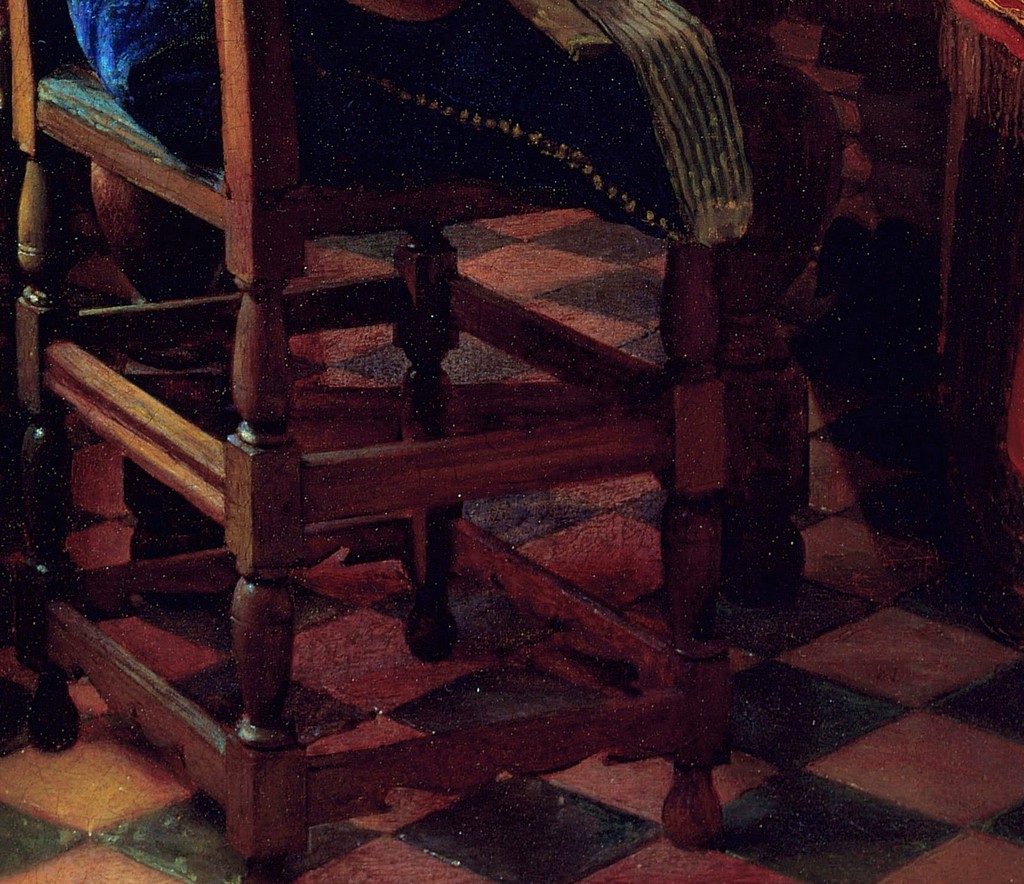
The tiled floor
The floor grid creates order beneath the social uncertainty. It makes the room feel measured and stage-like.
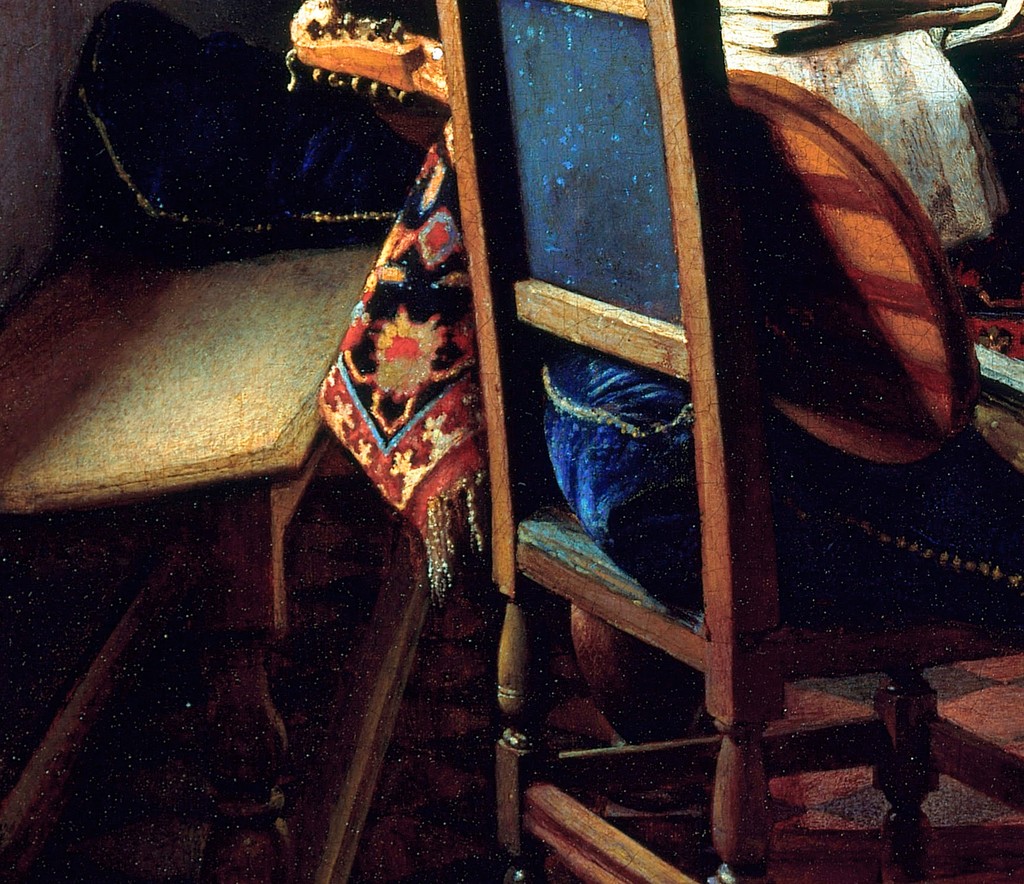
Chair and foreground barrier
The chair and foreground forms keep the viewer slightly outside the exchange. Vermeer makes looking feel both invited and restrained.
What the Painting Shows
The painting shows a man and woman in an interior. The woman is seated and raises or has just raised a glass of wine. The man stands beside her, hat in hand or near her, creating a sense of polite attention. A table, chair, window and tiled floor structure the room.
The scene belongs to Dutch courtship imagery, where wine, music and social exchange often carry moral and erotic implications. But Vermeer does not make the situation crude. The figures are poised, the room is carefully ordered and the meaning remains suspended.
The viewer is left to ask what kind of encounter is taking place. Is the man encouraging the woman? Is the wine part of sociability, seduction or polite ritual? Vermeer gives enough evidence to create tension, but not enough to settle the story.
Wine and Courtship
Wine in Dutch genre painting often suggests pleasure, risk, sociability and possible moral danger. In The Glass of Wine, the drinking woman and attentive man create a courtship scene with an uncertain emotional temperature.
The Berlin museum’s interpretation supports the wine and courtship reading while preserving uncertainty about the relationship between the figures. [1] This is the right balance. The painting should not be reduced to a warning against drinking or a simple seduction narrative.
Instead, Vermeer shows a moment in which social behaviour is difficult to read. The glass is central because it concentrates the questions of pleasure, control and persuasion.
The Window and Moral Framing
The window is one of the painting’s most important features. It brings light into the room, but it also participates in the painting’s moral atmosphere. Dutch interiors often use windows, emblems and reflected light to frame social behaviour.
In The Glass of Wine, the window helps create a bright and orderly setting for an ambiguous exchange. The room is not dark or chaotic. The possible moral uncertainty exists within clarity, which is typical of Vermeer’s subtlety.
This makes the painting different from more overtly comic or disorderly genre scenes. Vermeer does not need drunkenness or spectacle. He builds tension through posture, objects and the space between figures.
Temperance and Uncertainty
The Berlin material supports a Temperance-emblem route while preserving uncertainty about the precise relationship between the figures. [1] That combination is valuable. It allows the painting to be read within moral culture without turning it into a simple emblem.
Temperance matters because wine can suggest both pleasure and danger. A glass can be social, celebratory or risky depending on context. Vermeer keeps that instability alive. The woman’s drink is neither condemned nor celebrated outright.
The painting therefore depends on controlled ambiguity. It gives the viewer enough signals to suspect courtship and moral tension, but not enough to declare a single outcome.
The Man and Woman
The relationship between the man and woman is the centre of the painting. He stands; she sits. He watches; she drinks. This difference in posture creates a slight imbalance of power or intention. Yet Vermeer does not make the man villainous or the woman foolish. The scene remains socially controlled.
The woman’s act of drinking also matters because it is public within the room. She is not alone. Her gesture is part of an exchange. The man’s presence makes the glass meaningful.
The painting’s ambiguity depends on restraint. A more expressive face or dramatic gesture would decide the scene too quickly. Vermeer keeps the figures measured, allowing the viewer to sense courtship without being handed a simple narrative.
Colour, Light and Interior Order
The room’s order is essential to the painting’s effect. Vermeer uses architecture, furniture and light to stabilise a potentially unstable subject. The tiled floor and window give the scene structure, while the figures create social tension.
The painting’s colour is also part of its meaning. Warm tones of clothing and wine are held within the cooler order of the room. Vermeer makes pleasure visible, but contained.
This combination of order and risk places The Glass of Wine near other early mature works in which Vermeer explores courtship and sociability before moving toward more solitary interiors.
Relation to Officer and Laughing Girl
The Glass of Wine naturally connects to Officer and Laughing Girl, another Vermeer scene of male-female sociability in an interior. Both paintings involve courtship-like interaction, a seated woman and a man whose presence shapes the mood of the room.
The difference is tone and structure. Officer and Laughing Girl uses stronger spatial contrast between the large foreground officer and the woman near the window. The Glass of Wine is more balanced and controlled, with the glass becoming the central object of social uncertainty.
Together, these works show Vermeer refining courtship imagery before his later paintings move toward more private forms of attention.
The Berlin Pairing
Berlin’s Vermeer holdings are important because The Glass of Wine and Woman with a Pearl Necklace show two different kinds of ambiguity. In one, a woman’s self-presentation unfolds before a mirror. In the other, wine and male attention create a social exchange that is difficult to read.
Both paintings caution against single-message interpretation. Vermeer works through posture, light, objects and restraint. He lets moral possibility remain active without closing the scene into a lesson.
Early Interior Experiment
The date range of 1658/60 places The Glass of Wine near Vermeer’s early mature development. [1] It belongs after the bold scale of The Procuress and before the most reduced solitary interiors. That position gives it special value in the sequence of the career.
The painting shows Vermeer testing how social interaction can be controlled by architecture. The figures matter, but so do the window, floor, furniture and distance between bodies. The room disciplines the courtship subject.
This makes The Glass of Wine a bridge between narrative genre painting and the later Vermeer of suspended attention. The scene still contains a social drama, but it is already restrained by light and space.
Its wider format also distinguishes it from Vermeer’s later compact single-figure studies, giving the courtship exchange more room to unfold. [1]
The 1901 acquisition from the Pelham Clinton Hope collection also places the work within the collecting history that shaped Vermeer’s modern museum presence in Berlin and beyond. [1]
Acquisition and Berlin Context
The Berlin record gives the acquisition as a 1901 purchase from the Pelham Clinton Hope collection at Deepdene. [1] Its presence in the Gemäldegalerie alongside Woman with a Pearl Necklace makes Berlin an important site for Vermeer’s treatment of courtship, self-presentation and moral ambiguity.
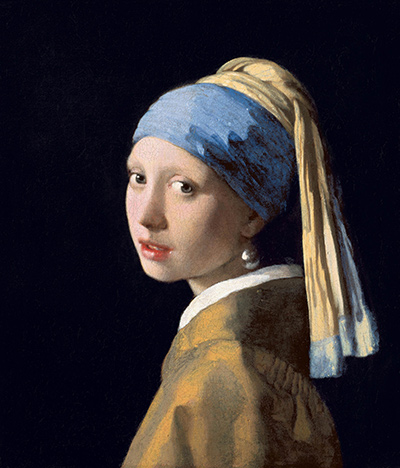
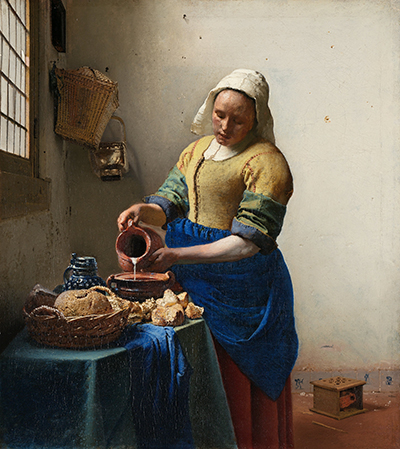
The painting is less globally famous than Girl with a Pearl Earring or The Milkmaid, but it is important for understanding Vermeer’s development around 1658-60. It belongs to the period when he was refining the interior genre scenes that would become central to his art.
Place in Vermeer’s Work
The Glass of Wine connects naturally to Officer and Laughing Girl, Girl Interrupted at Her Music and The Music Lesson. All involve social interaction, courtship or music within carefully controlled interiors.
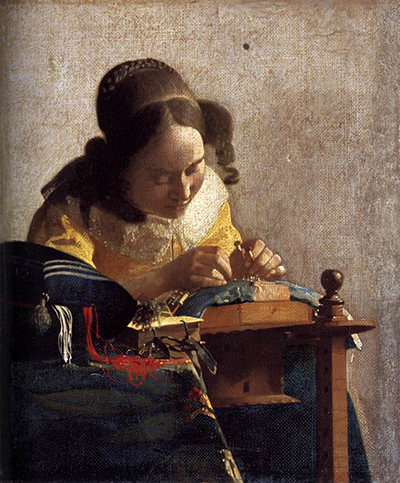
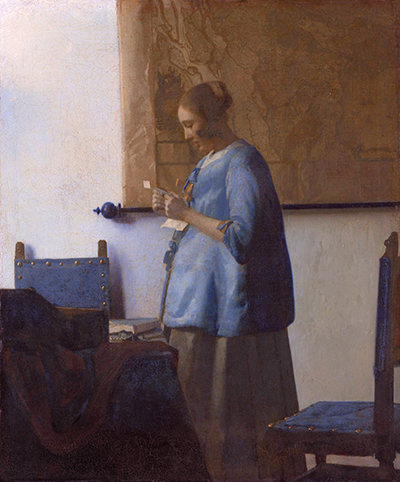
It also contrasts with later solitary works such as Woman in Blue Reading a Letter or The Lacemaker. In those paintings, inward attention dominates. In The Glass of Wine, Vermeer is still exploring the charged space between two people.
Frequently Asked Questions
The painting is in the Gemäldegalerie, Staatliche Museen zu Berlin. [1]
The museum title is Das Glas Wein. [1]
It can be read in relation to courtship and moral caution, but the painting should not be reduced to one simple warning. Vermeer keeps the relationship ambiguous.
It belongs with Vermeer’s courtship and music interiors, especially Officer and Laughing Girl, Girl Interrupted at Her Music and The Music Lesson.
Discussion
What feels most revealing about The Glass of Wine: Vermeer's handling of light, the silence of the scene, the object details, the attribution history, or the way the painting fits within Dutch Golden Age art?
Reader Insights
Vermeer rewards slow attention. Begin with the main action, then move outward to light, edges, objects and the quiet spaces that hold the composition together.
Many of these paintings are small, but their meanings open through Delft, collecting history, technical study and comparison with related Dutch interiors.
Pair this article with the biography and one neighbouring Vermeer work to see how subject, light and attention shift across the artist's compact oeuvre.
Join the Conversation
Have a thought or observation about The Glass of Wine? Share it below. Thoughtful responses may be added to this section as the Vermeer pages develop.
References
- Staatliche Museen zu Berlin, Das Glas Wein, Ident. Nr. 912C.