 by Tom Gurney
Tom Gurney BSc (Hons) is an art history expert with over 20 years experience
Published on June 19, 2020 / Updated on November 6, 2026
Email: tomgurney1@gmail.com / Phone: +44 7429 011000
Introduction
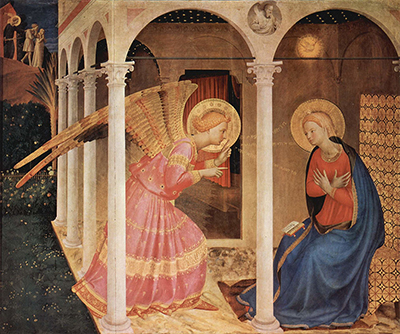
Fra Angelico’s Annunciation in the Museo Diocesano at Cortona is one of the most celebrated paintings associated with his name and one of the finest surviving examples of his repeated return to the Annunciation theme. Unlike the Prado version, the exact date and original patronage of the Cortona painting are less firmly documented in the available institutional record. The work is therefore best dated and contextualised with appropriate qualification.
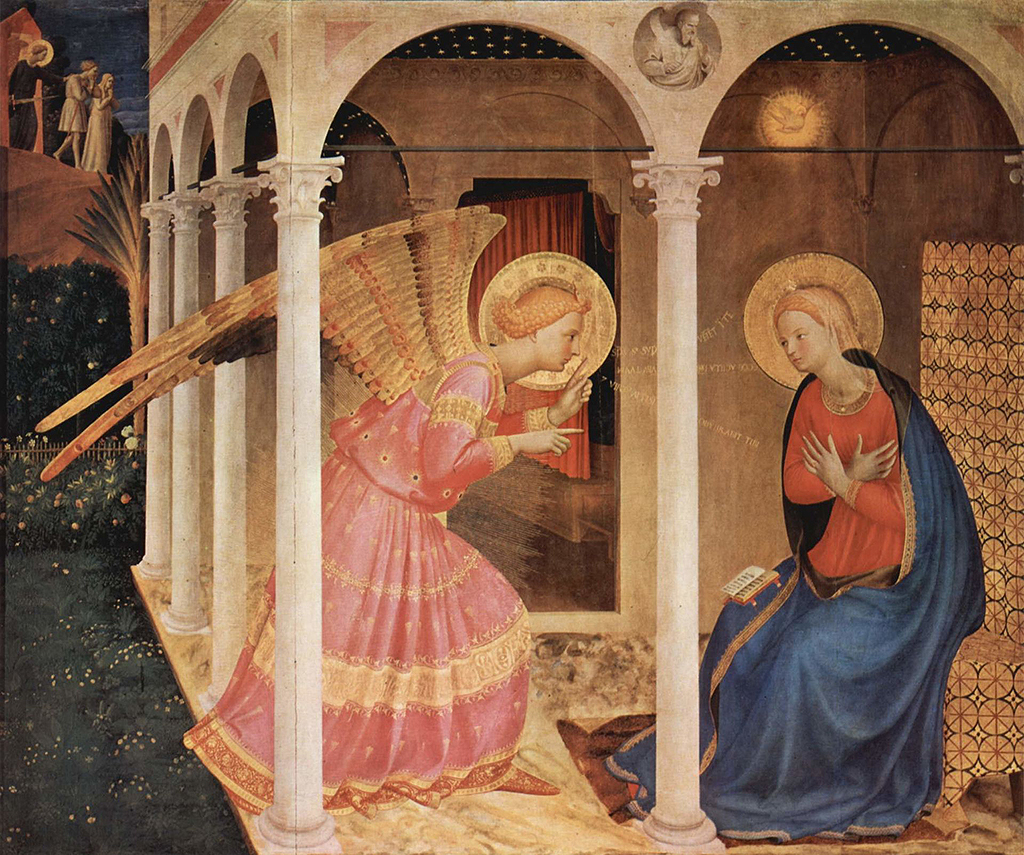
The work is generally placed in the 1430s and is securely connected with Cortona. It is now one of the defining masterpieces of the Museo Diocesano. The painting presents Gabriel and Mary within an elegant architectural setting. Adam and Eve appear in the background, linking the Fall of humanity with the beginning of redemption. A predella extends the Marian narrative.
This structure creates a clear comparison with the Prado Annunciation, while differences in architecture, inscriptions and detail demonstrate that Angelico was not repeating one fixed formula. The Annunciation was one of the subjects through which he repeatedly tested how sacred meaning could inhabit contemporary space. At Cortona, the result is exceptionally refined. The picture combines Gothic elegance, Renaissance architecture, complex theology and minute devotional detail. [1]
At a Glance
- ArtistFra Angelico [1]
- TitleThe Annunciation [1]
- Dategenerally placed in the 1430s; exact dating remains debated [1]
- Mediumtempera on panel [1]
- Current locationMuseo Diocesano, Cortona [1]
- Original contextsecurely Cortonese; exact patronage and first setting remain less certain [2]
- Principal figuresArchangel Gabriel and Virgin Mary [1]
- Secondary sceneExpulsion of Adam and Eve [3]
- Predellaepisodes from the life of the Virgin [1]
- Career significancemajor mature Annunciation between the Fiesole and San Marco traditions [4]
Contents
- Introduction
- Cortona
- Dating Caution
- Gabriel
- Mary
- The Spoken Words
- Adam and Eve
- Architecture
- Predella
- Why the Cortona Annunciation Matters
Cortona
Cortona preserves a particularly important group of works connected with Fra Angelico. The Museo Diocesano identifies the Annunciation as one of its great masterpieces. The city’s connection with Angelico therefore provides secure geographical provenance even where details of the original commission are less explicit than for the Prado altarpiece. This distinction matters. A painting can be securely tied to a city without every patronal detail surviving. [1]
Dating Caution
The Cortona Annunciation is frequently dated around 1433–34 or more broadly to the 1430s. Because the institutional documentation is less precise than the Prado’s 1425–26 record, a broader 1430s dating is more responsible than treating one exact year as settled. This is an important methodological difference. Not every masterpiece has equal documentary precision. [2]
Gabriel
Gabriel approaches Mary with extraordinary grace. The angel’s body, wings and robes create one of the painting’s most refined passages. The figure retains the decorative elegance of Angelico’s late-Gothic formation. At the same time, Gabriel occupies a coherent Renaissance space. The supernatural and naturalistic systems coexist. [1]
Mary
Mary sits within the architecture and responds with controlled humility. Her gesture communicates consent. She does not react theatrically. Angelico again treats the Annunciation as a disciplined exchange. The stillness creates devotional concentration. [1]
The Spoken Words
One of the distinctive features of Angelico’s Annunciation imagery is the use of painted words. The divine message and Mary’s response become visible within the composition. Text therefore participates directly in painting. This reflects a culture in which image and sacred word were deeply intertwined. Angelico’s manuscript background makes this especially appropriate. [1]
The painted words do more than identify the Gospel dialogue. They occupy space. They travel between Gabriel and Mary. Language becomes physically visible. This is a remarkable way to represent an event whose theological meaning depends upon speech and acceptance. [1]
Adam and Eve
Adam and Eve are expelled in the background. As in the Prado painting, their presence connects original sin with redemption. The Fall moves away. The Annunciation begins salvation. Angelico therefore compresses enormous theological history into one pictorial field. [3]
Christian tradition frequently contrasted Eve and Mary. Eve’s disobedience contributed to the Fall. Mary’s obedience opens the way towards redemption. The two women are therefore linked across sacred history. Angelico makes that typological relationship visible through simultaneous narrative. [1]
Architecture
The architecture is elegant and ordered. Columns, arches and decorated surfaces create a refined environment. The space feels contemporary rather than archaeologically biblical. This translation makes the sacred event immediate to a Renaissance viewer. Mary’s house becomes legible through the architecture of Angelico’s own world. [1]
Compared with the later San Marco corridor Annunciation, Cortona retains more decorative richness. Architectural ornament, text and visual detail all contribute. This does not make it less mature. The difference reflects function and context. A public panel painting can sustain visual elaboration that a monastic corridor fresco deliberately removes. [1]
The garden carries familiar Marian and Edenic associations. Enclosed greenery suggests purity. The expulsion of Adam and Eve turns the garden simultaneously into Paradise lost and redemption anticipated. Nature therefore participates in the theological programme. [1]
Predella
The predella extends the Virgin’s biography across smaller scenes. As with other Angelico altarpieces, the lower register allows narrative time to unfold beneath a principal timeless or concentrated sacred event. This relationship between main panel and predella is central to understanding the work as an altarpiece rather than isolated image. [1]
Predella scenes reward close looking. Angelico’s training in illumination made him exceptionally skilled at organising tiny figures and architecture. This precision gives the lower register a different visual rhythm from the monumental principal panel. [1]
The Prado Annunciation is earlier and more securely dated. Both paintings connect Adam and Eve with Gabriel and Mary. Both use architecture to unify sacred history. Cortona appears more refined and decorative in several respects. The comparison therefore reveals continuity and development without requiring one simple progression. [3]
The San Marco corridor Annunciation strips away most secondary narrative. Adam and Eve disappear. The predella disappears. Textual and decorative density diminishes. The comparison demonstrates that Angelico’s later contemplative simplicity was a deliberate choice, not an inability to produce complexity. [4]
The three major Annunciations can be treated almost as repeated experiments. Same Gospel event. Different place. Different audience. Different medium. Different amount of narrative. This makes the subject one of the best ways to study Angelico’s development. [1]
Although exact original patronage at Cortona remains less secure publicly, the subject itself remains deeply compatible with Dominican Marian devotion. Angelico’s repeated Annunciations belong within a broader liturgical and theological culture rather than merely personal artistic preference. [4]
The painting uses brilliant colour with careful balance. Gabriel’s wings, Mary’s garments and architectural surfaces create visual richness. Gold accents maintain sacred splendour. The palette reflects the mature fusion of illumination-derived refinement with panel-painting scale. [1]
Tempera allows crisp edges and precise detail. This suits Angelico’s exact drawing and small ornamental forms. The medium also contributes to the luminous clarity of colour. [1]
Today the Annunciation is displayed in the Museo Diocesano at Cortona. Its museum status foregrounds Angelico’s authorship. Its original liturgical context must be reconstructed historically. The work’s secure connection with Cortona nevertheless preserves a strong local identity. [1]
Why the Cortona Annunciation Matters
The Cortona Annunciation matters because it shows Angelico refining one of his central lifelong subjects without reducing it to repetition. Gabriel and Mary remain the theological centre. Adam and Eve enlarge the sacred history. Architecture creates Renaissance order. Painted words make revelation visible. The predella extends Mary’s biography.
The result is richer and more elaborate than the San Marco corridor fresco while remaining deeply controlled. The painting also teaches an important lesson about evidence. Its fame exceeds the precision of surviving public documentation about date and patron. That distinction is important to the work’s history. The work can be one of Angelico’s masterpieces without pretending that every catalogue question is settled. [1]
Frequently Asked Questions
Discussion
Which feature most clearly distinguishes the Cortona Annunciation from Angelico’s versions in Madrid and at San Marco?
Reader Insights
How do the painted inscriptions turn speech into part of the composition?
What do Adam, Eve and the predella add to the central encounter?
How does decorative richness coexist with the painting’s controlled devotional tone?
Join the Conversation
Share your reading of the Cortona Annunciation below.
References
- Comune di Cortona, Museo Diocesano di Cortona, institutional collection overview identifying Fra Angelico’s celebrated Annunciation. Comune di Cortona Museo Diocesano overview.
- Museo Diocesano di Cortona and regional cultural resources on Fra Angelico in Cortona. Diocese of Arezzo-Cortona-Sansepolcro museum record; Comune di Cortona Fra Angelico record.
- Museo Nacional del Prado, Fra Angelico Annunciation, for comparative chronology and iconography. Museo del Prado Annunciation collection record.
- Museo di San Marco, Fra Angelico Annunciation resources, for comparison with the later dormitory fresco. Museo di San Marco collection information; San Marco Annunciation and Dominican setting.
.jpg)
 Fra Angelico.jpg)