Buy Art Prints Now
from Amazon
* As an Amazon Associate I earn from qualifying purchases.
 by Tom Gurney
Tom Gurney BSc (Hons) is an art history expert with over 20 years experience
Published on June 19, 2020 / Updated on October 16, 2026
Email: tomgurney1@gmail.com / Phone: +44 7429 011000
Madame Récamier: Introduction
Jacques-Louis David's portrait of Madame Récamier is one of the most famous unfinished portraits in European art. It shows Juliette Récamier reclining on an antique-style couch, dressed in white, turned toward the viewer with a calm, open poise. The room around her is almost empty. The surface is spare, pale and restrained. Nothing distracts from the long horizontal body, the simple dress, the elegant furniture and the suspended feeling of a portrait left in a state between sketch and completion. [1] [2] [3]
The painting is easy to mistake for a graceful image of Directoire taste. It is that, but it is also more exacting. David does not surround Récamier with luxury, books, flowers, social company or narrative props. He creates distance. The sitter appears near and remote at the same time, made present by the direct turn of her face and held apart by the stripped-down space around her. The portrait turns social identity into a study of pose, furniture, dress and incompletion. [1] [2] [3]
The Louvre records the work as Portrait de Juliette Récamier, née Bernard (1777-1849), painted in 1800. It was commissioned by Juliette Récamier and her husband, begun in spring 1800, and left unfinished by the end of the year. That unfinished state is not a minor accident in the painting's later fame. It is central to the way modern viewers see the work: the portrait feels complete as an image precisely because it refuses the finish expected of a commissioned society likeness. [1] [2] [3]
The painting belongs to the same post-Revolutionary moment as The Intervention of the Sabine Women. In the Sabines, David used antique bodies and modern feeling to imagine civic reconciliation after violence. In Madame Récamier, antique furniture and dress enter the world of portraiture and social display. The scale is quieter, but the ambition is still public. David is shaping an image of a modern woman through the language of antiquity. [1] [2] [3]
At a Glance
- ArtistJacques-Louis David [1] [2]
- Louvre TitlePortrait de Juliette Récamier, née Bernard (1777-1849) [1]
- Common English TitleMadame Récamier [1] [2]
- Date1800 [1]
- MediumOil on canvas [1]
- Dimensions1.74 by 2.44 metres [1]
- CollectionMusee du Louvre, INV 3708 / C 124 [1]
- StatusCommissioned in 1800 and left unfinished [1] [3]
Contents
- Introduction
- Object Facts
- Juliette Récamier
- Unfinished Portrait
- Pose and Furniture
- Social Image
- Portraiture Around 1800
- How to Look
- Why It Matters
Object Facts and the Louvre Record
The Louvre identifies the work as Portrait de Juliette Récamier, née Bernard (1777-1849). The artist is Jacques-Louis David, and the date is 1800. The inventory numbers are INV 3708 and C 124. The painting belongs to the Department of Paintings and is currently associated with Salle 702, Salle Daru, in the Denon wing, among the Louvre's Neoclassical paintings. [1]
The work is oil on canvas and measures 1.74 metres high by 2.44 metres wide. The format is unusually broad for a portrait, closer in effect to a staged interior than to a bust or half-length likeness. Récamier's body extends across the canvas, and the long couch sets the rhythm of the composition. [1]
The Louvre's description, taken from the 1826 posthumous sale catalogue of David's studio stock, emphasizes her antique couch, the three-quarter turn of her head, her uncovered hair and white dress, the abandon of the pose, the elegance of the arrangement and the exactness of the likeness. That early description is important because it already treats the work's unfinished condition as valuable rather than merely defective. The painting could be admired for the art with which it was disposed, even though it was not fully carried through. [1]
The history is equally precise. The portrait was commissioned by the sitter and her husband. It was begun in spring 1800 and left unfinished by the end of that year. It then remained in David's possession until his death in 1825, though from 1820 it was deposited at the Paris home of the painter Antoine-Jean Gros. It appeared in the posthumous sale of David's studio in April 1826 under the title Portrait ébauché de Madame Récamier and was bought by M. Lenormant. Later in 1826 it was sold to the royal household and entered the Louvre in January 1827. [1]
That provenance explains why the portrait is not simply an interrupted commission that vanished from view. It stayed close to David, passed through his studio afterlife and entered a public collection early in the Restoration. Its unfinished condition travelled with it as part of its identity. [1]
Juliette Récamier as Sitter
Juliette Récamier was born Juliette Bernard in 1777 and became one of the most admired women in Parisian society around 1800. The page does not need to become a full biography of her, but her social position matters because David's painting depends on it. She was not an anonymous model. She was a young woman whose image, taste and salon culture had public importance. [1] [2]
The Louvre shop's summary of the portrait describes her as 23 years old when David painted her and notes that she gathered brilliant Parisian company at her private mansion on rue du Mont-Blanc. It also notes that her salon soon became known as one of the centres of opposition to the First Consul Bonaparte and was closed by government order in 1803. Those details help explain why the portrait should be read as social image-making, not just personal beauty. [1] [2]
The Musée Carnavalet's page for François Gérard's later portrait also helps frame the sitter carefully. It describes Récamier as a model, muse, patroness and collector, and as one of the most frequently painted women of her time. It emphasizes that she and her banker husband installed themselves in the Chaussée-d'Antin area and brought fashionable artists into their private mansion on Rue du Mont-Blanc. In that world, portraiture, interior design and sociability were connected. [1] [2]
David's portrait captures that connection without showing the salon itself. There are no guests, no conversation and no signs of literary performance. Instead, the painting turns Récamier's social persona into controlled simplicity. Her identity is expressed through antique taste, pose and restraint. [1] [2]
This restraint is part of the portrait's modernity. Rather than crowding the sitter with the attributes of rank or intellect, David presents her as an image of taste. The portrait says that the most powerful sign of social distinction may be not abundance, but selection. [1] [2]
The Unfinished Portrait
The painting's unfinished state has generated much of its fascination. The Louvre record states plainly that it was left unfinished by the end of 1800. Napoleon.org summarizes the familiar story that Récamier, dissatisfied with David's slow progress or the developing likeness, turned to François Gérard, after which David abandoned the work. The exact causes remain uncertain, and a responsible account should not turn anecdote into proven fact. [1] [3] [4]
What can be said safely is that the work's incompletion became central to its reception. The painting is not unfinished in a way that makes it unreadable. Récamier's face, body, dress and pose are sufficiently established; the couch, lamp and space are clear; the overall design is complete enough to command attention. But areas of the surface retain a lighter, more open handling. [1] [3] [4]
This gives the portrait a special tension. It has the authority of a finished composition and the freshness of a work still in process. The viewer senses David's decisions without seeing every passage brought to equal polish. The restraint of the setting makes this even more powerful. In a crowded composition, unfinished passages might look like gaps. Here they contribute to the painting's quiet. [1] [3] [4]
The Louvre's 1826 sale-catalogue description recognized the value of the ébauche, or sketch-like state. It praised the arrangement and likeness despite the incomplete finish. That early response matters because it shows that the painting's appeal is not only a modern taste for fragments. Its half-finished status was already understood as part of its artistic charge shortly after David's death. [1] [3] [4]
David's choice to keep the portrait also matters. Whether the break came from artistic will, sitter dissatisfaction, delays, Gérard's rival portrait or some combination of these, the result was that the canvas remained in the artist's orbit. The painting became less a delivered likeness than a studio object: a portrait, a design statement and a trace of an unresolved encounter between artist and sitter. [1] [3] [4]
Pose, Furniture and Antique Taste
Récamier reclines on a lit de repos, an antique-style daybed. Her white dress, bare arms, loosened hair and long pose belong to the revived antique taste of the Consulate and Directoire years. The furniture is not incidental. It creates the composition's form and gives the sitter's body its public language. [1] [3] [5]
The Louvre's collection search records several objects associated with Récamier's interiors, including furniture from her salon around 1800. Those object records show that her public identity was bound to a wider world of modern antique taste, furniture, interiors and self-fashioning. David's portrait does not need to document her actual room detail by detail. It condenses that world into a couch, a lamp and an almost empty space. [1] [3] [5]
The couch has become so closely associated with the image that the word "récamier" later entered furniture vocabulary for a kind of backless or partly backed reclining sofa. That afterlife should be handled carefully: the painting did not invent lounging furniture, and Récamier's own interiors were part of a broader antique revival. But David's image helped make the pose and object visually memorable. [1] [3] [5]
The spareness of the furniture also marks a change from older society portraiture. There is no heavy drapery announcing rank, no elaborate room, no ornamental display. The antique setting is reduced almost to essentials. The result is cool, severe and elegant. [1] [3] [5]
That severity is important because it keeps the portrait from becoming merely decorative. Récamier's beauty is not presented through glitter. It is presented through line, proportion and distance. David turns her into a figure of modern antique simplicity. [1] [3] [5]
The lamp near the couch reinforces the same effect. It is small but deliberate, another antique-style form that helps define the room. Like the couch, it makes the image a portrait of taste as much as a portrait of a person. [1] [3] [5]
Social Image and Psychological Distance
David's portrait is striking because it is both intimate and distant. Récamier is shown reclining, a pose that could imply ease or informality. Yet the painting does not feel private. The sitter turns toward the viewer with grace, but she is set apart by the width of the canvas and the coolness of the empty room. [3] [4]
This distance has often been part of the portrait's appeal. Napoleon.org describes the picture as breaking away from traditional portraiture's concentration on the sitter's face, creating distance between viewer and model. That is a useful point. David refuses to make the face the only centre of meaning. The whole arrangement matters: couch, body, dress, floor, lamp and unfinished air around her. [3] [4]
The result is a portrait of social presence rather than conversational personality. Récamier does not perform charm directly. She occupies an image. Her calm, almost suspended turn toward the viewer suggests awareness, but not disclosure. The painting makes her famous and unreachable at once. [3] [4]
This quality distinguishes David's portrait from Gérard's later image of Récamier. Carnavalet presents Gérard's portrait as a work Récamier ordered in 1801, later admired as one of Gérard's masterpieces, and notes that she was satisfied enough with it to have engravings distributed. Gérard's portrait is more finished, more theatrical and more flattering in a conventional society-portrait sense. David's is cooler, stranger and more modern. [3] [4]
The comparison should not become a contest in which one painting simply defeats the other. They do different things. Gérard gives Récamier a polished public image. David gives her a distilled image of presence and taste, made more potent by interruption. [3] [4]
David's Portraiture Around 1800
Madame Récamier belongs to David's post-Revolutionary and early Consulate portraiture. It was painted after the crisis of the Terror and before the full Napoleonic court machinery of works such as The Coronation of Napoleon. The political temperature is quieter than in the Revolutionary martyr paintings or imperial canvases, but the portrait is still embedded in public life. [1] [3] [6]
The Getty's Empire to Exile exhibition frame is helpful here because it treats David's career from the mid-1790s onward as a period of complex image-making, not simple decline after Revolutionary heroics. Around 1800, David was painting a changing France: new elites, new fashions, new political alignments and new forms of social display. [1] [3] [6]
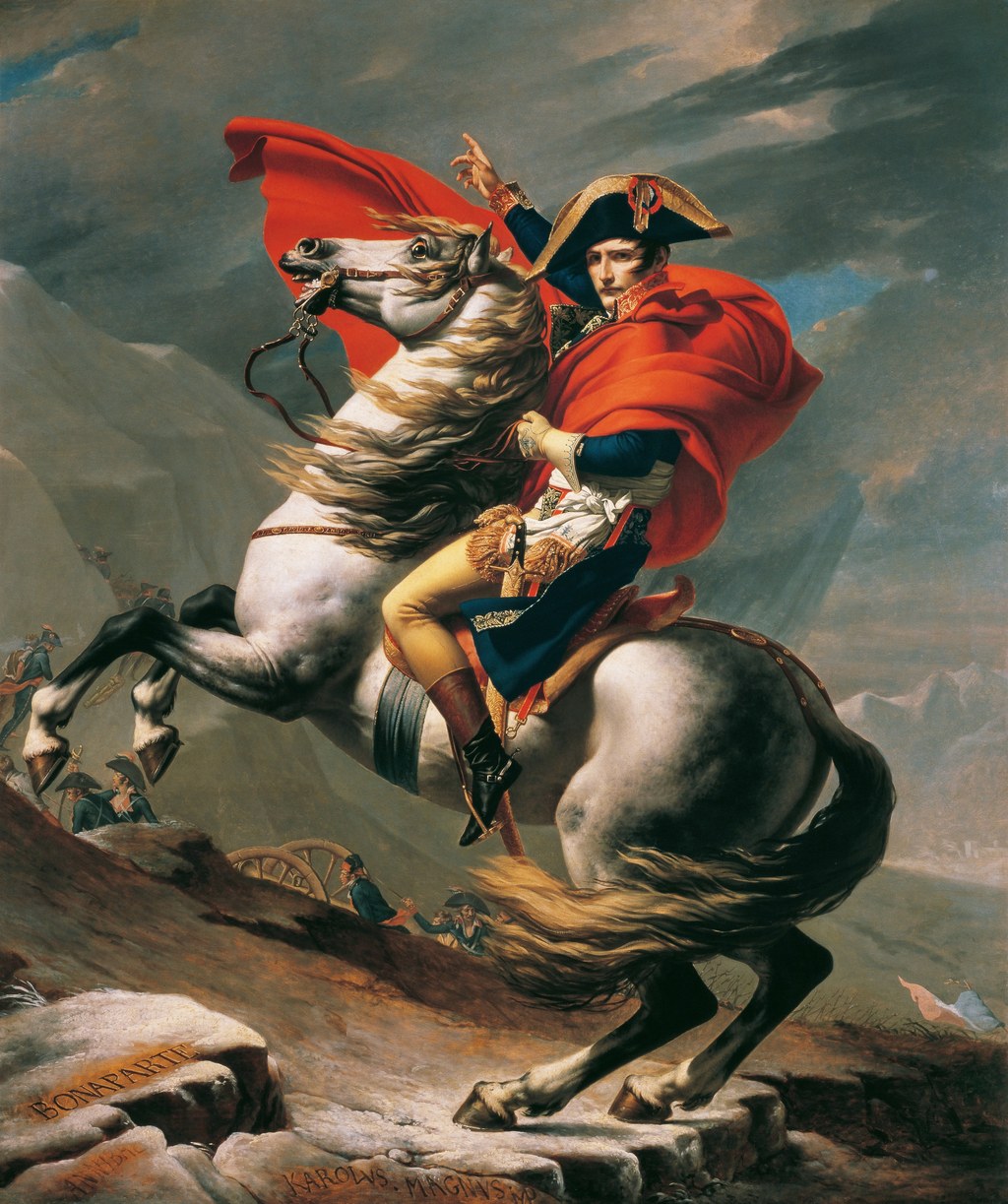
The portrait also connects to Portrait of Pope Pius VII and Napoleon Bonaparte in His Study at the Tuileries in an unexpected way. All three paintings reduce public identity to a few carefully chosen signs. Pius VII is defined through seated stillness, clerical presence and controlled colour. Napoleon is defined through clock, papers, sword and work-room myth. Récamier is defined through couch, dress, pose and the power of unfinished space. [1] [3] [6]
In this sense, David's portraiture is not a retreat from history painting. It is another way of constructing public meaning. The sitter becomes a carefully composed social argument. The props are few, but they are exact. [1] [3] [6]
The portrait also looks back to the Sabines because both works use antique dress and bodily arrangement to address modern France. In the Sabines, antique bodies carry a civic appeal for reconciliation. In Madame Récamier, antique styling carries a social image of elegance, modernity and self-possession. [1] [3] [6]
How to Look at the Painting
Begin with the long horizontal. Récamier's body and couch stretch across the canvas, making the portrait feel unusually spacious. The eye travels along the reclining form before returning to the face. [1] [3]
Then look at the turn of the head. The sitter is not lost in reverie. She turns toward the viewer, but without urgency. The pose holds attention because it is both welcoming and reserved. [1] [3]
Next notice the empty room. David has removed almost everything that might distract from the sitter's relation to furniture, dress and space. The blankness is not poverty of invention. It is the invention. [1] [3]
Look also at the unfinished surface. The portrait does not hide its interrupted state. It asks the viewer to see the painting as a design held open. The incompletion creates air around the figure and keeps the image from becoming a conventional polished likeness. [1] [3]
Finally, compare the portrait with David's more dramatic works. Against the oath, death, martyrdom and ceremony of the surrounding David cluster, Madame Récamier is quiet. But its quietness is not slight. It shows David making a modern public image through restraint. [1] [3]
Why It Still Matters
Madame Récamier remains important because it shows how little David needed to make a memorable image. A couch, a white dress, an antique lamp, a turn of the head and an unfinished expanse are enough. The portrait's power comes from selection. [1] [2] [3]
It also shows the instability of portraiture around 1800. A society portrait could no longer rely only on inherited rank or decorative splendour. It had to register taste, fashion, sociability and modern self-fashioning. Récamier's portrait does this with extraordinary economy. [1] [2] [3]
The painting's unfinished state has become part of its beauty, but that beauty should not be romanticized too easily. The work began as a commission and broke off. It carries a real history of delay, dissatisfaction, artistic choice and unresolved exchange. Its elegance is bound to that interruption. [1] [2] [3]
For David's career, the portrait is a reminder that his genius was not limited to heroic men, ancient sacrifice or imperial ceremony. He could make a reclining figure in a bare room as charged as a battlefield. The result is one of his most modern works: spare, poised, socially intelligent and permanently suspended between presence and absence. [1] [2] [3]
Related Pages
The Jacques-Louis David biography places Madame Récamier within the artist's post-Revolutionary career and early Consulate context. The David paintings hub sets it among his history paintings, portraits and Napoleonic images. [1] [3] [6]
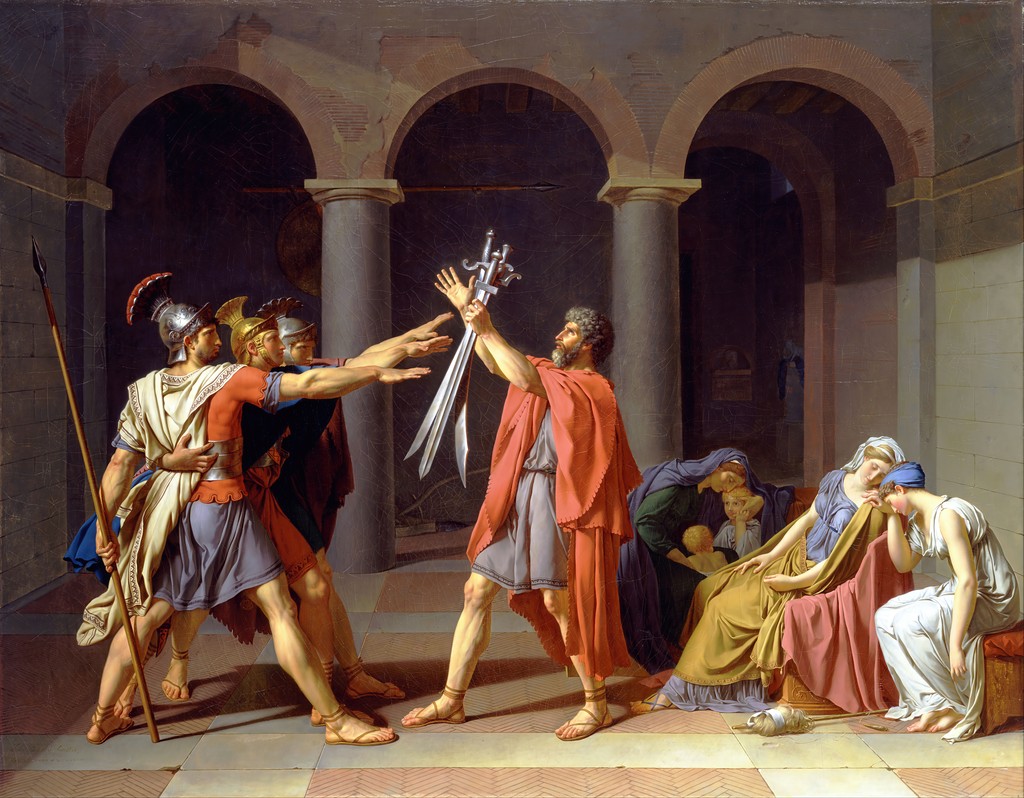
For related works in David's classical and post-Revolutionary language, compare The Intervention of the Sabine Women, The Oath of the Horatii and The Lictors Bearing to Brutus the Bodies of His Sons. For later public portraiture and Napoleonic identity, see Portrait of Pope Pius VII and Napoleon Bonaparte in His Study at the Tuileries. [1] [3] [6]
Frequently Asked Questions
Discussion
Madame Récamier is a portrait about elegance, distance and the power of an image left unfinished.
Use the prompts below to think about how David turns pose, furniture and empty space into social presence.
Reader Insights
Where does your eye settle first: Récamier's face, the long couch, the white dress, or the unfinished open space?
Does the interrupted finish make the portrait feel incomplete, modern, intimate, or more deliberately restrained?
Is David showing Récamier as a person, a social ideal, an image of taste, or all three?
Join the Conversation
Share your reading of Madame Récamier below.
References
- Musee du Louvre, Portrait de Juliette Récamier, INV 3708 / C 124, accessed 26 July 2026.
- Louvre Shop / GrandPalaisRmn, Estampe Mrs Récamier - Jacques-Louis David, accessed 26 July 2026.
- Fondation Napoleon, Portrait of Juliette Récamier, accessed 26 July 2026.
- Musée Carnavalet / Paris Musées, Gérard portrait of Juliette Récamier, accessed 26 July 2026.
- Musee du Louvre, Fauteuil du salon de Madame Récamier, accessed 26 July 2026.
- Getty, Jacques-Louis David: Empire to Exile, accessed 26 July 2026.