


 by Tom Gurney
Tom Gurney BSc (Hons) is an art history expert with over 20 years experience
Published on June 19, 2020 / Updated on August 9, 2026
Email: tomgurney1@gmail.com / Phone: +44 7429 011000
Rembrandt Drawings: Introduction
Rembrandt's drawings are often described as quick, but quick does not mean slight. A few lines can make a woman bend over a child, a beggar turn in the street, a tree lean under weather, or a biblical figure hesitate before speaking. In the drawings, Rembrandt's art becomes mobile. It can pause over a face, test a pose, search for light, or catch a gesture before it disappears.
They are also difficult works to discuss simply. Some drawings are accepted as Rembrandt's own hand. Others belong to pupils, followers, or artists working near him. Some sheets have changed in appearance as ink, paper and old corrections have aged. Modern research therefore asks two questions at once: what can we see in the marks, and what can the material evidence still tell us?
This page treats Rembrandt's drawings as a central part of his work across training, observation, figure study, landscape, biblical narrative, studio practice and attribution. It is a guide to the medium as a whole, not a revival of separate pages for individual drawing subjects.
Contents
- Introduction
- Why the Drawings Matter
- Drawing From Training, Memory and Observation
- Pen, Brush, Wash, Chalk and Ink
- Figure Studies and Biblical Invention
- Landscapes and Everyday Looking
- Drawing in the Studio
- Why Condition Changes What We See
- Attribution and the Moving Corpus
- How Drawings Connect to Paintings and Etchings
Why the Drawings Matter
The drawings matter because they show Rembrandt thinking in a different tempo from his paintings and prints. A painting may carry the weight of a commission, a finished composition, a patron, a frame and a public place. An etching may pass through states, paper choices and many impressions. A drawing can be more direct. It may record looking, planning, teaching, remembering or inventing.
That does not make drawings private in a modern sense. Rembrandt lived in a world of studios, pupils, collectors and copied examples. Drawings could be kept, exchanged, studied and imitated. Some were probably made from life, some from memory, some as exercises, some as preparation for larger works, and some as independent observations. Their value lies in that range.
The Rijksmuseum's research into Rembrandt drawings is especially helpful because it combines art history with technical study. Its Drawing out Rembrandt project focuses on pen drawings in the museum's collection and asks how they were made, how they have aged and how their present state affects interpretation. This is the right way to approach the whole subject: not by treating a drawing as a transparent window into Rembrandt's mind, but by seeing it as a physical sheet with marks, materials, history and changing appearance.
Drawing From Training, Memory and Observation
Rembrandt's early formation in Leiden and Amsterdam prepared him for a kind of drawing that was both learned and alert. He trained in a culture where students copied, observed models, studied older art and practised the human figure. But his drawings rarely feel like academic routine. Even when the subject is humble or ordinary, the line often searches for pressure, balance and attention.
Observation is one of the great pleasures of Rembrandt's drawings. He could find drama in an old man's head, tenderness in a domestic moment, or structure in a few marks of landscape. A drawing did not have to become a painting to be worth making. It could be a record of looking.
Memory also matters. Some figure studies and biblical ideas appear less like direct records from a posed model and more like reimagined action. Rembrandt could compress a narrative into the bend of a back or the placement of a hand. This is why drawings belong beside the larger pages on Rembrandt's biography and style. They show the habits that stand behind the public works: repeated attention to bodies, faces, movement and human response.
The drawings also connect to his role as a teacher. A studio full of pupils does not leave a simple record. Works can be copied, varied, corrected or made in the master's manner. The result is a body of material where teaching and authorship sometimes overlap. That is one reason attribution is such a central issue in Rembrandt drawing studies.
Pen, Brush, Wash, Chalk and Ink
Rembrandt drawings are often associated with pen and ink, and for good reason. The Rijksmuseum records that its Rembrandt drawing holdings are mostly pen and ink. Pen line suits Rembrandt's gift for speed, variation and pressure. It can flick, drag, thicken, break and return. It can suggest a sleeve, a beard, a shadow or a whole posture with startling economy.
Brush and wash add another register. Wash can spread tone across a sheet, deepen a shadow, bind a group of figures, or give atmosphere to a landscape. It lets a drawing move closer to the problems of light and mass that appear in the paintings, while still keeping the freedom of paper.
Chalk belongs to a different kind of touch. It can be softer, broader and more tonal. In Rembrandt's world, chalk, pen, brush and ink were not simply materials; they were ways of thinking. Each medium shaped what could be found quickly and what had to be built slowly.
The word ink should also be handled carefully. Modern viewers often see brown lines and assume they were always brown. The Rijksmuseum's DoRe research warns against that certainty. Some ink may originally have looked blacker. Paper can discolour. White corrections or highlights can become transparent, altered or oxidised. Iron-gall ink can damage paper over time. These changes are not minor technical trivia. They affect how strong, dark, fresh or fragile a drawing appears to us now.
This is why a responsible account of Rembrandt's drawings has to include condition. The sheet we see today is not always visually identical to the sheet Rembrandt, a pupil or an early collector saw in the seventeenth century.
Figure Studies and Biblical Invention
Rembrandt's drawings of figures often seem to begin with action. A body leans, kneels, listens, collapses, reaches or turns away. The face may be little more than a mark, but the whole figure can still carry emotion.
That gift is crucial for his biblical and narrative art. Rembrandt's religious subjects are rarely only about splendid costumes or grand settings. They depend on recognition, shock, mercy, shame, grief, fear and silence. Drawings gave him a way to test those human pressures before they became finished paintings or prints.
In biblical subjects, a drawing can act like a small theatre. It may block out where figures stand, who looks at whom, how light might fall, or where the emotional centre lies. But it can also be more exploratory than that. A sheet may not be a direct step toward a known painting. It may simply show Rembrandt returning to a story because the story gave him a human problem to solve.
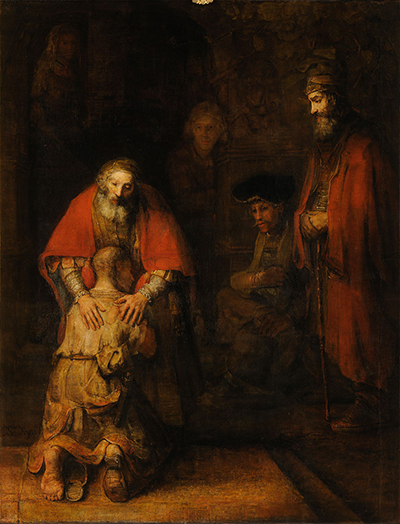
This matters for subjects such as the Prodigal Son, Lazarus, Christ among the sick, or scenes of accusation, healing and revelation. Rembrandt's paintings and etchings often feel psychologically dense because he had trained himself to imagine bodies in moments of decision. The drawings are one place where that imagination stays visible.
Landscapes and Everyday Looking
Rembrandt's drawings are not only about figures. His landscape drawings, like his landscape etchings, show an artist alert to the ordinary Netherlands around him: cottages, trees, roads, canals, bridges and open skies. These sheets are important because they resist the idea that Rembrandt's genius was only theatrical or interior.
Landscape drawing encouraged a different kind of attention. Instead of building drama around a biblical scene, Rembrandt could let a bank of trees, a bend in a road or a low horizon carry the interest. The result can be quiet but not passive. A few lines can make land feel lived in. A wash can turn weather into structure. A blank area can become light.
These works also help readers understand the connection between drawing, etching and painting. A landscape drawing may share the observational habit of a sketch, while an etching such as The Three Trees transforms landscape into a highly worked printed image. Rembrandt moved between these media without making them identical. Drawing gave him the freedom to look; printmaking let him revise, multiply and vary; painting gave him scale, colour and surface.
Drawing in the Studio
Rembrandt's studio complicates the drawings in the best possible way. It means that drawings were not only solitary acts. They could be part of training, imitation, correction and shared visual practice.
Pupils learned by drawing. They copied models, prints, paintings and one another's work. They absorbed Rembrandt's ways of describing heads, hands, robes, shadows and biblical action. Some sheets once thought to be by Rembrandt have been reassigned to his school or circle. Others remain debated. This should not be treated as a scandal. It is part of how a famous seventeenth-century studio worked.
The Rembrandthuis collection and research material are useful here because the house is not only a biographical site. It is a reminder that Rembrandt's work was made in a professional environment with tools, pupils, clients, collectors and repeated practice. A drawing might be a master's invention, a pupil's exercise, a studio variant, or a later copy after a Rembrandt idea.
That studio context is one reason Rembrandt's drawings connect naturally to his workshop and attribution history. Looking at drawings trains the eye to notice how fragile authorship can be when style becomes teachable.
Why Condition Changes What We See
Condition is central to Rembrandt drawings because paper and ink are vulnerable. The Cultural Heritage Agency of the Netherlands explains iron-gall ink as a long-used ink type in archives, libraries and drawing collections. Its components can contribute to ink corrosion, damaging paper or parchment through chemical processes. The same research context is directly relevant to old master drawings.
The Rijksmuseum's DoRe project brings that problem close to Rembrandt. It studies how pen drawings have changed and how they may change in the future. The project uses non-invasive methods, including macro-XRF and multi-modal forensic imaging, to learn more about materials and condition.
For readers, the lesson is plain: a Rembrandt drawing is not only an image. It is also paper, ink, possible wash, old corrections, old mounting, handling history and conservation history. A line may have faded, shifted in colour or eaten into the sheet. A white touch may no longer behave as it once did. Paper may have yellowed, making contrast softer.
This does not reduce the beauty of the drawings. If anything, it makes them more intense. Their present delicacy is part of their survival. But it does mean we should be careful before judging a drawing's original force from its present colour alone.
Attribution and the Moving Corpus
Rembrandt drawing attributions have changed substantially over time. Older catalogues gave Rembrandt a much larger body of drawings than many scholars would accept today. Later research has separated autograph works from school pieces, copies, followers and uncertain sheets. That process continues because drawings often have less documentary support than major paintings.
Several factors make the problem hard. Drawings are portable. They can lose early ownership history. They may not be signed. They may exist in groups of related copies and variants. Pupils could imitate Rembrandt's hand closely. Later collectors sometimes wanted a sheet to be by Rembrandt because the name carried prestige.
Material study helps, but it does not solve every question by itself. Ink, paper and technique can support an argument, challenge an old belief or rule out a simple story. But attribution still depends on the whole case: style, handling, subject, provenance, comparison, technical evidence and the judgment of specialists.
The safest reader-facing language is therefore measured. A sheet may be by Rembrandt, attributed to Rembrandt, from his school, from his circle, by a follower, after Rembrandt, or formerly attributed to him. These are not decorative labels. They are part of the work's history and part of the honesty a Rembrandt page owes its readers.
How Drawings Connect to Paintings and Etchings
Rembrandt's drawings should not be isolated from his paintings and etchings. They belong to the same restless practice, but each medium does something different.
Drawings show speed and search. Paintings build presence through colour, surface, scale and layered handling. Etchings turn line into a repeatable image, but one that can change through states, plate tone, paper and inking. A figure first explored on paper may later find a new life in paint or print. A biblical scene may move across several media without becoming a simple copy from one to another.
This cross-media movement is one reason Rembrandt feels so modern to many viewers. He did not use drawing only as a servant of painting. He used it as a way of seeing, remembering and inventing. The best drawings feel complete even when they remain open.
The same point helps explain why the drawings belong near Rembrandt's style and technique, etchings, prints, paintings and workshop pages. They are not a side corridor. They are one of the main ways into his art.
How to Look at a Rembrandt Drawing
Start with the whole sheet. Before searching for details, notice the movement: where the eye goes first, which lines carry weight, where the paper is left open, and how much the drawing asks your imagination to complete.
Then look at the marks. Pen lines may thicken or fade. Wash may pull figures into shadow. Chalk may soften an edge. Some passages may seem astonishingly economical because Rembrandt, or an artist working near him, did not need to describe everything. The drawing works by choosing what matters.
Next, look at the material state. Is the ink now brown? Is the paper warm, stained or discoloured? Are there pale corrections or touches that may once have behaved differently? These questions do not require specialist equipment to matter. They help viewers remember that old drawings have lived physical lives.
Finally, read the attribution line. It is part of the artwork's meaning. "Rembrandt" is different from "school of Rembrandt" or "formerly attributed to Rembrandt." A cautious label does not make a sheet less interesting. It places it more accurately inside the world of Rembrandt, his pupils, his collectors and the long history of looking at his work.
Frequently Asked Questions About Rembrandt Drawings
Some inks and papers have changed over time. Rijksmuseum and RCE research shows that pen drawings may no longer look as they did when made, and iron-gall ink can contribute to corrosion and colour change.
No. Some are accepted as Rembrandt's own work, while others are attributed to his school, circle, followers or later copyists. Drawing attributions can change as scholars compare style, materials, provenance and technical evidence.
Yes, drawings could support figure invention, narrative thinking, landscape observation and studio practice. But not every drawing is a direct preparation for a known painting or print.
Some drawings feel complete as independent acts of observation or invention; others look more exploratory. The best approach is to ask what the sheet is doing rather than force every drawing into the same category.
Rembrandt Drawings with Images
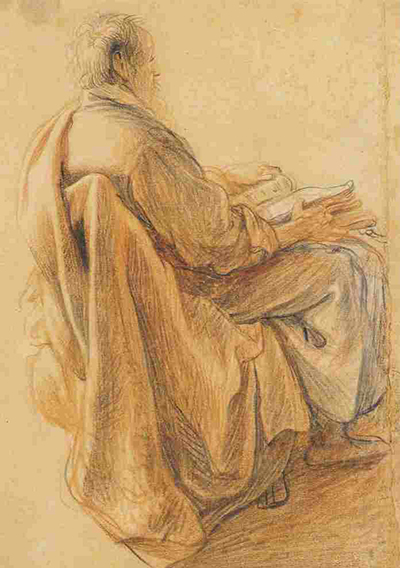
Old Man Reading a Book
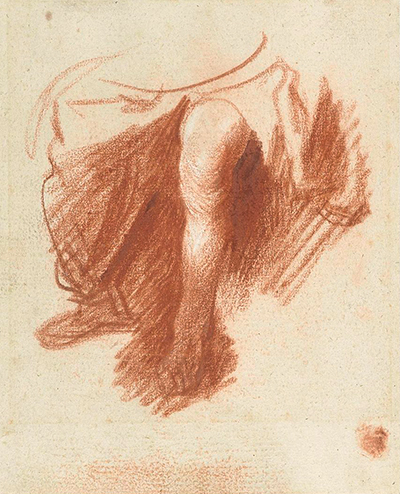
Study of the legs of a seated woman
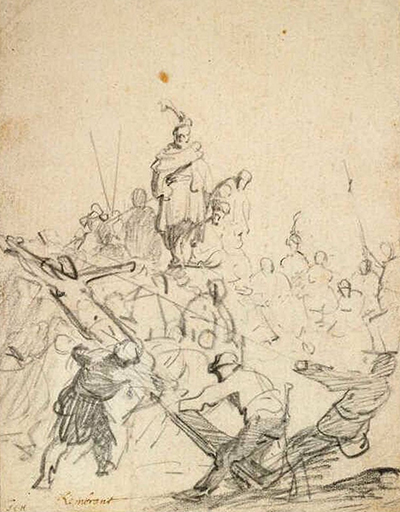
The Raising of the Cross
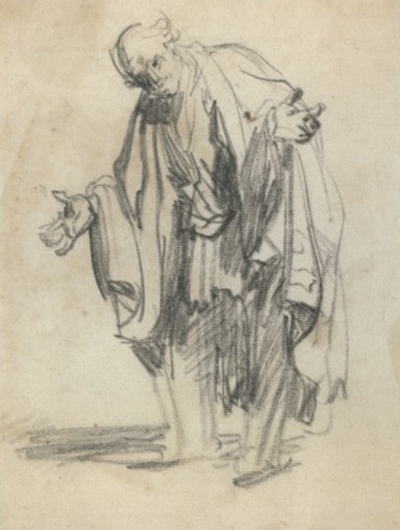
Old Man with Outspread Arms
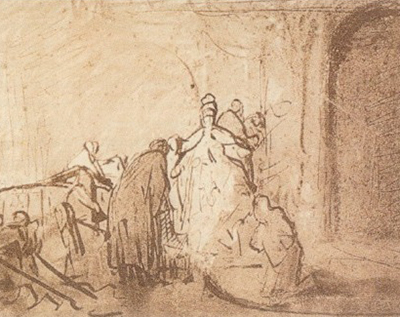
Study for Judas Returning the Thirty Pieces of Silver
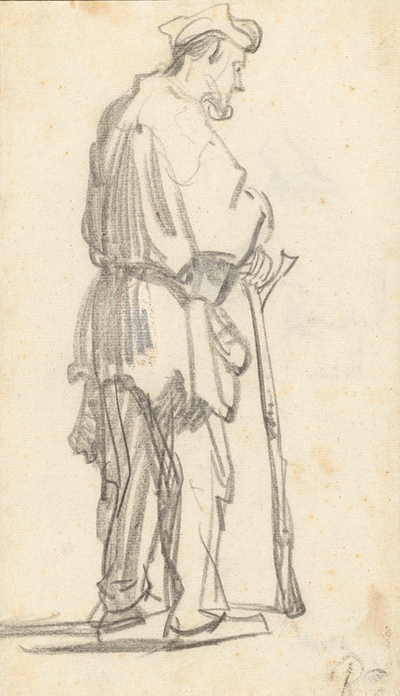
Standing Beggar in Lost Profile
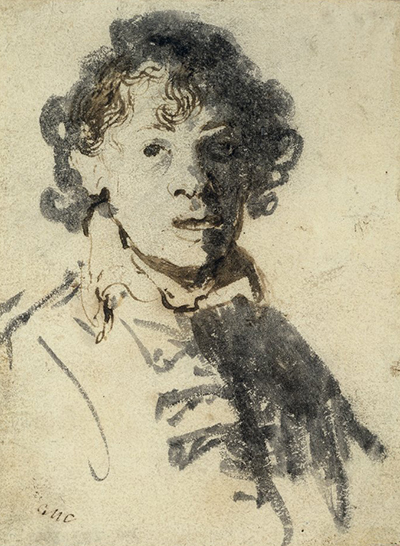
Self-Portrait with Open Mouth
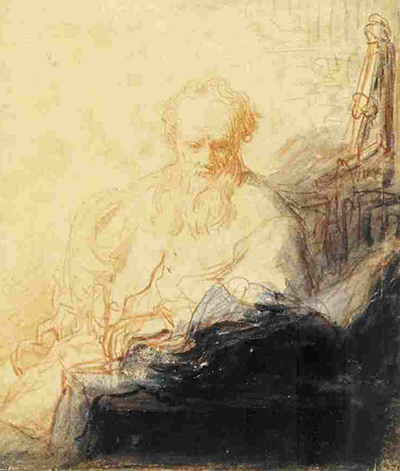
St Paul in Meditation
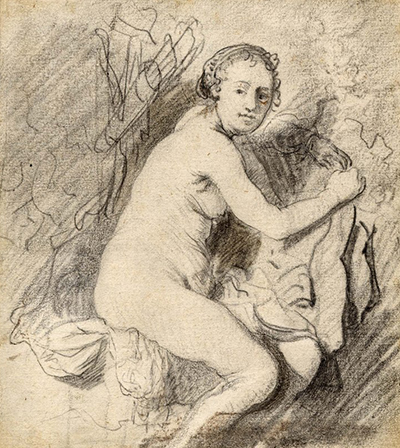
Diana at the Bath
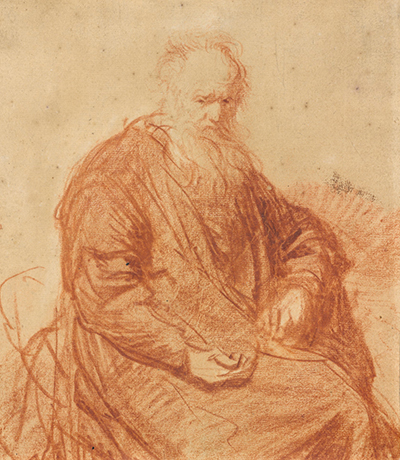
Seated Old Man
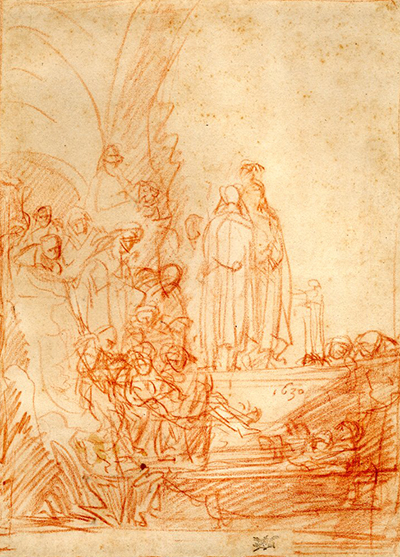
The Entombment of Christ
Kneeling Man
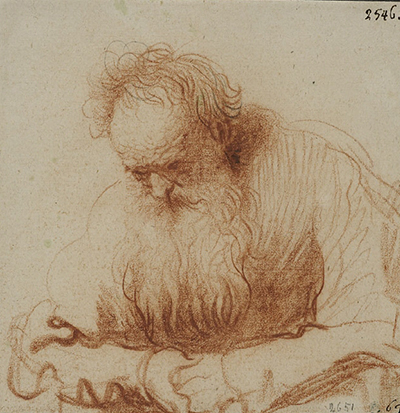
Seated Old Man II
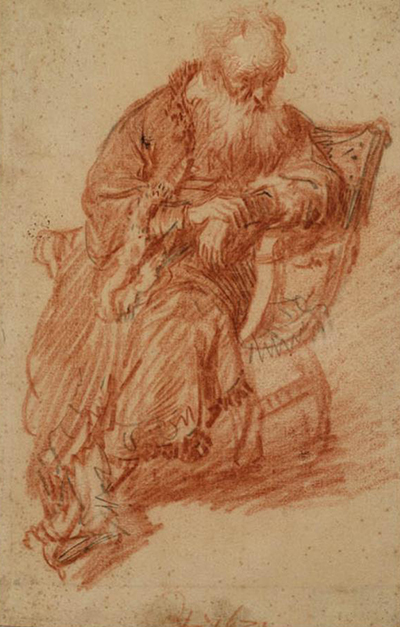
Old Man Seated in an Armchair
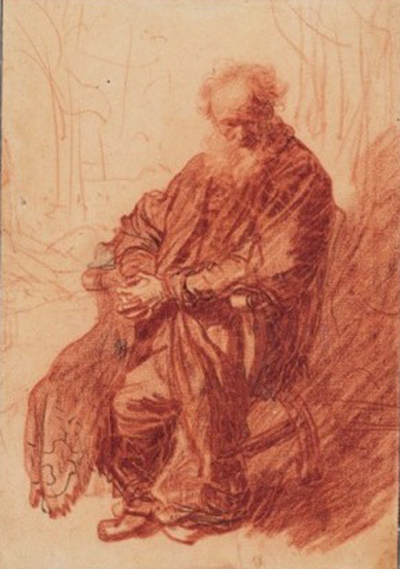
Old Man with Clasped Hands, Seated in an Armchair
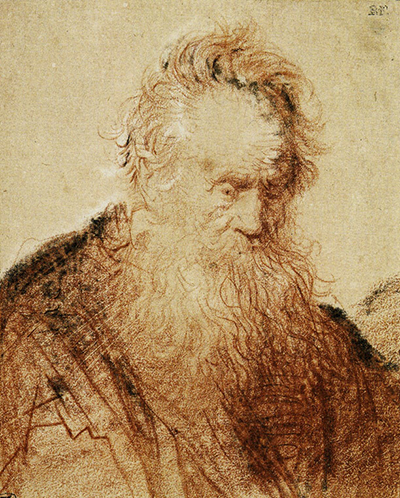
Bust of a Bearded Old Man
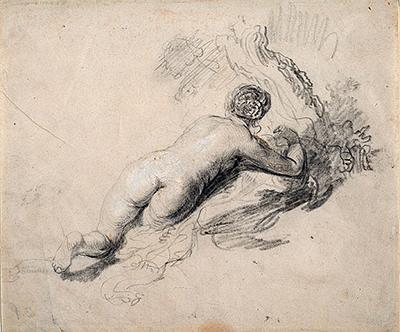
Lying Naked Woman
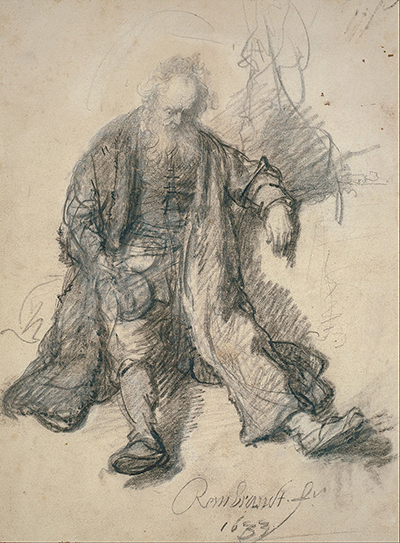
Study for Drunk Lot
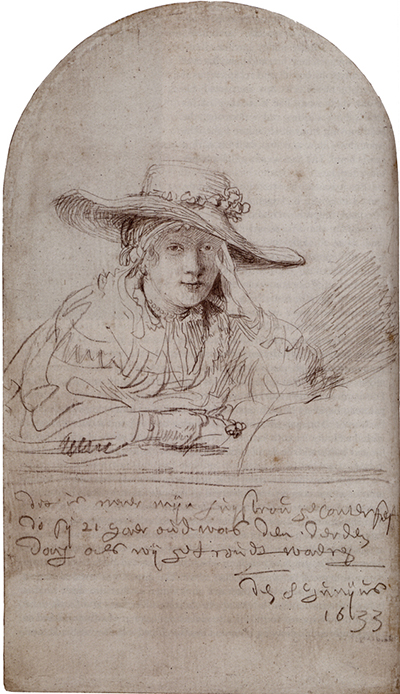
Portrait of Saskia as a Bride
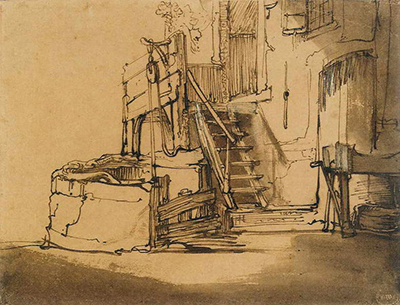
Entrance of a Cottage
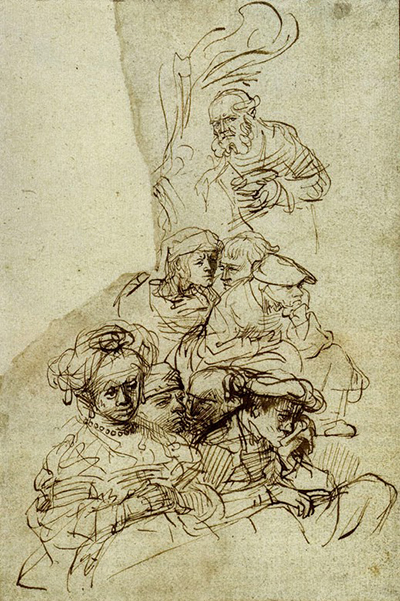
Groups of Listeners
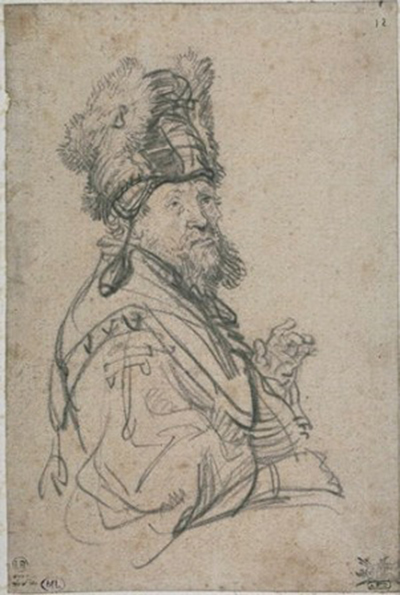
Bearded Old Man with a Fur Cap
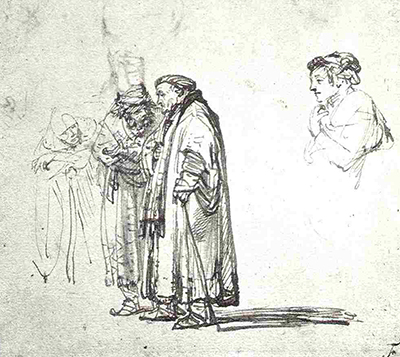
Two Men in Discussion, a Third Listening to Them
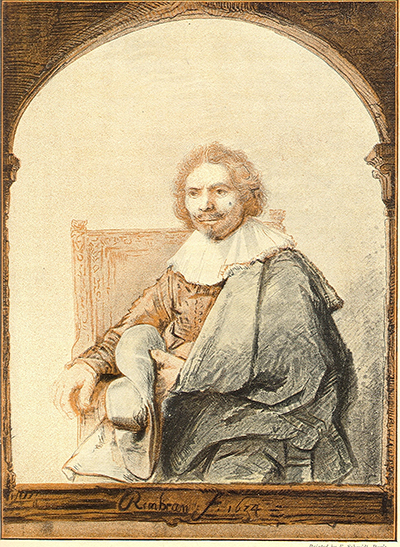
Portrait of a Man in an Armchair, Seen Through a Frame
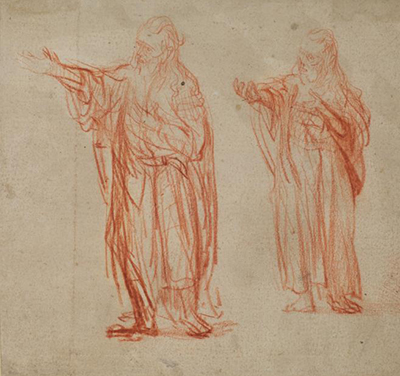
Two Studies of John the Baptist
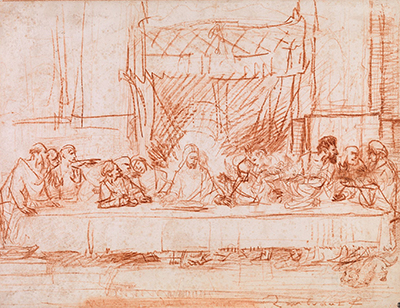
The Last Supper, after Leonardo da Vinci
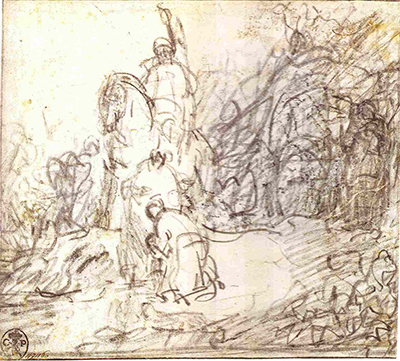
The Baptism of the Eunuch (Drawing)
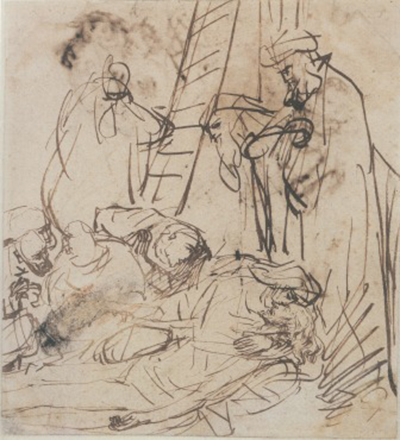
The Lamentation over the Dead Christ
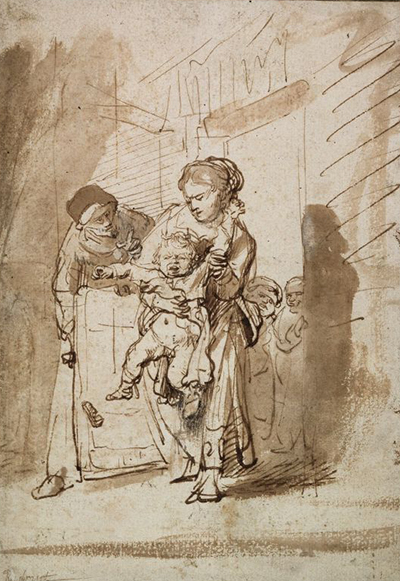
The Naughty Child
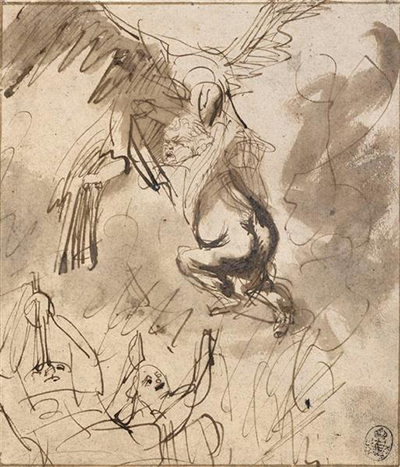
The Abduction of Ganymede (Drawing)
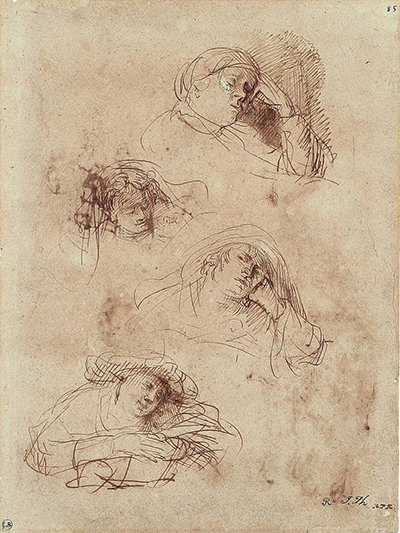
Four Studies of Saskia
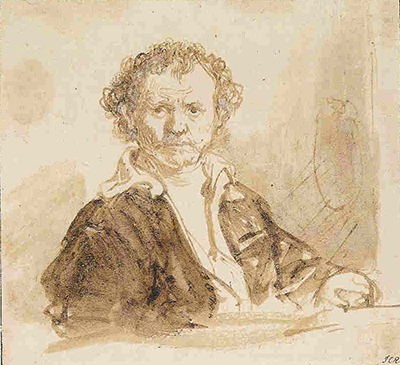
Self Portrait Sketch
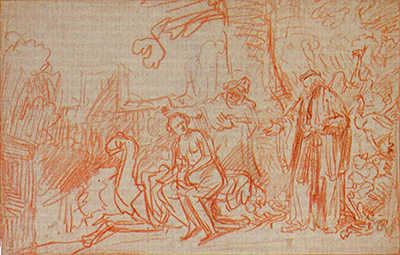
Susannah and the Elders
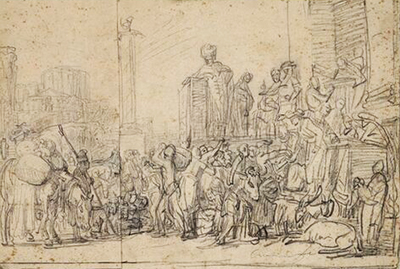
Joseph Distributing Corn in Egypt, after Pieter Lastman
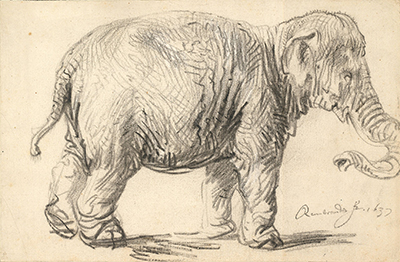
An Elephant
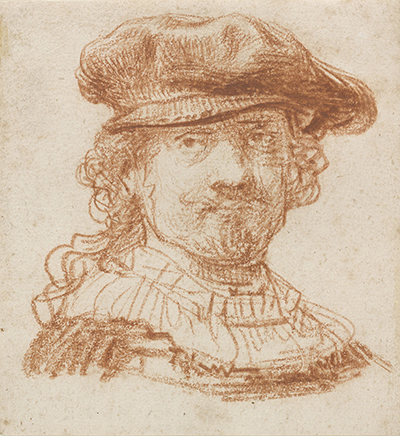
Self Portrait Drawing
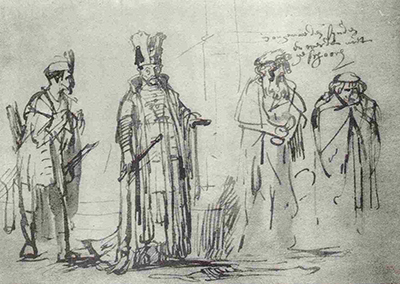
Study of Russian Costume
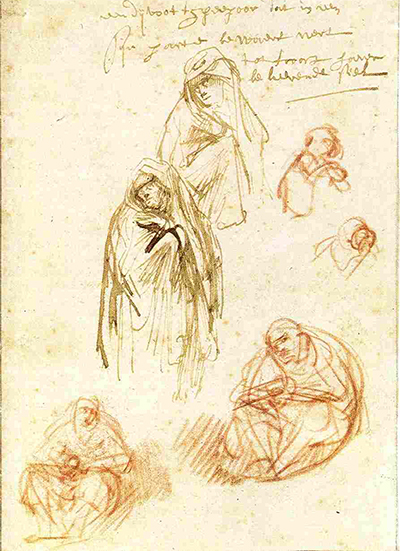
Studies of Grieving Marys
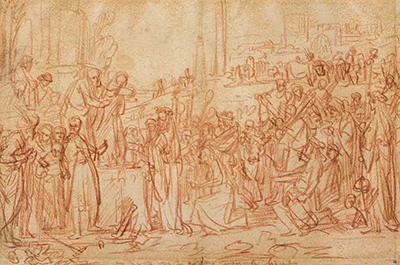
Paul and Barnabas at Lystra
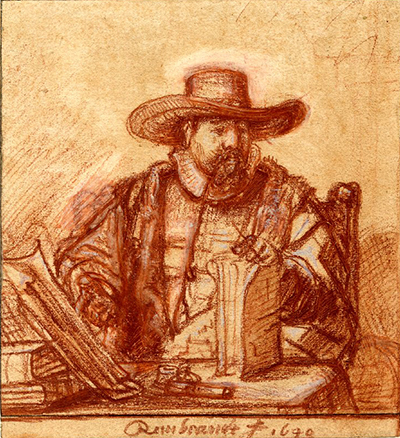
Portrait of Cornelis Claesz Anslo
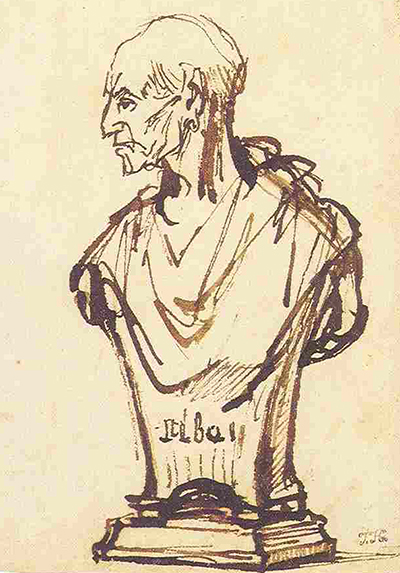
Bust of the Emperor Galba
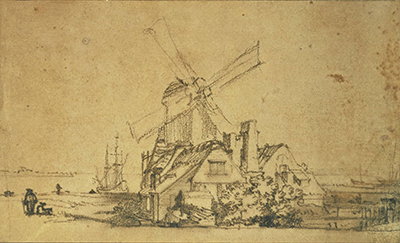
Windmill on the Bastion Blauwhoofd in Amsterdam
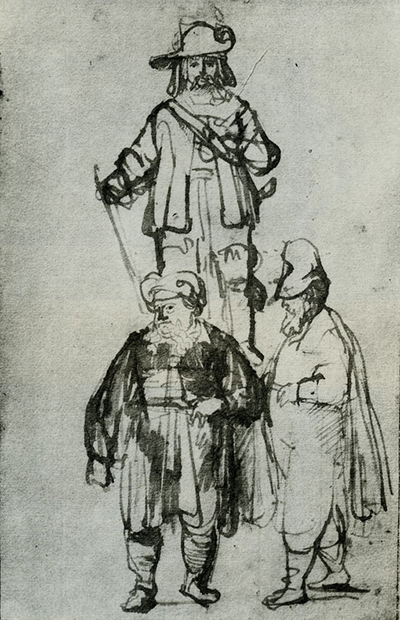
Studies of an Officer, an Oriental and a Man in High Cap
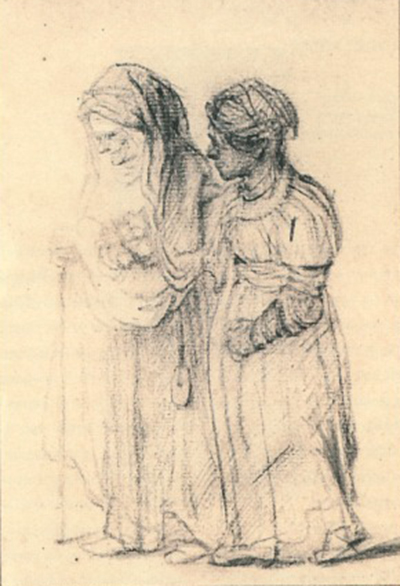
Two Women Walking
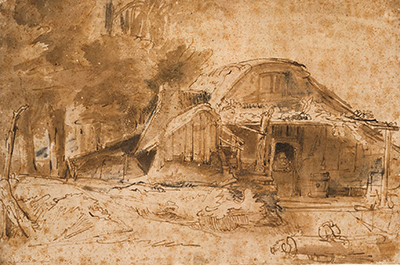
Cottage Near the Edge of a Wood
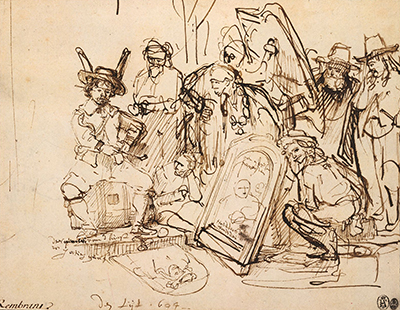
Satire on Art Criticism
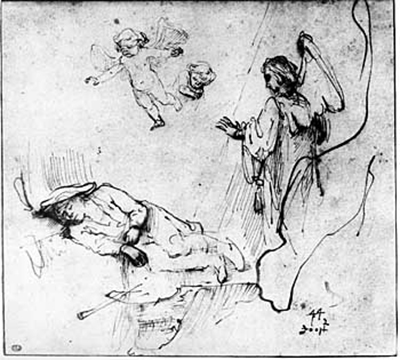
Jacob's Dream
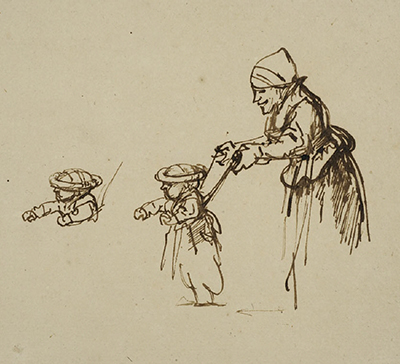
Sheet of Studies, with a Woman Teaching a Child to Walk
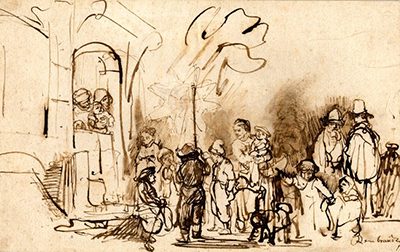
The Star of the Kings
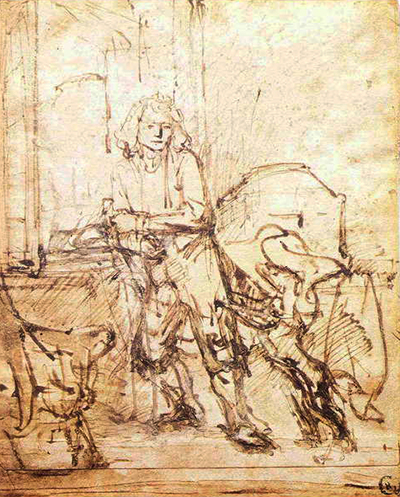
Jan Six
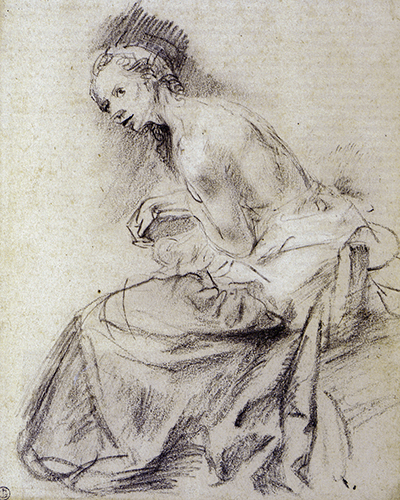
Study for a Susanna
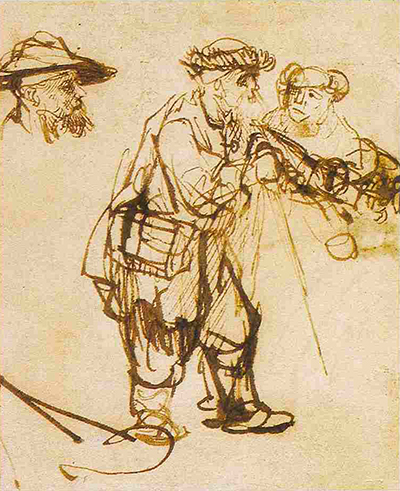
Blind Old Man Guided by a Woman
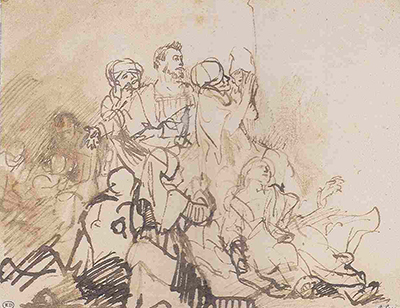
Study for the Group of the Sick
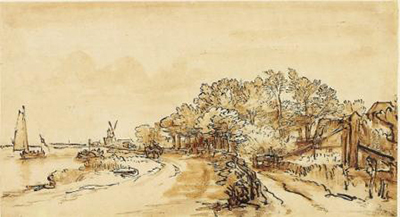
The Amsteldijk at Meerhuizen, Looking Towards The Little Windmill
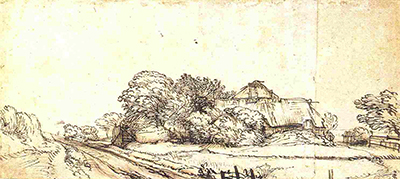
Cottage on the Diemerdijk, Looking East
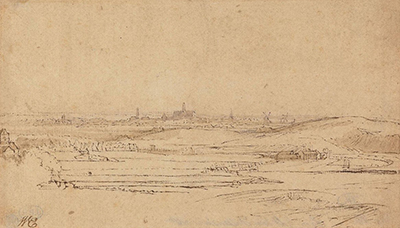
View of Haarlem with the Saxenburg Estate in the Foreground
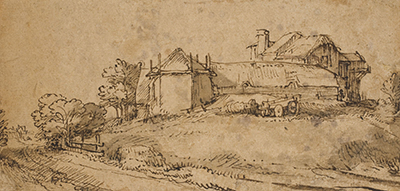
Landscape with a Farmhouse and a Hay Barn
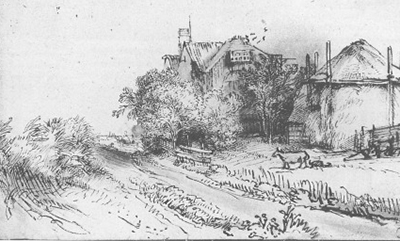
Farmstead with Adjoining House
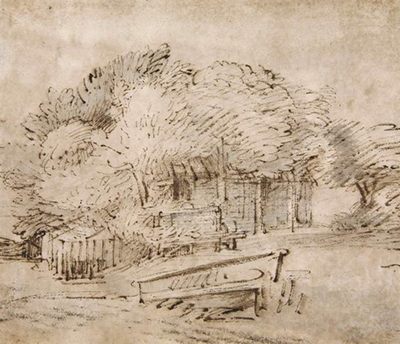
Farmhouse beneath Trees, with a Footbridge
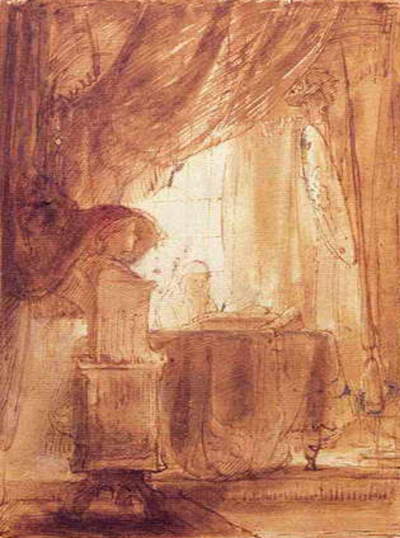
Minerva in her Study
 Rembrandt.jpg)
The Ruins of the Old City Hall in Amsterdam (After the Fire)
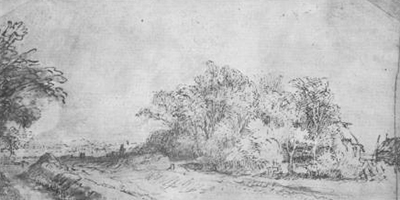
View at the Inn Huis te Vraag
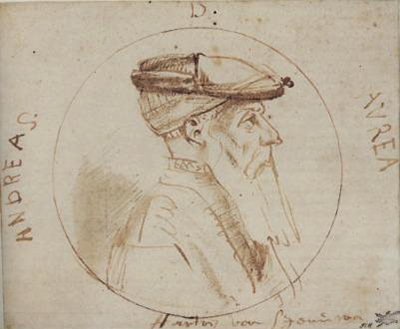
Bust of Andrea Doria
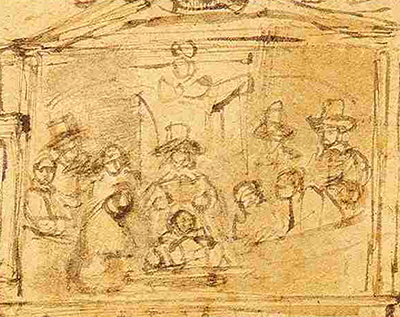
The Anatomy Lecture of Dr Jan Deyman
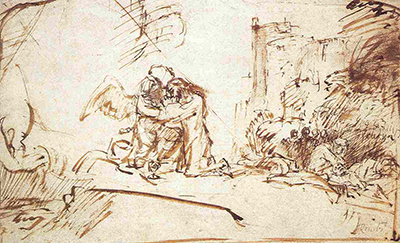
Christ Comforted by the Angel
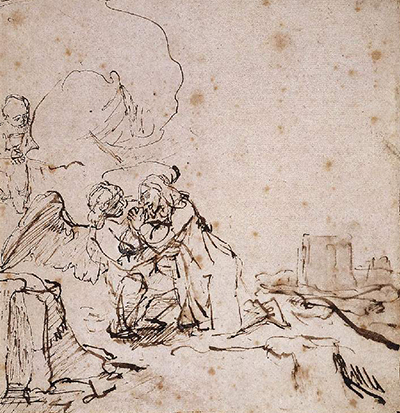
The Agony in the Garden
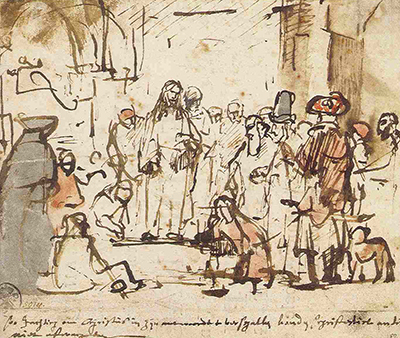
Christ and the Woman Taken in Adultery
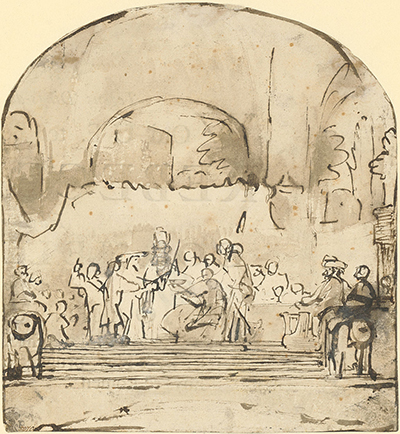
The Conspiracy of Claudius Civilis (Drawing)
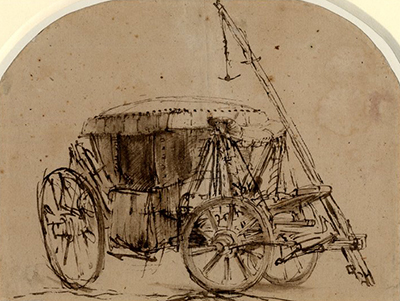
A Coach
Discussion
What is the best way into Rembrandt Drawings: materials, workshop practice, subject matter, collecting history, or comparison with one closely studied work?
Reader Insights
Use Rembrandt Drawings to notice how Rembrandt changed his effects when the medium changed.
Set one famous work beside a quieter example and ask whether the same habits of light, touch and observation remain visible.
Which technical choice makes the page feel most alive: line, paint handling, paper, surface, revision or light?
Join the Conversation
Have a thought or observation about Rembrandt Drawings? Share it below. Thoughtful responses may be added to this section as the Rembrandt pages develop.
References
- Rijksmuseum, Drawing out Rembrandt (DoRe): https://www.rijksmuseum.nl/en/research/our-research/print-room/drawings/drawing-out-rembrandt
- Rijksmuseum, Drawings by Rembrandt and his School: https://www.rijksmuseum.nl/nl/onderzoek/bestandscatalogi/drawings-by-rembrandt-and-his-school
- Cultural Heritage Agency of the Netherlands (RCE), IJzergallusinkt en inktvraat: https://kennis.cultureelerfgoed.nl/index.php/IJzergallusinkt_en_inktvraat
- Cultural Heritage Agency of the Netherlands (RCE), Drawings by Rembrandt - Connecting Art History, Science and Conservation: https://www.cultureelerfgoed.nl/actueel/agenda/2020/02/06/symposium-drawings-by-rembrandt
- Museum Rembrandthuis, collection overview: https://www.rembrandthuis.nl/en/find-out-more/collection/
- Museum Rembrandthuis, science portal: https://www.rembrandthuis.nl/en/find-out-more/science-portal/
- Vereniging Rembrandt, De levensloop van Rembrandt-tekeningen in het Rijksmuseum: https://www.verenigingrembrandt.nl/nl/onderzoek/de-levensloop-van-rembrandt-tekeningen-in-het-rijksmuseum
- Rijksmuseum, Man Drawing from a Plaster Cast, object RP-P-OB-347: https://www.rijksmuseum.nl/en/collection/object/Man-Drawing-from-a-Plaster-Cast--a9dd595788c45aeb1e8aaff3c671fc50
 Rembrandt.jpg)