 by Tom Gurney
Tom Gurney BSc (Hons) is an art history expert with over 20 years experience
Published on June 19, 2020 / Updated on October 27, 2026
Email: tomgurney1@gmail.com / Phone: +44 7429 011000
A Country Home: Introduction
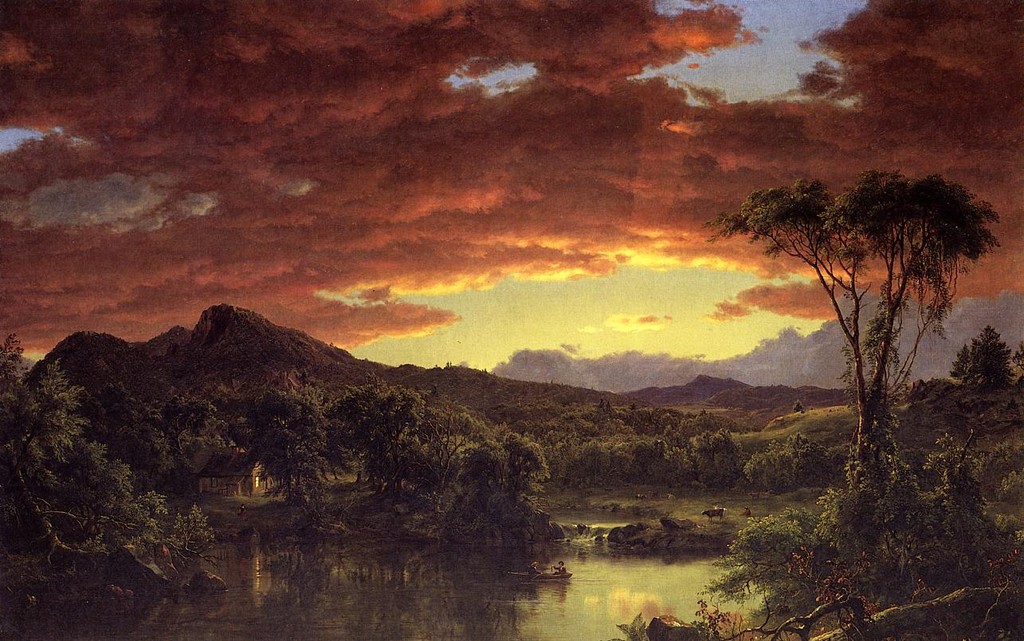
A small house stands beside water beneath a sky filled with glowing clouds in Frederic Edwin Church’s A Country Home. Cattle occupy a clearing, figures travel in a boat, and trees shelter the signs of habitation. Painted in 1854, the oil on canvas belongs to Seattle Art Museum, where it is recorded as the gift of Anna Robeson Baker Carmichael.[1]
The domestic subject occupies only a small part of the scene. Church gives much more space to clouds, wooded ground and distant hills. Yet the house helps us understand the landscape as somewhere people live. Its bright opening and reflection draw attention across the shaded foreground toward a home surrounded by a much larger natural world.
At a Glance
- ArtistFrederic Edwin Church
- TitleA Country Home
- Date1854
- MediumOil on canvas
- Dimensions81.3 × 129.5 cm; 32 × 51 inches
- CollectionSeattle Art Museum
- Accession number65.80
- CreditGift of Anna Robeson Baker Carmichael
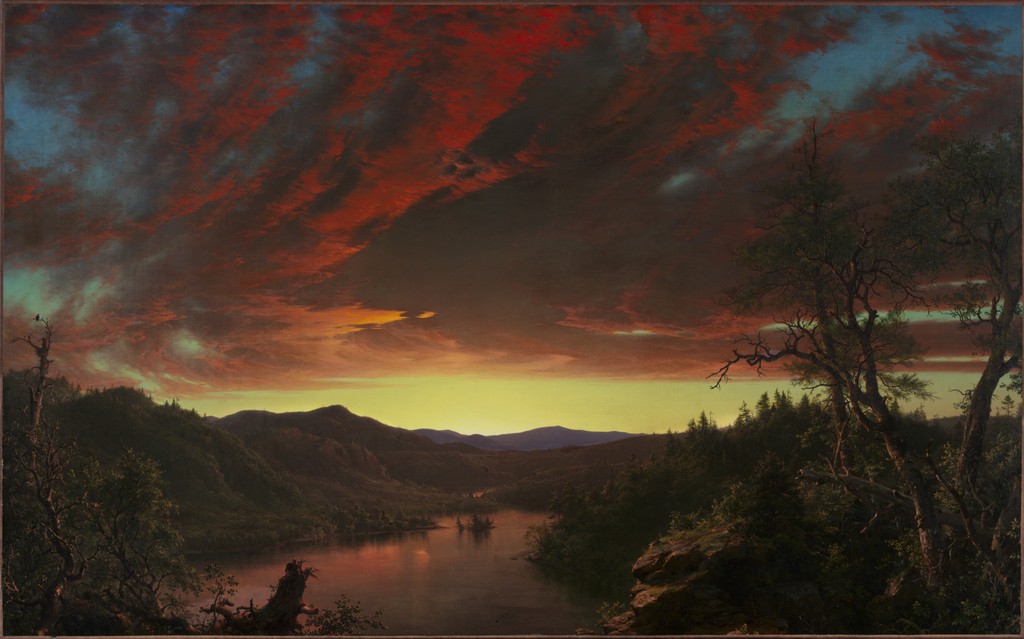
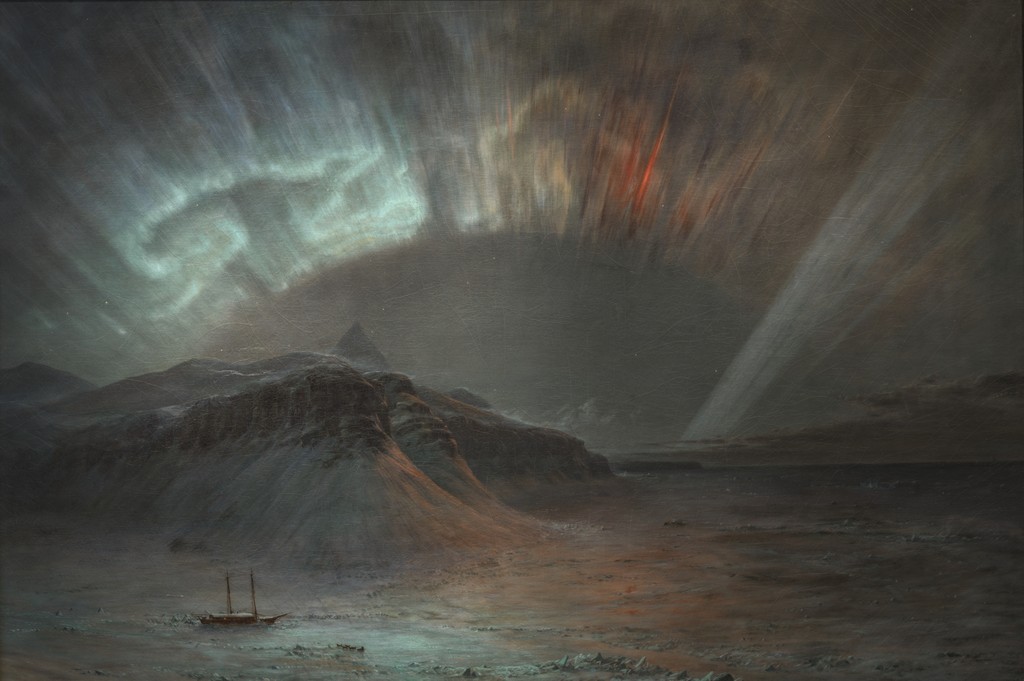
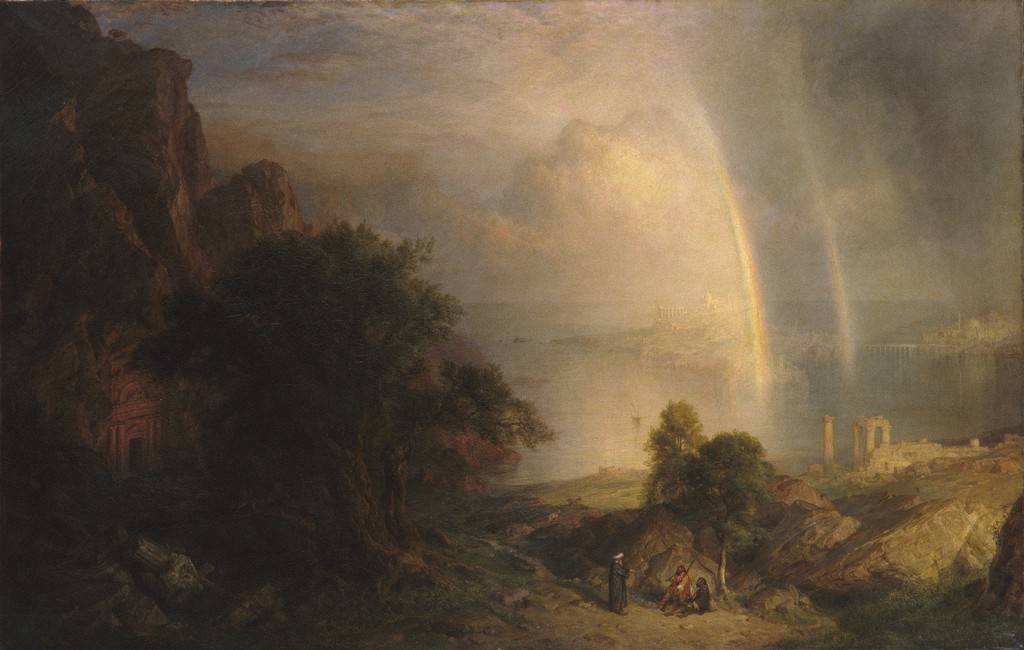
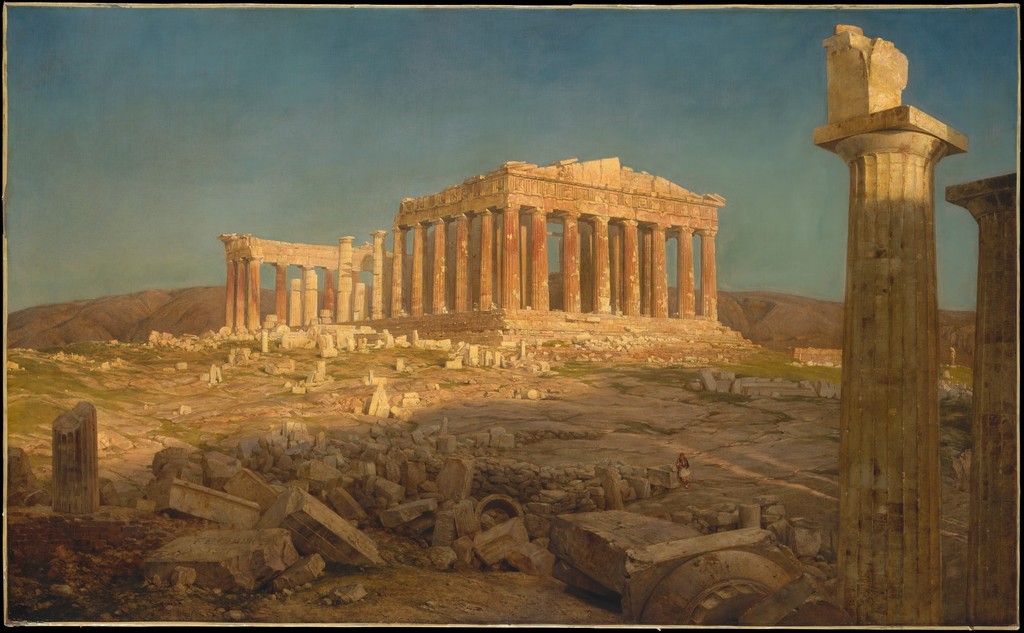
This work across Church’s career
Tamaca Palms
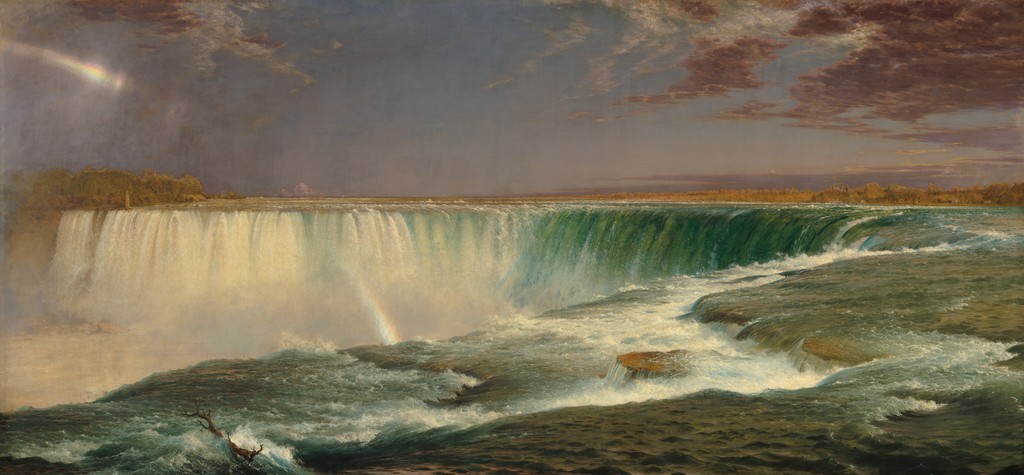
1854Niagara
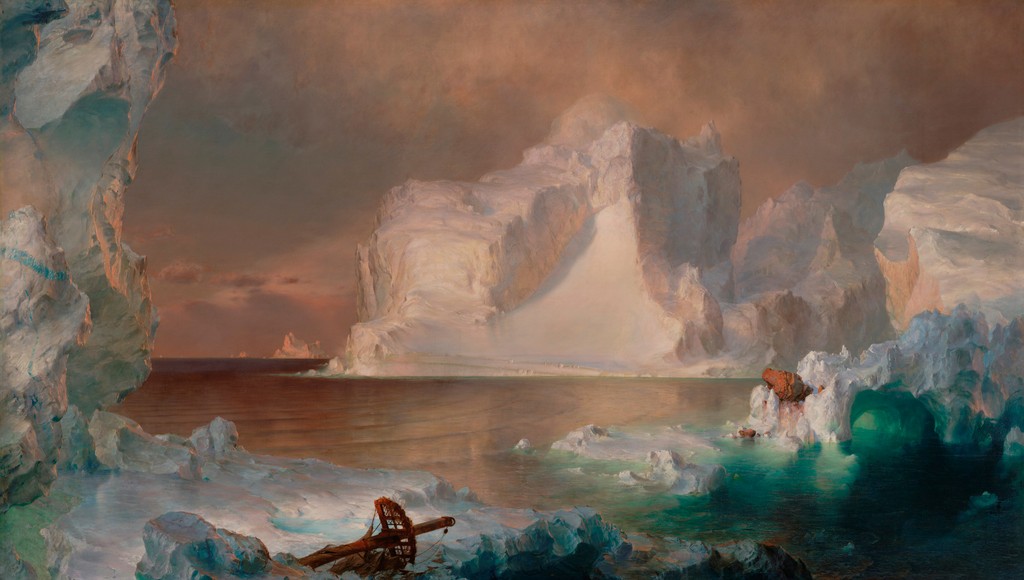
1857The Icebergs
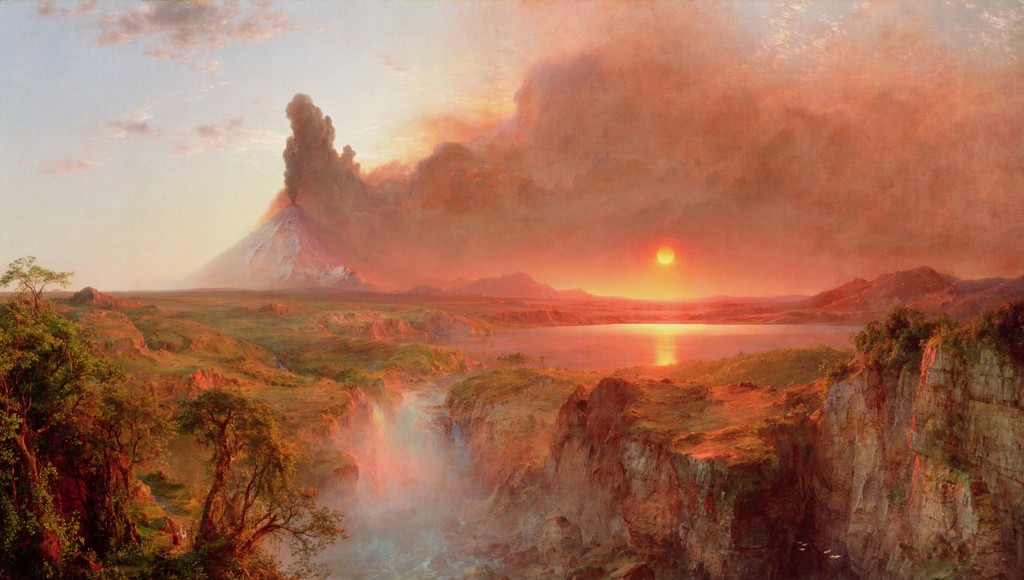
1861; foreground mast added between mid-1862 and early 1863Cotopaxi
1862Aurora Borealis
1865The Parthenon
1871The Aegean Sea
About 1877Contents
- A house sheltered by the landscape
- Clouds, light and reflected colour
- Trees and hills organise the view
- An early idea brought together
- General Swift and the painting’s first owners
- From a family possession to Seattle
A house sheltered by the landscape
The cottage lies toward the left, partly enclosed by trees. Its roof and walls have a modest place within the composition, while a yellow opening catches the eye. Beneath it, a narrow reflection extends into the water. This small repetition gives the building a presence beyond its physical outline: the home also becomes a point of light in the surrounding shade.
The land around the house looks uneven and densely wooded. It offers a contrast to the clearer ground farther right, where cattle stand near the water. Church has arranged different degrees of enclosure across the scene. The house nestles among trees, the cattle occupy an opening, and the boat rests within a wider stretch of reflected sky.
These details give the eye places to pause. They also suggest different relationships with the setting: shelter, grazing and movement across water. The landscape contains familiar activities without turning them into a detailed story. A tiny figure near the house cannot tell us who lives there, just as the boat’s occupants do not establish a particular family gathering or errand.
Clouds, light and reflected colour
The sky occupies roughly the upper half of the painting. Dense red and purple clouds spread across it, interrupted by a pale blue opening above and a broad yellow glow nearer the horizon. The heaviest cloud masses make that lower light seem especially concentrated. Hills and tree crowns stand against it in dark outlines.
The brightest part of the sky sits above the middle distance rather than directly above the cottage. This placement lets the picture balance two attractions: the small light associated with the home and the much larger opening beyond the hills. Our attention can move between an intimate detail and a distant expanse.
Water carries the sky’s colour into the foreground. Near the centre, yellow reflections open a passage between the darker banks. Elsewhere, reflected trees break the surface into shadowed patches and vertical marks. The water therefore joins the upper and lower parts of the picture while preserving the difference between open sky and sheltered ground.
It is tempting to invent an exact time, weather event or domestic scene from this glow. Looking closely offers a more reliable pleasure: following how the colours repeat. Yellow connects sky, water and the house; dark green and brown gather around these lighter passages. The entire scene feels held within the same changing illumination.
Trees and hills organise the view
On the right, tall, slender trunks rise above the surrounding foliage. Their dark crowns interrupt the sky and give that side of the composition a strong upright accent. Lower branches and fallen wood near the foreground bank supply smaller, irregular lines. Together, they bring the spectator close to the landscape before the eye travels into its distance.
Across the water, wooded ground forms a broad middle zone. Beyond it, hills become softer and less distinct, while a sharper mountain profile rises on the left. The painting moves through several kinds of space: close branches, water, trees and distant ridges. Its depth emerges from these successive layers and from the changing sharpness of their outlines.
The figures in the boat are particularly useful for judging scale. They are small enough for the trees to seem substantial, but visible enough to keep the water connected with human activity. The cottage performs a similar function on the opposite bank. Church gives the landscape grandeur without requiring a monumental building or a dramatic human action.
An early idea brought together
Franklin Kelly places A Country Home among Church’s early paintings that gave ordinary American rural scenery the dignity of an ideal landscape. In his 1989 exhibition essay, he relates it to Home by the Lake and Mount Ktaadn, discussing how observation and composed scenery could work together. This interpretation helps explain the picture’s carefully balanced arrangement of hills, trees, water and habitation.[2]
Seattle Art Museum likewise describes the canvas as a refinement of an idea Church had pursued since 1849. It appeared at the National Academy of Design’s 1854 exhibition as catalogue number 64. Church had already travelled to South America in 1853, but this domestic landscape continued his exploration of American rural subjects.[1]
Its place in Church’s career is therefore more interesting than a simple division between early local views and later tropical pictures. The organisation of a broad landscape around smaller details remained valuable as his subjects changed. Here, the cottage gives that organisation a distinctly domestic focus.
Watch: Frederic Edwin Church
Choose a film to explore the artist’s work, its interpretation and its wider setting.
Frederic Edwin Church's "The Icebergs" on the Move at the DMA
Follow the Dallas Museum of Art as it moves Church’s large painting The Icebergs.
Watch on YouTubeGeneral Swift and the painting’s first owners
The first owner recorded by Seattle Art Museum is General Joseph Gardner Swift of Geneva, New York. Curator Patricia Junker describes the painting as having been made in Church’s New York studio and considers it probable that Swift bought it directly from the artist soon after completion. That qualified account supports a purchase history; it does not establish a commission agreement.[3]
A portrait printed in Swift’s 1890 memoirs gives a face to this early owner. The accompanying genealogy identifies a later-life likeness by Daniel Huntington as the source of the book’s portrait plates. The frontispiece shows Swift with long pale hair and a dark coat, turned toward the right. It is a reproduction after another artist’s portrait, rather than a work by Church.[4]
The same volume prints Swift’s 1865 will and a memorandum saying that most of his other pictures belonged to Mr. Richards. Although it does not name A Country Home, the passage helps place art within the family’s possessions. The museum’s specific provenance records the canvas with Swift’s son-in-law, Peter Richards Jr., by 1862; that year’s Artists’ Fund Society exhibition listed Richards as its owner.[1]
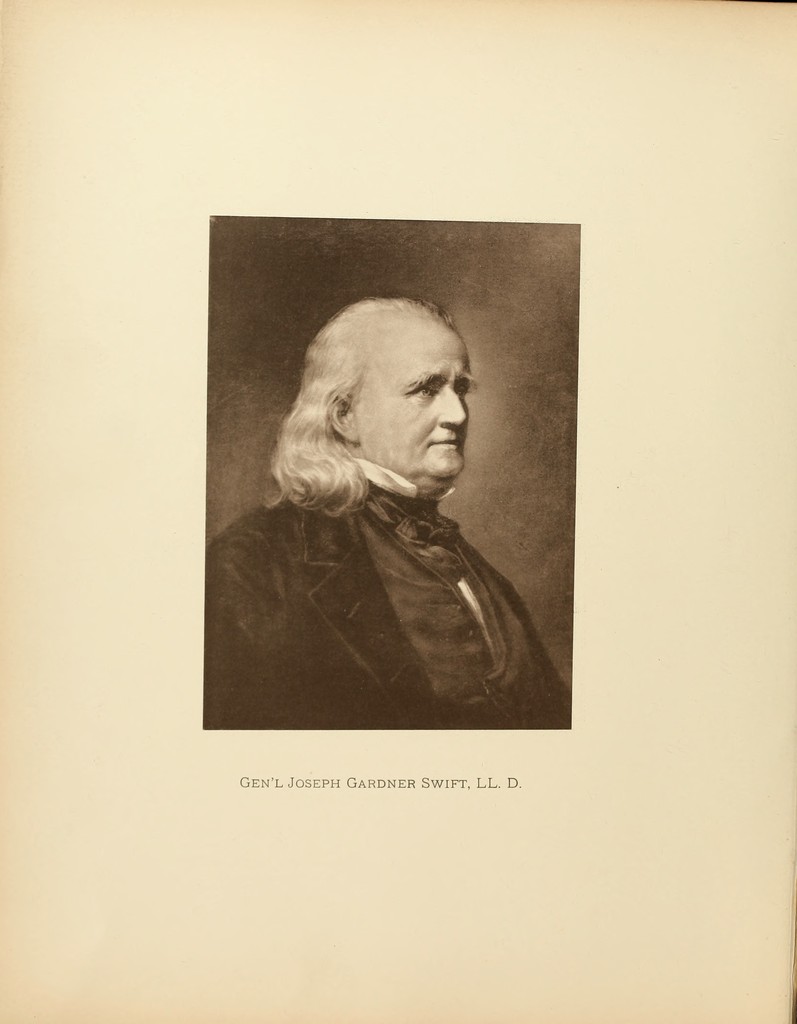
Joseph Gardner Swift, printed frontispiece after Daniel Huntington, The Memoirs of Gen. Joseph Gardner Swift, with genealogy by Harrison Ellery, 1890. Boston Public Library scan via Internet Archive/Wikimedia Commons. Public domain; original painting date unverified. Image source. Public domain: PD-old-70-expired / published1890 / PDM1.0. Resized; full source proportions retained.
From a family possession to Seattle
The painting eventually reached Seattle through the Richards family. Its donor, Anna Robeson Baker Carmichael, gave it to the museum in 1965. Researching her identity, Junker recognised a connection with separate Huntington portraits of Peter Richards and his wife Louisa in the museum’s collection. These pictures had arrived from another donor, making their relationship to the Church landscape less immediately apparent.[5]
Junker’s follow-up account describes Anna’s work for an insurance company and the Carmichaels’ modest bungalow. She inferred that the large, ornately framed landscape must have been a centrepiece in their home; its precise room placement is unconfirmed. Her research gives the painting a history beyond exhibitions and famous collectors, showing how family inheritance could preserve an important canvas across generations.
That ownership history adds another way to approach the subject. A picture of a sheltered rural home passed through actual households before becoming part of a public collection. Its cottage and boat remain small painted details, but the people who kept the canvas give its long survival a separate, documented human dimension.
Artworks directory
A documented selection of Church’s works discussed across these articles, together with identified prints after his designs. This is not a catalogue raisonné. Repeated titles and aliases are reconciled; studies remain distinct from finished paintings. Some dates remain unconfirmed. Other makers are named where a print adapts Church’s work.
| Name | Date | Medium |
|---|---|---|
| Above the Clouds at Sunrise | 1849 | Oil on canvas |
| The Aegean Sea | About 1877 | Oil on canvas |
| The Andes of Ecuador | 1855 | Oil on canvas |
| Aurora Borealis | 1865 | Oil on canvas |
| Autumn in North America | Circa 1856 | Oil on board |
| Coast Scene | 1852 | Oil on canvas |
| Cotopaxi | 1862 | Oil on canvas |
| A Country Home | 1854 | Oil on canvas |
| El Khasné, Petra | 1874 | Oil on canvas |
| El Rio de Luz | 1877 | Oil on canvas |
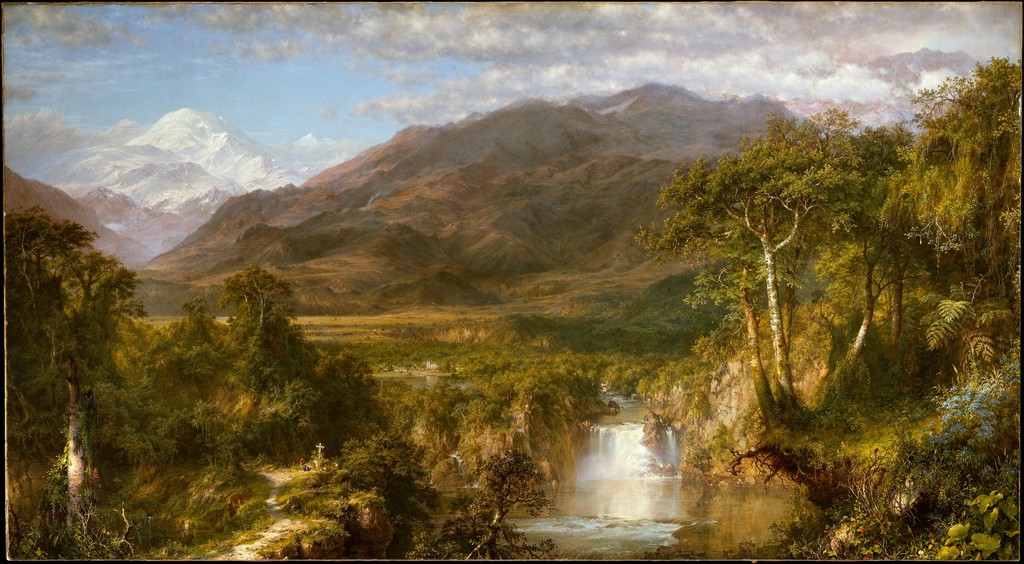
| The Heart of the Andes | 1859 | Oil on canvas |
| The Icebergs | 1861; foreground mast added between mid-1862 and early 1863 | Oil on canvas |
| Jerusalem from the Mount of Olives | 1870 | Oil on canvas |
| Mount Ktaadn | 1853 | Oil on canvas |
| Our Banner in the Sky | 1861 | Oil paint over lithograph on paper, laid down on cardboard |
| The Parthenon | 1871 | Oil on canvas |
| Rainy Season in the Tropics | 1866 | Oil on canvas |
| Storm in the Mountains | 1847 | Oil on canvas |
| Syria by the Sea | 1873 | Oil on canvas |
| Tamaca Palms | 1854 | Oil on canvas |
| Tropical Scenery | 1873 | Oil on canvas |
| Twilight in the Tropics | 1874; signed and dated, according to Bonhams’ catalogue | Oil on canvas |
| Twilight in the Wilderness | 1860 | Oil on canvas |
| View of Cotopaxi | 1857 | Oil on canvas |
| Niagara | 1857 | Oil on canvas |
| Magdalena River, New Granada, Equador | 1853 | Graphite heightened with white on wove paper |
| Tamaca Palm, Colombia or Ecuador | May–October 1853 | Graphite on gray laid paper |
| Mixed Sketches with a Champan, Río Magdalena, Colombia | May 1853 | Graphite on gray laid paper |
| Study for Rainy Season in the Tropics | 1865–1866 | Graphite on ruled notepad paper |
| Al-Khazneh, Petra (study) | February–March 1868 | Oil and graphite on tan paperboard |
| The Great Fall, Niagara (Charles Risdon, after Church) | 1874 impression | Hand-coloured chromolithograph on paperboard |
| The Heart of the Andes (William Forrest, after Church) | 1862 | Engraving in black on wove paper |
| Our Heaven Born Banner (William Bauly, adapting Church’s motif) | circa 1861 | Colour lithograph |
| A Tropical Moonlight (wood engraving after Church) | 1879 publication | Wood engraving in American Painters |
| Off Iceberg, Newfoundland | June 1859 | Oil and graphite on paperboard |
| Parthenon at Night, Athens | April 1869 | Oil and graphite on tan paperboard |
| Jerusalem from the Mount of Olives (study) | 1 April 1868 | Oil and graphite study |
| Horseshoe Falls (study) | December 1856–January 1857 | Oil on paper mounted to canvas |
| Niagara Falls, from the American Side | 1867 | Oil on canvas |
| Study for The Heart of the Andes | 1858 | Oil study |
| Mount Chimborazo through Rising Mist and Clouds | 1857 | Oil study |
| Cotopaxi Erupting, Viewed from Quito, Ecuador | June 1857 | Oil and graphite on tan paperboard |
| Cotopaxi (painted for Cyrus Field) | 1855 | Painting |
| Chimborazo | 1864 | Painting |
| Twilight, A Sketch | 1858 | Oil on canvas |
| View of Baalbek | 1868 | Oil and pencil on board |
| Three Bedouins | Date unconfirmed | Oil study |
| Coast Scene, Mount Desert (later canvas) | 1863 | Painting |
| The Wreck | Date unconfirmed | Painting |
| Grand Manan Island, Bay of Fundy | Date unconfirmed | Painting |
| Summer in South America | circa 1853 | Painting |
| Evening in Vermont | Date unconfirmed | Painting |
| Home by the Lake | Date unconfirmed | Painting |
| Storm in the Blue Mountains, Jamaica | August 1865 | Painting |
| The Natural Bridge, Virginia | 1852 | Painting |
| The Vale of St. Thomas, Jamaica | 1867 | Painting |
| Tequendama Falls, near Bogota, New Granada | Date unconfirmed | Painting |
| Sunrise in Syria | Before the 1876 exhibition | Painting |
| Cuernavaca (oil study; descriptive title) | 1898 | Oil study |
| Olana window design (descriptive title) | Date unconfirmed | Watercolour and graphite |
| Olana dining-room stencil sketch (descriptive title) | Date unconfirmed | Oil and graphite |
| Olana house (with Calvert Vaux) | 1870–1872; later additions | Architecture |
| Olana designed landscape | From 1860; developed over decades | Designed landscape |
Frequently Asked Questions
Church painted it in 1854. It appeared in the National Academy of Design’s exhibition that year.
It belongs to Seattle Art Museum, accession number 65.80. Collection ownership does not guarantee that it is currently on display.
The museum’s current record gives 81.3 × 129.5 centimetres, or 32 × 51 inches.
The evidence cited here does not identify it as his house or establish an exact site. The painting presents a composed rural landscape with domestic details.
General Joseph Gardner Swift is the first recorded owner. Patricia Junker considers a direct purchase from Church probable, rather than documenting a commission.
Discussion
Look again at the images and ideas explored in A Country Home. These editorial prompts invite your own observations.
Reader Insights
How do the trees and hills make the house feel sheltered?
Which reflection or patch of light most strongly joins the sky and land?
How does this inhabited landscape compare with one of Church’s later distant panoramas?
Join the Conversation
Share a detail, comparison or question about A Country Home below.
References
- Seattle Art Museum, A Country Home, object 65.80: current metadata, label, provenance and exhibition history.
- Frederic Edwin Church, National Gallery of Art exhibition catalogue, 1989: Franklin Kelly, pp. 47–48; Debora Rindge, chronology pp. 161 and 165; catalogue 19, p. 79.
- Patricia Junker, The History in Art History: How did this painting get to Seattle?, Seattle Art Museum, 16 November 2009.
- The Memoirs of Gen. Joseph Gardner Swift, with genealogy by Harrison Ellery, 1890: frontispiece and genealogy pp. 33–34, PDF pages 16 and 339–340, Boston Public Library scan via Wikimedia Commons.pdf).
- Patricia Junker, The History in Art History, Part II: How This Painting Came to Seattle!, Seattle Art Museum, 27 January 2010.
- Splash image source.
Frederic Edwin Church, A Country Home, 1854, oil on canvas, 81.3 × 129.5 cm. Seattle Art Museum, Gift of Anna Robeson Baker Carmichael, 65.80. Public-domain reproduction via Wikimedia Commons, source ArtRenewal.com. Image source. Public domain: PD-old-100 / faithful2D reproduction / PDM1.0. Resized; full source proportions retained.