 by Tom Gurney
Tom Gurney BSc (Hons) is an art history expert with over 20 years experience
Published on June 19, 2020 / Updated on October 27, 2026
Email: tomgurney1@gmail.com / Phone: +44 7429 011000
Mount Ktaadn: Introduction
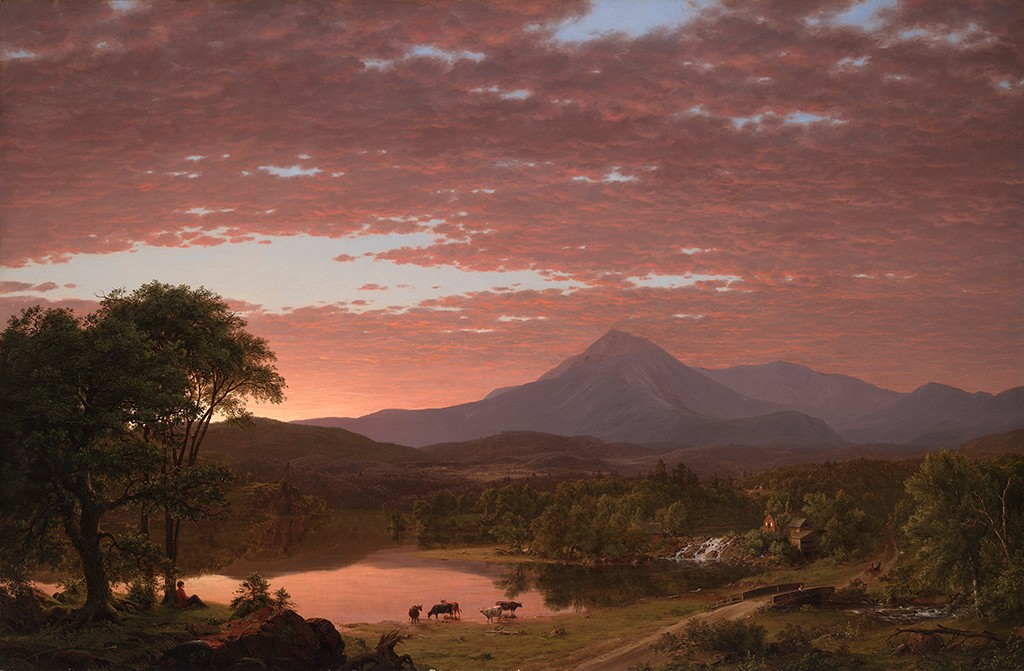
A mountain rises above woods, water and grazing cattle in Frederic Edwin Church’s Mount Ktaadn. Painted in 1853, the landscape places a small world of human activity beneath a much larger expanse of rock and sky. Its familiar foreground and distant summit offer two ways to experience the same scene: as somewhere people can live and as a place that extends beyond their reach.
Yale University Art Gallery holds the canvas as Mt. Ktaadn, accession number 1969.71. Its title uses an older spelling of Katahdin, the Maine mountain that Church returned to during his career.[1]
At a Glance
- ArtistFrederic Edwin Church
- TitleMt. Ktaadn; also Mount Ktaadn
- Date1853
- MediumOil on canvas
- Dimensions92.1 × 140.3 cm; 36¼ × 55¼ inches
- CollectionYale University Art Gallery, New Haven
- Accession number1969.71
- CreditStanley B. Resor, B.A. 1901, Fund
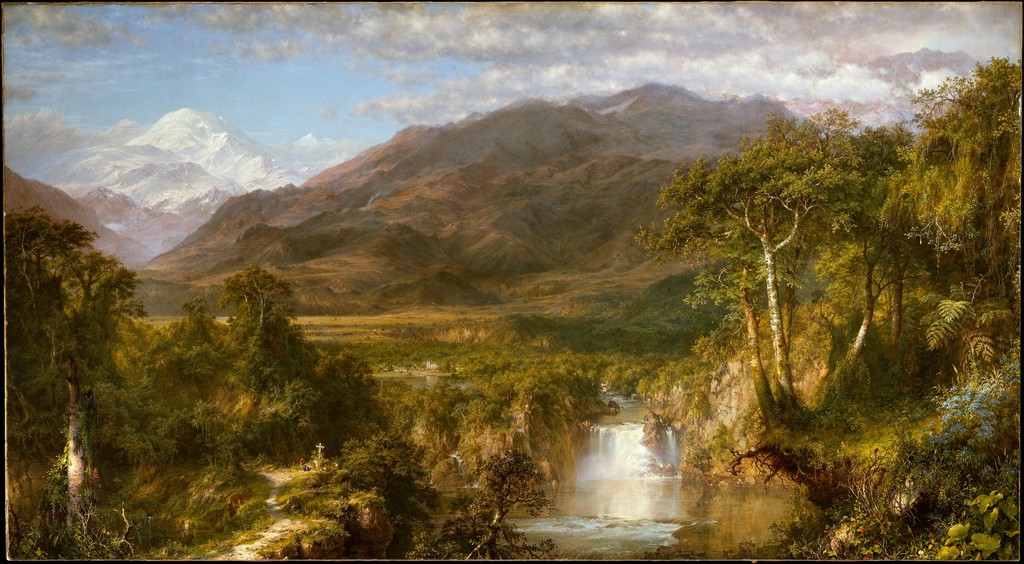
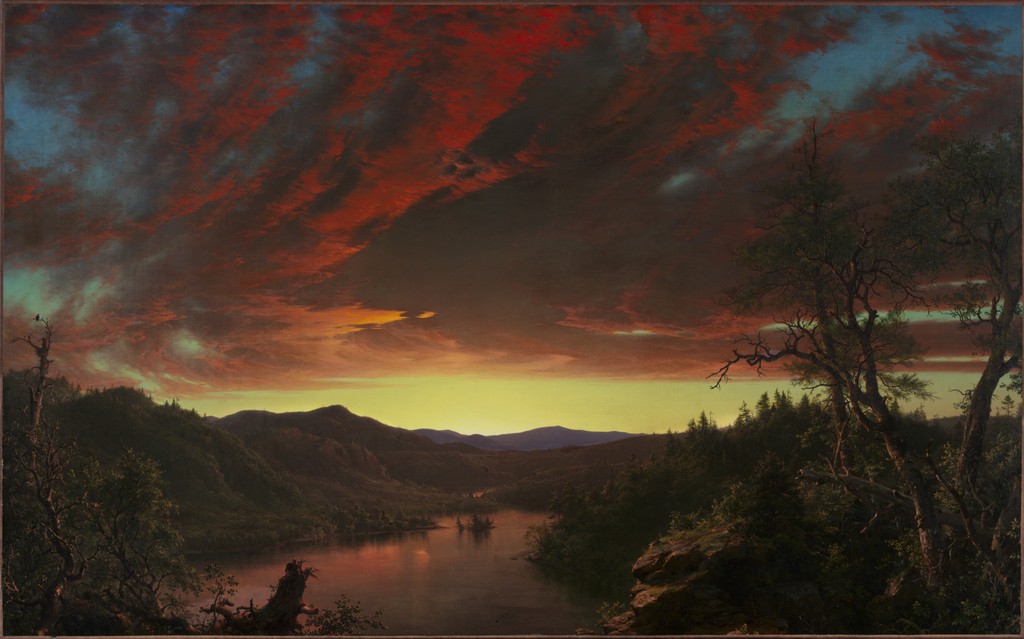
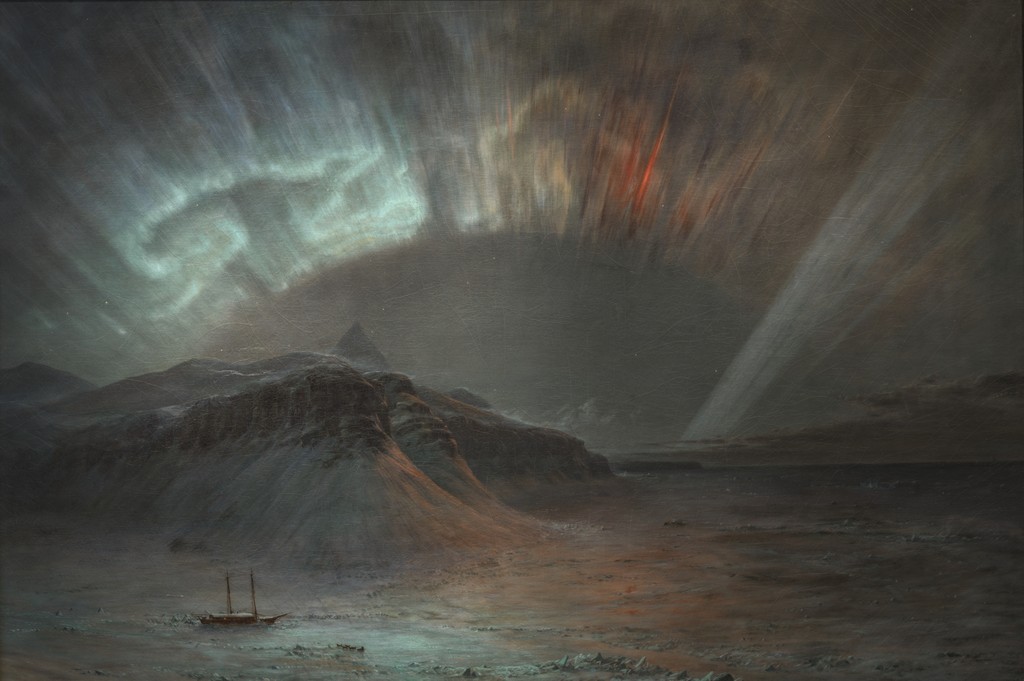
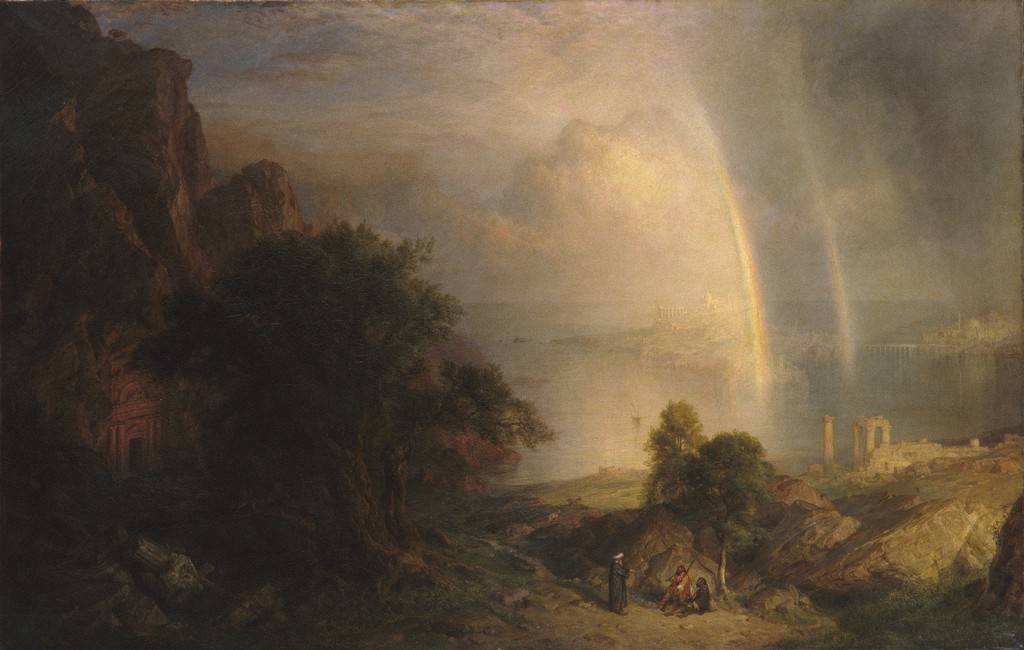
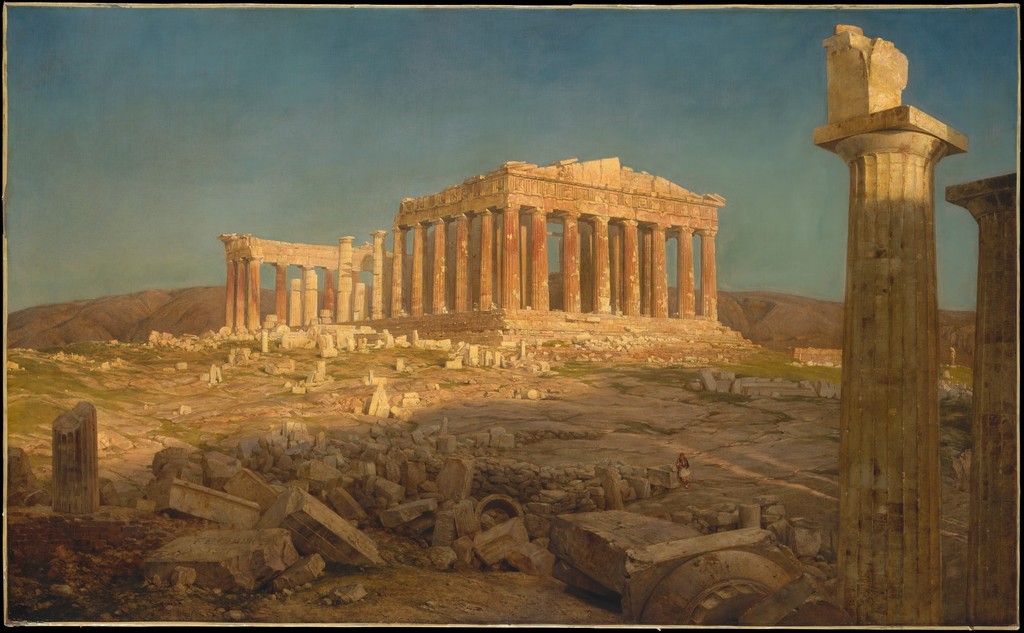
This work across Church’s career
Tamaca Palms
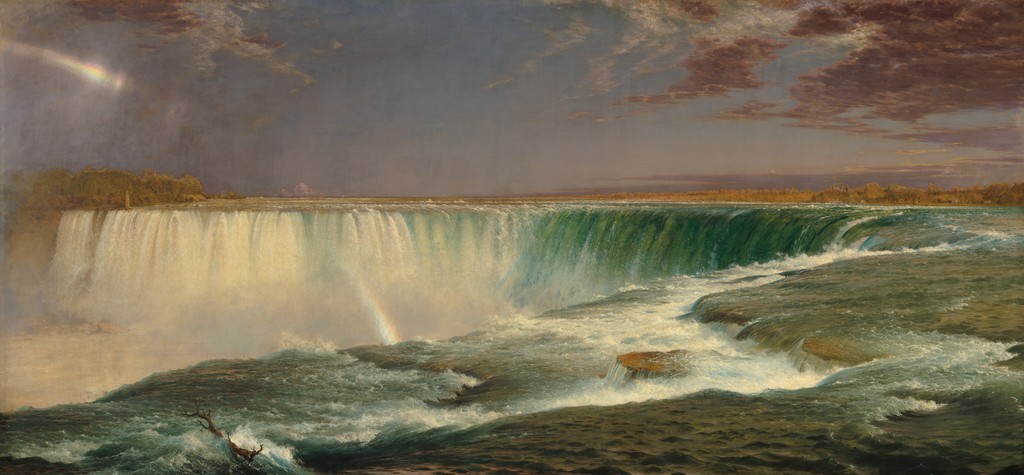
1854Niagara
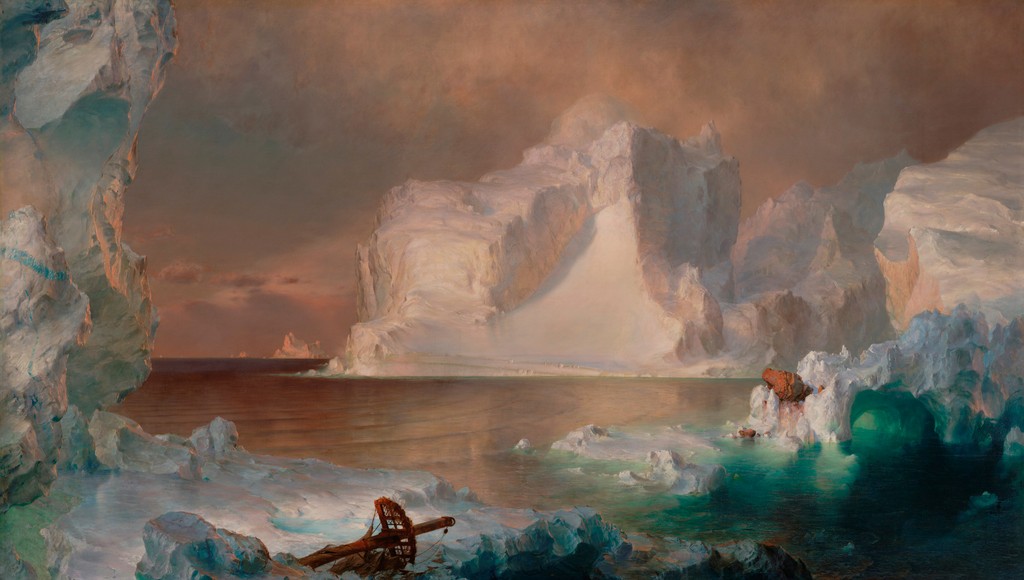
1857The Icebergs
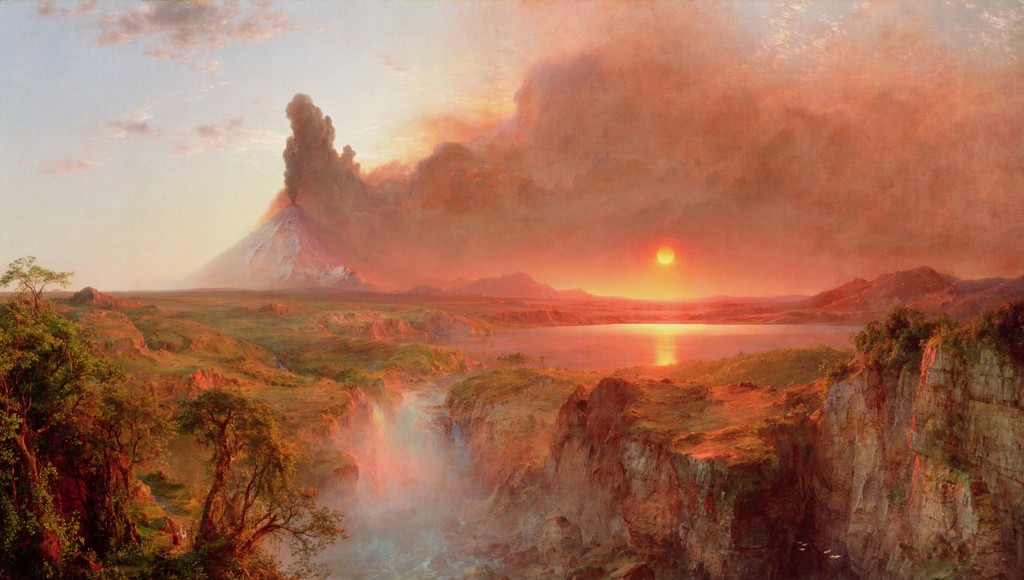
1861; foreground mast added between mid-1862 and early 1863Cotopaxi
1862Aurora Borealis
1865The Parthenon
1871The Aegean Sea
About 1877Contents
- A mountain beyond the settled foreground
- Trees, a seated figure and grazing cattle
- Water, a bridge and a mill
- Sunset colour joins the sky and land
- Maine journeys and a composed landscape
- Thoreau’s less comfortable encounter
- A region with a continuing human history
- Comparing the mountain with a modern photograph
A mountain beyond the settled foreground
The principal peak stands slightly right of centre. Its slopes descend into a long ridge, while lower wooded hills separate it from the water and clearing nearer the spectator. Church gives the mountain a recognisable outline without making its surface as sharply detailed as the foreground. Distance becomes visible through softer forms and a cooler, more muted colour.
That distinction matters to the whole composition. Close to us, individual trunks, rocks, cattle and small buildings can be picked out. Farther away, woods gather into broad masses and mountain slopes become less distinct. The eye moves from things it can identify toward a landscape it can take in only on a larger scale.
The summit also rises above the activities below. Trees, animals and buildings occupy the lower part of the picture, leaving the mountain silhouetted against the sky. Its apparent separation gives the scene grandeur while preserving the modest scale of the inhabited foreground. Church has made the peak the destination of our gaze, even though much of the painting’s interest lies along the way.
Trees, a seated figure and grazing cattle
A group of tall trees frames the left side. Their dark crowns and branching trunks create a sheltered place from which to look across the water. Beneath them, a small seated figure faces into the landscape. The figure supplies a possible counterpart to the spectator: someone already present within the view, resting near its edge.
The surrounding rocks and irregular ground keep this corner from feeling like a smooth garden. Fallen wood and smaller plants give it texture, while the trees interrupt the illuminated sky. Against those dark shapes, the open water appears particularly bright. Our attention is drawn out from shade toward the larger scene.
Cattle gather along the near shore, farther right. Their bodies and legs are small but distinct enough to give the clearing a familiar use. They help establish scale, too: the nearby trees tower above them, and the mountain belongs to a still larger order of size. The animals make the foreground approachable without reducing the distance beyond it.
These details slow the act of looking. A quick glance might register mountain and sunset; a longer inspection finds resting, grazing and movement through the landscape. Church places ordinary activities within an expansive view, so that the picture can offer both an immediate sense of calm and a more sustained exploration of its parts.
Water, a bridge and a mill
Water occupies the central opening beneath the mountain. Its surface receives the warm colour of the sky, providing a broad light area among darker banks. Along the right side, pale falling water breaks up the vegetation near a group of buildings. A bridge crosses closer to the foreground, connecting the road across the lower part of the scene.
Yale’s exhibition interpretation identifies a sawmill, bridge, buggy and men. It reads these details as a harmonious settlement beneath a mountain beyond cultivation, and the sunset as an optimistic expression of the young nation’s future.[1]
The road and bridge also provide a route for the eye. Their diagonal movement carries attention across the lower foreground toward the right bank, where the buildings and falling water invite a closer look. This movement balances the more direct attraction of the mountain above, giving the spectator a choice between exploring nearby activity and looking into the distance.
The visual arrangement explains the appeal of that interpretation. The buildings are small, surrounded by trees, and the bridge follows the lower ground. None competes with the mountain for dominance. Yet their unobtrusive appearance cannot establish the actual environmental effects of settlement or milling. The painting offers a persuasive arrangement of human activity and scenery, rather than a record of their consequences.
Sunset colour joins the sky and land
A wide canopy of reddish clouds fills the upper half of the canvas. Blue openings remain between them, while a brighter band runs near the horizon. On the left, the glow appears behind the trees and lower hills; toward the mountain, pink and purple colours soften the transition between rock and sky.
The reflected light in the water connects this upper expanse with the inhabited foreground. Sky and lake share warm tones, even though their surfaces have different textures. The clouds are broken into uneven bands and patches; the water offers a quieter, more continuous area of colour. Together they hold the upper and lower parts of the painting in relation.
Dark foliage is equally important. It makes the pale openings more noticeable and gives the foreground a sense of depth. The picture’s warmth therefore depends partly on shade: brighter passages stand out because Church surrounds them with substantial areas of darker green and brown. Following these relationships reveals how carefully the view is organised.
Watch: Frederic Edwin Church
Choose a film to explore the artist’s work, its interpretation and its wider setting.
Frederic Edwin Church's "The Icebergs" on the Move at the DMA
Follow the Dallas Museum of Art as it moves Church’s large painting The Icebergs.
Watch on YouTubeMaine journeys and a composed landscape
Debora Rindge’s chronology in the National Gallery of Art’s 1989 Church catalogue records visits to Katahdin in September 1851 and August 1852. It lists the completed 1853 painting at that year’s National Academy of Design exhibition as number 81. The canvas belongs to a period when Church was developing substantial landscapes from his travels.[2]
In the same catalogue, Franklin Kelly discusses Mount Ktaadn as an imagined pastoral transformation of Maine’s wilderness. He places it alongside Home by the Lake and A Country Home in an account of Church’s composed early landscapes. Observation supplied their material, while arrangement gave that material a broader meaning.
This helps explain why identifying the mountain does not make the picture a straightforward survey. Its foreground, distant forms and light work together to present a coherent experience. A geographical subject can remain recognisable while becoming the centre of an idealised landscape. Church’s skill lies partly in making that organisation feel natural to the viewer.
Thoreau’s less comfortable encounter
Henry David Thoreau approached Katahdin in 1846. His account appeared as “Ktaadn and the Maine Woods” in 1848, before Church’s painting, and was later collected in The Maine Woods. During his descent, Thoreau described the Burnt Lands as “exceedingly wild and desolate” and reflected on nature’s unsettling indifference to human comfort.[3]
The comparison makes Church’s welcoming foreground more striking. Thoreau’s passage confronts the difficulty of feeling at home in the landscape; Church provides shade, cattle, buildings and a road through it. These are different experiences of the region. Their chronological relationship does not by itself prove that the essay prompted Church’s journey or dictated his composition.
A region with a continuing human history
Descriptions of wilderness also require attention to people whose presence those descriptions can overlook. The National Park Service identifies Katahdin Woods and Waters as part of the present and traditional Penobscot homeland. It describes continuing Indigenous stewardship and explains that Katahdin is sacred to the Maliseet, Mi’kmaq, Passamaquoddy and Penobscot Nations.[4]
This regional history adds necessary context to nineteenth-century ideas of settlement. It prevents a picturesque foreground or a traveller’s sense of isolation from being mistaken for a complete account of who inhabited, travelled through and cared for the area. The modern monument’s boundaries do not identify Church’s exact painted viewpoint.
Comparing the mountain with a modern photograph
A photograph by TJ aka Teej shows Katahdin from the Appalachian Trail as it passes through Katahdin Stream Campground in Baxter State Park. Woodland rises toward a broad ridge beneath a blue sky, while a roofed picnic table occupies the foreground. The photographer released the image into the public domain.[5]
The different viewpoint makes it a useful regional comparison. It shows another relationship between nearby human use and distant mountain scenery, rather than verifying Church’s arrangement. Set beside the photograph, the painting’s extensive cloud canopy, reflected sunset and carefully distributed activities become especially apparent. Those choices give the 1853 canvas its particular character within Church’s landscape paintings.
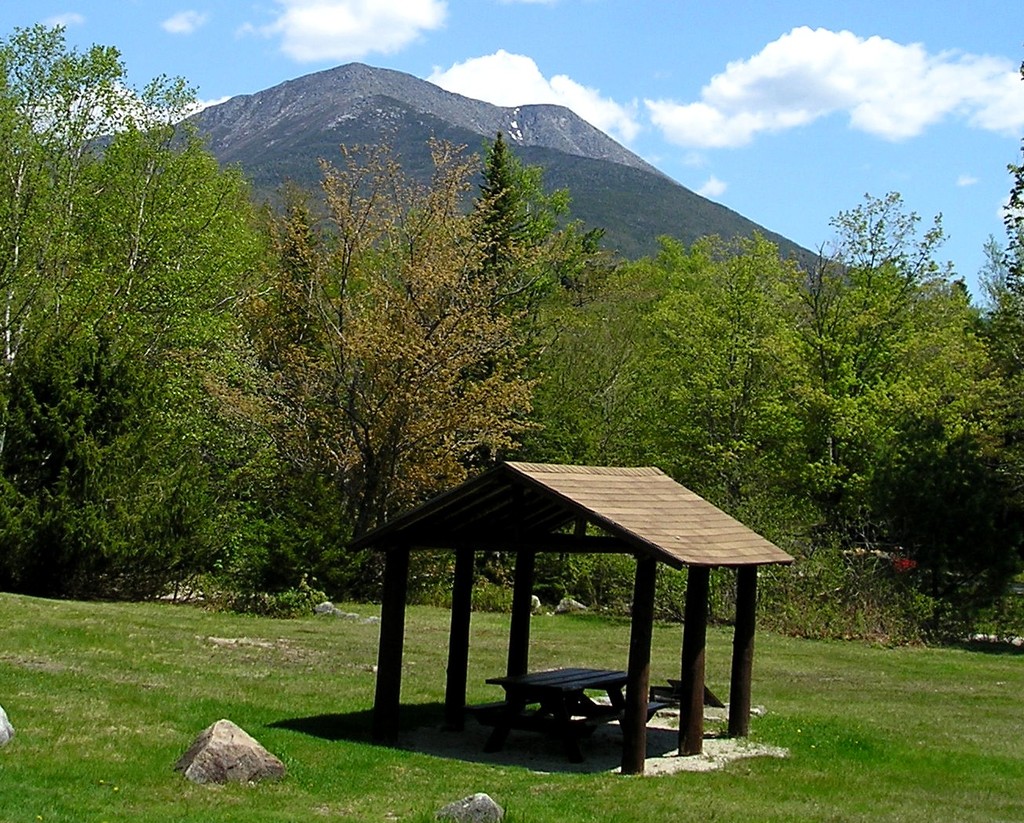
Katahdin from the Appalachian Trail at Katahdin Stream Campground, Baxter State Park. Photograph by TJ aka Teej, via Wikimedia Commons; author-released public domain. Modern regional context, a different viewpoint from Church’s composition; capture date unspecified. Image source. Author-released public domain worldwide; unrestricted-use fallback grant. Resized; full source proportions retained.
Artworks directory
A documented selection of Church’s works discussed across these articles, together with identified prints after his designs. This is not a catalogue raisonné. Repeated titles and aliases are reconciled; studies remain distinct from finished paintings. Some dates remain unconfirmed. Other makers are named where a print adapts Church’s work.
| Name | Date | Medium |
|---|---|---|
| Above the Clouds at Sunrise | 1849 | Oil on canvas |
| The Aegean Sea | About 1877 | Oil on canvas |
| The Andes of Ecuador | 1855 | Oil on canvas |
| Aurora Borealis | 1865 | Oil on canvas |
| Autumn in North America | Circa 1856 | Oil on board |
| Coast Scene | 1852 | Oil on canvas |
| Cotopaxi | 1862 | Oil on canvas |
| A Country Home | 1854 | Oil on canvas |
| El Khasné, Petra | 1874 | Oil on canvas |
| El Rio de Luz | 1877 | Oil on canvas |
| The Heart of the Andes | 1859 | Oil on canvas |
| The Icebergs | 1861; foreground mast added between mid-1862 and early 1863 | Oil on canvas |
| Jerusalem from the Mount of Olives | 1870 | Oil on canvas |
| Mount Ktaadn | 1853 | Oil on canvas |
| Our Banner in the Sky | 1861 | Oil paint over lithograph on paper, laid down on cardboard |
| The Parthenon | 1871 | Oil on canvas |
| Rainy Season in the Tropics | 1866 | Oil on canvas |
| Storm in the Mountains | 1847 | Oil on canvas |
| Syria by the Sea | 1873 | Oil on canvas |
| Tamaca Palms | 1854 | Oil on canvas |
| Tropical Scenery | 1873 | Oil on canvas |
| Twilight in the Tropics | 1874; signed and dated, according to Bonhams’ catalogue | Oil on canvas |
| Twilight in the Wilderness | 1860 | Oil on canvas |
| View of Cotopaxi | 1857 | Oil on canvas |
| Niagara | 1857 | Oil on canvas |
| Magdalena River, New Granada, Equador | 1853 | Graphite heightened with white on wove paper |
| Tamaca Palm, Colombia or Ecuador | May–October 1853 | Graphite on gray laid paper |
| Mixed Sketches with a Champan, Río Magdalena, Colombia | May 1853 | Graphite on gray laid paper |
| Study for Rainy Season in the Tropics | 1865–1866 | Graphite on ruled notepad paper |
| Al-Khazneh, Petra (study) | February–March 1868 | Oil and graphite on tan paperboard |
| The Great Fall, Niagara (Charles Risdon, after Church) | 1874 impression | Hand-coloured chromolithograph on paperboard |
| The Heart of the Andes (William Forrest, after Church) | 1862 | Engraving in black on wove paper |
| Our Heaven Born Banner (William Bauly, adapting Church’s motif) | circa 1861 | Colour lithograph |
| A Tropical Moonlight (wood engraving after Church) | 1879 publication | Wood engraving in American Painters |
| Off Iceberg, Newfoundland | June 1859 | Oil and graphite on paperboard |
| Parthenon at Night, Athens | April 1869 | Oil and graphite on tan paperboard |
| Jerusalem from the Mount of Olives (study) | 1 April 1868 | Oil and graphite study |
| Horseshoe Falls (study) | December 1856–January 1857 | Oil on paper mounted to canvas |
| Niagara Falls, from the American Side | 1867 | Oil on canvas |
| Study for The Heart of the Andes | 1858 | Oil study |
| Mount Chimborazo through Rising Mist and Clouds | 1857 | Oil study |
| Cotopaxi Erupting, Viewed from Quito, Ecuador | June 1857 | Oil and graphite on tan paperboard |
| Cotopaxi (painted for Cyrus Field) | 1855 | Painting |
| Chimborazo | 1864 | Painting |
| Twilight, A Sketch | 1858 | Oil on canvas |
| View of Baalbek | 1868 | Oil and pencil on board |
| Three Bedouins | Date unconfirmed | Oil study |
| Coast Scene, Mount Desert (later canvas) | 1863 | Painting |
| The Wreck | Date unconfirmed | Painting |
| Grand Manan Island, Bay of Fundy | Date unconfirmed | Painting |
| Summer in South America | circa 1853 | Painting |
| Evening in Vermont | Date unconfirmed | Painting |
| Home by the Lake | Date unconfirmed | Painting |
| Storm in the Blue Mountains, Jamaica | August 1865 | Painting |
| The Natural Bridge, Virginia | 1852 | Painting |
| The Vale of St. Thomas, Jamaica | 1867 | Painting |
| Tequendama Falls, near Bogota, New Granada | Date unconfirmed | Painting |
| Sunrise in Syria | Before the 1876 exhibition | Painting |
| Cuernavaca (oil study; descriptive title) | 1898 | Oil study |
| Olana window design (descriptive title) | Date unconfirmed | Watercolour and graphite |
| Olana dining-room stencil sketch (descriptive title) | Date unconfirmed | Oil and graphite |
| Olana house (with Calvert Vaux) | 1870–1872; later additions | Architecture |
| Olana designed landscape | From 1860; developed over decades | Designed landscape |
Frequently Asked Questions
The painting dates to 1853 and was exhibited at the National Academy of Design that year.
It belongs to Yale University Art Gallery, accession number 1969.71. Check the museum for current display information.
The title uses an older spelling of the Maine mountain’s name.
The essay preceded Church’s recorded visits, but the evidence cited here does not establish that it caused his journey.
No. It shows a modern view from Katahdin Stream Campground and provides regional context.
Discussion
Look again at the images and ideas explored in Mount Ktaadn. These editorial prompts invite your own observations.
Reader Insights
How do the seated figure and cattle affect your reading of the distant mountain?
Where do the bridge, water and mill draw your eye through the foreground?
How does the sunset colour join the settled landscape with the sky?
Join the Conversation
Share a detail, comparison or question about Mount Ktaadn below.
References
- Yale, Mt. Ktaadn: exhibition metadata and interpretation; Yale University Art Gallery, 1969.71.
- Frederic Edwin Church, National Gallery of Art exhibition catalogue, 1989: Franklin Kelly, p. 48; catalogue 18, p. 78; Debora Rindge, chronology pp. 160–161; checklist p. 201.
- Henry David Thoreau, The Maine Woods: introductory publication note and Ktaadn opening and descent passages; Project Gutenberg transcription of the 1906 Houghton Mifflin edition.
- National Park Service, Katahdin Woods and Waters: History & Culture.
- TJ aka Teej, Katahdin from Katahdin Stream Campground: Wikimedia Commons description and author’s public-domain release.
- Splash image source.
Frederic Edwin Church, Mt. Ktaadn, 1853. Oil on canvas, 92.1 × 140.3 cm. Yale University Art Gallery, Stanley B. Resor, B.A. 1901, Fund, 1969.71. Faithful reproduction of a public-domain work. Image source. Faithful 2D reproduction of public-domain work / PD-Art / PDM1.0. Resized; full source proportions retained.