 by Tom Gurney
Tom Gurney BSc (Hons) is an art history expert with over 20 years experience
Published on June 19, 2020 / Page Updated on November 6, 2026
Email: tomgurney1@gmail.com / Phone: +44 7429 011000
Introduction
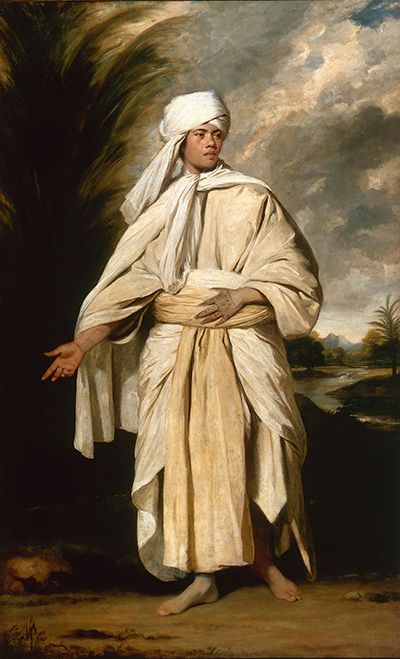
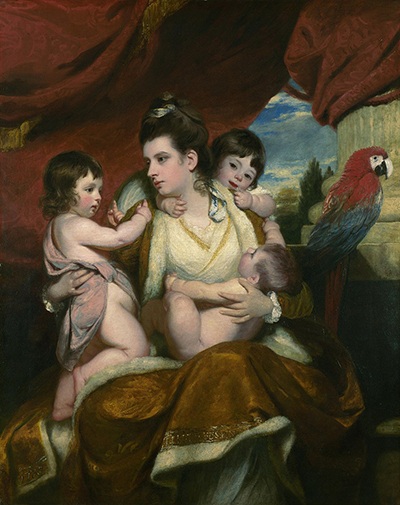
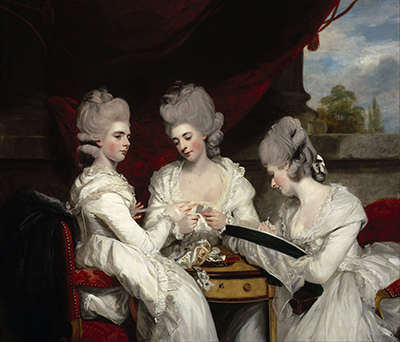
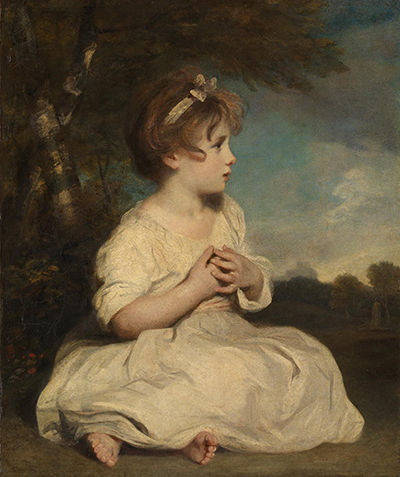
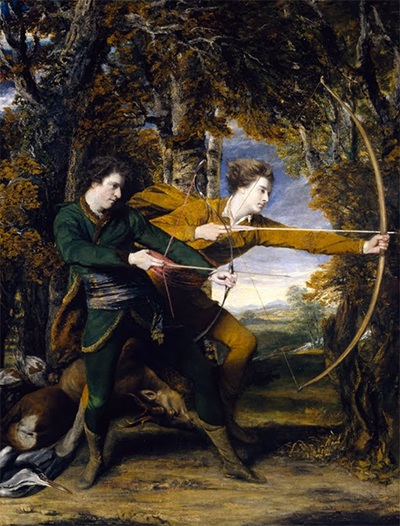
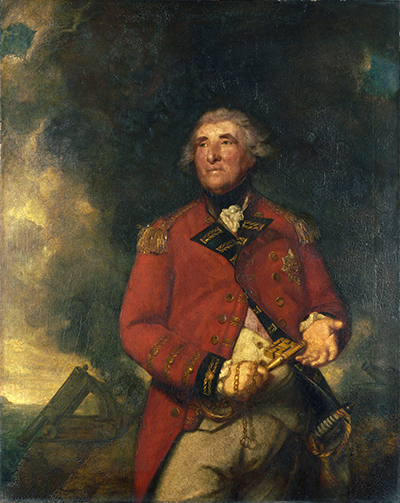
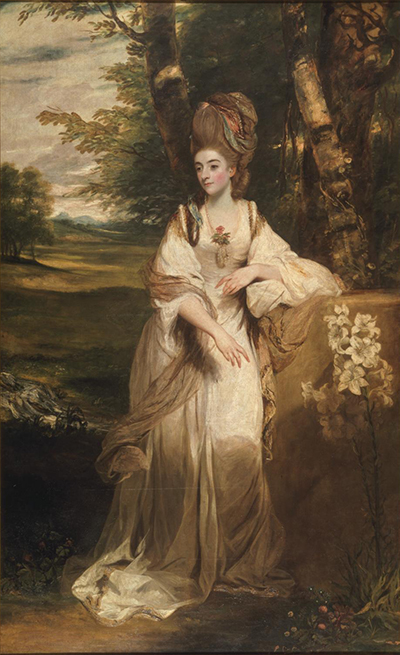
Joshua Reynolds prints are best understood as a history of reproduction, reputation and circulation. Reynolds himself was a painter, not primarily a printmaker, but his portraits became some of the most widely repeated images of eighteenth-century British art. Mezzotints, stipple engravings and other prints after his paintings carried his sitters into homes, albums, shops, libraries and collections far beyond the owners of the original canvases.
That distinction is essential. A print described as "after Sir Joshua Reynolds" is not normally an autograph work by Reynolds. It is a printed image made by another artist from, or in relation to, a Reynolds painting. The engraver, publisher, date, state and medium all matter. Such prints are not secondary in the sense of being unimportant. They are central to the way Reynolds became famous, but they belong to the history of reception as much as to the history of painting.
The National Portrait Gallery's Reynolds records show the scale of this afterlife: Reynolds is associated there with 1,441 portraits as artist or producer, while the print holdings connected with his name form a very large corpus of reproduced portraits and related images.[1][2] The paintings made his reputation, but prints helped distribute it. They turned private portraits into public faces.
At a Glance
- AuthorshipUsually made by printmakers after Reynolds paintings
- Principal mediumMezzotint, valued for rich tonal transitions [3]
- Other mediumStipple engraving [8][12]
- Early exampleLady Charlotte Fitzwilliam, 1754 [4]
- Key engraverJames McArdell [4]
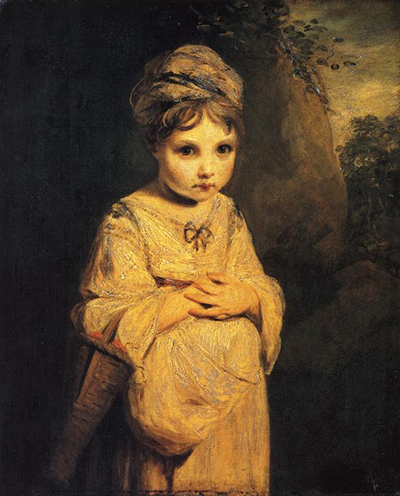
- Child subjectThe Strawberry Girl after Reynolds [5]
- Theatrical subjectDavid Garrick between Tragedy and Comedy [6]
- Self-imageSir Joshua Reynolds, Knight, 1811 [8]
- Print evidenceEngraver, publisher, date, state and medium all matter
- Historical roleCirculation, celebrity and posthumous reputation
Contents
- Introduction
- Prints after Reynolds
- Why Mezzotint Mattered
- Engravers, Publishers and Fame
- The Audience for Reproductive Prints
- Theatre, Literature and Public Faces
- Children, Sentiment and Popular Memory
- States, Dates and Changing Meanings
- Self-image and Posthumous Reputation
- Prints and Catalogue Caution
Prints after Reynolds
The phrase "after Reynolds" is the key to reading this material. It means that a printmaker based the image on a work by Reynolds, rather than that Reynolds cut the plate or pulled the impression. This was normal practice in eighteenth-century Britain. Painters, engravers and publishers worked within an energetic print market in which successful portraits could be converted into saleable images.
This conversion changed the life of a portrait. An oil painting might hang in a family house, a club, a royal collection or an academy exhibition. A print could travel more freely. It could be bought, collected, gifted, bound into books or displayed by people who would never own the painting. Through prints, Reynolds's portraits entered a wider social memory.
Prints also altered the meaning of celebrity. A sitter painted by Reynolds could become recognisable to people outside the sitter's immediate circle. Actors, writers, politicians, military figures, aristocrats and children all gained new visibility when their images were engraved. Reynolds's art therefore helped create a print culture of faces: public people made portable.
This does not make the prints mere copies. They are translations. The printmaker had to convert colour, brushwork, scale and texture into line, tone and paper. A good reproductive print did not simply report the painting; it remade it in another language.
Selected Prints after Reynolds
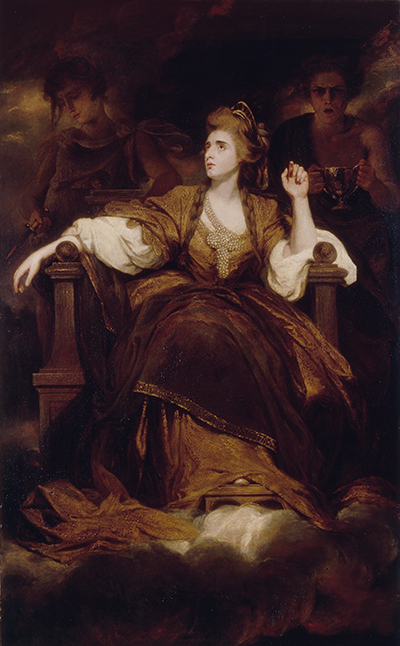
Why mezzotint mattered
Mezzotint was especially important for Reynolds because it was well suited to portraiture. The Metropolitan Museum of Art explains that mezzotint works from a darkened plate that is gradually smoothed and burnished to create lighter areas, allowing rich tonal transitions rather than a purely linear structure.[3] This tonal character made it powerful for translating oil portraits into print.
Reynolds's paintings often depended on atmospheric shadow, soft modelling, dark backgrounds and luminous faces. Mezzotint could suggest those effects more convincingly than simple outline engraving. It gave printmakers a way to reproduce the drama of a head emerging from darkness, the sheen of fabric, the depth of a cloak or the theatrical fall of light.
The method also suited the social purpose of portrait prints. A mezzotint could preserve the sense that the sitter was not merely identified, but dignified. It translated status into tone. This made it a natural partner for Reynolds's Grand Manner portraits, where pose, lighting and inherited pictorial authority mattered as much as likeness.
The 1754 mezzotint of Lady Charlotte Fitzwilliam by James McArdell after Reynolds is an early and important example. The Metropolitan Museum records it as a mezzotint after Reynolds, published by Reynolds from his house in St Martin's Lane.[4] That publication detail matters. It shows Reynolds participating in the print circulation of his own painted work during his lifetime, not merely leaving later engravers to exploit his reputation after death.
Engravers, publishers and the business of fame
Reynolds's print culture involved many hands. The painter supplied the original image; the engraver interpreted it; the publisher managed production and sale; collectors and viewers gave the print its social life. Each name on a print record can therefore change the story. "After Reynolds" is only one part of the credit line.
James McArdell was one of the key mezzotint engravers associated with Reynolds's early fame. The Lady Charlotte Fitzwilliam print demonstrates how quickly a Reynolds portrait could become a printed commodity and an object of circulation.[4] Later engravers and publishers extended that process across a much larger range of sitters and subjects.
The British Museum's print records show this range clearly. Thomas Watson's mezzotint after Reynolds's The Strawberry Girl demonstrates how one of Reynolds's fancy or child images could be turned into a print.[5] Edward Fisher's mezzotint after David Garrick between Tragedy and Comedy shows the theatrical side of Reynolds's print afterlife.[6] A mezzotint after Reynolds's portrait of William Windham shows the same reproductive culture applied to a public and political sitter.[7]
Such examples reveal a network rather than a single category. Reynolds's print afterlife includes children, actresses, actors, politicians, naval and military men, writers, aristocratic women and self-images. The print market took his portraits into many kinds of public recognition.
The audience for reproductive prints
Reproductive prints widened Reynolds's audience in practical ways. A grand portrait required access: to the house in which it hung, the exhibition in which it appeared, or the collection that later acquired it. A print required much less. It could move through shops, portfolios, libraries and illustrated publications. It could be handled, stored and compared. It could survive in multiples.
This changed how portraits worked. A painted likeness was usually tied to a sitter, family or institution. A printed likeness could become a public token of identity. Viewers could collect actors, writers, politicians or admired beauties as images, building their own visual map of contemporary fame. Reynolds's portraits were well suited to this culture because they gave sitters memorable roles as well as recognisable features.
The National Portrait Gallery's large print holdings connected with Reynolds demonstrate how broad this culture became.[2] They include prints where Reynolds is the source artist, prints connected to his sitters and prints in which his own image is reproduced. The collection record therefore reflects more than artistic admiration. It records the multiplication of social identity through paper.
Prints also made comparison easier. A collector could place portraits of writers, actors and statesmen near one another in a way that no single domestic interior of paintings could manage. Reynolds's portraits, once printed, could enter series, albums and biographical collections. They became part of a culture that organised public life through faces.
This is one reason a Reynolds print is often more than an image of one painting. It may also be evidence of a sitter's popularity, a publisher's calculation, an engraver's skill and the appetite of a public that wanted recognisable likenesses of celebrated people. The print stands at the meeting point between art and social demand.
Theatre, literature and public faces
Reynolds painted people who were already famous, and prints helped make them more famous still. This is especially clear with actors and writers. An actor's fame depended on presence, gesture and memory; a printed portrait could preserve that presence for people who had not seen the performance. Reynolds's portraits of theatrical figures therefore found a natural extension in print.
The British Museum's record for Edward Fisher's mezzotint after David Garrick between Tragedy and Comedy is a strong example.[6] The original painting stages Garrick between rival allegorical forces, but the print allowed that theatrical identity to travel. It made the actor's image collectible. It also made Reynolds's dramatic invention accessible beyond the painted original.
Literary portraits worked similarly. Reynolds belonged to the social world of Samuel Johnson, Edmund Burke and other major figures of London conversation, and the National Portrait Gallery records his connections to Johnson's Literary Club.[1] Prints after portraits of such figures helped join painting to literary and intellectual celebrity. A viewer could own an image of a writer or statesman, not simply read his words or hear his reputation.
This is one reason Reynolds matters so much to British portrait culture. He painted individuals, but prints turned those individuals into shared cultural icons. Portraiture, publishing and celebrity reinforced one another.
Children, sentiment and popular memory
Prints after Reynolds also helped spread the sentimental and fancy-picture side of his art. The Strawberry Girl is a useful example because it belongs to a different emotional register from the formal aristocratic portrait. The British Museum records Thomas Watson's mezzotint after Reynolds's The Strawberry Girl, showing how this kind of image could circulate independently of the painting.[5]
Child subjects were especially suited to print afterlife because they combined recognisable feeling with decorative appeal. They could be collected for sentiment as well as for sitter identity. In Reynolds's hands, childhood was often idealised, theatrical and pictorially elevated; in print, that idealisation could reach a much broader audience.
This does not mean that prints made Reynolds merely sweet or domestic. Rather, they helped select certain aspects of his art for wider consumption. The public memory of an artist is often shaped by what reproduces well. Reynolds's heroic officers, theatrical actors and affecting children all benefited from print because each could be made legible in black and white.
The result is a more varied Reynolds than a list of oil paintings alone might suggest. Prints carried grandeur, fame, sentiment and likeness through the same reproductive system.
States, dates and changing meanings
Prints also require attention because they can exist in states. A plate might be altered, lettered, republished or issued in different forms. A painting has its own history of ownership and condition; a print has a history of plate, impression, publication and distribution. These histories do not always move together.
The British Museum's Lady Caroline Montagu record is a useful reminder. It identifies a published state of a 1777 mezzotint by John Raphael Smith after Reynolds, with bibliographic references to catalogues of engraved works and mezzotint portraits.[11] The word "state" matters because it points to the life of the plate as well as the image. Print history is not only about what is represented, but about how and when an impression was produced.
Dates can also shift meaning. A print made close to the date of a painting may participate in the original burst of a sitter's fame. A later impression or posthumous engraving may belong to memory, biography or revival. The 1811 stipple engraving of Reynolds himself, for instance, does not belong to the first moment of his self-portrait's creation; it belongs to the later circulation of his image as a canonical British artist.[8]
This makes Reynolds's prints especially useful for studying reputation over time. The same painted source could serve different purposes in different decades. During Reynolds's lifetime, it might advertise the painter's fashionable authority or the sitter's prominence. Later, it might help construct a national artistic tradition.
The printed image is therefore historical twice over. It points back to a Reynolds painting, but it also belongs to its own date of making. Reading both dates together helps prevent a flat view of reproduction.
Self-image and posthumous reputation
Reynolds's own image also entered print culture. The Metropolitan Museum's 1811 stipple engraving Sir Joshua Reynolds, Knight, by William Bond after Reynolds, reproduces the commanding self-portrait in which Reynolds appears in doctoral robes beside a bust of Michelangelo.[8] The Met notes that the painted self-portrait was made in 1779 or 1780 for the Royal Academy's new premises at Somerset House, that Valentine Green soon made a mezzotint after it in December 1780, and that many other prints followed.[8]
This is a particularly revealing case because the original painting was already an image of artistic authority. Reynolds presented himself as the head of the Royal Academy, linked to Michelangelo and clothed in academic honour. Prints then multiplied that image. They helped turn Reynolds's self-fashioning into a public emblem.
Posthumous print projects extended this process. The National Portrait Gallery records mezzotint reproductions by Samuel William Reynolds after six portraits by Sir Joshua Reynolds.[9] Such later works show how the artist's reputation continued to be organised through reproduction after his death. Print culture did not merely respond to Reynolds's fame; it helped maintain it.
The difference between lifetime and posthumous prints is important. A print published while Reynolds was alive may be connected to active career management, market demand or the circulation of a recent portrait. A later print may belong to commemoration, collecting, biography or revival. Both can be valuable, but they belong to different moments in the making of reputation.
Prints and catalogue caution
Prints after Reynolds require careful identification. The same painted portrait might be engraved more than once, by different printmakers, in different sizes, states and publications. A print title might use a sitter's name, an allegorical title or a shortened form. Some prints reproduce a known painting closely; others pass through later copies or intermediate drawings.
This is where David Mannings's complete catalogue of Reynolds's paintings remains important.[10] Mannings and Postle help establish painted originals, title variants, sitters, dates and versions. But a catalogue of paintings is not the same thing as a catalogue of prints. Print records must still be read in their own right, with attention to engraver, publisher, date, medium and collection number.
The British Museum's record for Lady Caroline Montagu, for example, identifies the work as a 1777 mezzotint by John Raphael Smith after Reynolds and links it to Mannings 1581.[11] That kind of record shows the ideal relationship between painting catalogue and print evidence. The print is connected to the painted work, but the print has its own maker, material, date and publication history.
This caution protects Reynolds from two opposite errors. One error is to treat every print as if it were made by Reynolds himself. The other is to dismiss prints as merely derivative. The better view is to see them as historical objects that translated his paintings into a wider visual economy.
Authorship in a printed image
Authorship in a Reynolds print is layered. The painting may be by Reynolds, the plate by an engraver, the publication by a named publisher and the surviving impression held by a later collection. A single object can therefore carry several histories at once. The phrase "after Sir Joshua Reynolds" honours the source image, but it does not erase the labour of the printmaker.
This matters particularly with mezzotint because tonal interpretation required real skill. The engraver had to decide how to convert colour into degrees of black and white, how to hold a face in light, how to give weight to fabric, and how to keep the sitter legible without the resources of oil paint. A successful mezzotint after Reynolds is therefore an interpretation of his pictorial language, not a mechanical transfer.
Stipple engraving made different choices. The Met's 1811 Reynolds self-image and NPG's stipple examples show how dotted tone could serve portrait reproduction in the late eighteenth and early nineteenth centuries.[8][12] Stipple could create delicacy and controlled modelling, especially useful for smaller portraits, book illustrations and later biographical images. It belongs to a different reproductive mood from the deep velvet of mezzotint.
Looking at authorship this way makes the print culture around Reynolds richer. It restores the printmakers and publishers who helped create his public image. It also shows that Reynolds's fame depended on collaboration, even when his name dominated the credit line.
How prints changed Reynolds
Prints changed Reynolds by changing the scale of his audience. The original paintings remained tied to owners, collections and exhibition moments. Prints made the images repeatable. They allowed Reynolds's visual inventions to move through eighteenth- and nineteenth-century culture in a way no single canvas could.
They also shaped which Reynolds people remembered. Portraits of public men, celebrated actors, idealised children and the artist himself could circulate as prints and become familiar even to viewers who never saw the originals. The printed Reynolds was therefore not identical to the painted Reynolds. It was a selected, translated and multiplied Reynolds.
This matters for understanding his place in British art. Reynolds was not only a painter of elite society; he became one of the chief sources from which elite, literary, theatrical and political society was pictured for a wider public. Prints made that publicness possible.
The best way to approach Joshua Reynolds prints is therefore neither as modern decoration nor as lesser versions of paintings. They are evidence of how images travelled. They show Reynolds's portraits moving from canvas to plate to paper, from private possession to public recognition, from sitter likeness to cultural memory. In that movement, Reynolds's art became more than painting. It became part of the printed face of eighteenth-century Britain.
Frequently Asked Questions
Discussion
How does a printed translation change the meaning and audience of a Reynolds portrait?
Reader Insights
What happens when colour, brushwork and scale become tone, line and paper?
How should Reynolds, the engraver and the publisher share authorship of a printed image?
Which sitters or subjects gained the most from becoming portable and repeatable?
Join the Conversation
Share your reading below.
References
- National Portrait Gallery, “Sir Joshua Reynolds”, https://www.npg.org.uk/collections/search/person/mp03755/sir-joshua-reynolds
- National Portrait Gallery, prints associated with Sir Joshua Reynolds, https://www.npg.org.uk/collections/search/person/mp03755/sir-joshua-reynolds?medium=print
- Metropolitan Museum of Art, “The Printed Image in the West: Mezzotint”, https://www.metmuseum.org/essays/the-printed-image-in-the-west-mezzotint
- Metropolitan Museum of Art, James McArdell after Sir Joshua Reynolds, Lady Charlotte Fitzwilliam, 53.600.4169, https://www.metmuseum.org/art/collection/search/400073
- British Museum, Thomas Watson after Sir Joshua Reynolds, The Strawberry Girl, 1875,0710.643, https://www.britishmuseum.org/collection/object/P_1875-0710-643
- British Museum, Edward Fisher after Sir Joshua Reynolds, David Garrick between Tragedy and Comedy, 1902,1011.1195, https://www.britishmuseum.org/collection/object/P_1902-1011-1195
- British Museum, after Sir Joshua Reynolds, William Windham, 1902,1011.7960, https://www.britishmuseum.org/collection/object/P_1902-1011-7960
- Metropolitan Museum of Art, William Bond after Sir Joshua Reynolds, Sir Joshua Reynolds, Knight, 17.3.756-2344, https://www.metmuseum.org/art/collection/search/827515
- National Portrait Gallery, Samuel William Reynolds, Mezzotint reproductions after six portraits by Sir Joshua Reynolds, https://www.npg.org.uk/collections/search/portrait/mw90956/Mezzotint-reproductions-by-Samuel-William-Reynolds-after-six-portraits-by-Sir-Joshua-Reynolds
- David Mannings, Sir Joshua Reynolds: A Complete Catalogue of His Paintings, with subject pictures catalogued by Martin Postle, Yale University Press / Paul Mellon Centre for Studies in British Art, 2000.
- British Museum, John Raphael Smith after Sir Joshua Reynolds, Lady Caroline Montagu, 1830,0714.1, https://www.britishmuseum.org/collection/object/P_1830-0714-1
- National Portrait Gallery, “Stipple engraving” collection search, including Francis Haward after Reynolds, Sarah Siddons (née Kemble) as the Tragic Muse, https://www.npg.org.uk/collections/search/portrait-list.php?displayNo=40&search=ap&subj=467%3BStipple+engraving