 by Tom Gurney
Tom Gurney BSc (Hons) is an art history expert with over 20 years experience
Published on June 19, 2020 / Updated on July 28, 2026
Email: tomgurney1@gmail.com / Phone: +44 7429 011000
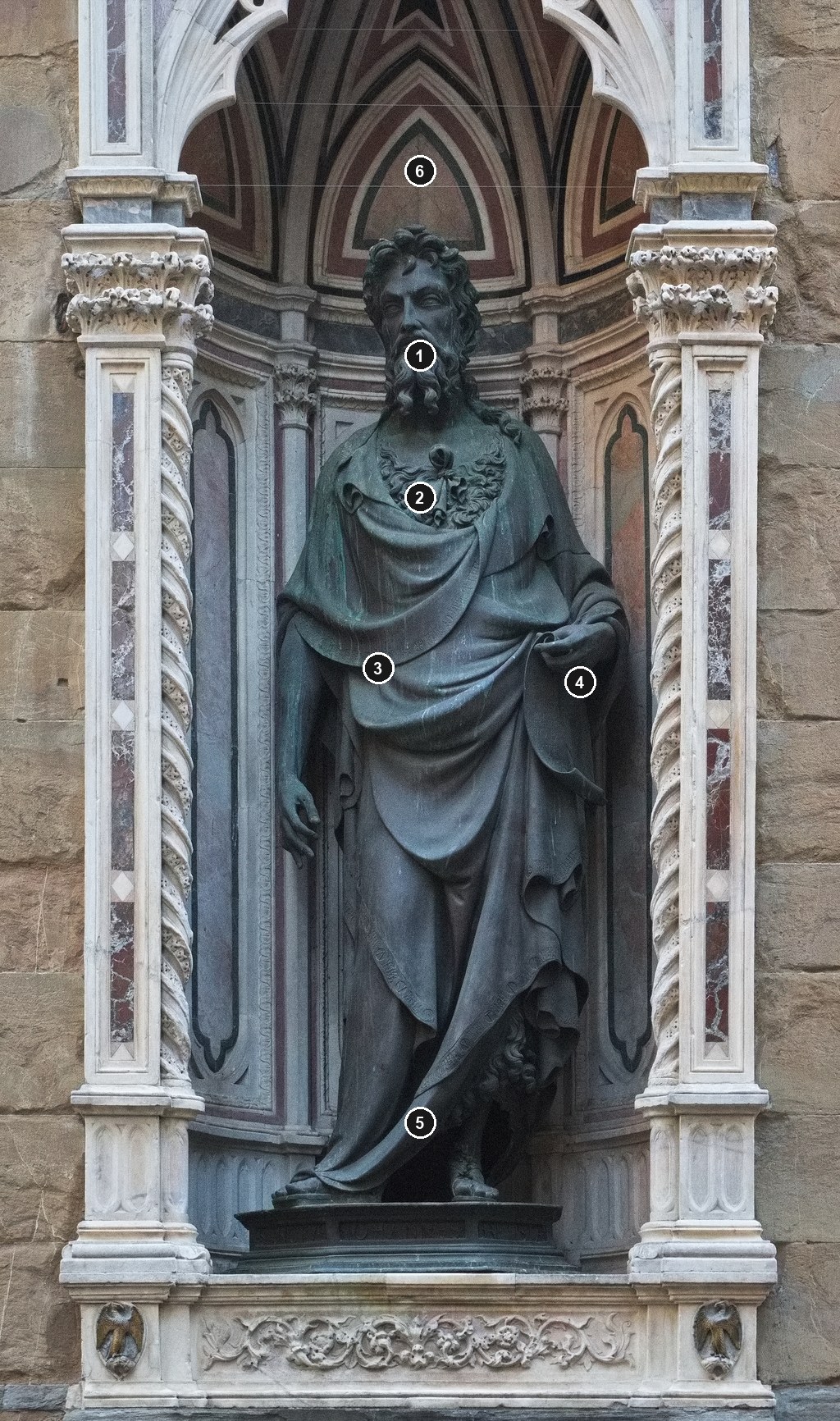
Lorenzo Ghiberti's St John the Baptist was one of the boldest bronze sculptures made in early fifteenth-century Florence. Commissioned by the Arte di Calimala for Orsanmichele and generally dated around 1414–1416, the statue stands approximately 255 centimetres high. The original is preserved in the Museo d'Orsanmichele, while a copy represents it in the exterior niche. [1]
Contents
- A guild saint in a public setting
- Monumental bronze
- Original surface and present appearance
- Looking at the statue in its niche
- Comparison with St Matthew
A guild saint in a public setting
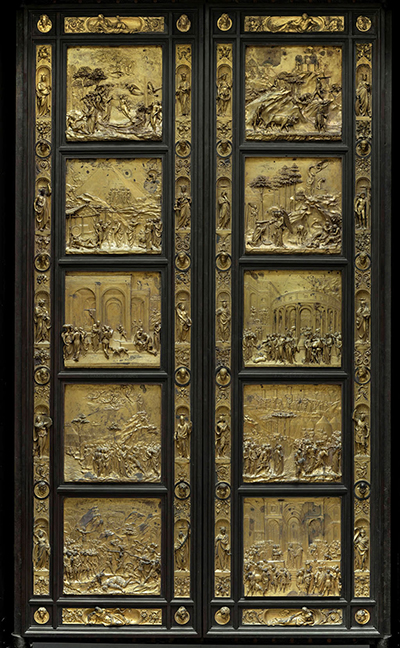
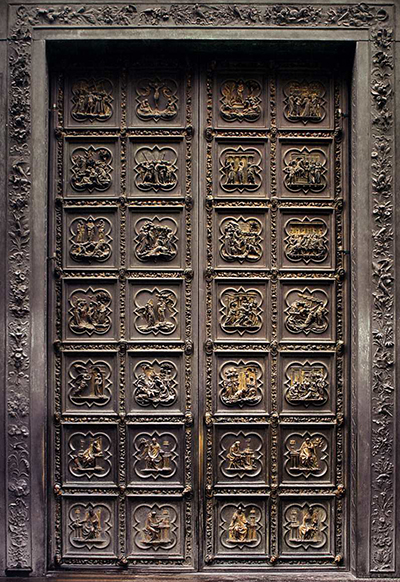
Orsanmichele's exterior niches were assigned to Florence's guilds. Their patron saints formed a public ensemble in which devotion, civic identity and institutional rivalry met. Calimala—the powerful guild associated with imported cloth and responsibility for the Baptistery—chose Florence's patron saint and employed the sculptor already leading its Baptistery-door project.
The work therefore connected two prominent Calimala commissions. Yet the statue posed a different problem from a relief panel. It needed a strong silhouette at street distance, physical authority within a niche, and detail capable of rewarding closer looking.
Monumental bronze
The national catalogue describes cast, chased and gilded bronze and identifies the statue as an exceptional large-scale casting in Florence. Its technical ambition should not be reduced to size alone. The long mantle creates broad, flowing contours, while chased detail animates the hair, face, veins and garment. Goldsmith precision survives within a figure designed for architectural scale.
John is slender rather than massively muscular. His long drapery both reveals and conceals the body, producing a tension between physical presence and patterned surface. Older writers sometimes treated these qualities as merely “Gothic.” A more useful reading sees Ghiberti working deliberately between ornamental refinement, close observation and the demands of monumental bronze.
Original surface and present appearance
The catalogue records gilding, and an official Opificio publication documents study of the bronze surface. Because the full conservation article has not been inspected for this manuscript, detailed claims about the treatment are avoided. What can be said securely is that the statue's present dark bronze appearance does not exhaust its original visual effect: chasing and gilded enrichment would have responded to changing outdoor light.
Like the other original exterior sculptures, St John was moved indoors for conservation. The museum preserves it within the larger Orsanmichele group, while the exterior copy maintains the relationship between saint, guild and niche. [2]
Looking at the statue in its niche
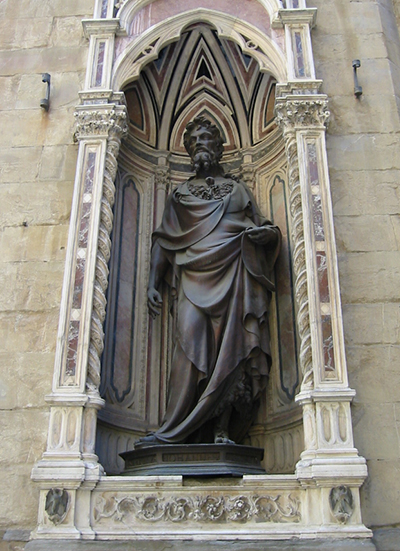
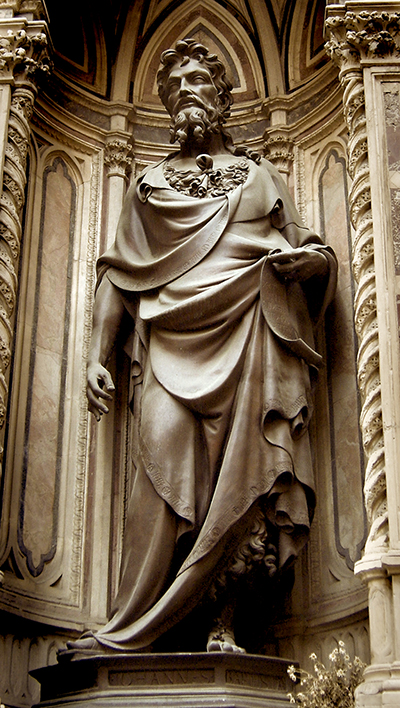
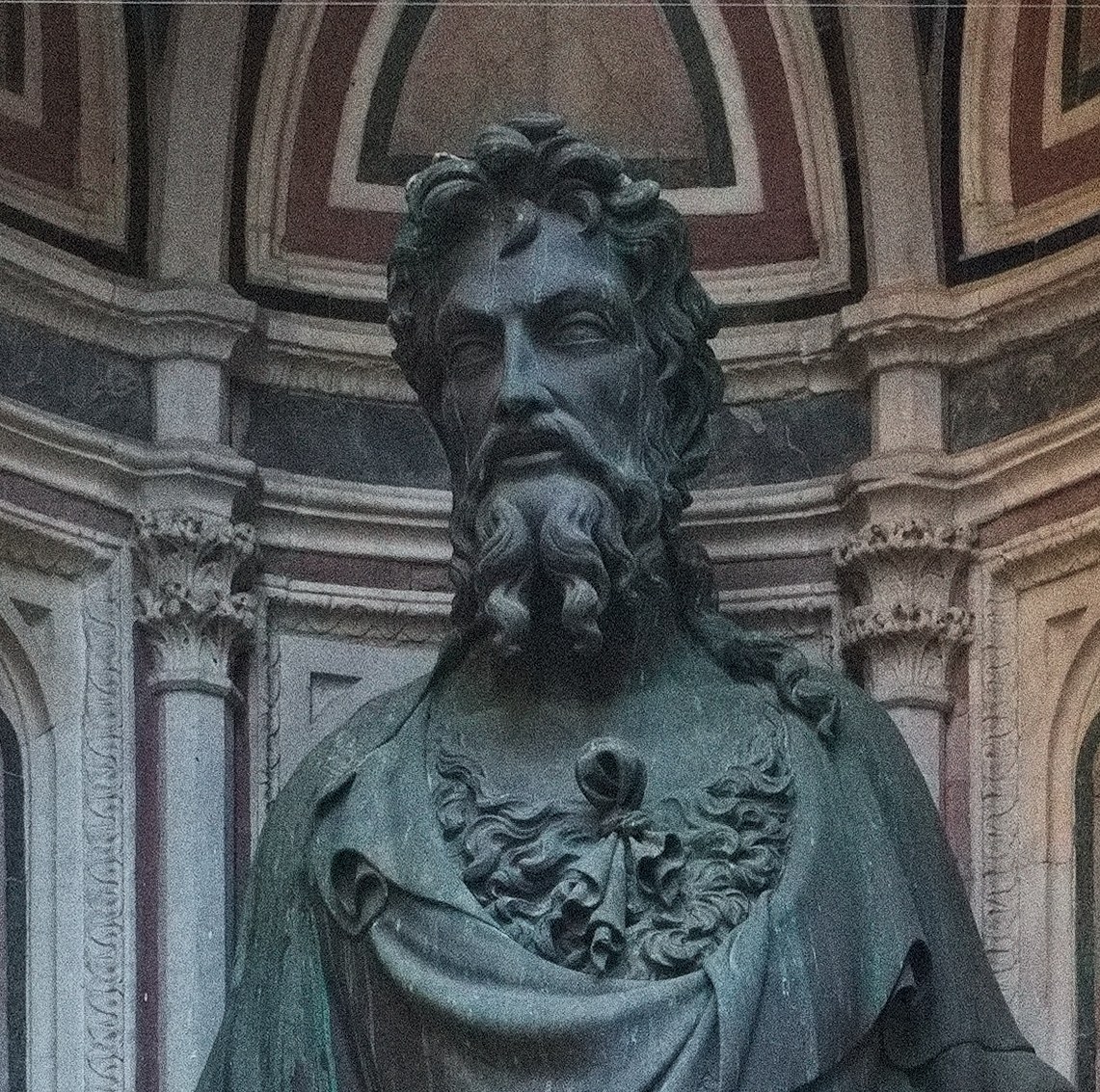
The figure is designed to be read vertically. The mantle drops in long bands from the shoulders before gathering into denser folds around the lower body. That downward movement exaggerates John's height and directs attention toward the exposed feet. At the top, the head projects from the garment's enclosing mass; the beard, hair and concentrated expression create a focus strong enough to register from below.
The niche matters to this design. Its columns and arch frame the saint as if within a small building, while the dark recess intensifies the outer contour. Details that appear delicate in museum photographs originally worked within a layered architectural setting of bronze, stone, mosaic and street light. The statue's apparent slenderness is therefore not simply a lack of bodily weight. It is part of a calculated relationship between figure, drapery and tall vertical enclosure.
John's identity also suited Calimala's wider responsibilities. As Florence's patron saint, he connected the guild's Orsanmichele image to its stewardship of the Baptistery. Ghiberti's simultaneous work for both sites made the statue part of a larger civic programme expressed through bronze.
Comparison with St Matthew
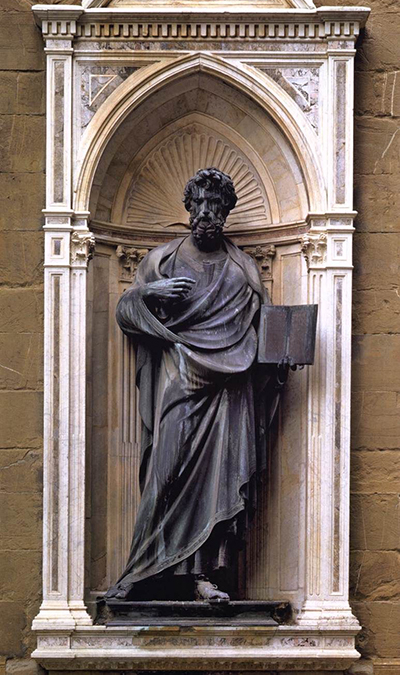
Ghiberti's later St Matthew provides the most revealing comparison. The Arte del Cambio explicitly pursued monumental scale in a setting already shaped by Calimala's bronze. St Matthew is larger, more architecturally contained and technically documented as a difficult casting. St John remains more elongated and continuously wrapped in drapery.
The comparison shows how Orsanmichele encouraged artistic escalation. Guilds did not commission isolated images; they responded to neighboring works, materials and dimensions. Ghiberti's three bronzes—St John, St Matthew and St Stephen—trace changing answers to the same challenge of placing a patron saint in Florence's most competitive sculptural setting.
The pairing also clarifies Ghiberti's range. St John emphasizes elongated contour and the continuous rhythm of cloth. St Matthew places greater weight on the body beneath the drapery and on the saint's interaction with his book. Neither should be treated merely as a stage on a one-way path from Gothic to Renaissance style. Each answers a different guild, niche and devotional identity.
Annotated Close Reading of St John the Baptist
Image note: this photograph shows the exterior replica in Ghiberti’s original Orsanmichele niche; the conserved original bronze is displayed indoors.
Head and concentrated gaze
The bearded head creates a strong focus within the tall niche and remains legible from street level.
Hair garment and goldsmith detail
Dense hair and garment textures show how fine surface pattern survives within monumental scale.
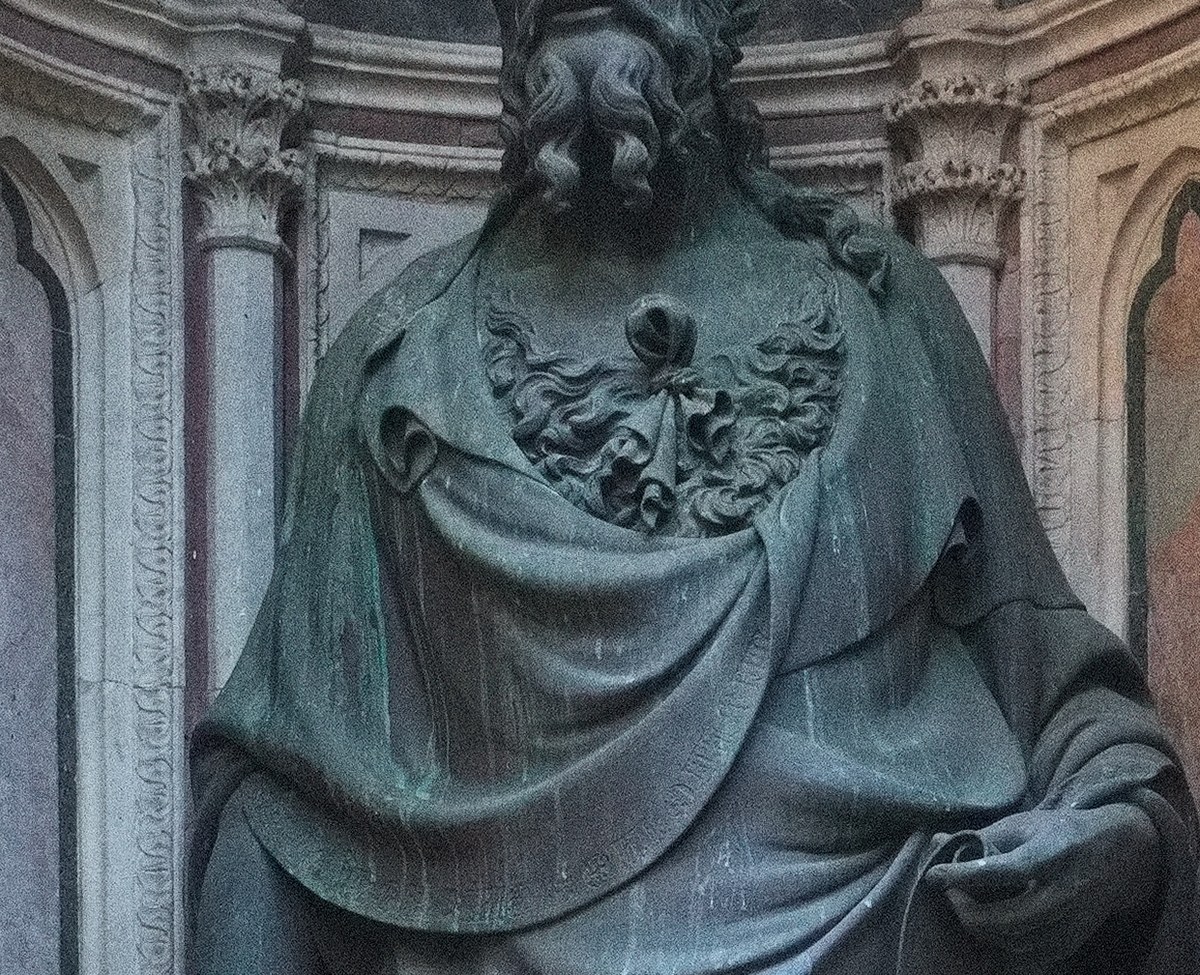
Mantle across the torso
The mantle crosses the torso in a long continuous movement that emphasizes the figure’s vertical form.
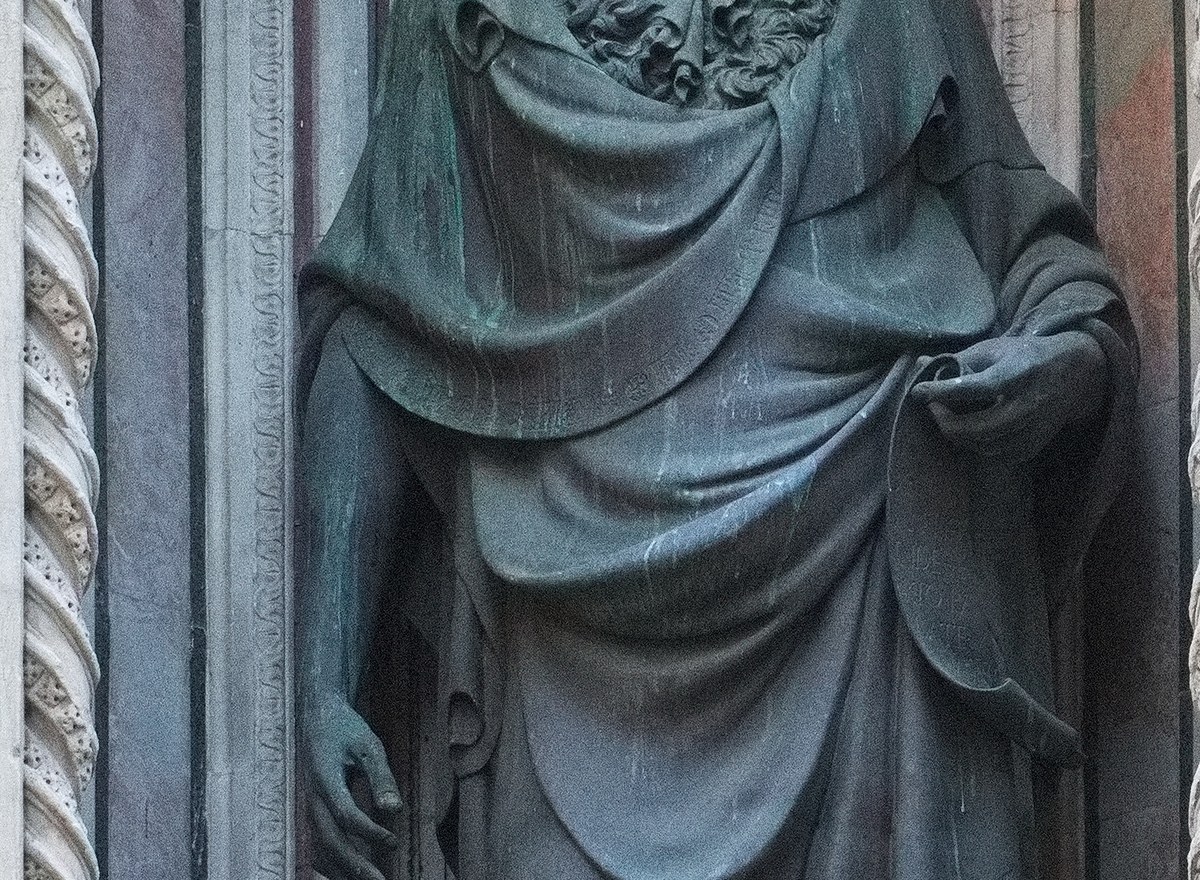
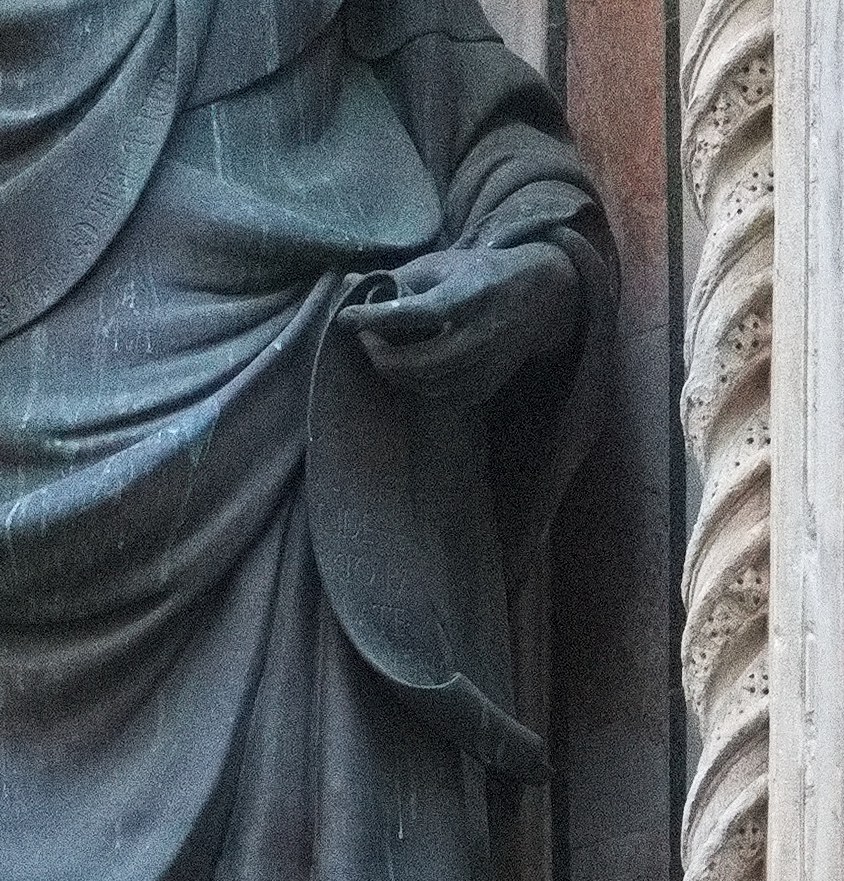
Open left hand
The open hand interrupts the surrounding folds with a small, direct gesture.
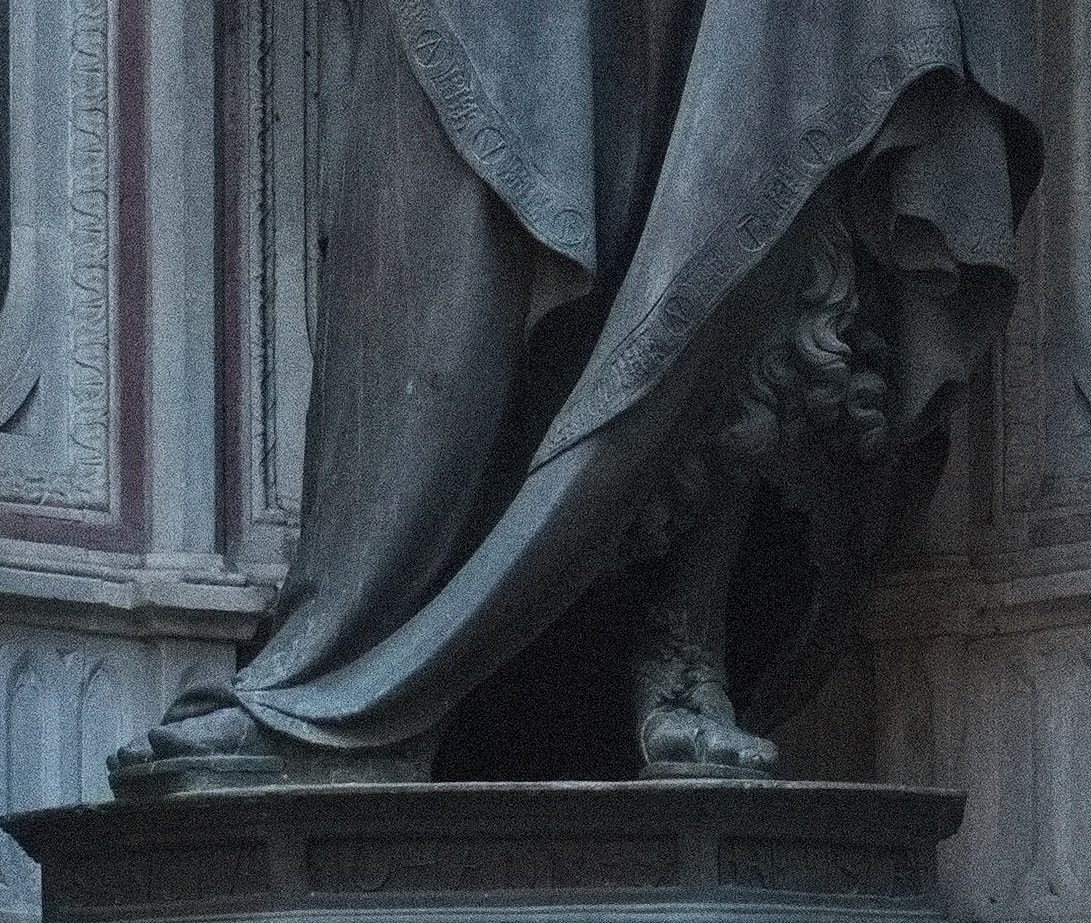
Feet and weighted stance
The exposed feet anchor the elongated figure and clarify its stance above the street.
Niche and Calimala setting
Twisted columns, inlay and the painted recess frame the replica within the guild’s original architectural setting.
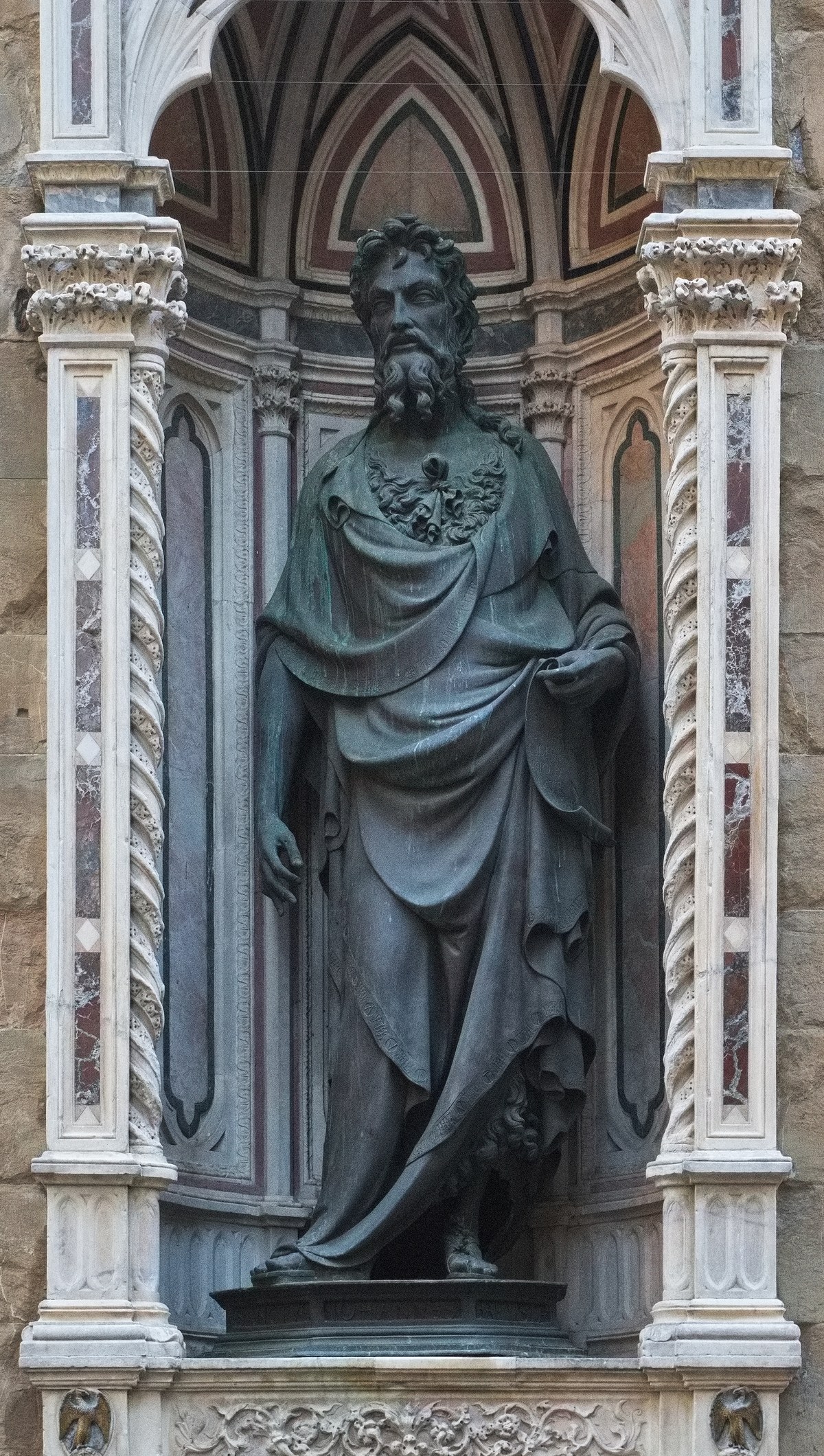
Photograph by Armin Kleiner, CC BY-SA 4.0, via Wikimedia Commons; annotated and cropped. Source. CC BY-SA 4.0.
Discussion
Ghiberti rewards slow looking: relief, gilding, narrative structure, workshop practice and conservation evidence can all change how a work is read.
Join the Conversation
Have an observation about St John Baptist, a source to add, or a comparison that sharpens the reading? Share it below.