by Tom Gurney
Tom Gurney BSc (Hons) is an art history expert with over 20 years experience
Published on June 19, 2020 / Updated on September 29, 2026
Email: tomgurney1@gmail.com / Phone: +44 7429 011000
About the painting
A Mondrian image sold as a “print” may be a modern reproduction of a painting, a museum poster or a separately catalogued work on paper. Those are different objects. This guide helps readers choose and describe a print accurately while using the paintings and drawings pages for the original artworks.[1]
At a glance
- ArtistPiet Mondrian (1872–1944)
- TopicPrints of Mondrian images, editions and original works on paper
- Key distinctionA print reproducing an oil painting is not the original oil painting
- VerificationCheck title, original collection, printer, publisher, date and edition where relevant
Mondrian across periods
Contents
- What kind of print is it?
- Choosing the artwork first
- Before buying or describing a sheet
- What a reproduction can tell you
- Reading edition claims
- Choosing a source image by composition
What kind of print is it?
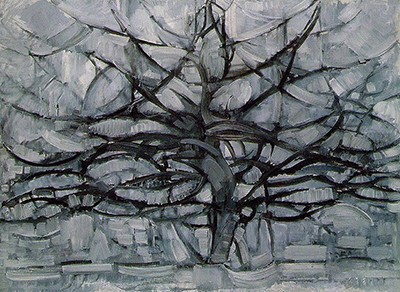
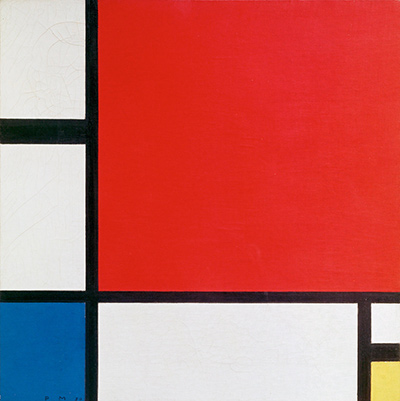
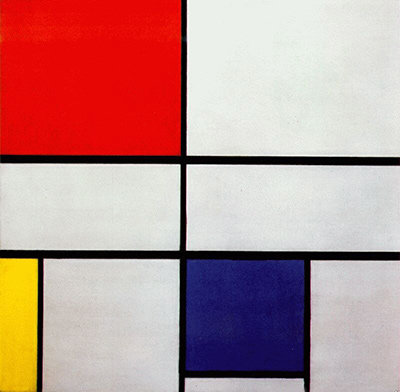
A museum reproduction is made after an existing artwork. Tate, for example, lists custom prints after Mondrian works in its collection, including The Tree A and Composition with Yellow, Blue and Red. Those listings identify the image being reproduced; they do not turn the output into a new oil painting by Mondrian.[1]
 The Red Tree Piet Mondrian.jpg)
An original work on paper is a different category. Mondrian made drawings and studies that institutions catalogue as objects in their own right. The medium on an object record might be pencil, charcoal, watercolour or gouache. A printed photograph of such a drawing is still a reproduction of that drawing. Check the object record before calling it an original print.
One documented example shows why this distinction matters. The Museum of New Zealand Te Papa Tongarewa holds a 1953 colour screenprint called Composition, printed by Atelier Arcay after a 1921 Mondrian painting. Its record says Nelly van Doesburg supervised the production after Mondrian's death. The sheet was initially sold as an actual Mondrian because the design followed the painting so closely. Te Papa catalogues Mondrian as the maker of the source composition “after” whom the print was made, and identifies the Paris printer and later date separately. Those production details are more informative than a generic “Mondrian print” label.[4]
Serigraphs require particular care. Screenprinting is a process that can reproduce flat colour effectively, but a Mondrian-like grid, a number written on a sheet or the label “serigraph” alone does not establish that Mondrian designed or signed an edition. The illustration on this site’s serigraph page has no verified edition identity.[2]
Choosing the artwork first
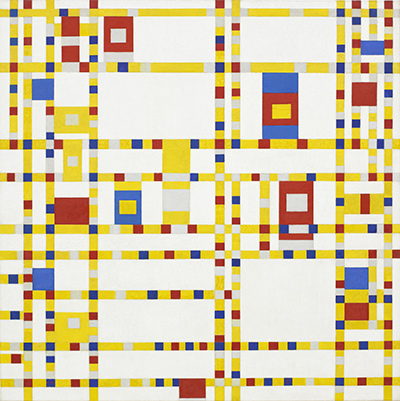
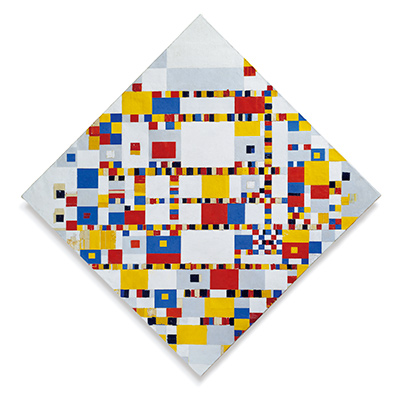
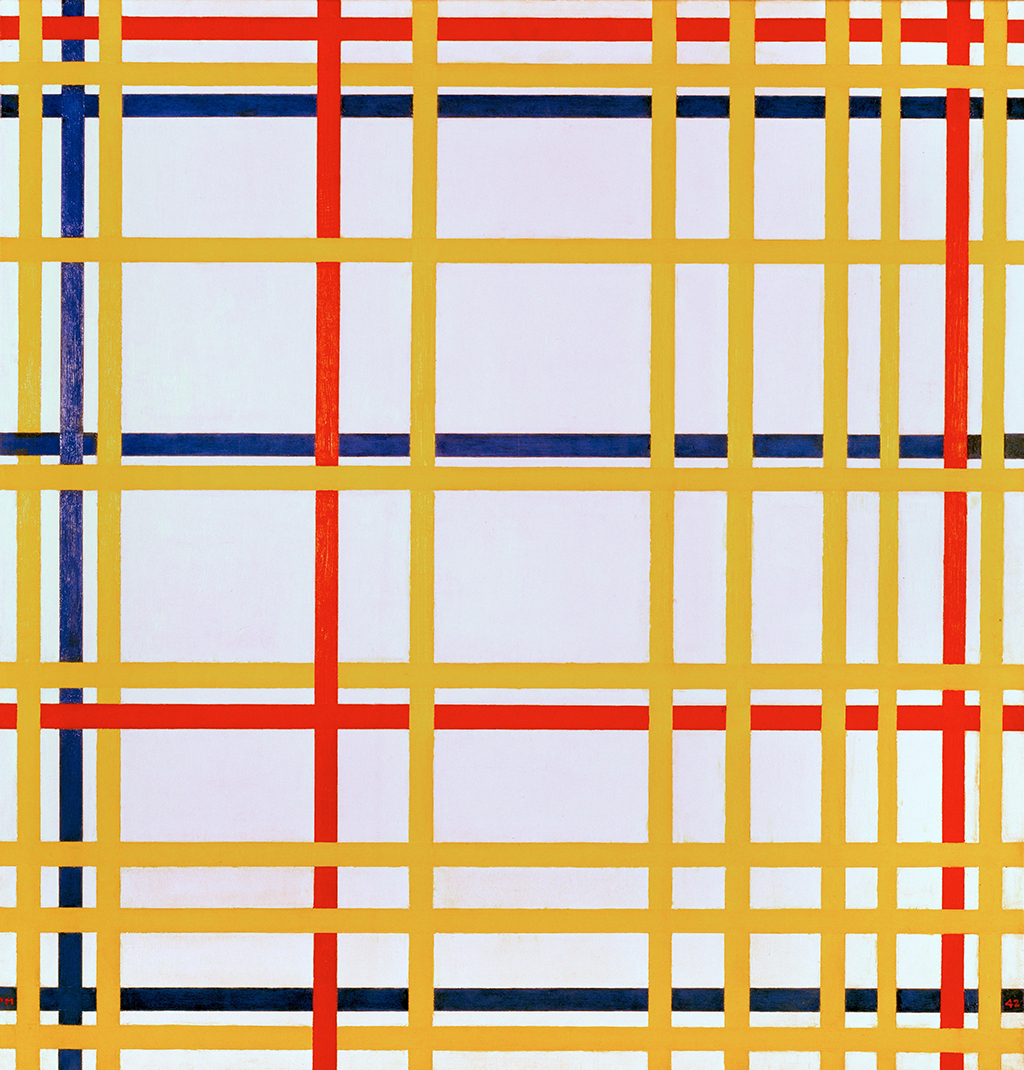
For a bright late composition, see Broadway Boogie Woogie and Victory Boogie Woogie. For a classic asymmetrical grid, see the Zürich red-yellow-blue page and the separate Belgrade Composition II. Their similar translated titles conceal different images and collections.
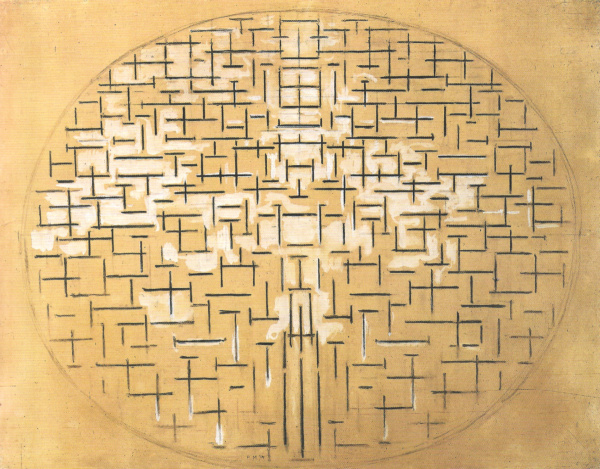
A reproduction of Tableau I should match the tall Cologne B126 painting, not the square Hague B128 work. The NGA lozenge is a diamond-format painting; its white margins, orientation and cropping are essential to a faithful reproduction. Earlier The Red Tree and The Tree A suit readers who want to see the path from representational work toward abstraction.
Before buying or describing a sheet
Confirm the exact source artwork in an institutional catalogue. Ask for the paper size and image size separately, because a print may include a border absent from the painting. If an edition is claimed, look for a credible printer or publisher record and a stated year of production. “Signed in the image” differs from a signature on the sheet itself. Condition, colour fidelity and paper quality affect how a reproduction looks, but they do not change its attribution.
The original painting's image rights and the later photograph or print file may have separate terms. This local article reuses its existing illustration and does not imply that every online image may be republished. A licensed museum print is a straightforward option for someone who wants a physical reproduction.[1]
Watch: Piet Mondrian
See his studio, the move toward geometric abstraction and the rhythms of his New York paintings.
Piet Mondrian: Abstract Painting as We Know It
Curator Michael White explores the paintings and Mondrian’s studio as an abstract space.
Watch on YouTubeWhat a reproduction can tell you
A good reproduction helps people study composition and colour, but its printed surface belongs to a different date and production process from the source painting. Compare a listing for a print with the museum record for the artwork it reproduces. The listing may tell you the paper, size and printer of the new sheet; the museum record tells you the medium, dimensions and history of Mondrian's original. Both sets of facts are useful, but they answer different questions. A print after a 1921 oil painting was not itself painted in 1921.
Colour matching also needs care. Mondrian's whites and grays can be subtly different, and a small digital preview may hide painted edge changes. A reproduction may crop the support, alter the white border or shift a blue field through paper and ink choices. Check the entire image against the source object before treating a crop as a faithful version. For the lozenge paintings, even the angle at which the square support is displayed is essential to the composition.
Reading edition claims
An edition number describes a particular printing run only when the publisher and edition can be documented. Handwritten fractions, pencil signatures and embossed marks should be examined, but they are not proof of Mondrian's own participation. A later publisher can make a numbered reproduction of a painting after the artist's death. Ask for a printer, publisher, production date, edition size and source-work identification; then compare those claims with an institutional record or a reliable catalogue. MoMA's printmaking guide explains the techniques, while RKD identifies the original Mondrian works that later prints may reproduce.[2][3]
If the source work cannot be identified, describe only what is known: a reproduction in the manner of Mondrian, or a screenprinted sheet with an unverified attribution. That phrasing keeps a useful image available without promising an original edition that the evidence does not support.
Choosing a source image by composition
The title printed on a shop listing is a starting point, not the final identification. A reader looking for a classic grid should compare the exact placement of red, yellow and blue with the museum object, because Mondrian made numerous works with those colours. A reader choosing a tree should check whether the source is an early naturalistic study, a Cubist tree or a later abstract composition. These distinctions change what the reproduction actually shows. This site's artwork pages link the image to collection identifiers so a print can be chosen for its real source rather than a loosely matching title.
Mondrian artworks directory
Frequently asked questions
Is a Mondrian art print an original painting?
No. A reproduction is a separate printed object made after an original painting or drawing.
Is every Mondrian serigraph signed by Mondrian?
No. Authorship and edition details must be verified for the particular sheet.[2]
Which title should appear on a print label?
Use the collecting institution’s title and identify the source artwork by collection or object number where possible.
Discussion
Does the print identify its source painting?
Reader Insights
What evidence dates the printed sheet?
Which marks establish an edition?
Which marks establish an edition?
Join the Conversation
Share what you notice in this painting below.
References
- Tate, Mondrian custom prints within the museum’s abstract-print collection. View source.
- The Museum of Modern Art, What Is a Print?, screenprint/serigraph technique. View source.
- RKD – Netherlands Institute for Art History, Mondrian digital catalogue for original object identification. View source.
- Museum of New Zealand Te Papa Tongarewa, collection record for Composition, a 1953 Atelier Arcay screenprint after a 1921 Mondrian painting, registration 1983-0032-251/12-16. View source.
- Lead image credit. A guide to identifying Mondrian source artworks and later prints.