 by Tom Gurney
Tom Gurney BSc (Hons) is an art history expert with over 20 years experience
Published on January 28, 2026 / Updated on January 29, 2026
Email: tomgurney1@gmail.com / Phone: +44 7429 011000
Modigliani's Models and Sitters: The People Behind his Portraits and Nudes
Amedeo Modigliani remains most famous for his portraits and nude figurative paintings. His mature period was almost exclusively focused on these genres, be it his sculptures, drawings or paintings. He would use a variety of models and sitters for this body of work, some of whom held an important role in his life.
He would call upon lovers, friends, patrons and anonymous models, for a variety of outcomes, and a number of these individuals would appear multiple times. He went beyond just focusing on their personal aesthetic, attempting to communicate their inner character within his paintings and consequently they helped shape his artistic direction whilst working in Paris.
The artist lived a turbulent life, with wild behaviour and poor health impeding his artistic success. The portraits shown here help to visualise his journey, capturing key figures in his life who tried to lure him over to a more stable scenario, which at times he was able to achieve.
This article explores Modigliani's models and sitters in depth: who they were, why he chose them, how he portrayed them, and how their identities — sometimes known, sometimes lost — influence how his paintings are understood today.
Modigliani's Models and Sitters — At a Glance
- Primary subjects: Lovers, friends, patrons, professional models
- Most depicted sitter: Jeanne Hébuterne
- Other key sitters: Paul Guillaume, Lunia Czechowska, Beatrice Hastings
- Anonymous sitters: Many nudes and female portraits
- Working method: Direct sittings, memory, intuition
- Why sitters matter: Central to Modigliani's portrait and nude style
Categories of Modigliani's Sitters
Lovers and Intimate Companions
Modigliani is famously quoted as saying he would not include the eyes of his portraits until he truly understood the soul of his subject. Consequently, the people closest to him would appear frequently in his work, and often make up the best of his portraits.
Romantic partners and intimate companions appear repeatedly in his work, rendered with a tenderness and psychological depth rarely found in his commissioned portraits. Find below some of the most important lovers in Modigliani's life, and how they shaped his artistic career.
Jeanne Hébuterne
Jeanne Hébuterne was by far his most important muse. Painted dozens of times between 1917 and 1919, Jeanne appears both as a specific individual and as an idealised presence.
She was believed to be a quiet but thoughtful young woman who became entirely devoted to Amedeo. As a painter herself she understood and respected his work, and they often sat together painting in his studio. Amedeo's portraits of Jeanne are marked by softened contours, lowered gazes, and an emotional stillness that distinguishes them from his depictions of friends and patrons.
Their relationship was something of a love story, though ending in tragedy. In recent years, the role of Jeanne, and her own story, has started to appear more and more. This series of portraits is amongst the most significant in Amedeo's career, and also tells us much about the last years of his life.
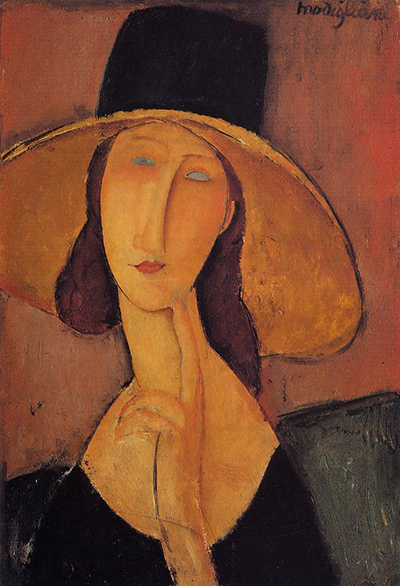
Portrait of Jeanne Hebuterne in a Large Hat, Amedeo Modigliani
Beatrice Hastings
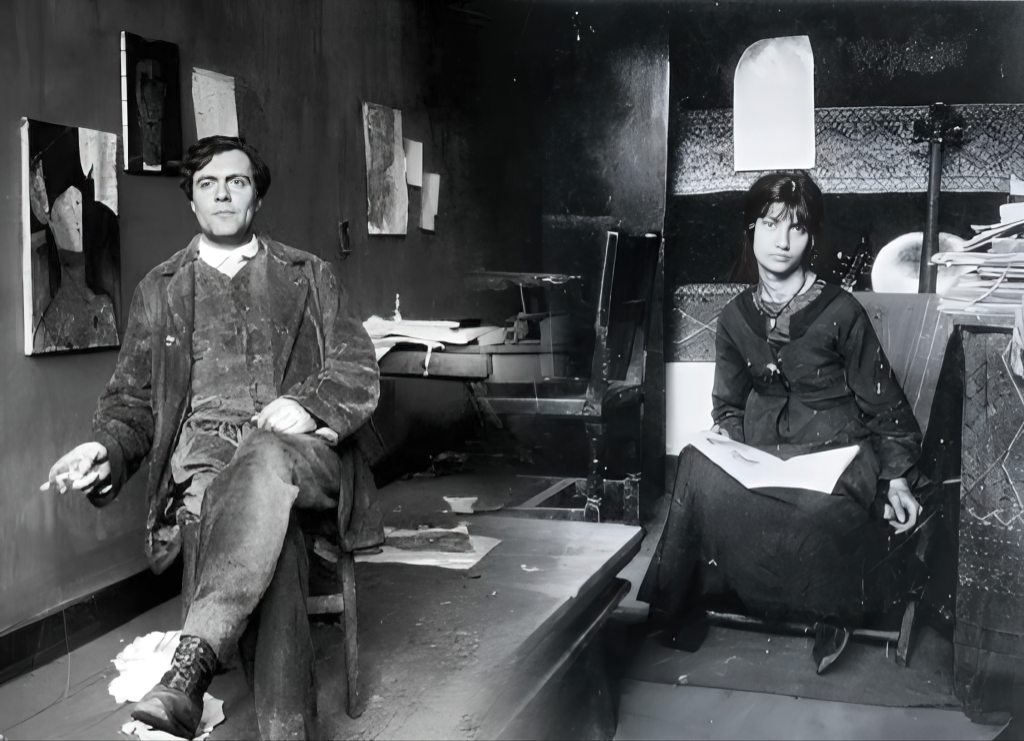
Beatrice Hastings, a poet and critic, was another significant sitter during Modigliani's earlier Paris years. Her portraits are sharper, more angular, and psychologically charged, reflecting their volatile relationship and Hastings' own formidable personality.
She was a strong-willed creative herself, and a whole host of problems that they both experienced during their relationship helped fuel their work, but also ultimately led them to go their separate ways. Beatrice was attracted to the Paris world of flair and creativity, but eventually found Amedeo even too much for her.
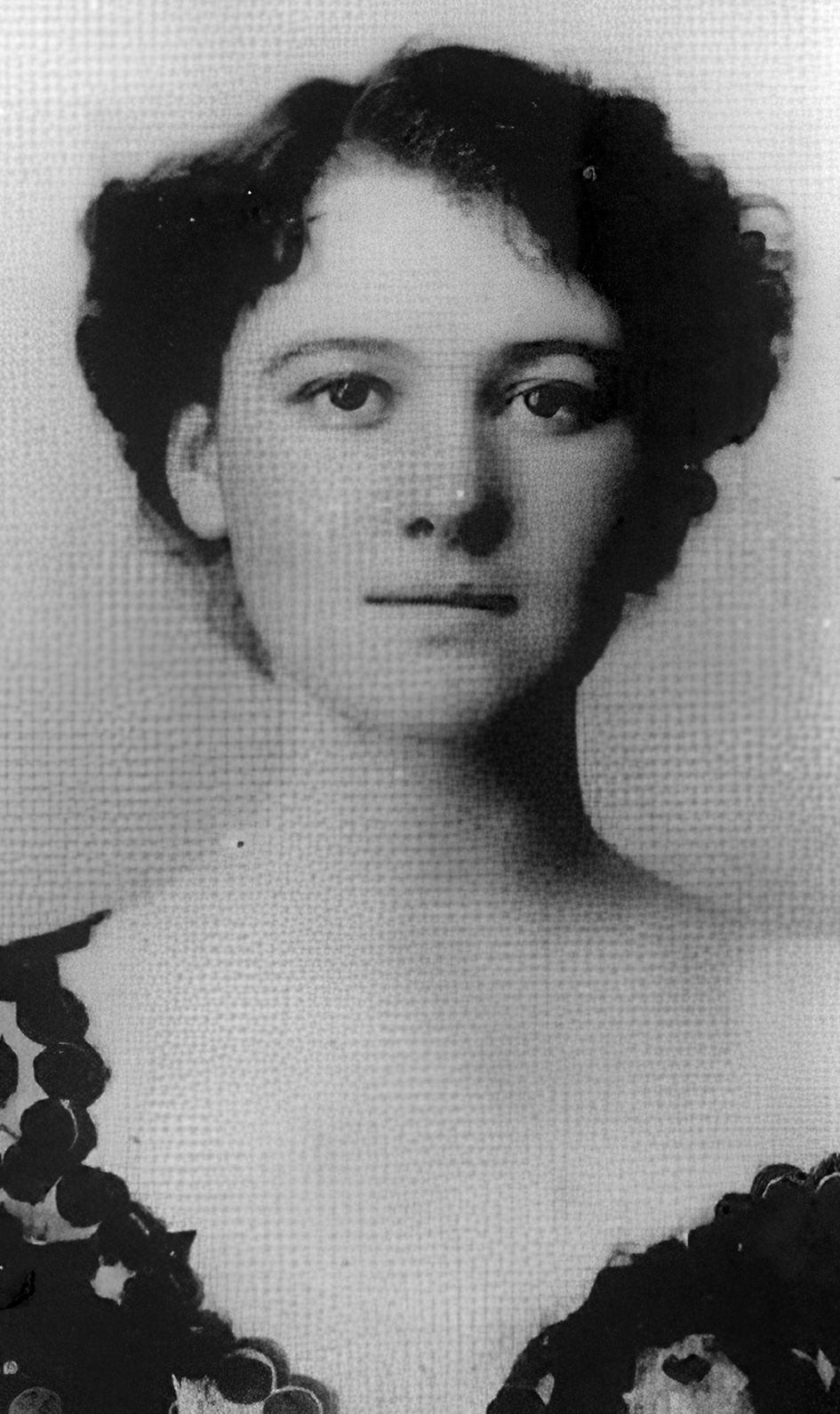
Photograph of Beatrice Hastings
Iris Tree
Iris Tree was an English poet, actress and art model. She enjoyed the bohemian lifestyle in Paris and modelled for Modigliani several times, sometimes nude. Iris is not believed to have had a relationship with Amedeo in the personal sense, though many question marks still remain from this period in their lives.
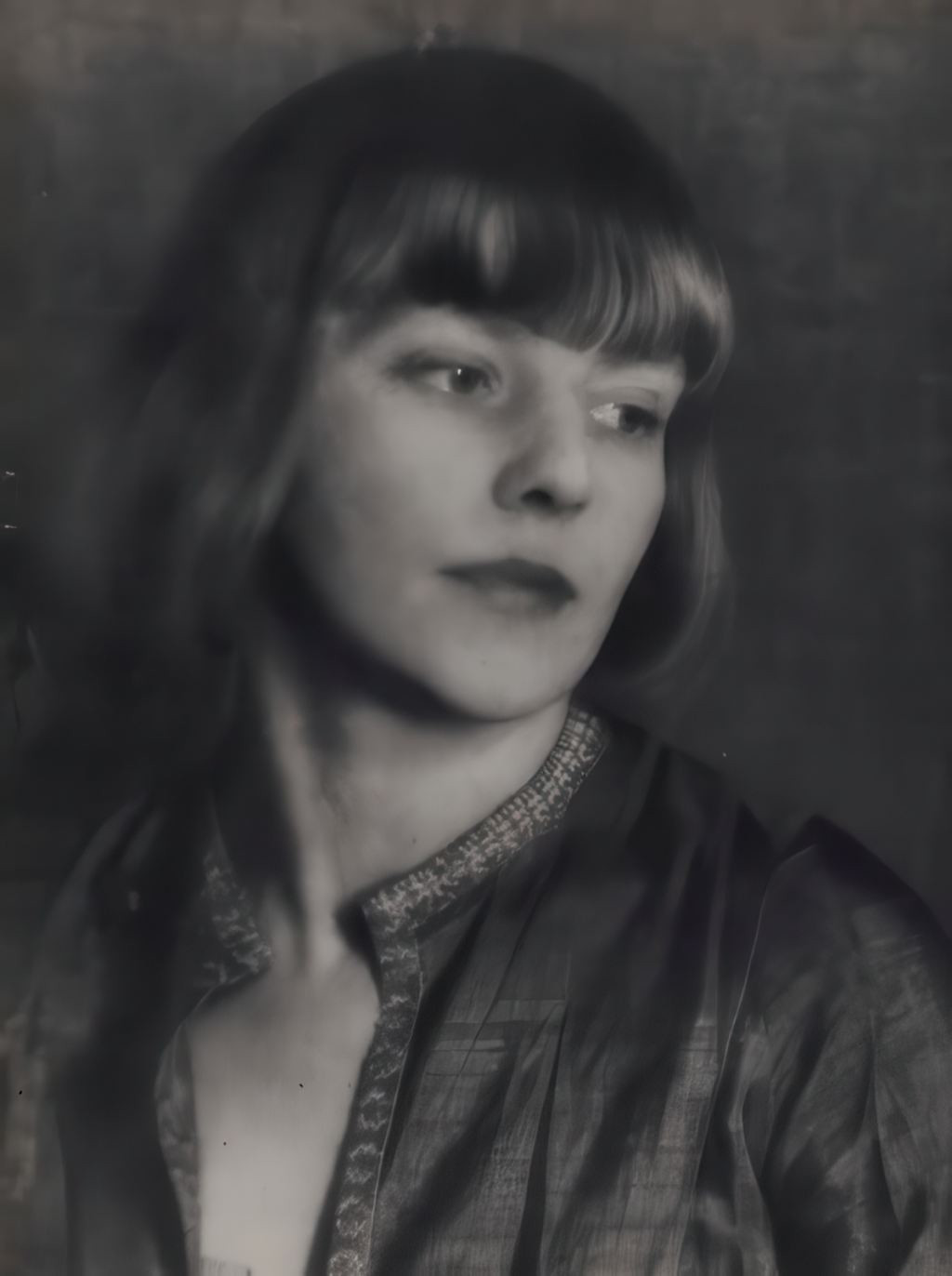
Photograph of Iris Tree
Additional Lovers and Companions
Other figures, such as have been proposed as sitters for certain portraits and nudes, though such identifications remain debated. Where evidence is inconclusive, modern scholarship increasingly acknowledges uncertainty rather than repeating traditional attributions.
A number of detailed surveys of Modigliani's life and artistic output were completed in the 20th century and some have been merged together in more recent times. This gives us a better picture of who can confidently be identified in his portraits, and where there remains considerable doubt.
Friends, Artists and the Montparnasse Circle
Modigliani travelled from Italy in order to live in the main artistic hub of Europe. Paris was flourishing, encouraging new art movements and allowing creative minds to exchange ideas openly. The district of Montparnasse was particularly vibrant, and Amedeo spent much of his time here.
Many of his sitters were fellow painters, sculptors, poets, and intellectuals from the very same community, and his portraits serve as a visual record of his social circle. They also shared his precarious existence in cafés, studios and rented rooms, hoping to one day achieve critical acclaim for their work.
Artists such as Chaim Soutine, Moïse Kisling, and Juan Gris sat for Modigliani, their portraits capturing both camaraderie and tension. Modigliani would feel extra pressure when painting fellow artists, particularly ones he respected such as these. With finances tight for many of them, they would regularly sit for each other, cross over into each other's oeuvre.
Whilst mixing closely with Cubist artists and other avant-garde painters and sculptors, Modigliani was strong enough to forge a unique style which may have been influenced by others, but remained, fundamentally, very much his own. He therefore continued to focus on emotional presence, and stayed entirely true to himself.
The relaxed, casual nature of this Paris community has also led to issues in attributing his work, as well as identifying the subjects in his portraits. Some have been corrected over time, and this challenge continues today.
Dealers, Patrons and Cultural Figures
Dealers and patrons appear within some of Modigliani's portraits as he would take commissions from time to time. They would often be delivered without the same levels of intimacy or atmosphere, perhaps reflecting that the works were a necessary task for financial gain, as opposed to an expression of friendship.
Paul Guillaume
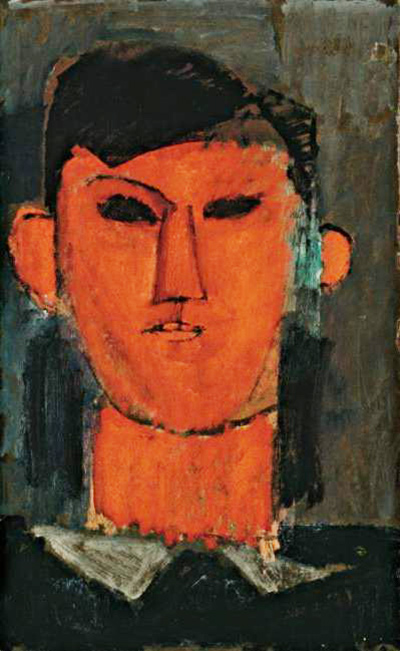
Paul Guillaume, one of Modigliani's strongest supporters, was portrayed with elongated features and measured dignity. Amedeo certainly had an affection for Paul, counting him as a friend who often helped him out of trouble. Guillaume understood Modigliani's artistic style, perhaps as well as anyone, and therefore portraits of him by Modigliani could be freer and entirely in line with how he wanted to work.
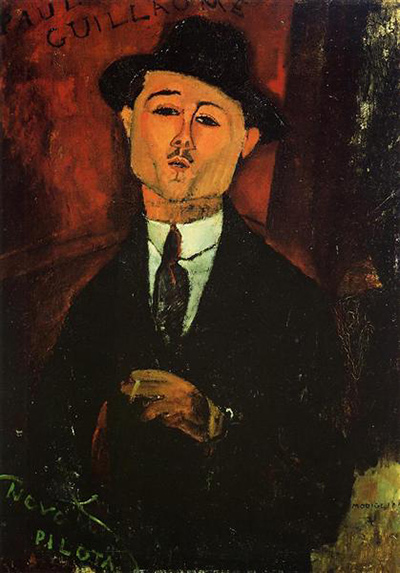
Portrait of Paul Guillaume, Amedeo Modigliani
Professional Models and Anonymous Sitters
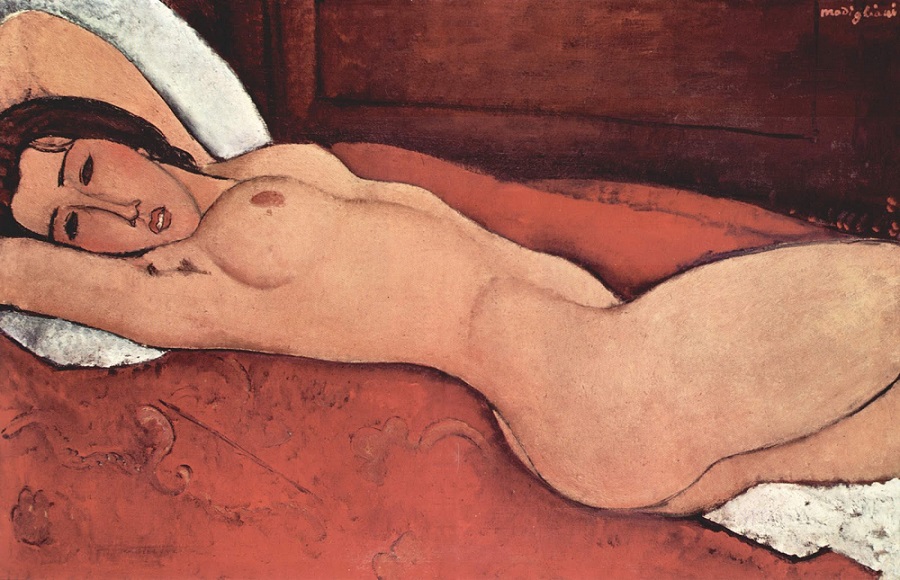
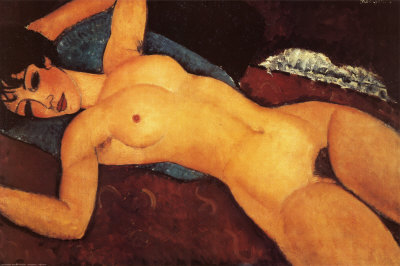
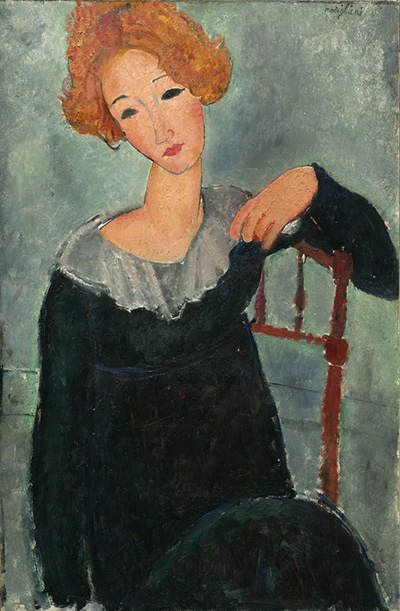
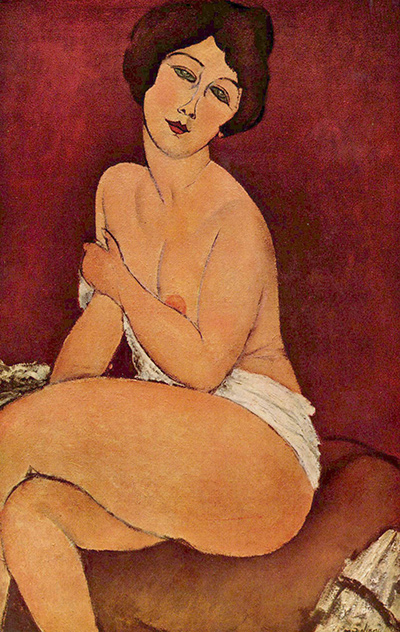
Many of Modigliani's nudes and female portraits were painted from professional models, whose identities were never recorded or later forgotten. In such cases, titles like Seated Nude or Woman with Red Hair replace personal names, though there has still been plenty of discussion and debate around possible identities - the rise of photography around this period has helped us to confidently identify some of these fringes models and sitters, but certainly not all.
Although Modigliani worked best with people he knew, he would always attempt to portray the human in front of him with whatever knowledge of them that he had. Perhaps they would have a relaxed chat first, helping Amedeo to get a feeling for his sitter, or alternatively they may have already met informaly in and around the Paris social circles.
The Role of the Sitter in Modigliani's Style
Modigliani's distinctive visual language developed through sustained engagement with the human figure. His experience as a sculptor influenced how he saw his sitters, encouraging an emphasis on volume, contour and frontal stability. He reduced details, hoping to build an atmosphere of emtion.
He was forced to abandon his sculptures after his health deteriorated and so he chose to bring some of these elements into his two-dimensional work. His elongated features carried over into his portraits, directly reflecting some of his more famous sculptures. He was focused on internal reflection, rather than a sitter expressing wild emotions to the viewer.
These features are not symbolic abstractions but expressions of how Modigliani perceived his sitters emotionally and intuitively, which entirely explains why his best work was of those who he knew best. It was also these which inspired and motivated him the most.
Whilst recent research has determined that Modigliani was a much more considered, planned artist than many initially believed, he would also typically let his emotions run free whilst painting. He worked quickly, allowing his knowledge of the subject to fuse his brushstrokes in an organic manner. This was perhaps influenced by how he would sketch the public in the streets of Paris, using jsut a few strokes of the pencil.
Repeat Sitters and Artistic Trust
Certain individuals appear repeatedly in Modigliani's work, suggesting trust, availability, and mutual understanding were key in how the artist chose his sitters for each painting. Lunia Czechowska, for example, sat for several portraits, each subtly different in mood and emphasis.
These repetitions allowed Modigliani to refine his approach over time. He explored variations in posture, colour and expression whilst remaining true to the subject.
Repeat sitters also reflect Modigliani's preference for familiarity. In a life marked by instability, returning to known faces provided continuity and creative freedom. He became more knowledgeable on the physical features of the sitter in front of him and so could work quicker and more naturslly.
Female Sitters and the Modern Nude
Modigliani's approach to portraiture and figurative art was unusual. He combined classical and modern ideas, but differed in how he captured nudes. He avoided their narrative or allegorical methods, leading to fury from some at his first solo exhibition.
There will always be debate around the use of nudity in art, and how much is purely about art itself. Modigliani himself had considerable integrity in this regard, focusing, as he did, on the inner emotions of his models. His nude series of 1917-1918 remains a key contribution in modern art, even though it was not recognised as such as the time.
Significance
Modigliani did not become distracted by landscape art or still life arrangements, as many others at this time had done. Portraiture and figurative art became his niche, and because of this, the sitters and models that he used became key to his artistic output. Understanding more about his selection process therefore helps us to better analyse his works.
The elongated necks, mask-like faces and often vacant eyes that define his style were not random distortions. They were responses to specific individuals, seen through the mind of this complex character and his belief that painting should reveal inner truth rather than surface appearance.
Sitters and Paintings by Year
The following table lists known sitters painted by Amedeo Modigliani, ordered chronologically by year. Where sitter identities are uncertain or debated, this is clearly indicated.
| Year | Sitter | Painting(s) | Notes |
|---|---|---|---|
| 1908 | Unknown (Jewish Woman) | Jewish Woman (La Juive / The Jewess) | Sitter sometimes identified as Soutine's sister, though this remains unconfirmed. |
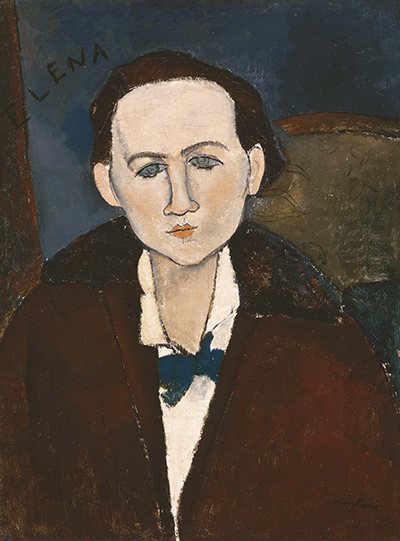
| 1909 | Elena Povolozky | Portrait of Elena Povolozky | Early Paris portrait reflecting sculptural influence. |
| 1910 | Beatrice Hastings |
Beatrice Hastings Seated Portrait of Beatrice Hastings |
Writer, critic, and lover during Modigliani's Montparnasse years. |
| 1914 | Paul Guillaume | Portrait of Paul Guillaume | Dealer and early patron; portrait symbolises emerging modern art economy. |
| 1915 | Lunia Czechowska |
Portrait of Lunia Czechowska Portrait of Lunia Czechowska with a Fan |
Close friend; one of Modigliani's most frequently painted sitters. |
| 1916 | Maude Abrantes | Portrait of Maude Abrantes | British socialite and artist's model. |
| 1916 | Woman with Red Hair | Woman with Red Hair | Sitter unidentified; emphasis on psychological presence over likeness. |
| 1917 | Jeanne Hébuterne |
Jeanne Hébuterne Seated Portrait of Jeanne Hébuterne with Yellow Sweater Jeanne Hébuterne with Hat and Necklace |
Modigliani's companion and most frequently depicted sitter. |
| 1917 | Anonymous model |
Reclining Nude Seated Nude Nu Couché |
Painted for Léopold Zborowski; identities largely unknown. |
| 1918 | Jeanne Hébuterne |
Jeanne Hébuterne with Blue Eyes Jeanne Hébuterne in a Red Shawl |
Later portraits show softer palette and heightened emotional intimacy. |
| 1919 | Jacques and Berthe Lipchitz | Jacques and Berthe Lipchitz | Rare double portrait of close friends within the Paris avant-garde. |
The Legacy of Modigliani's Sitters
The people who posed for Modigliani continue to shape his reputation. Jeanne Hébuterne's tragic story, Paul Guillaume's role as dealer, and the rediscovery of lesser-known sitters all contribute to the evolving narrative of his life and work. There is an incredible story which has inspired several films about Modigliani's life, often just focusing on a small period of his time in Paris.
The huge auction valuations given to his work in the present day ensure that this artist remains in the headlines, allowing us to discover the wild and turbulent life that he led, as well as the different individuals around him who have their own stories to tell - his focus on portraiture helps us to visualise his story in a way that would not be possible with other niches.
Understanding Modigliani's models and sitters is critical to exploring his art. These differing relationships are played on in his work, and help to create a visual timeline of his progress, capturing the ups and many downs of his progress in Paris.
FAQs
References
- Modigliani and his Models
- Modigliani's Painted Nudes: A Technical Study
- Modigliani's powerfully modern portraits