by Tom Gurney
Tom Gurney BSc (Hons) is an art history expert with over 20 years experience
Published on June 19, 2020 / Updated on January 23, 2026
Email: tomgurney1@gmail.com / Phone: +44 7429 011000
This portrait of Paul Guillaume by Amedeo Modigliani was completed in 1915 and today resides at the Musée de l'Orangerie in Paris, France.
Modigliani painted this portrait whilst his friend was in his mid-twenties and would complete a number of other portraits of him in around the same period. Guillame was a keen supporter of modern art and was a respected dealer in Paris, with a good knowledge of the young artists coming through at that time.
Painting Description
Modigliani testifies to this in the title that he gave the work 'New Helmsman', which suggested that his friend and dealer was helping to steer and protect the modern art scene through rocky waters. There were many others in the industry who took the opposite approach, and so his support was highly appreciated.
Modigliani added a Star of David to the top right corner of the painting. He also added the phrase in Latin 'Stella Maris', which translates to 'Star of the Sea', symbolising the connection between the subject and artist.
There is also an ancient Sanskrit symbol in a lower corner of the painting which represents a positive omen with which the dealer served his clients. It is thought that the sitting for the painting was done in a cellar with good lighting.
The cellar contained several bottles of wine which the two friends enjoyed sharing during the sittings. The cellar was located in Paris, where both men were living at the time. Guillaume was a particular supported of the art scene in Paris at the time.
- Artist: Amedeo Modigliani
- Title: Paul Guillaume, Novo Pilota
- Date: 1915
- Medium: Oil on cardboard, mounted on plywood
- Size: 105 cm x 75 cm
- Genre: Portrait
- Subject: Paul Guillaume (1891-1934)
- Significance: Portrait of Modigliani's principal dealer and most important supporter
- Location: Musée de l'Orangerie, Paris, France
Who was Paul Guillaume?
Modigliani's friend, Paul Guillaume came from a poor background. He supported himself by working in a garage. One day, in the middle of a shipment of rubber that was being used to make tyres, was an African mask.
Paul Guillaume was fascinated by the discovery and started to study African art. He went on to have a large collection of African art (which inspired Modigliani's sculptures).
He went on to become a respected Paris-based art dealer and collector who emerged as a significant advocate of modern art around the time of WWI. He had an eye for the future direction of art, promoting lesser known artists such as Pablo Picasso, Chaim Soutine, Giorgio de Chirico, and Amedeo Modigliani.
Clearly, it was no coincidence that both Guillaume and Modigliani shared a passion for African and Oceanic art, with the former encouraging the latter to look into it, just as he had. Amedeo soon developed the same level of interest and this influence spread into his sculptures, and later his paintings and drawings too.
The Legacy of Paul Guillaume
Paul Guillaume died prematurely in 1934, but his influence endured through his collection and through the continued prominence of the artists he supported. His widow, Domenica Guillaume, later played a role in placing works in public institutions, including those that would form the foundation of the Musée de l'Orangerie, which is where the portrait shown in this page now resides.
This portrait, therefore, holds most significance because of the friendship and working relationship between Amedeo Modigliani and Paul Guillaume. Few others were interested in helping the troubled but brilliant artist, and without Guillaume's help, his genius may never have been discovered by later generations.
Paul Guillaume and Amedeo Modigliani
Paul Guillaume's relationship with Modigliani began around 1914-1915, at a time when the artist was increasingly turning away from sculpture and devoting himself fully to painting. Modigliani had previous supporters, but they were not as personable or helpful as Paul. He encouraged Amedeo to focus on portraits and nudes, due to their popularity in emerging markets and tastes. Modigliani was highly creative, but lacked any of the market-sense that could make him successful in a financial sense.
Paul Guillaume served as Modigliani's principal dealer, promoter and commercial supporter. He would lend money to Amedeo when he was struggling, and encourage him to try out certain stylistic ideas when he felt that could be commercially viable. He was a patient, forgiving man who understood the complex mind of his friend, having dealt with many other artists in a similar predicament.
Perhaps their most successful collaboration would be in Modigliani's nude series, an idea originally floated by the dealer. Guillaume was able to connect the troubled character with formal, sometimes stuffy art industry figures and was able to speak both languages. He brought structure to Amedeo's life, at least for a short period, and worked hard to make the most of his talent.
Paul Guillaume in Modigliani Provenance
Most of Modigliani's works during the period of their friendship will have provence with Paul Guillaume early on in its existence. The painting displayed here, Paul Guillaume (Novo Pilota) from 1915 had amongst the most straightforward provenance of any of the artist's work - it passed from Guillaume to his widower upon his death, before eventually making it into the collection of the Musée de l'Orangerie in 1960, where it remains today.
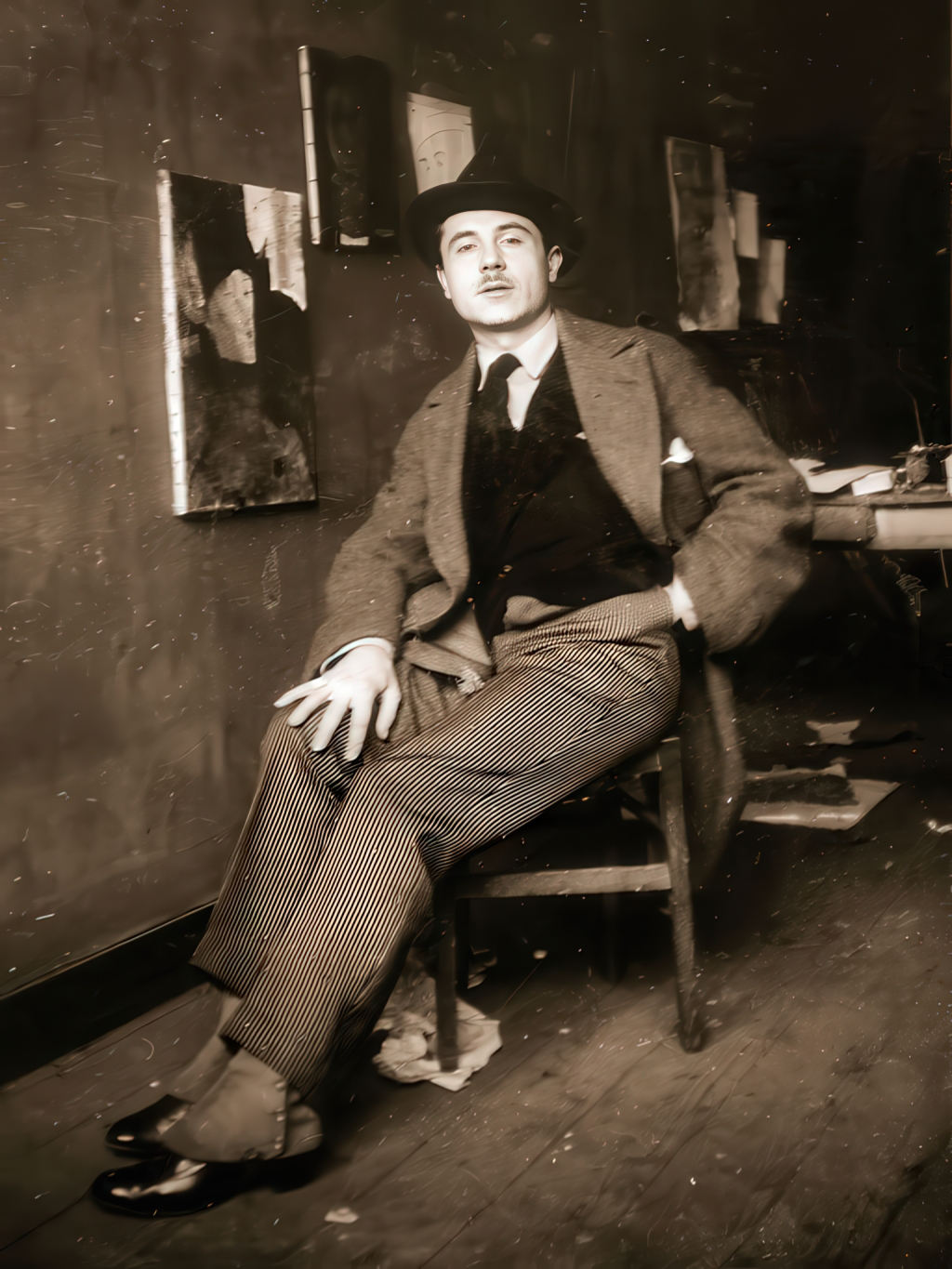
Paul Guillaume in Modigliani's Studio, 13 Rue Ravignan, 1915, Photograph attributed to Amedeo Modigliani
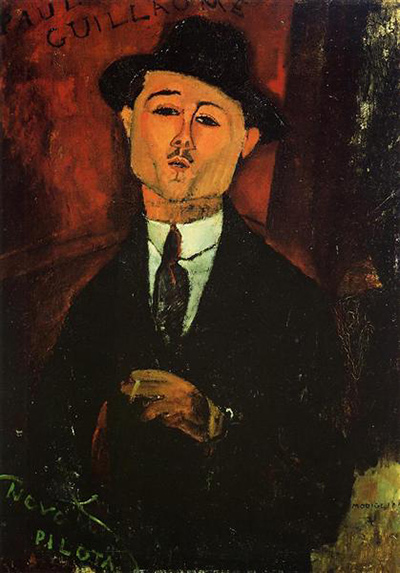
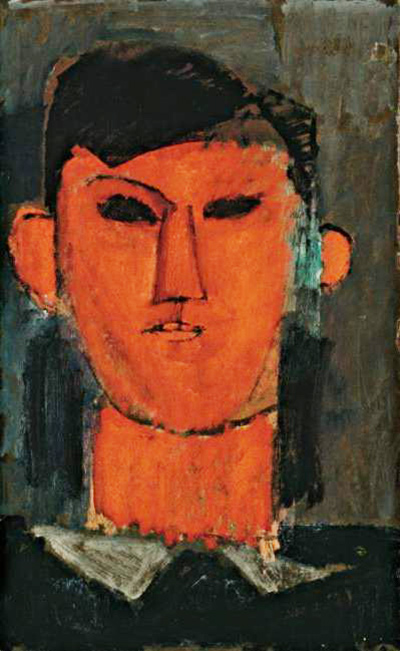
Portrait of Paul Guillaume, 1915, Close up Details, Amedeo Modigliani
Location
Musée de l'Orangerie
Jardin des Tuileries,
75001 Paris,
France
References
- Modigliani - Masters of Art Series, Olaf Mextorf, Prestel, 2020, PP68-69
- Paul Guillaume, Novo Pilota on SecretModigliani.com
- Paul Guillaume, Novo Pilota
- Paul Guillaume: The dealer who made Modigliani move from sculpture to painting
- Alternative Portrait Sold at Christie's Auction
- Alternative Portrait at Toledo Museum of Art
- MoMA Sketch of Paul Guillaume by Modigliani
- The Diary of One Who Disappeared
- Large Image at Wikimedia
- Painting at Musée de l'Orangerie, Paris
- Painting on Google Arts and Culture
- Musée de l’Orangerie - Amedeo Modigliani - A painter and his art dealer
- Symbolic elements in Modigliani's works