


 Buy Art Prints Now
from Amazon
* As an Amazon Associate I earn from qualifying purchases.
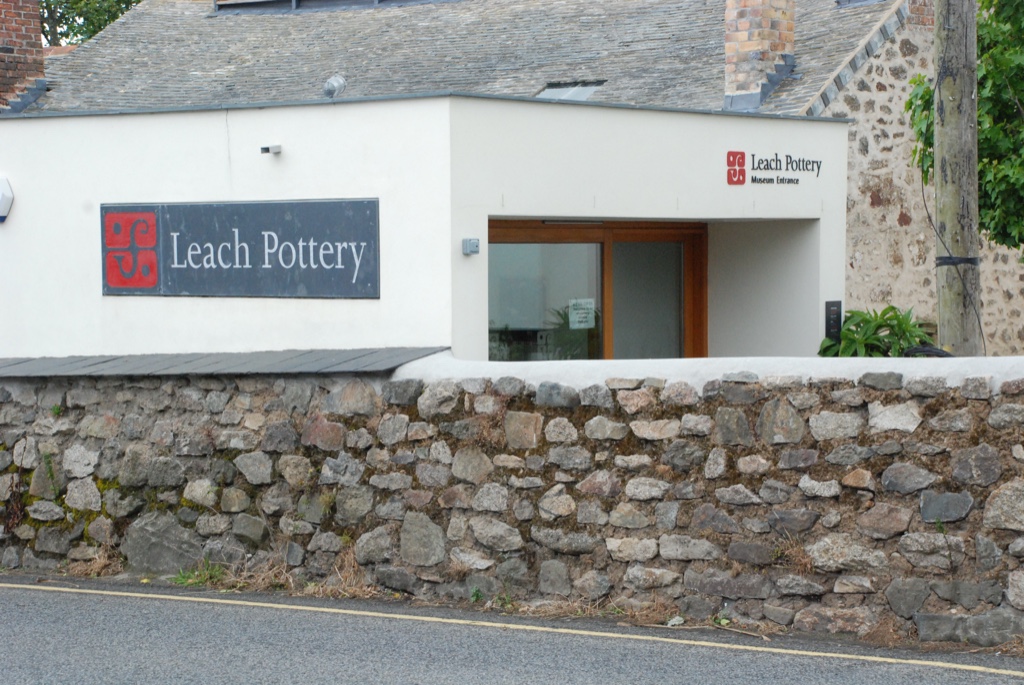
Leach Pottery exterior, 2009. Photo: Jordanhill School D&T Dept, via Wikimedia Commons; CC BY 2.0. Resized for web; no crop.

 by Tom Gurney
Tom Gurney BSc (Hons) is an art history expert with over 20 years experience
Page Created: September 16, 2026 / Page Updated: September 16, 2026
Email: tomgurney1@gmail.com / Phone: +44 7429 011000
Bernard Leach: pots, workshop and ideas
Bernard Leach (1887–1979) was a British potter whose career connected ceramic making with travel, teaching and writing. He and Shoji Hamada established the Leach Pottery in St Ives in 1920. To understand his achievement, begin with the vessel: its weight, rim, surface and relationship to use, not simply its decoration. [1]
This guide follows a small group of documented pots and the collections that preserve his work. It is not a catalogue of everything he made. Museum object numbers matter because several distinct vessels share the modest title Bottle.
At a Glance
- Life1887–1979 [3]
- MediumCeramics, including stoneware [3]
- WorkshopLeach Pottery, St Ives; founded 1920 [1]
- WritingA Potter's Book, 1940 [2]
Bernard Leach in context
Studio pottery
Identifiable movement in the 1920s; continues beyond this windowMingei / folk-craft movement
Term coined 1925; continues beyond this windowBernard Leach
1887–1979Shoji Hamada
1894–1978 · potter and collaboratorSoetsu Yanagi
1889–1961 · writer and collaboratorBottle · V&A CIRC.144-1931
1931Bottle with Abstract Design · Met 60.46
Approximately 1958Bottle · Crafts Council P4
1960s · decade, not exact yearMovement bands show a selected historical window, not the end of a movement. Peer bands show lives, not teaching relationships. Work bands preserve approximate dates; a one-year marker is a display device, not a claim about making time. [2][3][4][10][11]
Contents
- Training and St Ives
- Looking at the pots
- Workshop and writing
- Archives and legacy
- Selected documented works
- Frequently asked questions
- Discussion
- References
Training and St Ives
Born in Hong Kong, Leach studied art in London before returning to Japan. A raku gathering in 1911 prompted his turn towards ceramics; he trained with Kenzan VI, learning forming, brush decoration and firing. St Ives brought that learning into a new material setting. The early pottery struggled with kiln performance, clay and money: cross-cultural ambition did not remove the practical difficulty of making sound pots. [1]
Leach's example belongs within the broader history of studio pottery, rather than at its solitary beginning. The V&A identifies earlier independent makers and describes studio pottery as an established movement in the 1920s. His particular contribution drew on East Asian ceramics and English slipware. Michael Cardew, Norah Braden and Katharine Pleydell-Bouverie trained at St Ives, but their subsequent work should not be treated as interchangeable with his. [2]
Looking at the pots
The V&A documents a 1931 stoneware bottle with white glaze and brown painting, CIRC.144-1931. Its record provides a precise starting point for comparison, not a title that identifies every Leach bottle. [2]
Bottle with Abstract Design, approximately 1958, is a different object in the Metropolitan Museum of Art, numbered 60.46. It combines stoneware, incised design, slip and glaze and stands 38 cm high. The museum connects its blue glaze and loosely drawn decoration to Leach's interest in Chinese Song ceramics and Japanese folk pottery. [3]
As a looking exercise, follow the museum's photograph from foot to shoulder to neck. Ask where the body seems to expand and where the opening restrains it. Then consider how a drawn line behaves on a curved surface: it must be encountered around an object rather than read all at once like an illustration. These are interpretive questions, not evidence that the pot has a particular symbolic subject. The record's approximate date should remain approximate; a later acquisition date is not its year of manufacture.
The Crafts Council's Bottle, P4, dates to the 1960s. Its description specifies a black glaze with brown stripes, reduced stoneware, tenmoku glaze and combed decoration. The body was press-moulded and the top thrown. At 19 cm high, it is substantially smaller than the Met vessel. Those construction details prevent the easy assumption that every Leach pot was formed entirely on the wheel. [4]
For this object, compare the narrow base and opening with the intervening body, then look at how the stripes articulate its surface. The catalogue's technical vocabulary identifies processes; it does not, by itself, explain what the form feels like in the hand. Nor should a screen photograph be mistaken for a complete experience of glaze, balance or scale. Combining a photograph with dimensions and a construction record offers a more careful first encounter than judging a pot as a flat decorative image.
Workshop and writing
A studio pottery can make individual pieces and repeatable useful wares. David Leach helped reorganise production at St Ives, and the first Standard Ware catalogue appeared in 1946. Bernard's career therefore cannot be separated entirely from the workshop and other people's skilled labour. [1]
A Potter's Book, published in 1940, carried his ideas beyond the pots. The V&A describes a combination of practical instruction and an argument about the potter's creative life, with an international influence. Writing gave readers a way into workshop practice, although a persuasive account of making should not be confused with a neutral history of every ceramic tradition. [2]
A humbler document makes the career tangible in a different way. Crafts Council archive item AM185 records a Leach Pottery invoice dated 30 June 1972. It lists six Leach objects, five acquired for the Crafts Advisory Committee collection, and connects them with the exhibition British Potters and its Hamburg destination. Such paperwork helps reconstruct circulation and acquisition. It also shows why a history of a pot needs more than its appearance: invoices and exhibition records can distinguish making, sale and later public ownership. [8]
Archives and legacy
The Crafts Study Centre holds a gift of 85 Leach pots together with his source collection. It also preserves work by Pleydell-Bouverie, Cardew and Braden, and by Lucie Rie and Hans Coper. These holdings invite comparison rather than a single line of descent. The Centre explicitly describes its online maker displays as curated selections; absence from a web selection is not proof that a work does not exist in the collection. [6]
Leach also gave the Centre diaries, photographs, manuscripts, papers and drawings during the 1970s. Later additions include Alan Bell's material and letters to Laurie Cookes from Leach's 1930s Japanese travels. Its archive catalogue is a route into the documentary record, not a substitute for examining individual documents. A manuscript, letter and finished published statement may answer different questions about an artist's developing position. [5]
The Centre's wider collections place objects beside correspondence, catalogues and working notes. Makers' collections preserve things assembled for inspiration and study. This distinction is essential for Leach: a historic pot he collected is not automatically a pot he made. Read authorship, provenance and object numbers before attributing a vessel, and keep a maker's own account in conversation with material evidence. That approach makes his legacy more interesting than a simple label of East meeting West. [7]
The Leach Pottery continues as a studio and museum. For visits, use its current official information rather than treating an historical overview as a display list or opening-hours guide. [9]
Selected documented works
Three selected museum-recorded vessels, not an exhaustive census or catalogue raisonné. Titles include collection object numbers. The references below supply the records; no artwork subpages are implied.
| Name | Date | Medium |
|---|---|---|
| Bottle · V&A CIRC.144-1931 | 1931 | Stoneware; white glaze and brown painting |
| Bottle with Abstract Design · Met 60.46 | ca. 1958 | Stoneware; incised design, slip and glaze |
| Bottle · Crafts Council P4 | 1960s | Reduced stoneware; tenmoku glaze, combed decoration |
Frequently Asked Questions
He trained in visual art, but this guide focuses on his career as a potter, workshop founder and writer. His ceramic works are vessels, not paintings. [1]
No. It contains three documented museum objects. It is a selected known-work directory, not an exhaustive census or catalogue raisonné.
Discussion
What changes when a pot is considered as an object to hold and use, rather than a flat image?
Reader Insights are prompts for discussion, not quotations from visitors or verified reader testimony.
Reader Insights
Compare the Met and Crafts Council bottles through their recorded heights and construction. Which differences are easy to miss in photographs?
How might workshop production complicate a history centred on one famous maker?
What could a letter or invoice reveal that a finished vessel cannot?
Join the Conversation
Share an observation or question. When identifying a pot, include its collection and object number; do not post personal information.
References
- Leach Pottery: History, accessed 16 September 2026.
- V&A: Studio Pottery — an introduction, accessed 16 September 2026.
- Metropolitan Museum of Art: Bottle with Abstract Design, 60.46, accessed 16 September 2026.
- Crafts Council: Bottle, P4, accessed 16 September 2026.
- Crafts Study Centre: Papers and Books of Bernard Leach, accessed 16 September 2026.
- Crafts Study Centre: Ceramics, accessed 16 September 2026.
- Crafts Study Centre: About our collections, accessed 16 September 2026.
- Crafts Council: Leach Pottery invoice, AM185, accessed 16 September 2026.
- Leach Pottery: About us, accessed 16 September 2026.
- Japan Folk Crafts Museum: History and Soetsu Yanagi, accessed 16 September 2026.
- Japan Folk Crafts Museum, Osaka: Shoji Hamada biography, accessed 16 September 2026.