 by Tom Gurney
Tom Gurney BSc (Hons) is an art history expert with over 20 years experience
Email: tomgurney1@gmail.com / Phone: +44 7429 011000
The Garzadori altarpiece in Vicenza
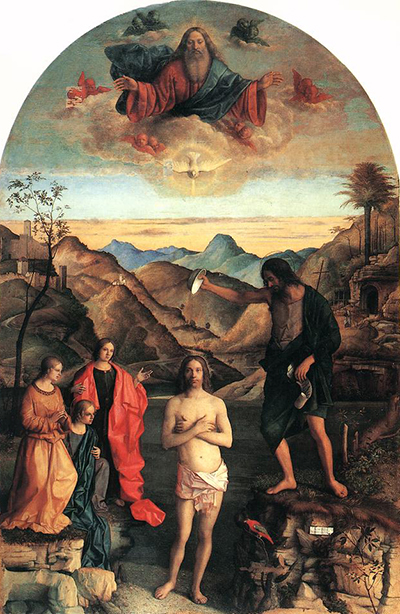
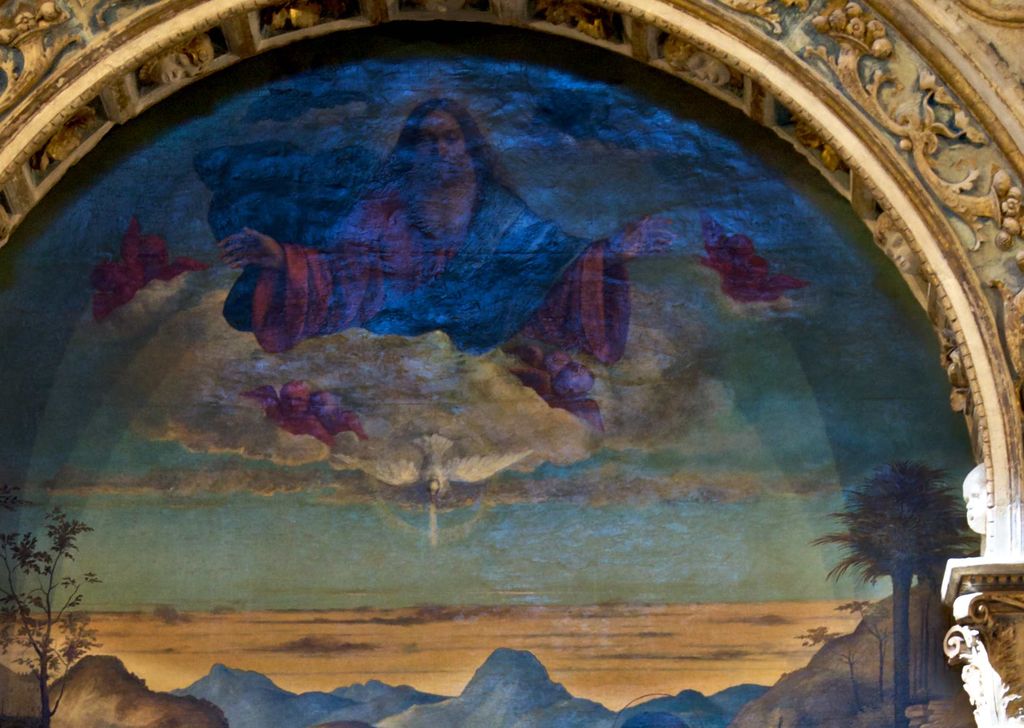
Giovanni Bellini’s Baptism of Christ rises above the Garzadori altar in the Dominican church of Santa Corona in Vicenza. At the centre, Christ crosses his arms and looks out at the viewer as John the Baptist reaches from a ledge to pour water over his head. The landscape opens behind them into a river valley and a distant line of mountains. High in the curved top of the picture, God the Father appears above the dove of the Holy Spirit. The tall panel, about four metres high, still occupies the marble setting for which it was made in the first decade of the sixteenth century. [1] [2] [3]
At a Glance
- ArtistGiovanni Bellini
- DateEarly sixteenth century
- MediumPaint on a wooden panel
- LocationSanta Corona, Vicenza
The work in Bellini’s career
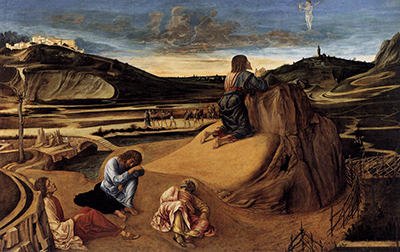
The Agony in the Garden
c. 1458–60Presentation at the Temple
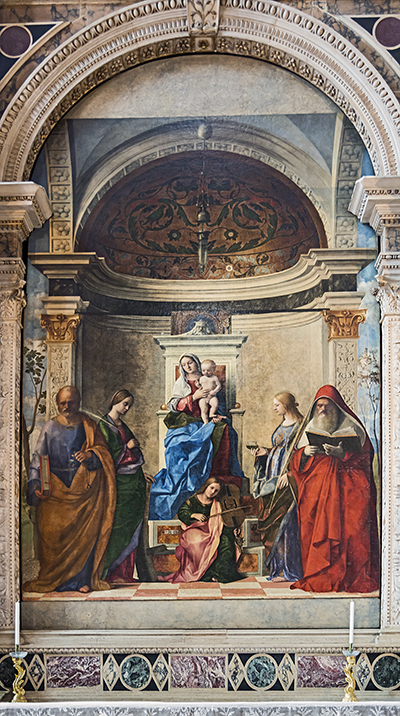
c. 1475The Garzadori altarpiece in Vicenza
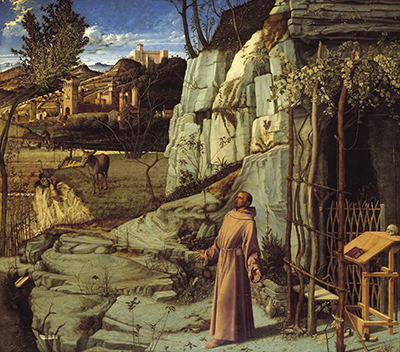
Early sixteenth centurySt. Francis in the Desert
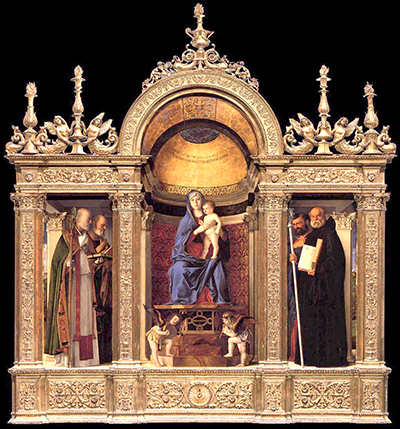
Late 1470sFrari Triptych
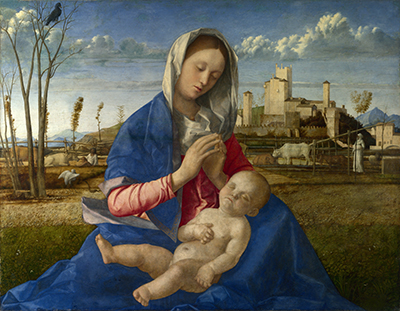
1488Madonna of the Meadow
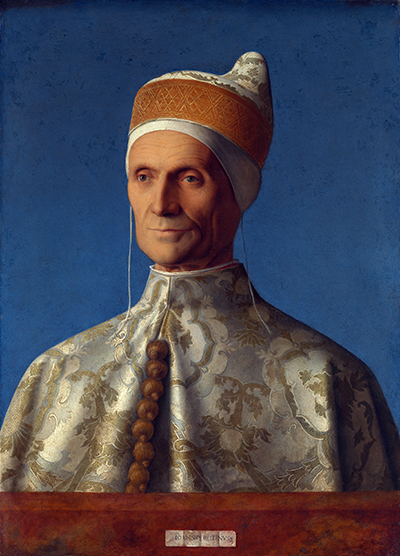
c. 1500–05Doge Leonardo Loredan
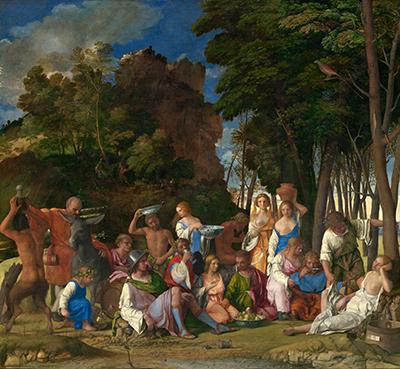
c. 1501–02The Feast of the Gods
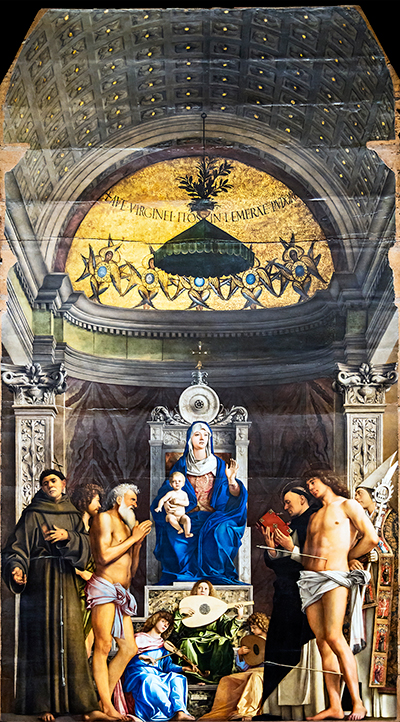
Bellini’s signed date 1514The Garzadori altar at Santa Corona
The patron, Battista Graziani Garzadori, was a Vicentine textile merchant. On pilgrimage to the Holy Land, he vowed to dedicate an altar to John the Baptist, his name saint. In 1500 he obtained a site in the north aisle of Santa Corona. An inscription recorded on the nave piers links the chapel dedication to his safe return from Jerusalem. In 1502 the bishop granted him permission to rebury two of his children at Santa Corona, a document that reveals the family’s stake in the chapel beyond the original act of thanksgiving. [4] [5]
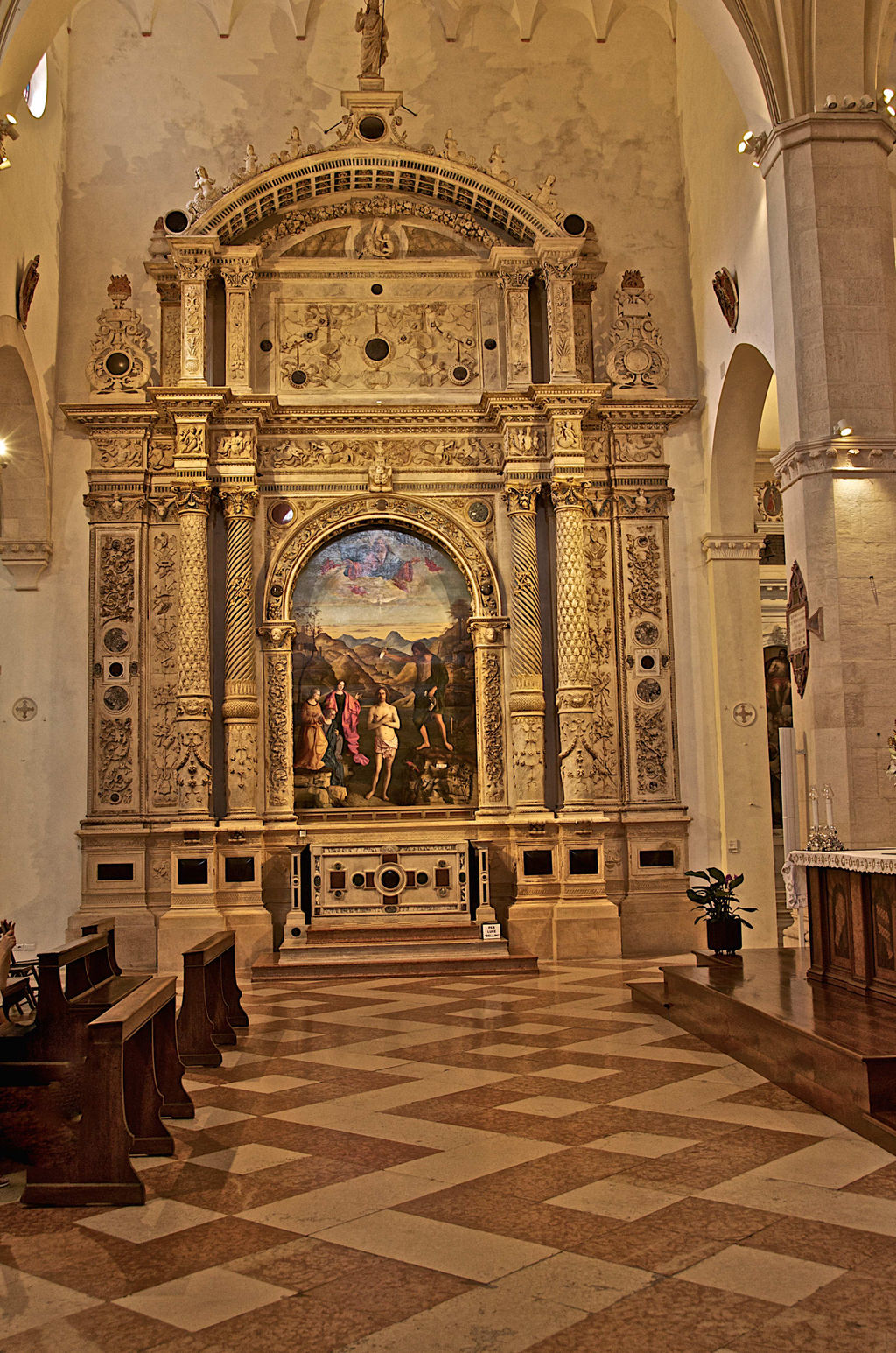
The commission came at a moment when the Dominicans were reorganising the church’s interior. As art historian Joanne Allen has shown, the friars’ choir moved out of the upper nave into the enlarged east end. With the nave opened up, a side altar of this size could be seen across the church. From near the middle of the nave, a viewer can take in the breadth of the stonework and the vertical line that runs from the altar table through Christ to the top of the panel. The painting’s position gives its most important figure a direct line of sight to people gathered in the body of the church. [1] [5] [6]
Look at the whole altar and the scale becomes clearer. Fluted and spiralling shafts, marble discs and relief ornament rise on either side of the painted scene. The carved arch closes around the sky, and another, broader arc above it crowns the whole monument. At the bottom, the patterned altar front brings this structure back down to the level at which a priest would have celebrated Mass. The Musei Civici attributes the stone altar to Rocco da Vicenza. Allen records a workshop attribution to Bernardino da Como and Tommaso da Lugano, with Rocco as a possible contributor. Both attributions concern the architectural surround. [1] [5] [6]
Christ, the Baptist and the three attendants
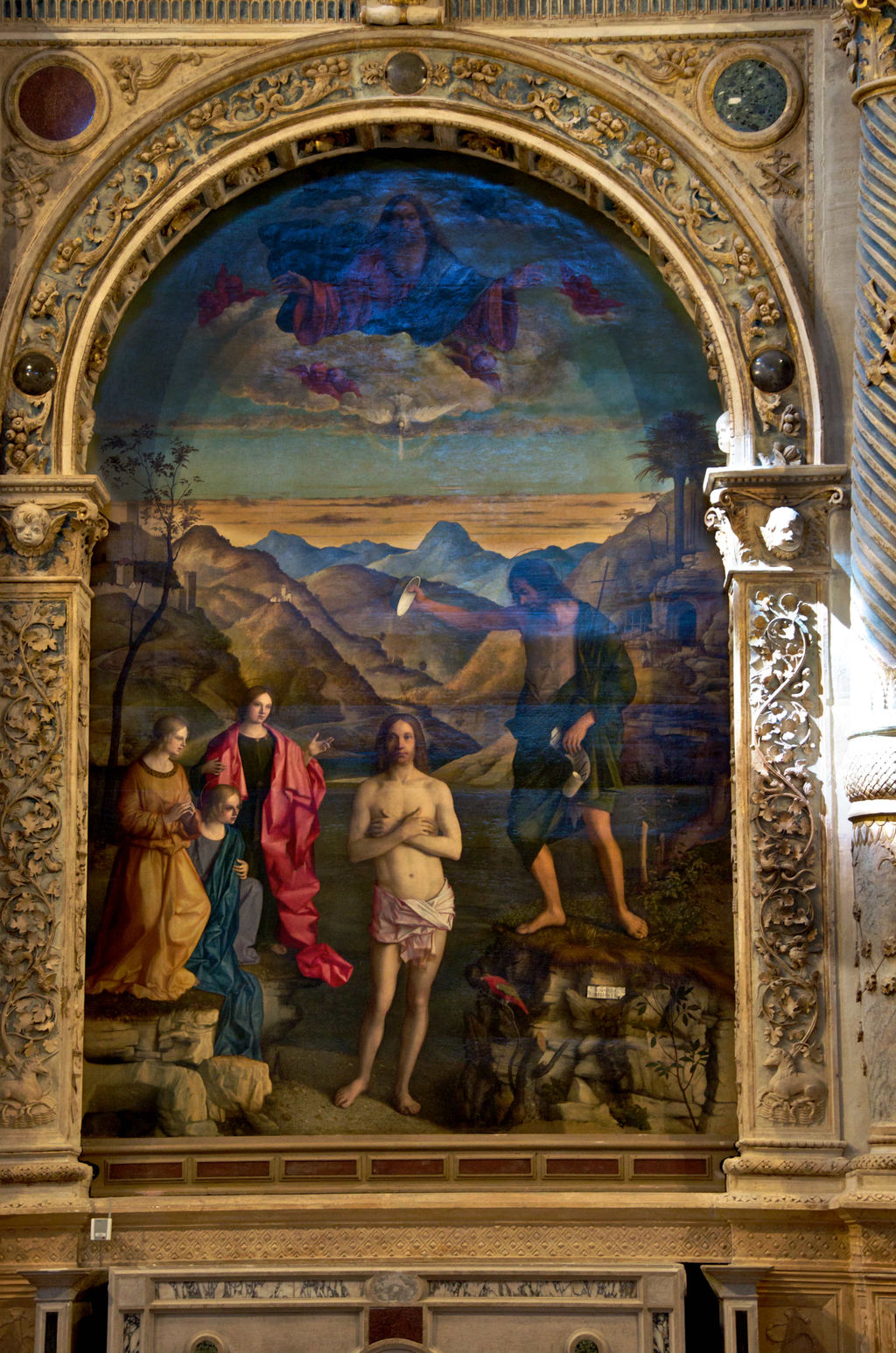
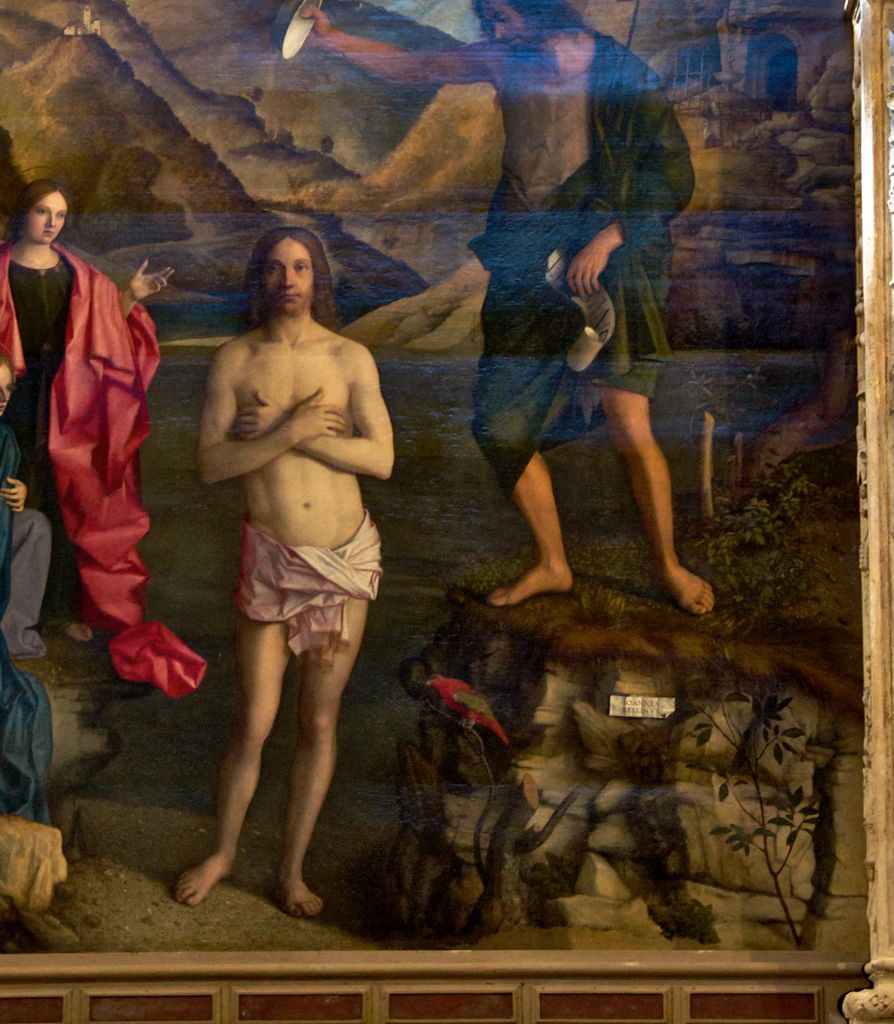
John stands on the viewer’s right. His feet are planted on uneven ground, and his torso inclines as he stretches his arm out. The pale interior of his tilted bowl makes the small vessel easy to pick out against the distant hills. Christ stands almost frontally, his weight slightly shifted and his face turned outwards. His hands reach across to opposite sides of his chest. A comparison with Cima da Conegliano’s earlier Baptism of Christ, still in San Giovanni in Bragora in Venice, makes the gesture easier to see. Cima joins Christ’s palms in prayer. Bellini spreads the arms across the chest, giving the body a closed, still bearing as John leans in. [2] [5] [7]
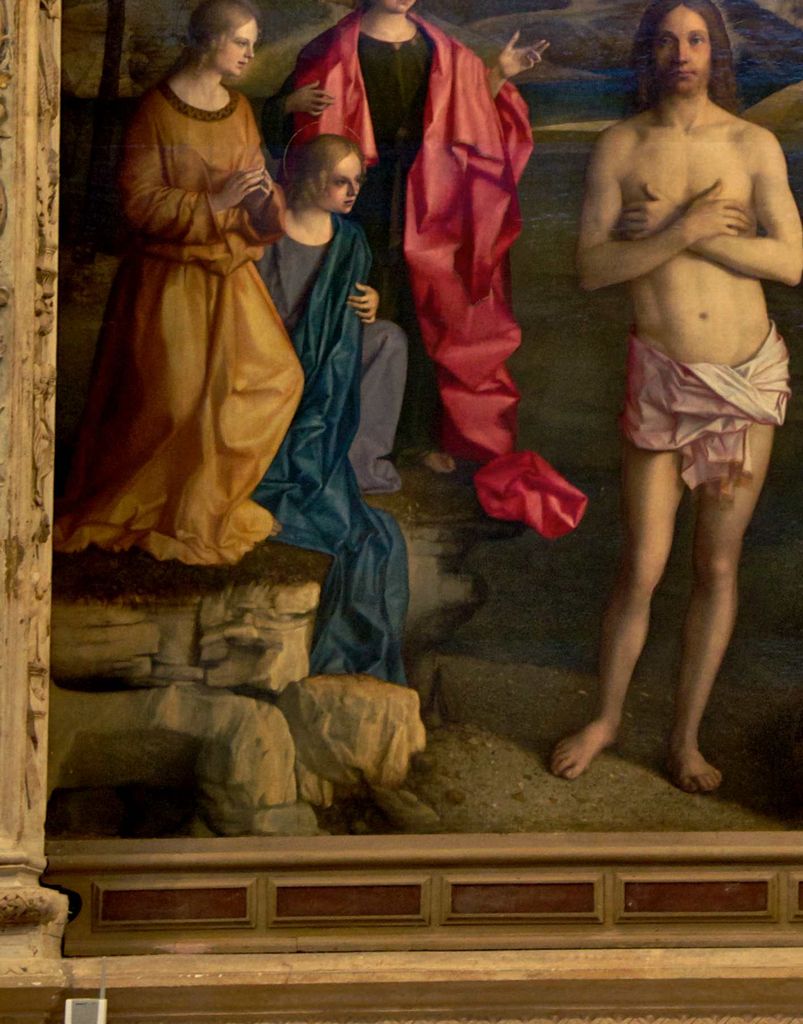
The three attendants on the viewer’s left occupy different levels of the bank. One in blue is set low, a figure in gold turns inwards, and the highest stands with a red mantle gathered around her and one hand raised. The fabric drops in folds almost to the ground, supplying broad passages of colour beside Christ’s bare torso. The civic museum’s guide allows two readings of the group. The women can recall the angels traditionally placed beside the baptised Christ, or stand for Faith, Hope and Charity. The painting gives them similar tasks as witnesses while varying their positions and responses. [2] [3] [6]
Follow the right bank below John’s feet and two details come into view among the rocks. A little parrot perches against the shadow, and a pale painted slip bears Bellini’s signature. The bird’s bright plumage gives it a presence out of proportion to its size. Its meaning has been read variously. The civic museum’s object description connects it with the Passion, while its large-print guide associates it with Mary and purity. These readings suggest how a viewer might move from the visible bird to other parts of the Christian story. The signature has a different function. It places the painter’s name low in the scene, where it can be read on approaching the panel. [2] [3] [6]
The Jordan and the light over the valley
The river opens a path from the foreground into the distance. Its banks take the eye between dark rocks towards slopes that overlap in successive bands. Tiny buildings help measure the distance, while the mountains lose definition and turn cooler towards the horizon. A thin tree on the left marks the step from nearby ground into the valley. Its branches are distinct against the sky, where the far ridge reads as a single blue shape. At Christ’s feet the edge of the water is subdued. His pale feet and the small stretch of ground immediately below them hold the eye close to the figure even as the river draws it back into the landscape. [2] [6]
From the lit bowl, the eye can move down to Christ’s face or up to the dove. The valley’s horizontal bands give these upward and downward movements a stable background. The art historian Paul Hills, as discussed by Allen, observed that the nearby figures are lit from the viewer’s right while the far landscape is lit from the left. The dark hillside behind Christ makes his face and the rays around his head easier to distinguish. In the church, Allen proposes, the lighting across the foreground could have seemed to come from the windows of the recently rebuilt apse. [5] [6]
The baptism and the Holy Thorn
Santa Corona was founded to house a thorn venerated as a relic of Christ’s crown. Allen connects the altarpiece’s focus on Christ’s head with a sermon from the church’s Monumenta Reliquiarum. The sermon compares the water of the baptism with the blood shed when Christ was crowned with thorns. For a viewer familiar with those words, the bowl poised over Christ’s head could recall the crown to come. The argument depends on the traditions of this church and on where Bellini directs the eye. The painted act remains John’s baptism in the Jordan. [1] [5]
The altar also gives the crossed arms a possible meaning beyond the immediate action. Art historian Eunjin Chung reads the posture, the water and the heavenly light together as references to baptism, death and the Eucharist. Christ’s arms can then suggest a body prepared for burial, even though he is standing and looking back at the viewer. The connection matters in a chapel with a family burial history and an altar used for Mass. The posture does several things at once. It concentrates attention on Christ’s body, sets his stillness against John’s movement and gives viewers room to connect one moment in Christ’s life with another. [5] [8]
Date, attribution and the restored panel
The Italian heritage catalogue dates the painting after 1500 and before 1510. Vicenza’s municipal account gives 1500–02, while the civic museums’ large-print guide uses 1502–05. The year 1500 belongs securely to the chapel grant and dedication. The wooden panel is documented in the civic museums’ educational material and the conservation history. Giovanni Carlo Federico Villa’s account for RAI describes tempera and oil on wood, while Allen’s illustration caption lists oil on wood. These descriptions leave the exact use of the binders open. The state catalogue’s canvas entry conflicts with the evidence of the surviving wooden support. [3] [5] [9] [10] [11] [12]
The signature and present civic museum attribution identify Bellini as the painter. The breadth of the red mantle prompted Edoardo Arslan to propose a contribution by Giorgione, an attribution still presented as a possibility in the civic museum’s account. A different hand can be documented in the picture’s later history. An 1839 restoration contract cited by Allen called for extensive reworking of the figure of God the Father. The upper figure’s present appearance consequently owes something to a documented intervention centuries after the painting was made. [2] [5] [13]
A further decision concerned the support itself. In 1934 the Steffanoni restorers proposed transferring the paint from the wood to canvas. Matilde Cartolari’s study of the surviving records shows that Mauro Pellicioli favoured consolidation, keeping the paint on its existing support. The municipal conservation account records further work by Ottorino Nonfarmale in 1978 and Alessandra Cottone in 2007. It was shown in a climate-controlled case at the 2008–09 Bellini exhibition at the Scuderie del Quirinale in Rome and returned to Santa Corona after work on the church in 2012. [14] [15]
The heritage authority authorised a new intervention on both the painting and the marble altar in 2021. Conservator Egidio Arlango addressed unevenness in the colour and tone of the painted surface, while the marble surround received maintenance. The city presented the restored ensemble at Santa Corona in May 2022. It remains above the altar on Contrà Santa Corona. The church is where the painting’s scale, the height of its stone surround and the sightline across the nave can be taken in together. [1] [15] [16]
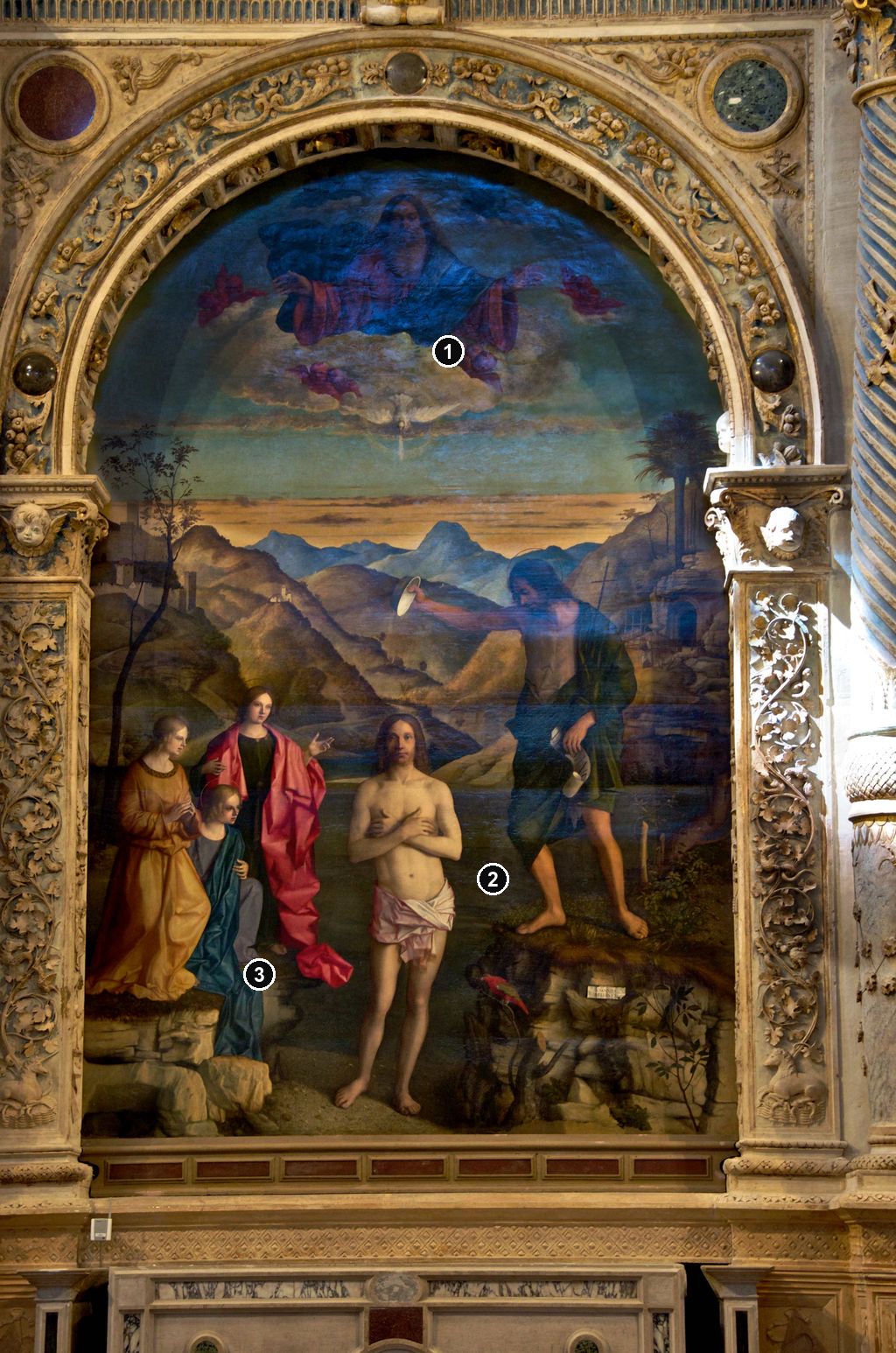
Annotated Details from Baptism of Christ at Santa Corona
Numbered overview and cropped details also licensed under CC BY-SA 4.0. Photograph Caba2011 via Wikimedia Commons. Image source. CC BY-SA 4.0.
Details from BAPTISM OF CHRIST AT SANTA CORONA
Read the vertical painting from the descending light to the clearing beside the Jordan.
The upper opening
The arch follows the upper shape of the painted sky. The bright opening above Christ gathers the clouds around the heavenly figures.
Christ and John
Christ stands before the edge of the water. John leans in from the right as the movement of his arm bridges the space between them.
The witnesses at left
The angels cluster near the water, and folds of red and ochre catch against the shadowed bank.
Related reading
Artworks directory
Discussion
Look again at the images and ideas explored in Baptism of Christ by Giovanni Bellini. These editorial prompts invite your observations.
Reader Insights
How does the architecture of the altar guide you through the painting vertically?
Where would you place yourself in relation to the figures and the painted river?
Where does the colour of the angels’ clothing lead your eye across the riverbank?
Join the Conversation
Share a detail, comparison or question about Baptism of Christ by Giovanni Bellini below.
References
- Musei Civici di Vicenza, Chiesa di Santa Corona. View source.
- Musei Civici di Vicenza, Il Battesimo di Cristo, accessible object description. View source.
- Musei Civici di Vicenza, Chiesa di Santa Corona, large-print guide, pp. 9–10. View source.
- Città di Vicenza, return of the Fogolino frescoes to Santa Corona, including the Garzadori commission. View source.
- Joanne Allen, ‘Giovanni Bellini’s Baptism of Christ in its visual and devotional context’, Renaissance Studies 27 (2013), pp. 681–704. Full text. View source 1. View source 2.
- Caba2011, Wikimedia Commons photographs of the painted panel and the Garzadori altar in the nave, CC BY-SA 4.0. View source 1. View source 2. View source 3.
- Chorus, Chiese del Patriarcato di Venezia, Cima da Conegliano’s Baptism of Christ. View source.
- Eunjin Chung, ‘Baptism as Eucharist’, Art History and Visual Culture 10 (2011), pp. 52–73, Korean and English abstracts. View source.
- Catalogo Generale dei Beni Culturali, Battesimo di Cristo, national record 0500074256. View source.
- Città di Vicenza, public interpretation project for Bellini’s Baptism of Christ, 14 November 2023. View source.
- Giovanni Carlo Federico Villa for RAI Radio 3, Battesimo di Cristo. View source.
- Città di Vicenza, Musei Civici education video for the Baptism of Christ. View source.
- Edoardo Arslan, ‘Bellini e Giorgione’, Bollettino d’Arte (1962), pp. 54–55. View source.
- Matilde Cartolari, ‘Mauro Pellicioli e i restauri belliniani alle Gallerie dell’Accademia (1933–1939)’, pp. 272–73. View source.
- Ministero della Cultura, authorisation to conserve the Garzadori altar and Bellini altarpiece, 28 May 2021 and Città di Vicenza, completion of conservation, 25 May 2022, city release republished by ViPiù. View source 1. View source 2.
- Musei Civici di Vicenza, visiting information for Santa Corona. View source.