


 by Tom Gurney
Tom Gurney BSc (Hons) is an art history expert with over 20 years experience
Published on 16 September 2026 / Updated on 16 September 2026
Email: tomgurney1@gmail.com / Phone: +447429011000
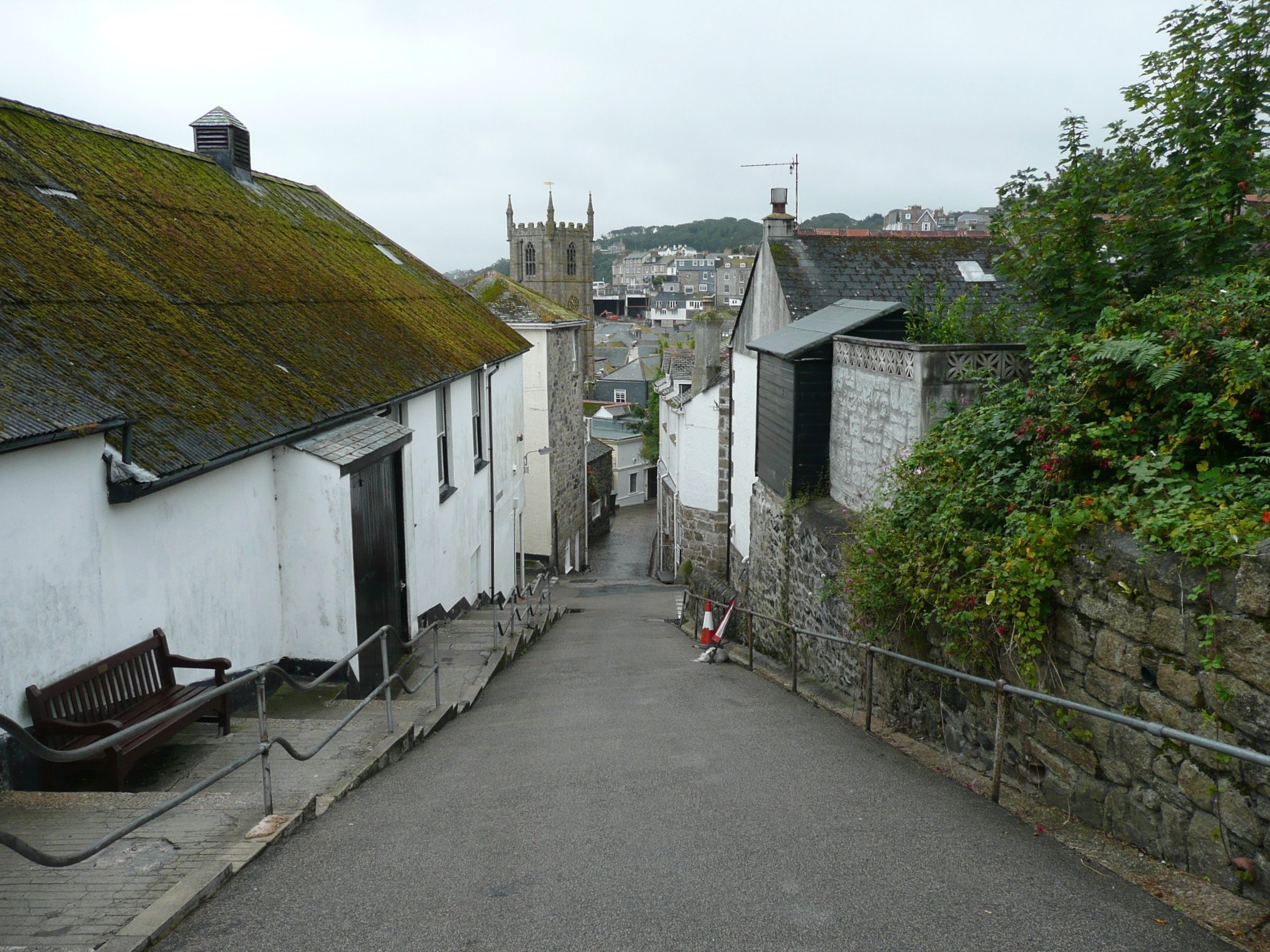
Photograph by John Stratford via Wikimedia Commons · CC BY 2.0 · Image source
Sculpture in the place where it was made
The Barbara Hepworth Museum and Sculpture Garden in St Ives offers an encounter with an artist through her working environment. House, studio, garden and sculpture form a connected experience. This is not a retrospective arranged in a neutral gallery: the spaces help explain the scale of the work, the materials Hepworth handled and the importance of looking at sculpture in the open air.
The museum is at Trewyn Studio on Barnoon Hill, close to the centre of St Ives. Tate runs it separately from the larger Tate St Ives gallery. It rewards a slower visit than its modest size might suggest. A sculpture can change markedly as you move around it, and a small alteration in viewpoint may bring a hollow, a planted boundary or another work into an entirely new relationship.
Finding Trewyn
Hepworth moved to Cornwall with Ben Nicholson and their children in 1939. She acquired Trewyn Studio in September 1949 and made it her permanent home from December 1950 until her death in 1975. The acquisition gave her a studio, yard and garden within the town, at a time when larger projects and a growing international reputation were making demands on her practice.
The estate chronology records that artists including John Wells, Denis Mitchell and Terry Frost were among her early permanent assistants. Their presence is a reminder that sculpture can involve collaborative labour without losing the artist's authorship. Large blocks, plaster prototypes, moving and casting all ask for different forms of skill. The studio makes those practical questions harder to overlook than a finished bronze displayed alone.
A garden shaped for sculpture
Tate describes most of the garden bronzes as remaining in positions chosen by Hepworth. The planting was developed with help from her friend, the composer Priaulx Rainier. The relationship between work and setting is therefore central to the visit, not simply an attractive background added after the artist's death.
Notice how foliage changes a sculpture's outline. An opening may frame leaves at one angle and a neighbouring surface at another. Sun and shadow alter the contrast between inner and outer forms, while the relative scale of plant, path and sculpture can make a work seem intimate or monumental. These effects are reasons to circle a work where the permitted route allows, rather than settle immediately for its most familiar photographed view.
Two Forms: a circle interrupted
Two Forms (Divided Circle) is a bronze of 1969, represented by a cast at the museum. Its title gives a useful starting point without explaining away the sculpture. Look at the relationship between the two upright parts and the empty interval between them. The imagined circle depends on what is absent as much as on what is solid.
From a frontal viewpoint the division may seem decisive; from the side, thickness and curvature become more insistent. Compare the inner surfaces with the exterior and watch how light changes across them. The work encourages a viewer to hold several impressions together: separation, correspondence, enclosure and an opening through which the wider setting remains visible.
Stone and the rhythm of carving
The museum's collection includes Stone Sculpture (Fugue II), a limestone carving dated 1956. It provides a useful contrast with bronze. Stone asks the viewer to consider mass and the consequences of removing material, while a cast work has a different history of making. Neither medium should be treated as simply more authentic than the other.
Follow the meeting of surfaces and the way a contour leads towards a hollow or edge. A musical title can suggest rhythm and recurrence, but the sculpture remains an object to experience visually and spatially. Look first, then return to the title: it may help organise what you have noticed without dictating a single interpretation.
Workshops, plaster and bronze
The estate's account of Hepworth's late carvings explains that her bronze practice developed from plaster formed over an armature, then shaped and carved before casting. This makes the relationship between bronze and carving more complex than a simple division between cast and hand-worked art. A finished surface can carry decisions made earlier in a different material.
The acquisition of the nearby Palais de Danse in 1961 gave Hepworth more room for major commissions. It is a separate building, not another name for Trewyn or a space to assume is included in the museum ticket. At the museum itself, Tate's visual guide describes views into the workshops from outside, where tools and projects help establish the practical character of the place.
Four-Square and the scale of the body
Four-Square (Walk Through), a bronze of 1966, is another work represented at the museum. Its title draws attention to the viewer's body and to the space within and around the sculpture. Even when you are simply looking from a permitted path, it is useful to imagine how the upright forms establish passages, boundaries and changing alignments.
Do not assume an invitation to touch or climb: Tate asks visitors not to touch the artworks. Spatial attention does not require physical contact. Compare what can be seen through an opening with what is concealed by a solid plane, and consider how the work changes the apparent size of the garden around it.
From workplace to museum
The museum opened in 1976, following Hepworth's wishes, and passed to Tate in 1980. Sophie Bowness's study of the studios explains that preparing the site involved choices about arrangement and clarity. The museum preserves the character of a working place, but it should not be understood as every object remaining exactly where it stood at the moment of Hepworth's death.
That distinction enriches rather than diminishes the experience. Tools, unfinished work and the relationship between rooms can suggest a practice in motion, while their presentation also reflects the responsibilities of a museum. Ask what a workshop can reveal that a finished sculpture cannot: a sequence of decisions, a physical constraint or a material waiting for another stage of work.
Planning time and tickets
The Hepworth Museum requires a ticket or an eligible membership or pass. Tate recommends advance booking, and visiting Tate St Ives requires an additional ticket. Check current prices, concessions, opening days and seasonal arrangements directly with Tate. The two venues can make a rewarding combined visit, but they are distinct experiences and should not be rushed into one brief stop.
The museum has no car park, and St Ives has narrow streets and limited parking. Plan the approach before travelling rather than expect to stop beside the entrance. Allow time for the interior and for several viewpoints in the garden; changing weather is part of an outdoor visit, and some surfaces can become slippery in rain.
Access and an enjoyable visit
Steps and uneven surfaces limit access. Tate states that manual wheelchair access is by prior appointment and that mobility scooters are not permitted. Its visual story identifies a ramped entrance from Ayr Lane for arranged access to the garden, while the ground floor of the museum is not wheelchair accessible. Contact Tate in advance to discuss the route and equipment that suit your needs.
The visual story is useful for other visitors too, showing the order of spaces and what to expect. Food and drink are not permitted in the museum or garden. A satisfying visit is built around attention rather than quantity: choose a few works, look at them from several positions, and use the studios and planting to reconsider what sculpture can be.
Sources and further reading
Use these official museum pages, object records and exhibition sources to check details and keep exploring.
- Barbara Hepworth Museum and Sculpture Garden
Admission and the relationship with Tate St Ives - Barbara Hepworth Museum visual story
The order of spaces and access limitations - Biography
The artist's chronology - Trewyn studios and the museum
Working spaces and their adaptation as a museum - The late marble carvings of Barbara Hepworth
Carving plaster bronze and working scale - Two Forms Divided Circle
A garden sculpture as a looking anchor - Stone Sculpture Fugue II
A stone-carving looking anchor - Four-Square Walk Through
Scale and space in the garden
,St.Ives,_Cornwall_(3384838852).jpg)