


 by Tom Gurney
Tom Gurney BSc (Hons) is an art history expert with over 20 years experience
Published on 16 September 2026 / Updated on 16 September 2026
Email: tomgurney1@gmail.com / Phone: +447429011000
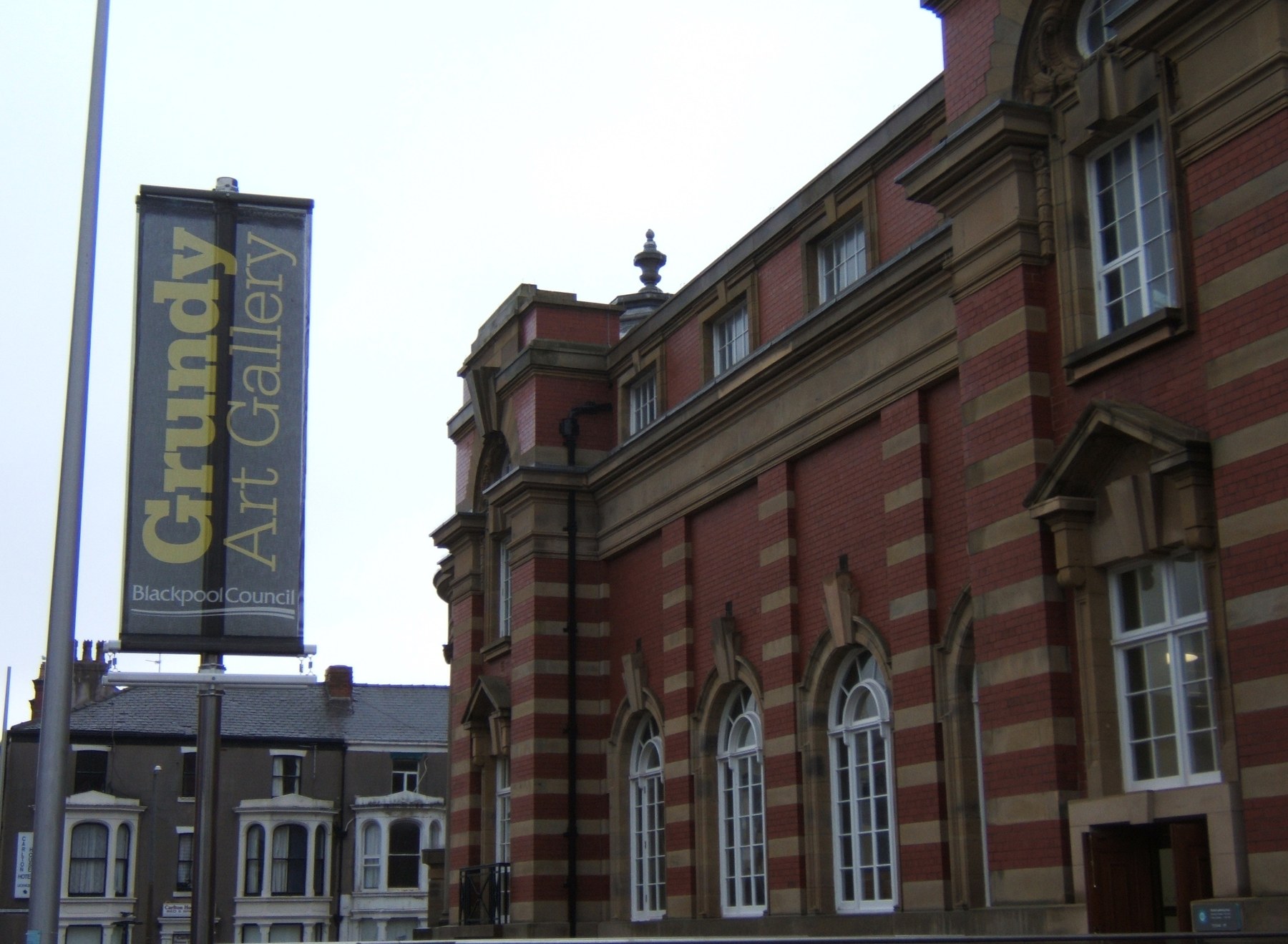
Photograph by Barbara Carr via Geograph and Wikimedia Commons · CC BY-SA 2.0 · Image source
A civic gallery shaped by Blackpool
Grundy Art Gallery combines two identities that are worth keeping together. It cares for Blackpool's municipal art collection, with Victorian painting, modern British work and contemporary acquisitions, and it presents a changing programme of exhibitions. The collection is not permanently displayed as a fixed sequence of highlights. Works emerge through particular displays, comparisons and curatorial questions. A visit therefore begins with what is on now, rather than with an expectation that a favourite painting will always occupy the same wall.
Blackpool gives that programme a distinctive setting. Entertainment, seaside tourism, illumination and popular culture are not merely the surroundings from which visitors step indoors. The gallery's mission treats them as material for artistic investigation. That makes Grundy an interesting place to consider how art travels between civic culture, spectacle and everyday experience. A contemporary installation here can enter a conversation with the resort beyond the door, while a collection painting can reveal a different history of taste and public ambition.
The Grundy gift and the public collection
The gallery opened in 1911 after Blackpool Council commissioned a building in 1908 following an art bequest and financial gift from the brothers John and Cuthbert Grundy. Both brothers were artists. Their gift helped turn private artistic interest into a public institution, giving the town a place where art could be encountered beyond domestic ownership or the commercial market.
That origin remains useful when thinking about the collection today. A municipal gallery accumulates the choices of founders, donors, curators and supporting organisations over time. It is rarely a perfectly balanced textbook history. Grundy's holdings include oils and watercolours, ceramics, photographs and souvenirs of Blackpool as well as contemporary prints, jewellery, sculpture and video. The contrast between a painted landscape and a resort souvenir is not an embarrassment to be edited out. It asks how a town understands itself through images and objects.
The gallery's collection overview identifies artists including John Linnell, David Roberts, Henry Scott Tuke, Laura Knight, Augustus John and Anna Airy. These names indicate a substantial British painting strand, but they should not be mistaken for a current room list. When collection works are on display, look for the different kinds of attention they reward: the organisation of landscape, the handling of bodies, the social performance of portraiture or the movement between observation and imaginative construction.
Modern art and the Contemporary Art Society
The Contemporary Art Society has been important to the growth of Grundy's holdings. Its record identifies a Picasso lithograph, The Dove of Peace, acquired in 1952, and describes modern British and contemporary works entering the collection through this relationship. A public collection in Blackpool can therefore connect local experience with a wider network of artists, patrons and museum acquisitions.
The Society's overview includes Craigie Aitchison, Peter Blake, Martin Creed, Haroon Mirza and Lubaina Himid among the contemporary artists represented. Their presence broadens the idea of what a civic art gallery might collect. Painting remains important, but sound, sculptural form, text and other approaches can also carry questions about identity, public life and the making of meaning. The rewarding comparison is often between methods rather than generations: how does one artist compress an idea into an image, while another distributes it through a space?
Light as a collecting thread
Since 2015, Grundy has collected around the broad theme of light. Its collection overview notes acquisitions by Joseph Kosuth and Tracey Emin with the support of public partners and galleries. The subject offers a particularly apt connection to Blackpool without requiring every work to illustrate the Illuminations directly.
Light can be a material, a message, an atmosphere or a means of directing attention. In painting it may build depth and describe weather. In a contemporary work it may illuminate language, alter a room or become the object itself. During a relevant display, ask what happens when light changes from something that makes an artwork visible into something the artwork actively uses. The resort outside offers another scale of the same question: when does illumination invite reflection, and when does it compete for the eye?
A thoughtful first visit
Check the current exhibition before arriving, then allow it to set the pace. Read the introductory material, choose one work that seems immediately approachable and one that resists a quick explanation, and compare how they use scale, surface or space. If collection works are included, ask why these particular objects have been brought into the exhibition. Their role may be to establish a historical contrast, complicate a theme or reveal an unexpected continuity.
Grundy works well as a focused visit rather than as a place to rush through a long checklist. It is also worth returning when the programme changes. The same gallery can offer a very different experience under a new exhibition, and the absence of a permanent hang makes those changes part of the institution's character.
Learning and access
The gallery offers tailored school sessions, tours and workshops for colleges and universities, alongside support for visitors who prefer a quieter setting. Its schools information describes relaxed-hour sessions and advises booking through the events calendar. These provide a useful alternative to assuming that a busy public exhibition is the only way to experience the gallery.
The official access information lists ramp access and step-free main exhibition areas, portable seating, large-print material, magnifiers, ear defenders and communication aids. Some guided or described experiences depend on availability, so contact the team when a particular service is essential. The visit page also notes that public toilet and baby-changing facilities are not inside the gallery; accessible toilets are available in the adjacent Central Library.
Planning the practical visit
Grundy is on Queen Street beside Central Library, close to Blackpool North station and the seafront. Admission is normally free unless a particular activity states otherwise. Crucially, its published opening pattern applies during exhibitions; installation periods and one-off closures can change access. Use the official visit page and programme calendar before travelling, especially when fitting the gallery between train times or other Blackpool plans.
Sources and further reading
Use these official museum pages, object records and exhibition sources to check details and keep exploring.
- Collection history and overview
The founding gift and evolving collection - Grundy Art Gallery
The civic institution and its setting - Grundy Art Gallery Blackpool
Modern collecting and Contemporary Art Society gifts - Mission
Blackpool popular culture and contemporary art - Visit
Current opening and visit arrangements - Accessibility
Access facilities and practical limits - Schools and colleges
Learning and group engagement - Exhibitions
The changing exhibition calendar
.jpg)