by Tom Gurney
Tom Gurney BSc (Hons) is an art history expert with over 20 years experience
Published on 16 September 2026 / Updated on 16 September 2026
Email: tomgurney1@gmail.com / Phone: +447429011000
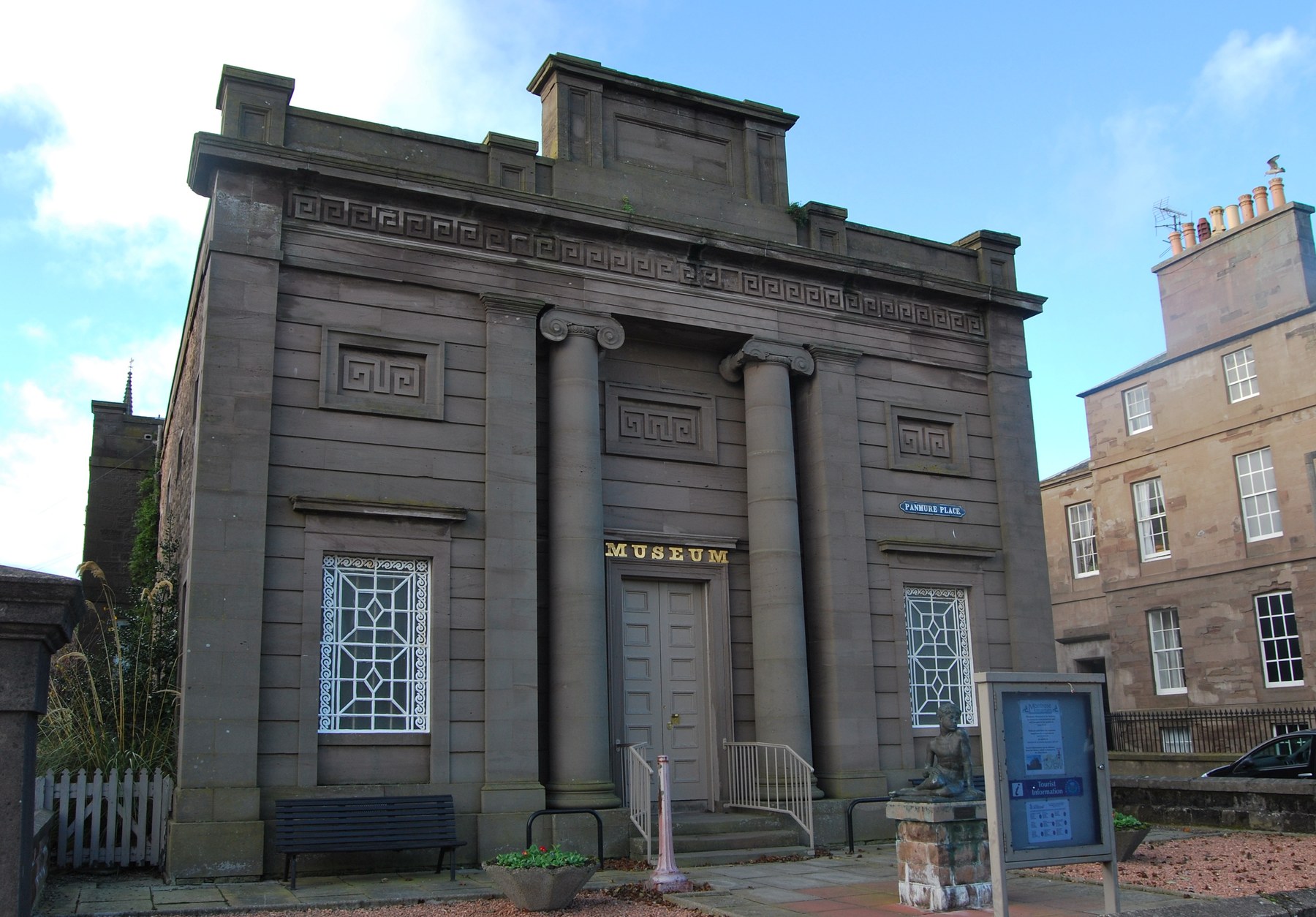
Photograph by Russ Hamer via Wikimedia Commons · CC BY-SA 3.0 · Image source
Art inside a local museum
Montrose Museum brings local history, natural history, maritime life and a changing art gallery into one compact institution. Its art interest is strongest when those subjects are allowed to overlap. A landscape is also an image of a place people know; a sculpted portrait can connect an artist with a local literary movement; and an object brought home through overseas trade can complicate the familiar story of a Scottish harbour town.
The gallery hosts exhibitions drawn from community activity and Angus Council's paintings and sculpture collections. There is no reason to expect the same fine-art hang on every visit. Check the programme first, then use the museum's wider displays to give the art a setting. This is a destination for understanding the relationship between a town and its cultural memory, rather than for collecting a sequence of internationally famous masterpieces.
A nineteenth-century temple of learning
ANGUSalive dates the museum to 1842 and its foundation by Montrose Natural History and Antiquarian Society. The neoclassical entrance, with Ionic columns and the museum's name above the doorway, gives learning a deliberately public presence. The building belongs to the early development of purpose-built museums in Scotland, when local societies brought natural specimens, antiquities and art into a shared space.
That mixed inheritance matters. The museum's atrium, mezzanine and galleries accommodate more than one way of knowing the world. A visitor can move from the history of Montrose and the Jacobites to maritime subjects and an art exhibition. Rather than treating the non-art rooms as a detour, consider the connections: who travelled, who commissioned images, what was collected, and which people became visible in the town's account of itself?
The wider Angus art collection
The Angus art collection contains around 4,000 works and draws together holdings formerly kept by seven historic burgh towns, combined in 1975. ANGUSalive cares for this evolving collection on behalf of the people of Angus. Its scale belongs to the regional collection as a whole, not to the number of works in Montrose's galleries at one time.
Artists identified in the collection include William Lamb, David Waterson, James Watterston Herald, Joyce W. Cairns, James McIntosh Patrick and Robert Gibb. The range encourages a more nuanced idea of Scottish art than a simple opposition between local and national significance. Artists can be deeply attached to a particular place while also working within wider networks of training, exhibition and exchange.
The regional distinction is practical as well as historical. ANGUSalive's collection page places two paintings by Pieter Brueghel the Younger in the Corsar Gallery at Arbroath Library. They are not Montrose Museum highlights. A visitor interested in a particular work should check its actual venue and display status rather than assume that the entire Angus collection is available at one address.
What past displays reveal
Fine Art in Focus: Highlights from the Angus Fine Art Collection, which ended on 5 July 2026, offers a useful example of the gallery's role. The exhibition brought regional collection stories together and included James Morrison's Old Montrose of 1983, recently donated from a private collection with Art Fund assistance. Morrison's response to Angus landscape connects a recognisable locality with panoramic space and atmospheric skies. The work's acquisition enriches the collection, but the past exhibition listing is not a promise that it remains on view.
The same display included George Paul Chalmers' preparatory sketch for The Legend, returned from conservation. The final painting is at the National Galleries of Scotland. Keeping sketch and finished picture distinct is part of the interest: preparation exposes choices that a completed narrative image may conceal. A drawing can show the arrangement of figures, the search for emphasis and the difficulty of turning a literary episode into a convincing scene.
William Lamb provides another art-and-place connection. An ANGUSalive account of a Robert Burns bust loan describes Lamb's Montrose studio, established in 1924, and his contact with the Scottish Renaissance literary movement. His interest in ordinary working people gives sculpture a civic dimension. The separate William Lamb studio and the museum should not be confused, and a historic loan announcement should be checked before planning to see that specific bust.
Looking beyond an uncomplicated local story
The museum's past Perspectives: Collecting the World exhibition, held in 2025, examined the Angus world-cultures collection through travel, empire and collecting. ANGUSalive explicitly connects that collection's nineteenth-century formation with colonial power and the ethical questions surrounding the movement of objects. This is more revealing than treating overseas material simply as evidence that local collectors were adventurous.
When relevant objects are shown, ask how the label explains acquisition and origin. Does it identify a maker or community as well as a collector? Does it discuss the circumstances under which the object moved? Conservation is also part of access: the official account notes that treatment needs delayed the display of samurai armour. A museum's responsibility to preserve and understand an object can affect what visitors actually see.
Planning a visit
Begin with the current art or temporary exhibition, then choose one museum-history strand rather than trying to give every case equal time. As checked in September 2026, ANGUSalive lists Tartan & Turmoil: The Angus Jacobite Story through 23 November 2026. This is a history-focused programme, not the continuation of Fine Art in Focus. Use the official listings for changes and for the next art display.
Montrose Museum is on Panmure Place, behind the High Street in the Mid Links area. General entry is free, but opening patterns differ between summer and winter and last admission is earlier than closing. The official venue page is the right source for the day you intend to visit. Educational groups can arrange visits with ANGUSalive's learning team.
Access is not uniform throughout the historic building. The venue lists a front entrance ramp and a lift to the first-floor mezzanine, but says the Natural History Gallery is reached only by stairs. A large-print visual guide is available for that gallery. Contact the museum before travelling if the stair-only section, hearing support or another specific facility will affect your visit. Understanding those limits in advance makes it easier to shape a rewarding visit around the spaces you can use.
Sources and further reading
Use these official museum pages, object records and exhibition sources to check details and keep exploring.
- Montrose Museum
The building collections and visitor information - Collections
The wider Angus art collection - Highlights from the Angus Fine Art Collection
Past displays and collection stories - Robert Burns comes home to Montrose
William Lamb and Montrose cultural life - Perspectives Collecting the World
Collecting history and conservation - ANGUSalive unveils Jacobite exhibition
The 2026 history programme - Educational visits
Planning educational groups