by Tom Gurney
Tom Gurney BSc (Hons) is an art history expert with over 20 years experience
Published on 16 September 2026 / Updated on 16 September 2026
Email: tomgurney1@gmail.com / Phone: +447429011000
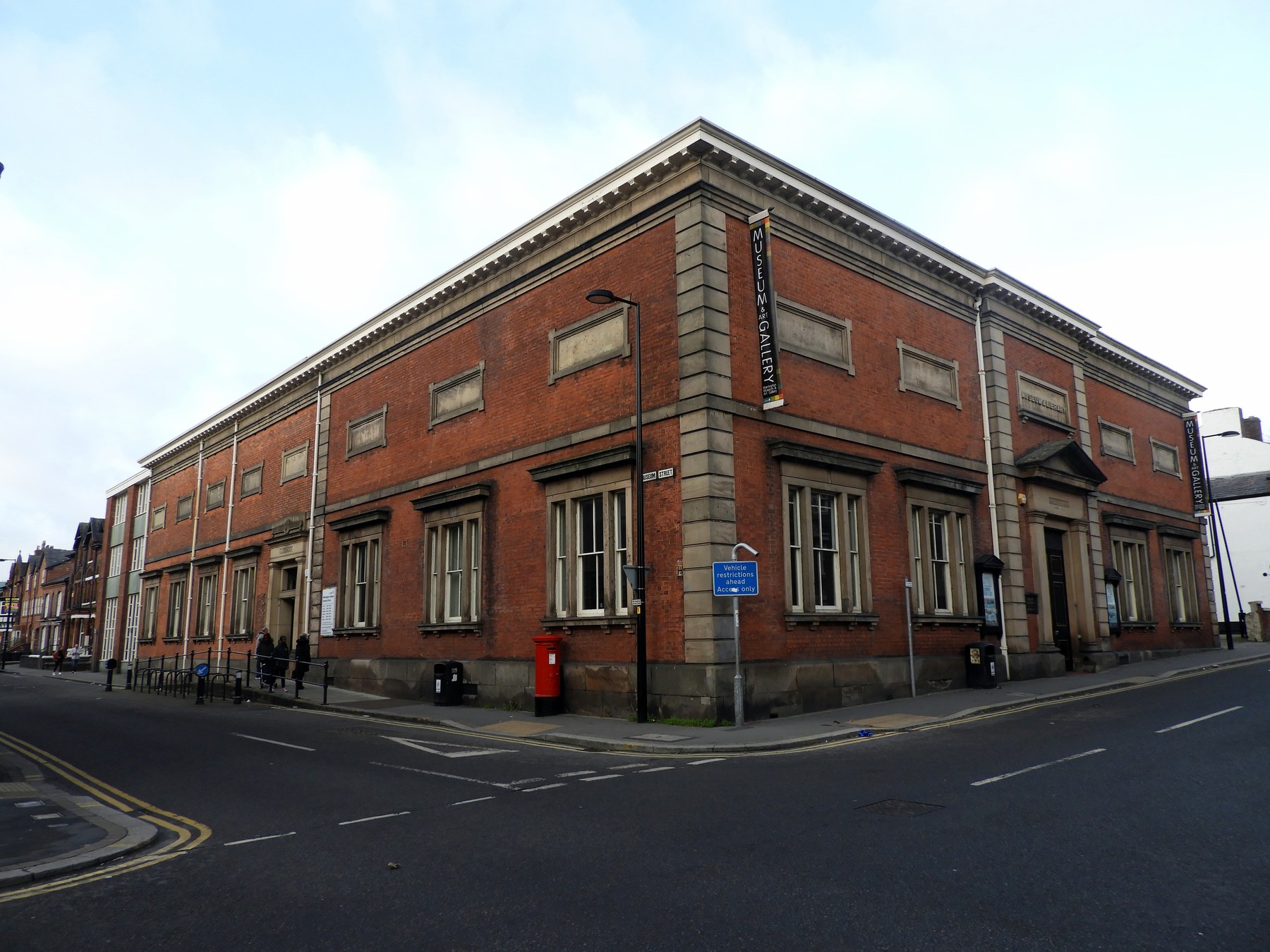
Photograph by Reading Tom via Flickr and Wikimedia Commons · CC BY 2.0 · Image source
A civic museum with art at its heart
Warrington Museum & Art Gallery combines paintings and sculpture with archaeology, natural history and the history of the town. It is not simply an art gallery with a few historical objects attached. Its appeal comes from the proximity of different kinds of looking: a carefully composed painting, a specimen arranged for study, an object of domestic life and a document preserving somebody's words.
The Grade II listed museum and library building has housed the collections since 1857. Culture Warrington describes holdings of just under 200,000 objects, mostly connected with the town and surrounding area but also reaching much farther afield. That figure describes the collection, not the number of objects on view. For an art-focused visitor, the strongest route is to begin with the galleries and then follow one of their connections into the wider museum.
How a people's museum took shape
The museum's official history traces its beginnings through an exhibition in 1840 and a private Natural History Society museum opened in 1842. The public museum followed in 1848. This chronology places art, science and local learning together from the outset, rather than treating fine art as a later decorative addition to an otherwise scientific institution.
A purpose-built home was needed as the collections and audience grew. John Dobson's proposed design exceeded the available budget, and a modified scheme was produced by a local architect named Stone. The foundation stone was laid in 1855 and the building opened in 1857. The Large Art Gallery followed in 1877, with the Warrington School of Art remaining within the museum until it moved to its own premises in 1884. The story shows how public ambition, funding and the practical needs of teaching shaped the galleries visitors encounter today.
The art-school connection
The Large Art Gallery's official overview names Luke Fildes and Henry Woods among artists who studied at Warrington School of Art. It also identifies sculpture by John Warrington Wood. These connections give local artistic training a visible place in the collection: the town was not only an audience for art made elsewhere, but a starting point for artists' careers.
The collection also includes Jan van Os, Frank Brangwyn and L. S. Lowry, with selected works rotated into display. Check the current hang if a particular artist is the reason for your visit. Rather than look only for familiar names, compare how different artists organise a scene. Where does light fall? How close is the viewer placed to a figure? Do the objects in a room support the story or compete with it? Such questions make the contrasts within a mixed collection productive.
Sculpture changes the rhythm of looking. Walk around a work where space allows, noticing how its outline and balance alter. A large narrative figure asks for a different kind of attention from a painting encountered straight on. The relationship between gallery space and sculpture is part of Warrington's history as well as its visitor experience.
World cultures and the circumstances of collecting
The gallery described on the official website as Ethnology or World Stories includes material from ancient Egypt and from cultures in Africa, Asia, the Americas and the Pacific. The painted Egyptian mummy case of Pa-en-akh-menu and Japanese netsuke are among its identified objects. These deserve attention to making and meaning, not just to the distance they travelled.
The museum's account identifies Benin works associated with Henry Lyon, an official of the Niger Coast Protectorate at the time of the British expedition in 1897. That historical context is essential. A label naming a donor is not a complete explanation of how an object changed hands. Look for what the display says about makers, communities, colonial power and acquisition. The collection overview does not establish the present legal status or eventual disposition of every object, so those questions should not be answered by assumption.
Natural history as a visual encounter
The Botany Gallery is a particularly interesting companion to an art visit. Its economic-botany approach considers plants not only through classification but also through their uses. Enlarged nineteenth-century flower models were made for teaching, revealing structures that are difficult to inspect in a small living specimen.
A model sits between observation and invention: it must simplify enough to explain, while remaining convincing enough to teach. Compare its colour, scale and separation of parts with the decisions made in a painting or sculpture. This is not a claim that botanical models and fine art serve the same purpose. It is a way to recognise the visual intelligence involved in making knowledge accessible.
The museum's traditional cabinets are also worth noticing. Their density, arrangement and relationship to the room affect how a collection is understood. An object can be given prominence by isolation, or made one element in a series. Looking at the case as well as its contents reveals something about the museum's own history of explanation.
Curiosity and changing displays
The Cabinet of Curiosities Gallery deliberately brings natural and human-made objects into comparison, with a central case used for changing displays that comment on the collections. It provides a useful pause between specialist galleries. Instead of asking which object is the most important, consider what happens when objects of very different origins are shown together.
That approach can encourage delight, but it can also prompt scrutiny. Which similarities are visual, and which are historical? What disappears when an object is presented chiefly as unusual? A museum visit becomes richer when curiosity leads beyond surprise to questions about use, origin and interpretation.
Local history and the archive
The ground-floor Archive and Local Studies Searchroom is in Warrington Central Library, within the museum and library building. Its resources include printed material, photographs and manuscripts, ranging from medieval deeds to modern event posters. Some fragile originals must be consulted through copies. The searchroom has its own hours and access arrangements, separate from the art galleries.
For anyone researching a local artist, building or family, these documentary collections can provide a different kind of detail from an exhibition label. A photograph might establish how a street changed; a programme might show the audience for a cultural event; a handwritten record might reveal a commission or personal connection. Enquire in advance if you need to consult specific material rather than expect a gallery visit to include immediate archive access.
A practical first visit
Admission is free. The museum occupies the first and second floors, with entry from Bold Street or through the library entrance on Museum Street. The visitor page distinguishes general public hours from Mondays and Tuesdays reserved for booked school visits. Use the current official timetable for opening days, bank holidays and last admission.
There is no museum cafe. Visitors may bring food to consume in Creativity Cove, but it should remain sealed elsewhere in the galleries. The town-centre setting makes it easy to plan a separate refreshment stop. A first visit need not cover every subject: the art galleries, one world-cultures or natural-history strand and a changing display make a coherent route.
Access through the historic building
The museum lists a lift serving its first and second floors, a stairlift for an intermediate gallery and an adapted toilet. Seating is available in selected spaces, and some galleries use lower light levels to protect sensitive collections. These are more useful details than a blanket promise that every visitor will find every space equally straightforward.
Read the full access information or contact the museum if lift dimensions, the intermediate level, lighting or a particular facility affects your plans. Historic cabinets and a preserved Victorian character can be part of the attraction, but an enjoyable visit depends on knowing how the rooms actually work. Planning around those details leaves more attention available for the art and objects themselves.
Sources and further reading
Use these official museum pages, object records and exhibition sources to check details and keep exploring.
- History of the museum
The civic museum and gallery chronology - Large Art Gallery
The painting and sculpture collection - World Stories and Ethnology Gallery
World cultures and acquisition context - Botany Gallery
Economic botany and teaching models - Collections
The scale and breadth of holdings - Archive and local studies
Documentary research in the library searchroom - Visit us
Public opening and visitor facilities - Accessibility
Routes and facilities in the historic building