 by
Tom Gurney
Tom Gurney BSc (Hons) is an art history expert with over 20 years experience
Email:
tomgurney1@gmail.com
/ Phone:
+44 7429 011000
Self Portrait by Anthony van Dyck: Introduction
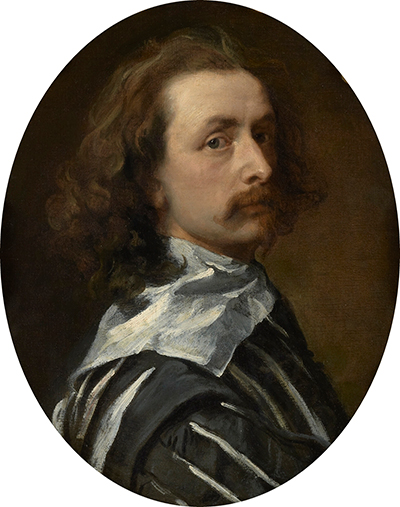
Anthony van Dyck turns towards us over a shoulder crossed by bright slashes of white. His face holds our attention; below it, quick strokes make the clothes seem almost in motion. This oval self-portrait, dated about 1640, belongs to the National Portrait Gallery in London. [1]
At a Glance
- Artist Anthony van Dyck
- Title in the collection Sir Anthony van Dyck
- Date About 1640
- Medium Oil on canvas, oval
- Dimensions 56 × 46 cm
- Collection National Portrait Gallery, London
- Inventory number NPG6987. [1]
This work across Anthony van Dyck’s career
Entry of Christ into Jerusalem
about 1617Frans Snyders
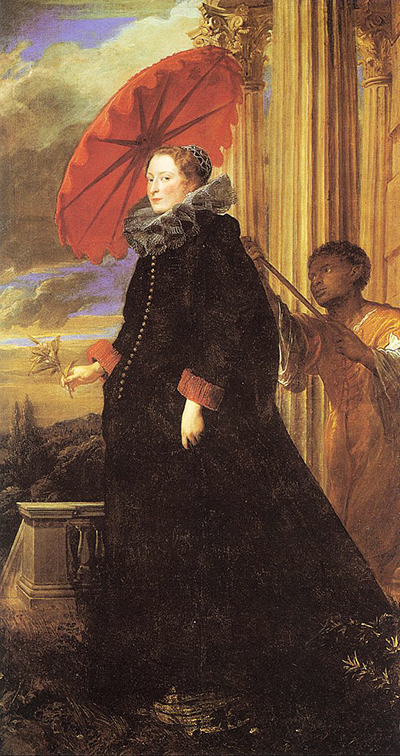
about 1620Rinaldo and Armida
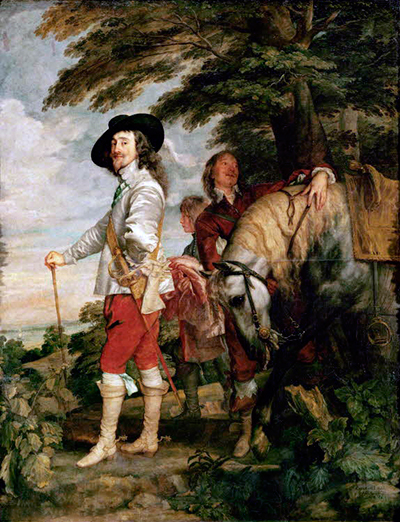
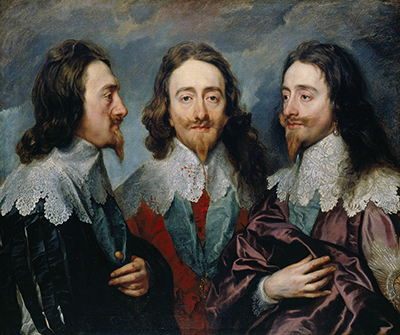
1629–1632; Louvre commentary proposes late1631–spring1632Charles I in Three Positions
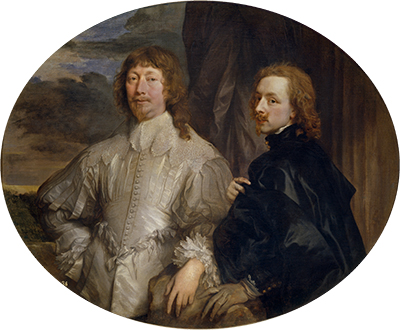
1635–before June 1636Lord John Stuart and his Brother
about 1638Cupid and Psyche
1639–40Contents
- A turn held within an oval
- Does he show himself painting?
- A carefully described face and a broadly painted doublet
- Was the painting finished?
- The frame and the sunflower
- From private portrait to public collection
A turn held within an oval
The body faces towards the right of the picture while the head turns back towards the viewer. The shoulder occupies much of the lower half, bringing us close enough to notice the way the collar folds against the neck. There is little surrounding space. We have the face, the clothes and a warm, shadowy background, with no room furnishing to explain where the encounter takes place.
The oval helps give this movement its shape. Hair follows its upper curve; the broad shoulder presses towards its lower edge. At the left, loose curls almost merge with the darkness. At the right, a clearer stretch of background opens beside the cheek and nose. That uneven distribution of space gives the face somewhere to turn. The head feels mobile within an enclosure that is otherwise very compact.
Look particularly at the relationship between the eyes and the nose. The face is shown obliquely, so its two sides occupy different amounts of space, yet the eyes establish a connection across that turn. The nearer eye is readily visible; the farther one remains within the darker side of the face. Their small scale makes the surrounding expanses of forehead and cheek feel quiet. The curled moustache and narrow beard then give the lower face a sharper outline.
The expression invites speculation, but the painted arrangement offers firmer ground. A steady gaze and an upright head can suggest alertness. They cannot tell us what Van Dyck was thinking. Much of the portrait's intimacy comes from how little separates the viewer from those small changes around the eyes and mouth.
Does he show himself painting?
The National Portrait Gallery reads the projecting shoulder and sleeve as suggesting a raised arm engaged in painting, with the hand beyond the picture. The pose supports that possibility, although no brush or canvas is visible. [2]
It is an economical way to imply activity. The shoulder creates a large diagonal mass; the head interrupts it by turning in another direction. We can follow the body towards an action beyond the edge and then be brought back by the eyes. The figure seems to have become aware of us while occupied with something else.
That effect also makes the cropping worth considering. A hand or a palette would supply a readily identifiable attribute. Here the shoulder carries much of the suggestion of work. The portrait lets the viewer infer the continuation of the body, while keeping attention on the face and the paint that describes it.
Watch: Van Dyck’s art and working methods
Choose a museum introduction, a specialist lecture or a conservation film to continue exploring Van Dyck’s work.
Van Dyck, The Anatomy of Portraiture
The Frick curators introduce Van Dyck’s portraits, drawings and prints.
Watch on YouTubeA carefully described face and a broadly painted doublet
The Gallery identifies the dark doublet as probably silk, with white showing through its slashes. It also draws attention to the difference between the detailed face and the broadly handled costume. [2] In the reproduction, the white and grey strokes around the shoulder are among the first things to catch the eye. Some have abrupt ends; others lengthen into thin, wavering lines. Together they convey folds and openings without spelling out every seam.
The collar is especially effective as a transition. Its pale surface spreads below the chin, then breaks into darker marks towards the shoulder. It offers a small area of brightness beneath the warm flesh. From there, the slashes carry that brightness down through the black clothing, so the lower part of the portrait remains active even when the viewer looks away from the eyes.
Across the face, the transitions are more gradual. The lit forehead passes into the shadow beside the temple; a warmer cheek meets the softer grey beneath the eye. The nose gains its projection through adjacent light and dark areas. These changes ask for a different pace of looking from the emphatic marks in the doublet. Move between the two and it becomes easier to see how much variety Van Dyck achieves within a small picture.
The dark clothes also keep the silhouette from becoming rigid. Broad grey highlights describe the near shoulder, while the farther side sinks into the background. Hair, doublet and surrounding darkness approach one another in tone. Against them, the pale collar and face appear more immediate. The viewer has to complete some boundaries while others are made very clear.
Was the painting finished?
The National Portrait Gallery leaves two possibilities open: the loose handling may reflect an unfinished painting, or an experiment with different degrees of finish. [2] The contrast we can see does not, by itself, settle the question.
Either possibility makes the relationship between face and costume worth sustained attention. From a distance, the clothing coheres into a convincing shoulder and sleeve. Closer up, individual strokes become conspicuous. The face remains more continuous, encouraging recognition even as the clothes reveal the means of painting. The picture allows both experiences to sit together.
It is tempting to make that openness a story about the end of an artist's life. The collection dates the work to about 1640 and places it among his final years; it is one of three known English self-portraits. This does not establish it as his last painting. [1] The visible marks offer no basis for diagnosing illness or explaining why he stopped work.
The frame and the sunflower
The Gallery’s account of Jacob Simon’s research describes the oak frame as almost certainly contemporary, likely made with Van Dyck’s involvement. Its sunflower motif echoes his earlier Self-Portrait with a Sunflower and his personal emblem. [3]
A William Dobson portrait in Jersey has a later copy, probably made when Richard Graham brought the pictures together early in the eighteenth century. The Gallery distinguishes its pine construction from the Van Dyck frame’s oak, which fell out of favour after the mid-seventeenth century. [3]
This comparison supports the proposed early date of the frame. Van Dyck’s likely involvement remains a qualified conclusion; it does not establish that he designed it. [3]
From private portrait to public collection
The National Portrait Gallery acquired the self-portrait after a public appeal in 2014. [1] That modern date belongs to its collection history; the image itself takes us into Van Dyck's late career. The wider circumstances of his work at court can be explored through his years in England .
Here, the close encounter remains the strongest attraction. There are no surrounding figures to direct our response, and little background to explore. The picture repays a repeated movement of the eye: from the precise gaze to the broad shoulder, along the bright collar and back to the face. The change of focus is part of the pleasure of looking.
Artworks directory
A selected directory of paintings, drawings and prints, including works discussed in the articles and the Frick’s 2016 portraiture exhibition. It is not a complete catalogue of Van Dyck’s work. Print titles identify collaborators or later printmakers; disputed and workshop attributions are retained. The exhibition checklist supplies additional object records; current collection information governs the updated article entries. [4]
Frequently Asked Questions
It is the oval painting numbered NPG6987 in London's National Portrait Gallery. [1] The turned shoulder, loose hair and slashed dark doublet distinguish the image discussed here.
The difference is visible, but its cause remains open. The Gallery proposes either an unfinished state or experimental handling. [2] Broad strokes make the clothes legible from a distance, while the more continuous modelling of the face supports recognition.
The Gallery regards his involvement as likely, and the frame as almost certainly contemporary. [3] Evidence for his participation falls short of establishing him as its designer.
Discussion
Look again at the images and ideas explored in Self Portrait by Anthony van Dyck. These editorial prompts invite your observations.
Reader Insights
How does the oval shape affect your sense of the head turning and the shoulder moving beyond the edge?
What changes when you look first at the broad marks in the clothing and then at the more detailed face?
How might the sunflower motif on the frame influence your reading of a portrait whose painted field contains no flower?
Join the Conversation
Share a detail, comparison or question about Self Portrait by Anthony van Dyck below.
References
- National Portrait Gallery , London, Sir Anthony van Dyck, NPG6987. English. View source .
- National Portrait Gallery , London, Anthony van Dyck by Anthony van Dyck, Schools Hub. English. View source .
- National Portrait Gallery , London, About Van Dyck: painting and frame. English. View source .
- The Frick Collection, Van Dyck: The Anatomy of Portraiture, online exhibition checklist (2016). View source.