 by
Tom Gurney
Tom Gurney BSc (Hons) is an art history expert with over 20 years experience
Email:
tomgurney1@gmail.com
/ Phone:
+44 7429 011000
Silenus Drunk: Introduction
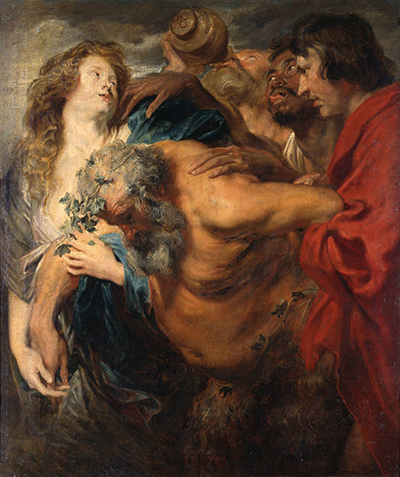
In Anthony van Dyck’s Silenus Drunk , a broad, ageing body tips forward while its companions crowd around to hold it up. The bowed head and bright, exposed shoulder occupy the heart of a tightly packed group. This is the compact, upright painting in Dresden, dated about 1619–20, whose drama unfolds through the pressure of one body against another. [1]
At a Glance
- Artist Anthony van Dyck.
- Title Silenus Drunk , also known as Drunken Silenus ; German title Der trunkene Silen .
- Date About 1619–20.
- Medium Oil on canvas.
- Dimensions 107 × 91.5 cm.
- Collection Gemäldegalerie Alte Meister, Staatliche Kunstsammlungen Dresden.
- Inventory number Gal.-Nr. 1017. [1]
This work across Anthony van Dyck’s career
Entry of Christ into Jerusalem
about 1617Silenus Drunk (current article)
c. 1619–20Frans Snyders
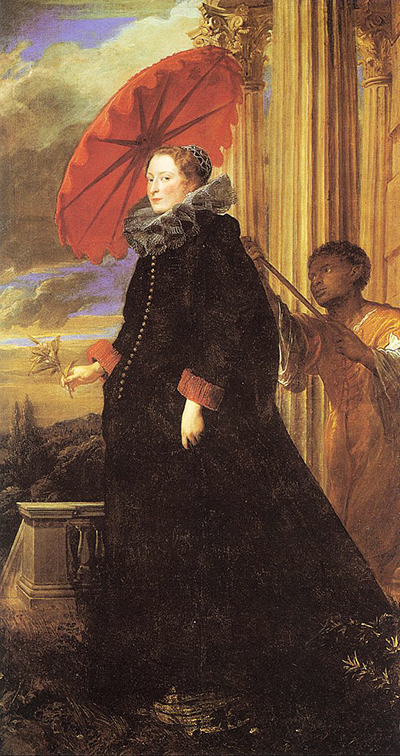
about 1620Rinaldo and Armida
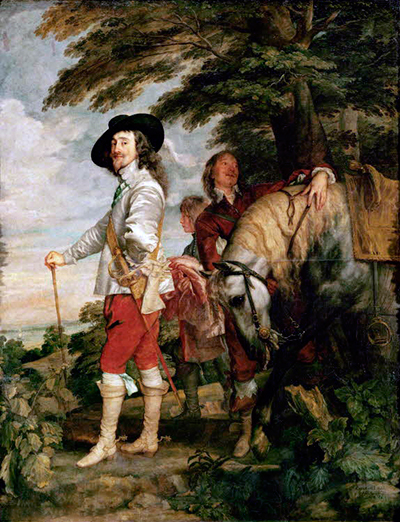
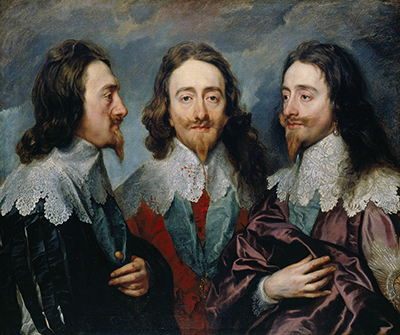
1629–1632; Louvre commentary proposes late1631–spring1632Charles I in Three Positions
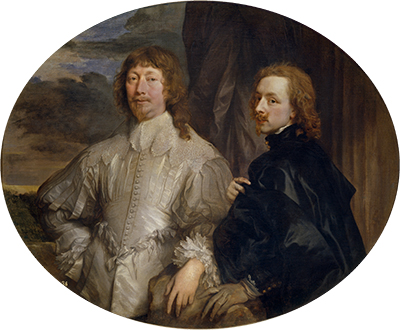
1635–before June 1636Lord John Stuart and his Brother
about 1638Cupid and Psyche
1639–40Self Portrait
c. 1640Contents
- A body held inside the frame
- Ivy and the raised vessel
- Flesh, cloth and light
- Laughter and dependence
- Dresden and the separate London painting
A body held inside the frame
Silenus’s head has dropped towards the left, bringing his grey beard close to the dark cloth gathered beside him. His torso remains conspicuously exposed. The light describes the slope of his shoulder, the broad chest and the folds across his abdomen, allowing us to feel the bend of the body before we disentangle the surrounding arms.
The companions provide an uneven frame around him. At the left, a woman lifts her face upwards while a pale hand closes around his arm. Behind him, a bearded man raises a vessel towards his mouth. At the right, a dark-haired figure in a red mantle leans inward. Hands press against Silenus’s shoulder and back; arms overlap along the right side. The group is joined by actual points of contact, so that looking from one figure to the next means following the paths of limbs.
That movement takes time to resolve. An isolated hand can be easier to see than the body to which it belongs. Van Dyck makes the physical difficulty of supporting Silenus part of the viewer’s experience: the crowded arrangement asks us to work out who bears the weight and where it might shift next.
The upright format intensifies this pressure. There is little clear space beside the figures and scarcely any room below the central body. Silenus seems too expansive for the available opening. His bent pose gathers the action downwards, while the raised vessel pulls our attention back towards the top. Between those opposing directions, the group appears momentarily caught.
Ivy and the raised vessel
Silenus belongs to the company of Bacchus, the god of wine. He was traditionally Bacchus’s tutor, and drunkenness became a familiar part of his depiction. This background identifies the subject without requiring the painting to illustrate a particular incident in a continuous story. [2]
The ivy around Silenus’s head gives the mythological identity a tangible presence. Leaves break up the outline of his brow and mingle with the grey hair. Further foliage lies against the exposed body. The greenery is small and irregular beside the great mass of flesh: it offers no formal crown or firm boundary around the head. Instead, it becomes entangled with the person wearing it.
The vessel introduces a second kind of action. Tilted high above Silenus, it belongs to someone who is still drinking while the central figure is already bent and dependent on support. The juxtaposition gives the image a lively, slightly unruly rhythm. Drinking continues within the very group that is trying to manage its consequences.
It also complicates the exchange of looks. Silenus directs his face downwards, the woman turns hers up, and the red-clad companion looks inward towards the others. Their heads occupy different levels and follow different directions. Although the figures touch, their attention never settles into a single, orderly response.
Watch: Van Dyck’s art and working methods
Choose a museum introduction, a specialist lecture or a conservation film to continue exploring Van Dyck’s work.
Van Dyck, The Anatomy of Portraiture
The Frick curators introduce Van Dyck’s portraits, drawings and prints.
Watch on YouTubeFlesh, cloth and light
The strongest contrast is between Silenus’s skin and the fabrics around it. His broad shoulder catches a warm light, with darker transitions beneath the arm and across the lower torso. The red mantle on the right forms a large, folded mass beside that illuminated flesh. Its colour holds the edge of the composition and gives the leaning companion a substantial presence even where the folds obscure the body underneath.
On the other side, blue-green cloth creates a cooler, darker setting for Silenus’s lowered head. The pale hand gripping his arm becomes especially legible against it. The cloth also offers a visual route from the woman’s upper body towards the lower part of the painting, where folds, foliage and a shaggy brown covering make the forms more difficult to separate.
The torso presents a continuous, rounded surface; the edges of the group dissolve into curls, leaves, fingers and fabric. Our eye can pause on the shoulder, then become caught again in the smaller incidents around it. That alternation gives the scene its density without distributing equal emphasis to every detail.
The background contributes little sense of a particular place. Its subdued tones leave the figures close to the picture’s surface. We are offered no clear route through a landscape and no architectural setting that might explain where the gathering has stopped. The immediate subject is the bodily encounter itself.
Laughter and dependence
The raised drink, the unsteady pose and the crowded company can invite a comic response. Silenus has lost the upright bearing that would ordinarily allow a figure to command the centre of a composition. His size makes the practical problem more conspicuous: the larger the body, the greater the effort implied by the surrounding hands.
Yet the same arrangement can encourage a more sympathetic reading. His lowered face is partly sheltered by beard and foliage, and the bright shoulder is exposed to our view. He occupies the centre while relying on others to keep him there. The hands that might first look like pieces of a bustling spectacle also register as gestures of physical care.
The woman’s upward-turned head introduces another ambiguity. Her parted lips and lifted face contribute to the animation of the group, but they do not give us a secure account of what she thinks. The red-clad figure’s inward lean likewise shows involvement without settling whether his response is amusement, concentration or impatience. The painting leaves those possibilities available.
A moral lesson about excess is one possible response to the subject, but the visible arrangement also rewards attention to effort, contact and vulnerability. The mythological name makes Silenus recognisable; the bowed neck and supporting fingers make the situation physically intelligible. We can respond to the strain of holding someone up without knowing an exact episode or assigning each face a fixed emotion.
Dresden and the separate London painting
The National Gallery in London owns a different Drunken Silenus supported by Satyrs , inventory NG853. Its broad, horizontal crowd contrasts with Dresden’s compact group. London currently attributes its painting to “possibly” Anthony van Dyck and considers it likely to be a collaborative work from Rubens’s studio. Those qualifications concern the London object. Dresden catalogues Gal.-Nr. 1017 under Van Dyck’s name. [1] [2]
The comparison is useful because format changes our encounter with the subject. In Dresden, the figures cluster so closely around Silenus that their bodies largely determine the available space. His shoulder, beard and bent torso remain the principal landmarks. The eye repeatedly returns to the same small set of contacts rather than travelling along a procession.
Readers who approach Van Dyck through his portraits may find this concentrated bodily action an absorbing route into his religious and mythological paintings . Here, a face gains meaning through the limbs, fabric and other faces pressed around it. To follow the group is to watch a precarious balance being maintained.
Artworks directory
A selected directory of paintings, drawings and prints, including works discussed in the articles and the Frick’s 2016 portraiture exhibition. It is not a complete catalogue of Van Dyck’s work. Print titles identify collaborators or later printmakers; disputed and workshop attributions are retained. The exhibition checklist supplies additional object records; current collection information governs the updated article entries. [3]
Frequently Asked Questions
The painting discussed here belongs to the Gemäldegalerie Alte Meister in Dresden, within the Staatliche Kunstsammlungen Dresden. Its inventory number is Gal.-Nr. 1017. [1]
He is Bacchus’s tutor, shown here among companions associated with drinking. [2]
The Dresden museum records the inscription AVD at the upper centre. That recorded inscription does not establish a precise year of execution; the museum dates the work approximately. [1]
The continued drinking and Silenus’s unsteady bulk allow a comic reading. His dependence on supporting hands can also bring tenderness or discomfort into the scene. The composition sustains both responses without making the companions’ individual emotions certain.
Discussion
Look again at the images and ideas explored in Silenus Drunk. These editorial prompts invite your observations.
Reader Insights
Follow the hands around Silenus. Which contact most strongly conveys the effort of supporting his body?
How does the raised vessel change your response to the bowed figure below it?
Where does the painting seem comic, and which visible detail makes you feel sympathy for Silenus?
Join the Conversation
Share a detail, comparison or question about Silenus Drunk below.
References
- Staatliche Kunstsammlungen Dresden , Der trunkene Silen , Gal.-Nr. 1017. German. View source .
- The National Gallery , London, Drunken Silenus supported by Satyrs , possibly by Anthony van Dyck, NG853. English; separate London painting. View source .
- The Frick Collection, Van Dyck: The Anatomy of Portraiture, online exhibition checklist (2016). View source.