


 by
Tom Gurney
Tom Gurney BSc (Hons) is an art history expert with over 20 years experience
Email:
tomgurney1@gmail.com
/ Phone:
+44 7429 011000
Anthony van Dyck Prints: Introduction
A search for Anthony van Dyck prints can lead to a lightly etched face, a formal engraved portrait or a colour reproduction of a painting for the home. Each offers a different encounter with his art. The most rewarding starting point is the Iconography : a portrait series in which Van Dyck’s own work on copper meets the skills of specialist engravers.
At a Glance
- Four kinds of print Van Dyck’s own etchings; collaborative prints in the Iconography ; later historical prints after his designs; modern reproductions.
- Main historical series The Iconography , also called the Iconographie , developed through successive plates, states and publications. [1]
- Etching and engraving Acid bites the lines in etching; a burin cuts them directly into metal in engraving. [2] [3]
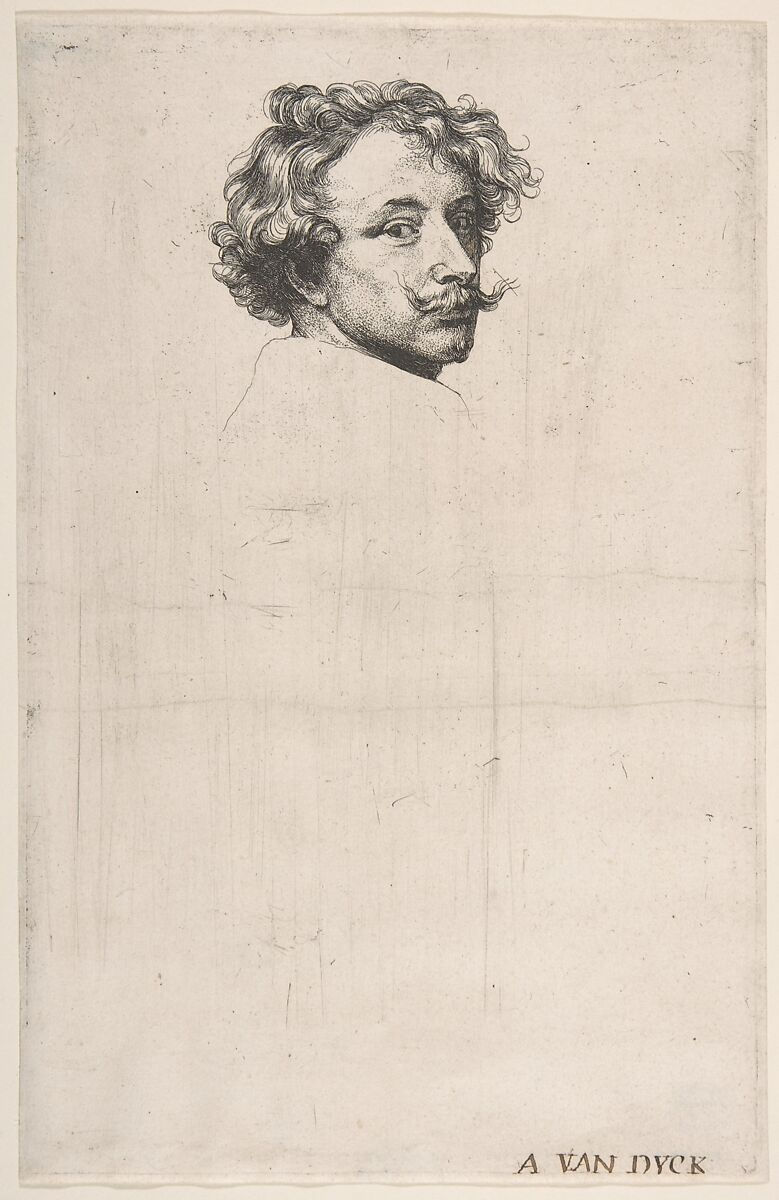
- An instructive example The Metropolitan Museum of Art’s etched Self-Portrait , dated about 1640, is a first-state impression. [4]
- Useful reproduction checks Identify the painting or print, its version, any cropping, the printing material and the dimensions of the image itself.
Contents
- What does “a print by Van Dyck” mean?
- Etching and engraving: two ways of making a line
- The self-portrait: a face emerging from open paper
- States, impressions and editions
- The Iconography grew over time
- Snyders and Van Balen: portraits passed between artists
- Historical prints after the paintings
- Choosing a modern Van Dyck reproduction
What does “a print by Van Dyck” mean?
The first distinction is between making a design and making a printing plate. Van Dyck sometimes did both. In other cases, another artist translated his portrait into engraved lines, contributing the specialised work through which it became a print. A description naming an engraver “after Anthony van Dyck” credits Van Dyck as the source of the composition. It does not, by itself, say that he cut the plate or supervised its production.
The National Museum of Western Art in Tokyo supplies a clear example. Its checklist for the exhibition Artists by Artists in Western Prints , held from 28 March to 21 June 2026, lists Portrait of Jacques Callot from the Iconography as an engraving by Lucas Vorsterman the Elder after Van Dyck. Item 17 gives the inventory number G.1987-0421 but leaves the print’s date blank. The dates beside the two artists are their lifetimes, not dates for the sheet. [5]
Later historical prints introduce another relationship. An engraver could work from a Van Dyck composition long after the painter’s death. A modern colour print of the painting belongs to a fourth category: a newly produced reproduction. To understand a particular sheet, begin with the names and medium in its description, then establish which of these relationships they describe.
Explore an original etching
Etching and engraving: two ways of making a line
Both etching and engraving are intaglio processes. Ink sits in recesses in a metal plate and transfers to paper under pressure. The difference lies in how those recesses are made.
An engraver pushes a burin through the metal, cutting a groove directly into its surface. Changes in the cut and the spacing of lines create differences in light and shade. Close hatching can build a dark passage; widely separated marks allow more paper to show through. The printed image reverses the design on the plate. [3]
For an etching, the plate is covered with an acid-resistant ground. The artist draws through that coating with a needle, exposing the metal along the intended lines. Acid then bites those exposed areas. After the ground is removed, the plate can be inked and printed. [2]
This distinction helps explain the drawing-like character of Van Dyck’s etched portraits. His hand could move through the ground without having to carve every mark into metal. Yet the finished sheet still depended on a sequence of material decisions between drawing and printing. “Etching” describes the process that made the lines; it does not mean that the image was drawn directly on the surviving paper.
A single plate could also combine techniques. An etched beginning might receive an engraved completion. Reading the medium as “etching and engraving” can therefore open up the history of an image, particularly when its different states survive.
The self-portrait: a face emerging from open paper
In the Met’s early-state Self-Portrait , the head occupies the upper part of a tall sheet. Loose curls gather into dense black pockets around the ear and then open into individual loops above the forehead. The eyes turn towards us while the nose points across the page. A sharply curled moustache extends the face’s movement into the surrounding space.
The contrast between the eyes is especially arresting. One remains clearly legible in the light; the other sits within a heavier patch of shadow. Small marks accumulate around the cheek and beneath the chin, making the head feel rounded without giving its outline an equally heavy boundary everywhere. Below it, only a few strokes begin to establish the collar and shoulders. Most of the sheet remains open.
These different densities give the portrait its peculiar balance. The hair invites us to follow individual lines, the shadow under the chin holds the head together, and the almost absent body lets attention return to the face. The actual sheet measures only 24.1 × 15.6 cm. [4]
Later, Jacques Neeffs added a sculptural bust and pedestal. Whether Van Dyck intended that outcome is unknown. [4] The intervention gives the face a different setting and function, making its place within the series part of what we see.
States, impressions and editions
These three words answer different questions about a print.
An impression is an individual printed sheet pulled from a plate. Several impressions can carry the same design. A state records a stage in the plate’s alteration: adding a body, changing lettering or introducing further engraved work can distinguish one state from another. An edition concerns a publication or issue of prints. It may bring together impressions from many plates and include plates at different stages of their histories.
The Met describes its self-portrait as the first of seven states and notes that the Iconography plates underwent repeated alteration and printing over centuries. [4] A state number therefore concerns the plate’s development. It does not tell us how many sheets were printed, and the date assigned to the original design does not automatically date every surviving impression.
When comparing two reproductions, check whether they represent the same state before deciding that one is cropped or incomplete. A head on nearly empty paper and the same head above an elaborate pedestal may preserve substantially different stages of one plate. Likewise, two sheets showing the same state still remain separate physical impressions, with their own paper, inking and histories.
Watch: Van Dyck’s art and working methods
Choose a museum introduction, a specialist lecture or a conservation film to continue exploring Van Dyck’s work.
Stijn Alsteens: Drawing for Portraits
Stijn Alsteens explores how portrait drawings prepare and develop a likeness.
Watch on YouTubeThe Iconography grew over time
The Iconography brought together portraits of rulers, military figures, scholars and artists. Its formation extended across years. The Frick places its beginnings in the period following Van Dyck’s return from Italy in 1627 and records an edition in 1632 of which no copy survives. It identifies Gillis Hendricx’s publication of 1645 as the earliest known surviving edition. Those landmarks help explain why a single date cannot describe every design, plate and bound volume. [1]
Van Dyck died in 1641, so later publications belong to the project’s continuing history. KBR describes early editions containing about a hundred engravings and etchings and explains that portrait drawings passed to engravers including Paulus Pontius, Schelte Bolswert and Lucas Vorsterman. Its account gives the broad production period as about 1632–44; that range includes work published after Van Dyck’s death. [6]
Large collection figures need equal care. KBR’s conservation project examined approximately 850 prints by and after Van Dyck. That is the scope of a collection under examination, encompassing different relationships to his art. It is not a count of 850 plates etched by him. [6]
The series becomes easier to explore when each sheet is allowed its own history. Ask who designed the portrait, who worked on the plate, which state is represented and when that impression or publication can be dated. A broad series title gathers these objects together without making their authorship or chronology identical.
Snyders and Van Balen: portraits passed between artists
The etched portrait of Frans Snyders offers another example of collaboration within a plate. Van Dyck etched the head, drawing on his earlier painted portrait of the still-life painter. The Frick dates the first state about 1627–35 and identifies Jacob Neefs as the engraver who completed the final version with a burin. The painting had preceded the print by several years. [1]
A different route connects Hendrick van Balen’s portrait drawing with Paulus Pontius’s engraving. The Getty’s catalogue describes the black-chalk sheet as a study for a print of the same size, in reverse. The engraved image develops the antique head beneath Van Balen’s hand and includes a classical column. Its fourth state carries an inscription referring to his respect for antiquity. [7]
That sequence shows why “after” can describe an active translation. Choices about setting, tonal structure and inscription helped turn a drawn likeness into a public portrait. The engraver’s name tells us whose work carried the design into its printed form. Preparatory sheets and intermediate paintings belong to the story too; the drawings page explores their wider functions.
Historical prints after the paintings
Van Dyck’s compositions continued to circulate through printmakers working in later generations. The Pushkin Museum’s British prints index lists Isaac Beckett’s mezzotints after his Crucifixion , dated 1681/88, and Bacchus , dated 1687/88. It also records Robert Strange’s print of the royal children, dated 1750 with a question mark and made in engraving and etching, and his engraved Charles I , dated 1782. [8]
All fall after Van Dyck’s death in 1641. Their maker credits matter: Beckett and Strange supplied the printed interpretations of compositions credited to Van Dyck. The index dates identify those catalogued works; they do not establish the printing date of every impression that might survive.
Such sheets belong to the reception of his paintings. They allow us to ask how another artist translated a composition into a different medium, and which of Van Dyck’s subjects continued to attract attention. His paintings provide the wider context for tracing those sources.
Choosing a modern Van Dyck reproduction
For a modern reproduction, start with the particular image you want to live with. The title alone may be insufficient. Van Dyck painted related subjects and multiple versions, and a small preview can make distinct compositions look deceptively similar. Look for the collection, object title and, where supplied, inventory number. Match the actual composition before choosing a format.
Check the edges next. A reproduction may show the whole painting, a deliberate detail or a crop made to fit a standard rectangle. Cropping can remove a hand, shorten a figure’s standing space or alter the balance between a person and their surroundings. Compare the preview with the complete image. If choosing an etched portrait, check the state as well: the lightly indicated shoulders of an early state are part of that image’s appearance.
Then establish what will actually be printed. Paper and canvas give different surfaces. A reproduction of a painting on canvas is still a reproduction, and a digital print of an etching reproduces the historical sheet’s marks through a new printing process. A description such as “giclée” needs to be accompanied by concrete information about the material, dimensions and image supplied.
Size deserves more than a single measurement. Separate the printed image area , the overall sheet or canvas size and the outer framed size . A 40 cm sheet with broad margins contains a smaller image than a 40 cm image printed almost to its edges. A mount increases the finished object’s dimensions again. Write down the intended image height and width before comparing framed options.
Scale also changes what you notice. A small portrait may read first as a head and silhouette; a larger reproduction may make facial modelling or the pattern of etched lines more prominent. Consider the distance from which it will usually be seen, and whether the source image remains clear at the proposed enlargement. An on-screen preview helps identify the composition, but cannot settle the appearance of the finished surface or colour under room lighting.
For framing, examine how the proposed mount and frame meet the image. A broad mount can give an etched sheet breathing space; a close frame can make a painted portrait feel more concentrated. Consider the finished dimensions against the available wall space as well as the image on its own.
Artworks directory
A selected directory of paintings, drawings and prints, including works discussed in the articles and the Frick’s 2016 portraiture exhibition. It is not a complete catalogue of Van Dyck’s work. Print titles identify collaborators or later printmakers; disputed and workshop attributions are retained. The exhibition checklist supplies additional object records; current collection information governs the updated article entries. [9]
Frequently Asked Questions
The phrase identifies Van Dyck as the source of the design. It does not establish workshop production or a lifetime date. Robert Strange’s engraved Charles I , for example, is dated 1782 in the Pushkin Museum’s index. [8]
A state concerns changes to a plate; an edition concerns a publication or issue. An impression is an individual printed sheet. The Met’s description of the self-portrait as a first state identifies a stage of the plate’s development. [4]
An intaglio plate can leave an indentation around its edges when pressed into paper. That explains the plate mark’s origin, but the mark alone cannot establish a sheet’s age or maker. [3]
Confirm the exact image and version, whether it is complete or cropped, the printing material, and the dimensions of the image, sheet and frame. For a reproduction of a historical print, identify the state represented too.
Discussion
Look again at the images and ideas explored in Anthony van Dyck Prints. These editorial prompts invite your observations.
Reader Insights
How does the open paper around Van Dyck’s etched self-portrait affect your sense of the figure?
What would you compare first when looking at a drawing and an engraving made after it?
Which details of a painting would you be least willing to lose in a cropped reproduction?
Join the Conversation
Share a detail, comparison or question about Anthony van Dyck Prints below.
References
- The Frick Collection , “The Iconographie and Other Early Portrait Prints after Van Dyck”, Van Dyck: The Anatomy of Portraiture , 2016. View source .
- The Metropolitan Museum of Art , “Etching”, 21 December 2018. View source .
- The Metropolitan Museum of Art , “Engraving”, 21 December 2018. View source .
- The Metropolitan Museum of Art , Self-Portrait, from The Iconography , object 50.583.4. View source .
- The National Museum of Western Art , Tokyo, Artists by Artists in Western Prints : exhibition checklist, 28 March–21 June 2026, p. 2, item 17. Japanese and English. View source .
- KBR , “De uomini illustri van Antoon van Dijck”, 18 June 2020. Dutch. View source .
- George R. Goldner , with Lee Hendrix and Gloria Williams, European Drawings 1: Catalogue of the Collections , J. Paul Getty Museum, 1988, entry 87, p. 196. View source .
- The Pushkin State Museum of Fine Arts , “Anthony van Dyck”, British prints collection index. Russian. View source .
- The Frick Collection, Van Dyck: The Anatomy of Portraiture, online exhibition checklist (2016). View source.
- Splash image, Anthony van Dyck, Self-Portrait from the Iconography, first state. The Metropolitan Museum of Art, 50.583.4. Image source. CC0 / Public domain.


