 by Tom Gurney
Tom Gurney BSc (Hons) is an art history expert with over 20 years experience
Published on June 19, 2020 / Updated on September 6, 2026
Email: tomgurney1@gmail.com / Phone: +44 7429 011000
Mary Magdalene by Artemisia Gentileschi
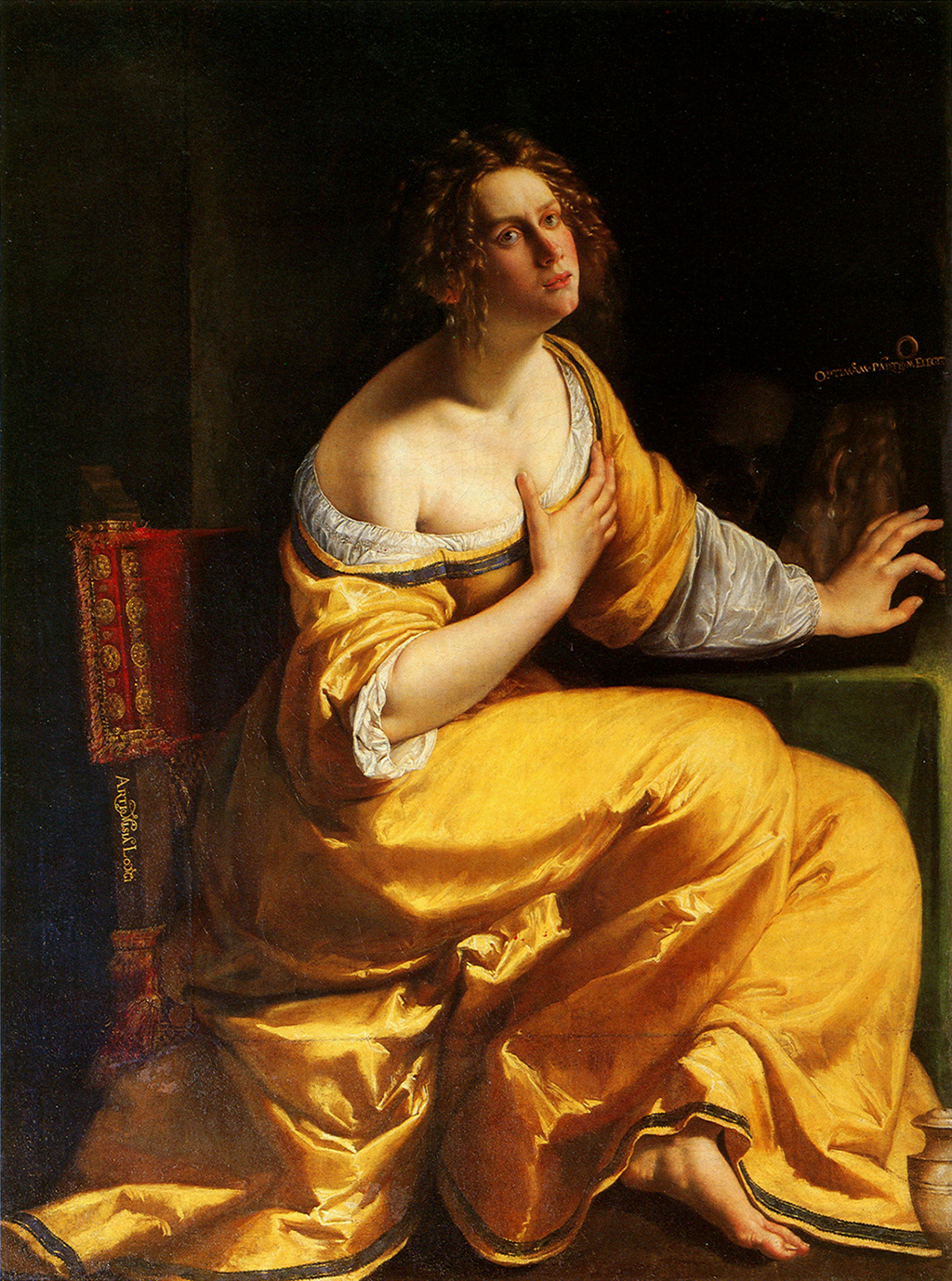
Artemisia Gentileschi's Mary Magdalene belongs to a quieter side of her art than the Judith paintings, but it is no less revealing. Instead of a heroine acting in the world, the painting shows a woman turning inward. The drama is not a sword stroke, a courtly collapse or a martyr's attribute. It is a spiritual decision, staged through light, fabric, gesture and the tension between worldly beauty and religious conversion. [1][2]
The work treated here is the painting now listed by the Uffizi Galleries as St. Mary Magdalen, in the Palatine Gallery at the Pitti Palace in Florence. The Uffizi gives the date as circa 1620, the medium as oil on canvas, the dimensions as 146.5 x 108 cm, and the inventory number as 1914 n. 142. [1]
This is the yellow-dressed Magdalene seated beside a mirror. It is not the later Mary Magdalene in Ecstasy now at the National Gallery of Art in Washington, and it is not the separate Mary Magdalene as Melancholy version associated with the Kimbell object route.
Image reference: Uffizi Galleries, St. Mary Magdalen.
At a Glance
- ArtistArtemisia Gentileschi
- Current official titleSt. Mary Magdalen. [1]
- Other titlesPenitent Magdalene and Conversion of the Magdalene. [2]
- DateUffizi: circa 1620; Smarthistory: circa 1615-16. [1][2]
- MuseumPitti Palace, Florence. [1]
- CollectionPalatine Gallery; Uffizi location listed as the Iliad Room. [1]
- Medium and sizeOil on canvas, 146.5 x 108 cm. [1]
- Inventory1914 n. 142. [1]
- Main subjectMary Magdalene turning from vanity toward devotion.
- Version cautionThis is the Pitti/Uffizi Magdalene, not the NGA Mary Magdalene in Ecstasy or the Kimbell/Melancholy version.
Contents
- Which Mary Magdalene Is This?
- Annotated Details
- The Magdalene and the Choice of Virtue
- Body, Fabric and Light
- Florence, Patronage and Self-Presentation
- Not the Ecstasy Version
- How This Painting Fits Artemisia's Career
- Where to Go Next
Which Mary Magdalene Is This?
The Uffizi record identifies the painting as St. Mary Magdalen, by Artemisia Gentileschi, in the Pitti Palace's Palatine Gallery. Those object facts make the Uffizi route the strongest reference point for this page. The image shows a seated young woman in a golden-yellow silk gown. Her right hand is held to her breast, her head turns upward, and her left hand gestures toward a mirror at her side. [1]
Title variation is part of the object's history. Smarthistory presents the Pitti painting under Conversion of the Magdalene, with artwork details naming it Penitent Magdalene, and dates it circa 1615-16. The Uffizi's current public record uses St. Mary Magdalen and circa 1620. Those titles are not contradictions in subject. They emphasize different aspects of the same devotional identity: the saint, the penitent woman, and the moment of conversion. [1][2]
For clarity, this account follows the Uffizi for current object identity while noting the alternate titles where they help readers understand the painting. The source distinction matters: one title or date should not erase the others.
Annotated Details from Mary Magdalene
This annotated close reading follows the Pitti/Uffizi St. Mary Magdalen route used by the Mary Magdalene page. The face, hand at the breast, mirror gesture, golden dress, inscription and lower folds all help Artemisia turn conversion into a visible bodily drama. The module belongs to the Pitti/Uffizi Magdalene page only, not to the NGA Mary Magdalene in Ecstasy or the Kimbell/Melancholy version.
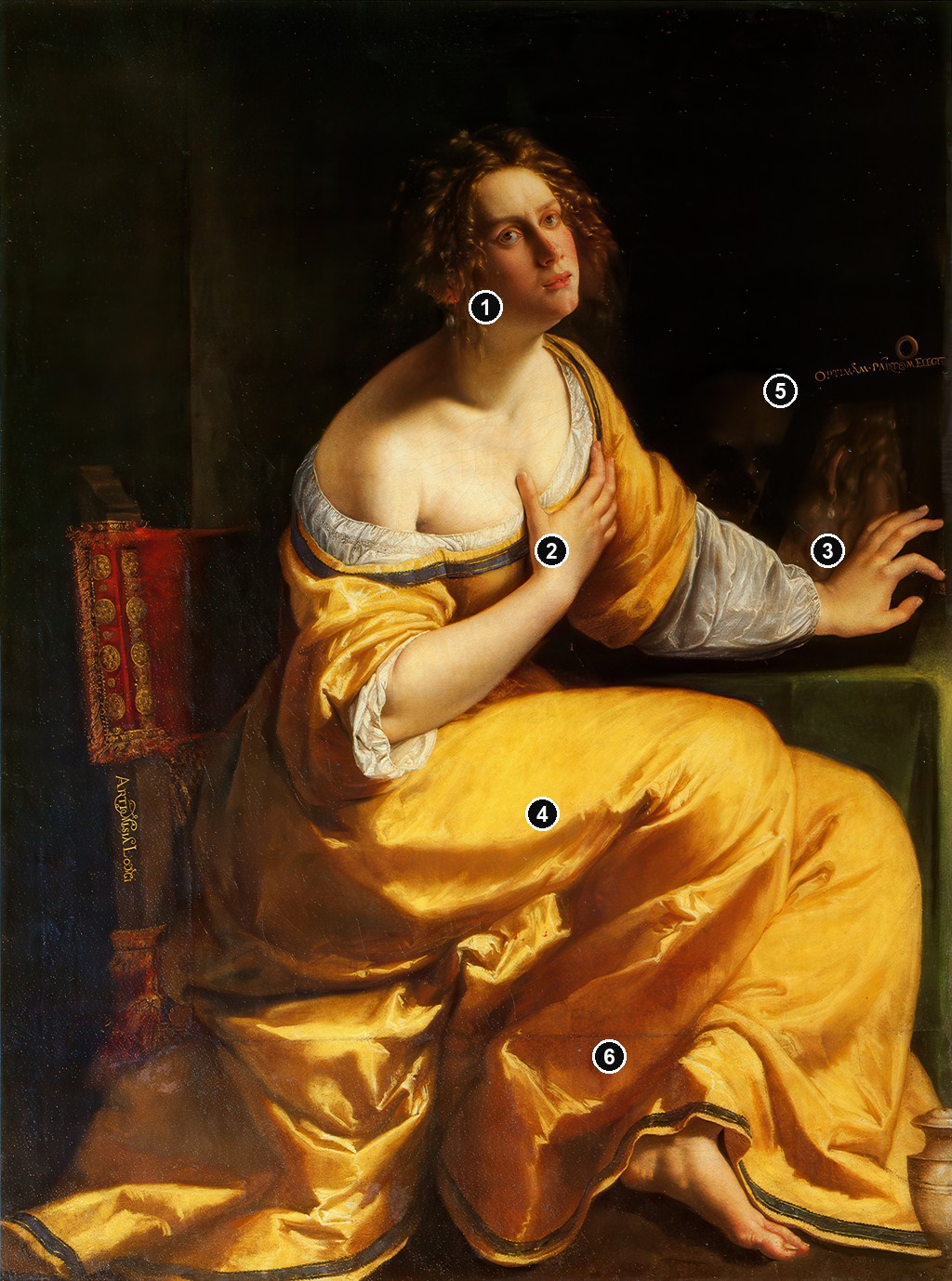
Details from MARY MAGDALENE
The details show how gesture, luxury fabric, mirror and inscription make the Magdalene's inward turn legible. They keep the focus on the Pitti/Uffizi object and its choice-of-virtue imagery.
Face and upward turn
The face turns upward with a softened, searching expression. Artemisia makes conversion feel personal rather than theatrical: the saint's decision begins in the eyes and lifted head.
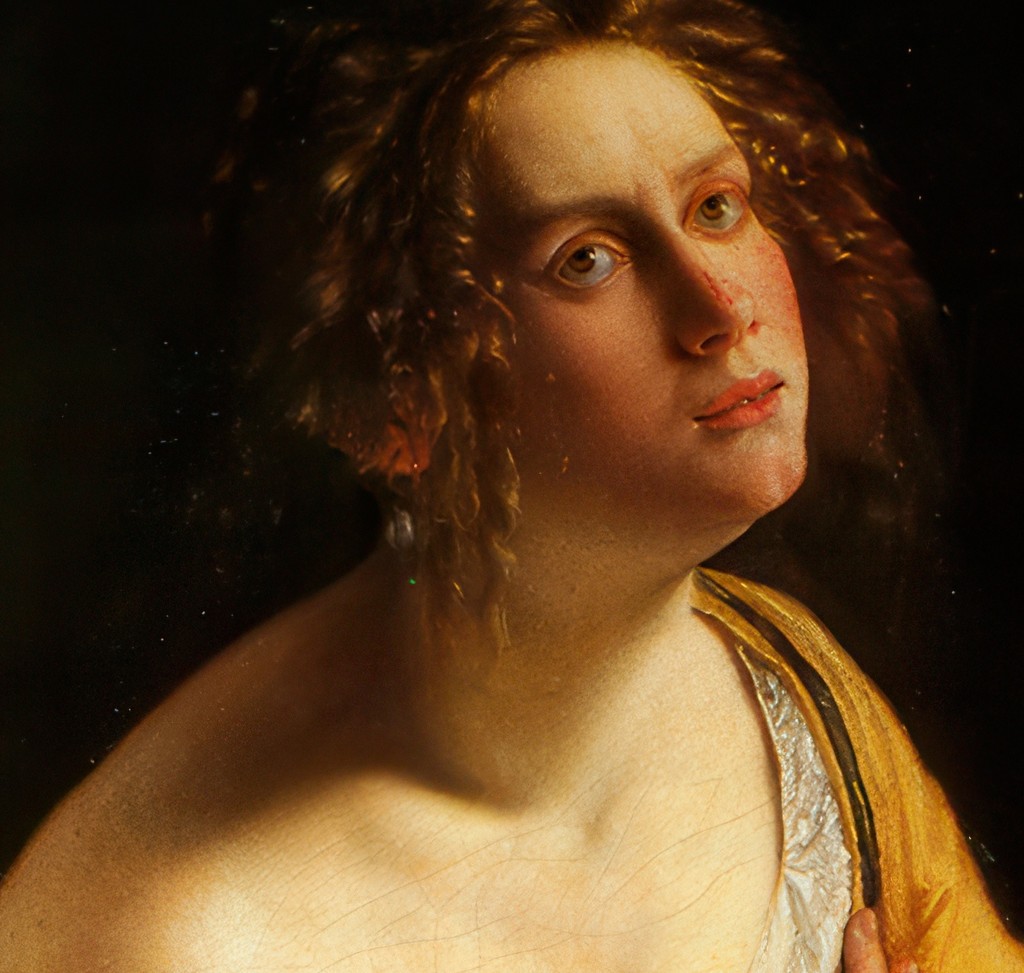
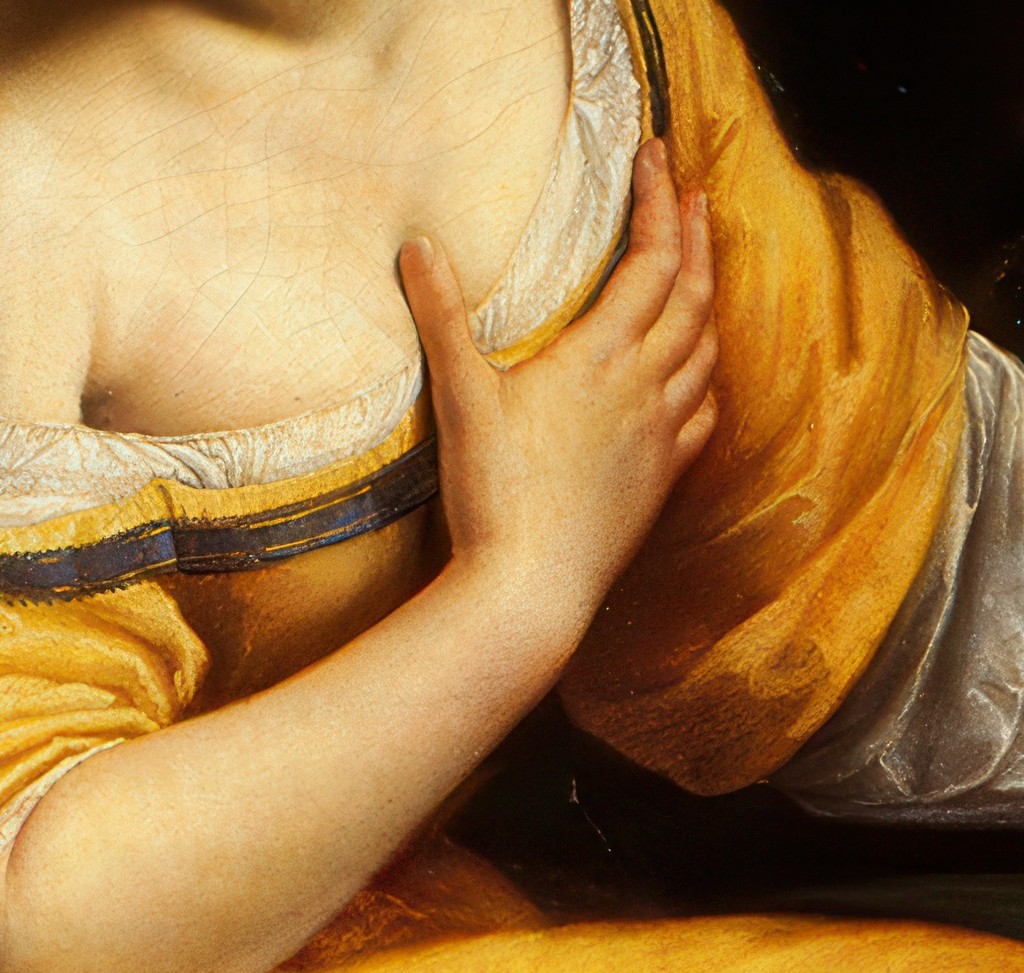
Hand at the breast
The hand at the breast gives inward recognition a physical form. The gesture can suggest penitence, emotion and sudden self-knowledge without needing a crowded narrative scene.
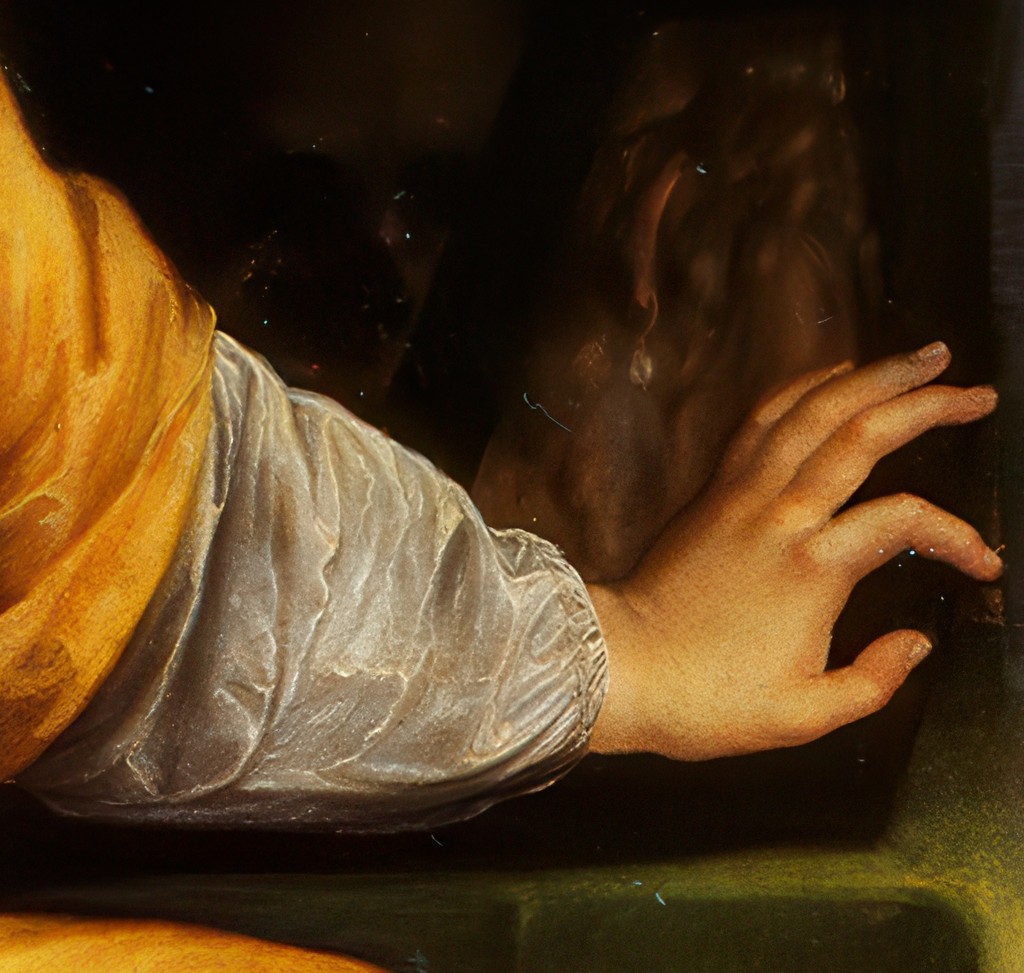
Hand and mirror gesture
The extended hand moves toward the mirror, the object associated with vanity in the Uffizi reading. The gesture makes the painting a drama of turning from worldly beauty toward devotion.
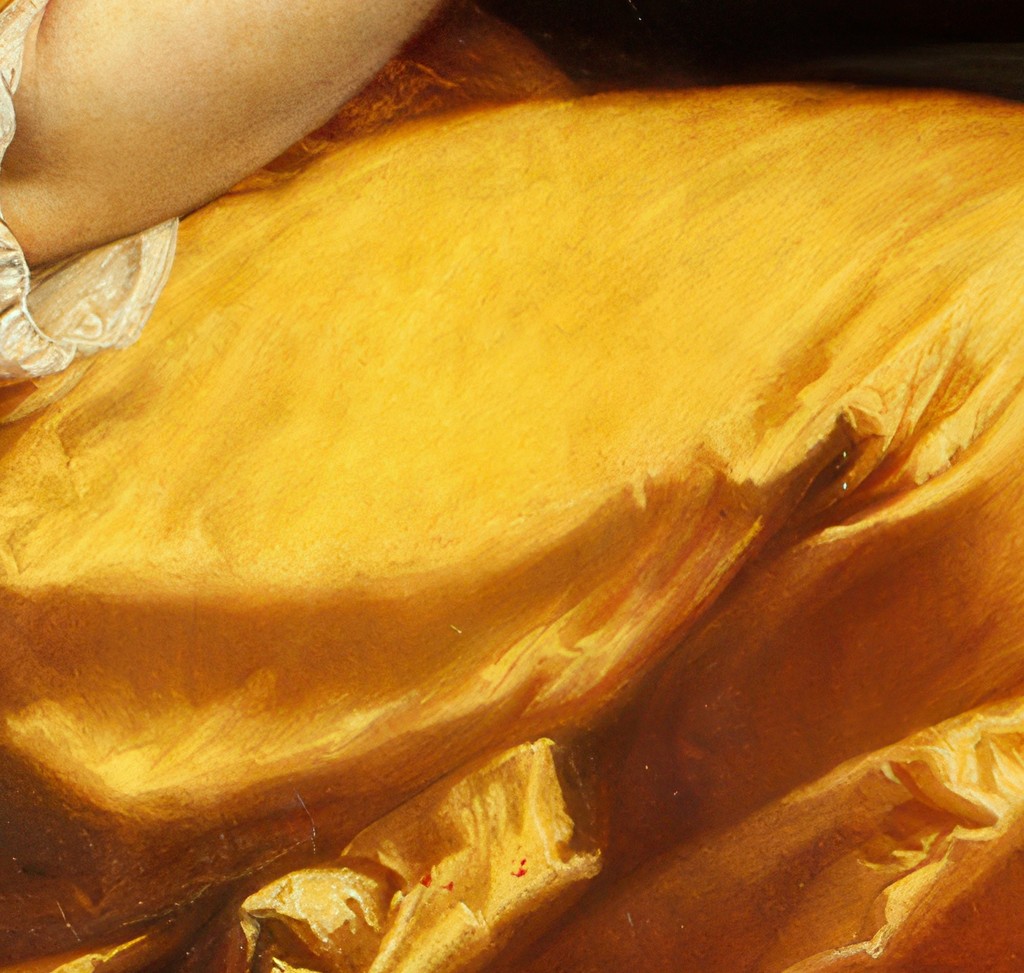
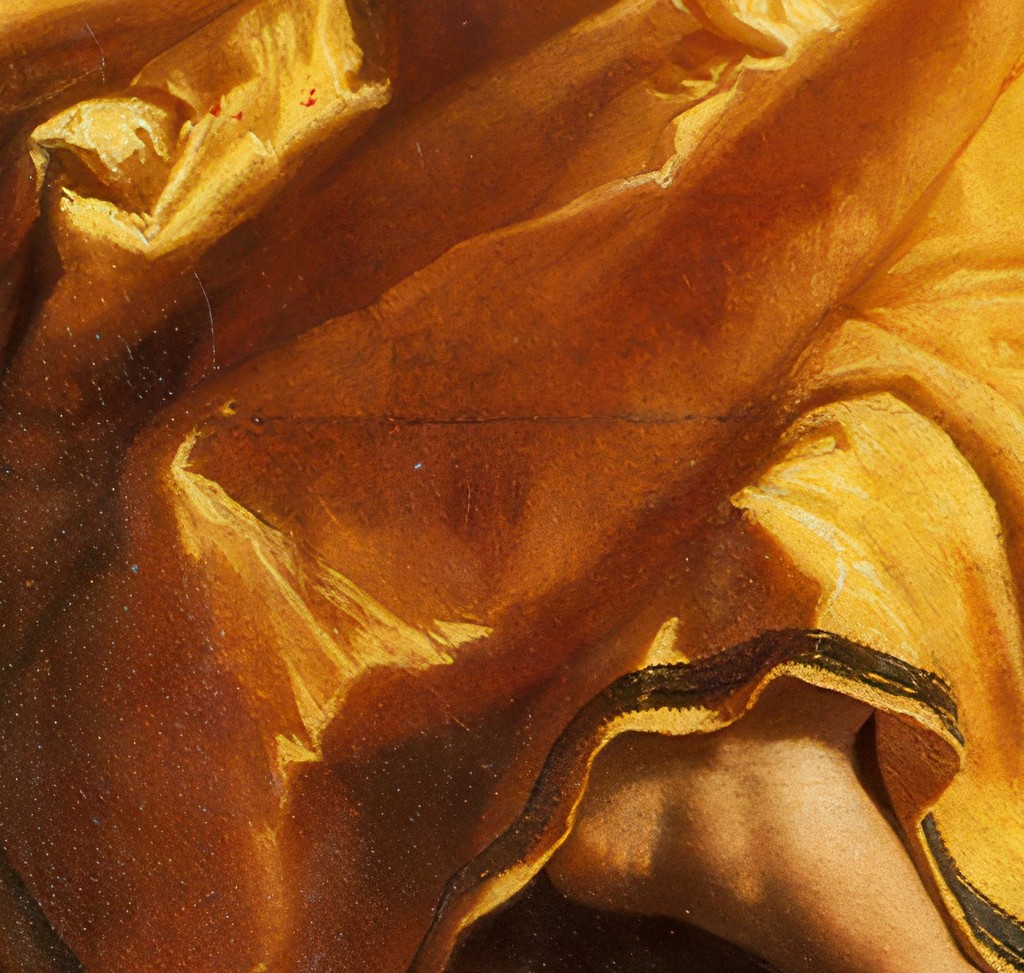
Golden drapery
The yellow silk floods the lower half of the picture. Artemisia lets the luxury remain beautiful, so the act of renunciation has real visual weight.
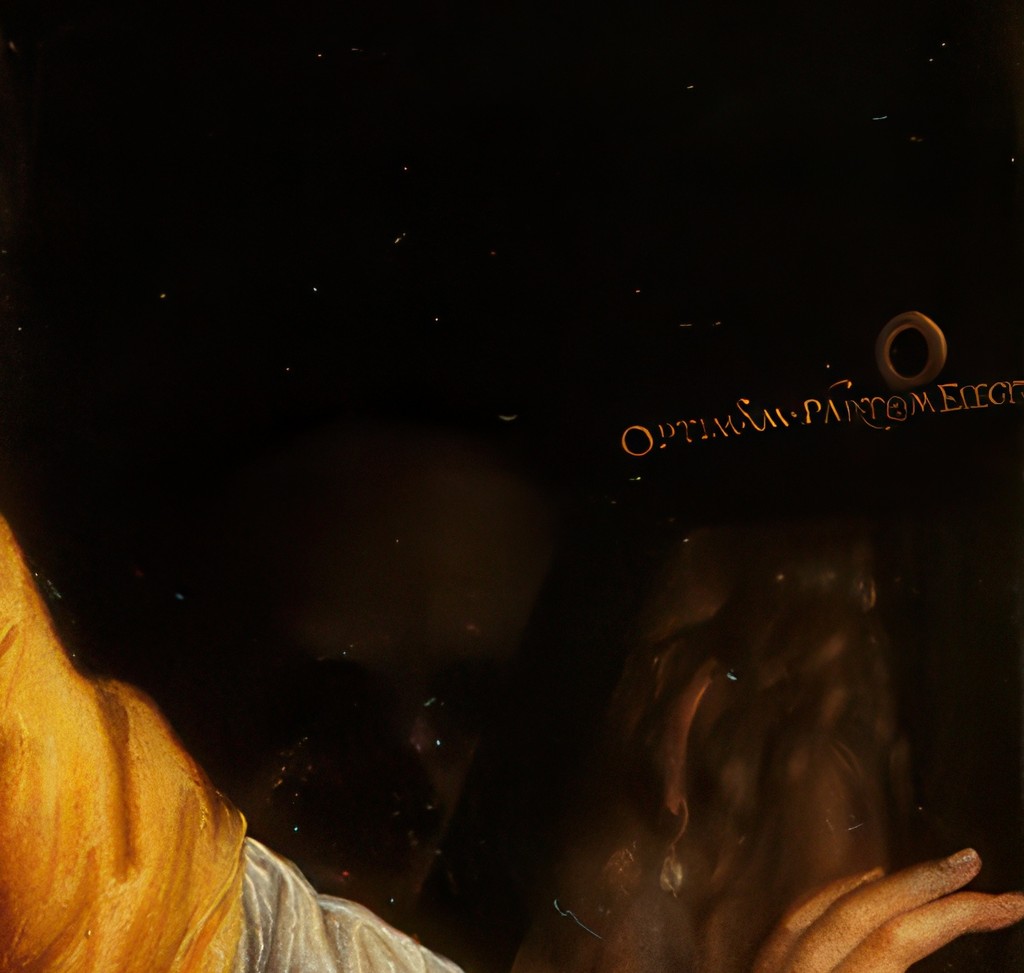
Inscription and dark mirror
The dark mirror and inscription carry the painting's moral language. They connect the image to the choice of the better part while keeping the surrounding space quiet and shadowed.
Lower folds and bare foot
The lower folds gather in heavy, luminous passages, with the bare foot emerging below. The body remains grounded even as the subject turns toward spiritual change.
The Magdalene and the Choice of Virtue
Mary Magdalene was one of the most emotionally charged saints in early modern Catholic art. She could stand for repentance, sensual beauty, tears, solitude, conversion and faithful witness. Artists often gave her signs of the life she was leaving behind: jewels, rich fabric, loose hair, perfume jars, mirrors or other objects associated with vanity and worldly pleasure.
Artemisia's Pitti Magdalene uses that tradition but does not make it simple. The saint is wrapped in a magnificent yellow gown. The fabric is not a minor prop. It floods the lower half of the canvas, catching light in folds and turning renunciation into a display of painterly luxury. The viewer is asked to see the beauty of what Mary Magdalene rejects.
The mirror beside her sharpens the theme. The Uffizi describes the mirror as a symbol of vanity and records the inscription Optimam partem elegit, understood as her choice of the better part, or virtue. Smarthistory connects the wording to the biblical contrast between worldly concern and spiritual attention. The object therefore gives the viewer both temptation and answer: beauty is present, but it is no longer the goal. [1][2]
Body, Fabric and Light
The painting's power lies in the way Artemisia makes inward change visible through the body. Mary Magdalene does not kneel at a distance or disappear into a vague holy glow. She sits close to us, large within the picture, one bare foot visible below the yellow folds. Her body turns between the world of the viewer and the dark space around the mirror.
Her gesture is ambiguous in the best sense. The hand at her breast can suggest emotion, recognition, repentance or sudden self-knowledge. The other hand moves toward the mirror, but not as if she is admiring herself. It becomes part of the renunciation. She is close enough to vanity to understand its pull, yet the painting shows her in the act of turning away.
Light arrives strongly from the right. The Uffizi connects this dramatic illumination to Artemisia's knowledge of Caravaggio's works in Rome. The light does not simply reveal the figure; it intensifies the moral drama. It brightens the face, shoulder, sleeve and satin, while the surrounding darkness holds the scene in tension. [1]
Smarthistory also emphasizes the contrast between Caravaggesque naturalism and the luxurious Florentine surface of the painting. That contrast is one of the reasons the work feels so alive. Artemisia does not strip Mary Magdalene of beauty in order to make her devout. She lets beauty remain visible, then makes the painting ask what beauty is for. [2]
Florence, Patronage and Self-Presentation
The Pitti Magdalene makes particular sense in Artemisia's Florentine world. After leaving Rome, she established herself in Florence, entered elite artistic circles and became an early woman member of the Academy of the Arts of Drawing. The National Gallery's artist biography records her arrival in Florence after the 1612 trial and her membership in the Academy in 1616. [3]
Smarthistory reads the painting in that Florentine context, noting the luxury of the sitter's dress and the prominent signature using the Lomi family name, which would have had local recognition in Florence. The painting's sumptuousness may therefore be more than decorative. It may speak to courtly taste, patronage and Artemisia's own need to present herself as an ambitious professional painter. [2]
The result is a devotional image with a social edge. Mary Magdalene is renouncing vanity, but Artemisia is also demonstrating mastery: satin, flesh, hair, reflected detail, inscription, gesture and light. The subject is humility; the execution is confident.
That tension is central to the painting. Artemisia did not have to choose between religious feeling and artistic display. She could make the display itself serve the religious drama.
Not the Ecstasy Version
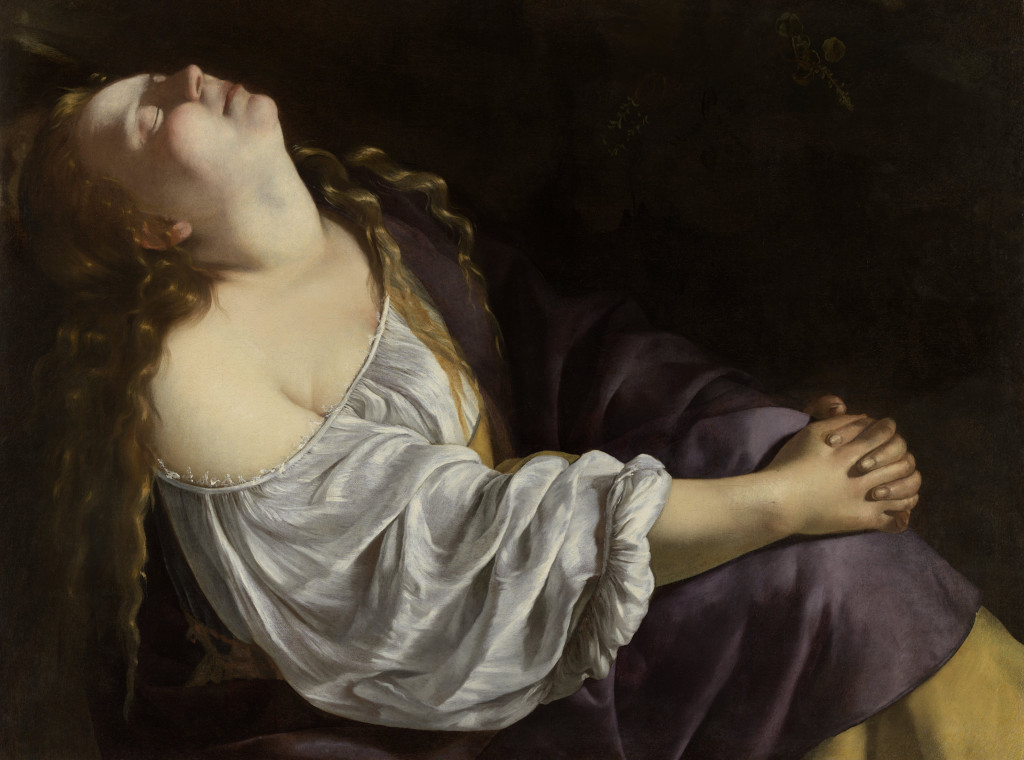
The National Gallery of Art's Mary Magdalene in Ecstasy is a different painting, now in Washington. The NGA article dates that work to around 1625 and describes its modern rediscovery and acquisition. Its Magdalene has no chair, no mirror and no lavish yellow gown. She is absorbed in an ecstatic moment, with closed eyes, exposed shoulder and clasped hands. [4]
The NGA article usefully notes that Artemisia painted several versions of the Magdalene's conversion or spiritual turning. It describes many of them as seated, often with objects connected to the life she has left behind, while the Washington painting strips the scene down to emotional absorption. [4]
That comparison helps define the Pitti version. The Pitti Magdalene is not simply less emotional than the Ecstasy. Its emotion is mediated through objects and choices: mirror, inscription, dress, hand, light. The Washington work asks viewers to witness an inward rapture. The Pitti work asks viewers to watch the difficult moment when worldly beauty is recognized and put aside.
The distinction should remain firm. Object facts, provenance, collection, dimensions and image notes from the NGA painting belong to the NGA version, not to this Pitti Magdalene.
How This Painting Fits Artemisia's Career
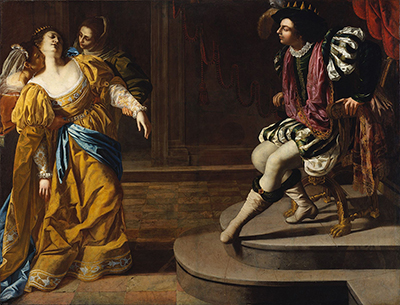
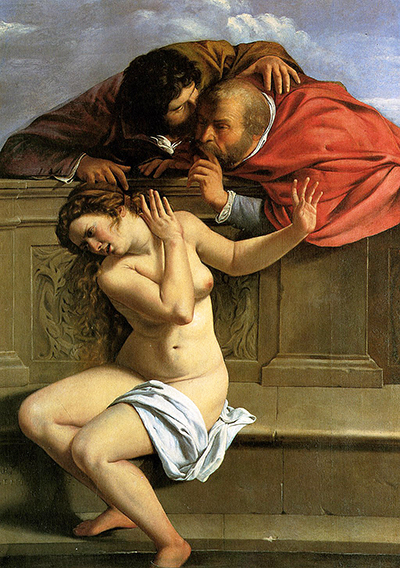
Artemisia is often introduced through women in crisis: Susanna under pressure, Judith in action, Lucretia before death, Esther before a king. Mary Magdalene belongs to the same wider concern with female bodies under moral and emotional strain, but the pressure is different. It is internal, devotional and reflective.
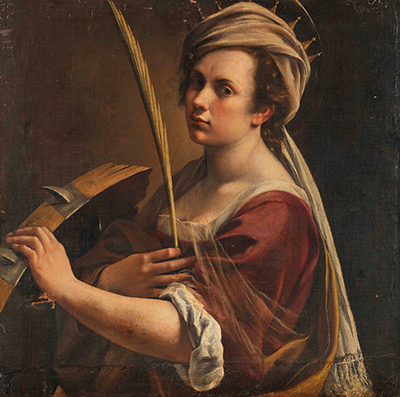
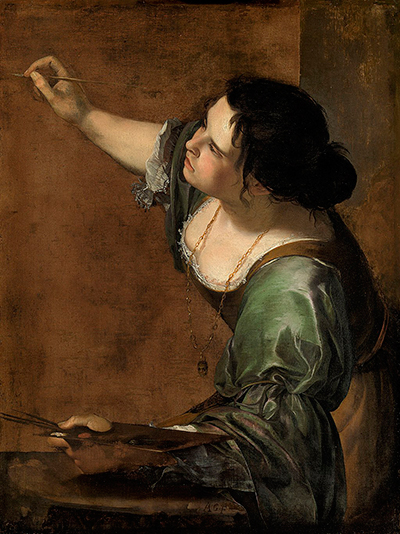
That makes the painting a useful bridge between her heroine scenes and her self-portrait group. Like Self-Portrait as Saint Catherine of Alexandria, it gives a female figure emotional authority. Like Self-Portrait as the Allegory of Painting, it uses the body as a site of meaning. Like Mary Magdalene in Ecstasy, it treats religious feeling as something physically visible.
The Pitti Magdalene also broadens Artemisia beyond a narrow revenge or violence reading. The painting is dramatic, but not violent. It is sensual, but not merely decorative. It is religious, but not remote. It shows how Artemisia could turn a familiar devotional subject into a charged encounter between the eye, the conscience and the painted surface.
Where to Go Next
Readers who want the broader shape of Artemisia's career should continue with the biography and the paintings hub. For Magdalene comparisons, Mary Magdalene in Ecstasy shows the NGA version, while Mary Magdalene as Melancholy follows the Kimbell Penitent Mary Magdalene.
For related themes, read Self-Portrait as Saint Catherine of Alexandria and Lucretia. Both show Artemisia turning a female figure into a powerful site of feeling, dignity and decision. The Pitti Magdalene is quieter than those works, but it asks an equally sharp question: what does conversion look like when the world being rejected is still painted with such beauty?
Frequently Asked Questions
This page treats the Pitti/Uffizi painting currently listed by the Uffizi Galleries as St. Mary Magdalen, in the Palatine Gallery at the Pitti Palace.
No. Mary Magdalene in Ecstasy is a different Artemisia Magdalene painting now in the National Gallery of Art, Washington. Its object facts should not be imported into the Pitti/Uffizi painting.
The Uffizi record uses St. Mary Magdalen, while Smarthistory discusses the same Pitti painting as Conversion of the Magdalene and Penitent Magdalene. The titles emphasize saint, penitence and conversion.
The Uffizi describes the mirror as a symbol of vanity. In the painting, it helps stage Mary Magdalene's turn away from worldly beauty toward devotion.
Discussion / Reader Insights
Use this space to share close-looking notes on Artemisia Gentileschi's Pitti/Uffizi Magdalene and its version boundaries.
What to Look For
- The mirror, inscription and yellow gown as signs of beauty, vanity and conversion.
- How Artemisia uses light to make an inward decision visible.
- Where this Pitti version differs from the NGA Ecstasy and Kimbell/Melancholy versions.
Join the Conversation
Have you compared this Pitti Magdalene with another Artemisia Magdalene version? Share the object source and the visual detail that matters most.
References
- Uffizi Galleries, St. Mary Magdalen by Artemisia Gentileschi.
- Smarthistory, Jesse Locker, Artemisia Gentileschi, Conversion of the Magdalene.
- National Gallery, London, Artemisia Gentileschi artist biography.
- National Gallery of Art, The Exceptional Emotion of Artemisia Gentileschi's Mary Magdalene in Ecstasy.
- Wikimedia Commons, Artemisia Gentileschi Mary Magdalene Pitti.jpg, candidate image/source-match reference.
 Artemisia Gentileschi.jpg)
 Artemisia Gentileschi.jpg)