


 by Tom Gurney
Tom Gurney BSc (Hons) is an art history expert with over 20 years experience
Published on June 19, 2020 / Updated on September 6, 2026
Email: tomgurney1@gmail.com / Phone: +44 7429 011000
Artemisia Gentileschi Paintings
Artemisia Gentileschi's paintings are among the most powerful works of the Italian Baroque. She painted biblical heroines, saints, allegories, portraits, devotional figures and ambitious courtly subjects, often giving familiar stories a new sense of physical and psychological pressure. Her best paintings do not simply show strong women. They show bodies making decisions, resisting danger, enduring suffering or claiming artistic authority. [1][2]
This paintings hub is a guide to the main routes through Artemisia's painted work. It is not a complete catalogue raisonne, and it does not pretend that every attribution, version or rediscovery has been settled. Artemisia's corpus includes closely related versions, works that have changed attribution, paintings rediscovered in recent decades and pictures whose object histories require careful handling.
The most useful starting points are Susanna and the Elders, the Florence and Naples versions of Judith Slaying Holofernes, Self-Portrait as the Allegory of Painting, Self-Portrait as Saint Catherine of Alexandria, Esther before Ahasuerus, Allegory of Inclination, Mary Magdalene in Ecstasy and The Birth of Saint John the Baptist. Together they show why Artemisia cannot be reduced to one subject or one biography.
Image reference: Artemisia Gentileschi image archive.
At a Glance
- ArtistArtemisia Gentileschi
- Main mediumOil painting
- Major subjectsBiblical heroines, saints, allegories, self-portraits and devotional figures
- Key citiesRome, Florence, Naples and London [1]
- Best entry pointsSusanna, Judith, La Pittura, Saint Catherine, Esther and Magdalene
- Important collectionsNational Gallery, Uffizi, Capodimonte, Royal Collection, Met, Prado and NGA
- Reader cautionVersions, rediscoveries and attribution histories need object-by-object reading
- Browse moduleSelected artwork pages with thumbnail and title routes below
Contents
- How to Read Artemisia's Paintings
- Early Rome and Susanna
- Florence and Self-Fashioning
- The Judith Paintings
- Heroines and Moral Crisis
- Magdalene and Devotional Paintings
- Allegory and Courtly Identity
- Versions and Rediscoveries
- Browse the Paintings
- How to Use This Hub
How to Read Artemisia's Paintings
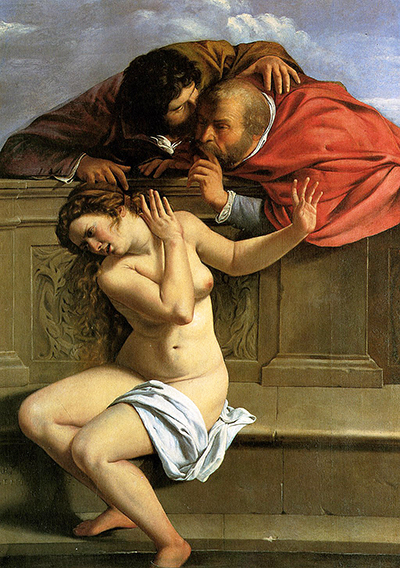
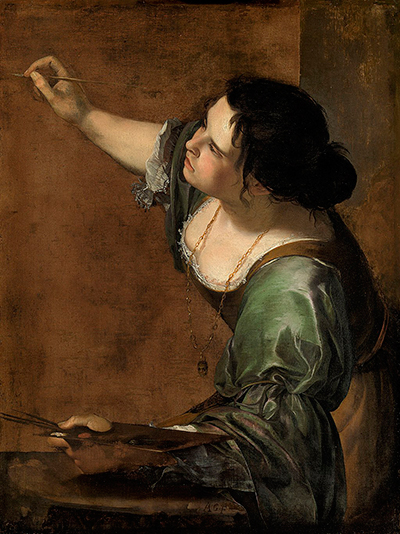
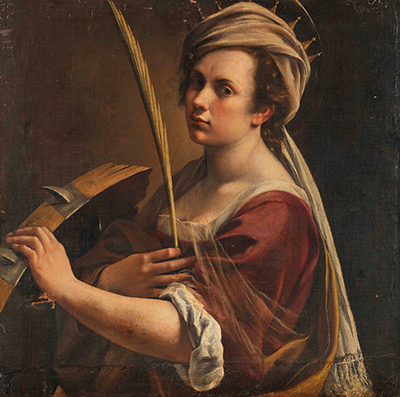
Artemisia's paintings often begin with a familiar story and then make it newly urgent. The viewer does not feel safely outside the action. Susanna turns away from the elders in a cramped space. Judith and her maidservant press down on Holofernes with real physical force. Esther faints before a king whose decision may save or destroy her people. Saint Catherine faces the viewer with the instrument of martyrdom beside her. La Pittura twists into the work of painting itself.
Three qualities recur across the strongest works. The first is pressure. Artemisia liked moments when a story has not yet resolved: the threat, the action, the decision, the aftermath or the public claim. The second is bodily credibility. Her figures lean, grip, twist, recoil, reach and bear weight. The third is moral clarity without emotional simplification. Her heroines may be courageous, but courage is rarely easy.
Light also matters. Artemisia worked in the Baroque world shaped by dramatic naturalism and Caravaggism, but she did not merely imitate a style. She used light to give bodies consequence. In the Judith paintings, light clarifies violence. In Saint Catherine, it turns an attribute into a presence. In La Pittura, it makes artistic labour visible.
Early Rome and Susanna
Susanna and the Elders is the essential starting point for Artemisia's early painting. Made in 1610, it is her earliest signed and dated painting known today and already shows the direction her art would take. Susanna is not presented as a calm nude for the viewer's pleasure. She is trapped, pressured and visibly distressed. [1]
The painting matters because it predates the violence Artemisia suffered in 1611 and the trial of Agostino Tassi in 1612. It is not a direct record of those events. It is evidence that Artemisia, still very young, already understood how to reverse the emotional direction of a familiar subject.
Florence and Self-Fashioning
Florence gave Artemisia new forms of artistic identity. After leaving Rome, she worked in a city where courtly culture, allegory, portraiture, literary circles and professional ambition mattered intensely. The paintings from this phase show her using the female figure not only as a subject of narrative pressure, but as a vehicle for self-presentation. [1]
Self-Portrait as Saint Catherine of Alexandria, now in the National Gallery, is central to this group. Artemisia appears as the learned martyr Catherine, with the broken wheel and palm that identify the saint. The painting is devotional, but it is also a self-image of unusual force: a woman artist taking on a role associated with learning, endurance and sacred authority. [2]
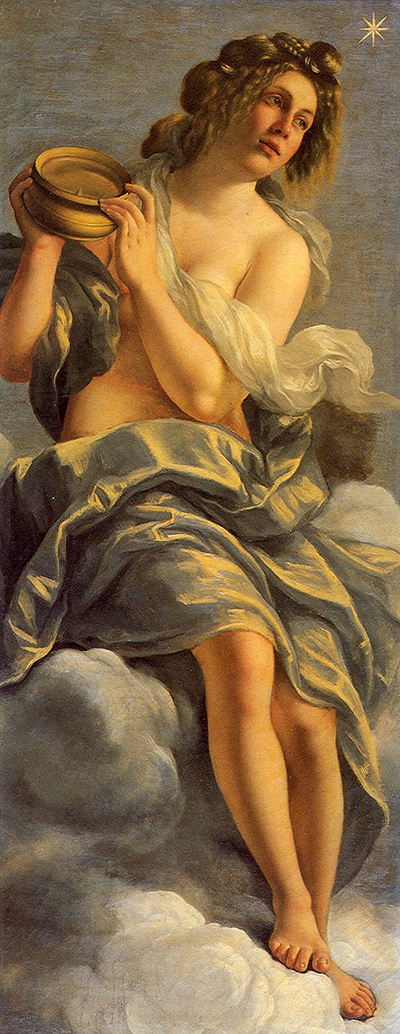
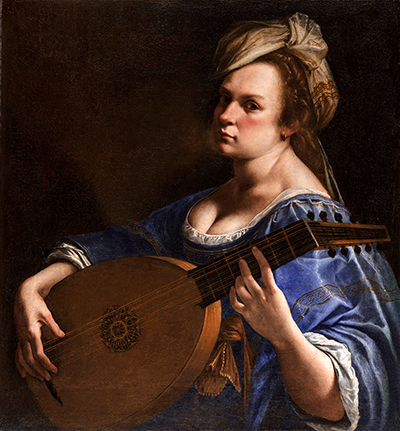
Self-Portrait as a Lute Player belongs to the same world of role portraiture and courtly self-fashioning. Allegory of Inclination, painted in 1616 for Casa Buonarroti, gives the Florentine phase another kind of importance: an allegorical commission tied to Michelangelo Buonarroti the Younger and later transformed by overpainting and restoration history. [7]
The Judith Paintings
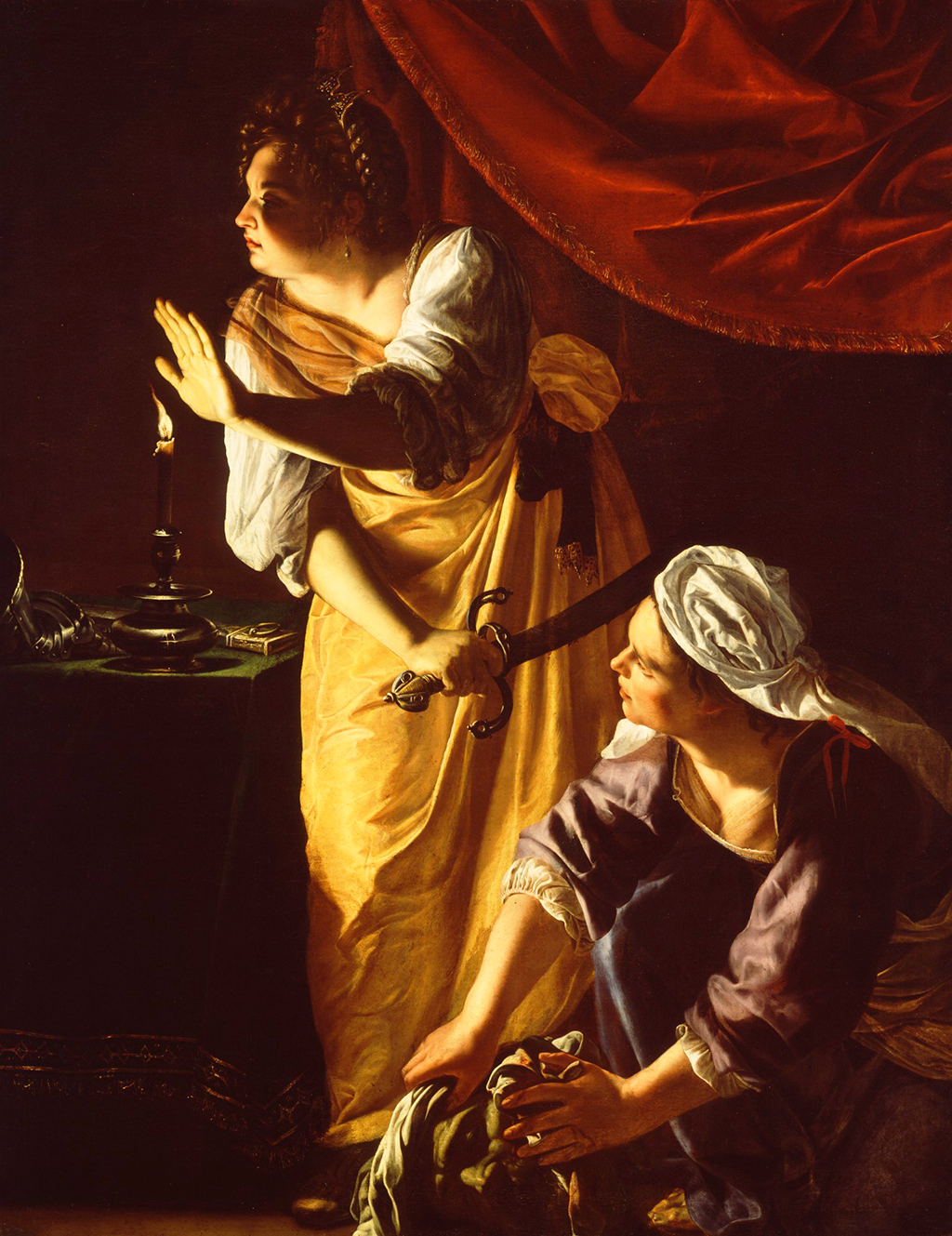
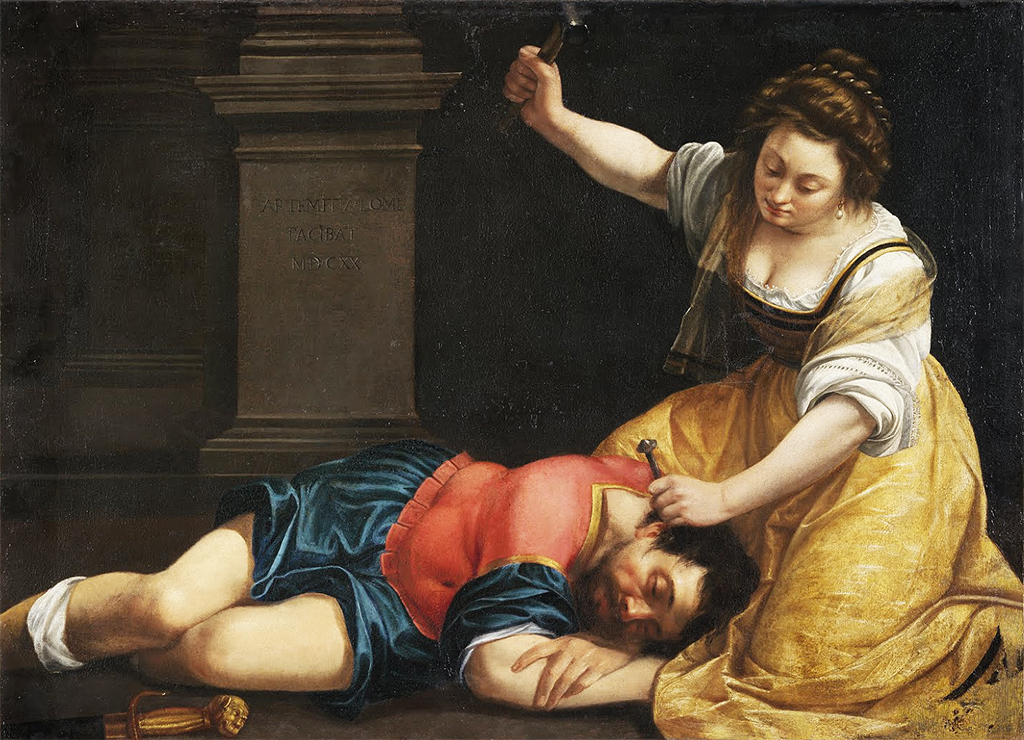
The Judith subjects are Artemisia's most famous works, and they deserve careful navigation. Judith Slaying Holofernes exists in closely related Florence and Naples versions, and Judith and Her Maidservant with the Head of Holofernes follows the story into the tense aftermath. These are not interchangeable pictures. They are a group of related works that ask to be read by object, collection, date and moment in the story. [3][4]
The Florence version, in the Uffizi, has its own object identity. The Naples version, in Capodimonte, is a distinct canvas with its own museum record, display context and modern reception. Both show the beheading itself: Judith and her maidservant acting together, Holofernes struggling, blood marking the bed and the heroic story made physically difficult.
Judith also helps explain how Artemisia uses collaboration. The maidservant is never merely decorative in the strongest Judith works. She helps hold the scene together physically and emotionally. Artemisia turns female partnership into pictorial structure.
Heroines and Moral Crisis
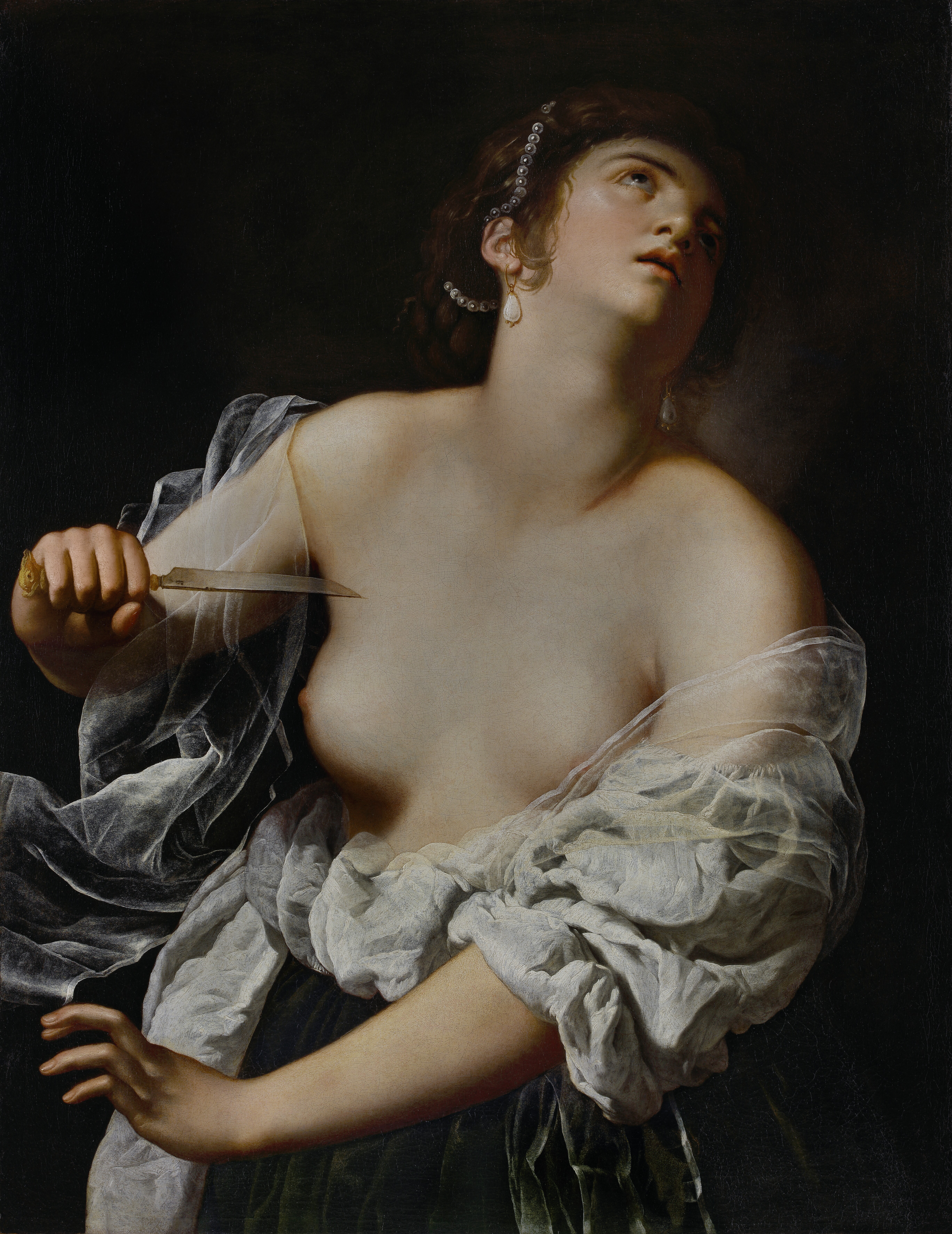
Artemisia returned often to women caught at moments of moral crisis. Some are threatened, like Susanna. Some act violently, like Judith. Some intervene in courtly power, like Esther. Some confront sexual violence, shame or death, like Lucretia. Others require especially careful version and attribution handling before a reader treats any single page as definitive.
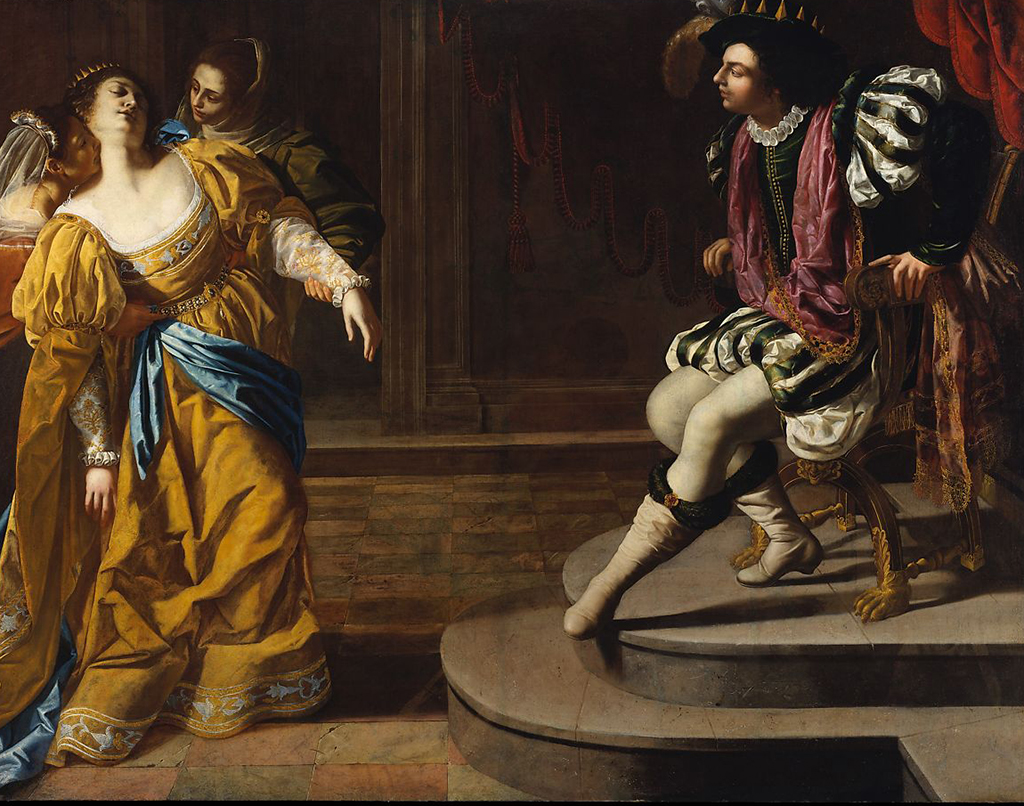
Esther before Ahasuerus, in the Metropolitan Museum of Art, is one of the most useful works for broadening the story beyond Judith and Susanna. The Met describes the painting as one of Artemisia's most ambitious, showing Esther risking death by appearing before King Ahasuerus to save her people. Technical evidence reveals a painted-out servant and dog beneath the surface. [6]
This group shows why simple summaries of Artemisia as a painter of female power are not enough. Susanna's strength is refusal. Judith's is action. Esther's is risky intercession. Saint Catherine's is endurance. La Pittura's is authorship. Artemisia gives each figure a different visual grammar.
Magdalene and Devotional Paintings
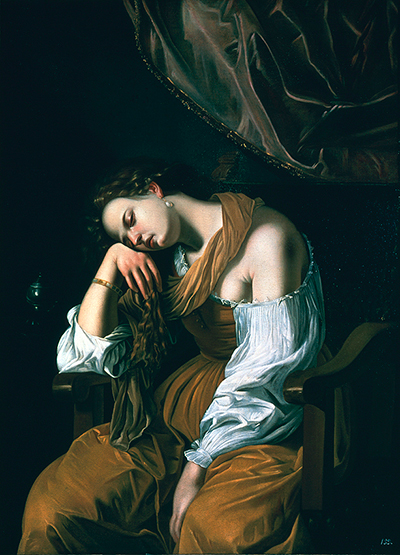
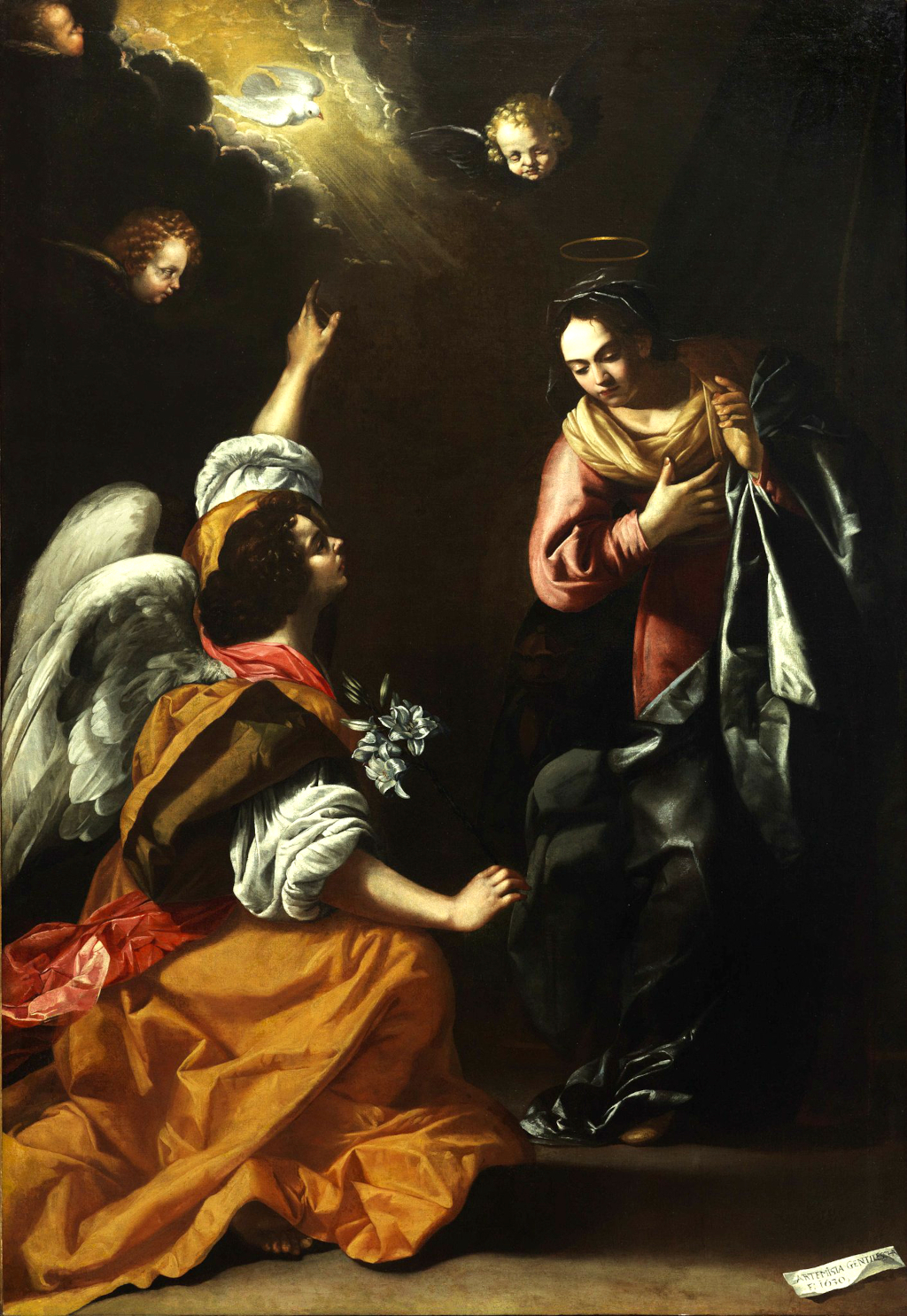
Artemisia's devotional paintings are essential to the shape of her career. They show a painter who could handle inward states as well as violent action. Magdalene subjects, Annunciation themes and large religious commissions belong to this side of her work.
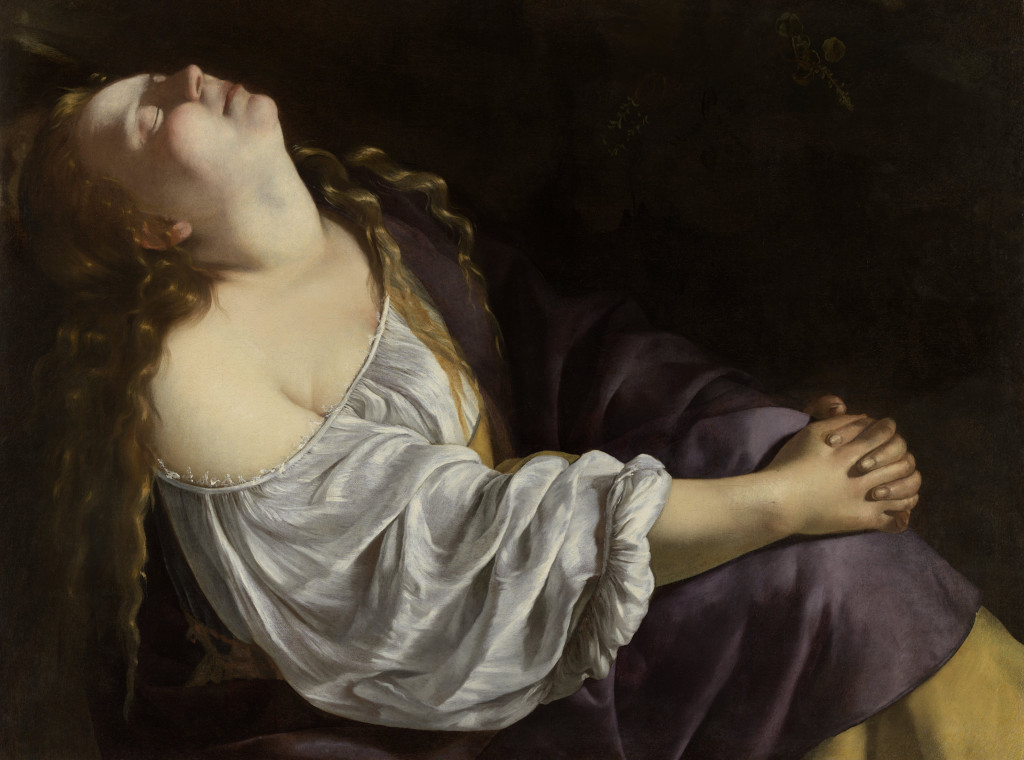
Mary Magdalene in Ecstasy, acquired by the National Gallery of Art in Washington in 2026, has become a major modern anchor for this devotional route. The NGA describes it as a defining work by Artemisia, dating it around 1625 and recording it as the first singular work by Gentileschi to enter that collection. [9]
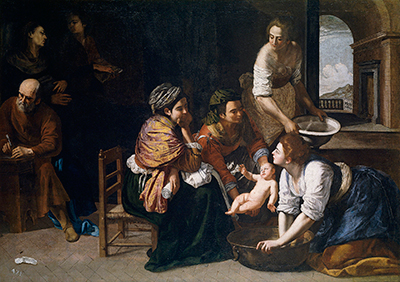
The Birth of Saint John the Baptist, in the Prado, points to another important phase: Naples and Spanish patronage. The Prado places the painting around 1635 and connects it with a series from the life of Saint John the Baptist commissioned for the Buen Retiro Palace in Madrid. [8]
Allegory, Portraiture and Courtly Identity
Artemisia's allegorical and portrait-like paintings show another route through the corpus. Self-Portrait as the Allegory of Painting, or La Pittura, is the most conceptually daring of these works. In the Royal Collection, Artemisia presents herself as both the painter and Painting personified. [5]
Allegory of Inclination offers a Florentine counterpart. Painted for Casa Buonarroti, it represented Michelangelo's natural inclination toward artistic creation and later became the focus of restoration and diagnostic study after historic overpainting altered the nude figure. [7] That history gives readers a concrete example of how Artemisia's paintings have been changed, interpreted and recovered over time.
Versions, Attributions and Rediscoveries
Artemisia's paintings need careful object-by-object reading because the corpus includes versions, rediscoveries and attribution questions. The same subject may exist in more than one version. Related works may belong to Artemisia, to her workshop, to another artist in the Gentileschi family or to later reception. Some paintings now central to her reputation entered major public collections only recently.
This does not weaken her importance. It is part of how early modern art history works. Paintings were copied, repeated, altered, sold, inherited, misattributed, restored and rediscovered. The task is not to flatten that complexity, but to help readers understand it.
The safest route is to begin with source-backed object pages. Read the Florence Judith as the Uffizi painting, the Naples Judith as the Capodimonte painting, Saint Catherine as National Gallery NG6671, La Pittura as the Royal Collection work, Esther as the Met painting, and Birth of Saint John as the Prado commission. Once each object is secure, comparison becomes useful instead of confusing.
Browse the Paintings
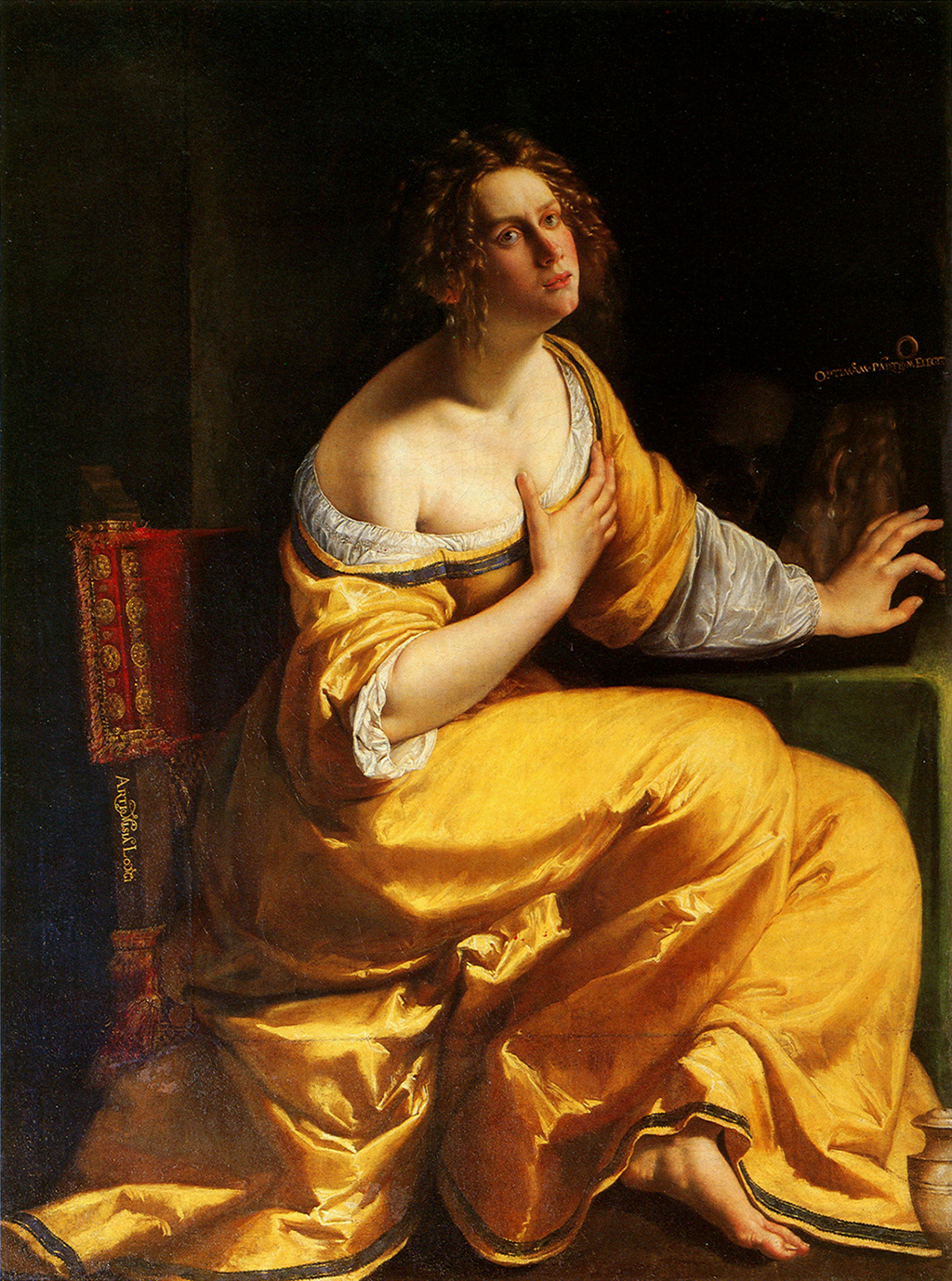
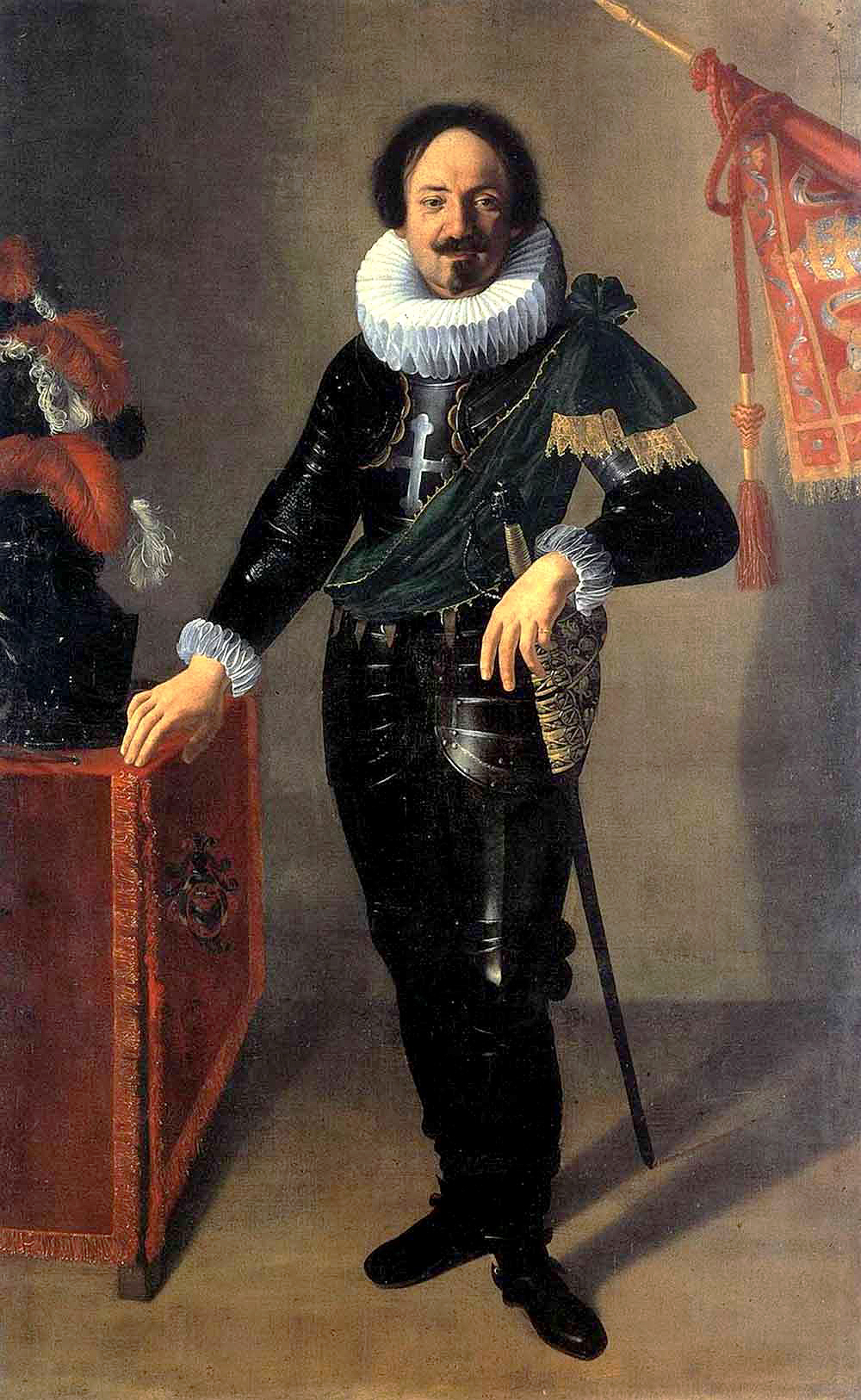
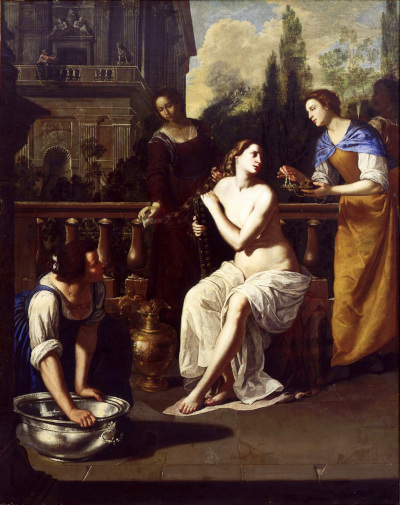
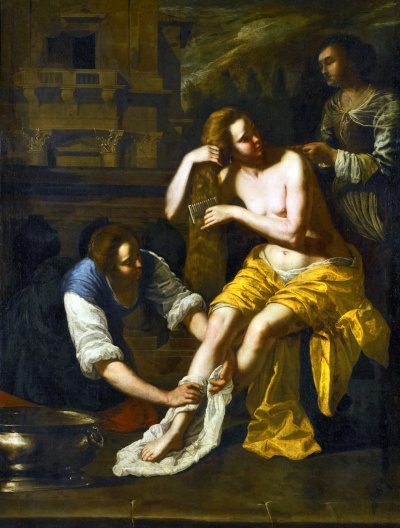
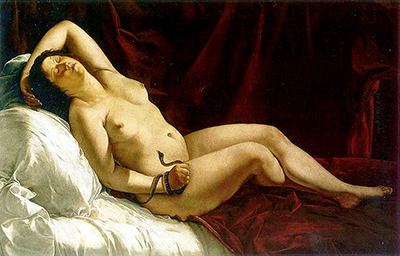
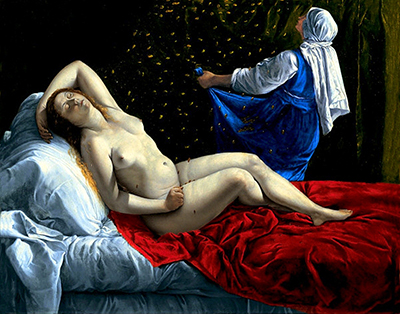
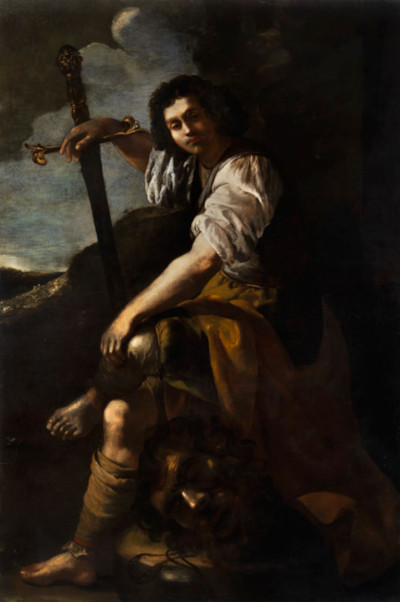
Use this list as a map rather than a ranking. Start with the flagship paintings if you are new to Artemisia: Susanna and the Elders, the two Judith beheading versions, La Pittura and Saint Catherine. Then move to works that widen the picture, including Judith and Her Maidservant, Esther before Ahasuerus, Allegory of Inclination, Mary Magdalene in Ecstasy, The Birth of Saint John the Baptist, Lucretia and Annunciation.
 Artemisia Gentileschi.jpg)
 Artemisia Gentileschi.jpg)
 Artemisia Gentileschi.jpg)
How to Use This Hub
The important thing is not to treat every page as the same kind of evidence. Some are securely anchored flagship works with rich museum records. Some are strong but narrower pages. Some are useful because they show version problems, rediscovery, workshop context or reception. A good paintings hub should make those differences easier to see.
Use the individual artwork pages for fuller visual analysis, object facts and source references. This page gives the overview: the subjects Artemisia returned to, the kinds of pressure she painted, the places and collections that shape the corpus, and the caution needed when versions or attributions are still under review.
Related Pages
- Artemisia Gentileschi
- Biography
- Paintings
- Self-Portrait as a Lute Player
- Self-Portrait as the Allegory of Painting
- Allegory of Inclination
- Susanna and the Elders
- Judith Slaying Holofernes, Florence
- Judith Slaying Holofernes, Naples
- Esther before Ahasuerus
- Mary Magdalene in Ecstasy
- Drawings
- Prints
- Baroque Artists
Frequently Asked Questions
Discussion
Which route through Artemisia Gentileschi's paintings helps you understand her range most clearly?
Reader Insights
Would you begin with Susanna, Judith, La Pittura, Saint Catherine or another painting?
Where does separating related versions make the story easier to follow?
Which painting best shows Artemisia beyond the familiar story of violence and biography?
Join the Conversation
Share your reading of Artemisia's paintings below.
References
- National Gallery, London, Artemisia Gentileschi (1593-1654 or later).
- National Gallery, London, Artemisia Gentileschi, Self-Portrait as Saint Catherine of Alexandria.
- Uffizi Galleries, Judith Beheading Holofernes.
- Museo e Real Bosco di Capodimonte, Giuditta decapita Oloferne di Artemisia Gentileschi.
- Royal Collection Trust, Self-Portrait as the Allegory of Painting (La Pittura).
- Metropolitan Museum of Art, Esther before Ahasuerus.
- Casa Buonarroti, The restoration of Artemisia Gentileschi's Inclination in Casa Buonarroti.
- Museo Nacional del Prado, The Birth of Saint John the Baptist.
- National Gallery of Art, The National Gallery of Art Acquires Mary Magdalene in Ecstasy.
- Artemisia Gentileschi image archive.