 by Tom Gurney
Tom Gurney BSc (Hons) is an art history expert with over 20 years experience
Published on June 19, 2020 / Updated on September 6, 2026
Email: tomgurney1@gmail.com / Phone: +44 7429 011000
Susanna and the Elders by Artemisia Gentileschi
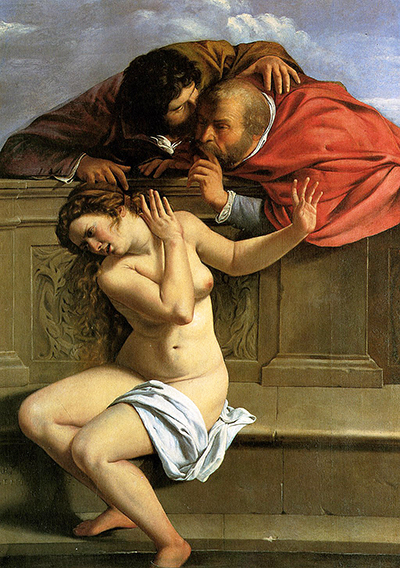
Artemisia Gentileschi's Susanna and the Elders is one of the most important early paintings of the Italian Baroque. Painted in 1610, when Artemisia was still a teenager, it is her earliest signed and dated painting known today and one of the clearest signs of the force she would bring to biblical subjects throughout her career. [1]
The painting shows Susanna, the virtuous woman from the Book of Daniel, trapped by two older men who have watched her bathing and now threaten to accuse her of adultery unless she submits to them. Many Renaissance and Baroque artists used the story as a respectable way to paint the female nude. Artemisia made something more disturbing. Her Susanna is not arranged for easy admiration. She twists away from the men above her, her arms raised in distress, her body pressed against cold stone and hemmed into a space with no visible escape. [2]
That difference is why the painting has become a central work in Artemisia studies. It is often discussed beside the violence Artemisia suffered in 1611 and the trial of Agostino Tassi in 1612, but the chronology is crucial: Susanna and the Elders predates those events. The painting is not a record of Artemisia's own assault. It is the work of a young artist who already knew how to turn a familiar subject into a scene of psychological pressure, moral danger and bodily vulnerability.
To look at this painting carefully is to see Artemisia's early intelligence at work. She understood the Susanna story, but she also understood the older visual tradition that had often made Susanna's body available to the viewer. Her painting refuses that comfort. It makes the viewer feel the weight of the elders' intrusion and the impossibility of Susanna's position.
Image reference: Smarthistory object discussion.
At a Glance
- ArtistArtemisia Gentileschi
- TitleSusanna and the Elders
- Date1610 [2]
- MediumOil on canvas [2]
- Dimensions170 x 119 cm [2]
- CollectionSchloss Weissenstein, Pommersfelden [2]
- SubjectSusanna threatened by two elders, from Daniel
- Career importanceEarliest signed and dated painting known today [1]
- Key cautionPainted before the 1611 assault and 1612 trial [2]
Contents
- The Story of Susanna
- Object Facts and Early Authorship
- Artemisia in Rome in 1610
- The Composition
- Annotated Details
- Susanna's Body and the Viewer
- Biography, Trauma and Chronology
- Susanna and the Tradition of the Nude
- Training, Signature and Evidence
- Why This Early Painting Matters
The Story of Susanna
The story of Susanna appears in the additions to the Book of Daniel. Susanna is a married woman admired for her beauty and virtue. Two elders, men of authority within her community, secretly watch her as she bathes in her husband's garden. When they find her alone, they threaten her: if she refuses them, they will falsely accuse her of adultery with a young man.
Susanna refuses. She chooses the risk of death over submission to the elders' coercion. The elders carry out their threat, and Susanna is condemned. Daniel intervenes by questioning the men separately and exposing contradictions in their testimony. Susanna is vindicated, and the elders are punished. [5]
The subject was popular in European painting partly because it joined moral drama to the display of the nude female body. A painter could present Susanna's body within a biblical narrative and claim the subject as an image of virtue, chastity and divine justice. That moral cover did not remove the visual problem. The story often allowed viewers to share, safely and silently, in the elders' act of looking.
Artemisia's painting changes that arrangement. The elders are still there; the threat remains sexual and legal; Susanna is still unclothed. But the painting does not make her nudity feel like the viewer's reward. Her body is tense, twisted and exposed against her will. The viewer is pushed into an uneasy position, aware of looking at a woman who does not want to be seen.
Object Facts and Early Authorship
Susanna and the Elders is dated 1610 and painted in oil on canvas. Smarthistory gives the dimensions as 170 x 119 cm and locates the painting at Schloss Weissenstein in Pommersfelden. [2] The National Gallery identifies it as Artemisia's earliest signed and dated painting, and the National Gallery's exhibition material noted that she painted it when she was seventeen. [1][3]
Those facts matter because they place the painting at the threshold of Artemisia's career. This is not a late work retroactively shaped by fame. It is an early signed statement by an artist still working inside her father's Roman workshop, but already capable of handling a difficult subject with unusual concentration.
The painting's importance has sometimes led scholars to ask how much Orazio Gentileschi, Artemisia's father and teacher, contributed to its design. That question belongs to the history of attribution and workshop practice, but it must be handled carefully. Smarthistory notes that some art historians have suggested Orazio's hand in the sophisticated composition, while also pointing to Artemisia's signature and to the way the painting's themes and quality continue in her later work. [2]
In other words, the painting should not be taken away from Artemisia simply because it is precocious. She was young, and she was trained by Orazio, but youth and training do not cancel authorship. The painting's signature, date and place in her later development all support its central position in her oeuvre.
Artemisia in Rome in 1610
Artemisia was born in Rome in 1593, the only daughter of Orazio Gentileschi. She trained in his workshop, which connected her to the Roman artistic world transformed by Caravaggio's dramatic naturalism. [1] Women had limited access to the training structures available to men, so the family workshop was the place where she could learn materials, composition, figure painting and the professional routines of art making.
That context helps explain the ambition of Susanna and the Elders. The painting is not naive. It is built from knowledge of earlier art, biblical subject matter and the expectations of elite viewers. Smarthistory points to Artemisia's engagement with artistic tradition, including connections to Annibale Carracci's treatment of Susanna and to the ancient Crouching Venus type adapted into Susanna's defensive pose. [2]
Rome in 1610 was a demanding place for a young painter. Caravaggio had died that year, but his influence remained powerful. Painters working in and around Rome were exploring close figure groups, strong light, emotional immediacy and subjects that unfolded in compressed space. Artemisia's Susanna belongs to that world, but it is also distinct from it. The drama does not come from theatrical violence or heroic action. It comes from the pressure of unwanted attention.
The Composition
The first thing to notice is how little room Susanna has. She sits on a stone bench that cuts across the lower part of the painting, and the space around her seems to close rather than open. Smarthistory describes the bench as blocking any visible escape route, and that observation is central to the painting's effect. [2] Susanna is outside, but she does not feel free.
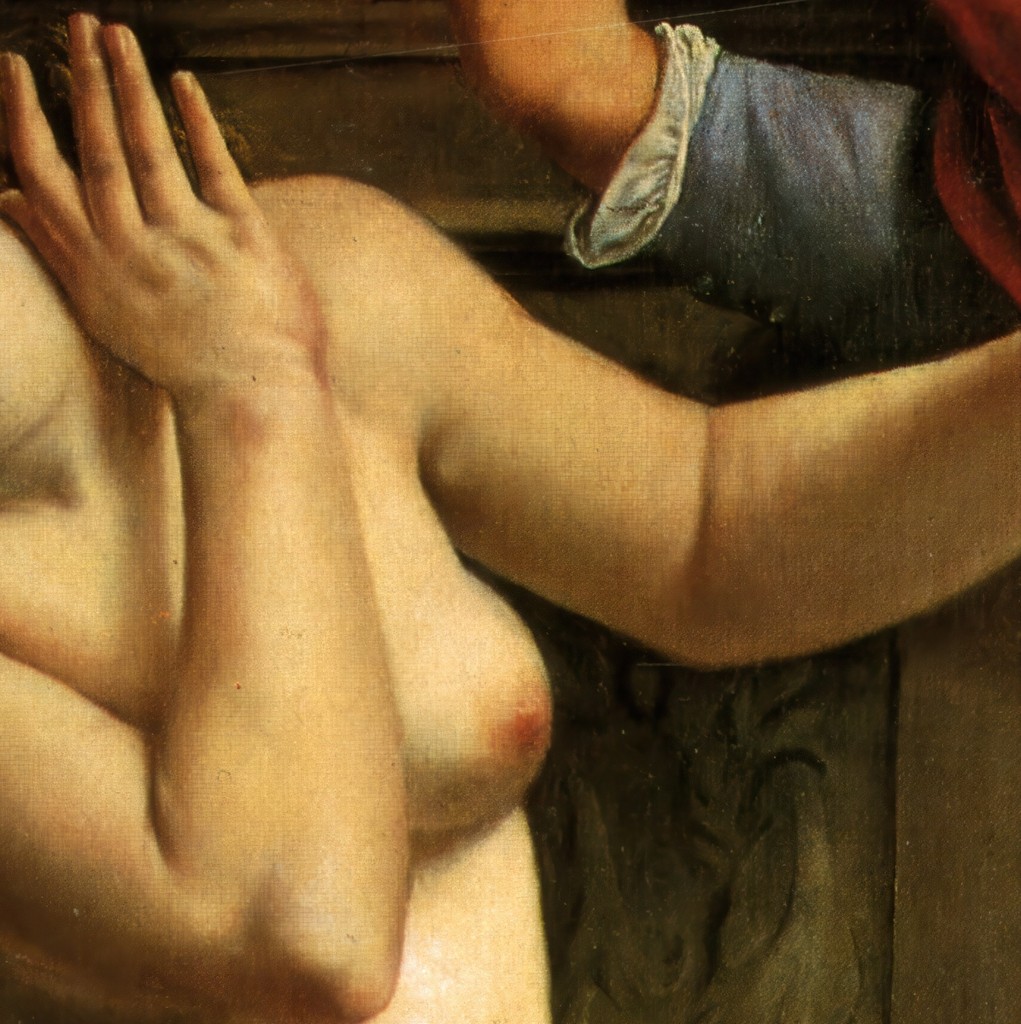
Her body turns sharply away from the elders. One arm crosses upward; the other lifts in a gesture of refusal and alarm. Her head bends, her face tightens, and her body recoils from the two men who appear above her. The pose is beautiful in a formal sense, but Artemisia does not let beauty neutralise fear. Susanna's exposed body is also a vulnerable body.
The elders form a dark, heavy mass at the top of the composition. They lean over the wall or stone ledge, close enough to invade Susanna's space even before any physical contact occurs. Their heads and hands concentrate the threat. One appears to speak or whisper; the other presses forward. The two figures operate almost like a single force descending on her.
The tight cropping matters too. There is no broad garden, no luxurious fountain, no space where the eye can wander away from the threat. The painting condenses the story to three bodies and one unbearable moment. That compression is one of Artemisia's great early achievements. She removes almost everything that would make the subject decorative.
Annotated Details from Susanna and the Elders
This annotated close reading follows the painting's pressure points: Susanna's recoiling body, the elders leaning over the stone ledge, the raised hands of refusal and the hard architecture that blocks any easy escape. The details reinforce the page's central caution: this is a 1610 painting about coercive looking and biblical threat, not a direct response to the later 1611 assault and 1612 trial.
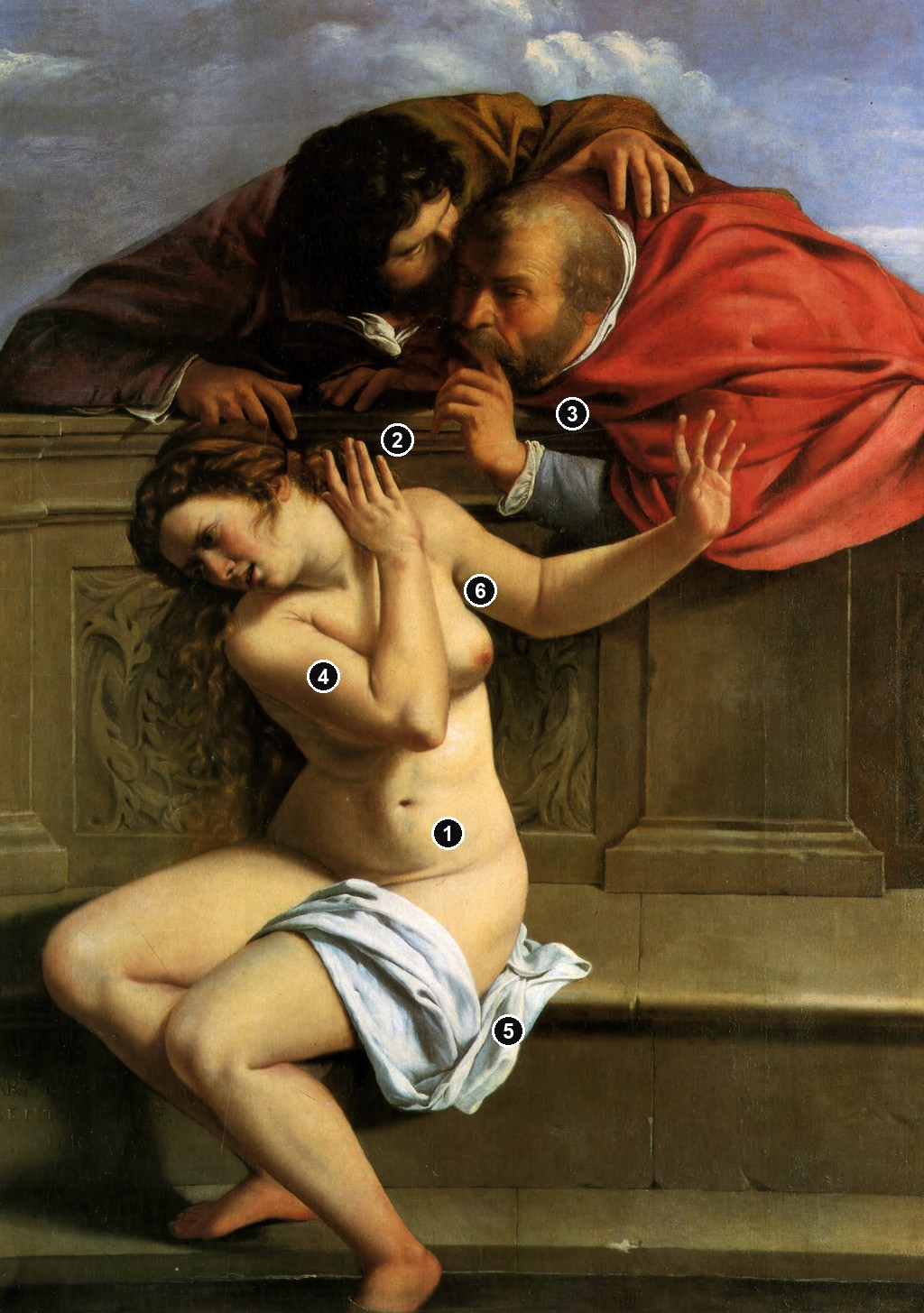
Details from SUSANNA AND THE ELDERS
Close looking shows how Artemisia compresses the story into a conflict between exposed vulnerability, male authority and the stone barrier that traps Susanna in the viewer's field of vision.
Susanna's recoiling body
Susanna's torso twists away from the men above her. The pose is formally elegant, but its effect is defensive: the body is exposed and resisting at the same time.
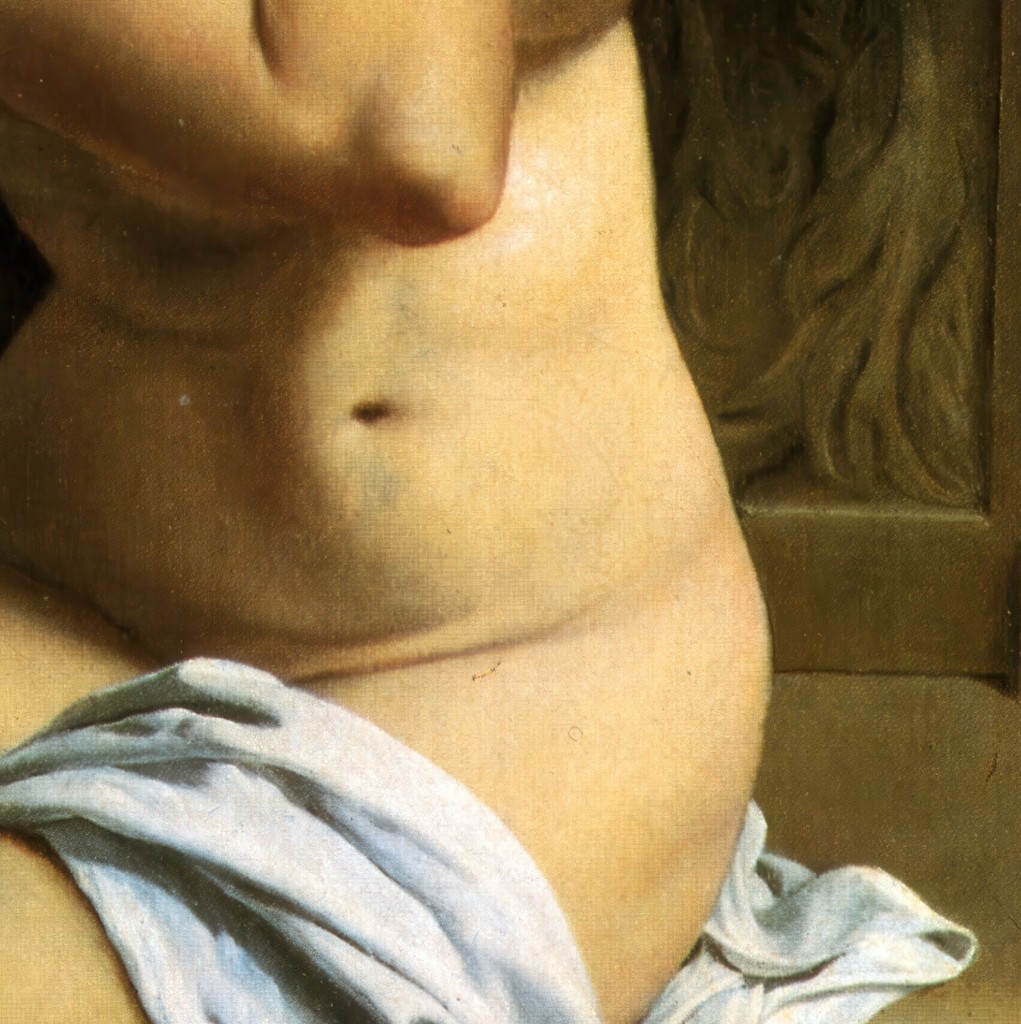
Elder leaning over the ledge
The dark-haired elder bends over the stone barrier, bringing his head and hand down into Susanna's space. His position makes looking feel like intrusion.
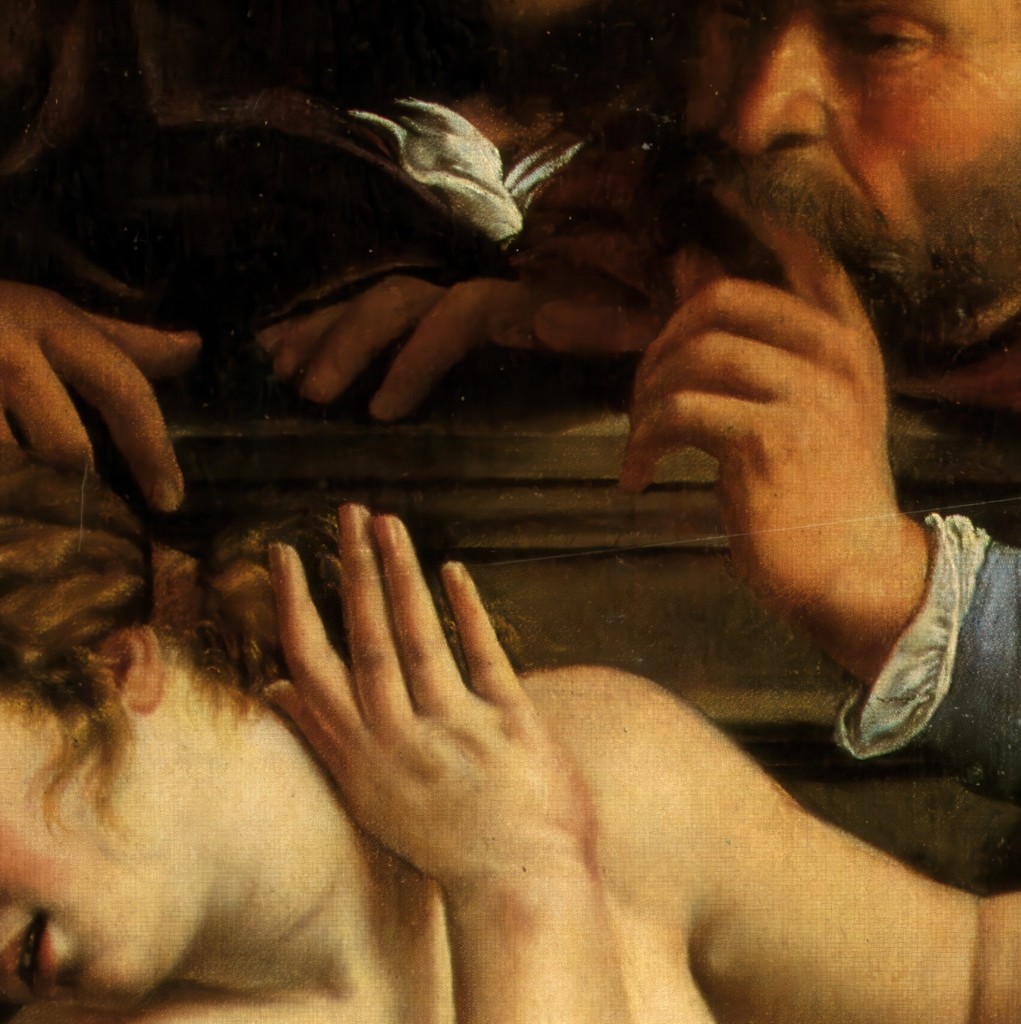
Second elder's pressure
The older man in red presses forward with a hand lifted near his mouth. The gesture holds the moment of coercive proposal before the false accusation begins.
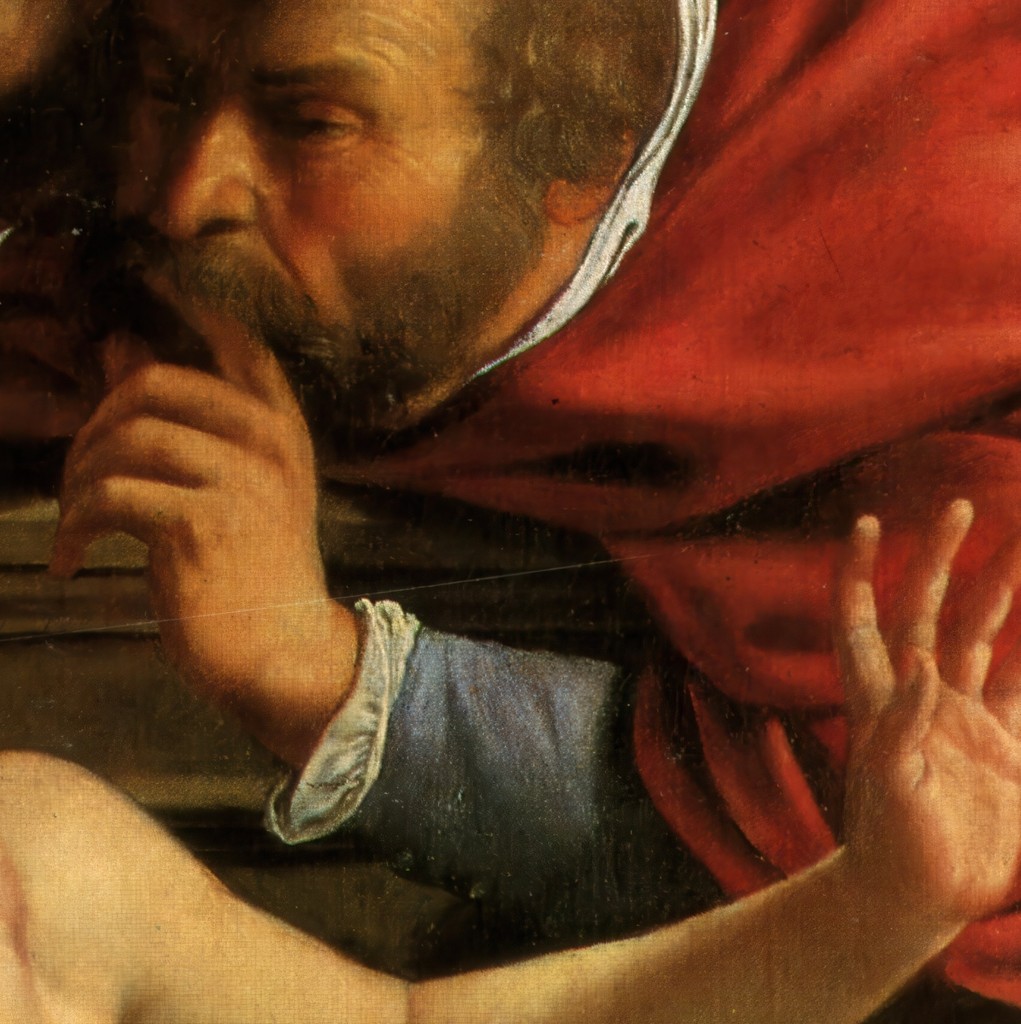
Raised arm and turning head
Susanna's head turns down and away while one arm rises across her body. Artemisia makes refusal visible before the story reaches Daniel's public vindication.
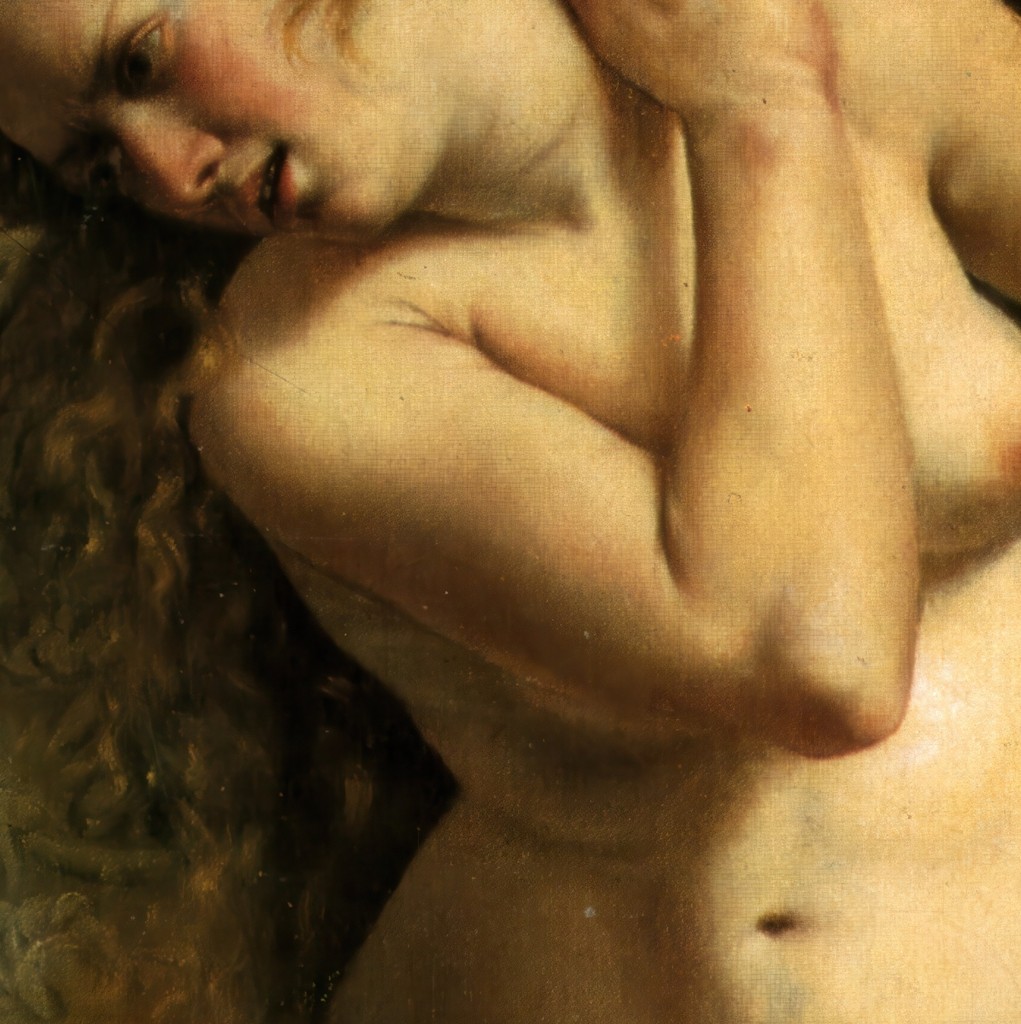
Compressed lower pose
The bent legs and white cloth compress the lower body against the stone step. The painting gives Susanna little room to move or breathe.
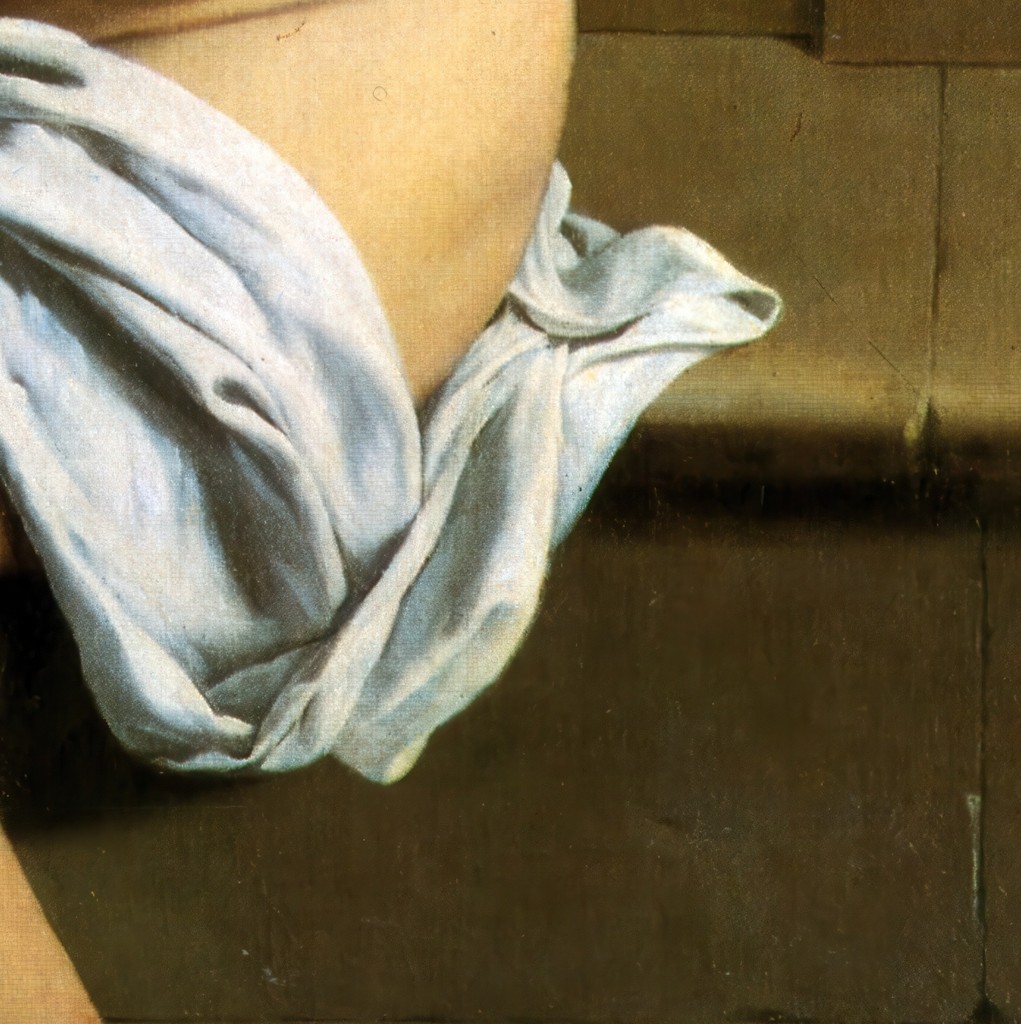
Defensive crossing of arms
The raised forearm and crossed hand create a bodily barrier between Susanna and the men above her. Artemisia makes resistance visible as pressure closes in.
Susanna's Body and the Viewer
The Susanna story had long posed a problem for painters. It allowed them to paint a nude woman while claiming moral seriousness. The viewer could admire Susanna's body while condemning the elders' desire. Artemisia makes that double position harder to maintain.
Her Susanna does not invite looking. She reacts to being looked at. The viewer sees her body, but the painting insists that this visibility is part of the violence of the scene. Susanna's raised arms do not simply cover her nudity in a modest gesture; they show the effort of defending herself from pressure she did not choose.
This is where Artemisia's painting differs most powerfully from many earlier treatments. The female nude is not transformed into a safe ideal. The body remains tense, awkward, angled and emotionally charged. Susanna's discomfort is not a minor detail within an otherwise pleasing composition. It is the painting's centre.
The result is a shift in moral perspective. The viewer cannot simply occupy the elders' place without discomfort. The painting makes their intrusion visible as intrusion. It also makes Susanna's refusal active even before the legal vindication of the story. Her body says no before Daniel ever enters the narrative.
Biography, Trauma and Chronology
No discussion of Artemisia's Susanna and the Elders can ignore the artist's biography, but chronology must guide interpretation. The painting was made in 1610. Artemisia testified that Agostino Tassi first raped her in 1611, and the trial took place in 1612. [2] The painting therefore predates the events most often brought into discussion of her life.
Before cleaning confirmed the 1610 date and signature, some interpretations treated the painting as if it followed Artemisia's later sexual violence. Smarthistory notes that the confirmed date complicates that reading. [2] The painting cannot be understood as an autobiographical image of the Tassi assault. It was painted before that assault happened.
That does not make biography irrelevant. Artemisia lived in a world where a young woman's reputation, sexuality, family honour and legal vulnerability had enormous consequences. The Susanna story itself is about sexual coercion, false testimony and the fragility of justice. A young woman painter did not need to have experienced the exact event to understand the danger the story described.
The safest and richest interpretation is therefore neither to erase biography nor to let biography swallow the painting. Susanna and the Elders shows Artemisia's early ability to imagine coercion from Susanna's side of the story. The painting is not a diary entry. It is a work of art that gives unusual force to a woman's fear and refusal.
The Elders
The elders are essential because the painting's threat depends on their authority as much as their desire. In the biblical story, they are not anonymous attackers. They are senior men whose testimony can destroy Susanna. Their power is social, legal and sexual at the same time.
Artemisia compresses that power into their bodily position. They are above Susanna. They lean into her space. Their dark clothing and crowded heads make them feel heavy, almost architectural. They do not need to brandish weapons. Their age, gender and status are enough.
One of the most unsettling features of the painting is that the elders appear close but not yet fully violent. The threat is still being made. The story is suspended at the moment of coercive proposal: submit, or be condemned. That moment can be more disturbing than open action because it asks the viewer to understand pressure before the world has named it as violence.
Susanna's isolation increases the force of the scene. No servant, husband or Daniel appears. There is no rescue in sight. The painting gives us the moment before public accusation, before trial, before vindication. It shows the private instant when a powerful lie is being prepared.
Susanna and the Tradition of the Nude
The National Gallery's discussion of the Susanna subject in relation to Ludovico Carracci notes that the story became popular partly because it offered a morally acceptable pretext for depicting a partly clothed or nude female figure. [5] Artemisia knew this tradition and worked inside it, but her painting exposes its discomfort.
In many versions, Susanna's body is arranged with a degree of calm elegance. The threat may be present, but the image still grants viewers a pleasurable nude. Artemisia's Susanna is more difficult. Her pose has classical and artistic precedents, but the emotional result is not classical serenity. Her body twists because she is trying to escape.
This is why the painting is so useful for understanding Artemisia's wider achievement. She did not reject traditional subjects. She altered their emotional balance. She took a story that could support voyeurism and made voyeurism itself part of the problem.
Smarthistory points to the way Artemisia's Susanna engages with earlier visual models, including the Susanna tradition of the Carracci and the ancient type of the Crouching Venus. [2] That matters because it places the painting inside the training culture of the period. Artemisia was not painting from feeling alone. She was demonstrating knowledge of the images that educated patrons and viewers could recognise.
Training, Signature and Evidence
Because Susanna and the Elders is so accomplished, it has attracted questions about Orazio Gentileschi's possible involvement. Such questions are not automatically unfair. Artemisia trained in Orazio's workshop, and early modern workshops often involved shared materials, models, advice and collaboration. A young painter's first major works could naturally bear the marks of a teacher.
But the history of women artists makes the question more charged. When a work by a young woman is unusually strong, there has often been a reflex to look for a male author behind it. In Artemisia's case, the better approach is to distinguish influence from displacement. Orazio's training helps explain how she developed so quickly. It does not require removing the painting from her authorship.
Art history depends on evidence, and Susanna and the Elders is a reminder of why material facts matter. The 1610 date changes how the painting can be interpreted. Without it, viewers might be tempted to read the work mainly as a later response to Artemisia's own assault. With it, the painting becomes something more complex: an early work that already imagines sexual coercion with startling seriousness.
Smarthistory notes that the signature appears on the lower left stone step and gives the inscription as ARTIMITIA / GENTILESCH F. / 1610. [2] The exact reading of a historic inscription belongs to technical and curatorial study, but its public significance is clear. Artemisia placed her name and date on the painting. The authorship was not meant to vanish.
Later Susannas and a Lifetime Subject
The National Gallery's exhibition material emphasised that Artemisia returned to the Susanna subject across her career. The 1610 painting was shown as her first signed and dated work, while a much later Susannah and the Elders from 1652 was included as her last-known painting of the same subject. [3] That span matters. Susanna was not a one-time youthful experiment.
Returning to the subject did not mean repeating it mechanically. For Artemisia, Susanna offered a way to think again about looking, vulnerability, accusation and justice. The story could be repainted under different circumstances, for different patrons and with different emotional emphasis. The 1610 version remains the crucial beginning because it already contains the problem so sharply.
Comparison with Artemisia's Later Heroines
Susanna and the Elders is quieter than the Judith paintings, but it prepares the ground for them. Susanna resists without visible weapons. Judith acts with a sword. The situations are different, but both subjects centre on women facing male violence and moral danger. In both, Artemisia gives the female figure a more serious physical and emotional presence than many viewers expect from the tradition.
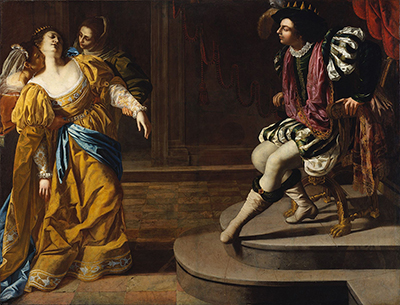
The comparison also reveals range. Susanna's resistance is defensive, inward and constrained. Judith's action is outward, coordinated and violent. Esther's danger is political and courtly. Saint Catherine's strength is spiritual and intellectual. Artemisia's art does not offer one simple model of female power. It studies different kinds of pressure and different forms of response.
This is why Susanna belongs near the beginning of any journey through Artemisia Gentileschi's paintings. It is not the most famous work, but it establishes a way of seeing. The body is not merely beautiful. The story is not merely inherited. The woman at the centre is not only a subject for others to view. She becomes the emotional measure of the entire picture.
Why This Early Painting Matters
Susanna and the Elders matters first because it is early. A signed and dated painting from 1610 gives viewers a rare fixed point at the start of Artemisia's career. It shows that her command of subject, composition and emotional tension was already present before Florence, Naples, London or the later fame of the Judith paintings.
It matters next because it changes how we see the Susanna tradition. Instead of treating the story as a moralised nude, Artemisia treats it as a crisis. The elders' looking is not neutral. Susanna's distress is not decorative. The painting asks viewers to feel how the subject works from her position.
It also matters because it complicates the relationship between art and biography. The painting feels intensely relevant to Artemisia's life, but it cannot be explained as the result of the assault and trial that followed. That tension is part of its importance. It shows how an artwork can speak to experience without being reduced to a single event.
How to Read the Painting Today
A good modern reading of Susanna and the Elders starts by respecting the painting's historical world. Artemisia was a Baroque painter working with biblical subjects, workshop training, inherited poses and patronage expectations. She was not making a modern manifesto.
But respecting the past does not mean ignoring what the painting makes visible. Artemisia's Susanna is a woman under pressure from men who have social power over her. The painting makes that pressure hard to aestheticise. It shows fear without turning fear into weakness, and it shows vulnerability without making Susanna passive.
The painting also encourages a different kind of looking. Rather than asking whether Susanna is beautiful, it asks what it means to look at someone who is being threatened by looking. Rather than asking whether the elders are villains in a simple story, it asks how their authority enters the composition. Rather than asking whether the painting is autobiographical, it asks how a young artist could so powerfully imagine another woman's position.
That is why Susanna and the Elders still unsettles viewers. It is not only an early masterpiece by a major woman artist. It is a painting about the ethics of seeing. It turns the viewer's attention back on itself.
Related Pages
- Artemisia Gentileschi
- Biography
- Paintings
- Judith Slaying Holofernes, Florence
- Judith Slaying Holofernes, Naples
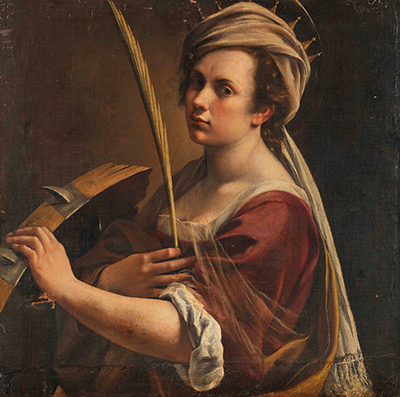
- Self-Portrait as Saint Catherine of Alexandria
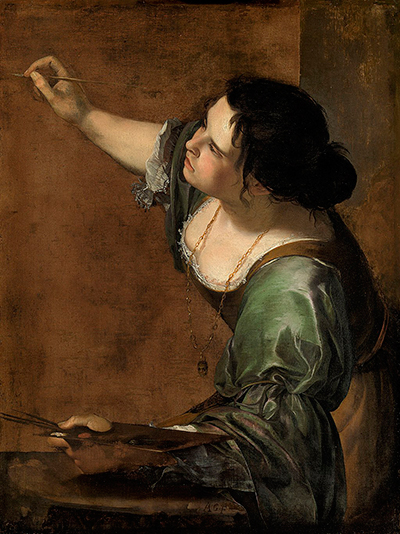
- Self-Portrait as the Allegory of Painting
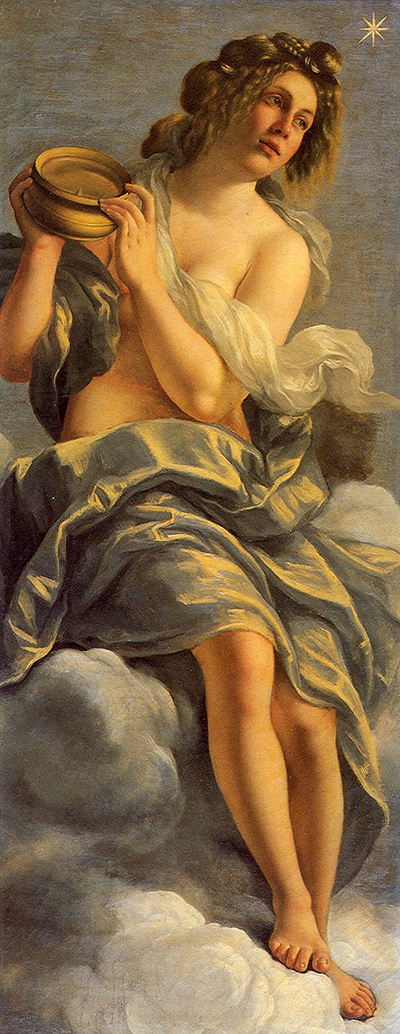
- Allegory of Inclination
- Caravaggio
- Baroque Artists
Frequently Asked Questions
Discussion
What should readers notice when looking closely at Artemisia Gentileschi's Susanna and the Elders?
Reader Insights
Which detail most strongly changes the painting from a display of the nude into a scene of pressure?
How does the painting feel different because Daniel and the public vindication are absent?
How does the 1610 date change the way you read the painting in relation to Artemisia's biography?
Join the Conversation
Share your reading of this painting below.
References
- National Gallery, London, Artemisia Gentileschi (1593-1654 or later).
- Smarthistory, Dr. Letha Ch'ien, Artemisia Gentileschi, Susanna and the Elders.
- National Gallery, London, Artemisia exhibition press release.
- A&AePortal, Jesse M. Locker, Artemisia Gentileschi: The Language of Painting.
- National Gallery, London, Ludovico Carracci, Susannah and the Elders.
 Artemisia Gentileschi.jpg)
 Artemisia Gentileschi.jpg)