by Tom Gurney
Tom Gurney BSc (Hons) is an art history expert with over 20 years experience
Published on July 14, 2026 / Updated on July 16, 2026
Email: tomgurney1@gmail.com / Phone: +447429011000
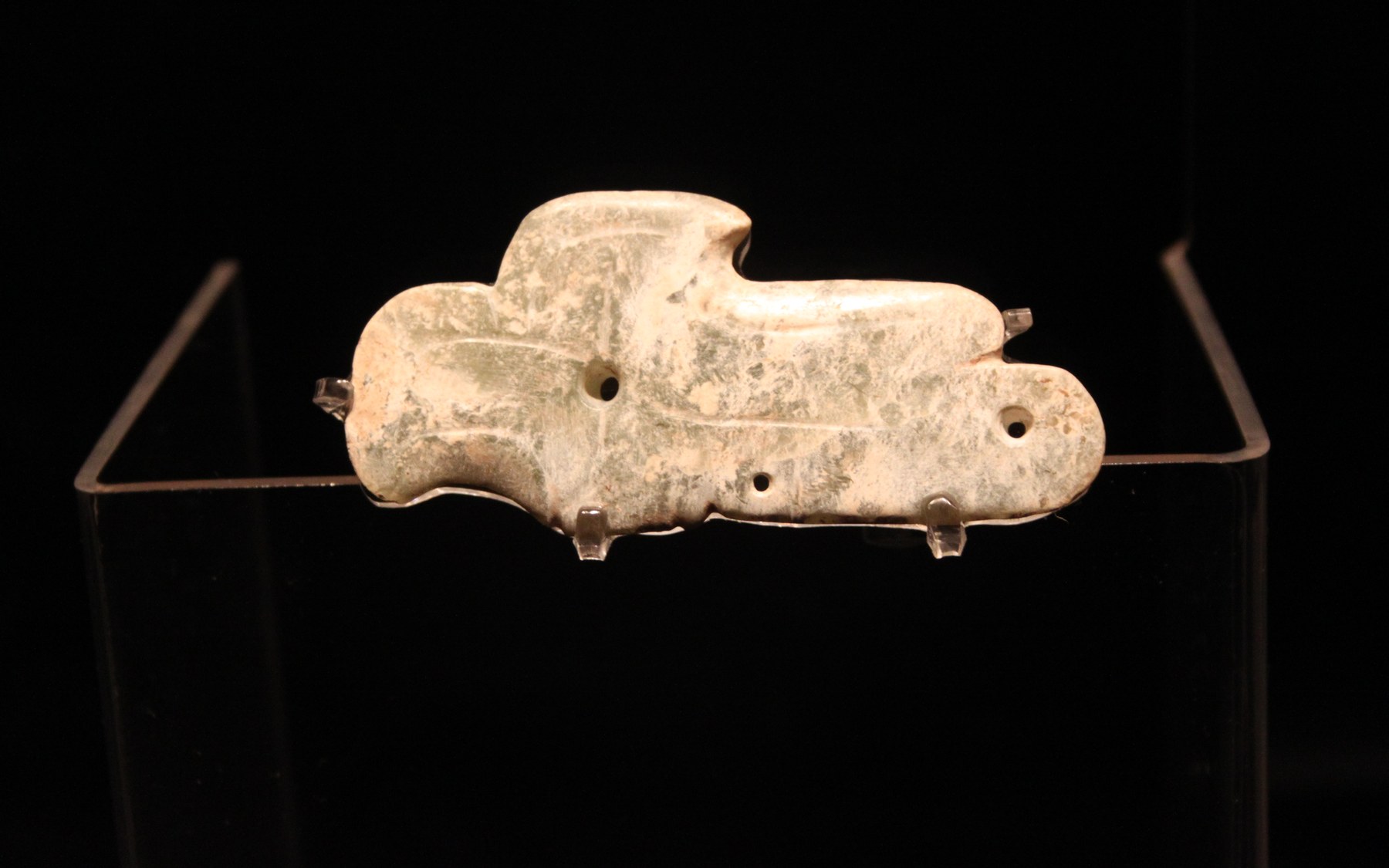
Hongshan Culture Jade Bird.jpg by Gary Todd; CC0 via Wikimedia Commons. Cropped for TheHistoryOfArt.org. · Image source
What to expect
A Lasting Legacy: Chinese Jades from New York Collections is a current Met exhibition in Gallery 222, focused on Chinese jade, American collecting and the way museum knowledge develops over time. The Met’s official page begins with the material itself: jade, primarily nephrite, has long been valued in China not only for beauty but for qualities associated with virtue. Its gentle colour, soft lustre, hardness and durability became moral as well as visual attributes.
The exhibition features 50 objects from The Met collection displayed alongside pieces associated with Heber R. Bishop, the pioneering late nineteenth-century American collector whose passion for Chinese jades helped shape later collecting in New York. That structure makes the show more than a material survey. It is also a history of taste, knowledge and transmission: how Chinese gemstone art was understood, valued and reframed by American collectors and museums across the twentieth century.
Why go
The exhibition is valuable because jade rewards slow looking. Its appeal is not always dramatic at first glance. A visitor may need to adjust to subtle colour, density, polish, translucency, carved detail and the different functions of tools, ritual objects, antique-style vessels, decorative pieces and later inventive carvings. The Met’s page names ancient tools and ceremonial weapons, works made after historical ritual vessels and implements, objects inspired by Mughal Indian jades and designs from the eighteenth to twentieth centuries. That range gives readers several routes through the display.
It is also a useful exhibition for thinking about museums. Heber R. Bishop was not simply a donor name. His collecting helped establish a framework through which Chinese jade could be admired, catalogued and studied in the United States. The exhibition therefore asks two questions at once: what did jade mean within Chinese cultural history, and what did it come to mean within New York collecting culture?
What to look for
Begin with material qualities rather than iconography. Look at colour first: white, green, grey, brown or mottled tones may shift under gallery light. Then look at surface and edge. Nephrite is extremely hard, so carving, drilling, polishing and shaping it required time, skill and specialised technique. A small ornament or ritual implement can carry a surprising amount of labour.
Then compare old forms and later reinterpretations. The Met notes that some objects were crafted after historical ritual vessels and implements, while others offered novel designs in the eighteenth to twentieth centuries. That is important because jade has a long memory as a material. Later artists and collectors could look backward to antiquity, adapt ancient forms, import ideas from other courtly traditions or create new objects for new markets. The most rewarding visit will probably come from noticing how objects negotiate between reverence and invention.
The Bishop connection should also change how one reads the gallery. Try to distinguish the Chinese history of jade from the American history of collecting jade. Those stories overlap in the museum, but they are not identical. A collector’s admiration can preserve objects and build public knowledge, while also framing them through particular tastes, categories and assumptions. The exhibition’s title, A Lasting Legacy, points toward that double legacy.
How it fits the Met
This exhibition strengthens the Met page because it gives Asian art and material culture a clearer role in the growing exhibitions cluster. The Met is too large to be reduced to European painting and American art, and a jade exhibition helps readers remember the museum’s encyclopedic breadth. It also pairs well with other long-running material-focused shows, such as Della Robbia sculpture and Savonnerie carpets, because all three ask visitors to think through making, collection history and conservation rather than only subject matter.
For New York planning, the exhibition is ongoing from 25 July 2026 and is free with museum admission. Because no closing date is currently listed, the page should not invent one. Readers should check the Met source before travelling for current access, hours and gallery information, especially if Gallery 222 or Asian art is the main reason for the visit.
Image and rights note
The image prospects are promising because the exhibition uses historic objects and The Met page already identifies a jade dragon ring detail in the image credits. The page remains image-free until Tom chooses and approves a source and credit path. Any final image should come from a reviewed Met object record or another clearly licensed source, with object details and credit handled precisely.
How to use this page
Because A Lasting Legacy: Chinese Jades from New York Collections is current, the page should help a reader decide whether it deserves time before the closing date, not merely record that it exists. The most reliable fixed details are the venue, dates, broad subject, media and official source link. The interpretive notes help place the exhibition in art-historical context: what kind of show it is, why it may matter, and which artists or topics are worth exploring next.
It is marked as a major exhibition in this guide, so it should be useful for readers choosing between several possible museum visits.
Looking notes
For a visitor, the most useful approach is to look for patterns rather than isolated highlights. With Chinese jade, Heber R. Bishop, nephrite, American collecting, Asian art, ask how the exhibition frames the subject: as biography, period survey, focused theme, collection display or reassessment. With media such as jade, nephrite, gemstone art, ritual objects, decorative arts, collecting history, pay attention to changes of scale, surface, lighting, material and display sequence, because those details are often lost in online listings.
The guide avoids over-specific claims where the public source does not yet support them. If a museum has not published a full object list, it is better to stay clear about what is confirmed than to imply certainty.
Who it is best for
A Lasting Legacy: Chinese Jades from New York Collections is most likely to help readers who are already interested in Chinese jade, Heber R. Bishop, nephrite, American collecting, and Asian art, but it may also be useful for visitors building a wider route around The Metropolitan Museum of Art in New York. If time is limited, use this page to decide whether the subject fills a gap in your knowledge, whether it connects to artists you already follow, and whether the official venue information makes the visit practical.