 Buy Art Prints Now
from Amazon
* As an Amazon Associate I earn from qualifying purchases.
Image reference [image]
 by Tom Gurney
Tom Gurney BSc (Hons) is an art history expert with over 20 years experience
Published on August 14, 2026 / Updated on August 14, 2026
Email: tomgurney1@gmail.com / Phone: +44 7429 011000
John William Waterhouse Biography: Introduction
John William Waterhouse built one of the most successful careers in late Victorian narrative painting while leaving remarkably little public testimony about himself. Born in Rome to a British artistic family, he trained in London, rose through the Royal Academy and spent more than forty years turning classical myth, medieval legend and English poetry into ambitious figure paintings. The Lady of Shalott, Hylas and the Nymphs and his images of Circe now seem inseparable from the stories they illustrate.
The apparent familiarity of those pictures can make Waterhouse himself seem more knowable than he is. No substantial body of diaries or intimate correspondence has emerged to illuminate his motives, models or domestic life. Museum records, exhibition catalogues, surviving studies and the testimony of colleagues provide a firm career outline, but they do not support every personal story repeated about him. His biography is therefore clearest when it follows the institutions, places, relationships and paintings that can be documented, while allowing the private man to remain partly out of view. [1] [3] [4]
At a Glance
- BornJanuary 1849, Rome; the exact day is uncertain [1]
- Died10 February 1917, London [1]
- NationalityBritish [1]
- ParentsWilliam Waterhouse, a painter, and Isabella Waterhouse, who also practised art [1] [2] [4]
- TrainingHis father’s studio and the Royal Academy Schools, first as a sculpture student [1] [2] [14]
- Principal studiosPrimrose Hill Studios, 1878–1900; 10 Hall Road, St John’s Wood, from 1900 [1] [3]
- SpouseEsther Maria Kenworthy, a flower painter; married in 1883 [1]
- Royal AcademyAssociate in 1885; Royal Academician in 1895 [1] [2]
- Main fieldOil paintings of historical, mythological and literary subjects [1] [2]
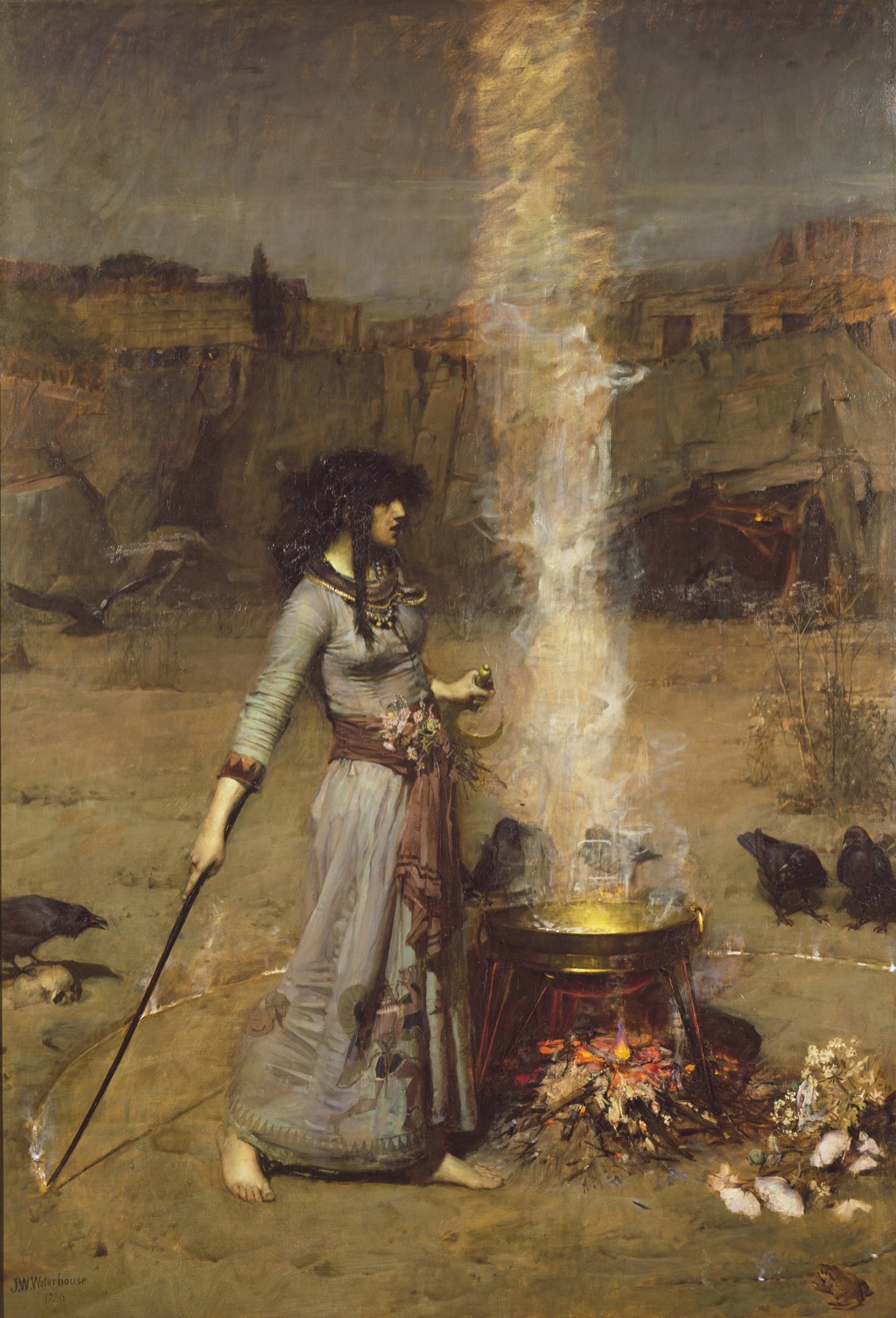
- Best-known worksThe Lady of Shalott, The Magic Circle, Ulysses and the Sirens, Circe Invidiosa, Hylas and the Nymphs, Ophelia and A Mermaid [2]
Contents
- Introduction
- A celebrated artist with an elusive private life
- Rome, family and a London childhood, 1849–1870
- From sculpture student to Royal Academy exhibitor, 1870–1878
- Italy, classical history and the first public buyers, 1878–1885
- Marriage and the community at Primrose Hill, 1883–1900
- Recognition and the turn towards poetry, 1885–1895
- Royal Academician, teacher and working artist, 1895–1900
- Hall Road and the Edwardian years, 1900–1914
- Studies, models and a carefully guarded interior life
A celebrated artist with an elusive private life
Waterhouse’s career can be traced with unusual precision through the Royal Academy. Its annual exhibitions record the pictures by which he sought notice, election and sales. The National Portrait Gallery’s catalogue places him in the Academy exhibitions almost every year from 1874 until 1917, except 1890 and 1915. It also records his studios, marriage, institutional elections and international prizes. These facts establish the public rhythm of his adult life. [1]
What they do not provide is a private voice comparable to the letters of Vincent van Gogh or the journals of other nineteenth-century artists. A letter from Waterhouse to the critic Harry Quilter survives at the Yale Center for British Art, but isolated correspondence is not the same thing as an archive capable of explaining an entire life. [11] The National Portrait Gallery explicitly notes the shortage of personal anecdote despite Waterhouse’s success and wealthy clientele. Even the identity of the model whose features recur in many later paintings remains unconfirmed. [1] [4]
This scarcity has consequences. It is tempting to turn the mood of the paintings into a portrait of the painter: the recurring enchantresses might suggest private obsession; the solitary heroines, melancholy; the Italian settings, nostalgia. Such connections can be worth considering, but the pictures are constructed works shaped by literature, exhibition culture and professional judgement. They are not diary pages. Waterhouse’s biography is strongest when it distinguishes what the art makes imaginable from what the documentary record proves.
The sources themselves also need comparison. The National Portrait Gallery dates his birth to January 1849. Even the 1911 Encyclopædia Britannica, written while Waterhouse was still alive and praising him as a leading British painter, printed the wrong birth year. [1] [14] The disagreement is a useful warning: nearness in time does not guarantee accuracy, and repetition does not resolve an uncertain fact.
Rome, family and a London childhood, 1849–1870
John William Waterhouse was born in Rome in January 1849 to British parents. His father, William Waterhouse, was a painter, and modern accounts also identify his mother, Isabella, as an artist. The family called the boy “Nino,” an affectionate Italian name that hints at how Rome remained part of his identity after childhood. The surviving record does not justify treating his few early years in Italy as the single cause of his mature classicism, but birth into an artistic household in Rome was a meaningful beginning. [1] [2] [4]
The Waterhouses returned to Britain when John was young, settling in London. He learned in his father’s studio before entering formal training. This route mattered. A family studio could make the routines of art—drawing, preparing materials, looking closely and treating pictures as work—ordinary rather than exceptional. The 1911 Britannica entry described him simply as the son of an artist who had received much of his training from his father. That contemporary summary is brief, but it confirms that family instruction remained part of Waterhouse’s public professional identity even after the Royal Academy became central to his career. [14]
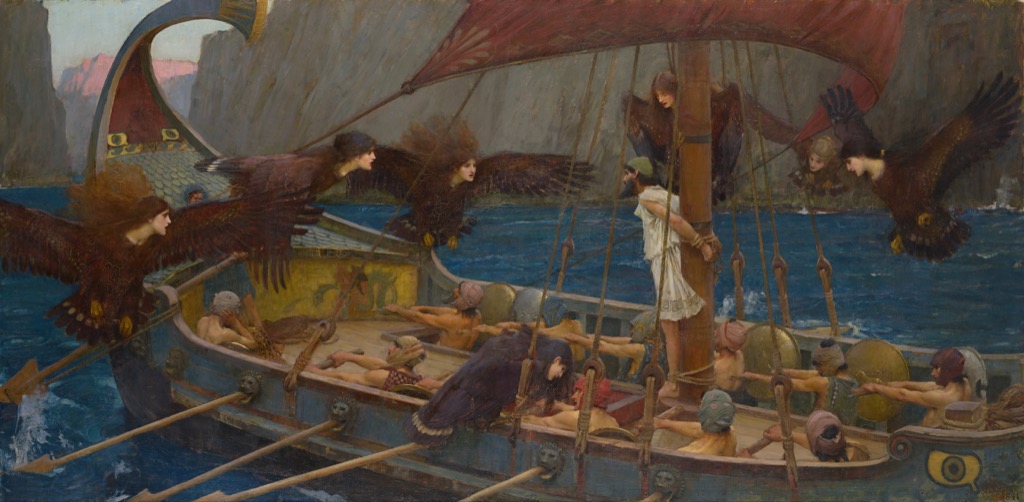
Later writers have connected his London upbringing with visits to major collections and his continuing fascination with antiquity. The claim is plausible, yet the surviving public evidence offers no childhood sketchbook or diary in which Waterhouse explains what he saw and when. It is safer to observe that, by adulthood, he possessed a working knowledge of classical stories and ancient visual culture. His Ulysses and the Sirens of 1891, for example, adapts the bird-bodied type of Siren found on an ancient Greek vase in the British Museum rather than substituting the more familiar mermaid form. [6] That is evidence of purposeful research by a mature artist, not proof of a particular childhood visit.
Rome nevertheless remained more than an entry on a birth certificate. Waterhouse travelled in Italy during the 1870s and early 1880s, and his early exhibition pictures repeatedly used Italian genre scenes, ancient history and imagined classical interiors. [4] His career would later move towards Tennyson, Shakespeare and Keats, but it never abandoned Homer, Ovid or the idea of the Mediterranean as a setting where beauty and danger could coexist.
From sculpture student to Royal Academy exhibitor, 1870–1878
Waterhouse entered the Royal Academy Schools as a probationary sculpture student in 1870; the National Portrait Gallery records him as a sculpture student in 1871, probably reflecting the distinction between his probationary and formal status. [1] [2] This beginning is easy to overlook because he became famous as a painter. Yet training through sculpture encouraged sustained attention to contour, weight and the body in space. His mature figures often occupy a composition with a sculptural clarity even when their surroundings dissolve into foliage, water or shadow.
He soon turned towards painting. The Academy did not simply teach technique: it offered an exhibition system through which a young artist could be reviewed, bought and elected into professional rank. Waterhouse’s first accepted Summer Exhibition picture was Sleep and His Half-Brother Death in 1874, when he was twenty-five. [2] The subject, drawn from the kinship of Sleep and Death in Greek mythology, already joins several concerns that would persist throughout his career: bodily stillness, psychological suspense and an old story translated into an immediately legible human encounter.
The accepted picture began a lifelong relationship with the Summer Exhibition. Waterhouse did not become notable through a sudden break with the Academy. He learned how to work within its calendar, scale and competitive display. A large narrative canvas had to communicate across a crowded gallery, reward close attention and attract buyers without surrendering artistic ambition. His increasing command of that environment helped make the Academy both his principal stage and, eventually, the institution to which he contributed as a member and teacher. [1] [2]
The early works are sometimes described as a prelude to the “real” Waterhouse of The Lady of Shalott. That view compresses a decade of development. Paintings such as After the Dance and The Remorse of the Emperor Nero belong to the Victorian classical world associated with artists including Lawrence Alma-Tadema and Frederic Leighton, but Waterhouse was already testing how history might be conveyed through mood rather than action. His emperors, sleepers and domestic figures do not merely reconstruct ancient costume. They turn waiting, regret, fatigue or foreknowledge into the event of the painting.
This was also the period in which Italy became an active working destination. The surviving summaries indicate repeated travel between about 1876 and 1883, although a fully documented itinerary is not available in the most accessible institutional sources. [4] Italian experience sharpened the setting of his classical subjects, but it did not make him an archaeological painter in a narrow sense. He borrowed historical atmosphere in order to stage emotions that late nineteenth-century viewers could recognise.
Italy, classical history and the first public buyers, 1878–1885
In 1878 Waterhouse leased No. 3 Primrose Hill Studios, a recently built group of twelve artist houses arranged around a quadrangle near Regent’s Park. The move gave him a purpose-built professional base and placed him among working painters who could exchange news, models, criticism and introductions. In 1887 he moved within the same development to No. 6. [3] The studio was both a workplace and part of the social infrastructure of a career increasingly sustained by exhibitions and collectors.
Waterhouse’s paintings grew more ambitious in scale and subject during these years. The Favourites of the Emperor Honorius imagines the late Roman emperor absorbed by his birds while power decays around him. In 1883 the Art Gallery of South Australia bought the picture, making it the first Waterhouse painting acquired by a public institution. [5] That purchase, from across the British Empire, shows how the Royal Academy marketplace could connect a London painter with a distant civic collection.
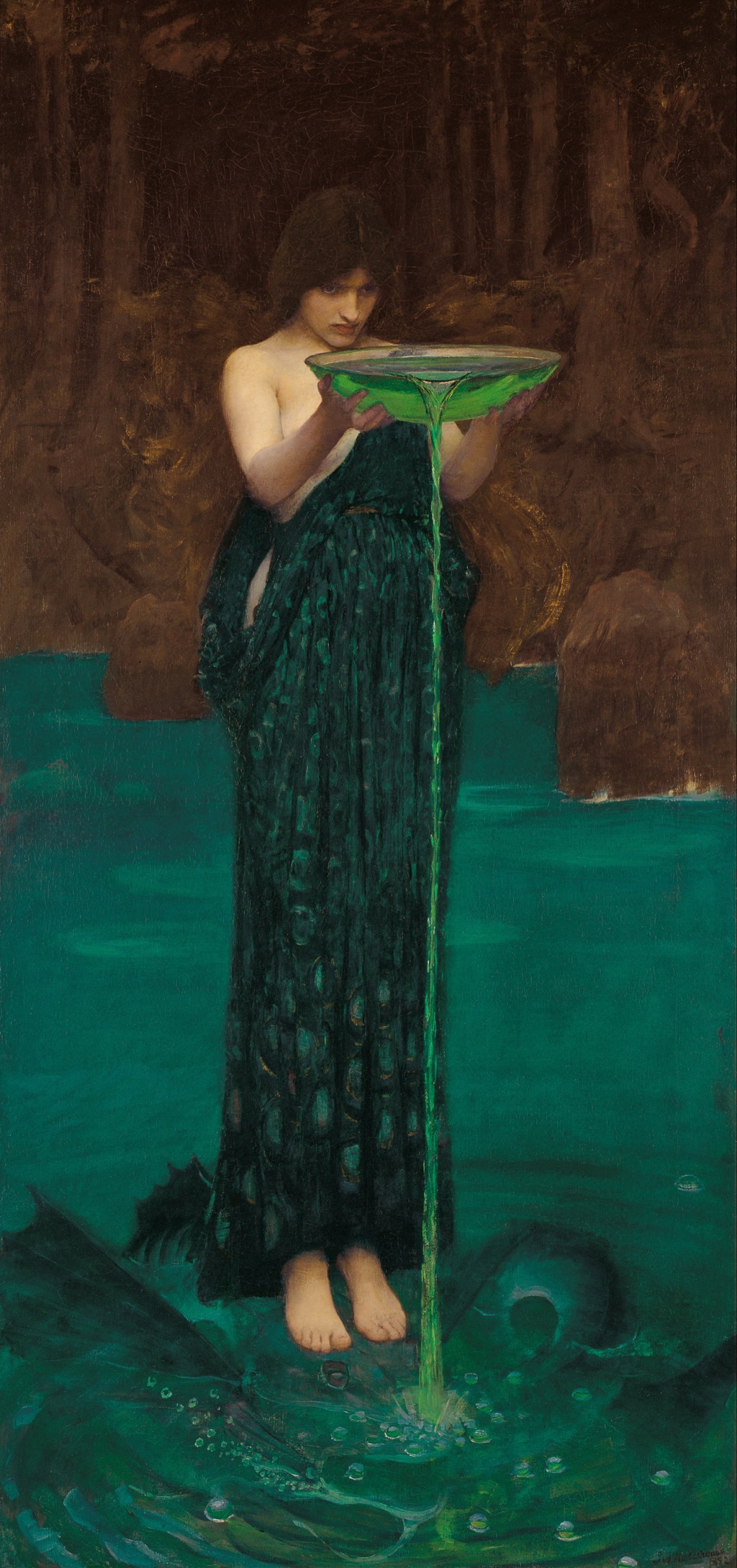
Public acquisition did not mean universal approval. Waterhouse’s pictures could appear attractive and unsettling at once, and museums sometimes bought them in the face of divided opinion. When the South Australian gallery acquired Circe Invidiosa in 1892, contemporary reaction included discomfort at its uncanny colour and threatening subject. [5] Such responses help correct the modern tendency to see Waterhouse only as a producer of decorative beauty. His women may be exquisitely painted, but they often stand at the point where desire becomes danger, action becomes irreversible or a story turns towards death.
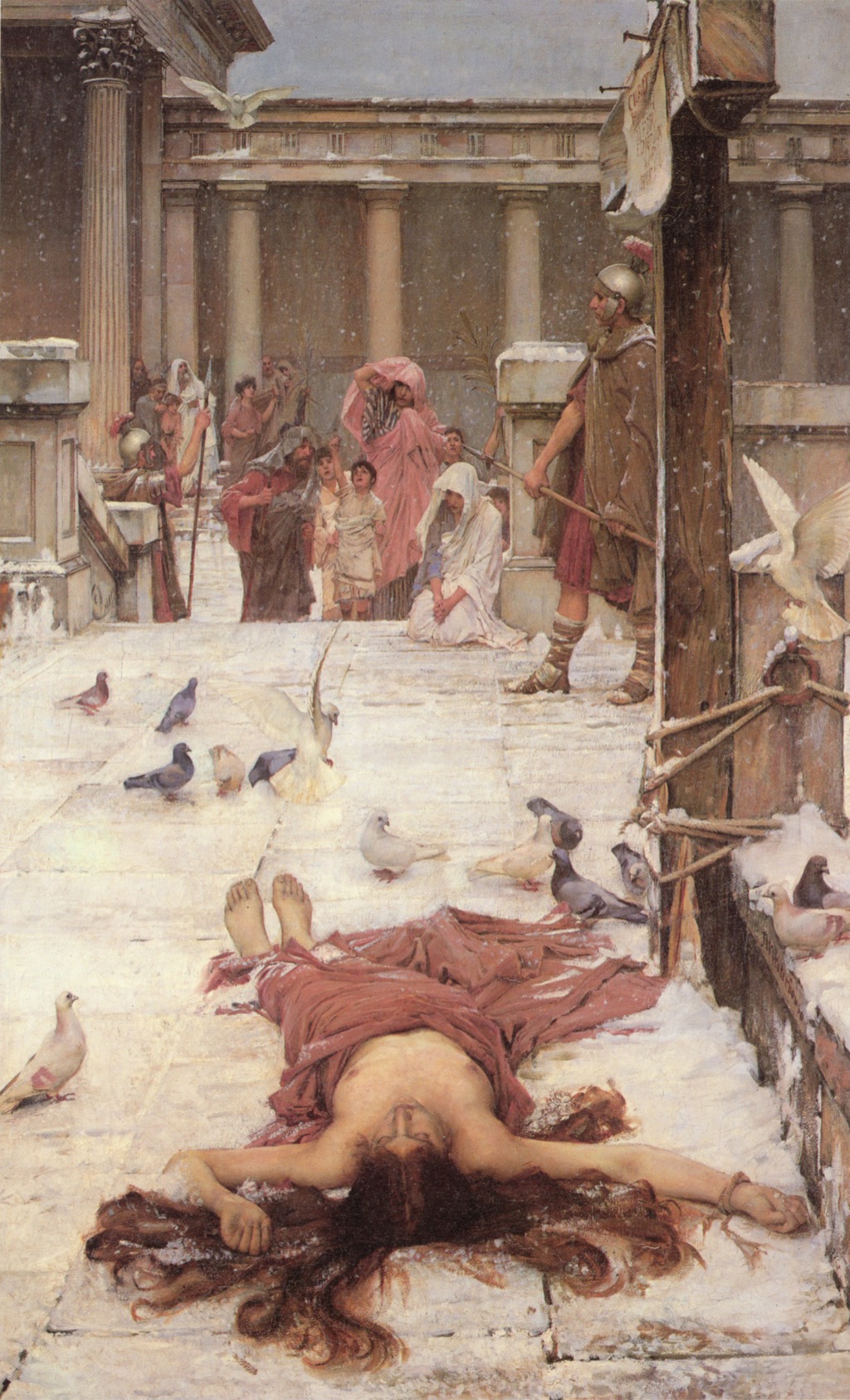
The Academy rewarded his progress. In 1885 Waterhouse exhibited Saint Eulalia, a large image of the young Christian martyr after death. The picture was associated with his election that year as an Associate of the Royal Academy. [2] Its cold ground, fallen body and supernatural signs demonstrate how far he had moved from intimate classical genre scenes. He now organised life-size figures and dramatic emptiness for maximum effect while avoiding the crowded action of conventional history painting.
Waterhouse’s reputation was therefore established before his decisive engagement with Arthurian legend. By 1885 he had Academy continuity, a substantial studio, public collection representation and professional rank. Calling him simply a late Pre-Raphaelite obscures this foundation. He came to Pre-Raphaelite subject matter as an Academy-trained painter of classicising history and psychologically charged narrative.
Marriage and the community at Primrose Hill, 1883–1900
In 1883 Waterhouse married Esther Maria Kenworthy. She was a flower painter who exhibited at the Royal Academy and elsewhere, not merely an anonymous artist’s wife. The National Portrait Gallery records the marriage as childless and places the couple at Primrose Hill Studios during the central years of Waterhouse’s rise. [1] A surviving portrait of Esther by her husband presents an additional, if limited, trace of a creative partnership whose daily texture is otherwise poorly documented.
The Primrose Hill address joined marriage, studio work and artistic friendship in one place. The National Portrait Gallery’s research into a small painted portrait of Waterhouse—once thought to be a self-portrait and now securely attributed to his neighbour William Logsdail—opens an unusually vivid window on that community. Logsdail lived at No. 4; Waterhouse moved from No. 3 to No. 6 in 1887. Logsdail later remembered the artists around the courtyard moving freely between studios, dining together and exchanging stories. [3]
Waterhouse and Logsdail also modelled for one another’s work. The portrait study now at the National Portrait Gallery connects Waterhouse with a figure in Logsdail’s The Bank and Royal Exchange, while Waterhouse painted Logsdail’s likeness for the same large London scene. This collaboration matters because Waterhouse is often imagined alone with an unidentified female model in a timeless studio. The evidence instead places him in a lively network of neighbours engaged with contemporary painting as well as myth and poetry. [3]
The Primrose Hill group had contact with artists responsive to French and Newlyn painting. The Royal Academy’s 2009 retrospective stressed that Waterhouse’s painterly handling and three-dimensional space distinguish him from the first Pre-Raphaelite generation, and connected his development with newer French-influenced art circulating through colleagues such as Logsdail and Frank Bramley. [2] Waterhouse’s later pictures could be minutely descriptive at a focal point, broadly brushed at the edges and atmospheric in their landscapes. That mixture is one reason they resist a single movement label.
Esther’s own practice should also caution against treating the women around Waterhouse only as models or muses. The documentary record says little about her role in his work, and it would be wrong to invent collaboration. What can be said is that the household contained two exhibitors and that Esther retained at least one major canvas from his studio, The Enchanted Garden, after his death. The absence of extensive correspondence limits any fuller account of their marriage. [1] [13]
Recognition and the turn towards poetry, 1885–1895
Between his election as an Associate in 1885 and as a full Royal Academician in 1895, Waterhouse produced the paintings that fixed the direction of his mature reputation. He did not abandon antiquity: Ulysses and the Sirens appeared at the Royal Academy in 1891, and the National Gallery of Victoria purchased it directly from him that year. [6] Circe Invidiosa followed in 1892. [5] What changed was the increasing concentration on a single suspended encounter—the moment a song exerts its power, poison enters the sea, or a decision cannot be reversed.
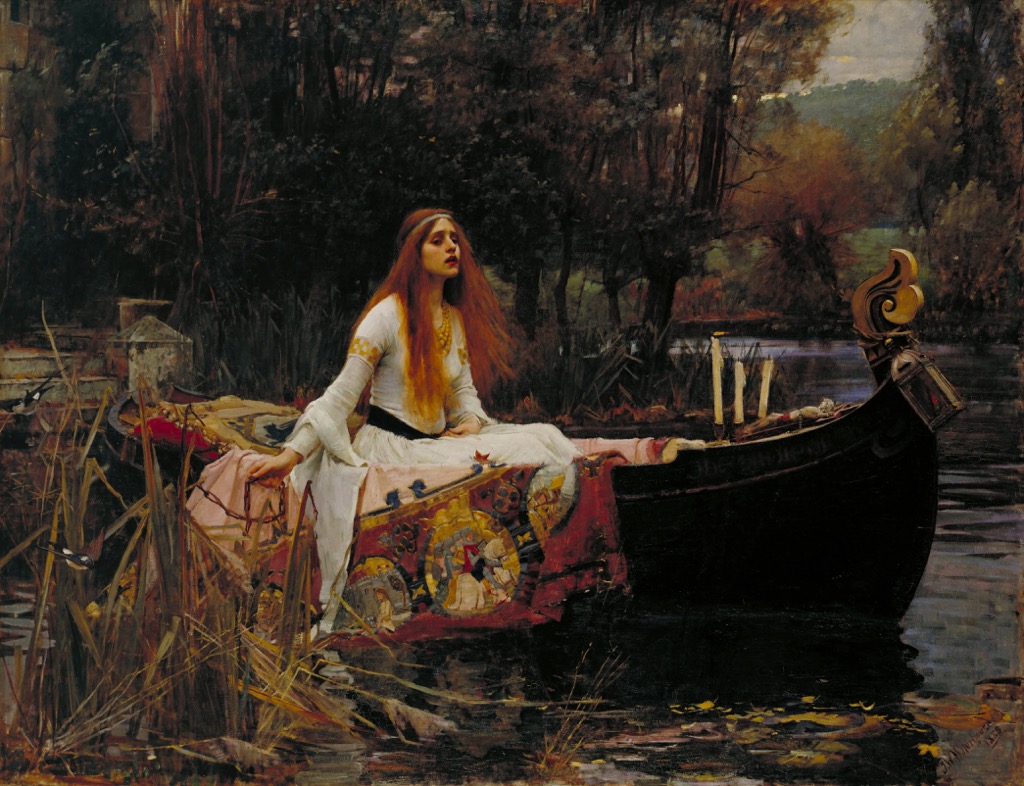
Alongside Homer and Ovid, English poetry became central. The Lady of Shalott of 1888 shows Tennyson’s heroine beginning the fatal journey towards Camelot. Waterhouse chose neither the first sight of Lancelot nor the discovery of her body, but the moment in which foreknowledge, departure and visual beauty are held together. Sir Henry Tate later presented the painting to the national collection in 1894. [7] Its entry into that founding gift helped ensure a public life beyond the Academy and private market.
Waterhouse was not a member of the Pre-Raphaelite Brotherhood. The group had been formed before he was born, and its original campaign belonged to an earlier generation. Yet his return to Tennyson, Keats and Shakespeare, his close attention to plants and textiles, and his images of endangered or desiring women established a powerful relationship with its afterlife. Art UK’s account of Tennysonian painting places Waterhouse within a longer visual tradition in which stillness and foreboding made poetry especially attractive to artists. [9]
The differences are as important as the inheritance. Waterhouse’s paint could remain loose and mobile. His figures occupy convincing depth rather than the deliberately compressed spaces of some early Pre-Raphaelite works. He combined the Brotherhood’s literary appetite with Academy scale, classical training and an openness to later nineteenth-century naturalism and Symbolism. “Modern Pre-Raphaelite,” the title of the 2008–10 retrospective, captures this productive contradiction better than the idea of belated imitation. [2]
Professional recognition extended outside Britain. The National Portrait Gallery records that Mariamne, first exhibited at the Academy in 1887, subsequently appeared in Paris, Chicago and Brussels and received international awards. [1] The foreign exhibition history shows that Waterhouse’s success was not confined to an insular taste for English medievalism. His subject pictures circulated within an international culture of exhibitions in which ambitious narrative painting still commanded attention.
His election as a Royal Academician in 1895 confirmed his standing among British artists. Election was not simply an honorific. It joined Waterhouse more closely to the governance, teaching and traditions of the institution that had trained and exhibited him. The young probationary sculpture student had become part of the Academy’s artistic establishment. [1] [2]
Royal Academician, teacher and working artist, 1895–1900
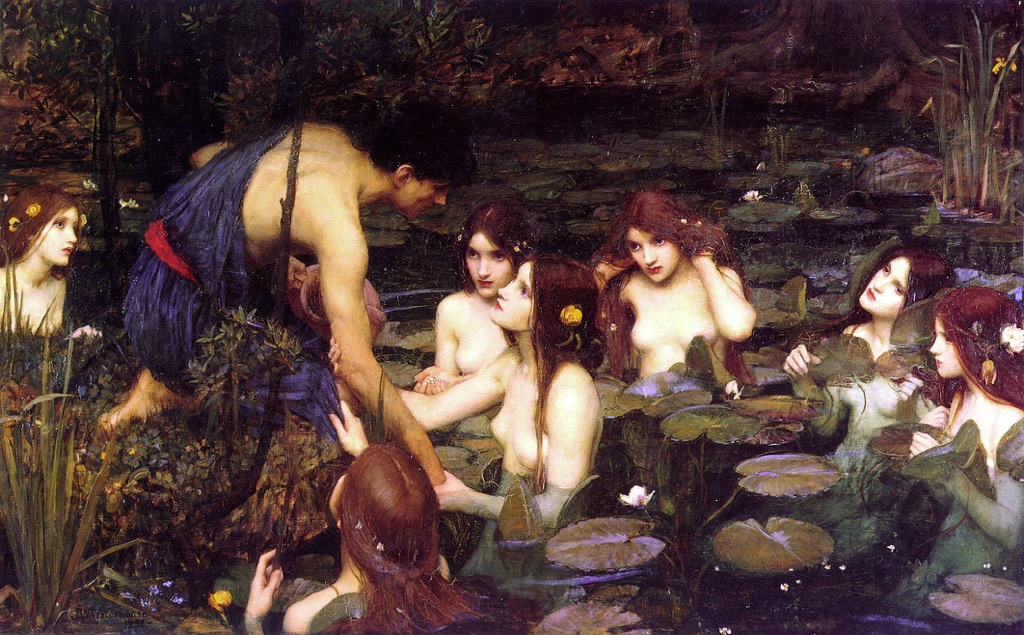
Waterhouse’s Academy membership coincided with several of his most familiar images. Hylas and the Nymphs of 1896 turns a myth from the voyage of the Argonauts into an encounter between one hesitant youth and seven nearly repeating faces emerging from a pool. Its beauty is inseparable from the knowledge that Hylas is being drawn out of his ordinary world. The composition concentrates Waterhouse’s mature gifts: a clear narrative threshold, a natural setting observed closely enough to feel tangible and a supernatural event made quiet rather than theatrical. [2]
He continued to prepare carefully. The 2009 retrospective brought together oil, chalk and pencil studies, sketchbooks and literary volumes in which he drew. [2] A charcoal and brown-chalk study for Circe Invidiosa, given by the artist to the Art Gallery of South Australia in 1899, demonstrates that the commanding painted figure emerged through prior work on pose and contour. [5] A Head of a Girl at Princeton University Art Museum offers another record of concentrated figure study. [10] Such sheets challenge the idea that his recurring heroines arrived as finished fantasies.
Waterhouse also taught regularly in the Royal Academy Schools. [2] By 1911 his name appeared on the honorary advisory council of the St John’s Wood Art Schools alongside Lawrence Alma-Tadema and George Clausen. [12] The public record is clearer about institutional association than about the content of his lessons, so claims about exactly what he taught individual students should be treated cautiously. Still, these roles place him within the transmission of academic practice, not only the production of paintings for sale.
As a newly elected Academician, he was required to deposit a diploma work. A Mermaid, completed in 1900 and now in the Royal Academy collection, fulfilled that obligation. [8] The subject brings together sea, beauty, absorption and danger without illustrating a single decisive incident. A solitary mermaid combs her hair at the water’s edge; shells and a string of pearls suggest a material world, while the unseen future of the story remains open. The painting represents institutional arrival, but its ambiguity points towards the more inward pictures of the Edwardian years.
Hall Road and the Edwardian years, 1900–1914
In 1900 Waterhouse left Primrose Hill Studios for 10 Hall Road in St John’s Wood, where he lived until his death. [1] The move ended more than two decades in the Primrose Hill courtyard but kept him within a district densely associated with artists and art schools. His later career remained productive: he exhibited, taught, developed recurring subjects and responded to a market that still valued large narrative canvases even as the centre of experimental art moved elsewhere.
The early twentieth-century pictures often draw closer to a single figure. Some retain a named literary source; others use suggestive titles and flower-filled settings to create the atmosphere of myth without fixing one story. The Royal Academy retrospective described a movement after 1900 towards more ambiguously titled scenes of women gathering flowers, followed in his final years by renewed engagement with emotionally charged narratives from Shakespeare, Arthurian legend and Boccaccio. [2]
This development was not a retreat from thought into decoration. Flowers in Waterhouse can mark beauty, medicine, temptation, ritual or a brief season before loss. Pools and rivers can divide worlds as well as reflect them. A doorway, mirror or threshold frequently organises the instant at which knowledge changes a figure’s fate. Repetition allowed him to test related states rather than reproduce one formula.
He also returned to subjects across many years. The three major Lady of Shalott paintings do not repeat the same episode: they move between the curse taking effect, the heroine looking towards Lancelot and her final voyage. His Ophelia pictures likewise explore different moments rather than forming a simple serial narrative. These returns suggest sustained visual inquiry, but the absence of extensive artist statements means the paintings must carry most of the argument. It is not possible to reconstruct a private programme with confidence.
Waterhouse’s place within modern art had become complicated. To younger avant-garde artists, history painting and literary illustration could appear exhausted. Yet the 1911 Britannica still praised his imaginative power, draftsmanship, colour and personal style. [14] The entry’s confidence shows that his standing remained high within the British art world even as the terms by which art would later be judged were changing around him.
Nor was his audience only British. The direct purchases by museums in Adelaide and Melbourne had already carried his work to Australia, while international exhibitions had circulated Mariamne. [1] [5] [6] Collectors and civic institutions supported a career that did not depend on a single patron. Sir Henry Tate was particularly important to the public visibility of The Lady of Shalott, but Waterhouse’s professional life was sustained by a broader network of Academy exhibitions, dealers, private buyers and public acquisitions. [1] [7]
Studies, models and a carefully guarded interior life
Waterhouse’s paintings depend upon the human figure, yet the people who posed for them are often harder to identify than the literary characters they became. One later model seems to recur across numerous works, but the National Portrait Gallery and scholarly summaries do not give her a secure name. [1] [4] Assigning a popular modern identity to every repeated face would turn resemblance into biography without sufficient evidence.
The surviving studies show how transformation occurred. A head might be examined independently; a body’s turn worked out in chalk; hands, drapery and plants adjusted through successive drawings. The finished figure then enters a setting assembled from observation, artistic memory, books and imagination. The Royal Academy exhibition’s inclusion of Waterhouse’s annotated or sketched literary volumes is especially revealing: reading and drawing belonged to the same process. [2]
His use of sources was selective rather than mechanically illustrative. The Sirens in Ulysses and the Sirens derive from an ancient vase type, but he multiplies them into a circling pressure around the ship. [6] Tennyson provides the narrative of The Lady of Shalott, yet Waterhouse makes visual decisions about the boat, tapestry, landscape and expression that no text can dictate. [7] [9] His achievement lies in turning scholarship and reading into a self-contained pictorial event.
This makes the label “illustrator” both accurate and insufficient. Waterhouse illustrated stories in the broad sense, but his best paintings do not merely translate a passage. They select a threshold, redistribute attention and make ambiguity visible. The viewer may know what happens next while remaining caught in the beauty of what is present. That tension explains why his pictures can feel emotionally immediate even when their sources are ancient.
The scarcity of personal documents has sometimes encouraged psychological certainty based on subject matter. The repeated sorceresses and threatened heroines have been read through changing ideas about sexuality, gender and the “New Woman”; the 2009 exhibition presented those as important historical contexts. [2] Such interpretations illuminate the culture in which the pictures operated. They should not be converted into unverified claims about Waterhouse’s marriage, desires or models.
War, final pictures and death, 1914–1917
Waterhouse continued to paint during the First World War, although the National Portrait Gallery records no Academy exhibit for him in 1915. [1] In the following years he returned to Miranda, Tristan and Isolde, the Lady of Shalott and Boccaccio’s Decameron. These were not new interests invented as an escape from war; they were renewed versions of literary and Italian subjects that had occupied him for decades. [2]
His last major composition, The Enchanted Garden, was left unfinished. It draws on a story from Boccaccio and shows a garden miraculously made to bloom in winter. The picture was exhibited posthumously at the Royal Academy in 1917 despite its incomplete state. Esther retained it after his death and sold it to William Hesketh Lever in 1922. [13] The work’s status is important: incomplete does not mean abandoned at an early stage, and posthumous display reflects the Academy’s respect for a member whose career had been bound to its exhibitions.
Waterhouse died at 10 Hall Road on 10 February 1917, aged sixty-eight. [1] Publicly accessible institutional sources are much firmer about the date and place than about the precise course of his illness, so a responsible account should resist over-detailed medical storytelling. He was buried at Kensal Green Cemetery, where the Friends of the cemetery include him among its notable artists. [17]
The First World War also shaped his immediate commemoration. A customary Royal Academy memorial retrospective did not take place after his death, and later scholarship has noted the war as the reason. [15] The interruption contributed to an unusually muted transition between Waterhouse’s lifetime prominence and his later historical reputation.
From neglected Victorian to modern Pre-Raphaelite
Waterhouse died at an awkward moment for the reputation of narrative painting. The genres in which he excelled—classical history, poetic illustration and myth—were losing authority within accounts of modernism centred on formal experiment and the avant-garde. His Academy success could then be treated as evidence of conservatism rather than as a historical system requiring explanation. [4]
Yet his images never disappeared completely. Public collections kept major works visible, and The Lady of Shalott acquired an audience far beyond specialist Victorian art history. The very qualities that once made Waterhouse difficult to classify—academic drawing, painterly surfaces, literary narrative, sensual colour and a late relationship with Pre-Raphaelitism—later enabled new viewers to approach him from several directions.
Scholarly reassessment accelerated through exhibitions and publications. The National Portrait Gallery bibliography records the 1978 Waterhouse exhibition at Sheffield and Wolverhampton, Anthony Hobson’s 1980 study, Peter Trippi’s 2002 monograph and the major J. W. Waterhouse: The Modern Pre-Raphaelite catalogue. [1] Trippi’s later institutional profile describes that touring retrospective, shown at the Groninger Museum, Royal Academy and Montreal Museum of Fine Arts, as the first of its kind devoted to Waterhouse. [16]
The 2008–10 exhibition did more than restore a popular painter. It reframed the apparent contradictions of his art as evidence of engagement: Rome and London, classical myth and English poetry, academic institutions and French-influenced handling, careful drawing and atmospheric paint. [2] “Modern Pre-Raphaelite” does not place him inside the original Brotherhood. It describes how he renewed parts of its visual and literary inheritance for a different generation.
Modern discussion has also become more critical of the gendered world represented in his paintings. The temporary removal of Hylas and the Nymphs at Manchester Art Gallery in 2018 formed part of Sonia Boyce’s participatory artwork Six Acts, which opened questions about sexuality, race, gender and the display of nineteenth-century art. [18] Whatever one thinks of that intervention, it demonstrates that Waterhouse’s pictures remain active enough to provoke debate rather than survive only as nostalgic decoration.
His biography helps explain that endurance. Waterhouse was neither an isolated dreamer nor a simple institutional conformist. He was a studio-trained professional who used the Academy expertly, maintained artistic friendships, taught, travelled, read closely and revised a narrow group of narrative problems over a long career. The private person remains elusive, but the public artist becomes clearer when his paintings are returned to the studios, exhibitions, collections and debates through which they entered the world.
Timeline
- 1849Born in Rome in January; the exact day remains uncertain.
- 1850sReturns to Britain with his family and grows up in London.
- 1870–1871Enters the Royal Academy Schools, initially as a sculpture student.
- 1874Exhibits Sleep and His Half-Brother Death at the Royal Academy.
- 1876–1883Makes repeated working visits to Italy.
- 1878Leases No. 3 Primrose Hill Studios.
- 1883Marries Esther Maria Kenworthy; the Art Gallery of South Australia acquires The Favourites of the Emperor Honorius.
- 1885Exhibits Saint Eulalia and is elected an Associate of the Royal Academy.
- 1887Moves to No. 6 Primrose Hill Studios; exhibits Mariamne.
- 1888Exhibits The Lady of Shalott.
- 1891The National Gallery of Victoria buys Ulysses and the Sirens directly from the artist.
- 1892The Art Gallery of South Australia acquires Circe Invidiosa.
- 1895Elected a Royal Academician.
- 1896Exhibits Hylas and the Nymphs.
- 1900Moves to 10 Hall Road, St John’s Wood, and completes A Mermaid.
- 1900sContinues Academy teaching and develops mythic, poetic and flower-gathering subjects.
- 1914–1917Returns to Shakespeare, Arthurian legend and Boccaccio in his final pictures.
- 1917Dies in London on 10 February; The Enchanted Garden is shown posthumously at the Royal Academy.
Related Pages
- John William Waterhouse: Return to the artist overview and major works route.
- Timeline: Follow the documented chronology of Waterhouse's life and exhibitions.
- Technique and Style: Read how his training, handling and visual habits shaped the paintings.
Frequently Asked Questions
Not in the original historical sense. The Pre-Raphaelite Brotherhood was formed before Waterhouse was born, and he was never a member. He trained at the Royal Academy and began with classical and historical subjects. From the later 1880s, however, he renewed many Pre-Raphaelite interests: Tennyson, Shakespeare and Keats; closely observed natural settings; intense colour; and stories centred on beauty, desire and danger. “Modern” or “late Pre-Raphaelite” is therefore more accurate than presenting him as part of the 1848 Brotherhood. [2] [9]
He was born in Rome in January 1849 to British parents. The National Portrait Gallery gives the month but not an exact day, while older sources do not always agree even on the year. January 1849 is the strongest formulation supported by the catalogue evidence. [1] [14]
He learned first in his father William Waterhouse’s studio, then entered the Royal Academy Schools in 1870–1871. He began as a sculpture student before turning to painting. His training helps explain both the strong physical presence of his figures and his lifelong reliance on the Royal Academy exhibition system. [1] [2] [14]
He married Esther Maria Kenworthy in 1883. Esther was a flower painter who exhibited her own work, including at the Royal Academy. The couple lived and worked at Primrose Hill Studios before moving to Hall Road in St John’s Wood. The National Portrait Gallery describes their marriage as childless. [1]
Several models must have posed for him, and a recurring face appears in many works from the 1890s onward. No securely documented identity accounts for all those appearances. Surviving drawings show careful work from models, but resemblance alone cannot prove a name. Claims that one famous sitter appears throughout Waterhouse’s career should therefore be treated with caution. [1] [2] [4]
Yes. Royal Academy exhibition research records that he taught regularly in the Academy Schools, and a 1911 publication lists him on the honorary advisory council of the St John’s Wood Art Schools. [2] [12] The available evidence confirms institutional service more securely than detailed stories about his classroom methods.
The Enchanted Garden, based on a story from Boccaccio’s Decameron, was left unfinished at his death. The Royal Academy nevertheless exhibited it later in 1917. His widow Esther subsequently sold it to William Hesketh Lever, and it entered the Lady Lever Art Gallery collection. [13]
He is buried at Kensal Green Cemetery in London. The cemetery also contains the graves of several other important British artists, writers, architects and engineers. [17]
Discussion
Waterhouse’s painted world feels intimate, but the man who made it left few intimate records. The gap between a well-documented public career and an elusive private life is part of the history, not an invitation to invent a personality that conveniently matches the pictures.
Reader Insights
How should a biography handle an artist whose exhibitions, studios and memberships are well recorded but whose private papers are sparse?
Waterhouse trained, exhibited, taught and rose within the Royal Academy while renewing ideas associated with artists once hostile to Academy convention. What does that combination reveal about establishment and experiment in late Victorian art?
Rome, Esther, Primrose Hill, teaching, collectors and literary books shaped the circumstances of Waterhouse’s work. How can those facts inform a reading of the recurring women without reducing them to coded episodes from his private life?
Join the Conversation
Share the document, painting or turning point that you think best illuminates Waterhouse’s life.
References
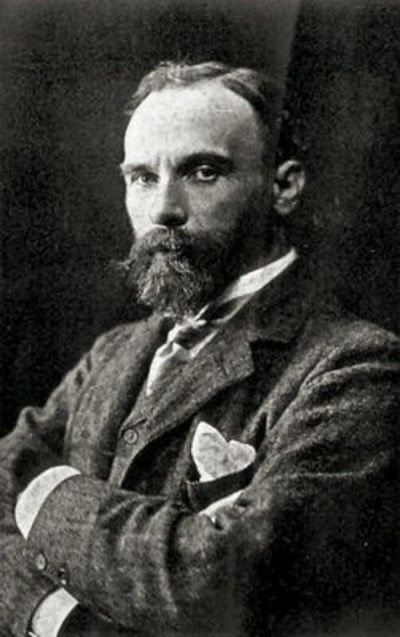
- Main image: H. S. Mendelssohn, John William Waterhouse, c. 1886, public-domain photograph via Wikimedia Commons.
- National Portrait Gallery, “John William Waterhouse (1849–1917), Figure Painter,” Later Victorian Portraits Catalogue. View source
- Royal Academy of Arts, “J. W. Waterhouse: The Modern Pre-Raphaelite,” 2009 exhibition information reproduced by The Victorian Web. View source
- National Portrait Gallery, “John William Waterhouse, by William Logsdail, circa 1887,” extended catalogue entry. View source
- The Victorian Web, “John William Waterhouse, 1849–1917: An Overview,” with bibliography and commentary drawn from modern Waterhouse scholarship. View source
- Art Gallery of South Australia, “Circe Invidiosa,” collection record and curatorial commentary. View source
- National Gallery of Victoria, “Ulysses and the Sirens,” collection record, provenance and curatorial commentary. View source
- Tate, “The Lady of Shalott, 1888,” collection record. View source
- Royal Academy of Arts, “A Mermaid,” Royal Academy diploma work by John William Waterhouse. View source
- Art UK, “Tennyson: the favoured subject,” discussion of Tennyson in British visual culture. View source
- Princeton University Art Museum, “Head of a Girl,” collection record. View source
- Yale Center for British Art, “John William Waterhouse letter to Harry Quilter,” archival collection record, MSS 84. View source
- Pall Mall Magazine, Pictures of 1911, advertisement for the St John’s Wood Art Schools naming J. W. Waterhouse on the honorary advisory council. View source
- Christie’s, “Head Study for ‘The Enchanted Garden’, 1916,” catalogue essay prepared with assistance from Peter Trippi. View source
- Encyclopædia Britannica, “Waterhouse, John William,” 1911 edition, transcribed by Wikisource. View source
- Journal of Victorian Culture, “Between Innovation and Nostalgia: Rethinking the Paintings of J. W. Waterhouse,” review of J. W. Waterhouse: The Modern Pre-Raphaelite, 2010. View source
- University of York, Department of History of Art, “Peter Trippi,” scholarly profile and Waterhouse publication record. View source
- Friends of Kensal Green Cemetery, “Notables,” listing John William Waterhouse among the artists buried at Kensal Green. View source
- Manchester Art Gallery, “Sonia Boyce,” interpretive text for Six Acts and the temporary removal of Hylas and the Nymphs. View source