 by Tom Gurney
Tom Gurney BSc (Hons) is an art history expert with over 20 years experience
Published on June 19, 2020 / Page Updated on November 5, 2026
Email: tomgurney1@gmail.com / Phone: +44 7429 011000
Introduction
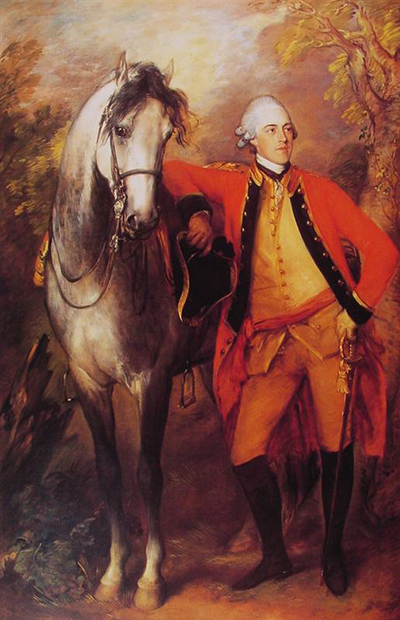
Thomas Gainsborough's Edward, Viscount (later Earl) Ligonier is a full-length portrait of military confidence, social rank and equestrian display. The Huntington identifies the painting as Edward, Viscount (later Earl) Ligonier, dates it to 1770, gives the accession number as 11.30, names Thomas Gainsborough as maker, and identifies the sitter as Edward, Viscount (later Earl) Ligonier, 1740-1782.[1] The medium is oil on canvas, and the dimensions are 94 × 62 inches, or 238.8 × 157.5 cm.[1]
The title needs to be handled exactly. The Huntington's wording, Edward, Viscount (later Earl) Ligonier, preserves a change in title without turning the painting into a peerage essay.[1] The sitter appears as a young aristocratic soldier in 1770, shown standing beside his horse. The image is not only about identity; it is about projection. Ligonier performs military ease for the viewer.
The portrait's most memorable feature is the balance between man and animal. The Huntington describes Ligonier next to his horse, his right hand resting on the saddle and holding a black and gold-laced hat, while his left hand rests on his sword hilt.[1] Its label text goes further, saying that the horse looks directly at the viewer in a remarkably engaging way, almost upstaging its owner.[1] That observation opens the whole painting.
At a Glance
- ArtistThomas Gainsborough
- SitterEdward, Viscount (later Earl) Ligonier, 1740–1782 [1]
- Date1770 [1]
- MediumOil on canvas [1]
- Dimensions238.8 × 157.5 cm (94 × 62 in.) [1]
- CollectionThe Huntington Library, Art Museum, and Botanical Gardens [1]
- Accession11.30 [1]
- Portrait typeFull-length military and equestrian display
- Principal attributesHorse, red uniform, sword and black-and-gold-laced hat [1]
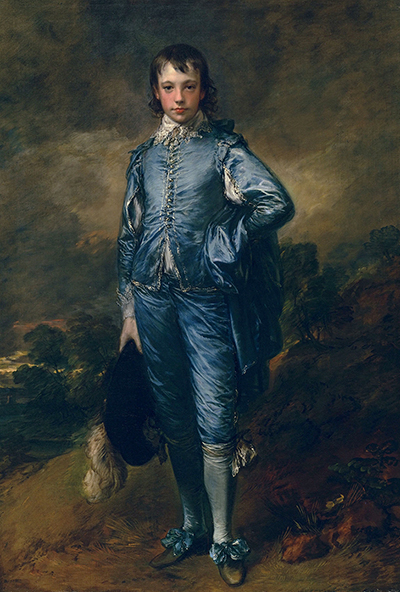
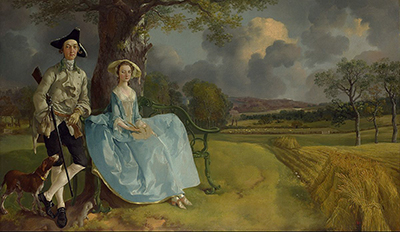
- ExploreBiography; The Blue Boy; Mr and Mrs Andrews; Paintings; Portraits
Contents
- Introduction
- Huntington Object Facts
- Military Bravado
- The Horse as Rival Presence
- Uniform, Sword and Hat
- Landscape and Setting
- Bath Portraiture and Aristocratic Clients
- Keeping the Object Separate
- How to Look
- Why the Portrait Matters
Huntington Object Facts
The Huntington record controls the object and gives the credit line to the Huntington itself.[1] The painting is a large oil on canvas, nearly eight feet high, which makes the viewer encounter Ligonier at something close to bodily scale.
That scale changes the experience of the image. This is not a modest likeness for close inspection only. It is a standing, publicising portrait in which body, horse and costume occupy the viewer's space. The size helps convert Ligonier from an individual sitter into an image of social and military presence.
The date, 1770, places the work in Gainsborough's Bath period. Gainsborough's House notes that after moving to Bath in 1759, Gainsborough began attracting more cosmopolitan and aristocratic clientele.[2] The National Gallery likewise describes Bath as a turning point in the artist's success as a fashionable portrait painter before his later move to London in 1774.[3]
That Bath context matters because the portrait depends on elegance, status and performance. Gainsborough had already become expert at making sitters appear socially alive rather than simply labelled. In Ligonier's portrait, he uses horse, sword, hat, uniform and landscape to make rank and military identity legible.
The painting should not be described from inherited title shorthand alone. "Edward, 2nd Viscount Ligonier" is a convenient modern label, but the Huntington's title is more precise for public use because it includes the later-earl wording.[1] That wording keeps chronology visible without requiring a long biographical detour.
The sitter's dates, 1740-1782, also keep the portrait in a short, sharp life span.[1] Gainsborough is painting a man who was still young, but already presented through a vocabulary of command. The later title in the object name looks ahead, while the 1770 image itself holds him at a moment of youthful martial display.
Military Bravado
The Huntington label describes Lord Ligonier as a distinguished soldier and says he is shown as the embodiment of military bravado.[1] The word "bravado" is useful because the portrait is less about combat than about self-command. Ligonier is not shown in battle. He is shown as a man prepared to be seen as martial.
His left hand loosely holds the sword hilt.[1] The looseness is important. A tense grip would suggest immediate action. A loose grip suggests confidence already possessed. Ligonier does not need to draw the sword to make the point. The weapon's presence is enough.
His right arm rests on the horse's back, while the hand holds a black and gold-laced hat.[1] That combination creates a relaxed diagonal across the upper body. The hat is a sign of dress and rank; the horse is a sign of military and aristocratic command. The sitter's body joins them.
This is portraiture as controlled theatre. The scene suggests readiness, but not urgency. Gainsborough paints a man who knows how to stand before others, a military aristocrat whose authority depends as much on bearing as on biography.
The bravado is therefore visual before it is narrative. It is built from the angle of the torso, the relaxed authority of the hands, the red of the coat, the sword, and the horse's powerful nearness. The painting does not need to recount campaigns in order to make Ligonier appear military. It makes martial identity visible through posture and staging.
There is a faint tension between ease and assertion. Ligonier looks composed, but the scene is carefully constructed to make that composure legible. He is not caught by accident beside the horse. He is arranged as a figure whose confidence can be read at a glance.
The Horse as Rival Presence
The horse is not a passive accessory. The Huntington label says it looks directly at the viewer in an engaging manner, almost upstaging Ligonier.[1] That is a striking institutional reading because it recognises the painting's visual wit. The animal does not merely support the sitter's status; it competes for attention.
The horse's head fills the left side of the composition. Its pale face and dark mane form a powerful contrast against the surrounding foliage and against Ligonier's red and gold uniform. The animal's gaze meets the viewer more directly than the sitter's. Ligonier turns slightly aside; the horse confronts.
This gives the portrait a lively imbalance. The sitter is the subject by title, but the horse has enormous pictorial charisma. Gainsborough uses that tension rather than suppressing it. The painting becomes an image of partnership, rivalry and display.
The horse also enlarges Ligonier's social identity. An equestrian association carries military, aristocratic and sporting meanings. Yet because Ligonier stands beside rather than astride the horse, the image avoids the full heroic charge of mounted portraiture. It gives command at rest.
That choice is subtle. A mounted portrait would have made Ligonier dominant through height and control. Gainsborough instead puts him beside the animal, which allows the horse to become a second personality. The sitter is still master of the image by title, but the animal gives the composition a living counterforce.
The horse's direct gaze also changes the viewer's position. Ligonier looks away, so the sitter does not fully meet us. The horse does. The animal becomes the point of contact, almost the portrait's host, drawing the viewer into a performance that Ligonier appears confident enough not to supervise directly.
Uniform, Sword and Hat
Ligonier's red coat dominates the figure. It gives the painting its martial colour and places the sitter within the visual language of military portraiture. The gold waistcoat and trim add brightness, while the black sash or dark diagonal element strengthens the body against the lighter horse.
The sword is handled with restraint. It is visible, but not dramatised. Ligonier's left hand touches it as a matter of identity, not action.[1] The sword says what kind of man the sitter wants to be seen as, but the painting does not need a battle scene to make that claim.
The hat in the right hand is equally important. The Huntington identifies it as black and gold-laced.[1] It adds a courtly note to the military one. Ligonier is not only a soldier; he is a gentleman whose dress, posture and accessories belong to a polished world of rank.
These elements work together. Uniform gives professional identity, sword gives martial readiness, hat gives social finish, and horse gives bodily scale and aristocratic energy. Gainsborough's task is to make these signs feel natural rather than assembled.
The colour scheme helps him do that. The red coat and gold waistcoat could have become merely showy, but they are set against a darker, more atmospheric landscape. The horse's grey-white body mediates between the bright human costume and the muted surrounding space. The result is a carefully tuned arrangement rather than a simple display of uniform.
The hat is a small but elegant sign of polish. It softens the harder implication of the sword and connects military dress with manners. Ligonier appears armed, but also socially finished. Gainsborough makes the soldier into a gentleman without weakening the martial language.
Landscape and Setting
The portrait is set outdoors, with foliage and warm atmospheric light surrounding the figures. This landscape should not be overread as a documented place unless a source supplies that claim. Its main job is pictorial: it gives the red uniform, pale horse and standing body a living environment.
Gainsborough's House notes that Gainsborough often fused portraiture and landscape in innovative ways.[2] The Ligonier portrait is a good example of that fusion in a narrow, practical sense. The landscape is not the subject, but it does more than fill space. It softens the military image and lets the body and horse breathe.
The tree at the right creates a vertical counterweight to the horse at the left. The darker vegetation behind the horse helps push its pale head forward. The warm sky and ground keep the whole picture from becoming a hard parade-ground statement.
This is where Gainsborough differs from a purely ceremonial painter. He can show rank and authority while preserving painterly atmosphere. The sitter's identity is firm, but the surrounding air remains mobile.
The landscape also reduces the severity of the uniform. A hard architectural interior would have made the portrait more official. The trees, warm sky and uneven ground create a more elastic setting, one that allows the horse to feel alive and the sitter to seem at ease rather than rigidly posted.
This outdoor setting also links the portrait to Gainsborough's broader habit of joining people and natural surroundings. Even in a military portrait, the landscape has work to do. It gives authority a place to breathe.
Bath Portraiture and Aristocratic Clients
The 1770 date matters because Gainsborough was still in the period of rising aristocratic patronage.[1][2] Bath gave him access to sitters who wanted elegance, status and naturalness in the same image. Ligonier's portrait fits that world precisely.
The painting is full-length, large and expensive-looking. It has the apparatus of rank: horse, sword, uniform, hat and outdoor setting. Yet it is not frozen. Ligonier's stance has ease, and the horse's direct gaze adds liveliness. The portrait promises authority without making the sitter stiff.
Rosenthal's Paul Mellon Centre study is useful for this kind of work because it treats Gainsborough's career as a negotiation among artistic pleasure, patronage, status, professional ambition and the culture of looking.[4] Ligonier's portrait is exactly such a negotiation. It gives the sitter military style while giving the viewer a painterly and almost playful encounter with the horse.
The work also sits between Gainsborough's portrait and landscape ambitions. The sitter paid the social bill, but the picture's pleasure depends on colour, atmosphere and animal presence as much as on rank. Gainsborough knew how to make portraiture serve both client and eye.
This is one reason the painting does not feel like a dry record of a titled officer. It gives information, but it also gives pleasure: the gleam of the horse's head, the warmth of the coat, the dark curve of the mane, the relaxed hand, the softened landscape. Gainsborough makes the signs of status visually attractive.
At the same time, the portrait shows the limits of charm. Ligonier's military identity is not dissolved into prettiness. The sword, uniform and full-length scale keep authority present. The charm belongs to the handling, not to a denial of rank.
Keeping the Object Separate
Other Ligonier-related images can easily pull attention away from this object. Those associations should not be allowed to blur this painting. The Huntington record identifies Edward Ligonier, gives his dates and title, and describes the full-length portrait with the horse.[1]
That narrow control is important because family and surname links can tempt a broader story than the evidence supports. A portrait of Edward Ligonier is not automatically a full account of every Ligonier image associated with Gainsborough. This painting's job is specific.
The sitter's title also needs care. The Huntington's "Viscount (later Earl)" wording should be preserved because it contains a built-in chronology.[1] It tells readers that the title changed, but it does not require speculation about inheritance, marriage or family history beyond the object record.
The safest approach is to let the portrait's own elements carry the reading: Edward Ligonier, 1770, full-length, horse, hat, sword, military bravado, Huntington collection. That is enough for a strong account.
This also keeps the writing proportionate. The portrait is not short of meaning, but its meaning is concentrated. It does not require a long history of every family association. It requires careful attention to the exact object and to the confident visual language Gainsborough builds around it.
How to Look
Begin with the horse. It is impossible to treat the animal as background once its gaze is noticed. The head turns outward with startling directness, and the pale face becomes one of the brightest and most engaging forms in the painting.
Then look at Ligonier's body. He stands beside the horse rather than riding it. His right arm rests on the saddle, and his left hand is placed at the sword hilt.[1] The pose turns the horse into both companion and platform for display.
Next, follow the red coat. It anchors the sitter against the landscape and separates him from the horse's pale head. The colour gives heat to the composition and asserts military identity immediately.
Finally, look at the relation between face and animal. Ligonier's expression is composed, while the horse seems more alert to the viewer. That difference gives the portrait its spark. The sitter wants to project control, but Gainsborough allows the animal to steal some of the performance.
The lower body should not be skipped. The sword hangs near the leg, the boots establish martial readiness, and the grounded stance keeps Ligonier from floating in the display. The whole body matters because full-length portraiture turns posture into character.
The background should be read slowly as well. The foliage, sky and ground do not compete with the figures, but they shape the colour and mood. They make the red coat and pale horse more vivid, while preventing the portrait from becoming merely diagrammatic.
Why the Portrait Matters
Edward, Viscount (later Earl) Ligonier matters because it shows Gainsborough handling military portraiture without sacrificing liveliness. The painting has all the expected signs of rank and martial identity, but its most memorable feature may be the horse's direct, almost theatrical presence.[1]
It also matters as a Bath-period aristocratic portrait. Gainsborough had become highly skilled at turning clients into images of social ease, and Ligonier's portrait shows that skill at large scale.[2][3] The sitter is important, but the painting's success depends on the whole arrangement of horse, costume, weapon, landscape and light.
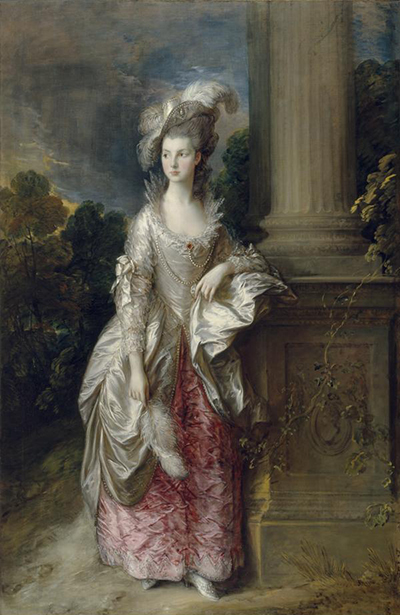
The portrait also helps balance the Gainsborough group. Not every male portrait is musical like Abel, familial like Dupont, civic like Captain William Wade or ceremonial like Charles Howard. Ligonier brings military aristocracy into the field, but in a form softened and animated by animal presence.
The final lesson is one of proportion. The Huntington record provides enough to read the picture well: date, title, sitter, dimensions, pose and label interpretation.[1] There is no need to import unsupported family narrative from nearby Ligonier material. A strong account stays with the object and sees what Gainsborough made of it: a confident soldier, a splendid horse, and a portrait in which authority is nearly upstaged by its own emblem.
It also matters because it shows Gainsborough's gift for enlivening formula. A soldier with horse, sword and uniform could have become predictable. Instead, the portrait has a distinct exchange of attention between man, animal and viewer. The horse looks out; Ligonier looks aside; the viewer moves between them. That triangular relation keeps the painting alive.
In the end, the portrait is not simply an image of possession or command. It is an image of performed ease. Ligonier stands as if authority comes naturally, while Gainsborough's composition quietly reveals how much art is required to make that naturalness convincing.
Frequently Asked Questions
Discussion
How does Gainsborough turn a formal military portrait into a lively exchange between sitter, horse and viewer?
Reader Insights
How does the horse’s direct gaze compete with Ligonier’s composed, averted attention?
How do the sword, hat, uniform and relaxed pose project authority without depicting combat?
How do the full-length format and atmospheric setting balance rank with painterly ease?
Join the Conversation
Share your reading below.
References
- The Huntington Library, Art Museum, and Botanical Gardens, “Thomas Gainsborough, Edward, Viscount (later Earl) Ligonier,” accession 11.30. View source.
- Gainsborough's House, “About Thomas Gainsborough.” View source.
- National Gallery, London, “Thomas Gainsborough,” artist biography. View source.
- Michael Rosenthal, The Art of Thomas Gainsborough: "A Little Business for the Eye" (New Haven and London: Yale University Press for the Paul Mellon Centre for Studies in British Art, 1999). Publication record.