by Tom Gurney
Tom Gurney BSc (Hons) is an art history expert with over 20 years experience
Published on July 14, 2026 / Updated on July 16, 2026
Email: tomgurney1@gmail.com / Phone: +447429011000
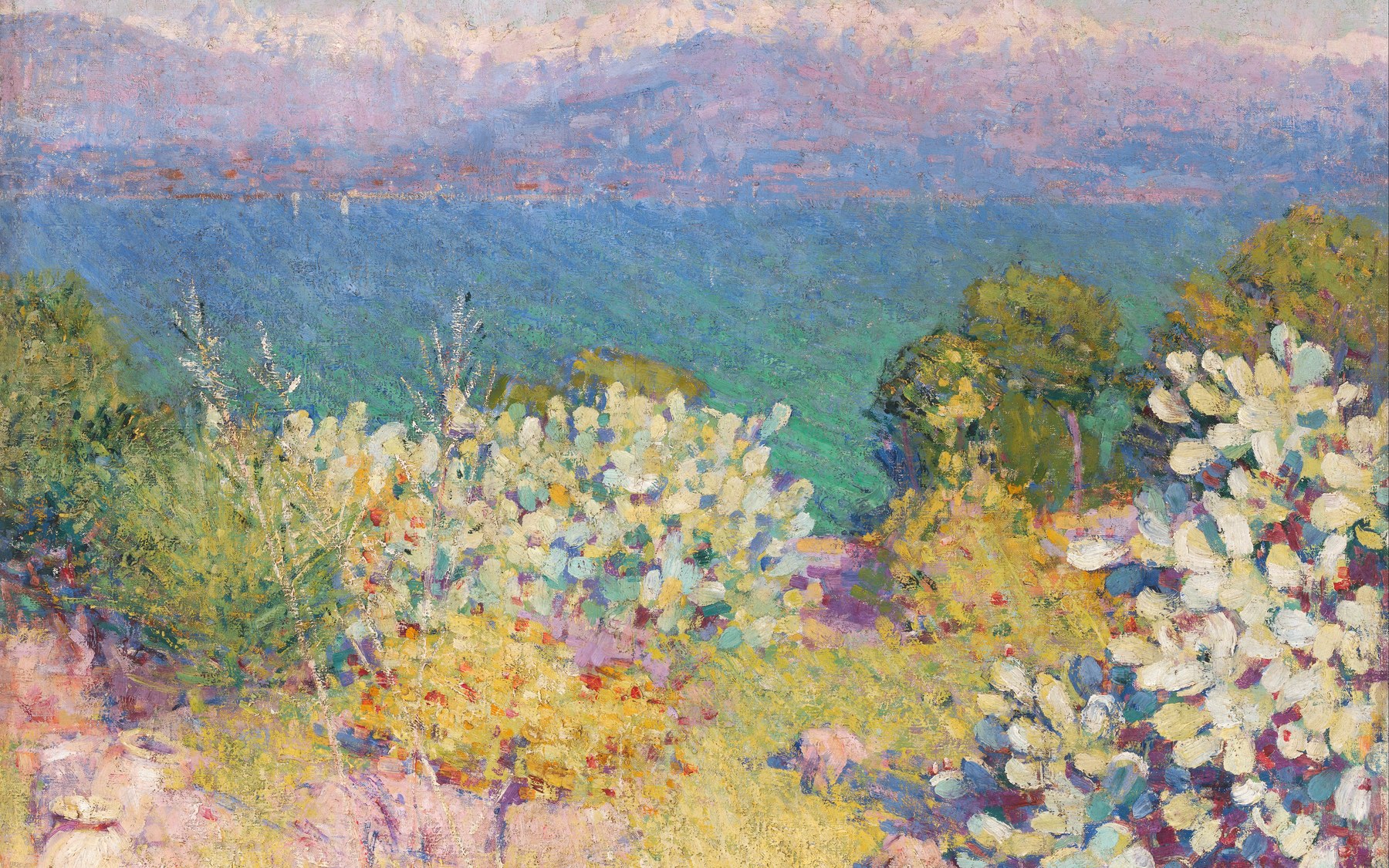
John Russell - In the morning, Alpes Maritimes from Antibes - Google Art Project.jpg by John Peter Russell; Public domain via Wikimedia Commons. Cropped for TheHistoryOfArt.org. · Image source
What to expect
Australian Impressionists in France was an NGV exhibition at The Ian Potter Centre: NGV Australia, shown at Federation Square from 15 June to 6 October 2013. Because it has now closed, this page is an archive record rather than a current visit page. It is included because the official NGV archive gives the Melbourne and Australia cluster a strong historical counterpoint to the later French Impressionism from the Museum of Fine Arts Boston exhibition at NGV International.
The official NGV page states that, for the first time, the story of Australian artists who lived in France during the late nineteenth and early twentieth centuries was presented through more than 120 works of art. The exhibition challenged a narrow understanding of Australian art by showing that Australian Impressionism was not made only on Australian soil. From the 1880s into the twentieth century, ambitious Australian artists travelled to Paris, studied in French ateliers, worked among expatriate communities and absorbed the changing conditions of modern painting.
The artist list gives the exhibition its shape. NGV names John Russell, E. Phillips Fox and Charles Conder as central figures, with the media release also highlighting Ethel Carrick, Kathleen O'Connor and Margaret Preston among later artists working in France. The show placed them in relation to French and international peers including Claude Monet, Henri de Toulouse-Lautrec, Pierre Bonnard and Camille Pissarro. That makes the page useful for readers interested in Impressionism as an international network rather than a French-only movement.
Why it mattered
The strongest reason to preserve this exhibition is that it unsettles the geography of Australian art. A national school can easily be described through local landscapes, local light and local institutions. NGV's archive asks for a more mobile account. Australian artists did paint Melbourne, Sydney, Heidelberg, Box Hill and other local settings, but they also studied in Paris, exhibited abroad, exchanged ideas with artists from Europe and North America, and returned with changed expectations about what modern art could be.
John Russell is especially important. NGV's page notes that Claude Monet demonstrated his Impressionist technique to Russell, and that Vincent van Gogh considered Russell a friend. Those details are not decorative anecdotes. They place an Australian painter inside the living network of Impressionist and Post-Impressionist art. Russell was not merely imitating a style imported from France; he was part of a social and artistic environment where technique, friendship and experiment overlapped.
Charles Conder gives the exhibition another route. NGV describes Conder in relation to Montmartre and Toulouse-Lautrec, while the media release notes that major European works by Conder were included. That matters because Conder is often remembered through Australian landscape and the Heidelberg circle. His French career complicates that memory, showing how an artist associated with Australian Impressionism could also move through Parisian nightlife, theatre, cabaret, design and cosmopolitan social culture.
The exhibition also opened space for women artists. Ethel Carrick, Kathleen O'Connor and Margaret Preston help move the subject beyond a small male circle. Their presence is important because overseas study and travel were career-shaping for many Australian women artists, even when later national art histories gave them less room than their male peers. A serious archive page should keep that broader participation visible.
What to look for in the archive record
Begin with the movement between places. The exhibition starts in Australia but unfolds in France. Paris appears as the training centre, but Montmartre, rural France, artists' colonies, studios, exhibitions and collector networks all matter. The most useful question is not simply what French Impressionism taught Australian painters. It is how Australian artists remade themselves by moving through French institutions, friendships and landscapes.
Then compare media. NGV says the exhibition brought together paintings, prints and drawings, and the media release also refers to photographs and letters. That range is valuable because expatriate art history is often preserved not only through finished canvases but through travel records, works on paper, correspondence and exhibition traces. The archive record suggests a story of lived experience as much as stylistic influence.
Look closely at what "Impressionism" means in this context. For some artists it may mean broken brushwork, plein-air light, rapid perception or colour in the landscape. For others it may mean social modernity, city life, informal subjects, print culture or a willingness to place Australian art inside a wider international argument. The term should remain flexible rather than becoming a single brushstroke formula.
The exhibition also invites comparison with French, British and American artists. NGV says the inclusion of key works by international artists placed the Australians within a broader Impressionist context. That curatorial choice is important. It avoids treating the Australians as provincial followers, but it also avoids treating them as isolated national exceptions. Their work sits inside a web of exchange.
How it fits Melbourne and Australia
This page strengthens Melbourne because it gives the city an Australian-art exhibition route as well as the more familiar international loan route. Gate 51 added French Impressionist works from MFA Boston at NGV International. This page adds The Ian Potter Centre: NGV Australia and shows how Melbourne's own institution has interpreted Australian artists abroad. Together, the two pages create a useful pair: French art travelling to Australia, and Australian artists travelling to France.
For current planning, the exhibition has ended and should not be used for tickets, opening hours or current display claims. Its value is contextual. It helps readers understand why NGV Australia matters as more than a venue for national collection display. It can tell international stories from an Australian starting point, and it gives the Australia country page an immediate theme around cross-border influence.
The page also creates internal-link opportunities for John Russell, E. Phillips Fox, Charles Conder, Tom Roberts, Arthur Streeton, Margaret Preston, Monet, Van Gogh, Toulouse-Lautrec, Pissarro, Australian Impressionism, Paris ateliers, Montmartre, expatriate artists, printmaking and the movement of artistic ideas across national boundaries.
Image and rights note
The underlying artists are largely historic, so public-domain routes may be possible. However, the most relevant NGV archive images, private-collection works, catalogue photography, archival photographs and press images may carry separate restrictions. This page remains image-free until a reviewed source and credit route is selected.
How to use this page
Because Australian Impressionists in France has ended, the page should function as an archive record and a route into related artists, works and venues. The most reliable fixed details are the venue, dates, broad subject, media and official source link. The interpretive notes help place the exhibition in art-historical context: what kind of show it is, why it may matter, and which artists or topics are worth exploring next.
It is marked as a major exhibition in this guide, so it should be useful for readers choosing between several possible museum visits.
Looking notes
For a visitor, the most useful approach is to look for patterns rather than isolated highlights. With John Russell, E. Phillips Fox, Charles Conder, Ethel Carrick, Kathleen O'Connor, Margaret Preston, Claude Monet, Henri de Toulouse-Lautrec, Vincent van Gogh, Pierre Bonnard, Camille Pissarro, Australian Impressionism, Paris ateliers, Montmartre, expatriate artists, Impressionism in Australia, ask how the exhibition frames the subject: as biography, period survey, focused theme, collection display or reassessment. With media such as painting, print, drawing, photograph, landscape painting, portraiture, works on paper, archival letters, pay attention to changes of scale, surface, lighting, material and display sequence, because those details are often lost in online listings.
The guide avoids over-specific claims where the public source does not yet support them. If a museum has not published a full object list, it is better to stay clear about what is confirmed than to imply certainty.
Who it is best for
Australian Impressionists in France is most likely to help readers who are already interested in John Russell, E. Phillips Fox, Charles Conder, Ethel Carrick, Kathleen O'Connor, Margaret Preston, Claude Monet, Henri de Toulouse-Lautrec, Vincent van Gogh, Pierre Bonnard, Camille Pissarro, Australian Impressionism, Paris ateliers, Montmartre, expatriate artists, and Impressionism in Australia, but it may also be useful for visitors building a wider route around The Ian Potter Centre: NGV Australia in Melbourne. If time is limited, use this page to decide whether the subject fills a gap in your knowledge, whether it connects to artists you already follow, and whether the official venue information makes the visit practical.