by Tom Gurney
Tom Gurney BSc (Hons) is an art history expert with over 20 years experience
Published on July 14, 2026 / Updated on July 16, 2026
Email: tomgurney1@gmail.com / Phone: +447429011000
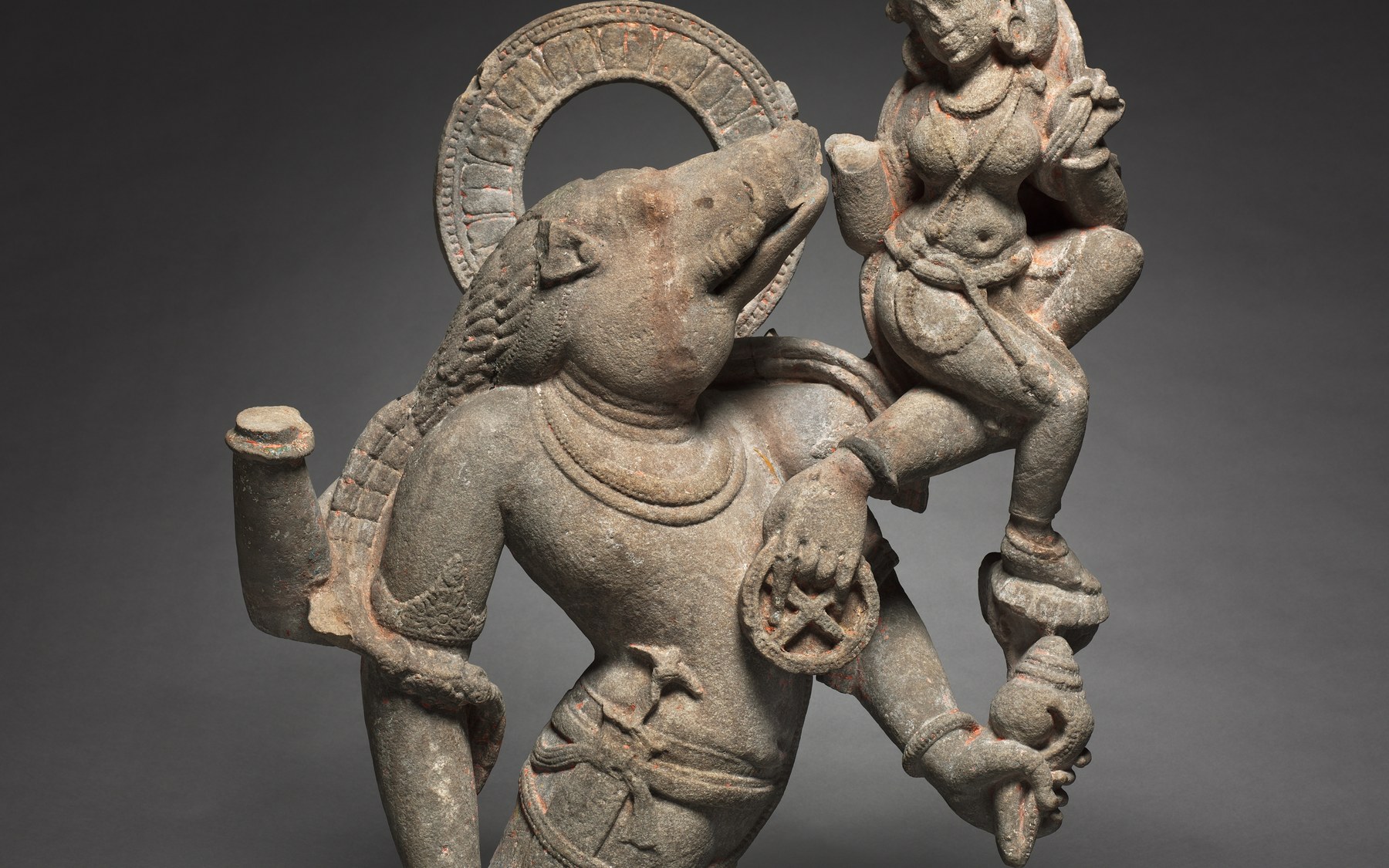
Central India, Medieval Period, 8th-9th century - Vahara, Boar Incarnation of Vishnu - 2011.148 - Cleveland Museum of Art.jpg by Unknown creator; CC0 via Wikimedia Commons. Cropped for TheHistoryOfArt.org. · Image source
What to expect
Avatar: Forms of Vishnu is a current Art Gallery of New South Wales exhibition in Sydney, running from 20 June to 5 October 2026. The official AGNSW page places it in the Naala Badu building on Lower level 2 and describes it as a ticketed exhibition bringing together centuries of art and storytelling from South and Southeast Asia around Vishnu, the Hindu deity associated with preserving order in the universe. Readers should check the Art Gallery source before travelling for ticket availability, final admission and any programme updates.
The exhibition centres on the idea of avatar, a Sanskrit term meaning "descent". AGNSW explains this as the many forms Vishnu takes to descend from the heavens and restore balance on earth. The official page names Matsya the fish, Kurma the tortoise, Krishna, Rama and Kalki among the avatars explored in the exhibition. That gives the page a clear interpretive route: not a general survey of all Hindu art, but a focused exhibition about divine forms, narrative cycles, renewal and protection.
The display includes sculpture, painting, textiles, photographs and film, with works from collections in Australia, India, Cambodia, Switzerland, the United Kingdom and the United States. AGNSW also states that new works were created especially for the exhibition by Desmond Lazaro, Gitanjali Das, Kalam Patua and Sumakshi Singh. The accompanying publication page describes the project as spanning fifteen centuries and featuring approximately 200 exceptional works.
Why it matters
The strongest reason to include this page is that it broadens the Art Gallery of New South Wales cluster beyond Australian art. The recent Sydney pages have focused on Streeton, the annual Archibald/Wynne/Sulman prizes and Nolan. Avatar: Forms of Vishnu adds South and Southeast Asian art, devotional storytelling, mythology, sculpture, painting, textile and film to the same museum route. That makes AGNSW feel more like the broad public museum it is, rather than only a Sydney-Australian-art anchor.
The exhibition also matters because it treats religious narrative as visual invention. Vishnu's avatars are not only theological ideas; they have been imagined through material, gesture, colour, scale, sequence, costume, landscape and performance across many places and periods. A sculpture of a divine form, a manuscript painting, a textile, a photograph or a film can each carry the story differently. That media range is part of the exhibition's value.
The inclusion of contemporary commissions is important too. It means the exhibition is not presenting Hindu narrative as closed historical material. Artists working now are being invited to respond to these forms and stories, extending a tradition rather than simply illustrating it. That makes the page more complex in rights terms, but also more interesting editorially: ancient, early modern and contemporary art can sit in one interpretive frame.
The international lender geography is another useful layer. Works from Australia, India, Cambodia, Switzerland, the UK and the USA suggest how South and Southeast Asian material is held, studied and displayed across many collection histories. A reader should be alert to both the beauty of the works and the institutional routes that brought them together in Sydney.
What to look for
Begin with the avatars themselves. Matsya, Kurma, Krishna, Rama and Kalki represent different forms and narrative moments. Rather than trying to memorise everything at once, visitors can look for how each form solves a visual problem: animal and human bodies, divine scale, heroic action, cosmic restoration, courtly setting, battle, devotion or future renewal.
Then compare media. Sculpture can make divine presence bodily and spatial. Painting can organise story, gesture, landscape and sequence. Textiles can carry pattern, ritual, touch and display. Photographs and film can bring contemporary performance, memory and reinterpretation into the gallery. The exhibition's strength should come from seeing these media as different ways of making Vishnu's avatars visible.
Iconography is another route. Vishnu's forms may be identified through attributes, companions, posture, colour, setting or narrative context. The accompanying publication promises short texts on Vishnu's divine circle, avatars, consorts and adversaries, which suggests the exhibition is designed to help visitors read who is who without reducing the works to labels.
Finally, think about devotion and storytelling together. Stories of heroism, love and renewal can be approached aesthetically, but they also belong to living religious and cultural traditions. A careful visit should respect that devotional dimension while still looking closely at style, material, craft and composition.
How it fits Sydney and Australia
This page strengthens Sydney by making AGNSW's Asian-art and international exhibition role visible. Streeton and Nolan connect the museum to Australian landscape and modernism; Archibald/Wynne/Sulman connects it to contemporary public prize culture; Avatar connects it to South and Southeast Asian art, mythology and global collections. That is a stronger city page than a single-topic Sydney route.
For practical planning, Avatar: Forms of Vishnu overlaps with the Archibald/Wynne/Sulman exhibition for much of winter 2026 and closes before Nolan Origins opens. It is in the Naala Badu building rather than the Naala Nura building used by the Archibald and Nolan pages, so visitors should check the AGNSW map and ticketing details before combining exhibitions.
The page also broadens the Australia country hub. Melbourne currently provides strong NGV Impressionism and international-loan coverage. Sydney now adds Australian art history, contemporary annual prizes, Australian modernism and South/Southeast Asian devotional art. That gives the broader museums section a more balanced Australian footing.
The page creates internal-link opportunities for Vishnu, avatars, Krishna, Rama, Kalki, Hindu art, South Asian art, Southeast Asian art, devotional art, textiles, sculpture, manuscript painting, mythology, AGNSW and the movement of religious stories across media and regions.
Image and rights note
This page remains image-free. Many historic works may be promising from an underlying artist-copyright perspective, but the exhibition includes contemporary commissions, lender objects, AGNSW photography, shop/publication imagery, film stills and press material. A future image review should use no lead image unless a source and credit route is explicitly approved.
How to use this page
Because Avatar: Forms of Vishnu is current, the page should help a reader decide whether it deserves time before the closing date, not merely record that it exists. The most reliable fixed details are the venue, dates, broad subject, media and official source link. The interpretive notes help place the exhibition in art-historical context: what kind of show it is, why it may matter, and which artists or topics are worth exploring next.
It is marked as a major exhibition in this guide, so it should be useful for readers choosing between several possible museum visits.
Looking notes
For a visitor, the most useful approach is to look for patterns rather than isolated highlights. With Vishnu, avatars, South Asian art, Southeast Asian art, Hindu art, Matsya, Kurma, Krishna, Rama, Kalki, sculpture, painting, textiles, photographs, film, Desmond Lazaro, Gitanjali Das, Kalam Patua, Sumakshi Singh, Naala Badu building, Gadigal Country, bhakti, mythology, devotional art, ask how the exhibition frames the subject: as biography, period survey, focused theme, collection display or reassessment. With media such as sculpture, painting, textile, photograph, film, manuscript painting, devotional object, contemporary commission, exhibition publication, pay attention to changes of scale, surface, lighting, material and display sequence, because those details are often lost in online listings.
The guide avoids over-specific claims where the public source does not yet support them. If a museum has not published a full object list, it is better to stay clear about what is confirmed than to imply certainty.
Who it is best for
Avatar: Forms of Vishnu is most likely to help readers who are already interested in Vishnu, avatars, South Asian art, Southeast Asian art, Hindu art, Matsya, Kurma, Krishna, Rama, Kalki, sculpture, painting, textiles, photographs, film, Desmond Lazaro, Gitanjali Das, Kalam Patua, Sumakshi Singh, Naala Badu building, Gadigal Country, bhakti, mythology, and devotional art, but it may also be useful for visitors building a wider route around Art Gallery of New South Wales in Sydney. If time is limited, use this page to decide whether the subject fills a gap in your knowledge, whether it connects to artists you already follow, and whether the official venue information makes the visit practical.