by Tom Gurney
Tom Gurney BSc (Hons) is an art history expert with over 20 years experience
Published on July 14, 2026 / Updated on July 16, 2026
Email: tomgurney1@gmail.com / Phone: +447429011000
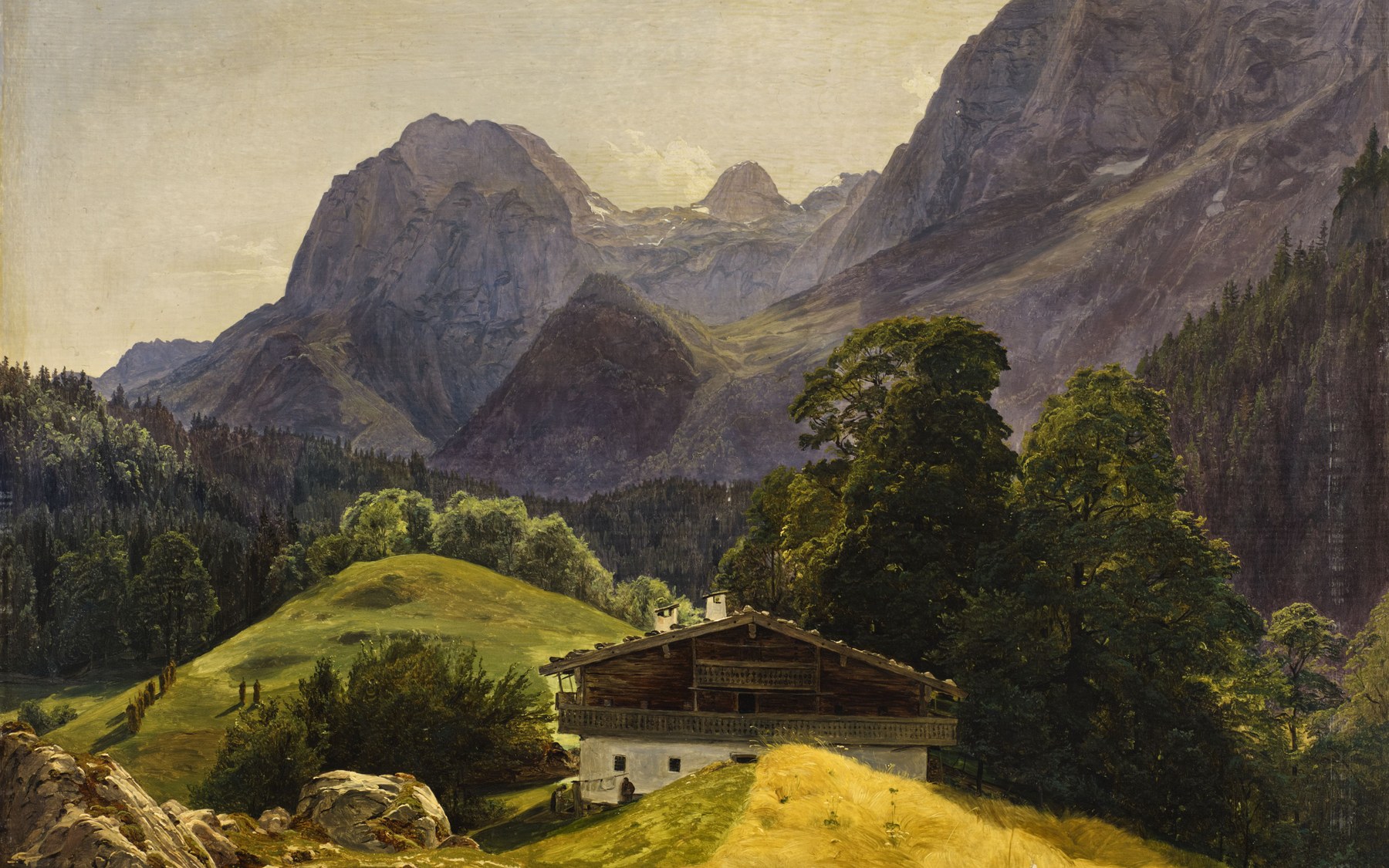
Ferdinand Georg Waldmüller - Der Taubensee mit dem Steinberg in der Ramsau.jpg by Ferdinand Georg Waldmüller; Public domain via Wikimedia Commons. Cropped for TheHistoryOfArt.org. · Image source
What to expect
Ferdinand Georg Waldmüller: True to Nature is a Belvedere exhibition at the Lower Belvedere in Vienna, running from 27 February to 14 June 2026. The official Belvedere press material presents Waldmüller as one of the key artists in the museum's collection and places his landscape painting within a broader nineteenth-century European turn toward nature. That makes this a useful Austrian addition rather than a duplicate of the later London page: the Vienna show starts from the Belvedere's own holdings, its local geography and its role in the artist's reception.
Waldmüller is best known as a major Austrian painter of the Biedermeier period, but this exhibition narrows the focus to landscape. The Belvedere describes intimate portraits of trees, wide views from the Vienna Woods and influential images of the Salzkammergut, while also bringing in contemporaries such as John Constable, Johann Christian Dahl and Jean-Baptiste Camille Corot. The comparison is important. Waldmüller should not be treated as a charming local specialist only; the exhibition asks how his realism belongs to a wider European conversation about nature, national landscape, training, topography and modern life.
The official press release also gives the show a clear social context. In the first half of the nineteenth century, political upheaval, social change and advancing industrialisation altered how people thought about nature. Landscape painting became a way to bring the natural world into domestic interiors, to picture local identity and to answer a growing desire to spend time outdoors. Waldmüller's landscapes are therefore not just pretty views. They sit inside a changing culture of looking, travel, collecting and middle-class life.
Why go
The strongest reason to go is that the Belvedere can make Waldmüller feel anchored rather than imported. The museum has extensive holdings of his work, and Vienna is not incidental to the story. Views connected to the Prater, the Vienna Woods, Salzburg, the Salzkammergut and Italy allow visitors to move between local place, national memory and European landscape traditions. For readers using the Austria guide, this page gives Vienna a second museum route after the Kunsthistorisches Museum: not only Habsburg Old Masters and city views, but nineteenth-century landscape, Biedermeier realism and the Belvedere's collection identity.
The exhibition is also valuable because it complicates the idea of being "true to nature". Naturalism can sound like a single method, as though an artist simply looked hard and copied what was there. The Belvedere's framing is richer. Across Europe, artists responded to nature through different training systems, cultural expectations and topographies. Constable, Dahl, Corot and Waldmüller did not arrive at realism by one route. Their landscapes carry different relationships to weather, light, terrain, mobility, national identity and the market for pictures.
For visitors who know Waldmüller mostly through genre scenes or portraits, the landscape focus should feel clarifying. It foregrounds outdoor study, tree forms, mountain air, clear light and specific terrain. It also shows why landscape painting mattered in the nineteenth century: not as a background genre, but as a modern way to organise longing, knowledge and belonging.
What to look for
Begin with light. Waldmüller's reputation depends partly on sharp observation and crisp illumination, but look for how that clarity behaves differently from scene to scene. Does the light flatten detail, separate forms, heighten leaves and rocks, or create a feeling of direct experience? In reproduction, this precision can look merely clean. In a gallery, it should be possible to see how light becomes structure.
Then look at distance. A mountain view, a path through woods, a tree study or a Prater scene each asks the viewer to stand somewhere. That position matters. Some landscapes invite a bodily sense of walking into space; others hold the viewer at a scenic distance. Waldmüller's realism often works through this tension between exact local detail and the ideal of a composed, memorable view.
Comparisons with European contemporaries should be especially useful. Constable can sharpen questions about cloud, weather and rural England; Dahl can bring northern topography and drama into view; Corot can suggest a different kind of tonal calm and outdoor study. The point is not to rank Waldmüller against better-known international names, but to see what changes when artists in different places claim nature as a serious modern subject.
The exhibition should also make visitors think about landscape as possession. In the nineteenth century, a view could become a portable memory, a sign of local attachment, a tourist object or a domestic image of escape from urban life. That is where the Belvedere's social framing matters. A painting of nature in a living room is not the same thing as nature itself. It is nature filtered through taste, money, memory and the desire to make the outside world available indoors.
How it fits the Belvedere and Vienna
This gate adds the Belvedere as a second Vienna venue in the museums and exhibitions section. That is useful structurally because Vienna should not be represented only by the Kunsthistorisches Museum. The Belvedere brings palace architecture, gardens, Austrian art, nineteenth-century painting and later modern routes into the city cluster. A Waldmüller landscape exhibition is a lower-risk and art-historically grounded way to introduce the museum before future pages on Klimt, Schiele, Kokoschka or other more rights-sensitive modern material.
For Vienna planning, the Lower Belvedere location also changes the day shape. It can pair naturally with the Belvedere gardens and the wider palace complex, while the KHM remains a separate Maria-Theresien-Platz route. Readers should check the Belvedere source before travelling for current tickets, opening hours, building access and any changes. The exhibition closes on 14 June 2026, so it is time-sensitive within the Austrian cluster.
The later National Gallery exhibition, Waldmüller: Landscapes, is a related London collaboration, not the same venue visit. The National Gallery states that the London show will be the first UK exhibition of Waldmüller's paintings and the first devoted solely to his work as a landscape painter, with the Belvedere lending most of the works. That makes the existing London page useful, but this Belvedere page should remain the Vienna-first record.
Image and rights note
The image prospects are strong because Waldmüller died in 1865 and several public-domain landscape images have already been identified for the wider Waldmüller topic. The Belvedere press images still require source and credit review, so this page remains image-free until a clearly licensed image source and credit path are selected. The safest future image review should prefer reviewed public-domain Waldmüller landscapes and should avoid claiming that a representative image is in the Belvedere display unless the official source or object record supports it.
How to use this page
Because Ferdinand Georg Waldmüller: True to Nature has ended, the page should function as an archive record and a route into related artists, works and venues. The most reliable fixed details are the venue, dates, broad subject, media and official source link. The interpretive notes help place the exhibition in art-historical context: what kind of show it is, why it may matter, and which artists or topics are worth exploring next.
It is marked as a major exhibition in this guide, so it should be useful for readers choosing between several possible museum visits.
Looking notes
For a visitor, the most useful approach is to look for patterns rather than isolated highlights. With Ferdinand Georg Waldmüller, Biedermeier landscape, Vienna Woods, Salzkammergut, John Constable, Jean-Baptiste Camille Corot, ask how the exhibition frames the subject: as biography, period survey, focused theme, collection display or reassessment. With media such as painting, landscape painting, oil painting, nature studies, pay attention to changes of scale, surface, lighting, material and display sequence, because those details are often lost in online listings.
The guide avoids over-specific claims where the public source does not yet support them. If a museum has not published a full object list, it is better to stay clear about what is confirmed than to imply certainty.
Who it is best for
Ferdinand Georg Waldmüller: True to Nature is most likely to help readers who are already interested in Ferdinand Georg Waldmüller, Biedermeier landscape, Vienna Woods, Salzkammergut, John Constable, and Jean-Baptiste Camille Corot, but it may also be useful for visitors building a wider route around Belvedere Museum Vienna in Vienna. If time is limited, use this page to decide whether the subject fills a gap in your knowledge, whether it connects to artists you already follow, and whether the official venue information makes the visit practical.