


 by Tom Gurney
Tom Gurney BSc (Hons) is an art history expert with over 20 years experience
Published on July 14, 2026 / Updated on July 16, 2026
Email: tomgurney1@gmail.com / Phone: +447429011000
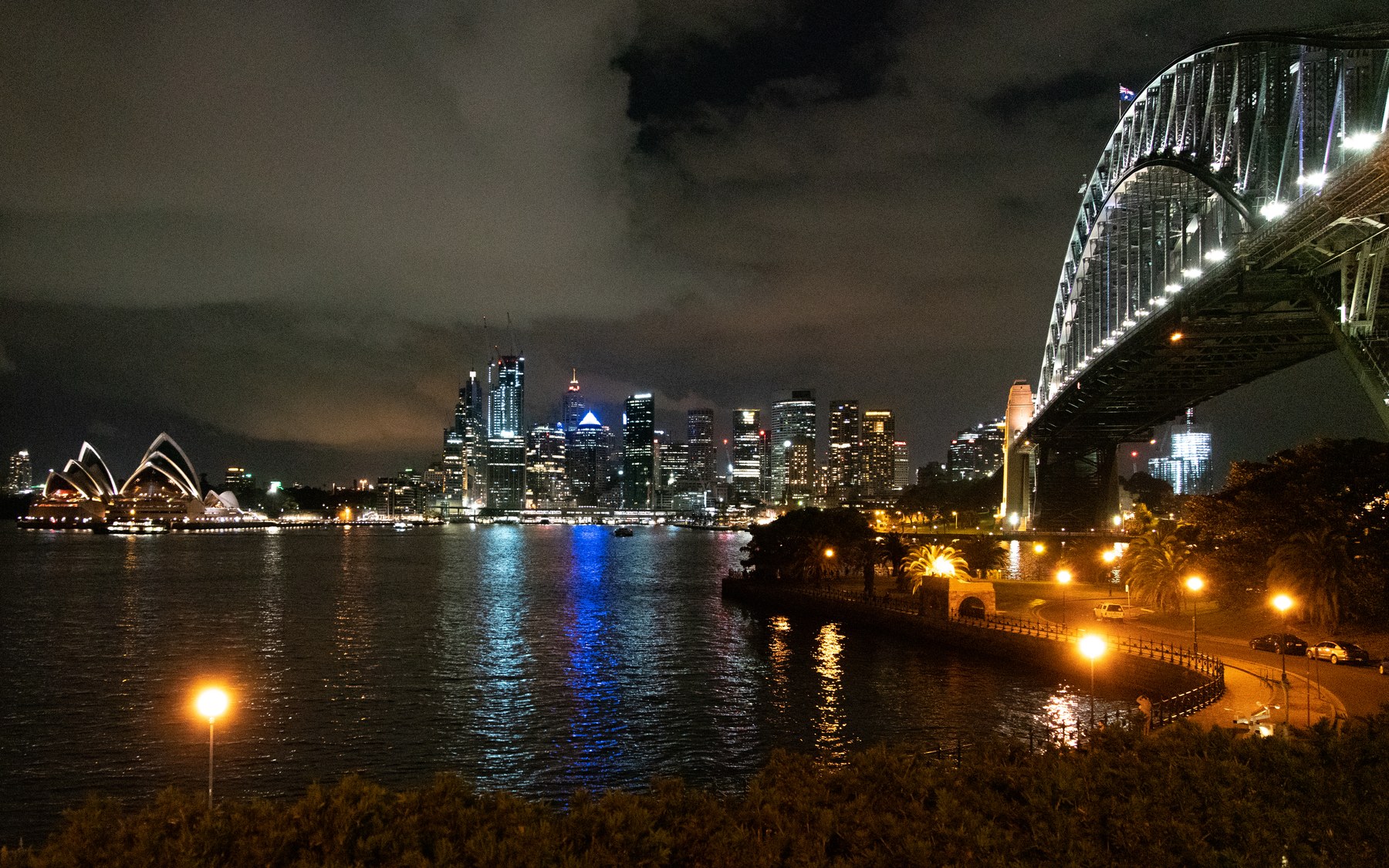
A View of the Sydney Opera House and Harbor Bridge in Australia (48453466807).jpg by U.S. Department of State from United States; Public domain via Wikimedia Commons. Cropped for TheHistoryOfArt.org. · Image source
What to expect
25th Biennale of Sydney: Rememory was presented at the Art Gallery of New South Wales from 14 March to 14 June 2026. Because it has now closed, this page is an archive record for the AGNSW presentation rather than a current visit page. The official Art Gallery page places the exhibition in the Naala Badu building on Lower level 1, lists it as Free, and makes clear that the Biennale was also presented at White Bay Power Station, Campbelltown Arts Centre, Chau Chak Wing Museum at the University of Sydney and Penrith Regional Gallery.
The Biennale's 25th edition was titled Rememory, a term associated with Toni Morrison. AGNSW describes it as a way of delving into fragmented and forgotten parts of history to recover and confront untold stories in the present. The exhibition was curated by Hoor Al Qasimi and explored migration, exile and belonging, with particular attention to First Nations stories and diasporic communities that shape Australia today.
The Biennale's own opening release gives the citywide scale: more than 143 artworks by 83 artists and collectives from 37 countries and territories, alongside a public program, presented across Sydney from 14 March to 14 June 2026. This guide page keeps AGNSW as the local venue anchor, but the Biennale should be understood as a multi-venue contemporary art event rather than a single-gallery exhibition.
Why it mattered
The strongest reason to include this page is that it completes the Sydney cluster with a major international contemporary art event. The recent AGNSW pages have given the museum several identities: Streeton for Australian landscape and Impressionism, Archibald/Wynne/Sulman for public prize culture, Nolan for Australian modernism, Avatar for South and Southeast Asian devotional art, and Dobell for contemporary drawing. Rememory adds the Biennale of Sydney: international, multi-site, contemporary, political, social and civic.
The theme matters because memory is not neutral. The word Rememory points toward histories that have been erased, fragmented, repressed or left untold. In a Sydney context, that has immediate force. The official AGNSW text names First Nations stories and diasporic communities, and those are not decorative themes. They shape how audiences are asked to think about belonging, displacement, identity and historical responsibility.
It also matters that the exhibition was free at AGNSW. Contemporary biennials can feel specialist, but free entry lowers the threshold. Visitors could encounter international contemporary art inside a public museum day, even if they were not following the entire Biennale across Sydney. That makes AGNSW an accessible point of entry into a much larger citywide program.
The wider venue footprint is important too. White Bay Power Station, Campbelltown Arts Centre, Chau Chak Wing Museum and Penrith Regional Gallery each changed the geography of the Biennale. Rather than concentrating contemporary art in one central museum, the edition spread memory, history and belonging across different institutional and urban settings.
What to look for in the archive record
Begin with the difference between memory and history. The exhibition's title suggests that remembering is active: gathering fragments, confronting absences and reassembling what has been separated. A viewer should ask how each work handles that process. Does it recover a story, mourn a loss, question an archive, stage a return, expose violence, or imagine a new form of belonging?
Then look at form. A biennial can include installation, video, sculpture, photography, performance, sound, text and participatory work. The key is not to ask whether everything behaves like a painting exhibition. Instead, ask what kind of encounter each work creates. Some works may be immersive; others may be archival, documentary, poetic, bodily or confrontational.
Migration and exile are another route. These themes can appear through personal memory, family history, national borders, language, objects, journeys or interrupted homes. The exhibition's value lies in asking how artists make those experiences visible without flattening them into a single story.
Finally, keep AGNSW's role in view. This page records the Art Gallery presentation, but the Biennale's meaning was distributed across Sydney. A work seen at AGNSW belonged to a larger map of sites, communities and institutional contexts. That relationship between gallery and city is part of the experience.
How it fits Sydney and Australia
This page strengthens Sydney by making the citywide contemporary-art ecology visible. The Art Gallery of New South Wales is not only a collection museum or a venue for annual prizes. It is also a partner in a major international biennial that connects the museum to other Sydney sites and to global contemporary practice.
For current planning, the AGNSW presentation has ended, so this page should not be used for tickets or opening hours. Its value is archival and connective. It records how the 25th Biennale entered the Art Gallery route and gives the Sydney page a contemporary international layer beside Australian art, Asian art, drawing and modernist survey exhibitions.
The page also broadens the Australia country hub. Melbourne currently carries a strong NGV and Australian Impressionism cluster. Sydney now carries AGNSW pages that move from Streeton and Nolan to prizes, Avatar, Dobell and the Biennale. That gives the museums section a much better Australian spread before the image review stage.
The page creates internal-link opportunities for contemporary art, Biennale of Sydney, Toni Morrison, memory in art, migration, exile, belonging, First Nations stories, diasporic communities, installation art, video art, public programs, Art Gallery of New South Wales and multi-venue exhibition planning.
Image and rights note
This page remains image-free. The Biennale is a contemporary exhibition involving living artists, artist estates, galleries, installation photography, video stills, venue documentation and press images. AGNSW, Biennale and partner-venue image credits all require high caution. A future image review should use no lead image unless a source and credit route is explicitly approved.
How to use this page
Because 25th Biennale of Sydney: Rememory has ended, the page should function as an archive record and a route into related artists, works and venues. The most reliable fixed details are the venue, dates, broad subject, media and official source link. The interpretive notes help place the exhibition in art-historical context: what kind of show it is, why it may matter, and which artists or topics are worth exploring next.
It is marked as a major exhibition in this guide, so it should be useful for readers choosing between several possible museum visits.
Looking notes
For a visitor, the most useful approach is to look for patterns rather than isolated highlights. With 25th Biennale of Sydney, Rememory, Toni Morrison, Hoor Al Qasimi, migration, exile, belonging, First Nations stories, diasporic communities, memory, history, White Bay Power Station, Campbelltown Arts Centre, Chau Chak Wing Museum, Penrith Regional Gallery, Sydney Opera House, Art Gallery of New South Wales, Naala Badu building, ask how the exhibition frames the subject: as biography, period survey, focused theme, collection display or reassessment. With media such as contemporary art, installation, video, sculpture, photography, performance, public program, multi-venue biennial, contemporary exhibition, pay attention to changes of scale, surface, lighting, material and display sequence, because those details are often lost in online listings.
The guide avoids over-specific claims where the public source does not yet support them. If a museum has not published a full object list, it is better to stay clear about what is confirmed than to imply certainty.
Who it is best for
25th Biennale of Sydney: Rememory is most likely to help readers who are already interested in 25th Biennale of Sydney, Rememory, Toni Morrison, Hoor Al Qasimi, migration, exile, belonging, First Nations stories, diasporic communities, memory, history, White Bay Power Station, Campbelltown Arts Centre, Chau Chak Wing Museum, Penrith Regional Gallery, Sydney Opera House, Art Gallery of New South Wales, and Naala Badu building, but it may also be useful for visitors building a wider route around Art Gallery of New South Wales in Sydney. If time is limited, use this page to decide whether the subject fills a gap in your knowledge, whether it connects to artists you already follow, and whether the official venue information makes the visit practical.
.jpg)