by Tom Gurney
Tom Gurney BSc (Hons) is an art history expert with over 20 years experience
Published on July 14, 2026 / Updated on July 16, 2026
Email: tomgurney1@gmail.com / Phone: +447429011000
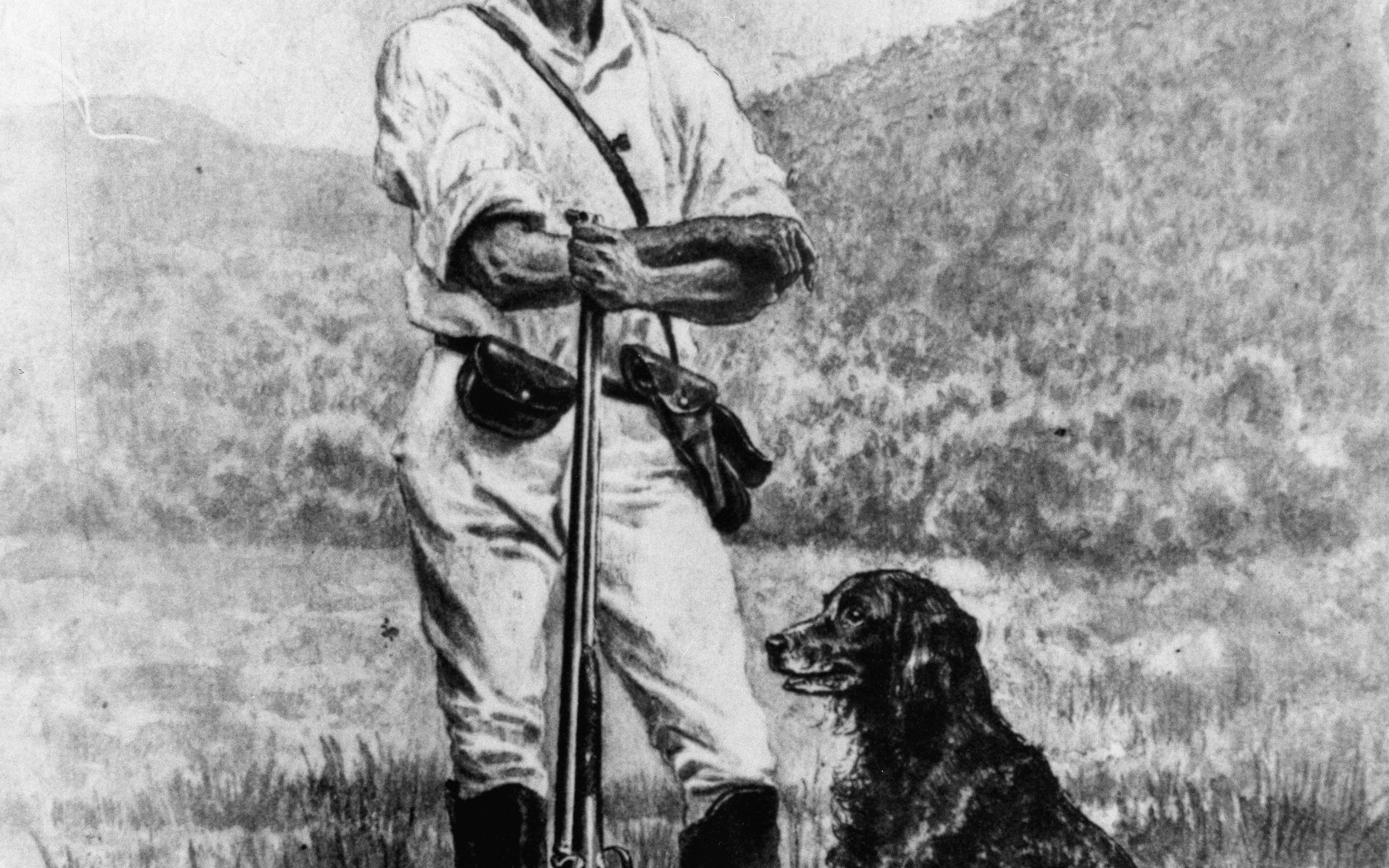
Drawing of Carl Lumholtz and his dog ca 1882.jpg by Unknown author Unknown author; Public domain via Wikimedia Commons. Cropped for TheHistoryOfArt.org. · Image source
What to expect
Dobell Australian Drawing Biennial 2026 is an upcoming free exhibition at the Art Gallery of New South Wales in Sydney, opening on 12 September 2026 and running to March 2027. The official AGNSW page places it in the Naala Nura building on Lower level 2, lists it as Free, and frames the exhibition around the immediacy and intimate power of drawing. Because the page gives a month rather than a precise closing day, this guide keeps the public date as "to March 2027" rather than inventing an exact end date.
The exhibition brings together 11 artists from across Australia: Stephen Benwell, Tom Blake, Andrew Browne, Emily Ferretti, Rosemary Lee, Mary MacDougall, Julian Martin, Jennifer Mills with Darcy Luker, Ryan Nazzari, Louise Weaver and Gutiŋarra Yunupiŋu. AGNSW describes a wide range of materials, including pastel, pencil, watercolour, ceramic, light and thread. That material spread is the key to the page. The biennial is not only about drawing as pencil on paper. It treats drawing as a flexible way of thinking, sensing, marking, forming and translating experience.
The official description says drawing can lay bare the bones of how we look, think and feel. That is a useful premise for visitors. Some artists use drawing for close observation of people, places and everyday detail. Others use it to give shape to imagination, or to elaborate a personal visual language through lines and marks that are their own. The exhibition proposes intimacy rather than medium purity as the closest definition of drawing.
Why it matters
The strongest reason to include this page is that it gives the Sydney cluster a contemporary works-on-paper and expanded-media route. Recent Art Gallery of New South Wales pages in the guide have covered Streeton, annual prizes, Nolan and Vishnu's avatars. The Dobell biennial adds a quieter but important mode: drawing as process, attention and immediacy. It balances the large ticketed survey and prize-exhibition pages with a free exhibition focused on how artists make marks and build visual languages.
The Dobell context matters too. AGNSW's Dobell Prize page explains that the original Dobell Prize for Drawing ran annually at the Art Gallery from 1993 to 2012, encouraging excellence in drawing and draughtsmanship among Australian artists. From 2014, the Gallery instead presented the curated Dobell Australian Drawing Biennial. That shift from open competition to curated biennial changes the kind of exhibition being seen. It is not simply a prize wall of finalists; it is a focused curatorial argument about what drawing can be now.
The 2026 edition is especially useful because it keeps drawing elastic. Pastel, pencil and watercolour sit near traditional expectations, while ceramic, light and thread push the category outward. That tension is productive. A visitor can ask whether drawing is defined by tool, surface, line, gesture, process, relation to the hand, or a way of thinking through material.
The artist list also matters geographically. AGNSW identifies artists from Victoria, Western Australia, New South Wales and the Northern Territory, with Jennifer Mills working with Darcy Luker. That spread supports a national view of contemporary drawing without pretending that one style or one centre defines the field.
What to look for
Begin with materials. A pencil line, a thread line, a ceramic edge and a line of light do not behave in the same way. Each has weight, duration, resistance and tactility. If the exhibition asks visitors to think beyond drawing's physical attributes, the best response is to look harder at those attributes and then ask what they make possible.
Then compare intimacy with scale. Drawing is often imagined as small, private and preparatory, but contemporary drawing can be spatial, sculptural, luminous or installation-based. A work may still feel intimate because it reveals attention or gesture, even if it is not physically small. Look for how the exhibition balances closeness with room-scale presence.
Observation is another route. AGNSW notes that some artists draw through attention to the minutiae of the everyday and to the people and places that make up their worlds. Those works may reward slow looking rather than instant recognition. The question is not only what is depicted, but how the artist's attention is structured.
Finally, think about personal visual language. The official page says several artists use drawing as the putting down of lines and marks that are all their own. That is a concise way of saying that drawing can be a signature, a rhythm, a syntax or a private system. A visitor should ask when a mark becomes expressive, when repetition becomes language, and when process becomes meaning.
How it fits Sydney and Australia
This page strengthens the Art Gallery of New South Wales cluster by adding a free contemporary drawing exhibition to a set that now includes Streeton, Archibald/Wynne/Sulman, Nolan and Avatar. That gives AGNSW a richer shape: Australian landscape, annual public prizes, Australian modernism, South and Southeast Asian devotional art, and contemporary drawing all sit inside one Sydney museum route.
For practical planning, the exhibition opens on 12 September 2026 in the Naala Nura building and is listed as free. It overlaps with Avatar and begins shortly before Nolan Origins opens, so a Sydney visitor may be able to combine drawing with either Asian-art or Australian-modernism routes depending on date and energy. Official AGNSW opening hours and any late changes should still be checked before travel.
The page also broadens the Australia country hub. Melbourne currently carries a strong NGV Impressionism cluster, while Sydney now carries AGNSW pages across historical, contemporary, modernist, Asian-art and works-on-paper subjects. That spread makes Australia less one-note and prepares the ground for future drawing, materials and art-school feature pages.
The page creates internal-link opportunities for drawing, works on paper, contemporary Australian art, expanded drawing, pastel, pencil, watercolour, ceramic, light, thread, William Dobell, Dobell Prize, Art Gallery of New South Wales, Sydney and the role of materials in art history.
Image and rights note
This page remains image-free. The exhibition consists of living artists and recent works, with official images credited to artists and photographers. AGNSW photography, installation images, artist-controlled works, publication imagery and press assets all require high caution. A future image review should use no lead image unless a source and credit route is explicitly approved.
How to use this page
Because Dobell Australian Drawing Biennial 2026 is upcoming, the page should help a reader decide whether to plan a future trip or watch for reviews and final venue details. The most reliable fixed details are the venue, dates, broad subject, media and official source link. The interpretive notes help place the exhibition in art-historical context: what kind of show it is, why it may matter, and which artists or topics are worth exploring next.
It is marked as a major exhibition in this guide, so it should be useful for readers choosing between several possible museum visits.
Looking notes
For a visitor, the most useful approach is to look for patterns rather than isolated highlights. With Dobell Australian Drawing Biennial, drawing, Sir William Dobell Art Foundation, Stephen Benwell, Tom Blake, Andrew Browne, Emily Ferretti, Rosemary Lee, Mary MacDougall, Julian Martin, Jennifer Mills, Darcy Luker, Ryan Nazzari, Louise Weaver, Gutiŋarra Yunupiŋu, pastel, pencil, watercolour, ceramic, light, thread, intimate expression, Naala Nura building, ask how the exhibition frames the subject: as biography, period survey, focused theme, collection display or reassessment. With media such as drawing, pastel, pencil, watercolour, ceramic, light work, thread work, contemporary art, works on paper, expanded drawing, pay attention to changes of scale, surface, lighting, material and display sequence, because those details are often lost in online listings.
The guide avoids over-specific claims where the public source does not yet support them. If a museum has not published a full object list, it is better to stay clear about what is confirmed than to imply certainty.
Who it is best for
Dobell Australian Drawing Biennial 2026 is most likely to help readers who are already interested in Dobell Australian Drawing Biennial, drawing, Sir William Dobell Art Foundation, Stephen Benwell, Tom Blake, Andrew Browne, Emily Ferretti, Rosemary Lee, Mary MacDougall, Julian Martin, Jennifer Mills, Darcy Luker, Ryan Nazzari, Louise Weaver, Gutiŋarra Yunupiŋu, pastel, pencil, watercolour, ceramic, light, thread, intimate expression, and Naala Nura building, but it may also be useful for visitors building a wider route around Art Gallery of New South Wales in Sydney. If time is limited, use this page to decide whether the subject fills a gap in your knowledge, whether it connects to artists you already follow, and whether the official venue information makes the visit practical.