by Tom Gurney
Tom Gurney BSc (Hons) is an art history expert with over 20 years experience
Published on July 14, 2026 / Updated on July 16, 2026
Email: tomgurney1@gmail.com / Phone: +447429011000
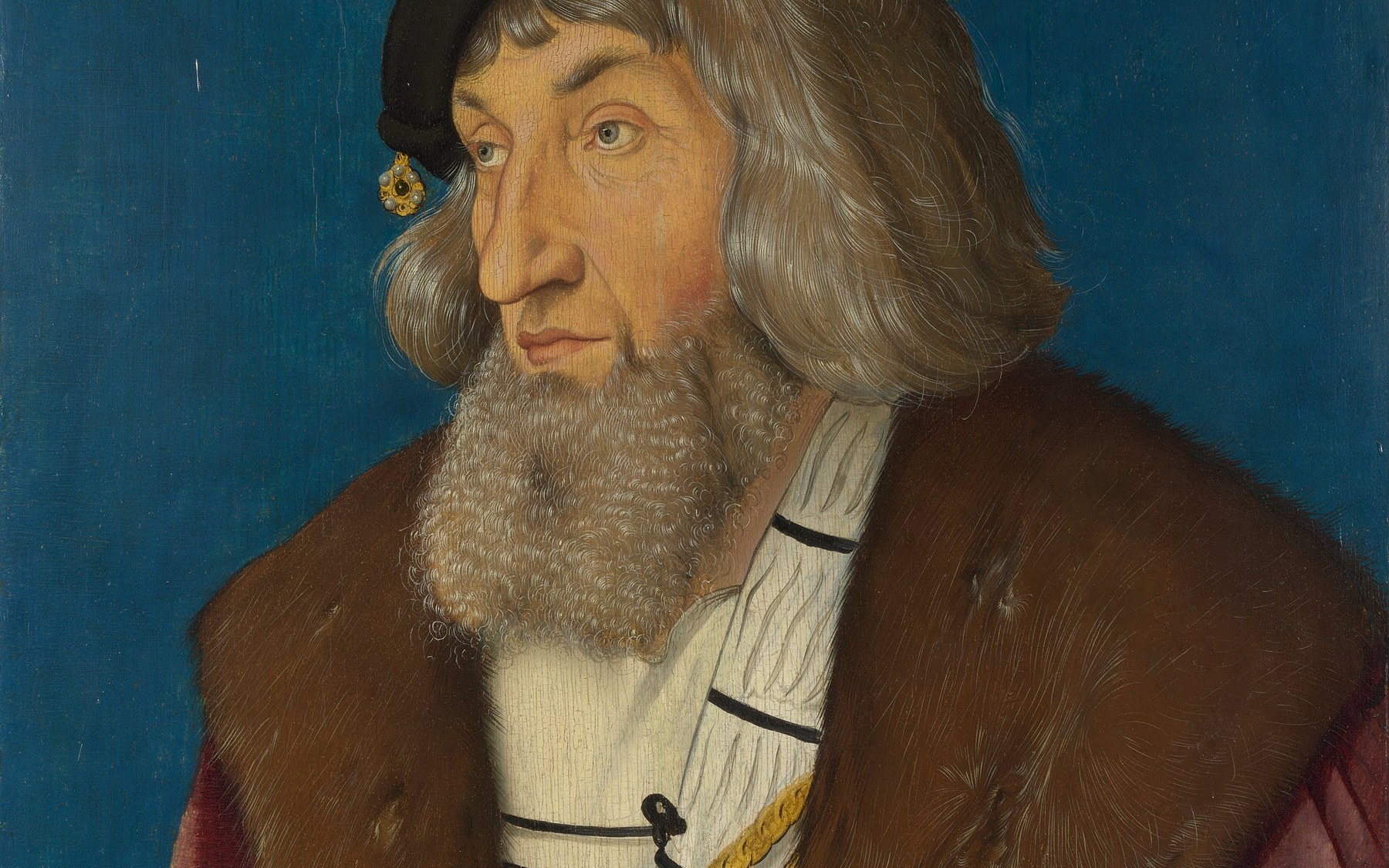
Hans Baldung Grien - Portrait of a Man - Google Art Project.jpg by Hans Baldung Grien; Public domain via Wikimedia Commons. Cropped for TheHistoryOfArt.org. · Image source
What to expect
Hans Baldung Grien is an upcoming Museo Nacional del Prado exhibition in Room D of the Jerónimos Building, scheduled from 24 November 2026 to 7 March 2027. Prado frames Baldung as one of the key figures of German Renaissance painting: an artist trained in Albrecht Dürer's Nuremberg workshop, probably entrusted with serious responsibility there during Dürer's second Italian journey, and later active as an independent master in Strasbourg.
The exhibition is especially useful because it is built around the Prado's own Baldung paintings rather than a loose German Renaissance survey. The museum's programme names two central panels, often interpreted through eternal beauty and the ages of human life. It also says that recent restoration has revealed new information about Baldung's creative process, including botanical details and tonal differences between the paintings. That gives the page a strong route: not only who Baldung was, but how restoration can sharpen the questions asked of his work.
The Prado's English programme places Baldung in dialogue with Dürer and Lucas Cranach. That comparison matters. Baldung is sometimes introduced as Dürer's pupil, but the exhibition's value is likely to lie in seeing him as more than a derivative workshop figure. He absorbed Nuremberg discipline, humanist learning, technical ambition and classical motifs, then pushed toward a stranger pictorial world in Strasbourg: allegory, myth, death, erotic unease, natural observation and moral imagination.
Why go
The strongest reason to go is that Baldung rewards close, slightly unsettled looking. His paintings can look learned and fantastical at the same time. A subject such as the ages of life may begin as moral allegory, but the bodies, landscape, details and emotional temperature can make the image feel stranger than a simple lesson. That quality makes him valuable for readers who want the German Renaissance beyond its most familiar names.
The Dürer connection is an obvious draw, but it should not flatten the visit. Dürer gives a context of drawing, printmaking, proportion, nature study and international ambition. Baldung keeps parts of that inheritance while finding a different voice. His work can feel more experimental in its treatment of the body, more theatrical in its allegory and more interested in the boundary between beauty and decay. A visitor should ask where the teacher's world is still visible, and where Baldung pulls away from it.
The restoration angle is also important. When a museum cleans and studies paintings, it can change the art-historical argument. Botanical details may become easier to read. Tonal contrasts may clarify the relation between companion panels. Underlying decisions, revisions or surface changes may point to the painter's process. For a Prado visitor, that means this exhibition is not only a chance to see rare German Renaissance works. It is a chance to see the museum thinking in public.
What to look for
Begin with the two Prado panels as a pair. If one image is read as an idealised vision of beauty and the other as an allegory of age, time and death, the exhibition invites comparison rather than isolated admiration. How does Baldung build contrast between youth and decline, grace and mortality, polished bodies and winter landscape, mythological possibility and Christian moral pressure? The most rewarding looking may happen in the gap between the two images.
Then look for nature. The Prado programme specifically mentions botanical details revealed through restoration. In Renaissance art, plants are rarely just decoration. They can show observational skill, signal place, enrich symbolism, or pull the viewer into the physical world even when the subject is allegorical. Baldung's nature study also links back to Dürer's famous interest in plants, animals and minute description, while remaining part of a more charged pictorial atmosphere.
It is also worth watching how classical motifs enter Christian or moral imagery. Prado notes a new interest in classical themes among Dürer and his contemporaries, and Baldung's work sits inside that transition. Mythological bodies and Renaissance humanist ideas do not simply replace older religious thought. They complicate it. Beauty can become a theological, erotic and moral problem at once.
Finally, compare Baldung with Cranach if the installation encourages it. Both artists could treat myth, the nude, moral allegory and courtly or civic taste, but their pictures do not feel the same. Cranach often has a cool elegance and courtly sharpness; Baldung can feel darker, more anxious and more overtly fascinated by transformation. Even without a full checklist, that comparison gives readers a good reason to slow down over style, mood and intention.
How it fits the Prado and Madrid
This page broadens the Prado cluster beyond Spanish court art, medieval Mediterranean exchange and nineteenth-century political painting. It gives the museum's German Renaissance holdings a clearer role and helps explain why the Prado is not only a Spanish painting destination. Royal collecting, international dynastic culture and later museum history brought many European schools into Madrid, and a Baldung exhibition makes that breadth visible.
For practical planning, the exhibition overlaps with Mariana of Austria and Rilke and Spanish Art, making late 2026 and early 2027 a strong Prado season for visitors who want more than one temporary route. Baldung will likely appeal most to readers interested in Dürer, Renaissance Germany, allegory, panel painting, restoration, mythological subjects and the relation between beauty and mortality. Readers should check the official Prado source before travelling for final room access, ticketing, object details and any updated exhibition page.
The page also creates useful future internal-link territory. It can later connect to Dürer, Cranach, German Renaissance art, allegory, restoration, botanical detail in painting, workshop training and master-apprentice routes. Those links should be added only where verified destination pages exist and genuinely help the reader continue.
Image and rights note
The subject is promising for image sourcing because Baldung died in 1545 and the underlying works are historic. The most relevant Prado images, however, may still carry object-record, press or reproduction terms, and a representative image should not be treated as a confirmed exhibition checklist object unless the official source supports that claim. This page remains image-free until a reviewed source and credit route is selected.
How to use this page
Because Hans Baldung Grien is upcoming, the page should help a reader decide whether to plan a future trip or watch for reviews and final venue details. The most reliable fixed details are the venue, dates, broad subject, media and official source link. The interpretive notes help place the exhibition in art-historical context: what kind of show it is, why it may matter, and which artists or topics are worth exploring next.
It is marked as a major exhibition in this guide, so it should be useful for readers choosing between several possible museum visits.
Looking notes
For a visitor, the most useful approach is to look for patterns rather than isolated highlights. With Hans Baldung Grien, Albrecht Dürer, German Renaissance, Lucas Cranach, Strasbourg, The Three Graces, The Ages and Death, restoration research, botanical detail, ask how the exhibition frames the subject: as biography, period survey, focused theme, collection display or reassessment. With media such as painting, panel painting, renaissance painting, allegory, mythological painting, restoration, technical study, pay attention to changes of scale, surface, lighting, material and display sequence, because those details are often lost in online listings.
The guide avoids over-specific claims where the public source does not yet support them. If a museum has not published a full object list, it is better to stay clear about what is confirmed than to imply certainty.
Who it is best for
Hans Baldung Grien is most likely to help readers who are already interested in Hans Baldung Grien, Albrecht Dürer, German Renaissance, Lucas Cranach, Strasbourg, The Three Graces, The Ages and Death, restoration research, and botanical detail, but it may also be useful for visitors building a wider route around Museo Nacional del Prado in Madrid. If time is limited, use this page to decide whether the subject fills a gap in your knowledge, whether it connects to artists you already follow, and whether the official venue information makes the visit practical.