by Tom Gurney
Tom Gurney BSc (Hons) is an art history expert with over 20 years experience
Published on July 14, 2026 / Updated on July 16, 2026
Email: tomgurney1@gmail.com / Phone: +447429011000
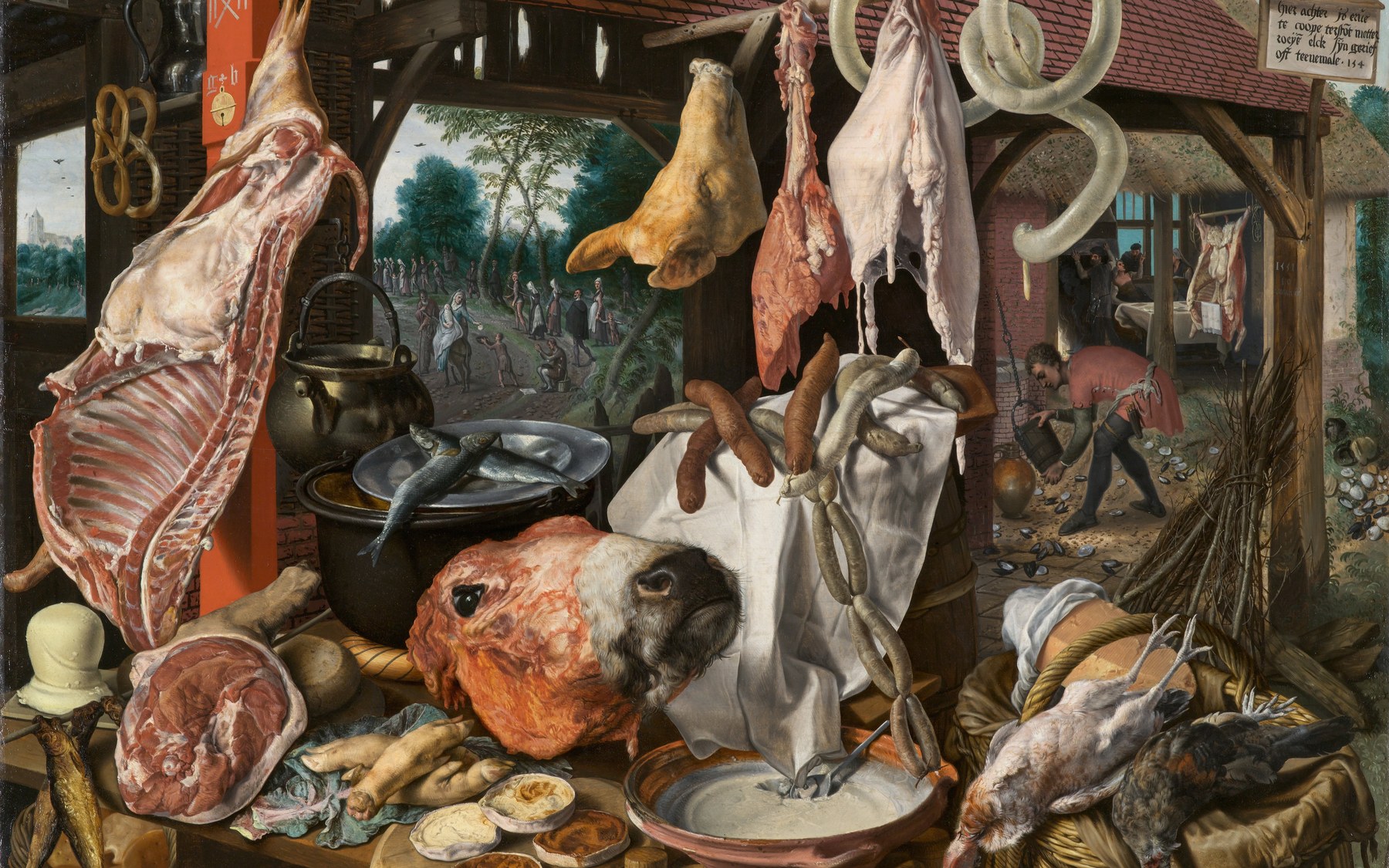
A Meat Stall with the Holy Family Giving Alms - Pieter Aertsen - Google Cultural Institute.jpg by Pieter Aertsen; Public domain via Wikimedia Commons. Cropped for TheHistoryOfArt.org. · Image source
What to expect
The Holy Family at Home is an upcoming Getty Center exhibition, scheduled from 22 September 2026 to 10 January 2027 in the Museum West Pavilion on the Plaza Level. Getty presents the exhibition in English and Spanish and lists it as free with a timed-entry reservation to the Center, while noting the separate parking fee. The practical frame is therefore clear, but the art-historical frame is richer: Northern European artists around 1500 began picturing the Holy Family as an intimate domestic group rather than only as distant sacred figures.
The official Getty page centres the show on the Virgin Mary, Christ Child and Saint Joseph as a loving trio in a domestic interior. It celebrates that theme through Getty's recently acquired painting by Gerard David, while also showing illuminated manuscripts and panel paintings that shaped and reflected this treatment. That cross-medium structure is important. The exhibition is not just about one Getty acquisition; it is about how late medieval and early Renaissance artists imagined holiness through household gestures, tender contact, care and interior space.
Getty's paintings page identifies the central work as Gerard David's The Holy Family, about 1520, an oil on panel acquired by the museum in 2023. The exhibition page describes the detail clearly: Mary and the Christ Child tenderly embrace, while Joseph holds a spoon and lidded bowl. That small domestic action matters because it brings Joseph into the emotional and practical life of the scene. He is not only a background witness. He becomes part of the family's care.
Why go
The strongest reason to go is that the exhibition makes a familiar Christian subject newly specific. The Holy Family can become a generic label if the viewer moves too quickly: mother, child, Joseph, devotional theme. Getty's framing asks for slower looking. What changes when the family is shown inside a home? What does a spoon, bowl, book, bench, curtain, bed or small architectural setting do to the sacred story? How does ordinary care become a form of devotion?
For readers interested in Northern European art, this is a useful small exhibition because it brings panel painting and manuscript illumination together. Around 1500, devotional images moved across media and scales. A panel painting might borrow from manuscript habits of intimacy, pattern and close detail; manuscripts might carry pictorial ideas that also shaped larger works. Seeing these media together should help visitors understand that late medieval visual culture was not divided as neatly as modern museum categories suggest.
The exhibition also gives Saint Joseph a stronger role. In many older images, Joseph can seem secondary, asleep, marginal or awkwardly placed. Getty's curator-tour description explicitly points to his prominent role in Northern European representations around 1500. That is a useful looking route: notice whether Joseph is passive, protective, practical, affectionate, elderly, contemplative or actively involved in the domestic scene. His place can change the emotional structure of the whole image.
What to look for
Begin with touch. The relation between Mary and the Christ Child often carries the emotional centre of a Holy Family image. A cheek pressed against a face, an arm around a body, a hand supporting the child or a shared glance can make doctrine feel immediate. In a Getty gallery, those details may be small, but they are not secondary. They are how tenderness becomes visible.
Then look at domestic objects. A bowl, spoon, cloth, book, bed or fireplace can locate the sacred family inside recognisable human life. The object may have symbolic meaning, but it may also work through familiarity. A viewer understands care because the scene uses the language of ordinary care. That is what makes the title at Home more than a setting note.
Compare panel paintings with illuminated manuscripts if the installation allows it. Manuscripts invite close looking, personal reading and devotional handling; panel paintings usually work differently in scale, display and material presence. Yet both can make the Holy Family intimate. Ask how the artist controls nearness: through small scale, compressed space, decorative detail, facial expression, gesture or the physical rhythm of a room.
Finally, look for the balance between sacred and everyday. The best works in this subject do not choose one or the other. They allow divinity to appear through ordinary family life. That balance is delicate. If the scene becomes too ordinary, the theological charge may fade; if it becomes too remote, the domestic tenderness disappears. The exhibition should help readers feel that tension rather than simply identify the iconography.
How it fits the Getty and Los Angeles
This page strengthens the Getty Center cluster because it gives the museum another historic, collection-led exhibition alongside Joshua Reynolds and Joseph Wright. The three Getty pages now cover portraiture, domestic devotion and the drama of light, which makes the museum page more varied than a single European-painting route. It also builds a useful Los Angeles thread around serious Old Master content in a city page that otherwise needs careful travel planning.
For practical planning, the exhibition opens before the Joseph Wright show and closes on 10 January 2027, so it is the more time-sensitive Getty exhibition within this small cluster. It can be paired naturally with the Center's paintings galleries, manuscripts, architecture, gardens and views, but readers should still check Getty's official source for timed-entry reservations, access information, tour availability and any gallery changes before travelling.
Image and rights note
The existing lead image, Pieter Aertsen's A Meat Stall with the Holy Family Giving Alms, is a public-domain representative image for the Holy Family theme, not a claim about Getty's checklist. Getty's own Gerard David painting is directly named by the official source and is likely the best future image candidate if source and credit terms are approved. Until then, the current public-domain image can remain as a cautious subject anchor, with copy avoiding any claim that it appears in the exhibition.
How to use this page
Because The Holy Family at Home is upcoming, the page should help a reader decide whether to plan a future trip or watch for reviews and final venue details. The most reliable fixed details are the venue, dates, broad subject, media and official source link. The interpretive notes help place the exhibition in art-historical context: what kind of show it is, why it may matter, and which artists or topics are worth exploring next.
It is listed as a recommended exhibition rather than a headline major show, so the main value is a focused subject, strong venue context or a useful route into related artists.
Looking notes
For a visitor, the most useful approach is to look for patterns rather than isolated highlights. With Holy Family, Gerard David, Saint Joseph, Northern European devotion, ask how the exhibition frames the subject: as biography, period survey, focused theme, collection display or reassessment. With media such as painting, illuminated manuscripts, panel painting, pay attention to changes of scale, surface, lighting, material and display sequence, because those details are often lost in online listings.
The guide avoids over-specific claims where the public source does not yet support them. If a museum has not published a full object list, it is better to stay clear about what is confirmed than to imply certainty.
Who it is best for
The Holy Family at Home is most likely to help readers who are already interested in Holy Family, Gerard David, Saint Joseph, and Northern European devotion, but it may also be useful for visitors building a wider route around Getty Center in Los Angeles. If time is limited, use this page to decide whether the subject fills a gap in your knowledge, whether it connects to artists you already follow, and whether the official venue information makes the visit practical.