by Tom Gurney
Tom Gurney BSc (Hons) is an art history expert with over 20 years experience
Published on July 14, 2026 / Updated on July 16, 2026
Email: tomgurney1@gmail.com / Phone: +447429011000
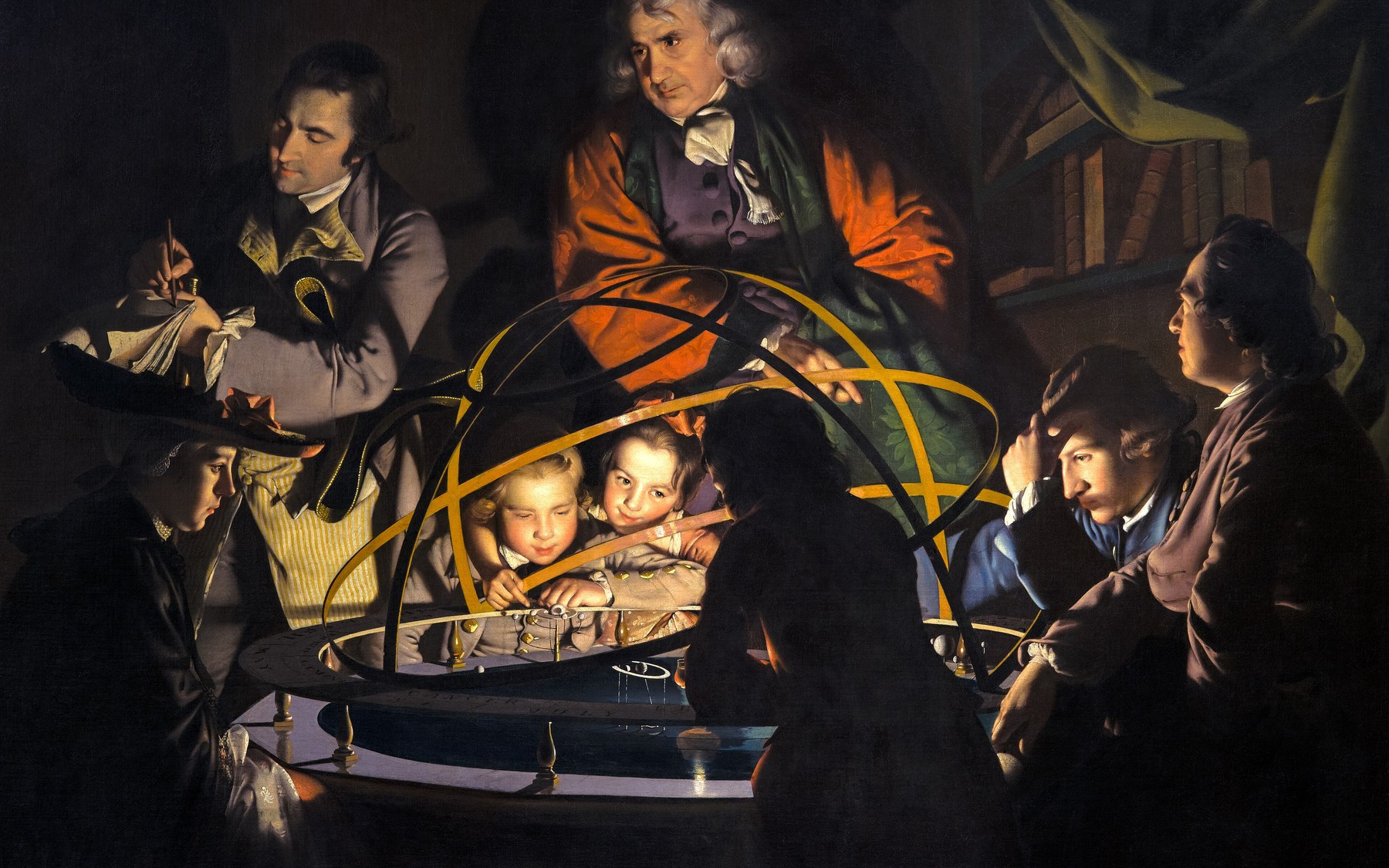
Joseph Wright of Derby, A Philosopher Lecturing on the Orrery, 1766; public-domain image via Wikimedia Commons · Image source
What to expect
A Light in the Dark: Joseph Wright of Derby is an upcoming Getty Center exhibition, scheduled from 24 November 2026 to 14 March 2027 in the Museum West Pavilion on the Plaza Level. Getty presents the exhibition in English and Spanish, and lists it as free with a timed-entry reservation to the Getty, while noting that parking carries a fee. Those practical details are useful, but the reason the page deserves a full guide is art-historical: Wright is one of the eighteenth century's great painters of light, darkness, experiment and concentrated attention.
The official Getty page frames the exhibition around Wright's ability to capture light piercing the dark. It points especially to the 1760s, when Wright exhibited a group of striking pictures in London that moved him from provincial Derby to national fame. Getty also identifies its recently rediscovered Two Boys with a Bladder as a key work in the show, and says the exhibition reunites several related paintings while exploring technical innovations and artistic ambition behind some of the most compelling pictures of the eighteenth century.
This is not simply a "pretty candlelight" exhibition. Wright's darkness is active. It creates suspense, focuses the eye, turns faces into theatres of response and makes knowledge feel dramatic. A candle, lamp or artificial light source can become the centre of a whole pictorial system: figures gather around it, shadows swallow the edges, and the viewer is invited to watch not only the object of attention but the act of attention itself.
Why go
The strongest reason to go is that Wright makes Enlightenment looking feel physical. His pictures often bring together science, experiment, children, families, artisans, spectacle and quiet wonder. Viewers do not merely see an experiment; they see people seeing. That double structure makes the paintings powerful for readers interested in art and science, but also for anyone interested in how painting can stage curiosity.
The Getty setting also matters. The museum already supports a European painting route through artists such as Joshua Reynolds, Gainsborough, Goya, David and later collection highlights. Wright adds a different pressure to that route. Instead of courtly portraiture or polished Grand Manner performance, he brings experimental light, provincial ambition, industrial-era intelligence and a fascination with how modern knowledge changes feeling.
The exhibition is promising for the site's broader future-feature ideas too. It connects naturally to colour theory, the history of light in painting, scientific instruments, studio technique, oil-painting surfaces, night scenes, education, childhood and the relationship between art and public demonstration. It can later support evergreen content without depending on the exhibition remaining open.
What to look for
Begin with the source of light. In Wright, light is rarely neutral illumination. It is often the subject's emotional engine. Ask where the light comes from, who controls it, who understands it, and who is left half in shadow. Does the light reveal knowledge, danger, play, theatre, intimacy or wonder? The answer may change across a single canvas.
Then look at faces. Wright's groups often work through distributed response: one figure is absorbed, another startled, another delighted, another sceptical or withdrawn. Those differences matter because they turn a scientific or domestic scene into a study of spectatorship. The painting asks what it means to witness something together while not feeling the same thing.
Surface is important too. Candlelit scenes can collapse in reproduction, but in person they depend on small transitions between warm light, reflected glow, deep brown, black, flesh tone and the glint of an object. The best visit will probably be slow and close, with time spent on the edges of illumination rather than only on the central highlight.
If the exhibition includes works around experiments, toys, children or demonstrations, avoid treating them as illustrations of science alone. Wright was interested in knowledge as performance. A bladder, lamp, machine, air pump or astronomical model can become a device for showing social behaviour: who teaches, who watches, who performs, who doubts and who is emotionally captured by the scene.
How it fits the Getty and Los Angeles
This page strengthens the Getty Center cluster because the museum now has several upcoming historic exhibitions with different routes: Joshua Reynolds and eighteenth-century portraiture, The Holy Family at Home for Northern European domestic devotion, and Joseph Wright for light, science and eighteenth-century modernity. Together they make the Getty page feel like an active European-painting destination rather than only an architectural or garden visit.
For Los Angeles planning, the Getty deserves a realistic day shape. The site, tram, gardens, views and galleries all take time, and cross-city travel can be unforgiving. Because this exhibition runs into March 2027, it can anchor a winter Getty visit, but readers should still check Getty's official page before travelling for timed-entry reservations, access details, gallery location and any changes.
Image and rights note
The existing public-domain Wright image candidate, A Philosopher Lecturing on the Orrery, is a strong representative candlelit-science image for the subject, but it should not be described as included in the Getty exhibition unless the official checklist or object record confirms that. Getty's own Two Boys with a Bladder is directly named by the official page, but any Getty image use still needs source and credit review. The page can remain release-ready with the current cautious image treatment while final image approval is handled separately.
How to use this page
Because A Light in the Dark: Joseph Wright of Derby is upcoming, the page should help a reader decide whether to plan a future trip or watch for reviews and final venue details. The most reliable fixed details are the venue, dates, broad subject, media and official source link. The interpretive notes help place the exhibition in art-historical context: what kind of show it is, why it may matter, and which artists or topics are worth exploring next.
It is marked as a major exhibition in this guide, so it should be useful for readers choosing between several possible museum visits.
Looking notes
For a visitor, the most useful approach is to look for patterns rather than isolated highlights. With Joseph Wright of Derby, ask how the exhibition frames the subject: as biography, period survey, focused theme, collection display or reassessment. With media such as painting, pay attention to changes of scale, surface, lighting, material and display sequence, because those details are often lost in online listings.
The guide avoids over-specific claims where the public source does not yet support them. If a museum has not published a full object list, it is better to stay clear about what is confirmed than to imply certainty.
Who it is best for
A Light in the Dark: Joseph Wright of Derby is most likely to help readers who are already interested in Joseph Wright of Derby, but it may also be useful for visitors building a wider route around Getty Center in Los Angeles. If time is limited, use this page to decide whether the subject fills a gap in your knowledge, whether it connects to artists you already follow, and whether the official venue information makes the visit practical.