by Tom Gurney
Tom Gurney BSc (Hons) is an art history expert with over 20 years experience
Published on July 14, 2026 / Updated on July 16, 2026
Email: tomgurney1@gmail.com / Phone: +447429011000
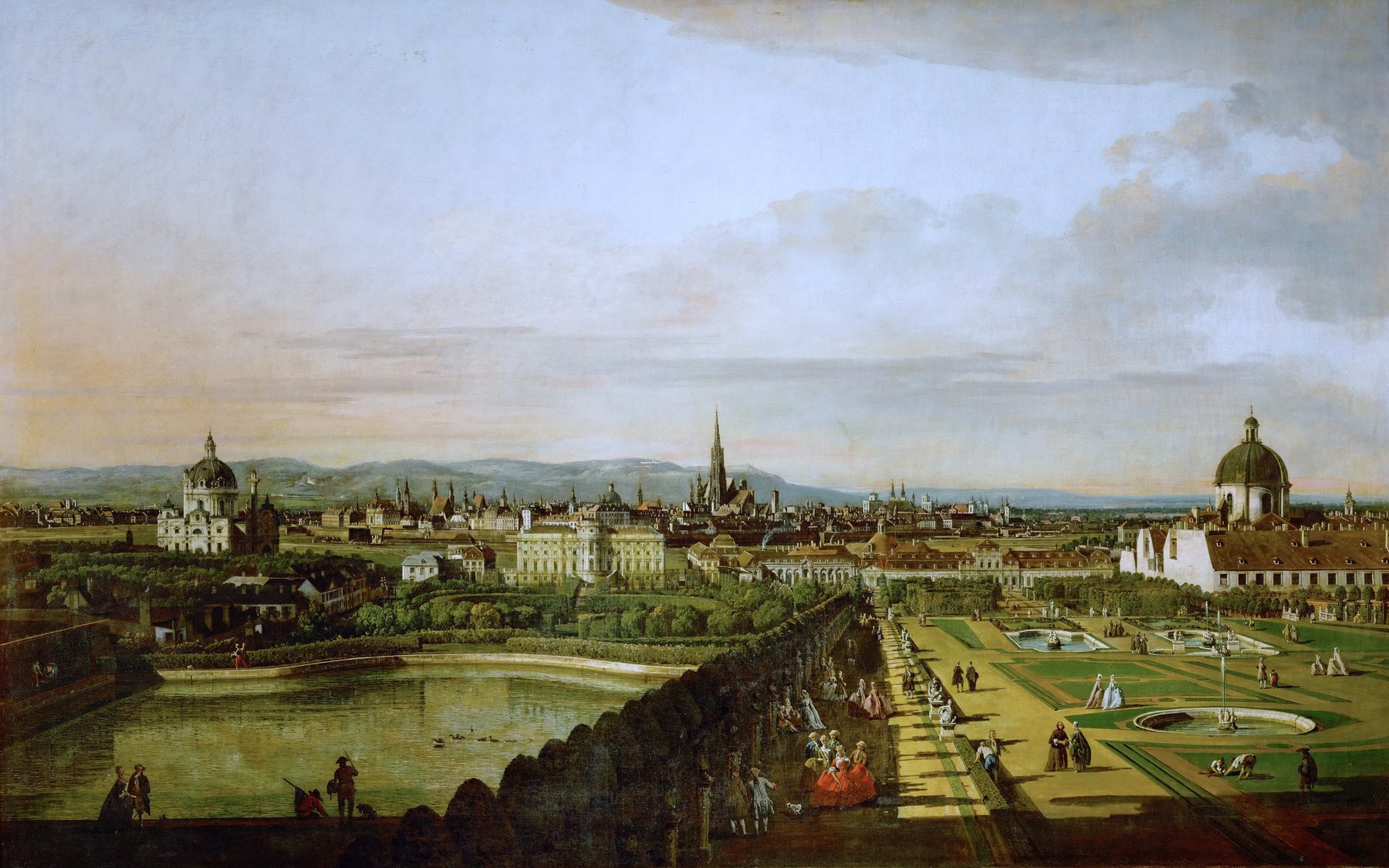
Bernardo Bellotto, il Canaletto - View of Vienna from the Belvedere.jpg by Bernardo Bellotto; Public domain via Wikimedia Commons. Cropped for TheHistoryOfArt.org. · Image source
What to expect
Canaletto & Bellotto is an upcoming Kunsthistorisches Museum Vienna exhibition on eighteenth-century city painting, open from 24 March to 6 September 2026. The official KHM page frames the show around Giovanni Antonio Canal, known as Canaletto, and his nephew Bernardo Bellotto, two artists whose views of Venice, London and Vienna helped turn the city view into one of the most compelling pictorial forms of the eighteenth century.
The subject is highly practical for this guide because it adds Austria, Vienna and the Kunsthistorisches Museum through historic material with a lower image-rights risk than modern or contemporary exhibitions. It is also a strong art-history subject. Canaletto and Bellotto are often remembered for precision, but the KHM presentation makes clear that these pictures are not just neutral records. They are crafted scenes in which observation, optical technology, memory, patronage and pictorial theatre all shape what the viewer thinks a city is.
The official page highlights the artists' use of optical devices such as the camera obscura and describes how scientific precision could be transformed into grand pictorial scenes. That is the important balance. A view may look documentary, yet still depend on selection, staging, light, scale, viewpoint and invention. This is why the exhibition should be useful for readers who want to understand architecture and urban history without leaving painting behind.
Why go
The main reason to go is comparison. Canaletto and Bellotto are close enough to be confused in broad outline: both made highly detailed views, both worked within the market for vedute, and both shaped the international image of major European cities. But the differences matter. Canaletto's Venice became a model of theatrical urban experience, attractive to collectors and travellers who wanted the city as spectacle, memory and possession. Bellotto adapted that language in other courtly and political settings, including Dresden, Warsaw and Vienna, where accuracy, grandeur and authority could serve different purposes.
For Vienna, Bellotto is the crucial figure. The KHM page states that the exhibition includes almost the entire body of his known works from his brief Vienna stay, including all thirteen paintings that entered the Habsburg collection. That gives the show more than a borrowed-theme structure. It is rooted in the museum's own imperial collection history and in the city outside the gallery. Works such as Bellotto's view of Vienna from the Belvedere help visitors think about the capital as image, not only as place.
The exhibition should also appeal to readers interested in the mechanics of looking. The camera obscura can make the artists sound purely technical, but the device does not remove artistic decision. It sharpens the problem. What does the artist keep, move, adjust or dramatise? How does a city become legible? Which buildings take command, which people animate the foreground, and how do light, water, sky and distance give urban space emotional force?
What to look for
Begin with viewpoint. A veduta usually persuades the viewer by seeming to stand in a particular place, but that place may be more constructed than it first appears. Notice whether the image feels walkable, ceremonial, panoramic or theatrical. A canal, square, bridge or palace facade can become a stage, and small figures can turn architecture from fixed stone into social space.
Then look for the relation between exactness and invention. Windows, cornices, rooflines, boats, shadows and reflections may be carefully described, but accuracy alone does not make a painting memorable. Canaletto and Bellotto both understood rhythm: repeated arches, receding facades, diagonals across water, clouds that open space, and foreground activity that gives the eye somewhere to begin. The pleasure of the image often lies in this tension between measured detail and arranged experience.
Bellotto's Vienna views deserve especially slow looking because they sit between local topography and dynastic self-image. A painted view can show a real city while also presenting it as orderly, impressive and historically meaningful. For readers building a Vienna route, this is a useful reminder that the capital's churches, palaces, streets and viewpoints were not only lived spaces. They were also images made for collections, diplomacy, memory and power.
Finally, compare Venice, London and Vienna as pictorial problems. Venice offers water, light, ceremony and tourism; London brings a different scale of river city and commercial modernity; Vienna brings Habsburg court culture, urban expansion and imperial self-presentation. The artists' shared language changes as those cities change. That makes the exhibition more than a double biography. It is a compact history of how European capitals were made visible.
How it fits the Kunsthistorisches Museum and Vienna
This gate gives the museums and exhibitions section a useful Austrian anchor. The Kunsthistorisches Museum is one of the world's great Old Master and imperial collection museums, and this exhibition introduces it through a subject that belongs naturally to Vienna. A visitor can move from Bellotto's painted city to the actual city fabric around Maria-Theresien-Platz, the Ringstrasse, the Hofburg and the Belvedere context without forcing the route.
For museum planning, the KHM page should become the base for later collection highlights: Bruegel, Titian, Rubens, Velazquez, the Kunstkammer and the wider Habsburg collecting story. Canaletto & Bellotto is a clean first exhibition because it connects Old Master painting, urban history and local geography. It also opens future internal links to the main Canaletto page and to Vienna-related artwork pages once those links are approved for this cluster.
Because the exhibition is upcoming, readers should check the KHM source before travelling for tickets, opening hours, room access and any changes. The current planning details are strong enough for a public page, but travel decisions should always use the official museum page as the final source.
Image and rights note
The image prospects are promising because Canaletto and Bellotto are historic artists and public-domain image sources are likely to exist. KHM press images identify relevant works but carry institutional credit and review requirements, so this page remains image-free until a clearly licensed image source and credit path are selected. Any representative image should avoid implying that it is in the exhibition unless the official source or object record confirms it.
How to use this page
Because Canaletto & Bellotto is upcoming, the page should help a reader decide whether to plan a future trip or watch for reviews and final venue details. The most reliable fixed details are the venue, dates, broad subject, media and official source link. The interpretive notes help place the exhibition in art-historical context: what kind of show it is, why it may matter, and which artists or topics are worth exploring next.
It is marked as a major exhibition in this guide, so it should be useful for readers choosing between several possible museum visits.
Looking notes
For a visitor, the most useful approach is to look for patterns rather than isolated highlights. With Canaletto, Bernardo Bellotto, Venice, London, Vienna, camera obscura, vedute, ask how the exhibition frames the subject: as biography, period survey, focused theme, collection display or reassessment. With media such as painting, city view, veduta, oil on canvas, optical devices, pay attention to changes of scale, surface, lighting, material and display sequence, because those details are often lost in online listings.
The guide avoids over-specific claims where the public source does not yet support them. If a museum has not published a full object list, it is better to stay clear about what is confirmed than to imply certainty.
Who it is best for
Canaletto & Bellotto is most likely to help readers who are already interested in Canaletto, Bernardo Bellotto, Venice, London, Vienna, camera obscura, and vedute, but it may also be useful for visitors building a wider route around Kunsthistorisches Museum Vienna in Vienna. If time is limited, use this page to decide whether the subject fills a gap in your knowledge, whether it connects to artists you already follow, and whether the official venue information makes the visit practical.